
316 Results for "

targeted covalent

" in MedChemExpress (MCE) Product Catalog:
Products (316)

316 Results for "targeted covalent" in MCE Product Catalog:

125
125 Publications Verification
Cat. No.: HY-112906
CAS No.: 314054-00-7
Purity:  99.45%
Target:  

STING

Research Areas:  

Inflammation/Immunology

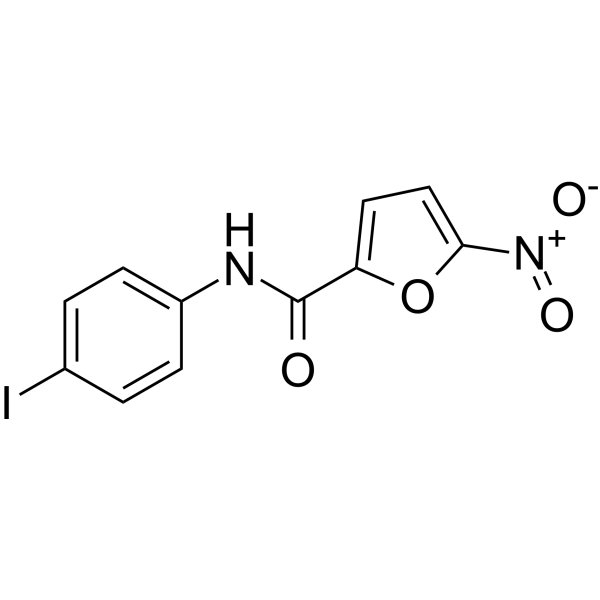
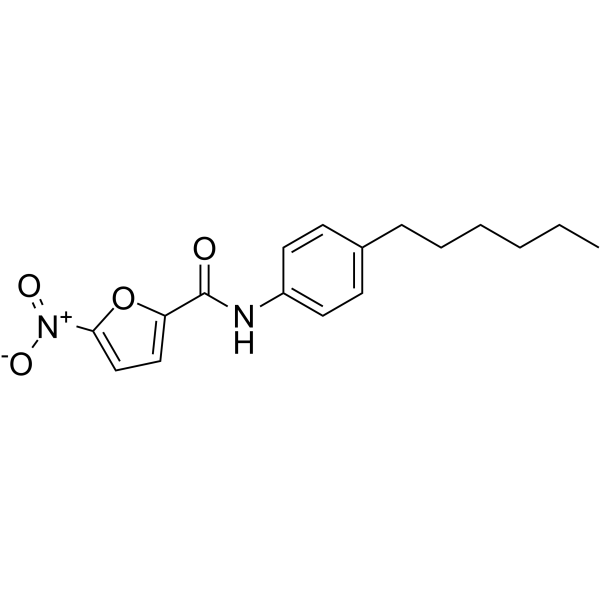
C-176 is a selective and blood-brain barrier permeable STING inhibitor. C-176 covalently targets transmembrane cysteine residue 91 and thereby blocking activation-induced palmitoylation of STING .
loading...
    loading...
35
35 Cited Publications
Cat. No.: HY-17600
CAS No.: 1420477-60-6
Synonyms: Calquence; ACP-196
Target:  

Btk

Research Areas:  

Inflammation/Immunology Cancer

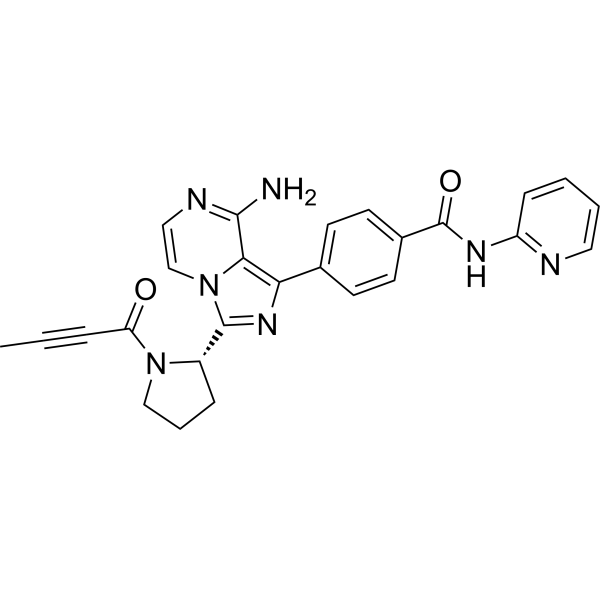
Acalabrutinib (ACP-196) is an orally active, irreversible, and highly selective second-generation BTK inhibitor. Acalabrutinib binds covalently to Cys481 in the ATP-binding pocket of BTK. Acalabrutinib demonstrates potent on-target effects and efficacy in mouse models of chronic lymphocytic leukemia (CLL). Acalabrutinib can be used for CLL research . Acalabrutinib is a click chemistry reagent, itcontains an Alkyne group and can undergo copper-catalyzed azide-alkyne cycloaddition (CuAAc) with molecules containing Azide groups.
loading...
    loading...
10
10 Cited Publications
Cat. No.: HY-128586
CAS No.: 1848959-10-3
Purity:  99.52%
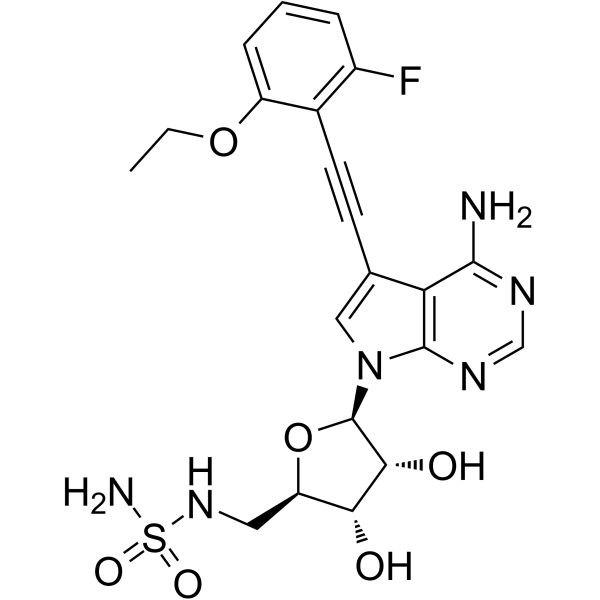
TAS4464 is a long-acting, highly selective covalent inhibitor targeting NEDD8-activating enzyme (NAE) (IC50=0.955 nM), and also inhibits CAII with an IC50 of 0.73 μM, which is less potent than MLN4924 (HY-70062). The IC50 values of TAS4464 against other E1 enzymes UAE and SAE are 449 nM and 1280 nM, respectively. TAS4464 targets NEDD8 in an ATP-dependent manner to inhibit NAE, blocks the neddylation pathway, causes accumulation of CRL ubiquitin ligase substrates (such as CDT1, p27, phosphorylated IκBα), and further induces tumor cell apoptosis. TAS4464 exhibits antiproliferative and cytotoxic effects, and has broad-spectrum antitumor activity against various hematologic and solid tumor cell lines as well as patient-derived tumor cells. TAS4464 has a wide selcetive window, without obvious toxicity. TAS4464 can be used in the research of hematologic malignancies (leukemia, lymphoma, multiple myeloma, etc.) and solid tumors (small cell lung cancer, colorectal cancer, sarcoma, endometrial cancer, ovarian cancer, etc.) .
loading...
    loading...
10
10 Cited Publications
Cat. No.: HY-128586A
CAS No.: 1848959-11-4
Purity:  98.91%
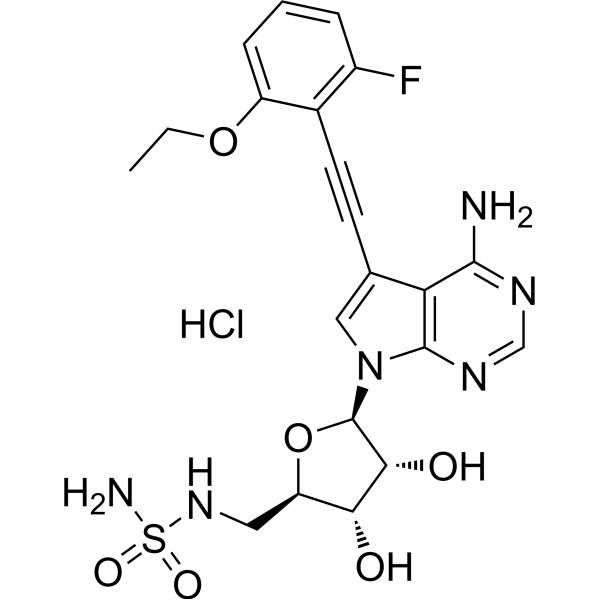
TAS4464 hydrochloride is a long-acting, highly selective covalent inhibitor targeting NEDD8-activating enzyme (NAE) (IC50=0.955 nM), and also inhibits CAII with an IC50 of 0.73 μM, which is less potent than MLN4924 (HY-70062). The IC50 values of TAS4464 hydrochloride against other E1 enzymes UAE and SAE are 449 nM and 1280 nM, respectively. TAS4464 hydrochloride targets NEDD8 in an ATP-dependent manner to inhibit NAE, blocks the neddylation pathway, causes accumulation of CRL ubiquitin ligase substrates (such as CDT1, p27, phosphorylated IκBα), and further induces tumor cell apoptosis. TAS4464 hydrochloride exhibits antiproliferative and cytotoxic effects, and has broad-spectrum antitumor activity against various hematologic and solid tumor cell lines as well as patient-derived tumor cells. TAS4464 hydrochloride has a wide therapeutic window, without obvious toxicity. TAS4464 hydrochloride can be used in the research of hematologic malignancies (leukemia, lymphoma, multiple myeloma, etc.) and solid tumors (small cell lung cancer, colorectal cancer, sarcoma, endometrial cancer, ovarian cancer, etc.) .
loading...
    loading...
9
9 Cited Publications
Cat. No.: HY-131328
CAS No.: 2101700-15-4
Purity:  99.88%
Synonyms: LOXO-305
Target:  

Btk

Research Areas:  

Cancer

Pirtobrutinib (LOXO-305), a highly selective and non-covalent next generation BTK inhibitor, inhibits diverse BTK C481 substitution mutations. Pirtobrutinib causes regression of BTK-dependent lymphoma tumors in mouse xenograft models. Pirtobrutinib is also more than 300-fold selective for BTK versus 370 other kinases tested and shows no significant inhibition of non-kinase off-targets at 1 μM .
loading...
    loading...
6
6 Cited Publications
Cat. No.: HY-100433
CAS No.: 1401089-31-3
Purity:  99.32%
Target:  

PDI

Research Areas:  

Cancer

PACMA 31 is an irreversible, orally active protein disulfide isomerase (PDI) inhibitor with an IC50 of 10 μM. PACMA 31 forms a covalent bond with the active site cysteines of PDI. PACMA 31 shows tumor targeting ability and significantly suppresses ovarian tumor growth without causing toxicity to normal tissues . PACMA 31 is a click chemistry reagent, it contains an Alkyne group and can undergo copper-catalyzed azide-alkyne cycloaddition (CuAAc) with molecules containing Azide groups.
loading...
    loading...
5
5 Cited Publications
Cat. No.: HY-128892
CAS No.: 1808714-73-9
Purity:  99.42%
Target:  

Autophagy

Research Areas:  

Neurological Disease

EN6 is a small-molecule in vivo autophagy activator that covalently targets cysteine 277 in the ATP6V1A subunit of the lysosomal v-ATPase. EN6-mediated modification of ATP6V1A uncouples v-ATPase from Rag, leading to inhibition of mTORC1 signalling, increased lysosomal acidification, and activation of autophagy. EN6 also scavenges TDP-43 aggregates (causative agents of frontotemporal dementia) in a lysosome-dependent manner .
loading...
    loading...
3
3 Cited Publications
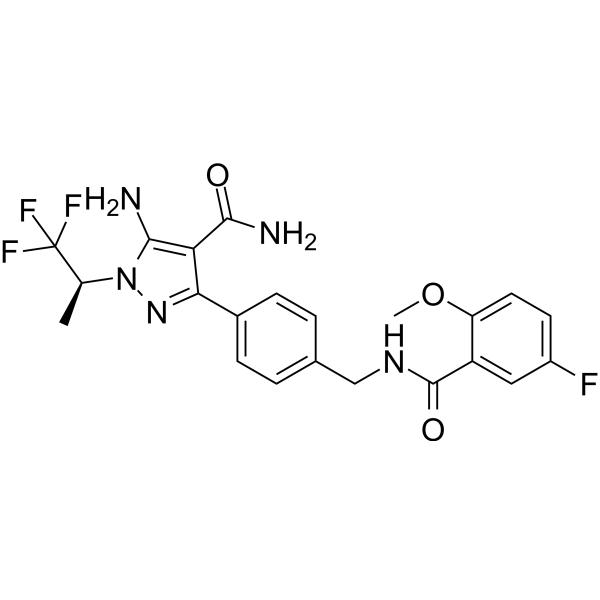
Cat. No.: HY-138683
CAS No.: 2244881-69-2
Purity:  99.75%
Target:  

STING

Research Areas:  

Inflammation/Immunology

STING-IN-3 is an inhibitor of stimulator of interferon genes (STING). STING-IN-3 efficiently inhibits both hsSTING and mmSTING through covalently target the predicted transmembrane cysteine residue 91 and thereby block the activation-induced palmitoylation of STING .
loading...
    loading...
3
3 Cited Publications
Cat. No.: HY-12680
CAS No.: 1575818-46-0
Purity:  98.09%
Target:  

Itk

Research Areas:  

Inflammation/Immunology

PRN694 is an irreversible, highly selective and potent covalent interleukin-2-inducible T-cell kinase (ITK) and resting lymphocyte kinase (RLK) dual inhibitor with IC50s of 0.3 nM and 1.4 nM, respectively. PRN694 exhibits extended target residence time on ITK and RLK, enabling durable attenuation of effector cells in vitro and in vivo .
loading...
    loading...
2
2 Cited Publications
Cat. No.: HY-134761
CAS No.: 1197824-15-9
Purity:  96.29%
Target:  

c-Myc

Research Areas:  

Cancer

EN4 is a covalent ligand that targets cysteine 171 (C171) of MYC. EN4 is selective for c-MYC over N-MYC and L-MYC. EN4 inhibits MYC transcriptional activity, downregulates MYC targets, and impairs tumorigenesis .
loading...
    loading...
2
2 Cited Publications
Cat. No.: HY-13943
CAS No.: 1202759-32-7
Purity:  99.92%
Target:  

Btk

Research Areas:  

Cancer

CNX-774 is an orally active, irreversible and selective BTK inhibitor, with an IC50 of < 1 nM. CNX-774 specifically targets Cysteine 481 of Btk for covalent modification .
loading...
    loading...
2
2 Cited Publications
Cat. No.: HY-102046
CAS No.: 2226521-65-7
Purity:  99.58%
Target:  

JAK

Research Areas:  

Inflammation/Immunology

FM-381, a chemical probe, is a potent covalent reversible inhibitor of JAK3 targeting the unique Cys909. FM-381 has an IC50 of 127 pM for JAK3, with 410, 2700 and 3600-fold selectivity over JAK1, JAK2 and TYK2, respectively .
loading...
    loading...
2
2 Cited Publications
Cat. No.: HY-136351
CAS No.: 2058075-45-7
Purity:  99.86%
Target:  

Autophagy

Research Areas:  

Cancer

THZ-P1-2 is a first-in-class and selective PI5P4K inhibitor, with an IC50 of 190 nM for PI5P4Kα. THZ-P1-2 covalently targets cysteines on a disordered loop in PI5P4Kα/β/γ. THZ-P1-2 causes autophagy disruption and upregulates TFEB signaling. THZ-P1-2 displays anticancer activity in leukemia cell lines .
loading...
    loading...
2
2 Cited Publications
Cat. No.: HY-137433
CAS No.: 1835667-63-4
Purity:  99.86%
Synonyms: D-0316
Research Areas:  

Cancer

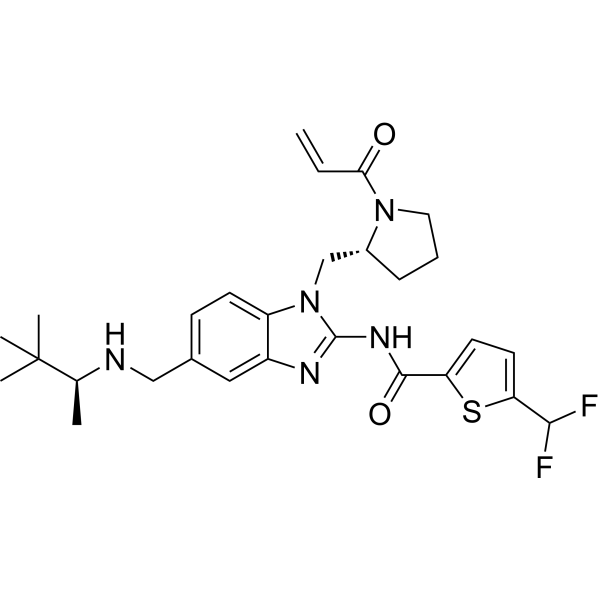
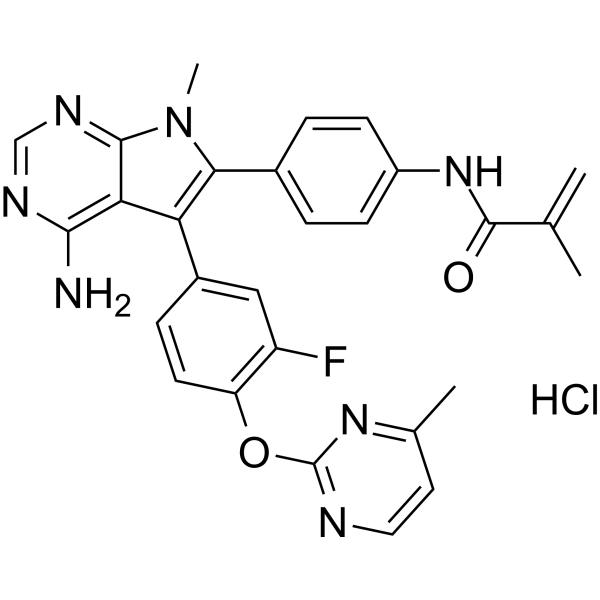
Befotertinib (D-0316) is an orally active EGFR inhibitor and ABCB1 inhibitor. Befotertinib selectively targets EGFR mutations including EGFR T790M, EGFR L858R and delE746-A750, forms covalent bonds with EGFR C797, inhibits oncogenic signaling pathways, and exerts antiproliferative effects. Befotertinib inhibits ABCB1-mediated drug efflux, activates the ATPase activity of ABCB1, acts as a chemosensitizer and apoptosis enhancer, and restores the sensitivity of multidrug-resistant cancer cells. Befotertinib can be used in research related to multidrug-resistant cancers and non-small cell lung cancer .
loading...
    loading...
2
2 Cited Publications
Cat. No.: HY-153918
CAS No.: 2955634-67-8
Purity:  99.50%
Target:  

Androgen Receptor

Research Areas:  

Cancer

(R)-SKBG-1 is a covalent inhibitor targeting the RNA binding protein NONO. (R)-SKBG-1 can reduce the expression of androgen receptor (AR) and its splice variants, inhibiting cancer cell proliferation. (R)-SKBG-1 inhibits androgen receptor expression with IC50 of 3.1 μM and 5.5 μM for AR-FL mRNA and AR-V7 mRNA, respectively. (R)-SKBG-1 interferes with the gene regulatory network of cancer cells and inhibits cancer cell growth by stabilizing the interaction between NONO and mRNA. (R)-SKBG-1 can be used in the study of cancers related to NONO dysfunction, such as prostate cancer .
loading...
    loading...
1
1 Cited Publications
Cat. No.: HY-147250
CAS No.: 2549174-42-5
Purity:  99.67%
Synonyms: RLY-4008
Target:  

FGFR

Research Areas:  

Cancer

Lirafugratinib (RLY-4008) is an orally active, irreversible and highly selective FGFR2 inhibitor with an IC50 of 3 nM. Lirafugratinib covalently binds to Cys491. Lirafugratinib targets FGFR2 primary alterations and resistance mutations and induces tumor regression while sparing other FGFRs .
loading...
    loading...
1
1 Cited Publications
Cat. No.: HY-48999A
CAS No.: 3033987-42-4
Target:  

EGFR

Research Areas:  

Cancer

FSK hydrochloride is fluorosulfonyloxybenzoyl-L-lysine, which features a long, flexible aryl fluorosulfate-containing side chain that can reach protein sites inaccessible to covalent conjugation. FSK hydrochloride modifies nanomolecules to target epidermal growth factor receptor (EGFR), resulting in irreversibly bound covalent interactions. Through genetically encoded chemical crosslinking, FSK hydrochloride captures unknown enzyme-substrate interactions in living cells, targets residues other than Cys, and mediates crosslinking at the binding periphery. FSK hydrochloride enables the construction of a bioreactive SuFEx system for generating covalent bonds in various proteins both in vitro and in vivo .
loading...
    loading...
1
1 Cited Publications
Cat. No.: HY-147250A
CAS No.: 2688040-45-9
Purity:  98.96%
Synonyms: RLY-4008 hydrochloride
Target:  

FGFR

Research Areas:  

Cancer

Lirafugratinib (RLY-4008) hydrochloride is an orally active, irreversible and highly selective FGFR2 inhibitor with an IC50 of 3 nM. Lirafugratinib hydrochloride covalently binds to Cys491. Lirafugratinib hydrochloride targets FGFR2 primary alterations and resistance mutations and induces tumor regression while sparing other FGFRs .
loading...
    loading...
1
1 Cited Publications
Cat. No.: HY-139603
CAS No.: 2416417-65-5
Purity:  99.44%
Target:  

YAP

Research Areas:  

Cancer

MYF-01-37 is a covalent TEAD inhibitor targeting Cys380. MYF-01-37 has a reversible inhibition on YAP/TEAD interaction .
loading...
    loading...
1
1 Cited Publications
Cat. No.: HY-P99542
CAS No.: 2254086-60-5
Synonyms: SAR-408701; HuMAb2-3-SPDB-DM4
Tusamitamab ravtansine (SAR-408701) is a targeted ADC against tumor cells expressing CEACAM5, composed of a humanized anti-CEACAM5 monoclonal antibody covalently linked to the potent cytotoxic agent, maytansinoid DM4 (HY-12454), via a cleavable linker. Tusamitamab ravtansine has an average drug-to-antibody ratio (DAR) of 3.8 .
loading...
    loading...

