Search Result
Results for "
thiol-groups
" in MedChemExpress (MCE) Product Catalog:
45
Biochemical Assay Reagents
| Cat. No. |
Product Name |
Target |
Research Areas |
Chemical Structure |
-
- HY-15915
-
-
-
- HY-138200
-
|
Cyanine5 maleimide
|
DNA Stain
Fluorescent Dye
|
Others
|
|
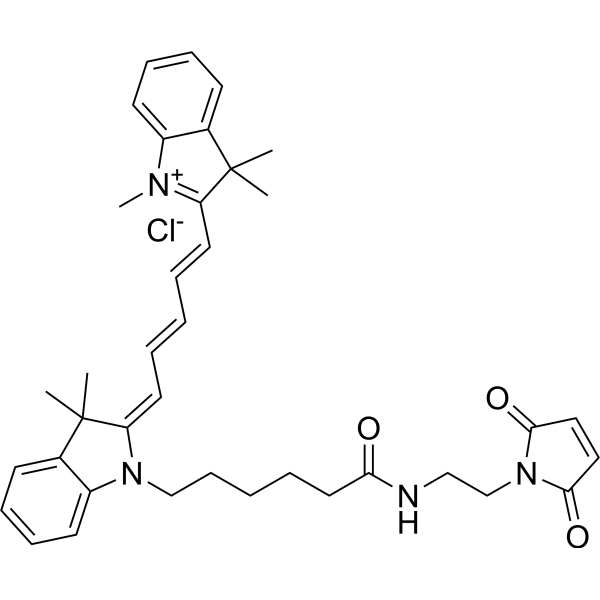
Cy5 maleimide (Cyanine5 maleimide) is a single-reactive dye containing a maleimide group and a CY5 fluorescent group, which can selectively couple with a thiol group. Cy5 maleimide can be used to label antibodies, peptides, or proteins (Ex/Em = 646/664 nm).
|
-
-
- HY-135233
-
|
SATA
|
Biochemical Assay Reagents
|
Others
|
|
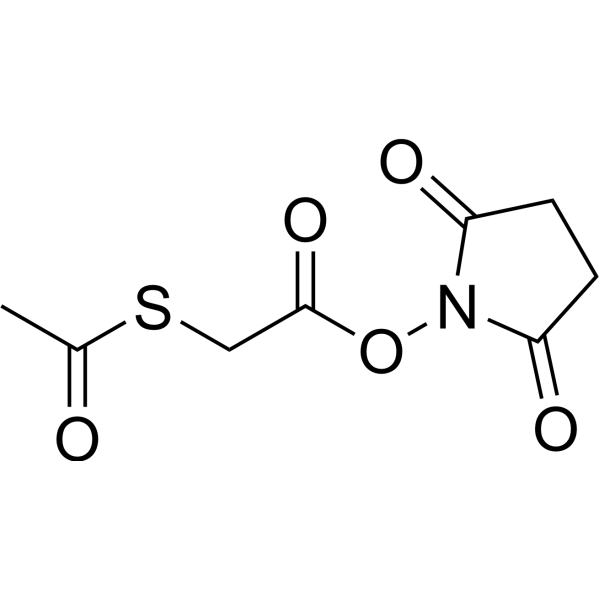
N-Succinimidyl S-acetylthioacetate (SATA) is a protein modifying agent. N-Succinimidyl S-acetylthioacetate adds sulfhydryl groups to proteins and other amine-containing molecules in a protected form. N-Succinimidyl-S-acetylthioacetate can thiolate antibodies, thereby promoting efficient attachment of antibodies to other molecules and exerting conjugation activity. N-Succinimidyl-S-acetylthioacetate can be used in immunoassays such as ELISA studies .
|
-
-
- HY-136386
-
|
|
Reactive Oxygen Species (ROS)
|
Others
|
|
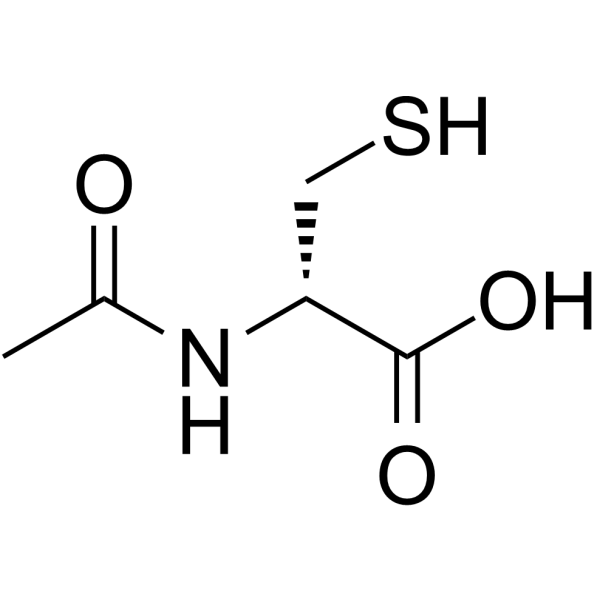
N-Acetyl-D-cysteine has antioxidant activities and scavenges ROS through the reaction with its thiol group, but cannot enter the glutathione metabolic pathway .
|
-
-
- HY-166648
-
|
|
Liposome
|
Cancer
|
|
DSPE-PEG2000-Maleimide sodium (purity>99%) is a functional lipid component and a thiol-reactive crosslinker. DSPE-PEG2000-Maleimide sodium (purity>99%) undergoes Michael addition with the thiol groups of thiolated or cyclic RGD peptides to form stable thioether bonds and DSPE-PEG2000-RGD. DSPE-PEG2000-Maleimide sodium (purity>99%) is applicable to research on drug delivery .
|
-
-
- HY-W068119A
-
|
2-Maleimidoethylamine hydrochloride
|
Biochemical Assay Reagents
|
Cancer
|
|
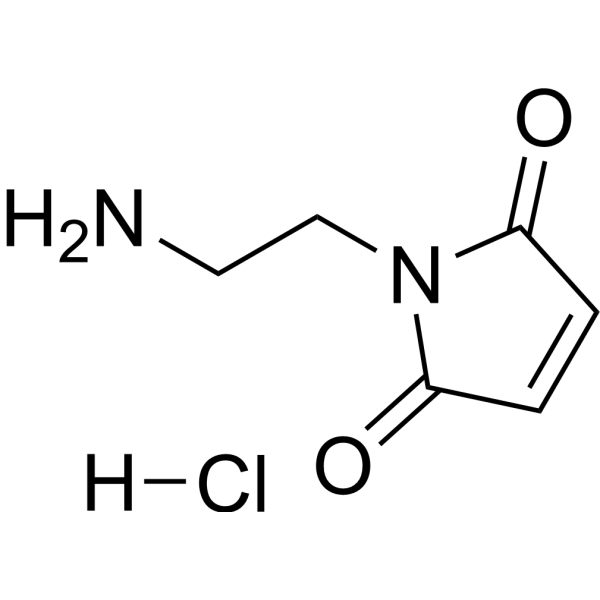
N-(2-Aminoethyl)maleimide (2-Maleimidoethylamine) hydrochloride is a selective covalent binding agent for thiol groups (RSGs), covalently binding to thiols via an irreversible thioether bond to prepare MMP-2-sensitive nanosystems. Under near-neutral conditions, the maleimide group in N-(2-Aminoethyl)maleimide hydrochloride binds to thiol groups via a nucleophilic addition reaction, and can be used to modify polymers or biological interfaces, enhancing mucosal adhesion and regulating the surface charge of biological interfaces. N-(2-Aminoethyl)maleimide hydrochloride can optimize the adhesion performance of drug delivery carriers and cell interactions with biological interfaces, and is applied in transmucosal drug delivery systems (such as drug carriers for oral and bladder sites) and biomaterial surface engineering research, providing support for tissue implantation, regeneration, and related drug delivery .
|
-
-
- HY-159057
-
|
|
Biochemical Assay Reagents
|
Others
|
|
Biotin-BMCC is a Maliemide (HY-W007324) conjugated biotin molecule that has a high affinity for free thiol groups of cysteines .
|
-
-
- HY-12638
-
|
DDM
|
Environmental Pollutants
Fungal
Parasite
Bacterial
|
Infection
|
|
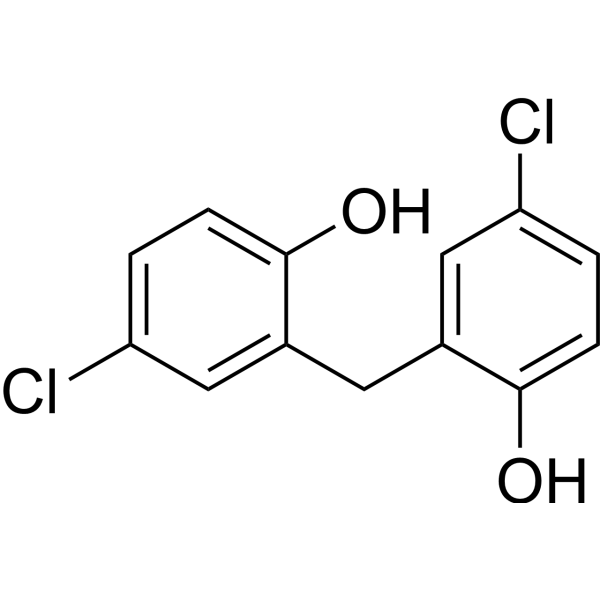
Dichlorophen is a chlorophenol antimicrobial agent that can destroy the integrity of microbial cell membranes and interfere with the activity of metabolic enzymes. Dichlorophen can covalently bind to the thiol groups of microbial proteins and has broad-spectrum antibacterial, antifungal and anthelmintic activity. Dichlorophen can be used as an antimicrobial agent in the study of drug-resistant bacterial infections .
|
-
-
- HY-W998680
-
|
5-FITC-Maleimide
|
Fluorescent Dye
|
Others
|
|
Fluorescein-maleimide (5-FITC-Maleimide) is a thiol-reactive fluorescent derivatization reagent and non-specific protein labeling reagent. Fluorescein-maleimide covalently binds to protein thiol groups for protein labeling. Fluorescein-maleimide covalently binds to protein amino and imidazole groups under neutral pH conditions. Fluorescein-maleimide is used for fluorescent labeling of proteins, nucleic acids or other molecules containing one or more thiol groups (Ex/Em = 494/519 nm) .
|
-
-
- HY-130080
-
|
Maytansinoid DM3
|
ADC Payload
Microtubule/Tubulin
|
Cancer
|
|
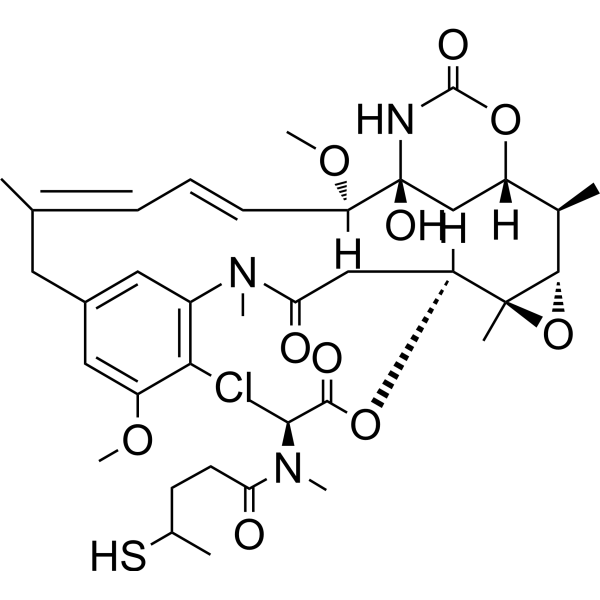
DM3 (Maytansinoid DM3), a Maytansine (HY-13674) analog bearing disulfide or thiol groups, and is a tubulin inhibitor. DM3 a cytotoxic moiety of antibody-drug conjugates (ADCs) .
|
-
-
- HY-137541
-
|
NTCB
|
Biochemical Assay Reagents
|
Others
|
|
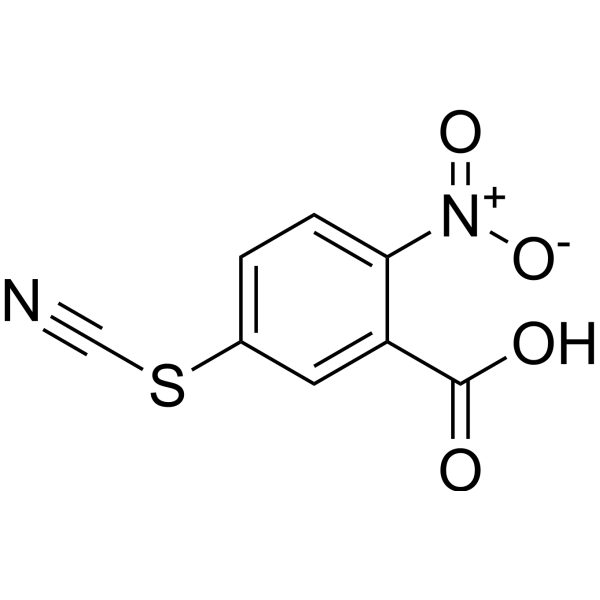
2-Nitro-5-thiocyanatobenzoic acid (NTCB) is a highly reactive reagent that transfers its cyano group rapidly to a nucleophilic thiolate. 2-Nitro-5-thiocyanatobenzoic acid has been proposed as a reagent for converting thiol groups in proteins into their S-cyano derivatives .
|
-
-
- HY-W441004
-
|
|
Liposome
|
Others
|
|
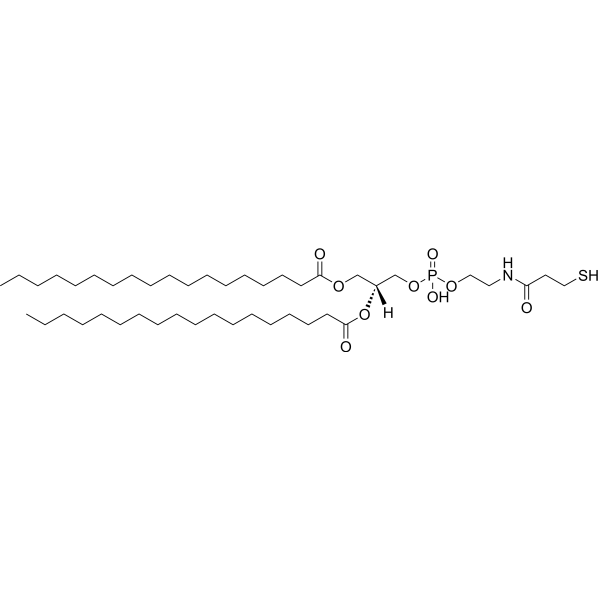
DSPE-Thiol is a phophalipid capped with thiol group. The thiol capped head can selectively react with maleimide. DSPE-Thiol can also be used for the preparation of phospholipid dimers .
|
-
-
- HY-166648A
-
|
|
Liposome
|
Others
|
|
DSPE-PEG-Maleimide ammonium (MW 2000) is a functional lipid component and a thiol-reactive crosslinker. DSPE-PEG-Maleimide ammonium (MW 2000) undergoes Michael addition with the thiol groups of thiolated or cyclic RGD peptides to form stable thioether bonds and DSPE-PEG (2000)-RGD. DSPE-PEG-Maleimide ammonium (MW 2000) is applicable to research on drug delivery .
|
-
-
- HY-D1364
-
|
|
Biochemical Assay Reagents
|
Others
|
|
Pyrene maleimide is a polyaromatic fluorescent hydrocarbon with a termininal maleimide group. The maleimide group will react with a thiol group to form a covalent bond.
|
-
-
- HY-D2498
-
|
|
Fluorescent Dye
|
Others
|
|
Cy7 maleimide is a fluorescent dye containing a Maleimide (HY-W007324) functional group. Maleimide can be used to label thiol groups on antibodies, proteins and peptides .
|
-
-
- HY-156377
-
|
|
Drug-Linker Conjugates for ADC
|
Cancer
|
|
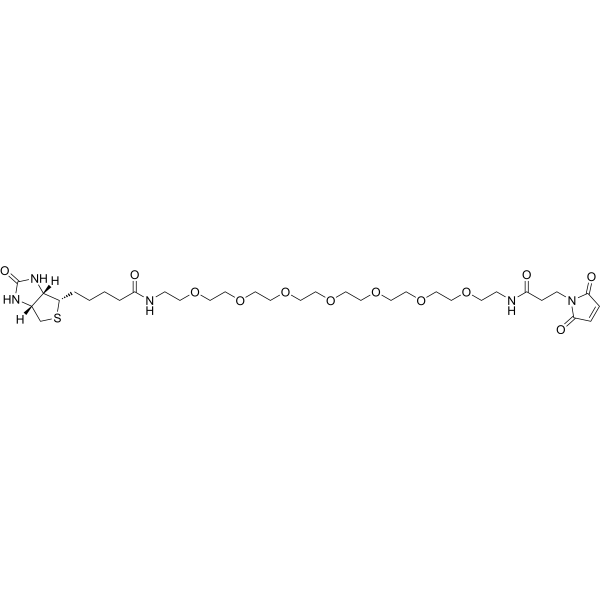
Biotin-PEG7-Maleimide is a biotinylation reagent that reacts with thiol groups (SH). Biotin-PEG7-Maleimide can be used as Drug-Linker Conjugates for ADCs .
|
-
-
- HY-W190932
-
|
|
Fluorescent Dye
|
Others
|
|
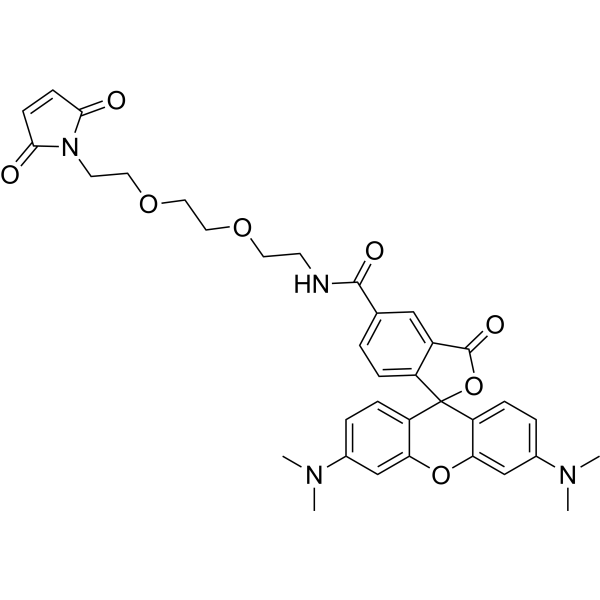
TAMRA-PEG2-Maleimide is a dye derivative of TAMRA (HY-135640) containing 4 PEG units. TAMRA-PEG2-Maleimide contains a maleimide group that can react with a thiol group to form a covalent bond.
|
-
-
- HY-W800805
-
|
|
Liposome
|
Cancer
|
|
DOPE-Mal is a synthetic analog of naturally-occurring PE containing 18:1 fatty acids at the sn-1 and sn-2 positions with a terminal maliemide group. The maleimide group will react with a thiol group to form a covalent bond. The hydrophilic PEG spacer increases solubility in aqueous media.
|
-
-
- HY-W1048849B
-
|
4-Arm PEG-thiol (MW 10000)
|
Biochemical Assay Reagents
|
Others
|
|
4-Arm PEG-SH (MW 10000) (4-Arm PEG-thiol (MW 10000)) is a multi-arm PEG derivative with thiol groups at each end of the four arms. The reactive free thiol, SH or sulfhydryl groups react selectively with maleimide and transition metal surfaces including gold and silver .
|
-
-
- HY-W872575
-
|
|
PROTAC Linkers
|
Cancer
|
|
TCO4-PEG3-Maleimide is a PROTAC linker and belongs to the PEG class. TCO4-PEG3-Maleimide contains TCO and Maleimide groups, which can undergo specific "click" reactions with tetrazine groups or thiol groups, or "mercapto-acrylamide" reactions.
|
-
-
- HY-W1048849A
-
|
4-Arm PEG5000-thiol
|
Biochemical Assay Reagents
|
Others
|
|
4-Arm PEG5000-SH (4-Arm PEG5000-thiol) is a multi-arm PEG derivative with thiol groups at each end of the four arms. The reactive free thiol, SH or sulfhydryl groups react selectively with maleimide and transition metal surfaces including gold and silver .
|
-
-
- HY-E70523
-
|
Valeryl-CoA; Valeryl-coenzyme A; Pentanoyl coenzyme A free acid
|
Endogenous Metabolite
|
Metabolic Disease
|
|
Pentanoyl coenzyme A (Valeryl-CoA) is a short-chain fatty acyl-CoA that functions as an intermediate in mitochondrial β-oxidation and related metabolic pathways. Pentanoyl coenzyme A results from the formal condensation of the thiol group of coenzyme A with the carboxy group of pentanoic acid. Pentanoyl coenzyme A's levels can reflect changes in lipid metabolism under different physiological and pathological conditions. Pentanoyl coenzyme A can be used for research on lipid metabolism .
|
-
-
- HY-N9279
-
|
Monocrotaline pyrrole; MCTP; 3,8-Didehydromonocrotaline
|
Endogenous Metabolite
|
Cardiovascular Disease
Cancer
|
|
Dehydromonocrotaline is a mitochondrial respiratory chain complex I NADH oxidase inhibitor, with a IC50 of 62.06 μM and a Ki of 8.1 μM in rats. Dehydromonocrotaline exerts non-competitive inhibitory effects by modifying cysteine thiol groups on complex I, and does not bind to the NADH-binding site. Dehydromonocrotaline dissipates mitochondrial membrane potential and reduces ATP levels. Dehydromonocrotaline can be used in studies related to hepatotoxicity, pulmonary hypertension and liver tumors .
|
-
-
- HY-W736950A
-
|
|
Amino Acid Derivatives
|
Others
|
|
H-L-Cys(MDNPE)-OH hydrochloride is a cysteine derivative with a short peptide sequence attached to the thiol group of cysteine.
|
-
-
- HY-W020780D
-
|
|
Biochemical Assay Reagents
|
Others
|
|
mPEG40000-Mal is a thiol-reactive PEG derivative that can be used to selectively modify proteins, peptides, or any other surface with available thiol groups .
|
-
-
- HY-W1048849C
-
|
4-Arm PEG20000-thiol
|
Biochemical Assay Reagents
|
Others
|
|
4-Arm PEG20000-SH (4-Arm PEG20000-thiol) is a multi-arm PEG derivative with thiol groups at each end of the four arms. The reactive free thiol, SH or sulfhydryl groups react selectively with maleimide and transition metal surfaces including gold and silver .
|
-
-
- HY-134428
-
|
|
Endogenous Metabolite
|
Metabolic Disease
|
|
Arachidonoyl coenzyme A lithium is an unsaturated fatty acyl coenzyme A, formed by the condensation of the thiol group of coenzyme A with the carboxyl group of arachidonic acid .
|
-
-
- HY-D2488
-
|
|
Fluorescent Dye
|
Others
|
|
Sulfo Cy5.5-maleimide is a fluorescent dye containing a Maleimide (HY-W007324) functional group. Maleimide can be used to label thiol groups on antibodies, proteins and peptides.
|
-
-
- HY-E70264
-
|
|
Endogenous Metabolite
|
Metabolic Disease
|
|
16:0 Coenzyme A triammonium is palmitoyl-CoA, which can serve as a reaction substrate to transfer the palmitoyl group to the free thiol group of the target protein through palmitoylation catalyzed by protein acyl transferases (PATs) .
|
-
-
- HY-W1048527
-
|
8-Arm PEG5000-thiol
|
Biochemical Assay Reagents
|
Others
|
|
8-Arm PEG5000-SH (8-Arm PEG5000-Thiol) is a multi-arm PEG derivative with thiol groups at each end of the eight arms. 8-Arm PEG5000-SH can be used for drug delivery .
|
-
-
- HY-156392
-
|
|
PROTAC Linkers
|
Cancer
|
|
TCO4-PEG7-Maleimide is a PROTAC linker and belongs to the PEG class. TCO4-PEG7-Maleimide contains TCO and Maleimide groups, which can undergo specific "click" reactions with tetrazine groups or thiol groups, or "mercapto-acrylamide" reactions.
|
-
-
- HY-W590555
-
|
|
Liposome
|
Cancer
|
|
Thiol-PEG2000-DMG is a phospholipid polyPEG which can be used to prepare liposomes or nanoparticles. The terminal thiol group reacts with maleimide, OPSS, vinylsulfone and transition metal surfaces including gold, silver, etc.
|
-
-
- HY-CE00380
-
|
(S)-3-Hydroxyoctanoyl-Coenzyme A
|
Biochemical Assay Reagents
|
Metabolic Disease
|
|
(S)-3-Hydroxyoctanoyl-CoA ((S)-3-Hydroxyoctanoyl-Coenzyme A) is a hydroxy fatty acyl-CoA that results from the formal condensation of the thiol group of coenzyme A with the carboxy group of (S)-3-hydroxyoctanoic acid.
|
-
-
- HY-CE00475
-
|
(R)-3-Hydroxytetradecanoyl-coenzyme A
|
Biochemical Assay Reagents
|
Metabolic Disease
|
|
(R)-3-Hydroxytetradecanoyl-CoA ((R)-3-Hydroxytetradecanoyl-coenzyme A) is a 3-hydroxy fatty acyl-CoA that results from the formal condensation of the thiol group of coenzyme A with the carboxy group of (R)-3-hydroxytetradecanoic acid.
|
-
-
- HY-157920
-
|
N-Biotinyl-N'-[2-(N-maleimido)ethyl]piperazine
|
Biochemical Assay Reagents
|
Others
|
|
Biotin-PE-maleimide (N-Biotinyl-N'-[2-(N-maleimido)ethyl]piperazine) is a bulky, membrane-impermeable, sulfhydryl-containing reagent with a relatively large molecular size. Biotin-PE-maleimide can be used for biotin labeling (such as thiol groups) and detection of proteins or other biomolecules .
|
-
-
- HY-W1048527A
-
|
8-Arm PEG20000-thiol
|
Biochemical Assay Reagents
|
Others
|
|
8-Arm PEG20000-SH (8-Arm PEG20000-Thiol) is a multi-arm PEG derivative with thiol groups at each end of the eight arms. 8-Arm PEG20000-SH can be used for drug delivery .
|
-
-
- HY-W1048527C
-
|
8-Arm PEG10000-thiol
|
Biochemical Assay Reagents
|
Others
|
|
8-Arm PEG10000-SH (8-Arm PEG10000-Thiol) is a multi-arm PEG derivative with thiol groups at each end of the eight arms. 8-Arm PEG10000-SH can be used for drug delivery .
|
-
-
- HY-W1048849D
-
|
4-Arm PEG40000-thiol
|
Biochemical Assay Reagents
|
Others
|
|
4-Arm PEG40000-SH (4-Arm PEG40000-thiol) is a multi-arm PEG derivative with thiol groups at each end of the four arms. The reactive free thiol, SH or sulfhydryl groups react selectively with maleimide and transition metal surfaces including gold and silver .
|
-
-
- HY-W591479
-
|
|
ADC Linker
|
Cancer
|
|
MC-Val-Ala-NHS ester is a cleavable ADC linker with a malimide group and an NHS ester group. The Val-Ala linkers can be cleaved by Cathepsin B. Maleimide group is reactive toward thiol groups. MC is reactive with thiol moieties. The NHS ester is able to react specifically and efficiently with amines (e.g. the side chain of lysine residues or aminosilane-coated surfaces) at neutral or slightly basic condition to form a covalent bond.
|
-
-
- HY-162159
-
-
-
- HY-D1526
-
|
|
Fluorescent Dye
|
Others
|
|
N-(4-Anilino-1-naphthyl)maleimide is a fluorescent probe that can be used to detect thiol groups in proteins. N-(4-Anilino-1-naphthyl)maleimide reacts with thiol groups and immediately produces a stable fluorescent compound with the λex=355 nm, λem=448 nm .
|
-
-
- HY-129994
-
|
S-Nitroso-coenzyme A; SNO-CoA; SNO-coenzyme A
|
Biochemical Assay Reagents
|
Metabolic Disease
|
|
S-Nitroso-CoA (S-Nitroso-coenzyme A) is a nitrosothio compound that is coenzyme A in which the thiol group is replaced by a nitrososulfanediyl group .
|
-
-
- HY-W395122
-
|
|
Biochemical Assay Reagents
|
Others
|
|
Mal-PEG1-PNP-carbonate is a amine-reactive compound. PNP is a good leaving group. The maleimide group will react with a thiol group to form a covalent bond, enabling the connection of biomolecule with a thiol.
|
-
-
- HY-W800682
-
|
|
Biochemical Assay Reagents
|
Others
|
|
Bis-Sulfone-PEG4-acid is a reagent with a sulfone and an acid. The sulfone group can be conjugated with thiol groups of proteins. The terminal acid reacts with primary amines with the help of activators (EDC or HATU) to from stable amide bonds.
|
-
-
- HY-CE00399
-
|
(S)-3-Hydroxylauroyl-coenzyme A
|
Biochemical Assay Reagents
|
Metabolic Disease
|
|
(S)-3-Hydroxylauroyl-CoA ((S)-3-Hydroxylauroyl-coenzyme A) is a hydroxy fatty acyl-CoA that results from the formal condensation of the thiol group of coenzyme A with the carboxy group of (S)-3-hydroxydodecanoic acid.
|
-
-
- HY-CE00476
-
|
(3R)-Hydroxyvaleryl-coenzyme A
|
Biochemical Assay Reagents
|
Metabolic Disease
|
|
(R)-3-Hydroxyvaleryl-CoA ((3R)-Hydroxyvaleryl-coenzyme A) is a 3-hydroxy fatty acyl-CoA resulting from the formal condensation of the thiol group of coenzyme A with the carboxy group of (R)-3-hydroxypentanoic acid.
|
-
-
- HY-D2103
-
|
|
Fluorescent Dye
|
Others
|
|
TAMRA-PEG3-Maleimide is a dye derivative of TAMRA (HY-135640) containing 3 PEG units. TAMRA-PEG3-Maleimide contains maleimide groups that react with thiol groups to form covalent bonds.
|
-
-
- HY-D2104
-
|
|
Fluorescent Dye
|
Others
|
|
TAMRA-PEG7-Maleimide is a dye derivative of TAMRA (HY-135640) containing 7 PEG units. TAMRA-PEG7-Maleimide contains a maleimide group that can react with a thiol group to form a covalent bond.
|
-
-
- HY-W591975
-
|
|
Biochemical Assay Reagents
|
Others
|
|
Alkyne maleimide is a bifunctional linker reagent with a terminal malimide group and a propargyl group. The maleimide group will react with a thiol group to form a covalent bond, enabling the connection of biomolecule with a thiol. The propargyl group can be linked to azide-containing biomolecules via Click Chemistry.
|
-
-
- HY-W800817
-
|
|
Biochemical Assay Reagents
|
Others
|
|
TCO-PEG4-maleimide is a click chemistry building block containing a TCO moiety and a maleimide group. The maleimide group will react with a thiol group to form a covalent bond. TCO moiety is very reactive with tetrazine (3rd generation click chemistry).
|
-
- HY-CE00299
-
|
(3S)-3-Hydroxyicosanoyl-coenzyme A
|
Biochemical Assay Reagents
|
Metabolic Disease
|
|
(3S)-3-Hydroxyicosanoyl-CoA ((3S)-3-Hydroxyicosanoyl-coenzyme A) is a 3-hydroxyicosanoyl-CoA that results from the formal condensation of the thiol group of coenzyme A with the carboxy group of (3S)-hydroxyicosanoic acid.
|
-
- HY-168938
-
|
|
Biochemical Assay Reagents
|
Others
|
|
Poly(ethylene glycol) methyl ether maleimide (Mn 2000) is a polyethylene glycol containing Maleimide (HY-W007324). Due to the Maleimide functional group, Poly(ethylene glycol) methyl ether maleimide (Mn 2000) can be used to conjugate biomolecules containing thiol groups.
|
-
- HY-136386R
-
|
|
Reference Standards
Reactive Oxygen Species (ROS)
|
Others
|
|
N-Acetyl-D-cysteine (Standard) is the analytical standard of N-Acetyl-D-cysteine. This product is intended for research and analytical applications. N-Acetyl-D-cysteine has antioxidant activities and scavenges ROS through the reaction with its thiol group, but cannot enter the glutathione metabolic pathway .
|
-
- HY-W800828
-
|
|
Biochemical Assay Reagents
|
Others
|
|
Iodoacetamido-PEG3-NHS ester is a PEG reagent containing an Iodoacetamide group and a Boc-protected amino group. The iodoacetamide group is an alkylating agent that can be used to bind covalently with the thiol group. The Boc group can be deprotected under mild acidic conditions to form the free amine.
|
-
- HY-D2150
-
|
|
Fluorescent Dye
|
Others
|
|
AF 430 maleimide is a derivative of the yellow fluorescent dye AF 430. AF430 has an excitation wavelength of 425 nm and an emission wavelength of 542 nm. AF 430 maleimide contains maleimide groups that react with thiol groups to form covalent bonds. To achieve specific coupling of dye labels and biomolecules .
|
-
- HY-CE00465
-
|
1,4-Dihydroxy-2-naphthoyl-coenzyme A
|
Biochemical Assay Reagents
|
Metabolic Disease
|
|
1,4-Dihydroxy-2-naphthoyl-CoA (1,4-Dihydroxy-2-naphthoyl-coenzyme A) is an acyl-CoA that results from the formal condensation of the thiol group of coenzyme A with the carboxy group of 1,4-dihydroxy-2-naphthoic acid.
|
-
- HY-E70254
-
|
|
Others
|
Others
|
|
Tricosanoyl-CoA triammonium is a very long-chain fatty acyl-CoA that results from the formal condensation of the thiol group of coenzyme A (HY-128851) with the carboxy group of tricosanoic acid (HY-W009081). Tricosanoyl-CoA is functionally related to a tricosanoic acid. Tricosanoyl-CoA is a conjugate acid of a tricosanoyl-CoA(4-).
|
-
- HY-CE00413
-
|
(3S)-3-Hydroxyoleoyl-coenzyme A
|
Biochemical Assay Reagents
|
Metabolic Disease
|
|
(3S)-3-Hydroxyoleoyl-CoA ((3S)-3-Hydroxyoleoyl-coenzyme A) is a 3-hydroxy fatty acyl-CoA that results from the formal condensation of the thiol group of coenzyme A with the carboxy group of (3S)-3-hydroxyoleic acid.
|
-
- HY-156391A
-
|
|
PROTAC Linkers
|
Cancer
|
|
TCO4-PEG2-Maleimide is a PROTAC linker and belongs to the PEG class. TCO4-PEG2-Maleimide contains TCO and Maleimide groups, which can undergo specific "click" reactions with tetrazine groups or thiol groups, or "mercapto-acrylamide" reactions.
|
-
- HY-156391
-
|
|
PROTAC Linkers
|
Cancer
|
|
TCO4-PEG2-Maleimide is a PROTAC linker and belongs to the PEG class. TCO4-PEG2-Maleimide contains TCO and Maleimide groups, which can undergo specific "click" reactions with tetrazine groups or thiol groups, or "mercapto-acrylamide" reactions.
|
-
- HY-W872575A
-
|
|
PROTAC Linkers
|
Cancer
|
|
TCO4-PEG3-Maleimide is a PROTAC linker and belongs to the PEG class. TCO4-PEG3-Maleimide contains TCO and Maleimide groups, which can undergo specific "click" reactions with tetrazine groups or thiol groups, or "mercapto-acrylamide" reactions.
|
-
- HY-W800654
-
|
|
Biochemical Assay Reagents
|
Others
|
|
Mal-PEG5-amine is a PEG linker containing a maleimide group and an amine group. The hydrophilic PEG spacer increases solubility in aqueous media. The amine group is reactive with carboxylic acids, activated NHS esters, carbonyls (ketone, aldehyde) etc. The maleimide group will react with a thiol group to form a covalent bond, enabling the connection of biomolecule with a thiol.
|
-
- HY-D2091
-
|
|
Fluorescent Dye
|
Others
|
|
PE-VF647 Maleimide is a double-dye dye that can undergo thiol reaction. It contains maleimide groups that can react with thiol groups to form covalent bonds. PE-VF647 Maleimide contains two dyes, PE and VF, with excitation wavelengths (Ex) of 495 nm and 566 nm, respectively. PE-VF594 Maleimide has an emission wavelength (Em) of 665 nm.
|
-
- HY-E70523A
-
|
Valeryl-CoA sodium; Valeryl-coenzyme A sodium
|
Endogenous Metabolite
|
Metabolic Disease
|
|
Pentanoyl coenzyme A (Valeryl-CoA) sodium is a short-chain fatty acyl-CoA that functions as an intermediate in mitochondrial β-oxidation and related metabolic pathways. Pentanoyl coenzyme A sodium results from the formal condensation of the thiol group of coenzyme A with the carboxy group of pentanoic acid. Pentanoyl coenzyme A sodium's levels can reflect changes in lipid metabolism under different physiological and pathological conditions. Pentanoyl coenzyme A sodium can be used for research on lipid metabolism .
|
-
- HY-W800670
-
|
|
Biochemical Assay Reagents
|
Others
|
|
Mal-amido-PEG5-alkyne is a PEG linker containing a maleimide group and an alkyne. The hydrophilic PEG spacer increases solubility in aqueous media. The alkyne group can react with azide-bearing compounds or biomolecules via copper catalyzed azide-alkyne Click Chemistry to yield a stable triazole linkage. The maleimide group will react with a thiol group to form a covalent bond, enabling the connection of biomolecule with a thiol.
|
-
- HY-D2093
-
|
|
Fluorescent Dye
|
Others
|
|
PE-VF750 Maleimide is a thiol-reactive double-dye dye that contains maleimide groups that can react with thiol groups to form covalent bonds. Ex/Em=495-566/777 nm. PE-VF750 Maleimide contains two dyes, PE and VF, with excitation wavelengths (Ex) of 495 nm and 566 nm, respectively. PE-VF594 Maleimide has an emission wavelength (Em) of 777 nm.
|
-
- HY-12638R
-
|
DDM (Standard)
|
Reference Standards
Bacterial
Fungal
Parasite
|
Infection
|
|
Dichlorophen (Standard) is the analytical standard of Dichlorophen (HY-12638). This product is intended for research and analytical applications. Dichlorophen is a chlorophenol antimicrobial agent that can destroy the integrity of microbial cell membranes and interfere with the activity of metabolic enzymes. Dichlorophen can covalently bind to the thiol groups of microbial proteins and has broad-spectrum antibacterial, antifungal and anthelmintic activity. Dichlorophen can be used as an antimicrobial agent in the study of drug-resistant bacterial infections .
|
-
- HY-D2092
-
|
|
Fluorescent Dye
|
Others
|
|
PE-VF680 Maleimide is a double-dye dye that can undergo thiol reaction. It contains maleimide groups that can react with thiol groups to form covalent bonds. Ex/Em=495-566/701 nm. PE-VF680 Maleimide contains two dyes, PE and VF, with excitation wavelengths (Ex) of 495 nm and 566 nm, respectively. PE-VF594 Maleimide has an emission wavelength (Em) of 701 nm.
|
-
- HY-182841D
-
|
DMPE-PEG10000-thiol
|
Biochemical Assay Reagents
|
Others
|
|
DMPE-PEG10000-SH (DMPE-PEG10000-Thiol) is a conjugate composed of DMPE, a PEG chain, and a terminal thiol group (-SH). The thiol group in DMPE-PEG10000-SH exhibits strong chemical reactivity and can participate in various bioconjugation reactions for targeted modification of liposomes/nanoparticles.
|
-
- HY-182882D
-
|
DPPE-PEG10000-thiol
|
Biochemical Assay Reagents
|
Others
|
|
DPPE-PEG10000-SH (DPPE-PEG10000-Thiol) is a conjugate composed of DPPE, a PEG chain, and a terminal thiol group (-SH). The thiol group in DPPE-PEG10000-SH exhibits strong chemical reactivity and can participate in various bioconjugation reactions for targeted modification of liposomes/nanoparticles.
|
-
- HY-183055D
-
|
DSG-PEG10000-thiol
|
Biochemical Assay Reagents
|
Others
|
|
DSE-PEG10000-SH (DSE-PEG10000-Thiol) is a conjugate composed of DSE, a PEG chain, and a terminal thiol group (-SH). The thiol group in DSE-PEG10000-SH exhibits strong chemical reactivity and can participate in various bioconjugation reactions for targeted modification of liposomes/nanoparticles.
|
-
- HY-182841C
-
|
DMPE-PEG5000-thiol
|
Biochemical Assay Reagents
|
Others
|
|
DMPE-PEG5000-SH (DMPE-PEG5000-Thiol) is a conjugate composed of DMPE, a PEG chain, and a terminal thiol group (-SH). The thiol group in DMPE-PEG5000-SH exhibits strong chemical reactivity and can participate in various bioconjugation reactions for targeted modification of liposomes/nanoparticles.
|
-
- HY-183055A
-
|
DSG-PEG2000-thiol
|
Biochemical Assay Reagents
|
Others
|
|
DSE-PEG2000-SH (DSE-PEG2000-Thiol) is a conjugate composed of DSE, a PEG chain, and a terminal thiol group (-SH). The thiol group in DSE-PEG2000-SH exhibits strong chemical reactivity and can participate in various bioconjugation reactions for targeted modification of liposomes/nanoparticles.
|
-
- HY-182882A
-
|
DPPE-PEG2000-thiol
|
Biochemical Assay Reagents
|
Others
|
|
DPPE-PEG2000-SH (DPPE-PEG2000-Thiol) is a conjugate composed of DPPE, a PEG chain, and a terminal thiol group (-SH). The thiol group in DPPE-PEG2000-SH exhibits strong chemical reactivity and can participate in various bioconjugation reactions for targeted modification of liposomes/nanoparticles.
|
-
- HY-183055B
-
|
DSG-PEG3400-thiol
|
Biochemical Assay Reagents
|
Others
|
|
DSE-PEG3400-SH (DSE-PEG3400-Thiol) is a conjugate composed of DSE, a PEG chain, and a terminal thiol group (-SH). The thiol group in DSE-PEG3400-SH exhibits strong chemical reactivity and can participate in various bioconjugation reactions for targeted modification of liposomes/nanoparticles.
|
-
- HY-182882C
-
|
DPPE-PEG5000-thiol
|
Biochemical Assay Reagents
|
Others
|
|
DPPE-PEG5000-SH (DPPE-PEG5000-Thiol) is a conjugate composed of DPPE, a PEG chain, and a terminal thiol group (-SH). The thiol group in DPPE-PEG5000-SH exhibits strong chemical reactivity and can participate in various bioconjugation reactions for targeted modification of liposomes/nanoparticles.
|
-
- HY-183055C
-
|
DSG-PEG5000-thiol
|
Biochemical Assay Reagents
|
Others
|
|
DSE-PEG5000-SH (DSE-PEG5000-Thiol) is a conjugate composed of DSE, a PEG chain, and a terminal thiol group (-SH). The thiol group in DSE-PEG5000-SH exhibits strong chemical reactivity and can participate in various bioconjugation reactions for targeted modification of liposomes/nanoparticles.
|
-
- HY-182882
-
|
DPPE-PEG1000-thiol
|
Biochemical Assay Reagents
|
Others
|
|
DPPE-PEG1000-SH (DPPE-PEG1000-Thiol) is a conjugate composed of DPPE, a PEG chain, and a terminal thiol group (-SH). The thiol group in DPPE-PEG1000-SH exhibits strong chemical reactivity and can participate in various bioconjugation reactions for targeted modification of liposomes/nanoparticles.
|
-
- HY-183055
-
|
DSG-PEG1000-thiol
|
Biochemical Assay Reagents
|
Others
|
|
DSE-PEG1000-SH (DSE-PEG1000-Thiol) is a conjugate composed of DSE, a PEG chain, and a terminal thiol group (-SH). The thiol group in DSE-PEG1000-SH exhibits strong chemical reactivity and can participate in various bioconjugation reactions for targeted modification of liposomes/nanoparticles.
|
-
- HY-182841
-
|
DMPE-PEG1000-thiol
|
Biochemical Assay Reagents
|
Others
|
|
DMPE-PEG1000-SH (DMPE-PEG1000-Thiol) is a conjugate composed of DMPE, a PEG chain, and a terminal thiol group (-SH). The thiol group in DMPE-PEG1000-SH exhibits strong chemical reactivity and can participate in various bioconjugation reactions for targeted modification of liposomes/nanoparticles.
|
-
- HY-182882B
-
|
DPPE-PEG3400-thiol
|
Biochemical Assay Reagents
|
Others
|
|
DPPE-PEG3400-SH (DPPE-PEG3400-Thiol) is a conjugate composed of DPPE, a PEG chain, and a terminal thiol group (-SH). The thiol group in DPPE-PEG3400-SH exhibits strong chemical reactivity and can participate in various bioconjugation reactions for targeted modification of liposomes/nanoparticles.
|
-
- HY-182841A
-
|
DMPE-PEG2000-thiol
|
Biochemical Assay Reagents
|
Others
|
|
DMPE-PEG2000-SH (DMPE-PEG2000-Thiol) is a conjugate composed of DMPE, a PEG chain, and a terminal thiol group (-SH). The thiol group in DMPE-PEG2000-SH exhibits strong chemical reactivity and can participate in various bioconjugation reactions for targeted modification of liposomes/nanoparticles.
|
-
- HY-W591469
-
|
|
Biochemical Assay Reagents
|
Others
|
|
mPEG1000-Mal is a thiol-reactive PEG derivative that can be used to selectively modify proteins, peptides, or any other surface with available thiol groups .
|
-
- HY-W800648
-
|
|
Biochemical Assay Reagents
|
Others
|
|
Mal-PEG2-Amide is a PEG linker with a maleimide group which can react with a thiol group to form a covalent bond, enabling the connection of biomolecule with a thiol.
|
-
- HY-W615173
-
|
|
Biochemical Assay Reagents
|
Others
|
|
NHS ester-C2-NHCO-C2-NHS is a heterobifunctional PEG linker, featuring a terminal NHS ester that can be used to label amine compounds and maleimide group for reactions with thiol groups.
|
-
- HY-CE00408
-
|
(S)-3-Hydroxyoctanedioyl-coenzyme A
|
Biochemical Assay Reagents
|
Metabolic Disease
|
|
(S)-3-Hydroxyoctanedioyl-CoA ((S)-3-Hydroxyoctanedioyl-coenzyme A) is an (S)-3-hydroxyacyl-CoA resulting from the formal condensation of the thiol group of coenzyme A with the 1-carboxy group of (S)-3-hydroxyoctanedioic acid.
|
-
- HY-D3052
-
|
|
Fluorescent Dye
|
Others
|
|
5(6)-carbonylated rhodamine 110 maleimide is a maleimide-based fluorescent reagent based on 5(6)-carbonylated rhodamine 110. Maleimide can be labeled by forming a stable thioester structure through an affinity addition reaction with a thiol group (-SH) (Ex/Em = 502/527 nm).
|
-
- HY-D3056
-
|
|
Fluorescent Dye
|
Others
|
|
5(6)-Rhodamine 6G maleimide is a maleimide-based fluorescent reagent based on Rhodamine 6G (HY-D0309). Maleimide can be labeled by forming a stable thioester structure through an affinity addition reaction with a thiol group (-SH) (Ex/Em = 526/547 nm).
|
-
- HY-W590586
-
|
|
Biochemical Assay Reagents
|
Others
|
|
Mal-PEG4-NH-Boc is a PEG linker containing a maleimide group and a Boc protected amine group. The hydrophilic PEG spacer increases solubility in aqueous media. The protected amine can be deprotected under acidic conditions. The maleimide group will react with a thiol group to form a covalent bond.
|
-
- HY-W800803
-
|
|
Biochemical Assay Reagents
|
Others
|
|
Mal-PEG5-NH-Boc is a PEG linker containing a maleimide group and a Boc protected amine group. The hydrophilic PEG spacer increases solubility in aqueous media. The protected amine can be deprotected under acidic conditions. The maleimide group will react with a thiol group to form a covalent bond.
|
-
- HY-W1048527B
-
|
8-Arm PEG40000-thiol
|
Biochemical Assay Reagents
|
Others
|
|
8-Arm PEG40000-SH (8-Arm PEG40000-Thiol) is a multi-arm PEG derivative with thiol groups at each end of the eight arms. 8-Arm PEG40000-SH can be used for drug delivery .
|
-
- HY-W190947
-
|
|
Biochemical Assay Reagents
|
Others
|
|
Iodoacetamido-PEG8-acid is a PEG reagent containing an Iodoacetamide group and a carboxlic acid moiety. The terminal carboxylic acid can react with primary amine groups in the presence of activators (e.g. EDC, or HATU) to form a stable amide bond. The iodoacetamide group is an alkylating agent that can be used to bind covalently with the thiol group.
|
-
- HY-W190922
-
|
|
Biochemical Assay Reagents
|
Others
|
|
Mal-PEG4-amine is a PEG linker containing a maleimide group and an amine group. The hydrophilic PEG spacer increases solubility in aqueous media. The amine group is reactive with carboxylic acids, activated NHS esters, carbonyls (ketone, aldehyde) etc. The maleimide group will react with a thiol group to form a covalent bond, enabling the connection of biomolecule with a thiol.
|
-
- HY-W591360
-
|
|
Biochemical Assay Reagents
|
Others
|
|
Iodoacetamido-PEG6-azide is an aqueous soluble PEG linker containing an azide and a terminal Iodoacetamido group. The azide group can react with alkyne, BCN, DBCO via Click Chemistry to yield a stable triazole linkage. The Iodoacetamido moiety is commonly used to bind covalently with the thiol group of cysteine so the protein cannot form disulfide bonds.
|
-
- HY-172505
-
|
|
Biochemical Assay Reagents
|
Others
|
|
Mal-PEG12-t-butyl ester is a PEG linker containing a maleimide group and a t-butyl ester group. The hydrophilic PEG spacer increases solubility in aqueous media. The t-butyl protected carboxyl group can be deprotected under acidic conditions. The maleimide group will react with a thiol group to form a covalent bond, enabling the connection of biomolecule with a thiol.
|
-
- HY-P2770B
-
|
|
Biochemical Assay Reagents
|
Metabolic Disease
|
|
β-Amylase, Barley (EC 3.2.1.2) hydrolyzes the α-(1,4) glucan bonds in polysaccharides composed of three or more α-(1,4)-linked D-glucan units. In the absence of a reducing agent, β-Amylase, Barley (EC 3.2.1.2) rapidly polymerizes via thiol groups.
|
-
- HY-D3200
-
|
|
Fluorescent Dye
Cuproptosis
|
Others
|
|
Dns-LLC is a cell-permeable Cu +-selective fluorescent probe that forms a 1:1 complex with Cu +. The thiol group of Dns-LLC plays a key binding role, while the sulfonamide and amide groups jointly contribute to the stabilization of the complex. Upon binding to Cu + in aqueous buffer solutions, Dns-LLC generates a turn-on fluorescence response, which can be used for the detection of Cu + in the Golgi apparatus .
|
-
- HY-W800722
-
|
|
Biochemical Assay Reagents
|
Others
|
|
N-(PEG1-acid)-L-Lysine-amido-Mal is a PEG based linker with terminal malimide and carboxylic acid groups. The hydrophilic PEG spacer increases solubility in aqueous media. The maleimide group will react with a thiol group to form a covalent bond, enabling the connection of biomolecule with a thiol. The terminal carboxylic acid can react with primary amine groups in the presence of activators (e.g. EDC, or HATU) to form a stable amide bond.
|
-
- HY-174949C
-
|
FMOC-NH-PEG5000-thiol
|
Biochemical Assay Reagents
|
Others
|
|
FMOC-NH-PEG5000-SH (FMOC-NH-PEG5000-Thiol) is a PEG derivative with an Fmoc protecting group and a thiol (-SH) reactive group. The thiol group is a highly reactive chemical group that can react specifically with a variety of molecules to form stable covalent bonds. Fmoc is a commonly used amino protecting group that protects the amino group from unwanted reactions until it is removed when a specific coupling reaction is required.
|
-
- HY-174949D
-
|
FMOC-NH-PEG10000-thiol
|
Biochemical Assay Reagents
|
Others
|
|
FMOC-NH-PEG10000-SH (FMOC-NH-PEG10000-Thiol) is a PEG derivative with an Fmoc protecting group and a thiol (-SH) reactive group. The thiol group is a highly reactive chemical group that can react specifically with a variety of molecules to form stable covalent bonds. Fmoc is a commonly used amino protecting group that protects the amino group from unwanted reactions until it is removed when a specific coupling reaction is required.
|
-
- HY-D2002
-
|
|
Fluorescent Dye
|
Neurological Disease
|
|
ATTO 488 maleimide is a thiol-reactive fluorescent labeling reagent that forms a covalent bond via its maleimide group with the thiol group of the C-terminal cysteine residue of α-synGC. ATTO 488 maleimide enables α-syn fiber imaging via super-resolution stimulated emission depletion (STED) fluorescence microscopy. ATTO 488 maleimide is applicable to research related to Parkinson's disease (Ex/Em = 488/592nm) .
|
-
- HY-174949
-
|
FMOC-NH-PEG1000-thiol
|
Biochemical Assay Reagents
|
Others
|
|
FMOC-NH-PEG1000-SH (FMOC-NH-PEG1000-Thiol) is a PEG derivative with an Fmoc protecting group and a thiol (-SH) reactive group. The thiol group is a highly reactive chemical group that can react specifically with a variety of molecules to form stable covalent bonds. Fmoc is a commonly used amino protecting group that protects the amino group from unwanted reactions until it is removed when a specific coupling reaction is required.
|
-
- HY-174949B
-
|
FMOC-NH-PEG3400-thiol
|
Biochemical Assay Reagents
|
Others
|
|
FMOC-NH-PEG3400-SH (FMOC-NH-PEG3400-Thiol) is a PEG derivative with an Fmoc protecting group and a thiol (-SH) reactive group. The thiol group is a highly reactive chemical group that can react specifically with a variety of molecules to form stable covalent bonds. Fmoc is a commonly used amino protecting group that protects the amino group from unwanted reactions until it is removed when a specific coupling reaction is required.
|
-
- HY-118112
-
|
|
Biochemical Assay Reagents
|
Others
|
|
4-N-Maleimidobenzoicacid-NHS is a PEG linker that finds utility in bioconjugation endeavors and protein labeling ventures. Specifically designed for selective reaction with thiol groups, the maleimide group establishes covalent linkages, thereby facilitating the coupling of proteins, peptides, or diverse molecules to thiol-bearing biomolecules. The NHS ester is able to react specifically and efficiently with primary amines (e.g. the side chain of lysine residues or aminosilane-coated surfaces) at neutral or slightly basic conditions to form a covalent bond.
|
-
- HY-174949A
-
|
FMOC-NH-PEG2000-thiol
|
Biochemical Assay Reagents
|
Others
|
|
FMOC-NH-PEG2000-SH (FMOC-NH-PEG2000-Thiol) is a PEG derivative with an Fmoc protecting group and a thiol (-SH) reactive group. The thiol group is a highly reactive chemical group that can react specifically with a variety of molecules to form stable covalent bonds. Fmoc is a commonly used amino protecting group that protects the amino group from unwanted reactions until it is removed when a specific coupling reaction is required.
|
-
- HY-P11781A
-
|
|
Drug Derivative
|
Cancer
|
|
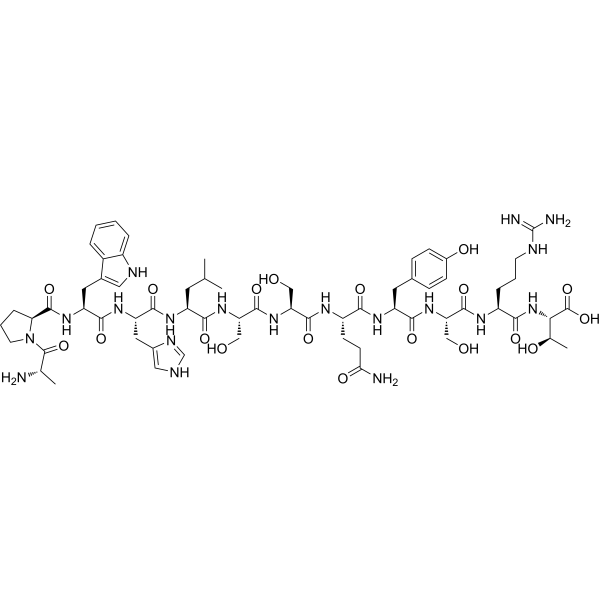
Cys-HW12 is a random peptide containing an N-terminal cysteine. Cys-HW12 can be coupled via the thiol group of Cys. Cys-HW12 can serve as a control for GE11 (HY-P10128)-conjugated mixed micelles targeting EGFR, and also functions as a cytotoxic agent, cellular uptake inhibitor, and tumor growth inhibitor. Cys-HW12 is applicable to pancreatic cancer-related research .
|
-
- HY-183022
-
|
|
Biochemical Assay Reagents
|
Others
|
|
1-(3-Azidopropyl)-1H-pyrrole-2,5-dione is a maleimide derivative with a 3-azidopropyl substituent, used to introduce an azide functional group to bovine serum albumin (BSA). 1-(3-Azidopropyl)-1H-pyrrole-2,5-dione reacts with the free, solvent-accessible thiol group of BSA to produce azide-functionalized BSA, which is used in click chemistry to form a TLL-BSA hetero-dimer .
|
-
- HY-W060216
-
|
|
Biochemical Assay Reagents
|
Others
|
|
2-Acetamido-3-methyl-3-sulfanylbutanoic acid is an organic compound that belongs to the class of amino acids. It is a derivative of methionine, an essential amino acid commonly found in various foods. 2-Acetamido-3-methyl-3-sulfanylbutanoic acid contains a thiol group and an acetamido group at specific positions in the amino acid chain. It has various applications in the food industry, especially as a flavor enhancer and umami seasoning. Additionally, it has potential research utility in liver disease and other metabolic disorders.
|
-
- HY-N19808
-
|
|
Drug Derivative
|
Cancer
|
|
2-Deacetyl-4-tigloylchamissionolide is a heliangolide-type sesquiterpene lactone, a derivative of Chamissonolide (HY-N19727), and a cytotoxic agent. 2-Deacetyl-4-tigloylchamissionolide exerts cytotoxicity via alkylating biological nucleophiles, targeting free thiol groups in proteins to interfere with their functions. 2-Deacetyl-4-tigloylchamissionolide exhibits different chromatographic behaviors in TLC and HPLC. 2-Deacetyl-4-tigloylchamissionolide can be used for the research of Ehrlich ascites carcinoma .
|
-
- HY-W394551
-
|
|
Biochemical Assay Reagents
|
Others
|
|
Methyl 3,4-dibromo-2,5-dioxo-2,5-dihydro-1H-pyrrole-1-carboxylate is a small pyrrolidone molecule which features two bromine atoms and a methyl ester. The unsaturated dibromo motif is a covalent ligand for thiol groups, and may be used to label cysteine residues in proteins. The presence of two leaving groups on this molecule allows this linker to bind two thiols at a time. The methyl ester can be saponified to link this molecule to amines to form larger structures.
|
-
- HY-181668
-
|
|
ULK
|
Cancer
|
|
ULK1-IN-4 (compound 12i) is a ULK1 inhibitor with an IC50 of 4.7 μM against human ULK1, and it exhibits selectivity for Aurora A/Aurora B kinases. ULK1-IN-4 forms a covalent bond with the thiol group of the Cys182 residue of ULK1, thereby inhibiting the kinase activity of ULK1. ULK1-IN-4 inhibits the growth of colorectal cancer cells and exerts tumor-suppressive activity in a mouse model of colorectal cancer .
|
-
- HY-NP008
-
|
|
Lipocalin Family
|
Inflammation/Immunology
|
|
β-Lactoglobulin, a major whey protein, is a small globular protein from the lipocalin family. β-Lactoglobulin is an important source of the essential and branched-chain amino acids (leucine, isoleucine, and valine). β-Lactoglobulin shows antioxidant properties, because it contains two disulfide bonds and one free thiol group. β-Lactoglobulin is a ligand transport agent. β-Lactoglobulin is one of the major allergens in milk and can be utilized in the research for developing safe hypoallergenic dairy products .
|
-
- HY-106981
-
|
OR 1384
|
NADPH Oxidase
Reactive Oxygen Species (ROS)
Apoptosis
NF-κB
NO Synthase
STAT
|
Inflammation/Immunology
|
|
Orazipone (OR 1384) is a small molecule immunomodulator with strong anti-inflammatory properties. Orazipone exerts its immunomodulatory effect by forming reversible thiol complexes, which bind to intracellular signaling proteins and the thiol groups of glutathione. Orazipone exhibits potent anti-eosinophilic activity by inducing apoptosis. Orazipone inhibits activation of inflammatory transcription factors NF-kB and STAT 1 and decreases inducible iNOS expression and NO production in response to inflammatory stimuli. Orazipone reduces NADPH oxidase activity and thereby decreases ROS production. Orazipone has a protective effect in intestinal radiation injury .
|
-
- HY-P11781B
-
|
|
Drug Derivative
|
Cancer
|
|
Cys-HW12 TFA is a random peptide containing an N-terminal cysteine and derivative of HW12 (HY-P11781). Cys-HW12 TFA can be coupled via the thiol group of Cys. Cys-HW12 TFA can serve as a control for GE11 (HY-P10128)-conjugated mixed micelles targeting EGFR, and also functions as a cytotoxic agent, cellular uptake inhibitor, and tumor growth inhibitor. Cys-HW12 TFA is applicable to pancreatic cancer-related research .
|
-
- HY-W1048549J
-
|
HOOC-PEG40000-thiol
|
Biochemical Assay Reagents
|
Others
|
|
HOOC-PEG40000-SH (HOOC-PEG40000-Thiol) is a reactive thiol PEG derivative with a terminal carboxyl group. The carboxyl group can react with amine or hydroxyl groups to form a stable amide bond or an unstable ester bond. The reaction of the carboxyl group allows the amine or hydroxyl group to be converted into a free thiol with a linear PEG linkage. The generated thiol group can be used to modify the surface of gold nanoparticles or participate in other PEGylation reactions. The PEG linkage between the thiol and carboxyl groups has good water solubility, flexible linker distance and higher stability .
|
-
- HY-P11308
-
|
|
EGFR
|
Cancer
|
|
Cys-GE11 is an N-terminal modified GE11 (HY-P10128) with cysteine (Cys) added. Cys-GE11 can be coupled through the thiol group of Cys. Cys-GE11 can be linked to PEG-P (TMC-DTC) through the N-terminus of cysteine to form a targeted polymer. Cys-GE11 can target cells with high EGFR expression (such as SMMC-7721 cells). Cys-GE11 can significantly enhance drug enrichment at the tumor site and exhibit low toxicity .
|
-
- HY-W1048549H
-
|
HOOC-PEG1000-thiol
|
Biochemical Assay Reagents
|
Others
|
|
HOOC-PEG1000-SH (HOOC-PEG1000-Thiol) is a reactive thiol PEG derivative with a terminal carboxyl group. The carboxyl group can react with amine or hydroxyl groups to form a stable amide bond or an unstable ester bond. The reaction of the carboxyl group allows the amine or hydroxyl group to be converted into a free thiol with a linear PEG linkage. The generated thiol group can be used to modify the surface of gold nanoparticles or participate in other PEGylation reactions. The PEG linkage between the thiol and carboxyl groups has good water solubility, flexible linker distance and higher stability .
|
-
- HY-W1048555A
-
|
|
Biochemical Assay Reagents
|
Others
|
|
Mal-PEG2000-SCM is a heterobifunctional PEG crosslinker bearing maleimide and succinimidyl carboxymethyl ester functional groups. MMal-PEG2000-SCM conjugates the F3 peptide to nanoparticles: the SCM group reacts with amino groups on the nanoparticle surface to form amide groups, while the MAL group reacts with thiol groups of the F3 peptide to form carbon-sulfur bonds. Mal-PEG-SCM enables unidirectional addition of linkers, ensuring that appropriate functional groups are available for RGD incorporation. Mal-PEG2000-SCM can be used in the development of nanoparticles targeting specific tumor cells .
|
-
- HY-W440896
-
|
|
Liposome
|
Others
|
|
DSPE-PEG2000-SH is an amphiphilic thiol-functionalized DSPE-PEG molecule. DSPE-PEG2000-SH inserts into extracellular vesicle (EV) bilayer membranes via hydrophobic interactions, displaying surface thiol groups to form EV-SH crosslinkers.DSPE-PEG2000-SH enables crosslinking of EV-SH with 8-arm PEG-norbornene via thiol-ene photochemistry to construct hydrogels, with hydrogel mechanical properties tunable via PEG segment molecular weight variation.DSPE-PEG2000-SH can be used to encapsulate agents for drug delivery system, such as mRNA vaccine .
|
-
- HY-W014316
-
|
|
Bacterial
Fungal
|
Infection
|
|
5-Bromo-5-nitro-1,3-dioxane is a broad-spectrum antimicrobial agent active against Gram-positive bacteria, Gram-negative bacteria and fungi. 5-Bromo-5-nitro-1,3-dioxane oxidizes free thiol groups to their corresponding disulfides. 5-Bromo-5-nitro-1,3-dioxane induces intracellular substance leakage in Escherichia coli and Staphylococcus aureus. 5-Bromo-5-nitro-1,3-dioxane modulates the oxygen consumption of Escherichia coli and Staphylococcus aureus .
|
-
- HY-W591476
-
|
mPEG1000-SH
|
Biochemical Assay Reagents
|
Others
|
|
m-PEG1000-thiol is a surface modifier that can modify DNA thiolation and is used in the synthesis of gold nanorods (AuNR). m-PEG1000-thiol can load thiolated DNA onto AuNR, form a covalent bond with the surface of gold nanoparticles through the thiol group, and stabilize the nanoparticles by the steric hindrance effect of the polyethylene glycol chain, preventing aggregation and enhancing its biocompatibility. m-PEG1000-thiol can also provide a platform for the subsequent coupling of biomolecules (such as DNA, antibodies) by replacing surfactants (such as CTAB) on the surface of nanoparticles, thereby exerting its activity in promoting the functionalization of nanomaterials [2].
|
-
- HY-CE00300
-
|
(9Z,12Z,15Z,18Z,21Z)-3-Oxotetracosapentaenoyl-coenzyme A
|
Biochemical Assay Reagents
|
Metabolic Disease
|
|
(9Z,12Z,15Z,18Z,21Z)-3-Oxotetracosapentaenoyl-CoA ((9Z,12Z,15Z,18Z,21Z)-3-Oxotetracosapentaenoyl-coenzyme A) is an unsaturated fatty acyl-CoA that results from the formal condensation of the thiol group of coenzyme A with the carboxy group of (9Z,12Z,15Z,18Z,21Z)-3-oxotetracosapentaenoic acid.
|
-
- HY-D2763
-
|
|
Fluorescent Dye
|
Others
|
|
BP Fluor 532 maleimide is a photostable, bright yellow-fluorescent dye with pH insensitive emission from pH 4 to pH 10. The excitation of BP Fluor 532 is ideally suited for the frequency-doubled Nd:YAG laser line. BP Fluor 532 dye can be conjugated to a variety of antibodies, peptides, proteins, tracers, and amplification substrates, and is often used for the generation of stable signals in imaging and flow cytometry.
Maleimide is the most popular sulfhydryl-reactive group for conjugating the dye to a thiol group on a protein, oligonucleotide thiophosphate, or low molecular weight ligand. The maleimide group specifically and efficiently reacts with reduced thiols (sulfhydryl groups, –SH) at pH 6.5 to 7.5 to form a stable thioether bond. The resulting conjugates exhibit brighter fluorescence and greater photostability than the conjugates of many other spectrally similar fluorophores.
|
-
- HY-W012166
-
|
NHS-Bromoacetate
|
Biochemical Assay Reagents
|
Infection
|
|
N-Succinimidyl bromoacetate (NHS-Bromoacetate) is a heterobifunctional crosslinking reagent, mainly used to modify the ɛ-amino group of lysine side chains. By covalently linking its bromoacetyl moiety to the ɛ-amino group of lysine in peptidomimetics, N-Succinimidyl bromoacetate enables their conjugation with thiol-modified nanoparticles via thioether bonds. N-Succinimidyl bromoacetate also performs bromoacetylation modification on carrier proteins, which then forms stable thioether bonds with the thiol groups of cysteine in peptides, thus efficiently preparing soluble peptide-protein conjugates with high substitution ratios. N-Succinimidyl bromoacetate can be used to prepare activated Sepharose derivatives for affinity chromatography, protein affinity labeling reagents, and peptide-protein immunogen conjugates with non-immunogenic linkages. N-Succinimidyl bromoacetate is applicable to studies related to HIV-1 infection and glioblastoma multiforme .
|
-
- HY-W014316R
-
|
|
Reference Standards
Bacterial
Fungal
|
Infection
|
|
5-Bromo-5-nitro-1,3-dioxane (Standard) is the analytical standard of 5-Bromo-5-nitro-1,3-dioxane (HY-W014316). This product is intended for research and analytical applications. 5-Bromo-5-nitro-1,3-dioxane is a broad-spectrum antimicrobial agent active against Gram-positive bacteria, Gram-negative bacteria and fungi. 5-Bromo-5-nitro-1,3-dioxane oxidizes free thiol groups to their corresponding disulfides. 5-Bromo-5-nitro-1,3-dioxane induces intracellular substance leakage in Escherichia coli and Staphylococcus aureus. 5-Bromo-5-nitro-1,3-dioxane modulates the oxygen consumption of Escherichia coli and Staphylococcus aureus .
|
-
| Cat. No. |
Product Name |
Type |
-
- HY-138200
-
|
Cyanine5 maleimide
|
Fluorescent Dyes
|
|
Cy5 maleimide (Cyanine5 maleimide) is a single-reactive dye containing a maleimide group and a CY5 fluorescent group, which can selectively couple with a thiol group. Cy5 maleimide can be used to label antibodies, peptides, or proteins (Ex/Em = 646/664 nm).
|
-
- HY-W998680
-
|
5-FITC-Maleimide
|
Fluorescent Dyes
|
|
Fluorescein-maleimide (5-FITC-Maleimide) is a thiol-reactive fluorescent derivatization reagent and non-specific protein labeling reagent. Fluorescein-maleimide covalently binds to protein thiol groups for protein labeling. Fluorescein-maleimide covalently binds to protein amino and imidazole groups under neutral pH conditions. Fluorescein-maleimide is used for fluorescent labeling of proteins, nucleic acids or other molecules containing one or more thiol groups (Ex/Em = 494/519 nm) .
|
-
- HY-D2498
-
|
|
Fluorescent Dyes
|
|
Cy7 maleimide is a fluorescent dye containing a Maleimide (HY-W007324) functional group. Maleimide can be used to label thiol groups on antibodies, proteins and peptides .
|
-
- HY-W190932
-
|
|
Fluorescent Dyes
|
|
TAMRA-PEG2-Maleimide is a dye derivative of TAMRA (HY-135640) containing 4 PEG units. TAMRA-PEG2-Maleimide contains a maleimide group that can react with a thiol group to form a covalent bond.
|
-
- HY-D2002
-
|
|
Fluorescent Dyes
|
|
ATTO 488 maleimide is a thiol-reactive fluorescent labeling reagent that forms a covalent bond via its maleimide group with the thiol group of the C-terminal cysteine residue of α-synGC. ATTO 488 maleimide enables α-syn fiber imaging via super-resolution stimulated emission depletion (STED) fluorescence microscopy. ATTO 488 maleimide is applicable to research related to Parkinson's disease (Ex/Em = 488/592nm) .
|
-
- HY-D2488
-
|
|
Fluorescent Dyes
|
|
Sulfo Cy5.5-maleimide is a fluorescent dye containing a Maleimide (HY-W007324) functional group. Maleimide can be used to label thiol groups on antibodies, proteins and peptides.
|
-
- HY-D1526
-
|
|
Fluorescent Dyes
|
|
N-(4-Anilino-1-naphthyl)maleimide is a fluorescent probe that can be used to detect thiol groups in proteins. N-(4-Anilino-1-naphthyl)maleimide reacts with thiol groups and immediately produces a stable fluorescent compound with the λex=355 nm, λem=448 nm .
|
-
- HY-D2103
-
|
|
Fluorescent Dyes
|
|
TAMRA-PEG3-Maleimide is a dye derivative of TAMRA (HY-135640) containing 3 PEG units. TAMRA-PEG3-Maleimide contains maleimide groups that react with thiol groups to form covalent bonds.
|
-
- HY-D2104
-
|
|
Fluorescent Dyes
|
|
TAMRA-PEG7-Maleimide is a dye derivative of TAMRA (HY-135640) containing 7 PEG units. TAMRA-PEG7-Maleimide contains a maleimide group that can react with a thiol group to form a covalent bond.
|
-
- HY-D2150
-
|
|
Fluorescent Dyes
|
|
AF 430 maleimide is a derivative of the yellow fluorescent dye AF 430. AF430 has an excitation wavelength of 425 nm and an emission wavelength of 542 nm. AF 430 maleimide contains maleimide groups that react with thiol groups to form covalent bonds. To achieve specific coupling of dye labels and biomolecules .
|
-
- HY-D2091
-
|
|
Fluorescent Dyes
|
|
PE-VF647 Maleimide is a double-dye dye that can undergo thiol reaction. It contains maleimide groups that can react with thiol groups to form covalent bonds. PE-VF647 Maleimide contains two dyes, PE and VF, with excitation wavelengths (Ex) of 495 nm and 566 nm, respectively. PE-VF594 Maleimide has an emission wavelength (Em) of 665 nm.
|
-
- HY-D2093
-
|
|
Fluorescent Dyes
|
|
PE-VF750 Maleimide is a thiol-reactive double-dye dye that contains maleimide groups that can react with thiol groups to form covalent bonds. Ex/Em=495-566/777 nm. PE-VF750 Maleimide contains two dyes, PE and VF, with excitation wavelengths (Ex) of 495 nm and 566 nm, respectively. PE-VF594 Maleimide has an emission wavelength (Em) of 777 nm.
|
-
- HY-D2092
-
|
|
Fluorescent Dyes
|
|
PE-VF680 Maleimide is a double-dye dye that can undergo thiol reaction. It contains maleimide groups that can react with thiol groups to form covalent bonds. Ex/Em=495-566/701 nm. PE-VF680 Maleimide contains two dyes, PE and VF, with excitation wavelengths (Ex) of 495 nm and 566 nm, respectively. PE-VF594 Maleimide has an emission wavelength (Em) of 701 nm.
|
-
- HY-D3052
-
|
|
Fluorescent Dyes
|
|
5(6)-carbonylated rhodamine 110 maleimide is a maleimide-based fluorescent reagent based on 5(6)-carbonylated rhodamine 110. Maleimide can be labeled by forming a stable thioester structure through an affinity addition reaction with a thiol group (-SH) (Ex/Em = 502/527 nm).
|
-
- HY-D3056
-
|
|
Fluorescent Dyes
|
|
5(6)-Rhodamine 6G maleimide is a maleimide-based fluorescent reagent based on Rhodamine 6G (HY-D0309). Maleimide can be labeled by forming a stable thioester structure through an affinity addition reaction with a thiol group (-SH) (Ex/Em = 526/547 nm).
|
-
- HY-D3200
-
|
|
Fluorescent Dyes
|
|
Dns-LLC is a cell-permeable Cu +-selective fluorescent probe that forms a 1:1 complex with Cu +. The thiol group of Dns-LLC plays a key binding role, while the sulfonamide and amide groups jointly contribute to the stabilization of the complex. Upon binding to Cu + in aqueous buffer solutions, Dns-LLC generates a turn-on fluorescence response, which can be used for the detection of Cu + in the Golgi apparatus .
|
-
- HY-D2763
-
|
|
Fluorescent Dyes
|
|
BP Fluor 532 maleimide is a photostable, bright yellow-fluorescent dye with pH insensitive emission from pH 4 to pH 10. The excitation of BP Fluor 532 is ideally suited for the frequency-doubled Nd:YAG laser line. BP Fluor 532 dye can be conjugated to a variety of antibodies, peptides, proteins, tracers, and amplification substrates, and is often used for the generation of stable signals in imaging and flow cytometry.
Maleimide is the most popular sulfhydryl-reactive group for conjugating the dye to a thiol group on a protein, oligonucleotide thiophosphate, or low molecular weight ligand. The maleimide group specifically and efficiently reacts with reduced thiols (sulfhydryl groups, –SH) at pH 6.5 to 7.5 to form a stable thioether bond. The resulting conjugates exhibit brighter fluorescence and greater photostability than the conjugates of many other spectrally similar fluorophores.
|
| Cat. No. |
Product Name |
Type |
-
- HY-15915
-
|
Ellman’s Reagent
|
Biochemical Assay Reagents
|
|
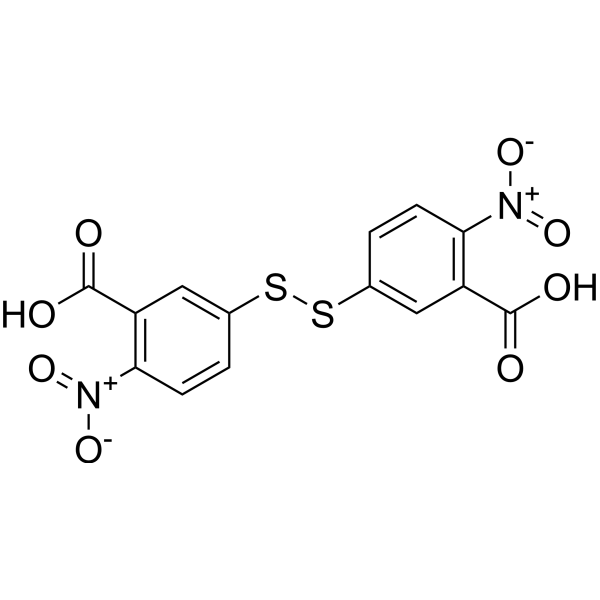
DTNB (Ellman’s Reagent) is a chemical used to quantify the number or concentration of thiol groups .
|
-
- HY-135233
-
|
SATA
|
Biochemical Assay Reagents
|
|
N-Succinimidyl S-acetylthioacetate (SATA) is a protein modifying agent. N-Succinimidyl S-acetylthioacetate adds sulfhydryl groups to proteins and other amine-containing molecules in a protected form. N-Succinimidyl-S-acetylthioacetate can thiolate antibodies, thereby promoting efficient attachment of antibodies to other molecules and exerting conjugation activity. N-Succinimidyl-S-acetylthioacetate can be used in immunoassays such as ELISA studies .
|
-
- HY-NP008
-
|
|
Biochemical Assay Reagents
|
|
β-Lactoglobulin, a major whey protein, is a small globular protein from the lipocalin family. β-Lactoglobulin is an important source of the essential and branched-chain amino acids (leucine, isoleucine, and valine). β-Lactoglobulin shows antioxidant properties, because it contains two disulfide bonds and one free thiol group. β-Lactoglobulin is a ligand transport agent. β-Lactoglobulin is one of the major allergens in milk and can be utilized in the research for developing safe hypoallergenic dairy products .
|
-
- HY-166648
-
|
|
Biochemical Assay Reagents
|
|
DSPE-PEG2000-Maleimide sodium (purity>99%) is a functional lipid component and a thiol-reactive crosslinker. DSPE-PEG2000-Maleimide sodium (purity>99%) undergoes Michael addition with the thiol groups of thiolated or cyclic RGD peptides to form stable thioether bonds and DSPE-PEG2000-RGD. DSPE-PEG2000-Maleimide sodium (purity>99%) is applicable to research on drug delivery .
|
-
- HY-W068119A
-
|
2-Maleimidoethylamine hydrochloride
|
Biochemical Assay Reagents
|
|
N-(2-Aminoethyl)maleimide (2-Maleimidoethylamine) hydrochloride is a selective covalent binding agent for thiol groups (RSGs), covalently binding to thiols via an irreversible thioether bond to prepare MMP-2-sensitive nanosystems. Under near-neutral conditions, the maleimide group in N-(2-Aminoethyl)maleimide hydrochloride binds to thiol groups via a nucleophilic addition reaction, and can be used to modify polymers or biological interfaces, enhancing mucosal adhesion and regulating the surface charge of biological interfaces. N-(2-Aminoethyl)maleimide hydrochloride can optimize the adhesion performance of drug delivery carriers and cell interactions with biological interfaces, and is applied in transmucosal drug delivery systems (such as drug carriers for oral and bladder sites) and biomaterial surface engineering research, providing support for tissue implantation, regeneration, and related drug delivery .
|
-
- HY-W440896
-
|
|
Biochemical Assay Reagents
|
|
DSPE-PEG2000-SH is an amphiphilic thiol-functionalized DSPE-PEG molecule. DSPE-PEG2000-SH inserts into extracellular vesicle (EV) bilayer membranes via hydrophobic interactions, displaying surface thiol groups to form EV-SH crosslinkers.DSPE-PEG2000-SH enables crosslinking of EV-SH with 8-arm PEG-norbornene via thiol-ene photochemistry to construct hydrogels, with hydrogel mechanical properties tunable via PEG segment molecular weight variation.DSPE-PEG2000-SH can be used to encapsulate agents for drug delivery system, such as mRNA vaccine .
|
-
- HY-W591476
-
|
mPEG1000-SH
|
Biochemical Assay Reagents
|
|
m-PEG1000-thiol is a surface modifier that can modify DNA thiolation and is used in the synthesis of gold nanorods (AuNR). m-PEG1000-thiol can load thiolated DNA onto AuNR, form a covalent bond with the surface of gold nanoparticles through the thiol group, and stabilize the nanoparticles by the steric hindrance effect of the polyethylene glycol chain, preventing aggregation and enhancing its biocompatibility. m-PEG1000-thiol can also provide a platform for the subsequent coupling of biomolecules (such as DNA, antibodies) by replacing surfactants (such as CTAB) on the surface of nanoparticles, thereby exerting its activity in promoting the functionalization of nanomaterials [2].
|
-
- HY-W441004
-
|
|
Biochemical Assay Reagents
|
|
DSPE-Thiol is a phophalipid capped with thiol group. The thiol capped head can selectively react with maleimide. DSPE-Thiol can also be used for the preparation of phospholipid dimers .
|
-
- HY-D1364
-
|
|
Biochemical Assay Reagents
|
|
Pyrene maleimide is a polyaromatic fluorescent hydrocarbon with a termininal maleimide group. The maleimide group will react with a thiol group to form a covalent bond.
|
-
- HY-W1048849B
-
|
4-Arm PEG-thiol (MW 10000)
|
Biochemical Assay Reagents
|
|
4-Arm PEG-SH (MW 10000) (4-Arm PEG-thiol (MW 10000)) is a multi-arm PEG derivative with thiol groups at each end of the four arms. The reactive free thiol, SH or sulfhydryl groups react selectively with maleimide and transition metal surfaces including gold and silver .
|
-
- HY-W1048849A
-
|
4-Arm PEG5000-thiol
|
Biochemical Assay Reagents
|
|
4-Arm PEG5000-SH (4-Arm PEG5000-thiol) is a multi-arm PEG derivative with thiol groups at each end of the four arms. The reactive free thiol, SH or sulfhydryl groups react selectively with maleimide and transition metal surfaces including gold and silver .
|
-
- HY-W1048555A
-
|
|
Biochemical Assay Reagents
|
|
Mal-PEG2000-SCM is a heterobifunctional PEG crosslinker bearing maleimide and succinimidyl carboxymethyl ester functional groups. MMal-PEG2000-SCM conjugates the F3 peptide to nanoparticles: the SCM group reacts with amino groups on the nanoparticle surface to form amide groups, while the MAL group reacts with thiol groups of the F3 peptide to form carbon-sulfur bonds. Mal-PEG-SCM enables unidirectional addition of linkers, ensuring that appropriate functional groups are available for RGD incorporation. Mal-PEG2000-SCM can be used in the development of nanoparticles targeting specific tumor cells .
|
-
- HY-W020780D
-
|
|
Biochemical Assay Reagents
|
|
mPEG40000-Mal is a thiol-reactive PEG derivative that can be used to selectively modify proteins, peptides, or any other surface with available thiol groups .
|
-
- HY-W1048849C
-
|
4-Arm PEG20000-thiol
|
Biochemical Assay Reagents
|
|
4-Arm PEG20000-SH (4-Arm PEG20000-thiol) is a multi-arm PEG derivative with thiol groups at each end of the four arms. The reactive free thiol, SH or sulfhydryl groups react selectively with maleimide and transition metal surfaces including gold and silver .
|
-
- HY-134428
-
|
|
Biochemical Assay Reagents
|
|
Arachidonoyl coenzyme A lithium is an unsaturated fatty acyl coenzyme A, formed by the condensation of the thiol group of coenzyme A with the carboxyl group of arachidonic acid .
|
-
- HY-W1048527
-
|
8-Arm PEG5000-thiol
|
Biochemical Assay Reagents
|
|
8-Arm PEG5000-SH (8-Arm PEG5000-Thiol) is a multi-arm PEG derivative with thiol groups at each end of the eight arms. 8-Arm PEG5000-SH can be used for drug delivery .
|
-
- HY-157920
-
|
N-Biotinyl-N'-[2-(N-maleimido)ethyl]piperazine
|
Biochemical Assay Reagents
|
|
Biotin-PE-maleimide (N-Biotinyl-N'-[2-(N-maleimido)ethyl]piperazine) is a bulky, membrane-impermeable, sulfhydryl-containing reagent with a relatively large molecular size. Biotin-PE-maleimide can be used for biotin labeling (such as thiol groups) and detection of proteins or other biomolecules .
|
-
- HY-W1048527A
-
|
8-Arm PEG20000-thiol
|
Biochemical Assay Reagents
|
|
8-Arm PEG20000-SH (8-Arm PEG20000-Thiol) is a multi-arm PEG derivative with thiol groups at each end of the eight arms. 8-Arm PEG20000-SH can be used for drug delivery .
|
-
- HY-W1048527C
-
|
8-Arm PEG10000-thiol
|
Biochemical Assay Reagents
|
|
8-Arm PEG10000-SH (8-Arm PEG10000-Thiol) is a multi-arm PEG derivative with thiol groups at each end of the eight arms. 8-Arm PEG10000-SH can be used for drug delivery .
|
-
- HY-W1048849D
-
|
4-Arm PEG40000-thiol
|
Biochemical Assay Reagents
|
|
4-Arm PEG40000-SH (4-Arm PEG40000-thiol) is a multi-arm PEG derivative with thiol groups at each end of the four arms. The reactive free thiol, SH or sulfhydryl groups react selectively with maleimide and transition metal surfaces including gold and silver .
|
-
- HY-168938
-
|
|
Biochemical Assay Reagents
|
|
Poly(ethylene glycol) methyl ether maleimide (Mn 2000) is a polyethylene glycol containing Maleimide (HY-W007324). Due to the Maleimide functional group, Poly(ethylene glycol) methyl ether maleimide (Mn 2000) can be used to conjugate biomolecules containing thiol groups.
|
-
- HY-174949B
-
|
FMOC-NH-PEG3400-thiol
|
Biochemical Assay Reagents
|
|
FMOC-NH-PEG3400-SH (FMOC-NH-PEG3400-Thiol) is a PEG derivative with an Fmoc protecting group and a thiol (-SH) reactive group. The thiol group is a highly reactive chemical group that can react specifically with a variety of molecules to form stable covalent bonds. Fmoc is a commonly used amino protecting group that protects the amino group from unwanted reactions until it is removed when a specific coupling reaction is required.
|
-
- HY-W060216
-
|
|
Biochemical Assay Reagents
|
|
2-Acetamido-3-methyl-3-sulfanylbutanoic acid is an organic compound that belongs to the class of amino acids. It is a derivative of methionine, an essential amino acid commonly found in various foods. 2-Acetamido-3-methyl-3-sulfanylbutanoic acid contains a thiol group and an acetamido group at specific positions in the amino acid chain. It has various applications in the food industry, especially as a flavor enhancer and umami seasoning. Additionally, it has potential research utility in liver disease and other metabolic disorders.
|
-
- HY-182841D
-
|
DMPE-PEG10000-thiol
|
Biochemical Assay Reagents
|
|
DMPE-PEG10000-SH (DMPE-PEG10000-Thiol) is a conjugate composed of DMPE, a PEG chain, and a terminal thiol group (-SH). The thiol group in DMPE-PEG10000-SH exhibits strong chemical reactivity and can participate in various bioconjugation reactions for targeted modification of liposomes/nanoparticles.
|
-
- HY-182882D
-
|
DPPE-PEG10000-thiol
|
Biochemical Assay Reagents
|
|
DPPE-PEG10000-SH (DPPE-PEG10000-Thiol) is a conjugate composed of DPPE, a PEG chain, and a terminal thiol group (-SH). The thiol group in DPPE-PEG10000-SH exhibits strong chemical reactivity and can participate in various bioconjugation reactions for targeted modification of liposomes/nanoparticles.
|
-
- HY-183055D
-
|
DSG-PEG10000-thiol
|
Biochemical Assay Reagents
|
|
DSE-PEG10000-SH (DSE-PEG10000-Thiol) is a conjugate composed of DSE, a PEG chain, and a terminal thiol group (-SH). The thiol group in DSE-PEG10000-SH exhibits strong chemical reactivity and can participate in various bioconjugation reactions for targeted modification of liposomes/nanoparticles.
|
-
- HY-182841C
-
|
DMPE-PEG5000-thiol
|
Biochemical Assay Reagents
|
|
DMPE-PEG5000-SH (DMPE-PEG5000-Thiol) is a conjugate composed of DMPE, a PEG chain, and a terminal thiol group (-SH). The thiol group in DMPE-PEG5000-SH exhibits strong chemical reactivity and can participate in various bioconjugation reactions for targeted modification of liposomes/nanoparticles.
|
-
- HY-183055A
-
|
DSG-PEG2000-thiol
|
Biochemical Assay Reagents
|
|
DSE-PEG2000-SH (DSE-PEG2000-Thiol) is a conjugate composed of DSE, a PEG chain, and a terminal thiol group (-SH). The thiol group in DSE-PEG2000-SH exhibits strong chemical reactivity and can participate in various bioconjugation reactions for targeted modification of liposomes/nanoparticles.
|
-
- HY-182882A
-
|
DPPE-PEG2000-thiol
|
Biochemical Assay Reagents
|
|
DPPE-PEG2000-SH (DPPE-PEG2000-Thiol) is a conjugate composed of DPPE, a PEG chain, and a terminal thiol group (-SH). The thiol group in DPPE-PEG2000-SH exhibits strong chemical reactivity and can participate in various bioconjugation reactions for targeted modification of liposomes/nanoparticles.
|
-
- HY-183055B
-
|
DSG-PEG3400-thiol
|
Biochemical Assay Reagents
|
|
DSE-PEG3400-SH (DSE-PEG3400-Thiol) is a conjugate composed of DSE, a PEG chain, and a terminal thiol group (-SH). The thiol group in DSE-PEG3400-SH exhibits strong chemical reactivity and can participate in various bioconjugation reactions for targeted modification of liposomes/nanoparticles.
|
-
- HY-182882C
-
|
DPPE-PEG5000-thiol
|
Biochemical Assay Reagents
|
|
DPPE-PEG5000-SH (DPPE-PEG5000-Thiol) is a conjugate composed of DPPE, a PEG chain, and a terminal thiol group (-SH). The thiol group in DPPE-PEG5000-SH exhibits strong chemical reactivity and can participate in various bioconjugation reactions for targeted modification of liposomes/nanoparticles.
|
-
- HY-183055C
-
|
DSG-PEG5000-thiol
|
Biochemical Assay Reagents
|
|
DSE-PEG5000-SH (DSE-PEG5000-Thiol) is a conjugate composed of DSE, a PEG chain, and a terminal thiol group (-SH). The thiol group in DSE-PEG5000-SH exhibits strong chemical reactivity and can participate in various bioconjugation reactions for targeted modification of liposomes/nanoparticles.
|
-
- HY-182882
-
|
DPPE-PEG1000-thiol
|
Biochemical Assay Reagents
|
|
DPPE-PEG1000-SH (DPPE-PEG1000-Thiol) is a conjugate composed of DPPE, a PEG chain, and a terminal thiol group (-SH). The thiol group in DPPE-PEG1000-SH exhibits strong chemical reactivity and can participate in various bioconjugation reactions for targeted modification of liposomes/nanoparticles.
|
-
- HY-183055
-
|
DSG-PEG1000-thiol
|
Biochemical Assay Reagents
|
|
DSE-PEG1000-SH (DSE-PEG1000-Thiol) is a conjugate composed of DSE, a PEG chain, and a terminal thiol group (-SH). The thiol group in DSE-PEG1000-SH exhibits strong chemical reactivity and can participate in various bioconjugation reactions for targeted modification of liposomes/nanoparticles.
|
-
- HY-182841
-
|
DMPE-PEG1000-thiol
|
Biochemical Assay Reagents
|
|
DMPE-PEG1000-SH (DMPE-PEG1000-Thiol) is a conjugate composed of DMPE, a PEG chain, and a terminal thiol group (-SH). The thiol group in DMPE-PEG1000-SH exhibits strong chemical reactivity and can participate in various bioconjugation reactions for targeted modification of liposomes/nanoparticles.
|
-
- HY-182882B
-
|
DPPE-PEG3400-thiol
|
Biochemical Assay Reagents
|
|
DPPE-PEG3400-SH (DPPE-PEG3400-Thiol) is a conjugate composed of DPPE, a PEG chain, and a terminal thiol group (-SH). The thiol group in DPPE-PEG3400-SH exhibits strong chemical reactivity and can participate in various bioconjugation reactions for targeted modification of liposomes/nanoparticles.
|
-
- HY-182841A
-
|
DMPE-PEG2000-thiol
|
Biochemical Assay Reagents
|
|
DMPE-PEG2000-SH (DMPE-PEG2000-Thiol) is a conjugate composed of DMPE, a PEG chain, and a terminal thiol group (-SH). The thiol group in DMPE-PEG2000-SH exhibits strong chemical reactivity and can participate in various bioconjugation reactions for targeted modification of liposomes/nanoparticles.
|
-
- HY-W591469
-
|
|
Biochemical Assay Reagents
|
|
mPEG1000-Mal is a thiol-reactive PEG derivative that can be used to selectively modify proteins, peptides, or any other surface with available thiol groups .
|
-
- HY-W1048527B
-
|
8-Arm PEG40000-thiol
|
Biochemical Assay Reagents
|
|
8-Arm PEG40000-SH (8-Arm PEG40000-Thiol) is a multi-arm PEG derivative with thiol groups at each end of the eight arms. 8-Arm PEG40000-SH can be used for drug delivery .
|
-
- HY-174949C
-
|
FMOC-NH-PEG5000-thiol
|
Biochemical Assay Reagents
|
|
FMOC-NH-PEG5000-SH (FMOC-NH-PEG5000-Thiol) is a PEG derivative with an Fmoc protecting group and a thiol (-SH) reactive group. The thiol group is a highly reactive chemical group that can react specifically with a variety of molecules to form stable covalent bonds. Fmoc is a commonly used amino protecting group that protects the amino group from unwanted reactions until it is removed when a specific coupling reaction is required.
|
-
- HY-174949D
-
|
FMOC-NH-PEG10000-thiol
|
Biochemical Assay Reagents
|
|
FMOC-NH-PEG10000-SH (FMOC-NH-PEG10000-Thiol) is a PEG derivative with an Fmoc protecting group and a thiol (-SH) reactive group. The thiol group is a highly reactive chemical group that can react specifically with a variety of molecules to form stable covalent bonds. Fmoc is a commonly used amino protecting group that protects the amino group from unwanted reactions until it is removed when a specific coupling reaction is required.
|
-
- HY-174949
-
|
FMOC-NH-PEG1000-thiol
|
Biochemical Assay Reagents
|
|
FMOC-NH-PEG1000-SH (FMOC-NH-PEG1000-Thiol) is a PEG derivative with an Fmoc protecting group and a thiol (-SH) reactive group. The thiol group is a highly reactive chemical group that can react specifically with a variety of molecules to form stable covalent bonds. Fmoc is a commonly used amino protecting group that protects the amino group from unwanted reactions until it is removed when a specific coupling reaction is required.
|
-
- HY-174949A
-
|
FMOC-NH-PEG2000-thiol
|
Biochemical Assay Reagents
|
|
FMOC-NH-PEG2000-SH (FMOC-NH-PEG2000-Thiol) is a PEG derivative with an Fmoc protecting group and a thiol (-SH) reactive group. The thiol group is a highly reactive chemical group that can react specifically with a variety of molecules to form stable covalent bonds. Fmoc is a commonly used amino protecting group that protects the amino group from unwanted reactions until it is removed when a specific coupling reaction is required.
|
-
- HY-W1048549H
-
|
HOOC-PEG1000-thiol
|
Biochemical Assay Reagents
|
|
HOOC-PEG1000-SH (HOOC-PEG1000-Thiol) is a reactive thiol PEG derivative with a terminal carboxyl group. The carboxyl group can react with amine or hydroxyl groups to form a stable amide bond or an unstable ester bond. The reaction of the carboxyl group allows the amine or hydroxyl group to be converted into a free thiol with a linear PEG linkage. The generated thiol group can be used to modify the surface of gold nanoparticles or participate in other PEGylation reactions. The PEG linkage between the thiol and carboxyl groups has good water solubility, flexible linker distance and higher stability .
|
-
- HY-W1048549J
-
|
HOOC-PEG40000-thiol
|
Biochemical Assay Reagents
|
|
HOOC-PEG40000-SH (HOOC-PEG40000-Thiol) is a reactive thiol PEG derivative with a terminal carboxyl group. The carboxyl group can react with amine or hydroxyl groups to form a stable amide bond or an unstable ester bond. The reaction of the carboxyl group allows the amine or hydroxyl group to be converted into a free thiol with a linear PEG linkage. The generated thiol group can be used to modify the surface of gold nanoparticles or participate in other PEGylation reactions. The PEG linkage between the thiol and carboxyl groups has good water solubility, flexible linker distance and higher stability .
|
| Cat. No. |
Product Name |
Target |
Research Area |
-
- HY-P4094
-
CTP
2 Publications Verification
Cardiac targeting peptide
|
Peptides
|
Cardiovascular Disease
|
|
CTP (cardiac targeting peptide) can transduce cardiomyocytes in vitro. CTP leads to efficient and specific transduction of heart tissue in mice model. CTP can be reversibly linked (e.g. via enolases, thiol groups) to cargo (e.g. miRNAs) for delivery specifically to cardiomyocytes over all other organs .
|
-
- HY-P11308
-
|
|
EGFR
|
Cancer
|
|
Cys-GE11 is an N-terminal modified GE11 (HY-P10128) with cysteine (Cys) added. Cys-GE11 can be coupled through the thiol group of Cys. Cys-GE11 can be linked to PEG-P (TMC-DTC) through the N-terminus of cysteine to form a targeted polymer. Cys-GE11 can target cells with high EGFR expression (such as SMMC-7721 cells). Cys-GE11 can significantly enhance drug enrichment at the tumor site and exhibit low toxicity .
|
-
- HY-P11781A
-
|
|
Drug Derivative
|
Cancer
|
|
Cys-HW12 is a random peptide containing an N-terminal cysteine. Cys-HW12 can be coupled via the thiol group of Cys. Cys-HW12 can serve as a control for GE11 (HY-P10128)-conjugated mixed micelles targeting EGFR, and also functions as a cytotoxic agent, cellular uptake inhibitor, and tumor growth inhibitor. Cys-HW12 is applicable to pancreatic cancer-related research .
|
-
- HY-P11781B
-
|
|
Drug Derivative
|
Cancer
|
|
Cys-HW12 TFA is a random peptide containing an N-terminal cysteine and derivative of HW12 (HY-P11781). Cys-HW12 TFA can be coupled via the thiol group of Cys. Cys-HW12 TFA can serve as a control for GE11 (HY-P10128)-conjugated mixed micelles targeting EGFR, and also functions as a cytotoxic agent, cellular uptake inhibitor, and tumor growth inhibitor. Cys-HW12 TFA is applicable to pancreatic cancer-related research .
|
| Cat. No. |
Product Name |
Category |
Target |
Chemical Structure |
-
- HY-N9279
-
|
Monocrotaline pyrrole; MCTP; 3,8-Didehydromonocrotaline
|
Pyrrolizidine Alkaloids
Structural Classification
Alkaloids
Endogenous metabolite
Source Classification
|
Endogenous Metabolite
|
|
Dehydromonocrotaline is a mitochondrial respiratory chain complex I NADH oxidase inhibitor, with a IC50 of 62.06 μM and a Ki of 8.1 μM in rats. Dehydromonocrotaline exerts non-competitive inhibitory effects by modifying cysteine thiol groups on complex I, and does not bind to the NADH-binding site. Dehydromonocrotaline dissipates mitochondrial membrane potential and reduces ATP levels. Dehydromonocrotaline can be used in studies related to hepatotoxicity, pulmonary hypertension and liver tumors .
|
-
-
- HY-136386R
-
-
-
- HY-N19808
-
|
|
Structural Classification
Terpenoids
Sesquiterpenes
Plants
Compositae
Source Classification
|
Drug Derivative
|
|
2-Deacetyl-4-tigloylchamissionolide is a heliangolide-type sesquiterpene lactone, a derivative of Chamissonolide (HY-N19727), and a cytotoxic agent. 2-Deacetyl-4-tigloylchamissionolide exerts cytotoxicity via alkylating biological nucleophiles, targeting free thiol groups in proteins to interfere with their functions. 2-Deacetyl-4-tigloylchamissionolide exhibits different chromatographic behaviors in TLC and HPLC. 2-Deacetyl-4-tigloylchamissionolide can be used for the research of Ehrlich ascites carcinoma .
|
-
| Cat. No. |
Product Name |
|
Classification |
-
- HY-W872575
-
|
|
|
TCO
PROTAC Synthesis
|
|
TCO4-PEG3-Maleimide is a PROTAC linker and belongs to the PEG class. TCO4-PEG3-Maleimide contains TCO and Maleimide groups, which can undergo specific "click" reactions with tetrazine groups or thiol groups, or "mercapto-acrylamide" reactions.
|
-
- HY-156392
-
|
|
|
TCO
PROTAC Synthesis
|
|
TCO4-PEG7-Maleimide is a PROTAC linker and belongs to the PEG class. TCO4-PEG7-Maleimide contains TCO and Maleimide groups, which can undergo specific "click" reactions with tetrazine groups or thiol groups, or "mercapto-acrylamide" reactions.
|
-
- HY-156391A
-
|
|
|
TCO
|
|
TCO4-PEG2-Maleimide is a PROTAC linker and belongs to the PEG class. TCO4-PEG2-Maleimide contains TCO and Maleimide groups, which can undergo specific "click" reactions with tetrazine groups or thiol groups, or "mercapto-acrylamide" reactions.
|
-
- HY-156391
-
|
|
|
TCO
|
|
TCO4-PEG2-Maleimide is a PROTAC linker and belongs to the PEG class. TCO4-PEG2-Maleimide contains TCO and Maleimide groups, which can undergo specific "click" reactions with tetrazine groups or thiol groups, or "mercapto-acrylamide" reactions.
|
-
- HY-W872575A
-
|
|
|
TCO
|
|
TCO4-PEG3-Maleimide is a PROTAC linker and belongs to the PEG class. TCO4-PEG3-Maleimide contains TCO and Maleimide groups, which can undergo specific "click" reactions with tetrazine groups or thiol groups, or "mercapto-acrylamide" reactions.
|
-
- HY-W591360
-
|
|
|
Azide
|
|
Iodoacetamido-PEG6-azide is an aqueous soluble PEG linker containing an azide and a terminal Iodoacetamido group. The azide group can react with alkyne, BCN, DBCO via Click Chemistry to yield a stable triazole linkage. The Iodoacetamido moiety is commonly used to bind covalently with the thiol group of cysteine so the protein cannot form disulfide bonds.
|
-
- HY-183022
-
|
|
|
Azide
|
|
1-(3-Azidopropyl)-1H-pyrrole-2,5-dione is a maleimide derivative with a 3-azidopropyl substituent, used to introduce an azide functional group to bovine serum albumin (BSA). 1-(3-Azidopropyl)-1H-pyrrole-2,5-dione reacts with the free, solvent-accessible thiol group of BSA to produce azide-functionalized BSA, which is used in click chemistry to form a TLL-BSA hetero-dimer .
|
| Cat. No. |
Product Name |
|
Classification |
-
- HY-166648
-
|
|
|
Pegylated Lipids
|
|
DSPE-PEG2000-Maleimide sodium (purity>99%) is a functional lipid component and a thiol-reactive crosslinker. DSPE-PEG2000-Maleimide sodium (purity>99%) undergoes Michael addition with the thiol groups of thiolated or cyclic RGD peptides to form stable thioether bonds and DSPE-PEG2000-RGD. DSPE-PEG2000-Maleimide sodium (purity>99%) is applicable to research on drug delivery .
|
-
- HY-W440896
-
|
|
|
Pegylated Lipids
|
|
DSPE-PEG2000-SH is an amphiphilic thiol-functionalized DSPE-PEG molecule. DSPE-PEG2000-SH inserts into extracellular vesicle (EV) bilayer membranes via hydrophobic interactions, displaying surface thiol groups to form EV-SH crosslinkers.DSPE-PEG2000-SH enables crosslinking of EV-SH with 8-arm PEG-norbornene via thiol-ene photochemistry to construct hydrogels, with hydrogel mechanical properties tunable via PEG segment molecular weight variation.DSPE-PEG2000-SH can be used to encapsulate agents for drug delivery system, such as mRNA vaccine .
|
-
- HY-W591476
-
|
mPEG1000-SH
|
|
Polymers
|
|
m-PEG1000-thiol is a surface modifier that can modify DNA thiolation and is used in the synthesis of gold nanorods (AuNR). m-PEG1000-thiol can load thiolated DNA onto AuNR, form a covalent bond with the surface of gold nanoparticles through the thiol group, and stabilize the nanoparticles by the steric hindrance effect of the polyethylene glycol chain, preventing aggregation and enhancing its biocompatibility. m-PEG1000-thiol can also provide a platform for the subsequent coupling of biomolecules (such as DNA, antibodies) by replacing surfactants (such as CTAB) on the surface of nanoparticles, thereby exerting its activity in promoting the functionalization of nanomaterials [2].
|
-
- HY-W441004
-
|
|
|
Phospholipids
|
|
DSPE-Thiol is a phophalipid capped with thiol group. The thiol capped head can selectively react with maleimide. DSPE-Thiol can also be used for the preparation of phospholipid dimers .
|
-
- HY-166648A
-
|
|
|
Pegylated Lipids
|
|
DSPE-PEG-Maleimide ammonium (MW 2000) is a functional lipid component and a thiol-reactive crosslinker. DSPE-PEG-Maleimide ammonium (MW 2000) undergoes Michael addition with the thiol groups of thiolated or cyclic RGD peptides to form stable thioether bonds and DSPE-PEG (2000)-RGD. DSPE-PEG-Maleimide ammonium (MW 2000) is applicable to research on drug delivery .
|
-
- HY-W590555
-
|
|
|
Pegylated Lipids
|
|
Thiol-PEG2000-DMG is a phospholipid polyPEG which can be used to prepare liposomes or nanoparticles. The terminal thiol group reacts with maleimide, OPSS, vinylsulfone and transition metal surfaces including gold, silver, etc.
|
Your information is safe with us. * Required Fields.
Inquiry Information
- Product Name:
- Cat. No.:
- Quantity:
- MCE Japan Authorized Agent:

