
Search Result
Results for "
thiols
" in MedChemExpress (MCE) Product Catalog:
179
Biochemical Assay Reagents
21
Isotope-Labeled Compounds
| Cat. No. |
Product Name |
Target |
Research Areas |
Chemical Structure |
-
- HY-166648
-
|
|
Liposome
|
Cancer
|
|
DSPE-PEG2000-Maleimide sodium (purity>99%) is a functional lipid component and a thiol-reactive crosslinker. DSPE-PEG2000-Maleimide sodium (purity>99%) undergoes Michael addition with the thiol groups of thiolated or cyclic RGD peptides to form stable thioether bonds and DSPE-PEG2000-RGD. DSPE-PEG2000-Maleimide sodium (purity>99%) is applicable to research on drug delivery .
|
-
-
- HY-151696
-
|
|
ADC Linker
|
Others
|
|
TCO-PEG3-maleimide (TCO-PEG3-NEM) is a click chemistry reagent. TCO-PEG3-maleimide efficiently binds TCO (trans-cyclooctene) moiety to thiol-containing molecules (such as antibodies, cysteine-containing peptides) .
|
-
-
- HY-D0102
-
|
ABD-F
|
Fluorescent Dye
|
Others
|
|
4-(Aminosulfonyl)-7-fluoro-2,1,3-benzoxadiazole (ABD-F) is a fluorescent reagent for the sensitive and specific detection of thiols (Ex/Em: 380/510 nm). 4-(Aminosulfonyl)-7-fluoro-2,1,3-benzoxadiazole has low fluorescence background, and good stability of fluorophor .
|
-
-
- HY-W591476
-
|
mPEG1000-SH
|
Biochemical Assay Reagents
|
Others
|
|
m-PEG1000-thiol is a surface modifier that can modify DNA thiolation and is used in the synthesis of gold nanorods (AuNR). m-PEG1000-thiol can load thiolated DNA onto AuNR, form a covalent bond with the surface of gold nanoparticles through the thiol group, and stabilize the nanoparticles by the steric hindrance effect of the polyethylene glycol chain, preventing aggregation and enhancing its biocompatibility. m-PEG1000-thiol can also provide a platform for the subsequent coupling of biomolecules (such as DNA, antibodies) by replacing surfactants (such as CTAB) on the surface of nanoparticles, thereby exerting its activity in promoting the functionalization of nanomaterials [2].
|
-
-
- HY-D1390A
-
|
|
Fluorescent Dye
|
Others
|
|
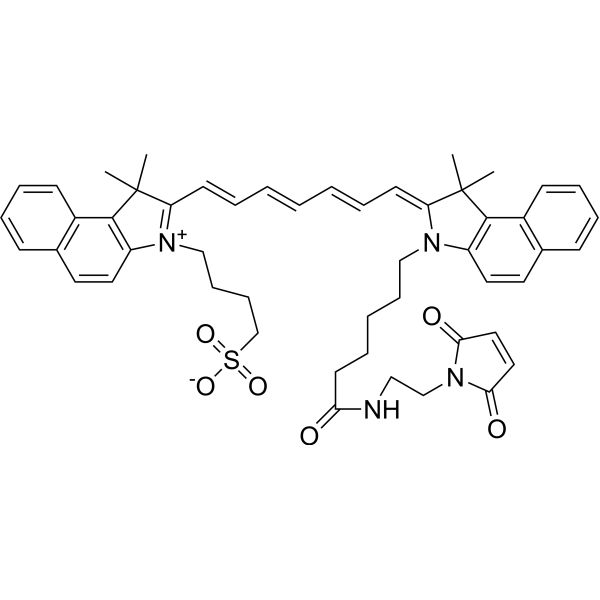
Sulfo-Cy5-Mal is a fluorescent dye derivative composed of a CY5 dye and a maleimide functional group. Sulfo-Cy5-Mal specifically covalently binds to thiol-containing (-SH) biomolecules. Sulfo-Cy5-Mal can be used for protein labeling, antibody conjugation, molecular imaging, and drug delivery studies (Ex/Em = 633 nm/670 nm) .
|
-
-
- HY-P2895
-
|
Clostridiopeptidase B
|
Endogenous Metabolite
|
Others
|
|
Clostripain (Clostridiopeptidase B) is a thiol protease isolated from Clostridium histolyticum. Clostripain exhibits proteolytic activity as well as amidase-esterase activity. The specificity of Clostripain is primarily restricted to arginine residues, but it also shows minor hydrolytic activity toward most lysine-containing substrates. Clostripain catalyzes the ammonolysis of Carbobenzoxyarginyl methyl ester to generate various dipeptides .
|
-
-
- HY-130080
-
|
Maytansinoid DM3
|
ADC Payload
Microtubule/Tubulin
|
Cancer
|
|
DM3 (Maytansinoid DM3), a Maytansine (HY-13674) analog bearing disulfide or thiol groups, and is a tubulin inhibitor. DM3 a cytotoxic moiety of antibody-drug conjugates (ADCs) .
|
-
-
- HY-137541
-
|
NTCB
|
Biochemical Assay Reagents
|
Others
|
|
2-Nitro-5-thiocyanatobenzoic acid (NTCB) is a highly reactive reagent that transfers its cyano group rapidly to a nucleophilic thiolate. 2-Nitro-5-thiocyanatobenzoic acid has been proposed as a reagent for converting thiol groups in proteins into their S-cyano derivatives .
|
-
-
- HY-148263
-
|
|
Fluorescent Dye
|
Cancer
|
|
Biotin-PEG2000-Thiol is an active compound. Biotin-PEG2000-Thiol is pegylated by binding to streptavidin or antibiotin with high affinity and specificity. Biotin-PEG2000-Thiol can modify biomolecules, proteins, peptides and other small molecule materials. Biotin-PEG2000-Thiol is widely used in the research of agent release and nano new materials .
|
-
-
- HY-D1261
-
|
Thiol-green 1
|
Fluorescent Dye
|
Others
|
|
Naph-EA-mal (Thiol-green 1) is a rapid detect and ultrafast turn-on thiol fluorescence probe for protein labeling and bioimaging. Naph-EA-mal (Thiol-green 1) can be used to detect thiols in living cells, label the protein thiols, quantify the concentration of total thiols in cell lysate, and determine the reversible protein thiols oxidation in fixed cells . Ex: 488 nM; Em: 540 nM.
|
-
-
- HY-W441004
-
|
|
Liposome
|
Others
|
|
DSPE-Thiol is a phophalipid capped with thiol group. The thiol capped head can selectively react with maleimide. DSPE-Thiol can also be used for the preparation of phospholipid dimers .
|
-
-
- HY-W011618
-
|
|
Fluorescent Dye
|
Others
|
|
N-(9-Acridinyl)maleimide is a maleimide type fluorescent thiol reagent. N-(9-Acridinyl)maleimide shows no substantial fluorescence but its coupling products with thiol compounds exhibit strong blue fluorescence. N-(9-Acridinyl)maleimide is used for fluorometrical analysis of cysteine and glutathione .
|
-
-
- HY-W013754
-
|
|
Glutathione S-transferase
|
Others
|
|
S-Hexylglutathione is an S-substituted glutathione in which the hydrogen of the thiol has been replaced by a hexyl group. S-Hexylglutathione is also an competitive inhibitor against glutathione-S-transferase. S-Hexylglutathione can be used as an affinity chromatographic ligand for glutathione-S-transferase and glutathione peroxidase .
|
-
-
- HY-125254
-
LEI110
1 Publications Verification
|
Phospholipase
HRASLS
|
Infection
Metabolic Disease
|
|
LEI110 is a potent, selective and cell-permeable pan-inhibitor of the HRASLS family of thiol hydrolases. LEI110 inhibits PLA2G16, HRASLS2, RARRES3 and iNAT, with pIC50 values of 7.0, 6.8, 6.8, and 7.6, respectively. LEI110 reduces cellular arachidonic acid levels and oleic acid-induced lipolysis in HepG2 cells .
|
-
-
- HY-W012184
-
|
|
Biochemical Assay Reagents
|
Inflammation/Immunology
|
|
CDAP is an organic cyanylating reagent that can be used for preparation of solid phase affinity reagents, modification of protein thiols and nucleotide delivery. CDAP also activates polysaccharides with a variety of chemical properties. CDAP can be used to prepare conjugate vaccines and other immune reagents .
|
-
-
- HY-166648A
-
|
|
Liposome
|
Others
|
|
DSPE-PEG-Maleimide ammonium (MW 2000) is a functional lipid component and a thiol-reactive crosslinker. DSPE-PEG-Maleimide ammonium (MW 2000) undergoes Michael addition with the thiol groups of thiolated or cyclic RGD peptides to form stable thioether bonds and DSPE-PEG (2000)-RGD. DSPE-PEG-Maleimide ammonium (MW 2000) is applicable to research on drug delivery .
|
-
-
- HY-D1262
-
|
Thiol-green 2
|
Fluorescent Dye
|
Others
|
|
BODIPY-TS (Thiol-green 2) is a fast response and thiol-specific turn-on probe. BODIPY-TS utilizes the thiosulfonate scaffold as a thiol recognition unit. BODIPY-TS has low toxicity, and features high selectivity, low detection limit, and quantitative reaction to thiols . Ex: 490 nM; Em: 515 nM.
|
-
-
- HY-135235
-
|
|
Fluorescent Dye
|
Others
|
|
Cysteine Thiol Probe is a thiol-based probe designed to label electrophilic natural products. Cysteine Thiol Probe possesses each of the characteristics of an ideal pharmacophore probe, and has a chromophore. Cysteine Thiol Probe is capable of engaging enone-, β-lactam-, and β-lactone-based electrophilic metabolites .
|
-
-
- HY-156377
-
|
|
Drug-Linker Conjugates for ADC
|
Cancer
|
|
Biotin-PEG7-Maleimide is a biotinylation reagent that reacts with thiol groups (SH). Biotin-PEG7-Maleimide can be used as Drug-Linker Conjugates for ADCs .
|
-
-
- HY-131468
-
|
AMD473; ZD0473
|
DNA/RNA Synthesis
|
Cancer
|
|
Picoplatin (AMD473) is a platinum-based antineoplastic agent. Picoplatin is specifically to circumvent thiol-mediated drug resistance by sterically hindering its reaction with glutathione (GSH) while still retaining the ability to form cytotoxic lesions with DNA .
|
-
-
- HY-119493
-
|
|
Fluorescent Dye
|
Others
|
|
MSBN is a highly selective fluorogenic probe for thiols. MSBN can be used to image thiols in live cells selectively and specifically label protein thiols with a signal to determine various reversible protein thiol modifications .
|
-
-
- HY-D2448
-
|
|
Fluorescent Dye
|
Cancer
|
|
Cy3-PEG-Thiol (Cy3-PEG-SH) is a near infrared fluorescent labeling reagent that combines Cy3 fluorescent dye, polyethylene glycol (PEG) and sulfhydryl (SH) polyethylene glycol derivatives, and is suitable for molecular coupling. Cy3-PEG-Thiol is absorbed at 550nm and has high solubility and end-group substitution rate .
|
-
-
- HY-100503
-
|
|
ADC Payload
|
Cancer
|
|
Maytansinoid DM4 is a thiol-containing maytansine derivative with highly potent cytotoxicity. Maytansinoid DM4 can be used as a cytotoxic moiety of ADC .
|
-
-
- HY-D1260
-
|
PSH-red
|
Fluorescent Dye
|
Neurological Disease
|
|
FM-red (PSH-red) is a red-emitting and environment-sensitive probe for selectively detecting and labeling protein thiols. FM-red can be used to image protein sulfhydryl groups in live cells and in vivo. FM-red also could be used to measure of the redox states of thioredoxin (Trx) .
|
-
-
- HY-116427
-
|
|
ADC Linker
PROTAC Linkers
|
Cancer
|
|
Propargyl-PEG4-thiol is a PEG-based PROTAC linker can be used in the synthesis of PROTACs. Propargyl-PEG4-thiol is a non-cleavable ADC linker used in the synthesis of antibody-drug conjugates (ADCs) . Propargyl-PEG4-thiol is a click chemistry reagent, it contains an Alkyne group and can undergo copper-catalyzed azide-alkyne cycloaddition (CuAAc) with molecules containing Azide groups.
|
-
-
- HY-W451262
-
|
|
PROTAC Linkers
|
Cancer
|
|
5-Aminopentane-1-thiol hydrochloride is a PROTAC linker that can be used in the synthesis of PROTACs.
|
-
-
- HY-P2927
-
|
|
PDI
|
Cardiovascular Disease
|
|
Protein disulfide isomerase is a prototypic thiol isomerase that catalyzes the formation and cleavage of thiol-disulfide bonds during protein folding in the endoplasmic reticulum (ER). Protein disulfide isomerase can be used for the study of cardiovascular diseases .
|
-
-
- HY-W022204
-
|
|
PROTAC Linkers
|
Cancer
|
|
Thiol-PEG2-thiol is a PROTAC linker that can be used in the synthesis of PROTACs.
|
-
-
- HY-W009299S
-
-
-
- HY-112526
-
|
|
Fluorescent Dye
|
Others
|
|
Thiofluor 623 (Compound 3) is a fluorescent turn-on probe that can be used for the selective sensing and bioimaging of thiols. Thiofluor 623 displays excellent immunity to interference from nitrogen and oxygen nucleophiles. Thiofluor 623 is essentially nonfluorescent in the absence of thiols, which cleave the probe and release the red-emissive donor-acceptor fluorophore (Ex=563 nm, Em=623 nm) .
|
-
-
- HY-130601
-
-
-
- HY-120188
-
|
|
PPAR
|
Others
|
|
CC618 is a selective PPARβ/δ antagonist. CC618 covalently modifies conserved Cys249 in the PPARβ/δ ligand-binding pocket via nucleophilic aromatic substitution, converting its thiol moiety to a 5-trifluoromethyl-2-pyridylthioether .
|
-
-
- HY-W011814S
-
-
-
- HY-W176660S
-
-
-
- HY-D0071
-
|
|
Fluorescent Dye
|
Others
|
|
N-4-(5,6-Dimethoxy-N-phthalimidinyl)phenylmaleimide is a fluorescence reagent for labeling thiol .
|
-
-
- HY-129846
-
|
|
Biochemical Assay Reagents
|
Others
|
|
IBTP iodide is a lipophilic cation and can be accumulated by mitochondria and yields stable thioether adducts in a thiol-specific
reaction. IBTP iodide can be used for specific labeling of mitochondrial protein thiols .
|
-
-
- HY-120492
-
-
-
- HY-138760
-
|
|
Fluorescent Dye
|
Others
|
|
SEluc-2 is a small-molecule probe based on the firefly luciferin. SEluc-2, a bioluminescent probe for the sensitive and selective detection of thiols in living cells .
|
-
-
- HY-D1066
-
|
|
Fluorescent Dye
|
Others
|
|
NIR-Thiol dinitrobenzenesulfonate has both absorption and emission in the NIR region. NIR-Thiol dinitrobenzenesulfonate responds to thiol with a large turn-on NIR fluorescence signal upon excitation in the NIR region. NIR-Thiol dinitrobenzenesulfonate is capable of imaging endogenously produced thiol in living cells and mice .
|
-
-
- HY-D1526
-
|
|
Fluorescent Dye
|
Others
|
|
N-(4-Anilino-1-naphthyl)maleimide is a fluorescent probe that can be used to detect thiol groups in proteins. N-(4-Anilino-1-naphthyl)maleimide reacts with thiol groups and immediately produces a stable fluorescent compound with the λex=355 nm, λem=448 nm .
|
-
-
- HY-D1527
-
|
|
Fluorescent Dye
|
Others
|
|
N-(3-Fluoranthyl)maleimide is a thiol fluorescent probe with a lifetime of 20 nsec. N-(3-Fluoranthyl)maleimide has a maximum excitation wavelength of 370 nm and can be used to study the time-dependent processes of biopolymers .
|
-
-
- HY-151615
-
|
|
Fluorescent Dye
|
Neurological Disease
|
|
DCI-Br-3 is a rapid, highly sensitive, and selective probe to monitor thiols in the epileptic brain. (λex=537 nm, λem=675 nm).DCI-Br-3 can effectively cross the blood-brain barrier (BBB) .
|
-
-
- HY-135963
-
-
-
- HY-D0151
-
|
|
Fluorescent Dye
|
Others
|
|
Tetramethylrhodamine-5-maleimide is a fluorescent probe with high specificity for cysteine thiol (SH) groups. Tetramethylrhodamine-5-maleimide has high sensitivity, responds rapidly to negatively charged nanoparticles, and shows a concentration-dependent decrease in fluorescence intensity, but it is susceptible to interference from humic acids .
|
-
-
- HY-150260
-
|
|
Bacterial
|
Infection
|
|
SA09-Cu is a noncompetitive and potent NDM-1 inhibitor with an IC50 of 9.6 nM. SA09-Cu can convert NDM-1 into an inactive state by oxidizing the Zn(II)-thiolate site of the enzyme and avoids to be reduced by intracellular thiols of bacteria. SA09-Cu exhibits excellent inhibition against a series of clinical NDM-1-producing carbapenem-resistant Enterobacteriaceae (CRE) in restoring the Meropenem (HY-13678) effect, and slows down the development of carbapenem resistance .
|
-
-
- HY-W010529S
-
-
-
- HY-W440723
-
|
|
Biochemical Assay Reagents
|
Others
|
|
Cholesterol-PEG2000-Thiol is a cholesterol PEG derivative that can form micelles through molecular self-assembly and has a longer half-life in vivo. Cholesterol-PEG2000-Thiol can be used in drug delivery research .
|
-
-
- HY-167335
-
|
|
Biochemical Assay Reagents
|
Others
|
|
PLLA1000-PEG3000-SPDP is a polylactic acid derivative that can form micelles in water and the SPDP moiety can react with thiols. PLLA1000-PEG3000-SPDP can be used in drug delivery research .
|
-
-
- HY-167338
-
|
|
Biochemical Assay Reagents
|
Others
|
|
PLLA10000-PEG5000-SPDP is a polylactic acid derivative that can form micelles in water and the SPDP moiety can react with thiols. PLLA10000-PEG5000-SPDP can be used in drug delivery research .
|
-
-
- HY-167341
-
|
|
Biochemical Assay Reagents
|
Others
|
|
PLLA10000-PEG1000-SPDP is a polylactic acid derivative that can form micelles in water and the SPDP moiety can react with thiols. PLLA10000-PEG1000-SPDP can be used in drug delivery research .
|
-
- HY-167336
-
|
|
Biochemical Assay Reagents
|
Others
|
|
PLLA1000-PEG2000-SPDP is a polylactic acid derivative that can form micelles in water and the SPDP moiety can react with thiols. PLLA1000-PEG2000-SPDP can be used in drug delivery research .
|
-
- HY-167324
-
|
|
Biochemical Assay Reagents
|
Others
|
|
PLLA4000-PEG2000-SPDP is a polylactic acid derivative that can form micelles in water and the SPDP moiety can react with thiols. PLLA4000-PEG2000-SPDP can be used in drug delivery research .
|
-
- HY-167333
-
|
|
Biochemical Assay Reagents
|
Others
|
|
PLLA2000-PEG1000-SPDP is a polylactic acid derivative that can form micelles in water and the SPDP moiety can react with thiols. PLLA2000-PEG1000-SPDP can be used in drug delivery research .
|
-
- HY-167331
-
|
|
Biochemical Assay Reagents
|
Others
|
|
PLLA2000-PEG3000-SPDP is a polylactic acid derivative that can form micelles in water and the SPDP moiety can react with thiols. PLLA2000-PEG3000-SPDP can be used in drug delivery research .
|
-
- HY-167332
-
|
|
Biochemical Assay Reagents
|
Others
|
|
PLLA2000-PEG2000-SPDP is a polylactic acid derivative that can form micelles in water and the SPDP moiety can react with thiols. PLLA2000-PEG2000-SPDP can be used in drug delivery research .
|
-
- HY-167321
-
|
|
Biochemical Assay Reagents
|
Others
|
|
PLLA5000-PEG1000-SPDP is a polylactic acid derivative that can form micelles in water and the SPDP moiety can react with thiols. PLLA5000-PEG1000-SPDP can be used in drug delivery research .
|
-
- HY-167328
-
|
|
Biochemical Assay Reagents
|
Others
|
|
PLLA3000-PEG2000-SPDP is a polylactic acid derivative that can form micelles in water and the SPDP moiety can react with thiols. PLLA3000-PEG2000-SPDP can be used in drug delivery research .
|
-
- HY-167320
-
|
|
Biochemical Assay Reagents
|
Others
|
|
PLLA5000-PEG2000-SPDP is a polylactic acid derivative that can form micelles in water and the SPDP moiety can react with thiols. PLLA5000-PEG2000-SPDP can be used in drug delivery research .
|
-
- HY-167327
-
|
|
Biochemical Assay Reagents
|
Others
|
|
PLLA3000-PEG3000-SPDP is a polylactic acid derivative that can form micelles in water and the SPDP moiety can react with thiols. PLLA3000-PEG3000-SPDP can be used in drug delivery research .
|
-
- HY-167326
-
|
|
Biochemical Assay Reagents
|
Others
|
|
PLLA3000-PEG5000-SPDP is a polylactic acid derivative that can form micelles in water and the SPDP moiety can react with thiols. PLLA3000-PEG5000-SPDP can be used in drug delivery research .
|
-
- HY-167334
-
|
|
Biochemical Assay Reagents
|
Others
|
|
PLLA1000-PEG5000-SPDP is a polylactic acid derivative that can form micelles in water and the SPDP moiety can react with thiols. PLLA1000-PEG5000-SPDP can be used in drug delivery research .
|
-
- HY-167318
-
|
|
Biochemical Assay Reagents
|
Others
|
|
PLLA5000-PEG5000-SPDP is a polylactic acid derivative that can form micelles in water and the SPDP moiety can react with thiols. PLLA5000-PEG5000-SPDP can be used in drug delivery research .
|
-
- HY-167323
-
|
|
Biochemical Assay Reagents
|
Others
|
|
PLLA4000-PEG3000-SPDP is a polylactic acid derivative that can form micelles in water and the SPDP moiety can react with thiols. PLLA4000-PEG3000-SPDP can be used in drug delivery research .
|
-
- HY-167322
-
|
|
Biochemical Assay Reagents
|
Others
|
|
PLLA4000-PEG5000-SPDP is a polylactic acid derivative that can form micelles in water and the SPDP moiety can react with thiols. PLLA4000-PEG5000-SPDP can be used in drug delivery research .
|
-
- HY-167339
-
|
|
Biochemical Assay Reagents
|
Others
|
|
PLLA10000-PEG3000-SPDP is a polylactic acid derivative that can form micelles in water and the SPDP moiety can react with thiols. PLLA10000-PEG3000-SPDP can be used in drug delivery research .
|
-
- HY-167330
-
|
|
Biochemical Assay Reagents
|
Others
|
|
PLLA2000-PEG5000-SPDP is a polylactic acid derivative that can form micelles in water and the SPDP moiety can react with thiols. PLLA2000-PEG5000-SPDP can be used in drug delivery research .
|
-
- HY-167325
-
|
|
Biochemical Assay Reagents
|
Others
|
|
PLLA4000-PEG1000-SPDP is a polylactic acid derivative that can form micelles in water and the SPDP moiety can react with thiols. PLLA4000-PEG1000-SPDP can be used in drug delivery research .
|
-
- HY-167340
-
|
|
Biochemical Assay Reagents
|
Others
|
|
PLLA10000-PEG2000-SPDP is a polylactic acid derivative that can form micelles in water and the SPDP moiety can react with thiols. PLLA10000-PEG2000-SPDP can be used in drug delivery research .
|
-
- HY-167337
-
|
|
Biochemical Assay Reagents
|
Others
|
|
PLLA1000-PEG1000-SPDP is a polylactic acid derivative that can form micelles in water and the SPDP moiety can react with thiols. PLLA1000-PEG1000-SPDP can be used in drug delivery research .
|
-
- HY-167319
-
|
|
Biochemical Assay Reagents
|
Others
|
|
PLLA5000-PEG3000-SPDP is a polylactic acid derivative that can form micelles in water and the SPDP moiety can react with thiols. PLLA5000-PEG3000-SPDP can be used in drug delivery research .
|
-
- HY-167329
-
|
|
Biochemical Assay Reagents
|
Others
|
|
PLLA3000-PEG1000-SPDP is a polylactic acid derivative that can form micelles in water and the SPDP moiety can react with thiols. PLLA3000-PEG1000-SPDP can be used in drug delivery research .
|
-
- HY-183022
-
|
|
Biochemical Assay Reagents
|
Others
|
|
1-(3-Azidopropyl)-1H-pyrrole-2,5-dione is a maleimide derivative with a 3-azidopropyl substituent, used to introduce an azide functional group to bovine serum albumin (BSA). 1-(3-Azidopropyl)-1H-pyrrole-2,5-dione reacts with the free, solvent-accessible thiol group of BSA to produce azide-functionalized BSA, which is used in click chemistry to form a TLL-BSA hetero-dimer .
|
-
- HY-W1127976S
-
-
- HY-170890
-
|
|
HDAC
|
Neurological Disease
Cancer
|
|
Largazole thiol, the active form of Largazole (HY-13906), is a potent, selective and brain-penetrant class I HDAC inhibitor. Largazole thiol. Largazole thiol exerts antitumor and neuroprotective effects. Largazole thiol can be used for research of Glioblastoma .
|
-
- HY-W010517R
-
|
|
Reference Standards
|
|
|
1-Methyl-1H-tetrazole-5-thiol (Standard) is the analytical standard of 1-Methyl-1H-tetrazole-5-thiol. This product is intended for research and analytical applications.
|
-
- HY-W440725
-
|
|
Biochemical Assay Reagents
|
Others
|
|
Cholesterol-PEG5000-Thiol is a cholesterol PEG derivative that can form micelles through molecular self-assembly and has a longer half-life in vivo. Cholesterol-PEG5000-Thiol can be used in drug delivery research .
|
-
- HY-167306
-
|
|
Biochemical Assay Reagents
|
Others
|
|
PLLA2000-PEG5000-Thiol is a polylactic acid derivative that forms micelles in water and initiates biodegradation by attacking ester bonds through hydrolysis. PLLA2000-PEG5000-Thiol can be used in drug delivery research .
|
-
- HY-167299
-
|
|
Biochemical Assay Reagents
|
Others
|
|
PLLA4000-PEG3000-Thiol is a polylactic acid derivative that forms micelles in water and initiates biodegradation by attacking ester bonds through hydrolysis. PLLA4000-PEG3000-Thiol can be used in drug delivery research .
|
-
- HY-167295
-
|
|
Biochemical Assay Reagents
|
Others
|
|
PLLA5000-PEG3000-Thiol is a polylactic acid derivative that forms micelles in water and initiates biodegradation by attacking ester bonds through hydrolysis. PLLA5000-PEG3000-Thiol can be used in drug delivery research .
|
-
- HY-167311
-
|
|
Biochemical Assay Reagents
|
Others
|
|
PLLA1000-PEG3000-Thiol is a polylactic acid derivative that forms micelles in water and initiates biodegradation by attacking ester bonds through hydrolysis. PLLA1000-PEG3000-Thiol can be used in drug delivery research .
|
-
- HY-167316
-
|
|
Biochemical Assay Reagents
|
Others
|
|
PLLA10000-PEG2000-Thiol is a polylactic acid derivative that forms micelles in water and initiates biodegradation by attacking ester bonds through hydrolysis. PLLA10000-PEG2000-Thiol can be used in drug delivery research .
|
-
- HY-167305
-
|
|
Biochemical Assay Reagents
|
Others
|
|
PLLA3000-PEG1000-Thiol is a polylactic acid derivative that forms micelles in water and initiates biodegradation by attacking ester bonds through hydrolysis. PLLA3000-PEG1000-Thiol can be used in drug delivery research .
|
-
- HY-167304
-
|
|
Biochemical Assay Reagents
|
Others
|
|
PLLA3000-PEG2000-Thiol is a polylactic acid derivative that forms micelles in water and initiates biodegradation by attacking ester bonds through hydrolysis. PLLA3000-PEG2000-Thiol can be used in drug delivery research .
|
-
- HY-167301
-
|
|
Biochemical Assay Reagents
|
Others
|
|
PLLA4000-PEG1000-Thiol is a polylactic acid derivative that forms micelles in water and initiates biodegradation by attacking ester bonds through hydrolysis. PLLA4000-PEG1000-Thiol can be used in drug delivery research .
|
-
- HY-167309
-
|
|
Biochemical Assay Reagents
|
Others
|
|
PLLA2000-PEG1000-Thiol is a polylactic acid derivative that forms micelles in water and initiates biodegradation by attacking ester bonds through hydrolysis. PLLA2000-PEG1000-Thiol can be used in drug delivery research .
|
-
- HY-167296
-
|
|
Biochemical Assay Reagents
|
Others
|
|
PLLA5000-PEG2000-Thiol is a polylactic acid derivative that forms micelles in water and initiates biodegradation by attacking ester bonds through hydrolysis. PLLA5000-PEG2000-Thiol can be used in drug delivery research .
|
-
- HY-167297
-
|
|
Biochemical Assay Reagents
|
Others
|
|
PLLA5000-PEG1000-Thiol is a polylactic acid derivative that forms micelles in water and initiates biodegradation by attacking ester bonds through hydrolysis. PLLA5000-PEG1000-Thiol can be used in drug delivery research .
|
-
- HY-167300
-
|
|
Biochemical Assay Reagents
|
Others
|
|
PLLA4000-PEG2000-Thiol is a polylactic acid derivative that forms micelles in water and initiates biodegradation by attacking ester bonds through hydrolysis. PLLA4000-PEG2000-Thiol can be used in drug delivery research .
|
-
- HY-167315
-
|
|
Biochemical Assay Reagents
|
Others
|
|
PLLA10000-PEG3000-Thiol is a polylactic acid derivative that forms micelles in water and initiates biodegradation by attacking ester bonds through hydrolysis. PLLA10000-PEG3000-Thiol can be used in drug delivery research .
|
-
- HY-167317
-
|
|
Biochemical Assay Reagents
|
Others
|
|
PLLA10000-PEG1000-Thiol is a polylactic acid derivative that forms micelles in water and initiates biodegradation by attacking ester bonds through hydrolysis. PLLA10000-PEG1000-Thiol can be used in drug delivery research .
|
-
- HY-167303
-
|
|
Biochemical Assay Reagents
|
Others
|
|
PLLA3000-PEG3000-Thiol is a polylactic acid derivative that forms micelles in water and initiates biodegradation by attacking ester bonds through hydrolysis. PLLA3000-PEG3000-Thiol can be used in drug delivery research .
|
-
- HY-167314
-
|
|
Biochemical Assay Reagents
|
Others
|
|
PLLA10000-PEG5000-Thiol is a polylactic acid derivative that forms micelles in water and initiates biodegradation by attacking ester bonds through hydrolysis. PLLA10000-PEG5000-Thiol can be used in drug delivery research .
|
-
- HY-167312
-
|
|
Biochemical Assay Reagents
|
Others
|
|
PLLA1000-PEG2000-Thiol is a polylactic acid derivative that forms micelles in water and initiates biodegradation by attacking ester bonds through hydrolysis. PLLA1000-PEG2000-Thiol can be used in drug delivery research .
|
-
- HY-167308
-
|
|
Biochemical Assay Reagents
|
Others
|
|
PLLA2000-PEG2000-Thiol is a polylactic acid derivative that forms micelles in water and initiates biodegradation by attacking ester bonds through hydrolysis. PLLA2000-PEG2000-Thiol can be used in drug delivery research .
|
-
- HY-167294
-
|
|
Biochemical Assay Reagents
|
Others
|
|
PLLA5000-PEG5000-Thiol is a polylactic acid derivative that forms micelles in water and initiates biodegradation by attacking ester bonds through hydrolysis. PLLA5000-PEG5000-Thiol can be used in drug delivery research .
|
-
- HY-167302
-
|
|
Biochemical Assay Reagents
|
Others
|
|
PLLA3000-PEG5000-Thiol is a polylactic acid derivative that forms micelles in water and initiates biodegradation by attacking ester bonds through hydrolysis. PLLA3000-PEG5000-Thiol can be used in drug delivery research .
|
-
- HY-167310
-
|
|
Biochemical Assay Reagents
|
Others
|
|
PLLA1000-PEG5000-Thiol is a polylactic acid derivative that forms micelles in water and initiates biodegradation by attacking ester bonds through hydrolysis. PLLA1000-PEG5000-Thiol can be used in drug delivery research .
|
-
- HY-167298
-
|
|
Biochemical Assay Reagents
|
Others
|
|
PLLA4000-PEG5000-Thiol is a polylactic acid derivative that forms micelles in water and initiates biodegradation by attacking ester bonds through hydrolysis. PLLA4000-PEG5000-Thiol can be used in drug delivery research .
|
-
- HY-167307
-
|
|
Biochemical Assay Reagents
|
Others
|
|
PLLA2000-PEG3000-Thiol is a polylactic acid derivative that forms micelles in water and initiates biodegradation by attacking ester bonds through hydrolysis. PLLA2000-PEG3000-Thiol can be used in drug delivery research .
|
-
- HY-167313
-
|
|
Biochemical Assay Reagents
|
Others
|
|
PLLA1000-PEG1000-Thiol is a polylactic acid derivative that forms micelles in water and initiates biodegradation by attacking ester bonds through hydrolysis. PLLA1000-PEG1000-Thiol can be used in drug delivery research .
|
-
- HY-W1048545H
-
|
Amine-PEG1000-Thiol hydrochloride
|
Biochemical Assay Reagents
|
Others
|
|
H2N-PEG1000-SH (Amine-PEG1000-Thiol) hydrochloride is a linear heterobifunctional PEGylated product containing thiol and amine. H2N-PEG1000-SH hydrochloride is an important cross-linking or bioconjugation reagent with PEG chains. Thiol or SH, sulfhydryl or thiol selectively reacts with maleimide, OPSS, vinyl sulfone and transition metal surfaces (including gold, silver, etc.) .
|
-
- HY-W1048545I
-
|
Amine-PEG3400-Thiol hydrochloride
|
Biochemical Assay Reagents
|
Others
|
|
H2N-PEG3400-SH (Amine-PEG3400-Thiol) hydrochloride is a linear heterobifunctional PEGylated product containing thiol and amine. H2N-PEG3400-SH hydrochloride is an important cross-linking or bioconjugation reagent with PEG chains. Thiol or SH, sulfhydryl or thiol selectively reacts with maleimide, OPSS, vinyl sulfone and transition metal surfaces (including gold, silver, etc.) .
|
-
- HY-W1048545E
-
|
Amine-PEG20000-Thiol hydrochloride
|
Biochemical Assay Reagents
|
Others
|
|
H2N-PEG20000-SH (Amine-PEG20000-Thiol) hydrochloride is a linear heterobifunctional PEGylated product containing thiol and amine. H2N-PEG20000-SH hydrochloride is an important cross-linking or bioconjugation reagent with PEG chains. Thiol or SH, sulfhydryl or thiol selectively reacts with maleimide, OPSS, vinyl sulfone and transition metal surfaces (including gold, silver, etc.) .
|
-
- HY-W1048545D
-
|
Amine-PEG10000-Thiol hydrochloride
|
Biochemical Assay Reagents
|
Others
|
|
H2N-PEG10000-SH (Amine-PEG10000-Thiol) hydrochloride is a linear heterobifunctional PEGylated product containing thiol and amine. H2N-PEG10000-SH hydrochloride is an important cross-linking or bioconjugation reagent with PEG chains. Thiol or SH, sulfhydryl or thiol selectively reacts with maleimide, OPSS, vinyl sulfone and transition metal surfaces (including gold, silver, etc.) .
|
-
- HY-W1048545A
-
|
Amine-PEG2000-Thiol hydrochloride
|
Biochemical Assay Reagents
|
Others
|
|
H2N-PEG2000-SH (Amine-PEG2000-Thiol) hydrochloride is a linear heterobifunctional PEGylated product containing thiol and amine. H2N-PEG2000-SH hydrochloride is an important cross-linking or bioconjugation reagent with PEG chains. Thiol or SH, sulfhydryl or thiol selectively reacts with maleimide, OPSS, vinyl sulfone and transition metal surfaces (including gold, silver, etc.) .
|
-
- HY-W1048545J
-
|
Amine-PEG40000-Thiol hydrochloride
|
Biochemical Assay Reagents
|
Others
|
|
H2N-PEG40000-SH (Amine-PEG40000-Thiol) hydrochloride is a linear heterobifunctional PEGylated product containing thiol and amine. H2N-PEG40000-SH hydrochloride is an important cross-linking or bioconjugation reagent with PEG chains. Thiol or SH, sulfhydryl or thiol selectively reacts with maleimide, OPSS, vinyl sulfone and transition metal surfaces (including gold, silver, etc.) .
|
-
- HY-W1048545C
-
|
Amine-PEG5000-Thiol hydrochloride
|
Biochemical Assay Reagents
|
Others
|
|
H2N-PEG5000-SH (Amine-PEG5000-Thiol) hydrochloride is a linear heterobifunctional PEGylated product containing thiol and amine. H2N-PEG5000-SH hydrochloride is an important cross-linking or bioconjugation reagent with PEG chains. Thiol or SH, sulfhydryl or thiol selectively reacts with maleimide, OPSS, vinyl sulfone and transition metal surfaces (including gold, silver, etc.) .
|
-
- HY-W1048849D
-
|
4-Arm PEG40000-thiol
|
Biochemical Assay Reagents
|
Others
|
|
4-Arm PEG40000-SH (4-Arm PEG40000-thiol) is a multi-arm PEG derivative with thiol groups at each end of the four arms. The reactive free thiol, SH or sulfhydryl groups react selectively with maleimide and transition metal surfaces including gold and silver .
|
-
- HY-182841D
-
|
DMPE-PEG10000-Thiol
|
Biochemical Assay Reagents
|
Others
|
|
DMPE-PEG10000-SH (DMPE-PEG10000-Thiol) is a conjugate composed of DMPE, a PEG chain, and a terminal thiol group (-SH). The thiol group in DMPE-PEG10000-SH exhibits strong chemical reactivity and can participate in various bioconjugation reactions for targeted modification of liposomes/nanoparticles.
|
-
- HY-182882D
-
|
DPPE-PEG10000-Thiol
|
Biochemical Assay Reagents
|
Others
|
|
DPPE-PEG10000-SH (DPPE-PEG10000-Thiol) is a conjugate composed of DPPE, a PEG chain, and a terminal thiol group (-SH). The thiol group in DPPE-PEG10000-SH exhibits strong chemical reactivity and can participate in various bioconjugation reactions for targeted modification of liposomes/nanoparticles.
|
-
- HY-182841C
-
|
DMPE-PEG5000-Thiol
|
Biochemical Assay Reagents
|
Others
|
|
DMPE-PEG5000-SH (DMPE-PEG5000-Thiol) is a conjugate composed of DMPE, a PEG chain, and a terminal thiol group (-SH). The thiol group in DMPE-PEG5000-SH exhibits strong chemical reactivity and can participate in various bioconjugation reactions for targeted modification of liposomes/nanoparticles.
|
-
- HY-182882A
-
|
DPPE-PEG2000-Thiol
|
Biochemical Assay Reagents
|
Others
|
|
DPPE-PEG2000-SH (DPPE-PEG2000-Thiol) is a conjugate composed of DPPE, a PEG chain, and a terminal thiol group (-SH). The thiol group in DPPE-PEG2000-SH exhibits strong chemical reactivity and can participate in various bioconjugation reactions for targeted modification of liposomes/nanoparticles.
|
-
- HY-W1048849A
-
|
4-Arm PEG5000-thiol
|
Biochemical Assay Reagents
|
Others
|
|
4-Arm PEG5000-SH (4-Arm PEG5000-thiol) is a multi-arm PEG derivative with thiol groups at each end of the four arms. The reactive free thiol, SH or sulfhydryl groups react selectively with maleimide and transition metal surfaces including gold and silver .
|
-
- HY-W1048849C
-
|
4-Arm PEG20000-thiol
|
Biochemical Assay Reagents
|
Others
|
|
4-Arm PEG20000-SH (4-Arm PEG20000-thiol) is a multi-arm PEG derivative with thiol groups at each end of the four arms. The reactive free thiol, SH or sulfhydryl groups react selectively with maleimide and transition metal surfaces including gold and silver .
|
-
- HY-182882C
-
|
DPPE-PEG5000-Thiol
|
Biochemical Assay Reagents
|
Others
|
|
DPPE-PEG5000-SH (DPPE-PEG5000-Thiol) is a conjugate composed of DPPE, a PEG chain, and a terminal thiol group (-SH). The thiol group in DPPE-PEG5000-SH exhibits strong chemical reactivity and can participate in various bioconjugation reactions for targeted modification of liposomes/nanoparticles.
|
-
- HY-182882
-
|
DPPE-PEG1000-Thiol
|
Biochemical Assay Reagents
|
Others
|
|
DPPE-PEG1000-SH (DPPE-PEG1000-Thiol) is a conjugate composed of DPPE, a PEG chain, and a terminal thiol group (-SH). The thiol group in DPPE-PEG1000-SH exhibits strong chemical reactivity and can participate in various bioconjugation reactions for targeted modification of liposomes/nanoparticles.
|
-
- HY-182841
-
|
DMPE-PEG1000-Thiol
|
Biochemical Assay Reagents
|
Others
|
|
DMPE-PEG1000-SH (DMPE-PEG1000-Thiol) is a conjugate composed of DMPE, a PEG chain, and a terminal thiol group (-SH). The thiol group in DMPE-PEG1000-SH exhibits strong chemical reactivity and can participate in various bioconjugation reactions for targeted modification of liposomes/nanoparticles.
|
-
- HY-182882B
-
|
DPPE-PEG3400-Thiol
|
Biochemical Assay Reagents
|
Others
|
|
DPPE-PEG3400-SH (DPPE-PEG3400-Thiol) is a conjugate composed of DPPE, a PEG chain, and a terminal thiol group (-SH). The thiol group in DPPE-PEG3400-SH exhibits strong chemical reactivity and can participate in various bioconjugation reactions for targeted modification of liposomes/nanoparticles.
|
-
- HY-182841A
-
|
DMPE-PEG2000-Thiol
|
Biochemical Assay Reagents
|
Others
|
|
DMPE-PEG2000-SH (DMPE-PEG2000-Thiol) is a conjugate composed of DMPE, a PEG chain, and a terminal thiol group (-SH). The thiol group in DMPE-PEG2000-SH exhibits strong chemical reactivity and can participate in various bioconjugation reactions for targeted modification of liposomes/nanoparticles.
|
-
- HY-W440722
-
|
|
Liposome
|
Others
|
|
Cholesterol-PEG1000-Thiol is a PEGylated lipid that forms micelles in water and can be used to prepare liposomes or nanoparticles as drug delivery systems. The thiol moiety reacts with maleimide to form a stable thioether bond .
|
-
- HY-W1048549J
-
|
HOOC-PEG40000-Thiol
|
Biochemical Assay Reagents
|
Others
|
|
HOOC-PEG40000-SH (HOOC-PEG40000-Thiol) is a reactive thiol PEG derivative with a terminal carboxyl group. The carboxyl group can react with amine or hydroxyl groups to form a stable amide bond or an unstable ester bond. The reaction of the carboxyl group allows the amine or hydroxyl group to be converted into a free thiol with a linear PEG linkage. The generated thiol group can be used to modify the surface of gold nanoparticles or participate in other PEGylation reactions. The PEG linkage between the thiol and carboxyl groups has good water solubility, flexible linker distance and higher stability .
|
-
- HY-W1048549H
-
|
HOOC-PEG1000-Thiol
|
Biochemical Assay Reagents
|
Others
|
|
HOOC-PEG1000-SH (HOOC-PEG1000-Thiol) is a reactive thiol PEG derivative with a terminal carboxyl group. The carboxyl group can react with amine or hydroxyl groups to form a stable amide bond or an unstable ester bond. The reaction of the carboxyl group allows the amine or hydroxyl group to be converted into a free thiol with a linear PEG linkage. The generated thiol group can be used to modify the surface of gold nanoparticles or participate in other PEGylation reactions. The PEG linkage between the thiol and carboxyl groups has good water solubility, flexible linker distance and higher stability .
|
-
- HY-W1048533D
-
|
Biotin-PEG10000-Thiol
|
Biochemical Assay Reagents
|
Others
|
|
Biotin-PEG10000-SH (Biotin-PEG10000-Thiol) is a biotin PEG polymer containing a thiol (-SH). Biotin-labeled compounds can then be linked to avidin or streptavidin for further purification or detection .
|
-
- HY-W1048533H
-
|
Biotin-PEG1000-Thiol
|
Biochemical Assay Reagents
|
Others
|
|
Biotin-PEG1000-SH (Biotin-PEG1000-Thiol) is a biotin PEG polymer containing a thiol (-SH). Biotin-labeled compounds can then be linked to avidin or streptavidin for further purification or detection .
|
-
- HY-W1048533A
-
|
Biotin-PEG2000-Thiol,
|
Biochemical Assay Reagents
|
Others
|
|
Biotin-PEG2000-SH (Biotin-PEG2000-Thiol) is a biotin PEG polymer containing a thiol (-SH). Biotin-labeled compounds can then be linked to avidin or streptavidin for further purification or detection .
|
-
- HY-W440724
-
|
|
Liposome
|
Cancer
|
|
Cholesterol-PEG3400-Thiol is an amphiphatic PEG derivative which forms micelles in water and can be used to prepare liposomes or nanoparticles for drug delivery system. The thiol moiety is reactive with maleimide to form a stable thioether bond.
|
-
- HY-W192474S
-
-
- HY-W1048533I
-
|
Biotin-PEG3400-Thiol
|
Biochemical Assay Reagents
|
Others
|
|
Biotin-PEG3400-SH (Biotin-PEG3400-Thiol) is a biotin PEG polymer containing a thiol (-SH). Biotin-labeled compounds can then be linked to avidin or streptavidin for further purification or detection .
|
-
- HY-W1048533J
-
|
Biotin-PEG40000-Thiol
|
Biochemical Assay Reagents
|
Others
|
|
Biotin-PEG40000-SH (Biotin-PEG40000-Thiol) is a biotin PEG polymer containing a thiol (-SH). Biotin-labeled compounds can then be linked to avidin or streptavidin for further purification or detection .
|
-
- HY-W1048533C
-
|
Biotin-PEG5000-Thiol
|
Biochemical Assay Reagents
|
Others
|
|
Biotin-PEG5000-SH (Biotin-PEG5000-Thiol) is a biotin PEG polymer containing a thiol (-SH). Biotin-labeled compounds can then be linked to avidin or streptavidin for further purification or detection .
|
-
- HY-W1048533E
-
|
Biotin-PEG20000-Thiol
|
Biochemical Assay Reagents
|
Others
|
|
Biotin-PEG20000-SH (Biotin-PEG20000-Thiol) is a biotin PEG polymer containing a thiol (-SH). Biotin-labeled compounds can then be linked to avidin or streptavidin for further purification or detection .
|
-
- HY-140651
-
|
|
PROTAC Linkers
|
Cancer
|
|
Amine-PEG2000-thiol is a PEG-based PROTAC linker that can be used in the synthesis of PROTACs .
|
-
- HY-140652
-
|
|
PROTAC Linkers
|
Cancer
|
|
Amine-PEG3400-thiol is a PEG-based PROTAC linker that can be used in the synthesis of PROTACs .
|
-
- HY-134711
-
|
|
PROTAC Linkers
|
Cancer
|
|
Amine-PEG6-thiol is a PEG-based PROTAC linker that can be used in the synthesis of PROTACs .
|
-
- HY-140709
-
|
mPEG20000-SH
|
PROTAC Linkers
|
Cancer
|
|
m-PEG20000-thiol is a PEG-based PROTAC linker that can be used in the synthesis of PROTACs .
|
-
- HY-140707
-
|
mPEG5000-SH
|
PROTAC Linkers
|
Cancer
|
|
m-PEG5000-thiol is a PEG-based PROTAC linker that can be used in the synthesis of PROTACs .
|
-
- HY-138311
-
|
|
PROTAC Linkers
|
Cancer
|
|
Boc-NH-PEG10000-Thiol is a PEG-based PROTAC linker can be used in the synthesis of PROTACs.
|
-
- HY-134711A
-
|
|
PROTAC Linkers
|
Cancer
|
|
Amine-PEG6-thiol hydrochloride is a PEG-based PROTAC linker that can be used in the synthesis of PROTACs .
|
-
- HY-141331
-
|
|
PROTAC Linkers
|
Cancer
|
|
m-PEG12-Thiol is a PEG-based PROTAC linker that can be used in the synthesis of PROTACs .
|
-
- HY-140653
-
|
|
PROTAC Linkers
|
Cancer
|
|
Amine-PEG5000-thiol is a PEG-based PROTAC linker that can be used in the synthesis of PROTACs .
|
-
- HY-W052006
-
|
|
PROTAC Linkers
|
Cancer
|
|
m-PEG7-thiol is a PEG-based PROTAC linker that can be used in the synthesis of PROTACs .
|
-
- HY-141329
-
|
|
PROTAC Linkers
|
Cancer
|
|
m-PEG6-thiol is a PEG-based PROTAC linker that can be used in the synthesis of PROTACs .
|
-
- HY-140708
-
|
mPEG10000-SH
|
PROTAC Linkers
|
Cancer
|
|
m-PEG10000-thiol is a PEG-based PROTAC linker that can be used in the synthesis of PROTACs .
|
-
- HY-140706
-
|
mPEG2000-SH
|
PROTAC Linkers
|
Cancer
|
|
m-PEG2000-thiol is a PEG-based PROTAC linker that can be used in the synthesis of PROTACs .
|
-
- HY-141330
-
|
|
PROTAC Linkers
|
Cancer
|
|
m-PEG8-thiol is a PEG-based PROTAC linker that can be used in the synthesis of PROTACs .
|
-
- HY-D3200
-
|
|
Fluorescent Dye
Cuproptosis
|
Others
|
|
Dns-LLC is a cell-permeable Cu +-selective fluorescent probe that forms a 1:1 complex with Cu +. The thiol group of Dns-LLC plays a key binding role, while the sulfonamide and amide groups jointly contribute to the stabilization of the complex. Upon binding to Cu + in aqueous buffer solutions, Dns-LLC generates a turn-on fluorescence response, which can be used for the detection of Cu + in the Golgi apparatus .
|
-
- HY-138758
-
|
|
PROTAC Linkers
|
Cancer
|
|
S-acetyl-PEG4-Thiol is a PEG-based PROTAC linker that can be used in the synthesis of PROTACs .
|
-
- HY-140439
-
|
|
PROTAC Linkers
|
Cancer
|
|
Boc-Aminooxy-PEG3-thiol is a PEG-based PROTAC linker that can be used in the synthesis of PROTACs .
|
-
- HY-137864
-
|
WR-1065
|
MDM-2/p53
|
Cancer
|
|
Amifostine thiol (WR-1065) is an active metabolite of the cytoprotector Amifostine (HY-B0639). Amifostine thiol is a cytoprotective agent with radioprotective abilities. Amifostine thiol activates p53 through a JNK-dependent signaling pathway .
|
-
- HY-108715R
-
|
|
Fluorescent Dye
Reference Standards
|
Neurological Disease
|
|
Real Thiol (Standard) is the analytical standard of Real Thiol (HY-108715). This product is intended for research and analytical applications. Real Thiol is a reversible reaction-based fluorescent probe which can quantitatively monitor the real-time glutathione dynamics in living cells.
|
-
- HY-W1048549A
-
|
HOOC-PEG2000-Thiol
|
Biochemical Assay Reagents
|
Others
|
|
HOOC-PEG2000-SH (HOOC-PEG2000-Thiol) is a reactive thiol PEG derivative with a terminal carboxyl group. The carboxyl group can react with amine or hydroxyl groups to form a stable amide bond or an unstable ester bond. The PEG linkage between the thiol and carboxyl groups has good water solubility, flexible linker distance and higher stability .
|
-
- HY-W1048549B
-
|
HOOC-PEG3400-Thiol
|
Biochemical Assay Reagents
|
Others
|
|
HOOC-PEG3400-SH (HOOC-PEG3400-Thiol) is a reactive thiol PEG derivative with a terminal carboxyl group. The carboxyl group can react with amine or hydroxyl groups to form a stable amide bond or an unstable ester bond. The PEG linkage between the thiol and carboxyl groups has good water solubility, flexible linker distance and higher stability .
|
-
- HY-W1048549C
-
|
HOOC-PEG5000-Thiol
|
Biochemical Assay Reagents
|
Others
|
|
HOOC-PEG5000-SH (HOOC-PEG5000-Thiol) is a reactive thiol PEG derivative with a terminal carboxyl group. The carboxyl group can react with amine or hydroxyl groups to form a stable amide bond or an unstable ester bond. The PEG linkage between the thiol and carboxyl groups has good water solubility, flexible linker distance and higher stability .
|
-
- HY-W1048549E
-
|
HOOC-PEG20000-Thiol
|
Biochemical Assay Reagents
|
Others
|
|
HOOC-PEG20000-SH (HOOC-PEG20000-Thiol) is a reactive thiol PEG derivative with a terminal carboxyl group. The carboxyl group can react with amine or hydroxyl groups to form a stable amide bond or an unstable ester bond. The PEG linkage between the thiol and carboxyl groups has good water solubility, flexible linker distance and higher stability .
|
-
- HY-W1048549D
-
|
HOOC-PEG10000-Thiol
|
Biochemical Assay Reagents
|
Others
|
|
HOOC-PEG10000-SH (HOOC-PEG10000-Thiol) is a reactive thiol PEG derivative with a terminal carboxyl group. The carboxyl group can react with amine or hydroxyl groups to form a stable amide bond or an unstable ester bond. The PEG linkage between the thiol and carboxyl groups has good water solubility, flexible linker distance and higher stability .
|
-
- HY-100041
-
|
Monobromobimane
|
Fluorescent Dye
|
Others
|
|
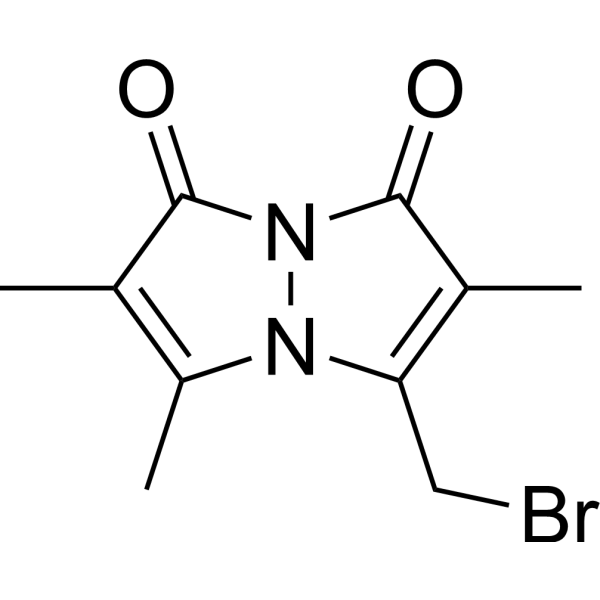
Bromobimane (Monobromobimane) is a nonfluorescent and converts into fluorescent products when reacts with thiols. Bromobimane has potential applications in labeling thiols .
|
-
- HY-103640R
-
|
WR-1065 dihydrochloride (Standard)
|
Reference Standards
MDM-2/p53
|
Cancer
|
|
Amifostine thiol (dihydrochloride) (Standard) is the analytical standard of Amifostine thiol (dihydrochloride). This product is intended for research and analytical applications. Amifostine thiol (WR-1065) dihydrochloride can protect normal tissues from the toxic effects of certain cancer agents and activate p53 through a JNK-dependent signaling pathway.
|
-
- HY-134512
-
|
|
PROTAC Linkers
|
Cancer
|
|
Aminooxy-PEG3-C2-thiol is a PEG-based PROTAC linker that can be used in the synthesis of PROTACs .
|
-
- HY-138525
-
|
|
PROTAC Linkers
|
Cancer
|
|
Azido-PEG4-Thiol is a PEG-based PROTAC linker that can be used in the synthesis of PROTACs . Azido-PEG4-Thiol is a click chemistry reagent, it contains an Azide group and can undergo copper-catalyzed azide-alkyne cycloaddition reaction (CuAAc) with molecules containing Alkyne groups. It can also undergo strain-promoted alkyne-azide cycloaddition (SPAAC) reactions with molecules containing DBCO or BCN groups.
|
-
- HY-168490A
-
|
|
Biochemical Assay Reagents
|
Others
|
|
Poly(ethylene glycol)methyl ether thiol (MW 2000) is a thiol-modified PEG that can be used to modify the surface of materials to enhance their hydrophilicity and functionality .
|
-
- HY-168490B
-
|
|
Biochemical Assay Reagents
|
Others
|
|
Poly(ethylene glycol)methyl ether thiol (MW 6000) is a thiol-modified PEG that can be used to modify the surface of materials to enhance their hydrophilicity and functionality .
|
-
- HY-168490
-
|
|
Biochemical Assay Reagents
|
Others
|
|
Poly(ethylene glycol)methyl ether thiol (MW 800) is a thiol-modified PEG that can be used to modify the surface of materials to enhance their hydrophilicity and functionality .
|
-
- HY-138532
-
|
|
PROTAC Linkers
|
Cancer
|
|
m-PEG8-amide-C10-Thiol is a PEG-based PROTAC linker that can be used in the synthesis of PROTACs .
|
-
- HY-174949C
-
|
FMOC-NH-PEG5000-Thiol
|
Biochemical Assay Reagents
|
Others
|
|
FMOC-NH-PEG5000-SH (FMOC-NH-PEG5000-Thiol) is a PEG derivative with an Fmoc protecting group and a thiol (-SH) reactive group. The thiol group is a highly reactive chemical group that can react specifically with a variety of molecules to form stable covalent bonds. Fmoc is a commonly used amino protecting group that protects the amino group from unwanted reactions until it is removed when a specific coupling reaction is required.
|
-
- HY-174949D
-
|
FMOC-NH-PEG10000-Thiol
|
Biochemical Assay Reagents
|
Others
|
|
FMOC-NH-PEG10000-SH (FMOC-NH-PEG10000-Thiol) is a PEG derivative with an Fmoc protecting group and a thiol (-SH) reactive group. The thiol group is a highly reactive chemical group that can react specifically with a variety of molecules to form stable covalent bonds. Fmoc is a commonly used amino protecting group that protects the amino group from unwanted reactions until it is removed when a specific coupling reaction is required.
|
-
- HY-174949
-
|
FMOC-NH-PEG1000-Thiol
|
Biochemical Assay Reagents
|
Others
|
|
FMOC-NH-PEG1000-SH (FMOC-NH-PEG1000-Thiol) is a PEG derivative with an Fmoc protecting group and a thiol (-SH) reactive group. The thiol group is a highly reactive chemical group that can react specifically with a variety of molecules to form stable covalent bonds. Fmoc is a commonly used amino protecting group that protects the amino group from unwanted reactions until it is removed when a specific coupling reaction is required.
|
-
- HY-174949B
-
|
FMOC-NH-PEG3400-Thiol
|
Biochemical Assay Reagents
|
Others
|
|
FMOC-NH-PEG3400-SH (FMOC-NH-PEG3400-Thiol) is a PEG derivative with an Fmoc protecting group and a thiol (-SH) reactive group. The thiol group is a highly reactive chemical group that can react specifically with a variety of molecules to form stable covalent bonds. Fmoc is a commonly used amino protecting group that protects the amino group from unwanted reactions until it is removed when a specific coupling reaction is required.
|
-
- HY-174949A
-
|
FMOC-NH-PEG2000-Thiol
|
Biochemical Assay Reagents
|
Others
|
|
FMOC-NH-PEG2000-SH (FMOC-NH-PEG2000-Thiol) is a PEG derivative with an Fmoc protecting group and a thiol (-SH) reactive group. The thiol group is a highly reactive chemical group that can react specifically with a variety of molecules to form stable covalent bonds. Fmoc is a commonly used amino protecting group that protects the amino group from unwanted reactions until it is removed when a specific coupling reaction is required.
|
-
- HY-W156811
-
-
- HY-134512A
-
|
|
PROTAC Linkers
|
Cancer
|
|
Aminooxy-PEG3-C2-thiol (hydrochloride) is a PROTAC linker belonging to the PEG class and can be used to synthesize PROTAC molecules .
|
-
- HY-140706A
-
|
mPEG40000-SH
|
Biochemical Assay Reagents
|
Others
|
|
m-PEG40000-thiol (mPEG40000-SH) can modify DNA thiolation and is used in the synthesis of gold nanorods (AuNRs) .
|
-
- HY-W1048527A
-
|
8-Arm PEG20000-Thiol
|
Biochemical Assay Reagents
|
Others
|
|
8-Arm PEG20000-SH (8-Arm PEG20000-Thiol) is a multi-arm PEG derivative with thiol groups at each end of the eight arms. 8-Arm PEG20000-SH can be used for drug delivery .
|
-
- HY-W1048527
-
|
8-Arm PEG5000-Thiol
|
Biochemical Assay Reagents
|
Others
|
|
8-Arm PEG5000-SH (8-Arm PEG5000-Thiol) is a multi-arm PEG derivative with thiol groups at each end of the eight arms. 8-Arm PEG5000-SH can be used for drug delivery .
|
-
- HY-W1048527B
-
|
8-Arm PEG40000-Thiol
|
Biochemical Assay Reagents
|
Others
|
|
8-Arm PEG40000-SH (8-Arm PEG40000-Thiol) is a multi-arm PEG derivative with thiol groups at each end of the eight arms. 8-Arm PEG40000-SH can be used for drug delivery .
|
-
- HY-W1048527C
-
|
8-Arm PEG10000-Thiol
|
Biochemical Assay Reagents
|
Others
|
|
8-Arm PEG10000-SH (8-Arm PEG10000-Thiol) is a multi-arm PEG derivative with thiol groups at each end of the eight arms. 8-Arm PEG10000-SH can be used for drug delivery .
|
-
- HY-W1048849B
-
|
4-Arm PEG-thiol (MW 10000)
|
Biochemical Assay Reagents
|
Others
|
|
4-Arm PEG-SH (MW 10000) (4-Arm PEG-thiol (MW 10000)) is a multi-arm PEG derivative with thiol groups at each end of the four arms. The reactive free thiol, SH or sulfhydryl groups react selectively with maleimide and transition metal surfaces including gold and silver .
|
-
- HY-29501
-
|
SH-PEG2-NH2
|
Biochemical Assay Reagents
|
Others
|
|
Thiol-PEG2-NH2 (SH-PEG2-NH2) is a PEG derivative consisting of a thiol (-SH), 2 PEG units, and NH2. Thiol is a highly reactive chemical group that can react specifically with a variety of molecules to form stable covalent bonds.
|
-
- HY-W020780D
-
|
|
Biochemical Assay Reagents
|
Others
|
|
mPEG40000-Mal is a thiol-reactive PEG derivative that can be used to selectively modify proteins, peptides, or any other surface with available thiol groups .
|
-
- HY-W800648
-
|
|
Biochemical Assay Reagents
|
Others
|
|
Mal-PEG2-Amide is a PEG linker with a maleimide group which can react with a thiol group to form a covalent bond, enabling the connection of biomolecule with a thiol.
|
-
- HY-W591469
-
|
|
Biochemical Assay Reagents
|
Others
|
|
mPEG1000-Mal is a thiol-reactive PEG derivative that can be used to selectively modify proteins, peptides, or any other surface with available thiol groups .
|
-
- HY-136130
-
|
|
ADC Linker
|
Cancer
|
|
N,N-Bis(PEG2-alkyne)-N-amido-PEG2-thiol is a cleavable 4 unit PEG ADC linker used in the synthesis of antibody-drug conjugates (ADCs) . N,N-Bis(PEG2-alkyne)-N-amido-PEG2-thiol is a click chemistry reagent, it contains an Alkyne group and can undergo copper-catalyzed azide-alkyne cycloaddition (CuAAc) with molecules containing Azide groups.
|
-
- HY-W104752
-
-
- HY-130509
-
|
Otmpmms
|
Biochemical Assay Reagents
|
Others
|
|
MTSSL (Otmpmms) is highly reactive thiol-specific spin label, which is used to label protein thiol residues for protein structure and dynamics determination and protein-protein interaction studies .
|
-
- HY-108715A
-
|
|
Fluorescent Dye
|
Neurological Disease
|
|
RT-AM is a pro-agent real thiol. Real Thiol is a reversible reaction-based fluorescent probe which can quantitatively monitor the real-time glutathione dynamics in living cells.
|
-
- HY-W395122
-
|
|
Biochemical Assay Reagents
|
Others
|
|
Mal-PEG1-PNP-carbonate is a amine-reactive compound. PNP is a good leaving group. The maleimide group will react with a thiol group to form a covalent bond, enabling the connection of biomolecule with a thiol.
|
-
- HY-N14193
-
|
|
Cathepsin
|
Inflammation/Immunology
|
|
Estatin B is a thiol protease inhibitor found by the Thermophilic Bacterium M4323, which is specific to thiol proteases such as papain, fig protease, and bromelain. Estatin B inhibits the production of IgE antibodies but not IgG in mice .
|
-
- HY-N9279
-
|
Monocrotaline pyrrole; MCTP; 3,8-Didehydromonocrotaline
|
Endogenous Metabolite
|
Cardiovascular Disease
Cancer
|
|
Dehydromonocrotaline is a mitochondrial respiratory chain complex I NADH oxidase inhibitor, with a IC50 of 62.06 μM and a Ki of 8.1 μM in rats. Dehydromonocrotaline exerts non-competitive inhibitory effects by modifying cysteine thiol groups on complex I, and does not bind to the NADH-binding site. Dehydromonocrotaline dissipates mitochondrial membrane potential and reduces ATP levels. Dehydromonocrotaline can be used in studies related to hepatotoxicity, pulmonary hypertension and liver tumors .
|
-
- HY-W590555
-
|
|
Liposome
|
Cancer
|
|
Thiol-PEG2000-DMG is a phospholipid polyPEG which can be used to prepare liposomes or nanoparticles. The terminal thiol group reacts with maleimide, OPSS, vinylsulfone and transition metal surfaces including gold, silver, etc.
|
-
- HY-W440727
-
|
|
Liposome
|
Cancer
|
|
Cholesterol-PEG2000-Vinylsulfone is a thiol reactive polyPEG via thiol-ene reaction to form a thioether bond. It can self-assemble in water and is used to prepare liposome as drug vehicle for targeted delivery into tissues.
|
-
- HY-W190877
-
|
SH-PEG1-COOH
|
Biochemical Assay Reagents
|
Others
|
|
Thiol-PEG1-acid (SH-PEG1-COOH) is a PEG derivative consisting of a thiol (-SH), 1 PEG unit, and a carboxyl (-COOH). The thiol is a highly reactive chemical group that can react specifically with a variety of molecules to form stable covalent bonds. The carboxyl group can easily form stable amide bonds with amino groups, and can also form ester bonds with hydroxyl groups.
|
-
- HY-W014316
-
|
|
Bacterial
Fungal
|
Infection
|
|
5-Bromo-5-nitro-1,3-dioxane is a broad-spectrum antimicrobial agent active against Gram-positive bacteria, Gram-negative bacteria and fungi. 5-Bromo-5-nitro-1,3-dioxane oxidizes free thiol groups to their corresponding disulfides. 5-Bromo-5-nitro-1,3-dioxane induces intracellular substance leakage in Escherichia coli and Staphylococcus aureus. 5-Bromo-5-nitro-1,3-dioxane modulates the oxygen consumption of Escherichia coli and Staphylococcus aureus .
|
-
- HY-100041R
-
|
Monobromobimane (Standard)
|
Fluorescent Dye
Reference Standards
|
Others
|
|
Bromobimane (Standard) is the analytical standard of Bromobimane (HY-100041). This product is intended for research and analytical applications. Bromobimane (Monobromobimane) is a nonfluorescent and converts into fluorescent products when reacts with thiols. Bromobimane has potential applications in labeling thiols .
|
-
- HY-D2974
-
|
|
Fluorescent Dye
|
Others
|
|
DCI-Ac-HMPC is a near-infrared thiol probe. DCI-Ac-HMPC can trigger the intramolecular cascade reaction to in-situ generate NIR coumarin fluorophore. DCI-Ac-HMPC can be used to track the level of thiols .
|
-
- HY-149182
-
-
- HY-129377
-
|
|
ADC Linker
|
Cancer
|
|
Sulfo-SPP is a heterobifunctional, thiol-cleavable and membrane impermeable crosslinker.
|
-
- HY-16739
-
-
- HY-129377A
-
|
|
ADC Linker
|
Cancer
|
|
Sulfo-SPP sodium a heterobifunctional, thiol-cleavable and membrane impermeable crosslinker.
|
-
- HY-162159
-
-
- HY-W010517S
-
-
- HY-W591975
-
|
|
Biochemical Assay Reagents
|
Others
|
|
Alkyne maleimide is a bifunctional linker reagent with a terminal malimide group and a propargyl group. The maleimide group will react with a thiol group to form a covalent bond, enabling the connection of biomolecule with a thiol. The propargyl group can be linked to azide-containing biomolecules via Click Chemistry.
|
-
- HY-126495
-
|
|
ADC Linker
|
Cancer
|
|
Sulfo-LC-SPDP is a heterobifunctional, thiol-cleavable and membrane impermeable crosslinker.
|
-
- HY-W998680
-
|
5-FITC-Maleimide
|
Fluorescent Dye
|
Others
|
|
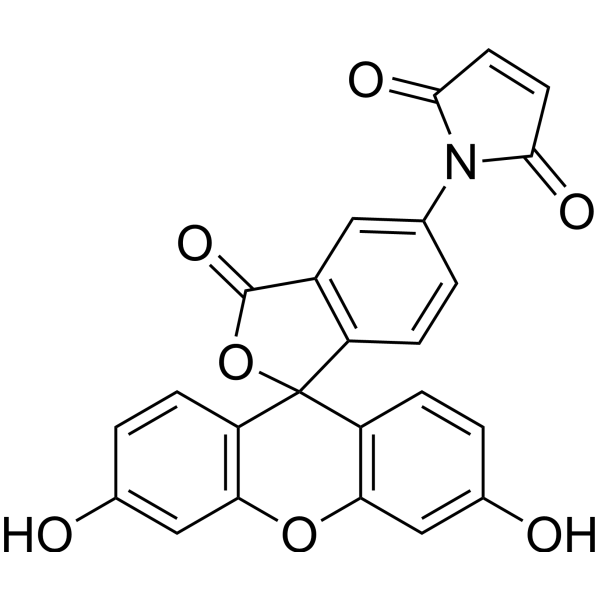
Fluorescein-maleimide (5-FITC-Maleimide) is a thiol-reactive fluorescent derivatization reagent and non-specific protein labeling reagent. Fluorescein-maleimide covalently binds to protein thiol groups for protein labeling. Fluorescein-maleimide covalently binds to protein amino and imidazole groups under neutral pH conditions. Fluorescein-maleimide is used for fluorescent labeling of proteins, nucleic acids or other molecules containing one or more thiol groups (Ex/Em = 494/519 nm) .
|
-
- HY-136129
-
|
|
ADC Linker
|
Cancer
|
|
N,N-Bis(PEG2-N3)-N-amido-PEG2-thiol is a cleavable 4 unit PEG ADC linker used in the synthesis of antibody-drug conjugates (ADCs) . N,N-Bis(PEG2-N3)-N-amido-PEG2-thiol is a click chemistry reagent, it contains an Azide group and can undergo copper-catalyzed azide-alkyne cycloaddition reaction (CuAAc) with molecules containing Alkyne groups. It can also undergo strain-promoted alkyne-azide cycloaddition (SPAAC) reactions with molecules containing DBCO or BCN groups.
|
-
- HY-D1754
-
|
LYCH ammonium
|
Fluorescent Dye
|
Others
|
|
Lucifer yellow CH (LYC) ammonium is a thiol-reactive fluorescent polar tracer.
|
-
- HY-135133
-
-
- HY-47851
-
-
- HY-W016620
-
|
Tetramethyl thiol alcynic acid
|
Drug Intermediate
|
Others
|
|
3-Acetylphenyl acetate (Tetramethyl thiol alcynic acid) can be used as pharmaceutical intermediates .
|
-
- HY-130509S
-
|
Otmpmms-15N
|
Isotope-Labeled Compounds
Biochemical Assay Reagents
|
Others
|
|
MTSSL- 15N (Otmpmms- 15N) is the 15N-labeled MTSSL (HY-130509). MTSSL (Otmpmms) is highly reactive thiol-specific spin label, which is used to label protein thiol residues for protein structure and dynamics determination and protein-protein interaction studies .
|
-
- HY-15915
-
DTNB
Maximum Cited Publications
14 Publications Verification
Ellman’s Reagent
|
Biochemical Assay Reagents
|
Others
|
|
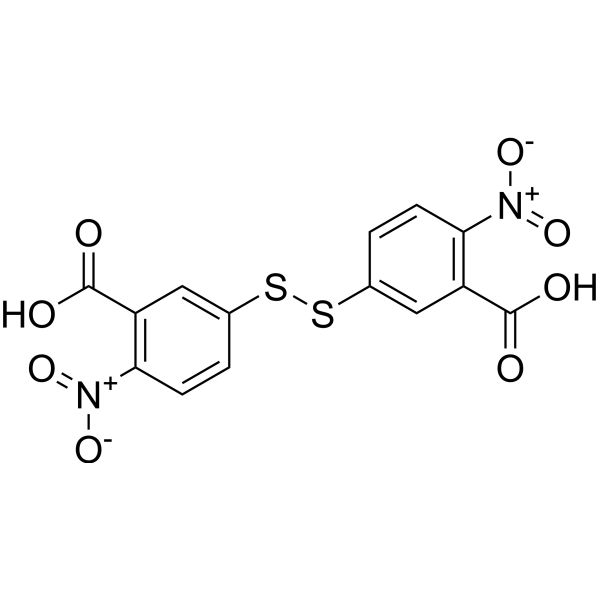
DTNB (Ellman’s Reagent) is a chemical used to quantify the number or concentration of thiol groups .
|
-
- HY-174965H
-
|
DBCO-PEG10000-Thiol
|
Biochemical Assay Reagents
|
Others
|
|
DBCO-PEG10000-SH (DBCO-PEG10000-Thiol) is a DBCO-modified PEG derivative. DBCO-PEG10000-SH contains a DBCO group and can undergo a strain-promoted alkyne-azide cycloaddition reaction (SPAAC) with molecules containing an azide group .
|
-
- HY-W441003
-
|
|
Biochemical Assay Reagents
|
Others
|
|
DSPE-PEG2000-IA is a thiol reactive phospholipid polyPEG. The iodoacetyll group is reactive with thiol to produce a thioether linkage. The polymer can self-assemble in water to form lipid bilayer and can be used to encapsulate drugs in targeted delivery application, such as liposomal doxorubicin as an anti cancer drug or mRNA vaccine.
|
-
- HY-174965D
-
|
DBCO-PEG3400-Thiol
|
Biochemical Assay Reagents
|
Others
|
|
DBCO-PEG3400-SH (DBCO-PEG3400-Thiol) is a DBCO-modified PEG derivative. DBCO-PEG3400-SH contains a DBCO group and can undergo a strain-promoted alkyne-azide cycloaddition reaction (SPAAC) with molecules containing an azide group .
|
-
- HY-174965B
-
|
DBCO-PEG1000-Thiol
|
Biochemical Assay Reagents
|
Others
|
|
DBCO-PEG1000-SH (DBCO-PEG1000-Thiol) is a DBCO-modified PEG derivative. DBCO-PEG1000-SH contains a DBCO group and can undergo a strain-promoted alkyne-azide cycloaddition reaction (SPAAC) with molecules containing an azide group .
|
-
- HY-W440907
-
|
|
Biochemical Assay Reagents
|
Others
|
|
DSPE-PEG5000-Vinylsulfone is a viniyl sulfone PEG lipid which can be used for bioconjugation with cysteine or other thiol molecule through thiol-ene reaction. The polymer is a self-assembling reagetn which forms lipid bilayer in water and can be used as drug carrier to delivery therapeutic agents, such as mRNA or DNA vaccine.
|
-
- HY-W440905
-
|
|
Biochemical Assay Reagents
|
Others
|
|
DSPE-PEG2000-Vinylsulfone is a viniyl sulfone PEG lipid which can be used for bioconjugation with cysteine or other thiol molecule through thiol-ene reaction. The polymer is a self-assembling reagetn which forms lipid bilayer in water and can be used as drug carrier to delivery therapeutic agents, such as mRNA or DNA vaccine.
|
-
- HY-W440904
-
|
|
Biochemical Assay Reagents
|
Others
|
|
DSPE-PEG1000-Vinylsulfone is a viniyl sulfone PEG lipid which can be used for bioconjugation with cysteine or other thiol molecule through thiol-ene reaction. The polymer is a self-assembling reagetn which forms lipid bilayer in water and can be used as drug carrier to delivery therapeutic agents, such as mRNA or DNA vaccine.
|
-
- HY-W440906
-
|
|
Biochemical Assay Reagents
|
Others
|
|
DSPE-PEG3400-Vinylsulfone is a viniyl sulfone PEG lipid which can be used for bioconjugation with cysteine or other thiol molecule through thiol-ene reaction. The polymer is a self-assembling reagetn which forms lipid bilayer in water and can be used as drug carrier to delivery therapeutic agents, such as mRNA or DNA vaccine.
|
-
- HY-W736950A
-
|
|
Amino Acid Derivatives
|
Others
|
|
H-L-Cys(MDNPE)-OH hydrochloride is a cysteine derivative with a short peptide sequence attached to the thiol group of cysteine.
|
-
- HY-182012
-
|
|
Drug Derivative
|
Cardiovascular Disease
|
|
DT-678 is an orally active antiplatelet and antithrombotic inhibitor. DT-678 is a conjugate formed by linking the active metabolite of Clopidogrel (HY-15283) with 3-nitropyridine-2-thiol via a mixed disulfide bond. DT-678 does not rely on CYP2C19 for activation, and directly releases active substances via thiol exchange reactions in vivo, exhibiting superior efficacy over Clopidogrel. DT-678 can be used in research related to acute coronary syndrome and thrombosis .
|
-
- HY-W023557
-
|
3-Methylmaleimide; 2-Methylmaleimide
|
Drug Intermediate
|
Others
|
|
Citraconimide is a 3-methylmaleimide derivative. Citraconimide has thiol affinity and can undergo highly regioselective addition with a variety of alkyl thiols. Citraconimide derivatives show growth inhibitory activity against HeLa cells. Citraconimide can be modified by N-substitution, halogenation and other reactions for use in bioactive molecule design and drug development research .
|
-
- HY-D1423
-
|
|
Fluorescent Dye
|
Others
|
|
Dibromobimane is a thiol-selective fluorescent imaging agent. Dibromobimane is used to crosslink cysteine- and homocysteine-containing peptides .
|
-
- HY-D0042
-
NBD-Cl
1 Publications Verification
NBD chloride
|
Fluorescent Dye
|
Others
|
|
NBD-Cl is a nonfluorescent reagent which becomes highly fluorescent after reaction with thiol or amino groups .
|
-
- HY-156559
-
-
- HY-140018
-
|
|
PROTAC Linkers
|
Cancer
|
|
Thiol-PEG3-acid is a PEG-based PROTAC linker that can be used in the synthesis of PROTACs .
|
-
- HY-130542
-
|
|
PROTAC Linkers
|
Cancer
|
|
Thiol-PEG8-acid is a PEG-based PROTAC linker that can be used in the synthesis of PROTACs .
|
-
- HY-138524
-
|
|
PROTAC Linkers
|
Cancer
|
|
Thiol-PEG2-acid is a PEG-based PROTAC linker that can be used in the synthesis of PROTACs .
|
-
- HY-141326
-
|
|
PROTAC Linkers
|
Cancer
|
|
Thiol-PEG12-acid is a PEG-based PROTAC linker that can be used in the synthesis of PROTACs .
|
-
- HY-133290
-
|
HS-PEG5-CH2CH2COOH
|
PROTAC Linkers
|
Cancer
|
|
Thiol-PEG5-acid is a PEG-based PROTAC linker that can be used in the synthesis of PROTACs .
|
-
- HY-138310
-
|
|
PROTAC Linkers
|
Cancer
|
|
Thiol-PEG5000-COOH is a PEG-based PROTAC linker can be used in the synthesis of PROTACs.
|
-
- HY-130213
-
|
|
PROTAC Linkers
|
Cancer
|
|
Thiol-PEG4-acid is a PEG-based PROTAC linker that can be used in the synthesis of PROTACs .
|
-
- HY-133291
-
|
|
PROTAC Linkers
|
Cancer
|
|
Thiol-PEG6-acid is a PEG-based PROTAC linker that can be used in the synthesis of PROTACs .
|
-
- HY-W800654
-
|
|
Biochemical Assay Reagents
|
Others
|
|
Mal-PEG5-amine is a PEG linker containing a maleimide group and an amine group. The hydrophilic PEG spacer increases solubility in aqueous media. The amine group is reactive with carboxylic acids, activated NHS esters, carbonyls (ketone, aldehyde) etc. The maleimide group will react with a thiol group to form a covalent bond, enabling the connection of biomolecule with a thiol.
|
-
- HY-W190922
-
|
|
Biochemical Assay Reagents
|
Others
|
|
Mal-PEG4-amine is a PEG linker containing a maleimide group and an amine group. The hydrophilic PEG spacer increases solubility in aqueous media. The amine group is reactive with carboxylic acids, activated NHS esters, carbonyls (ketone, aldehyde) etc. The maleimide group will react with a thiol group to form a covalent bond, enabling the connection of biomolecule with a thiol.
|
-
- HY-172505
-
|
|
Biochemical Assay Reagents
|
Others
|
|
Mal-PEG12-t-butyl ester is a PEG linker containing a maleimide group and a t-butyl ester group. The hydrophilic PEG spacer increases solubility in aqueous media. The t-butyl protected carboxyl group can be deprotected under acidic conditions. The maleimide group will react with a thiol group to form a covalent bond, enabling the connection of biomolecule with a thiol.
|
-
- HY-W1048555A
-
|
|
Biochemical Assay Reagents
|
Others
|
|
Mal-PEG2000-SCM is a heterobifunctional PEG crosslinker bearing maleimide and succinimidyl carboxymethyl ester functional groups. MMal-PEG2000-SCM conjugates the F3 peptide to nanoparticles: the SCM group reacts with amino groups on the nanoparticle surface to form amide groups, while the MAL group reacts with thiol groups of the F3 peptide to form carbon-sulfur bonds. Mal-PEG-SCM enables unidirectional addition of linkers, ensuring that appropriate functional groups are available for RGD incorporation. Mal-PEG2000-SCM can be used in the development of nanoparticles targeting specific tumor cells .
|
-
- HY-133294
-
|
HS-PEG8-OH
|
PROTAC Linkers
|
Cancer
|
|
Thiol-PEG8-alcohol is a PEG-based PROTAC linker that can be used in the synthesis of PROTACs .
|
-
- HY-133295
-
|
HS-PEG10-OH
|
PROTAC Linkers
|
Cancer
|
|
Thiol-PEG10-alcohol is a PEG-based PROTAC linker that can be used in the synthesis of PROTACs .
|
-
- HY-133297
-
|
HS-PEG12-OH
|
PROTAC Linkers
|
Cancer
|
|
Thiol-PEG12-alcohol is a PEG-based PROTAC linker that can be used in the synthesis of PROTACs .
|
-
- HY-141328
-
|
Thiol-PEG4-t-butyl ester
|
PROTAC Linkers
|
Cancer
|
|
Thiol-PEG4-Boc is a PEG-based PROTAC linker that can be used in the synthesis of PROTACs .
|
-
- HY-141318
-
|
|
PROTAC Linkers
|
Cancer
|
|
Thiol-PEG3-phosphonic acid is a PEG-based PROTAC linker that can be used in the synthesis of PROTACs .
|
-
- HY-138759
-
|
|
PROTAC Linkers
|
Cancer
|
|
Thiol-PEG3-NHBoc is a PEG-based PROTAC linker that can be used in the synthesis of PROTACs .
|
-
- HY-21241
-
-
- HY-114776
-
|
|
Fluorescent Dye
|
Others
|
|
Biotin-olefin (Compound 1) is a biotin probe. Biotin-olefin can used for photoimmobilization on thiol-functionalized surfaces .
|
-
- HY-133293
-
|
HS-PEG5-OH
|
PROTAC Linkers
|
Cancer
|
|
Thiol-PEG5-alcohol is a PEG-based PROTAC linker that can be used in the synthesis of PROTACs .
|
-
- HY-141327
-
|
Thiol-PEG3-t-butyl ester
|
PROTAC Linkers
|
Cancer
|
|
Thiol-PEG3-Boc is a PEG-based PROTAC linker that can be used in the synthesis of PROTACs .
|
-
- HY-130580
-
|
HS-PEG6-OH
|
PROTAC Linkers
|
Cancer
|
|
Thiol-PEG6-alcohol is a PEG-based PROTAC linker that can be used in the synthesis of PROTACs .
|
-
- HY-W190729
-
|
|
PROTAC Linkers
|
Cancer
|
|
Thiol-PEG3-acetic acid is a PEG-based PROTAC linker that can be used in the synthesis of PROTACs .
|
-
- HY-D0069
-
|
|
Fluorescent Dye
|
Others
Cancer
|
|
CPM is a maleimide derivative, acting as a blue fluorescent thiol-reactive dye (excitation/emission maxima of 387/463 nm) .
|
-
- HY-133296
-
|
HS-PEG9-OH
|
PROTAC Linkers
|
Cancer
|
|
Thiol-PEG9-alcohol is a PEG-based PROTAC linker that can be used in the synthesis of PROTACs .
|
-
- HY-133292
-
|
HS-PEG4-OH
|
PROTAC Linkers
|
Cancer
|
|
Thiol-PEG4-alcohol is a PEG-based PROTAC linker that can be used in the synthesis of PROTACs .
|
-
- HY-15876
-
|
|
Drug Metabolite
P2Y Receptor
|
Cardiovascular Disease
|
|
Clopidogrel thiolactone is an important intermediate in the metabolism of Clopidogrel (HY-15283). Clopidogrel thiolactone has antiplatelet aggregatione effects. Clopidogrel is a P2Y12 receptor inhibitor that exerts antiplatelet effects .
|
-
- HY-15876R
-
|
|
Drug Metabolite
Reference Standards
P2Y Receptor
|
Cardiovascular Disease
|
|
Cyhalofop (Standard) is the analytical standard of Cyhalofop. This product is intended for research and analytical applications. Cyhalofop (Cyhalofop acid), the primary metabolite of Cyhalofop-butyl (HY-B0861) in susceptible grasses, is the herbicidally active metabolite. Cyhalofop-butyl is an aryloxyphenoxypropionate post-emergence herbicide widely used around the world in agriculture .
|
-
- HY-W591476B
-
|
mPEG750-SH
|
Biochemical Assay Reagents
|
Others
|
|
m-PEG750-thiol modifies DNA thiolation for the synthesis of gold nanorods (AuNRs). Thiolated DNA can be loaded onto AuNR by the mPEG-SH/Tween 20 assisted method (Tween 20 and mPEG-SH repeatedly displace CTAB on the AuNR surface). DNA AuNRs have been widely used in nanostructure assembly, gene therapy, biosensing, and drug delivery.
|
-
- HY-W591476A
-
|
mPEG3400-SH
|
Biochemical Assay Reagents
|
Others
|
|
m-PEG3400-thiol modifies DNA thiolation for the synthesis of gold nanorods (AuNRs). Thiolated DNA can be loaded onto AuNR by the mPEG-SH/Tween 20 assisted method (Tween 20 and mPEG-SH repeatedly displace CTAB on the AuNR surface). DNA AuNRs have been widely used in nanostructure assembly, gene therapy, biosensing, and drug delivery.
|
-
- HY-W776833
-
|
Otmpmms-15N,d15
|
Isotope-Labeled Compounds
Biochemical Assay Reagents
|
Others
|
|
MTSSL- 15N,d15-1 (Otmpmms- 15N,d15) is the deuterium and 15N-labeled MTSSL (HY-130509). MTSSL (Otmpmms) is highly reactive thiol-specific spin label, which is used to label protein thiol residues for protein structure and dynamics determination and protein-protein interaction studies .
|
-
- HY-W777067
-
|
|
Isotope-Labeled Compounds
|
Others
|
|
3-Methyl-2-buten-1-yl Thiolacetate-d6 is the deuterium labeled 3-Methyl-2-buten-1-yl Thiolacetate(3-Methyl-2-buten-1-thiol precursor) (HY-W777066).
|
-
- HY-W591476C
-
|
mPEG550-SH
|
Biochemical Assay Reagents
|
Others
|
|
m-PEG550-thiol modifies DNA thiolation for the synthesis of gold nanorods (AuNRs). Thiolated DNA can be loaded onto AuNR by the mPEG-SH/Tween 20 assisted method (Tween 20 and mPEG-SH repeatedly displace CTAB on the AuNR surface). DNA AuNRs have been widely used in nanostructure assembly, gene therapy, biosensing, and drug delivery.
|
-
- HY-W591476D
-
|
mPEG350-SH
|
Biochemical Assay Reagents
|
Others
|
|
m-PEG350-thiol modifies DNA thiolation for the synthesis of gold nanorods (AuNRs). Thiolated DNA can be loaded onto AuNR by the mPEG-SH/Tween 20 assisted method (Tween 20 and mPEG-SH repeatedly displace CTAB on the AuNR surface). DNA AuNRs have been widely used in nanostructure assembly, gene therapy, biosensing, and drug delivery.
|
-
- HY-W040230
-
|
|
Fluorescent Dye
|
Others
|
|
Acrylodan, reacted with thiols, is sensitive to the local environmental dipolarity and dynamics within the binding pocket surrounding Cys 34 .
|
-
- HY-D1364
-
|
|
Biochemical Assay Reagents
|
Others
|
|
Pyrene maleimide is a polyaromatic fluorescent hydrocarbon with a termininal maleimide group. The maleimide group will react with a thiol group to form a covalent bond.
|
-
- HY-W800787
-
|
|
Liposome
|
Cancer
|
|
18:1 PE MCC is a maleimide-functionalized thiol-reactive lipid with a phosphoethanolamine linked to two oleic acid tails and a maleimide group.
|
-
- HY-134428
-
|
|
Endogenous Metabolite
|
Metabolic Disease
|
|
Arachidonoyl coenzyme A lithium is an unsaturated fatty acyl coenzyme A, formed by the condensation of the thiol group of coenzyme A with the carboxyl group of arachidonic acid .
|
-
- HY-141319
-
|
|
PROTAC Linkers
|
Cancer
|
|
Thiol-PEG3-phosphonic acid ethyl ester is a PEG-based PROTAC linker that can be used in the synthesis of PROTACs .
|
-
- HY-129994
-
|
S-Nitroso-coenzyme A; SNO-CoA; SNO-coenzyme A
|
Biochemical Assay Reagents
|
Metabolic Disease
|
|
S-Nitroso-CoA (S-Nitroso-coenzyme A) is a nitrosothio compound that is coenzyme A in which the thiol group is replaced by a nitrososulfanediyl group .
|
-
- HY-W800786
-
|
N-MCC-PE
|
Liposome
|
Cancer
|
|
16:0 PE MCC is a maleimide-functionalized thiol-reactive lipid with a phosphoethanolamine linked to two palmitic acid tails and a maleimide group.
|
-
- HY-132100
-
|
|
PROTAC Linkers
|
Cancer
|
|
Thiol-PEG2-t-butyl ester is a PEG-based PROTAC linker that can be used in the synthesis of PROTACs .
|
-
- HY-110256
-
-
- HY-D2091
-
|
|
Fluorescent Dye
|
Others
|
|
PE-VF647 Maleimide is a double-dye dye that can undergo thiol reaction. It contains maleimide groups that can react with thiol groups to form covalent bonds. PE-VF647 Maleimide contains two dyes, PE and VF, with excitation wavelengths (Ex) of 495 nm and 566 nm, respectively. PE-VF594 Maleimide has an emission wavelength (Em) of 665 nm.
|
-
- HY-W015224
-
|
|
Endogenous Metabolite
|
Metabolic Disease
|
|
Methyl 2-(1H-indol-3-yl)acetate is an indole ester.Methyl 2-(1H-indol-3-yl)acetate serves as a precursor for synthesis of S-alkylated/aralkylated 2-(1H-indol-3-ylmethyl)-1,3,4-oxadiazole-5-thiol derivatives .
|
-
- HY-W713925
-
|
|
Endogenous Metabolite
|
Metabolic Disease
|
|
Diheptanoyl Thio-PC is a substrate for all phospholipase A2s (PLA2s) with the exception of cPLA2 and PAF-acetyl hydrolase (PAF-AH).1 Interaction of this compound with a PLA2 results in cleavage of the sn-2 fatty acid generating a free thiol on the lysophospholipid. This free thiol can be detected using chromogenic substrates such as DTNB (Ellman’s reagent) and DTP.
|
-
- HY-138517
-
|
|
PROTAC Linkers
|
Cancer
|
|
Thiol-C9-PEG7 is a PEG-based PROTAC linker that can be used in the synthesis of PROTACs .
|
-
- HY-W800789
-
|
|
Liposome
|
Cancer
|
|
16:0 MPB PE is a maleimide-functionalized thiol-reactive lipid with a phosphoethanolamine linked to two palmitic acid tails and a phenyl maleimide group.
|
-
- HY-138446
-
|
SH-PEG4-NH2 hydrochloride
|
PROTAC Linkers
|
Cancer
|
|
Thiol-PEG4-NH2 hydrochloride is a PEG-based PROTAC linker that can be used in the synthesis of PROTACs .
|
-
- HY-108715
-
|
|
Fluorescent Dye
|
Neurological Disease
|
|
Real Thiol is a reversible reaction-based fluorescent probe which can quantitatively monitor the real-time glutathione dynamics in living cells.
|
-
- HY-138527
-
|
|
PROTAC Linkers
|
Cancer
|
|
Thiol-C9-PEG4 is a PEG-based PROTAC linker that can be used in the synthesis of PROTACs .
|
-
- HY-138529
-
|
|
PROTAC Linkers
|
Cancer
|
|
Thiol-C9-PEG5 is a PEG-based PROTAC linker that can be used in the synthesis of PROTACs .
|
-
- HY-W800788
-
|
|
Liposome
|
Cancer
|
|
18:1 MPB PE is a maleimide-functionalized thiol-reactive lipid with a phosphoethanolamine linked to two oleic acid tails and a phenyl maleimide group.
|
-
- HY-W440896
-
|
|
Liposome
|
Others
|
|
DSPE-PEG2000-SH is an amphiphilic thiol-functionalized DSPE-PEG molecule. DSPE-PEG2000-SH inserts into extracellular vesicle (EV) bilayer membranes via hydrophobic interactions, displaying surface thiol groups to form EV-SH crosslinkers.DSPE-PEG2000-SH enables crosslinking of EV-SH with 8-arm PEG-norbornene via thiol-ene photochemistry to construct hydrogels, with hydrogel mechanical properties tunable via PEG segment molecular weight variation.DSPE-PEG2000-SH can be used to encapsulate agents for drug delivery system, such as mRNA vaccine .
|
-
- HY-W699846
-
|
|
Isotope-Labeled Compounds
Biochemical Assay Reagents
|
Others
|
|
5-(Methoxy-d3)-1H-benzo[d]imidazole-2-thiol is the deuterium labeled 5-Methoxy-2-benzimidazolethiol (HY-W008378). 5-Methoxy-2-benzimidazolethiol is a benzimidazole. The iodimetric determination of 5-Methoxy-2-benzimidazolethiol in alkaline media is studied .
|
-
- HY-W800722
-
|
|
Biochemical Assay Reagents
|
Others
|
|
N-(PEG1-acid)-L-Lysine-amido-Mal is a PEG based linker with terminal malimide and carboxylic acid groups. The hydrophilic PEG spacer increases solubility in aqueous media. The maleimide group will react with a thiol group to form a covalent bond, enabling the connection of biomolecule with a thiol. The terminal carboxylic acid can react with primary amine groups in the presence of activators (e.g. EDC, or HATU) to form a stable amide bond.
|
-
- HY-W591479
-
|
|
ADC Linker
|
Cancer
|
|
MC-Val-Ala-NHS ester is a cleavable ADC linker with a malimide group and an NHS ester group. The Val-Ala linkers can be cleaved by Cathepsin B. Maleimide group is reactive toward thiol groups. MC is reactive with thiol moieties. The NHS ester is able to react specifically and efficiently with amines (e.g. the side chain of lysine residues or aminosilane-coated surfaces) at neutral or slightly basic condition to form a covalent bond.
|
-
- HY-W011500
-
|
Tris(2-carboxyethyl)phosphine hydrochloride
|
Drug Derivative
|
Others
|
|
TCEP hydrochloride (Tris(2-carboxyethyl)phosphine hydrochloride) is a non-thiol reducing agent that is more stable and produces a faster S-S reductive reaction than other chemical reductants. TCEP hydrochloride is a trialkylphosphine, selectively reduces protein disuldes without altering the properties or interacting with thiol-directed agents in the reaction mixture. TCEP hydrochloride is also a commonly used reducing agent in the DNA/AuNP chemistry .
|
-
- HY-W800670
-
|
|
Biochemical Assay Reagents
|
Others
|
|
Mal-amido-PEG5-alkyne is a PEG linker containing a maleimide group and an alkyne. The hydrophilic PEG spacer increases solubility in aqueous media. The alkyne group can react with azide-bearing compounds or biomolecules via copper catalyzed azide-alkyne Click Chemistry to yield a stable triazole linkage. The maleimide group will react with a thiol group to form a covalent bond, enabling the connection of biomolecule with a thiol.
|
-
- HY-159057
-
|
|
Biochemical Assay Reagents
|
Others
|
|
Biotin-BMCC is a Maliemide (HY-W007324) conjugated biotin molecule that has a high affinity for free thiol groups of cysteines .
|
-
- HY-138528
-
|
|
PROTAC Linkers
|
Cancer
|
|
Thiol-C9-PEG5-acid is a PEG-based PROTAC linker that can be used in the synthesis of PROTACs .
|
-
- HY-138530
-
|
|
PROTAC Linkers
|
Cancer
|
|
Thiol-PEG4-amide-NH2 is a PEG-based PROTAC linker that can be used in the synthesis of PROTACs .
|
-
- HY-138533
-
|
|
PROTAC Linkers
|
Cancer
|
|
Thiol-C10-amide-PEG8 is a PEG-based PROTAC linker that can be used in the synthesis of PROTACs .
|
-
- HY-138526
-
|
|
PROTAC Linkers
|
Cancer
|
|
Thiol-C9-PEG4-acid is a PEG-based PROTAC linker that can be used in the synthesis of PROTACs .
|
-
- HY-D2093
-
|
|
Fluorescent Dye
|
Others
|
|
PE-VF750 Maleimide is a thiol-reactive double-dye dye that contains maleimide groups that can react with thiol groups to form covalent bonds. Ex/Em=495-566/777 nm. PE-VF750 Maleimide contains two dyes, PE and VF, with excitation wavelengths (Ex) of 495 nm and 566 nm, respectively. PE-VF594 Maleimide has an emission wavelength (Em) of 777 nm.
|
-
- HY-135085
-
|
|
PROTAC Linkers
|
Cancer
|
|
Thiol-C2-PEG2-OH is a PEG-based PROTAC linker that can be used in the synthesis of PROTACs .
|
-
- HY-140730
-
|
|
PROTAC Linkers
|
Cancer
|
|
Thiol-PEG5000-CH2COOH is a PEG-based PROTAC linker that can be used in the synthesis of PROTACs .
|
-
- HY-140728
-
|
|
PROTAC Linkers
|
Cancer
|
|
Thiol-PEG2000-CH2COOH is a PEG-based PROTAC linker that can be used in the synthesis of PROTACs .
|
-
- HY-D1744
-
|
|
Fluorescent Dye
|
Others
|
|
ICG Maleimide is thiol reactive near infrared (NIR) fluorescent dye and used to generate a stable fluorescence signal in bioimaging (Ex/Em = 789/813 nm).
|
-
- HY-140729
-
|
|
PROTAC Linkers
|
Cancer
|
|
Thiol-PEG3400-CH2COOH is a PEG-based PROTAC linker that can be used in the synthesis of PROTACs .
|
-
- HY-D2092
-
|
|
Fluorescent Dye
|
Others
|
|
PE-VF680 Maleimide is a double-dye dye that can undergo thiol reaction. It contains maleimide groups that can react with thiol groups to form covalent bonds. Ex/Em=495-566/701 nm. PE-VF680 Maleimide contains two dyes, PE and VF, with excitation wavelengths (Ex) of 495 nm and 566 nm, respectively. PE-VF594 Maleimide has an emission wavelength (Em) of 701 nm.
|
-
- HY-D1590
-
|
|
Fluorescent Dye
|
Others
|
|
ODIPY Green 8-P2M is a novel thiol-reactive fluorescence probe based on the BODIPY fluorophore, the fluorescence is strongly quenched by d-PeT and then can be restored after reaction with thiol, resulting in an extremely high signal-to-noise ratio. ODIPY Green 8-P2M can be useful for detecting extremely low concentrations of protein in the gel after SDS-PAGE .
|
-
- HY-122251
-
|
|
RGS Protein
|
Others
Neurological Disease
|
|
CCG-4986 is an RGS protein inhibitor. CCG-4986 inhibits protein activity by covalently modifying the Cys-132 site of RGS4. CCG-4986 can be used to study diseases related to dysregulated G protein-coupled receptor (GPCR) signaling, such as Parkinson's disease and opioid addiction .
|
-
- HY-111823
-
|
VHL ligand 6
|
Ligands for E3 Ligase
|
Cancer
|
|
VH032 thiol (VHL ligand 6) is a VHL ligand, which binds to pan-BET inhibitor JQ1 via a linker to form PROTAC .
|
-
- HY-139480B
-
|
|
Biochemical Assay Reagents
|
Others
|
|
Poly(ethylene glycol) dithiol (Mn 1500) is a thiol-modified PEG that can be used to synthesize dithiol-terminated amphiphilic diblock copolymers for drug delivery .
|
-
- HY-139480A
-
|
|
Biochemical Assay Reagents
|
Others
|
|
Poly(ethylene glycol) dithiol (Mn 1000) is a thiol-modified PEG that can be used to synthesize dithiol-terminated amphiphilic diblock copolymers for drug delivery .
|
-
- HY-136386
-
|
|
Reactive Oxygen Species (ROS)
|
Others
|
|
N-Acetyl-D-cysteine has antioxidant activities and scavenges ROS through the reaction with its thiol group, but cannot enter the glutathione metabolic pathway .
|
-
- HY-W011500S
-
|
|
Isotope-Labeled Compounds
|
Others
|
|
TCEP-d16 (hydrochloride) is the deuterium labeled TCEP hydrochloride . TCEP hydrochloride (Tris(2-carboxyethyl)phosphine hydrochloride) is a non-thiol reducing agent that is more stable and produces a faster S-S reductive reaction than other chemical reductants. TCEP hydrochloride is a trialkylphosphine, selectively reduces protein disuldes without altering the properties or interacting with thiol-directed agents in the reaction mixture. TCEP hydrochloride is also a commonly used reducing agent in the DNA/AuNP chemistry .
|
-
- HY-118112
-
|
|
Biochemical Assay Reagents
|
Others
|
|
4-N-Maleimidobenzoicacid-NHS is a PEG linker that finds utility in bioconjugation endeavors and protein labeling ventures. Specifically designed for selective reaction with thiol groups, the maleimide group establishes covalent linkages, thereby facilitating the coupling of proteins, peptides, or diverse molecules to thiol-bearing biomolecules. The NHS ester is able to react specifically and efficiently with primary amines (e.g. the side chain of lysine residues or aminosilane-coated surfaces) at neutral or slightly basic conditions to form a covalent bond.
|
-
- HY-W678394
-
|
|
Biochemical Assay Reagents
|
Others
|
|
DOTA-Thiolis a bifunctional chelator (Bifunctional Chelator; BFC) and a macrocyclic DOTA derivative used for tumor pre-targeting. DOTA-Thiol can be used for conjugation of peptides and radionuclides.
|
-
- HY-W808757
-
|
|
Biochemical Assay Reagents
|
Others
|
|
Biotin-maleimide is a biotinylated biochemical detection reagent that acts as a thiol-specific probe. Biotin-maleimide can also be used to prepare biotin-conjugated polychelators .
|
-
- HY-W800714
-
|
|
Biochemical Assay Reagents
|
Others
|
|
SPDP-Gly-Gly-methoxy is a linker with SPDP and methyl ester moiety. The SPDP is an amine and thiol reactive crosslinker. It is also membrane permeable, allowing it to participate in intracellular crosslinking reactions.
|
-
- HY-N0394S1
-
-
- HY-148520
-
-
- HY-W016748
-
|
4-Phenyl-1,2,4-triazoline-3,5-dione
|
Biochemical Assay Reagents
|
Others
|
|
PTAD (4-Phenyl-1,2,4-triazoline-3,5-dione) is a dieneophile reagent that can oxidize thiols into disulfides .
|
-
- HY-D2498
-
|
|
Fluorescent Dye
|
Others
|
|
Cy7 maleimide is a fluorescent dye containing a Maleimide (HY-W007324) functional group. Maleimide can be used to label thiol groups on antibodies, proteins and peptides .
|
-
- HY-N0394S2
-
|
|
Endogenous Metabolite
Ferroptosis
|
Others
|
|
L-Cystine- 15N2 is the 15N-labeled L-Cystine. L-Cystine is an amino acid and intracellular thiol, which plays a critical role in the regulation of cellular processes.
|
-
- HY-103640
-
|
WR-1065 dihydrochloride
|
MDM-2/p53
|
Cancer
|
|
Amifostine thiol (WR-1065) dihydrochloride can protect normal tissues from the toxic effects of certain cancer agents and activate p53 through a JNK-dependent signaling pathway.
|
-
- HY-164785
-
|
|
Drug Intermediate
|
Others
|
|
TCO-PEG5-maleimide is a PEG linker with TCO and maleimide groups, specifically enabling tetrazine click chemistry and thiol conjugation for bioconjugation, probe design, and drug delivery.
|
-
- HY-W020780C
-
|
mPEG3400-Maleimide
|
Biochemical Assay Reagents
|
Others
|
|
mPEG3400-Mal is a PEG derivative used for thiol pegylation of protein molecules. Its maleimide group (-Mal) degrades in aqueous media and finds application in drug delivery studies.
|
-
- HY-W020780A
-
|
mPEG350-Maleimide
|
Biochemical Assay Reagents
|
Others
|
|
mPEG350-Mal is a PEG derivative used for thiol PEGylation of protein molecules. Its maleimide group (-Mal) degrades in aqueous media and finds application in drug delivery studies.
|
-
- HY-D1781
-
|
|
Fluorescent Dye
|
Others
|
|
NTPAN-MI is a fluorescent probe (excitation wavelength: 405 nm). NTPAN-MI is selectively activated after labeling unfolded proteins with exposed thiols, thereby reporting the degree of protein homeostasis .
|
-
- HY-W026277
-
|
1-Methyl-1H-pyrrole-2,5-dione
|
Biochemical Assay Reagents
|
Others
|
|
N-Methylmaleimide (1-Methyl-1H-pyrrole-2,5-dione) is an electron-deficient alkene that can be used as a thiol blocking agent .
|
-
- HY-W020780B
-
|
mPEG750-Maleimide
|
Biochemical Assay Reagents
|
Others
|
|
mPEG750-Mal is a PEG derivative used for thiol pegylation of protein molecules. Its maleimide group (-Mal) degrades in aqueous media and finds application in drug delivery studies.
|
-
- HY-W190927
-
|
MC-Val-Cit-PAB-Doxorubicin
|
Drug-Linker Conjugates for ADC
|
Cancer
|
|
MC-Val-Cit-Doxorubicin (MC-Val-Cit-PAB-Doxorubicin) is drug-linker conjugate for ADC. The maleimide can conjugate with thiol containing molecules. Doxorubicin is an anthracycline antibiotic with antineoplastic activity
|
-
- HY-W394551
-
|
|
Biochemical Assay Reagents
|
Others
|
|
Methyl 3,4-dibromo-2,5-dioxo-2,5-dihydro-1H-pyrrole-1-carboxylate is a small pyrrolidone molecule which features two bromine atoms and a methyl ester. The unsaturated dibromo motif is a covalent ligand for thiol groups, and may be used to label cysteine residues in proteins. The presence of two leaving groups on this molecule allows this linker to bind two thiols at a time. The methyl ester can be saponified to link this molecule to amines to form larger structures.
|
-
- HY-15916
-
DTE
2 Publications Verification
Dithioerythritol; Cleland’s reagent
|
Biochemical Assay Reagents
|
Others
|
|
DTE (Dithioerythritol) is a sulfur-containing sugar derived from the corresponding 4-carbon monosaccharide erythrose. DTE is an epimer of Dithiothreitol (DTT) (HY-15917). DTE is a thiol reducing agent .
|
-
- HY-W068119A
-
|
2-Maleimidoethylamine hydrochloride
|
Biochemical Assay Reagents
|
Cancer
|
|
N-(2-Aminoethyl)maleimide (2-Maleimidoethylamine) hydrochloride is a selective covalent binding agent for thiol groups (RSGs), covalently binding to thiols via an irreversible thioether bond to prepare MMP-2-sensitive nanosystems. Under near-neutral conditions, the maleimide group in N-(2-Aminoethyl)maleimide hydrochloride binds to thiol groups via a nucleophilic addition reaction, and can be used to modify polymers or biological interfaces, enhancing mucosal adhesion and regulating the surface charge of biological interfaces. N-(2-Aminoethyl)maleimide hydrochloride can optimize the adhesion performance of drug delivery carriers and cell interactions with biological interfaces, and is applied in transmucosal drug delivery systems (such as drug carriers for oral and bladder sites) and biomaterial surface engineering research, providing support for tissue implantation, regeneration, and related drug delivery .
|
-
- HY-176085
-
|
|
Phospholipase
|
Others
|
|
Heptanoyl thio-PC is a sn-2 thiol-labeled Phospholipase A2 (HY-P3029) (PLA2) substrate that can be used to detect the activity of Phospholipase A2 .
|
-
- HY-D2488
-
|
|
Fluorescent Dye
|
Others
|
|
Sulfo Cy5.5-maleimide is a fluorescent dye containing a Maleimide (HY-W007324) functional group. Maleimide can be used to label thiol groups on antibodies, proteins and peptides.
|
-
- HY-121030
-
|
N-(7-Dimethylamino-4-methyl-3-coumarinyl)maleimide
|
Fluorescent Dye
|
Others
|
|
DACM (N-(7-Dimethylamino-4-methyl-3-coumarinyl)maleimide) is a thiol-directed fluorescent dye (Ex=396 nm, Em=468 nm) .
|
-
- HY-157919
-
|
N-6-(Biotinylamino)hexanoyl-N'-[2-(N-maleimido)ethyl]piperazine, hydrochloride
|
Biochemical Assay Reagents
|
Others
|
|
Biotin-PEAC5-maleimide hydrochloride is a biochemical assay reagent, and can be used in biotin-PEAC5-maleimide (BPM)-labeling assay to assess modification of protein thiols by electrophiles .
|
-
- HY-171561
-
|
|
Biochemical Assay Reagents
|
Others
|
|
DOTAM-Maleimide triTFA is a bifunctional chelator, combining the DOTAM structure with a maleimide group for efficient thiol coupling. DOTAM-Maleimide triTFA forms stable complexes with radiometals, promising for applications in molecular imaging and radiotherapy .
|
-
- HY-W700621
-
|
Tris(2-carboxyethyl)phosphine hydrochloride-d12
|
Isotope-Labeled Compounds
Others
|
Others
|
|
TCEP-d12 (hydrochloride) (Tris(2-?carboxyethyl)?phosphine hydrochloride-d12) is deuterium labeled TCEP (hydrochloride). TCEP hydrochloride (Tris(2-carboxyethyl)phosphine hydrochloride) is a non-thiol reducing agent that is more stable and produces a faster S-S reductive reaction than other chemical reductants. TCEP hydrochloride is a trialkylphosphine, selectively reduces protein disuldes without altering the properties or interacting with thiol-directed agents in the reaction mixture. TCEP hydrochloride is also a commonly used reducing agent in the DNA/AuNP chemistry .
|
-
- HY-106981
-
|
OR 1384
|
NADPH Oxidase
Reactive Oxygen Species (ROS)
Apoptosis
NF-κB
NO Synthase
STAT
|
Inflammation/Immunology
|
|
Orazipone (OR 1384) is a small molecule immunomodulator with strong anti-inflammatory properties. Orazipone exerts its immunomodulatory effect by forming reversible thiol complexes, which bind to intracellular signaling proteins and the thiol groups of glutathione. Orazipone exhibits potent anti-eosinophilic activity by inducing apoptosis. Orazipone inhibits activation of inflammatory transcription factors NF-kB and STAT 1 and decreases inducible iNOS expression and NO production in response to inflammatory stimuli. Orazipone reduces NADPH oxidase activity and thereby decreases ROS production. Orazipone has a protective effect in intestinal radiation injury .
|
-
- HY-W800682
-
|
|
Biochemical Assay Reagents
|
Others
|
|
Bis-Sulfone-PEG4-acid is a reagent with a sulfone and an acid. The sulfone group can be conjugated with thiol groups of proteins. The terminal acid reacts with primary amines with the help of activators (EDC or HATU) to from stable amide bonds.
|
-
- HY-W007324
-
|
|
ADC Linker
Biochemical Assay Reagents
|
Cancer
|
|
Maleimide can be used for production of antibody-drug conjugate (ADC) which is used in cancer research. Maleimide also be leveraged for the preparation of fluorogenic probe, which is mainly used for the specific detection of thiol analytes .
|
-
- HY-N0394S4
-
|
|
Ferroptosis
Endogenous Metabolite
|
Others
|
|
L-Cystine-3,3'- 13C2 is the 13C labeled L-Cystine . L-Cystine is an amino acid and intracellular thiol, which plays a critical role in the regulation of cellular processes .
|
-
- HY-W440995
-
|
|
Liposome
|
Cancer
|
|
DOPE-PEG2000-Mal is a phospholipid polyPEG which can be used to prepare liposomes or nanoparticles. It is also reactive with thiol at pH 6.5 tp 7.5 to form a stable thioether bond.
|
-
- HY-E70264
-
|
|
Endogenous Metabolite
|
Metabolic Disease
|
|
16:0 Coenzyme A triammonium is palmitoyl-CoA, which can serve as a reaction substrate to transfer the palmitoyl group to the free thiol group of the target protein through palmitoylation catalyzed by protein acyl transferases (PATs) .
|
-
- HY-P11697
-
|
|
Drug Intermediate
|
Others
|
|
Fmoc-PNA-maleimide-OH is a Fmoc-protected functionalized peptide nucleic acid monomer featuring a maleimide group for thiol-reactive conjugation. Fmoc-PNA-maleimide-OH can be used in constructing PNA conjugates for molecular assembly applications.
|
-
- HY-W674381
-
|
|
Ligands for E3 Ligase
|
Cancer
|
|
5-(2-Chloroacetamide) thalidomide is a Thalidomide (HY-14658) analogue. Thalidomide recruits E3 Ligase for the ubiquitinylation and subsequent destruction of a given protein. This structure features a chloroacetamide, which is a thiol-specific reactive group.
|
-
- HY-W615173
-
|
|
Biochemical Assay Reagents
|
Others
|
|
NHS ester-C2-NHCO-C2-NHS is a heterobifunctional PEG linker, featuring a terminal NHS ester that can be used to label amine compounds and maleimide group for reactions with thiol groups.
|
-
- HY-D0807
-
5-IAF
1 Publications Verification
5-Iodoacetamidofluorescein
|
Fluorescent Dye
|
Cancer
|
|
5-IAF (5-Iodoacetamidofluorescein) is an idoacetamide derivate of fluoresceine. 5-IAF can be used as fluorescent probe that labels proteins and other molecules having free thiols (cysteine side chains) .
|
-
- HY-168451
-
|
|
E3 Ligase Ligand-Linker Conjugates
|
Cancer
|
|
trans-VH 101-Thiol-C-cyclohexane-p-C-OTs is the conjugate of an ligand for E3 ligase ligand and a linker, that can be used for synthesis of PROTAC degrader dBAZ2 (HY-168448) .
|
-
- HY-107783
-
|
|
Biochemical Assay Reagents
|
Others
|
|
Sulfo-GMBS is a crosslinker widely used in chemical modification and coupling reactions of proteins and peptides. Among amine-thiol crosslinkers, Sulfo-GMBS generates the largest number of crosslinks and covers most of the crosslinks identified by AMAS and GMBS .
|
-
- HY-W440719
-
|
|
Liposome
|
Cancer
|
|
Cholesterol-PEG2000-MAL is a PEG derivative and can be used to prepare liposome or nanoparticle due to its ability to self-assemble in water. The maleimide moiety is reactive with thiol molecule to form a covalent thioether bond.
|
-
- HY-136769
-
|
|
Biochemical Assay Reagents
|
Others
|
|
Biotin-HPDP is a biochemical reagent. Biotin-HPDP can couple with GMPS and label free protein thiols. Biotin-HPDP can be used as a biological material or organic compound for life science related research .
|
-
- HY-W800711
-
|
|
Biochemical Assay Reagents
|
Others
|
|
SPDP-Gly-Pro-NHS ester is a linker with SPDP and NHS ester moieties. The SPDP is an amine and thiol reactive crosslinker. It is also membrane permeable, allowing it to participate in intracellular crosslinking reactions. The NHS ester is amine reactive and forms stable amide bonds.
|
-
- HY-108534
-
|
AW 464
|
TrxR
|
Inflammation/Immunology
Cancer
|
|
PMX464 (AW 464), a thiol-reactive quinol, is the inhibitor of thioredoxin-thioredoxin reductase (Trx/TrxR) system. PMX464 can inhibit NF-κB-mediated proinflammatory activation of human type II alveolar epithelial cells .
|
-
- HY-B1217
-
|
BNPD; BNPK
|
Environmental Pollutants
Bacterial
|
Infection
|
|
Bronopol is an antibacterial agent with low toxicity (to mammals) and high activity (especially against Gram-negative bacteria). Bronopol oxidizes protein thiols, inhibits enzymatic activity, and exhibits antibacterial activity. Bronopol is also a formaldehyde releaser .
|
-
- HY-D0097
-
|
|
Fluorescent Dye
|
Others
|
|
7-Fluorobenzofurazan-4-sulfonic acid ammonium is a fluorescent label. 7-Fluorobenzofurazan-4-sulfonic acid ammonium can be used for detecting dissolved thiol-disulfide (e.g., Cys, GSH) .
|
-
- HY-B0639C
-
|
WR2721 sodium
|
MDM-2/p53
HIF/HIF Prolyl-Hydroxylase
|
Neurological Disease
|
|
Amifostine sodium (WR2721 sodium) is a phosphorus sulfate with radioprotective activity. Amifostine sodium can cause splenic vasodilation and may block autonomic ganglia. Amifostine sodium is clinically used to prevent cisplatin-induced ototoxicity .
|
-
- HY-B0639
-
|
WR2721
|
MDM-2/p53
HIF/HIF Prolyl-Hydroxylase
|
Cancer
|
|
Amifostine (WR2721) is a broad-spectrum cytoprotective agent and a radioprotector. Amifostine selectively protects normal tissues from damage caused by radiation and chemotherapy. Amifostine is potent hypoxia-inducible factor-α1 (HIF-α1) and p53 inducer. Amifostine protects cells from damage by scavenging oxygen-derived free radicals. Amifostine reduces renal toxicity and has antiangiogenic action .
|
-
- HY-B0639A
-
|
WR2721 trihydrate
|
MDM-2/p53
HIF/HIF Prolyl-Hydroxylase
|
Cancer
|
|
Amifostine trihydrate (WR2721 trihydrate) is a broad-spectrum cytoprotective agent and a radioprotector. Amifostine trihydrate selectively protects normal tissues from damage caused by radiation and chemotherapy. Amifostine trihydrate is potent hypoxia-inducible factor-α1 (HIF-α1) and p53 inducer. Amifostine trihydrate protects cells from damage by scavenging oxygen-derived free radicals. Amifostine trihydrate reduces renal toxicity and has antiangiogenic action .
|
-
- HY-D1402
-
|
|
Fluorescent Dye
|
Others
|
|
5MP-Fluorescein (compound 3e) is a fluorescein dye base on 5-Methylene pyrrolone (5MP).5-Methylene pyrrolones are highly thiol-specific and tracelessly removable bioconjugation tools .
|
-
- HY-CE00380
-
|
(S)-3-Hydroxyoctanoyl-Coenzyme A
|
Biochemical Assay Reagents
|
Metabolic Disease
|
|
(S)-3-Hydroxyoctanoyl-CoA ((S)-3-Hydroxyoctanoyl-Coenzyme A) is a hydroxy fatty acyl-CoA that results from the formal condensation of the thiol group of coenzyme A with the carboxy group of (S)-3-hydroxyoctanoic acid.
|
-
- HY-D2094
-
|
|
Fluorescent Dye
|
Inflammation/Immunology
Cancer
|
|
PerCP Maleimide is a fluorescent dye that reacts with free sulfhydryl groups on proteins. PerCP is a red fluorescence albuminous dye for immunostaining and Maleimide can be leveraged for the preparation of fluorogenic probe, which is mainly used for the specific detection of thiol analytes .
|
-
- HY-E71171
-
|
|
Biochemical Assay Reagents
|
Others
|
|
1,8-Cineole 2-exo-monooxygenase (EC 1.14.13.157) is a heme thiol protein (P-450) that catalyzes the oxidation of a variety of structurally unrelated compounds, including steroids, fatty acids, and exogenous substances.
|
-
- HY-W393115
-
|
|
Biochemical Assay Reagents
|
Others
|
|
Diethyl 6-bromohexylphosphonate is a short linker featuring a bromide and a diethyl phosphonate. The bromide is a good leaving group which can be easily displaced by nucleophiles like alcohols, amines or thiols, while the diethyl phosphonate may be hydrolyzed to allow for esterification.
|
-
- HY-CE00399
-
|
(S)-3-Hydroxylauroyl-coenzyme A
|
Biochemical Assay Reagents
|
Metabolic Disease
|
|
(S)-3-Hydroxylauroyl-CoA ((S)-3-Hydroxylauroyl-coenzyme A) is a hydroxy fatty acyl-CoA that results from the formal condensation of the thiol group of coenzyme A with the carboxy group of (S)-3-hydroxydodecanoic acid.
|
-
- HY-CE00476
-
|
(3R)-Hydroxyvaleryl-coenzyme A
|
Biochemical Assay Reagents
|
Metabolic Disease
|
|
(R)-3-Hydroxyvaleryl-CoA ((3R)-Hydroxyvaleryl-coenzyme A) is a 3-hydroxy fatty acyl-CoA resulting from the formal condensation of the thiol group of coenzyme A with the carboxy group of (R)-3-hydroxypentanoic acid.
|
-
- HY-B0496
-
PMSF
Maximum Cited Publications
146 Publications Verification
Phenylmethylsulfonyl fluoride; Benzylsulfonyl fluoride
|
Cathepsin
Ser/Thr Protease
|
Neurological Disease
|
|
PMSF (Phenylmethylsulfonyl fluoride) is a nonspecific and irreversible serine proteases inhibitor. PMSF inhibits some thiol proteases, non-protease enzymes, and acetylcholinesterase. PMSF can be used to prepare protein extracts from tissue and cell lysates .
|
-
- HY-137768
-
|
|
Drug Metabolite
|
Others
|
|
Captopril EP Impurity B is an impurity of Captopril. Captopril (SQ-14534), antihypertensive agent, is a thiol-containing competitive, orally active angiotensin-converting enzyme (ACE) inhibitor (IC50=0.025 μM) .
|
-
- HY-W013886
-
|
S-Acetylcaptopril
|
Drug Metabolite
|
Others
|
|
Captopril EP Impurity J is an impurity of Captopril. Captopril (SQ-14534), antihypertensive agent, is a thiol-containing competitive, orally active angiotensin-converting enzyme (ACE) inhibitor (IC50=0.025 μM) .
|
-
- HY-137769
-
|
3-Mercaptoisobutyric acid
|
Drug Metabolite
|
Others
|
|
Captopril EP Impurity C is an impurity of Captopril. Captopril (SQ-14534), antihypertensive agent, is a thiol-containing competitive, orally active angiotensin-converting enzyme (ACE) inhibitor (IC50=0.025 μM) .
|
-
- HY-130871A
-
|
Thiol-PEG3-amine hydrochloride
|
PROTAC Linkers
|
Cancer
|
|
HS-PEG3-CH2CH2NH2 hydrochloride (Thiol-PEG3-amine hydrochloride) is a PEG-based PROTAC linker that can be used in the synthesis of PROTACs .
|
-
- HY-168973
-
|
AER-01; MUC-031
|
Mucin
|
Inflammation/Immunology
|
|
Fexlamose (AER-01) is a thiol-modified carbohydrate agent with mucolytic property. Fexlamose cleaves disulfides to cause mucolysis. Fexlamose can be used for researchs of chronic obstructive pulmonary disease (COPD) and muco-obstructive lung diseases (MOLD) .
|
-
- HY-D2103
-
|
|
Fluorescent Dye
|
Others
|
|
TAMRA-PEG3-Maleimide is a dye derivative of TAMRA (HY-135640) containing 3 PEG units. TAMRA-PEG3-Maleimide contains maleimide groups that react with thiol groups to form covalent bonds.
|
-
- HY-D1605
-
|
|
Fluorescent Dye
|
Others
|
|
BODIPY FL L-Cystine is a thiol-reactive, green-fluorescent dye. BODIPY FL L-Cystine can be the labeling of membrane proteins, proteins with hydrophobic binding sites, or hydrophobic ligands. (λex=504 nm, λem=511 nm) .
|
-
- HY-137772
-
|
|
Drug Metabolite
|
Others
|
|
Captopril EP Impurity E is an impurity of Captopril. Captopril (SQ-14534), antihypertensive agent, is a thiol-containing competitive, orally active angiotensin-converting enzyme (ACE) inhibitor (IC50=0.025 μM) .
|
-
- HY-155901
-
|
Maleimide-NH-PEG2000-amine TFA
|
Biochemical Assay Reagents
|
Others
|
|
Mal-NH-PEG2000-NH2TFA is a PEG derivative that may be used for thiol PEGylation of protein molecules. Its maleimide group (-Mal) degrades in aqueous media and finds application in drug delivery studies.
|
-
- HY-D2104
-
|
|
Fluorescent Dye
|
Others
|
|
TAMRA-PEG7-Maleimide is a dye derivative of TAMRA (HY-135640) containing 7 PEG units. TAMRA-PEG7-Maleimide contains a maleimide group that can react with a thiol group to form a covalent bond.
|
-
- HY-E70615
-
|
|
Endogenous Metabolite
|
Cancer
|
|
Protein Disulfide Isomerase, Human, an oxidoreductase, is a mainly endoplasmic reticulum (ER) resident protein. Protein Disulfide Isomerase, Human plays an important role in maintaining cellular homeostasis through thiol oxidation/reduction cycling, chaperone action, and isomerization of client proteins .
|
-
- HY-W190932
-
|
|
Fluorescent Dye
|
Others
|
|
TAMRA-PEG2-Maleimide is a dye derivative of TAMRA (HY-135640) containing 4 PEG units. TAMRA-PEG2-Maleimide contains a maleimide group that can react with a thiol group to form a covalent bond.
|
-
- HY-W007671R
-
|
|
Reference Standards
Endogenous Metabolite
Tyrosinase
|
Others
|
|
H-Tyr-OMe is an endogenous metabolite. H-Tyr-OMe quenches the fluorescence of carbon dots by oxidizing the phenolic hydroxyl group to quinone under the catalysis of Tyrosinase, and its amino and thiol binding ability can respond to changes in the concentration of biothiols .
|
-
- HY-W007671
-
|
|
Endogenous Metabolite
Tyrosinase
|
Others
|
|
H-Tyr-OMe is an endogenous metabolite. H-Tyr-OMe quenches the fluorescence of carbon dots by oxidizing the phenolic hydroxyl group to quinone under the catalysis of Tyrosinase, and its amino and thiol binding ability can respond to changes in the concentration of biothiols .
|
-
- HY-W278706
-
|
|
Fluorescent Dye
|
Others
|
|
N-[4-(2-Benzimidazolyl)phenyl]maleimide is a potent fluorescent probe with excitation maximum of 315 nm and emission maximum of 360 nm. N-[4-(2-Benzimidazolyl)phenyl]maleimide can be used for fluorometry of thiol compounds .
|
-
- HY-CE00475
-
|
(R)-3-Hydroxytetradecanoyl-coenzyme A
|
Biochemical Assay Reagents
|
Metabolic Disease
|
|
(R)-3-Hydroxytetradecanoyl-CoA ((R)-3-Hydroxytetradecanoyl-coenzyme A) is a 3-hydroxy fatty acyl-CoA that results from the formal condensation of the thiol group of coenzyme A with the carboxy group of (R)-3-hydroxytetradecanoic acid.
|
-
- HY-W043676
-
|
|
Parasite
Drug Intermediate
|
Infection
|
|
Dibenzosuberol (Compound 2) is a key intermediate in the synthesis of compounds associated with inhibiting Trypanosoma thiol reductase (TryR). Dibenzosuberol also shows inhibition of T. brucei with an EC50 value of 51.3 μM. Dibenzosuberol is also an impurity of Amitriptyline (HY-B0527) .
|
-
- HY-173390
-
|
|
Drug Intermediate
Biochemical Assay Reagents
|
Others
|
|
BCN-E-BCN is a strained cycloalkyne-based probe designed for detecting protein sulfenylation, the primary intermediate in protein oxidation. This structurally constrained cycloalkyne compound specifically recognizes sulfenic acid groups formed during thiol oxidation, while remaining completely unreactive toward other oxidative states (such as free thiols, sulfinic, or sulfonic acid groups). Researchers can leverage its efficient conjugation with azide-bearing tags through copper-free click chemistry to amplify detection signals. Compared to conventional detection methods, BCN-E-BCN demonstrates superior reaction kinetics and enhanced sensitivity. With these advantages, BCN-E-BCN shows great promise as an effective tool for protein oxidation research .
|
-
- HY-W800817
-
|
|
Biochemical Assay Reagents
|
Others
|
|
TCO-PEG4-maleimide is a click chemistry building block containing a TCO moiety and a maleimide group. The maleimide group will react with a thiol group to form a covalent bond. TCO moiety is very reactive with tetrazine (3rd generation click chemistry).
|
-
- HY-CE00299
-
|
(3S)-3-Hydroxyicosanoyl-coenzyme A
|
Biochemical Assay Reagents
|
Metabolic Disease
|
|
(3S)-3-Hydroxyicosanoyl-CoA ((3S)-3-Hydroxyicosanoyl-coenzyme A) is a 3-hydroxyicosanoyl-CoA that results from the formal condensation of the thiol group of coenzyme A with the carboxy group of (3S)-hydroxyicosanoic acid.
|
-
- HY-117166
-
|
K-F-224
|
Bacterial
|
Infection
|
|
Naftoxate is an ester compound containing aminomethylsulfate, and its ammonium salt analog can inhibit free thiols to chemically weaken the reactive oxygen species (ROS)-sensitive anaerobic bacterium Trichomonas vaginalis and inhibit common pathogens causing vaginal infections: Candida albicans and Staphylococcus aureus .
|
-
- HY-W440899
-
|
|
Liposome
|
Others
|
|
DSPE-PEG1000-SPDP is a thiol reactive PEG lipid. The polymer is amphiphilic and spontaneously forms lipid bilayer in water. It can be used to encapsulate nutrients or therapeutics for targeted drug delivery, for example mRNA or DNA vaccine, liposomal doxorubicin for anti tumor.
|
-
- HY-W587665
-
|
|
Insecticide
|
Infection
|
|
Demeton-S sulfoxide is a systemic insecticide. When Demeton-S sulfoxide is topically applied to cotton stems, it is absorbed and transported to cotton leaves, whereas its penetration and diffusion capabilities are limited when it is topically applied to young lemon leaves .
|
-
- HY-W1048553C
-
|
|
Biochemical Assay Reagents
|
Others
|
|
Mal-PEG5000-NH2TFA is a linear heterobifunctional PEG product with maleimide and NH2 groups. The maleimide can react with thiols, SH, sulfhydryls or sulfhydryls, and the amine can react with carboxylic acids or activated NHS esters .
|
-
- HY-111824
-
|
VHL Ligand-Linker Conjugates 14; E3 ligase Ligand-Linker Conjugates 29
|
E3 Ligase Ligand-Linker Conjugates
|
Cancer
|
|
VH032-thiol-C6-NH2 (VHL Ligand-Linker Conjugates 14) is a synthesized E3 ligase ligand-linker conjugate that incorporates the VH032 based VHL ligand and a linker used in PROTAC technology.
|
-
- HY-W1048553H
-
|
|
Biochemical Assay Reagents
|
Others
|
|
Mal-PEG40000-NH2TFA is a linear heterobifunctional PEG product with maleimide and NH2 groups. The maleimide can react with thiols, SH, sulfhydryls or sulfhydryls, and the amine can react with carboxylic acids or activated NHS esters .
|
-
- HY-W1048553A
-
|
|
Biochemical Assay Reagents
|
Others
|
|
Mal-PEG2000-NH2TFA is a linear heterobifunctional PEG product with maleimide and NH2 groups. The maleimide can react with thiols, SH, sulfhydryls or sulfhydryls, and the amine can react with carboxylic acids or activated NHS esters .
|
-
- HY-CE00408
-
|
(S)-3-Hydroxyoctanedioyl-coenzyme A
|
Biochemical Assay Reagents
|
Metabolic Disease
|
|
(S)-3-Hydroxyoctanedioyl-CoA ((S)-3-Hydroxyoctanedioyl-coenzyme A) is an (S)-3-hydroxyacyl-CoA resulting from the formal condensation of the thiol group of coenzyme A with the 1-carboxy group of (S)-3-hydroxyoctanedioic acid.
|
-
- HY-W1048553B
-
|
|
Biochemical Assay Reagents
|
Others
|
|
Mal-PEG3400-NH2TFA is a linear heterobifunctional PEG product with maleimide and NH2 groups. The maleimide can react with thiols, SH, sulfhydryls or sulfhydryls, and the amine can react with carboxylic acids or activated NHS esters .
|
-
- HY-W1048553E
-
|
|
Biochemical Assay Reagents
|
Others
|
|
Mal-PEG20000-NH2TFA is a linear heterobifunctional PEG product with maleimide and NH2 groups. The maleimide can react with thiols, SH, sulfhydryls or sulfhydryls, and the amine can react with carboxylic acids or activated NHS esters .
|
-
- HY-W1048553
-
|
|
Biochemical Assay Reagents
|
Others
|
|
Mal-PEG1000-NH2TFA is a linear heterobifunctional PEG product with maleimide and NH2 groups. The maleimide can react with thiols, SH, sulfhydryls or sulfhydryls, and the amine can react with carboxylic acids or activated NHS esters .
|
-
- HY-W1048553D
-
|
|
Biochemical Assay Reagents
|
Others
|
|
Mal-PEG10000-NH2TFA is a linear heterobifunctional PEG product with maleimide and NH2 groups. The maleimide can react with thiols, SH, sulfhydryls or sulfhydryls, and the amine can react with carboxylic acids or activated NHS esters .
|
-
- HY-145485
-
|
|
PROTAC Linkers
|
Others
|
|
HS-PEG3400-SH, a linear homobifunctional PEG, is a cross-linker. HS-PEG-SH can be used for drug delivery and preparation of PEG hydrogels .
|
-
- HY-W441007
-
|
|
Liposome
|
Inflammation/Immunology
Cancer
|
|
DSPE-MAL is a phospholipid compound with a maleimide reactive group. DSPE-MAL contains two saturated fatty acids and can self-assemble in water to form a lipid bilayer. DSPE-MAL can be used to prepare liposomes as nanocarriers for active molecules .
|
-
- HY-138200
-
|
Cyanine5 maleimide
|
DNA Stain
Fluorescent Dye
|
Others
|
|
Cy5 maleimide (Cyanine5 maleimide) is a single-reactive dye containing a maleimide group and a CY5 fluorescent group, which can selectively couple with a thiol group. Cy5 maleimide can be used to label antibodies, peptides, or proteins (Ex/Em = 646/664 nm).
|
-
- HY-168938
-
|
|
Biochemical Assay Reagents
|
Others
|
|
Poly(ethylene glycol) methyl ether maleimide (Mn 2000) is a polyethylene glycol containing Maleimide (HY-W007324). Due to the Maleimide functional group, Poly(ethylene glycol) methyl ether maleimide (Mn 2000) can be used to conjugate biomolecules containing thiol groups.
|
-
- HY-W190925
-
|
|
Biochemical Assay Reagents
|
Others
|
|
APN-C3-biotin is a heterobifunctional linker containing an APN moiety with exquisite chemoselectivity for cysteine and Biotin. The superior stability of APN-cysteine conjugates in aqueous media, human plasma, and living cells makes this new thiol-click reaction a promising methodology for applications in bioconjugation.
|
-
- HY-D1403
-
|
|
Fluorescent Dye
|
Cancer
|
|
L-Biotin-NH-5MP is a biotin-conjugated 5-Methylene pyrrolone (5MP). 5-Methylene pyrrolones (5MPs) are thiol-specific, reversible bioconjugation reagents for cysteine-specific protein modification, that are commonly used for protein bioconjugation .
|
-
- HY-E70923
-
|
|
Biochemical Assay Reagents
|
Metabolic Disease
|
|
Xanthine dehydrogenase, Microorganism (EC 1.17.1.4) belongs to the molybdenum-containing hydroxylase family and participates in the oxidative metabolism of purines. Xanthine dehydrogenase, Microorganism (EC 1.17.1.4) is a homodimer and can be converted into xanthine oxidase through reversible thiol oxidation or irreversible proteolytic modification.
|
-
- HY-D2497
-
|
|
Fluorescent Dye
|
Others
|
|
Sulfo Cy7 bis-SH is a fluorescent dye that contains sulfonated Cyanine7 (Sulfo-CY7) fluorescent dye and thiol (-SH) functional group. SH is highly reactive and can react with a variety of functional groups (such as maleimide) to form stable thioether bonds .
|
-
- HY-123749
-
|
5-TMRIA
|
Fluorescent Dye
|
Others
|
|
Tetramethylrhodamine-5-iodoacetamide (5-TMRIA) is a thiol-selective reactive dye that is used to non-specifically label proteins via the cysteine residues. Tetramethylrhodamine-5-iodoacetamide (5-TMRIA) can be used to covalently label DNA fragments .
|
-
- HY-113748
-
|
|
Angiotensin-converting Enzyme (ACE)
|
Cardiovascular Disease
|
|
Rev 6207 (free base) is a potent non-thiol angiotensin I converting enzyme inhibitor. Rev 6207 (free base) has comparable antihypertensive activity to Enalapril (HY-B0331) in awake monkeys with high renin activity and can be used in the study of hypertensive diseases .
|
-
- HY-D1406
-
|
|
Fluorescent Dye
|
Others
|
|
L-Biotin-NH-5MP-Br is a biotin-conjugated 5-Methylene pyrrolone (5MP). 5-Methylene pyrrolones (5MPs) are thiol-specific, reversible bioconjugation reagents for cysteine-specific protein modification, that are commonly used for protein bioconjugation .
|
-
- HY-136386R
-
|
|
Reference Standards
Reactive Oxygen Species (ROS)
|
Others
|
|
N-Acetyl-D-cysteine (Standard) is the analytical standard of N-Acetyl-D-cysteine. This product is intended for research and analytical applications. N-Acetyl-D-cysteine has antioxidant activities and scavenges ROS through the reaction with its thiol group, but cannot enter the glutathione metabolic pathway .
|
-
- HY-W879048
-
|
|
ADC Linker
|
Others
|
|
DBCO-PEG24-Maleimide contains a maleimide and a DBCO group. DBCO-PEG24-Maleimide can be used for thiol-containing biomolecule conjugations. DBCO-PEG24-Maleimide can be used in click chemistry with azide-bearing biomolecules .
|
-
- HY-D3052
-
|
|
Fluorescent Dye
|
Others
|
|
5(6)-carbonylated rhodamine 110 maleimide is a maleimide-based fluorescent reagent based on 5(6)-carbonylated rhodamine 110. Maleimide can be labeled by forming a stable thioester structure through an affinity addition reaction with a thiol group (-SH) (Ex/Em = 502/527 nm).
|
-
- HY-B1217S
-
|
BNPD-d4; BNPK-d4
|
Isotope-Labeled Compounds
Bacterial
|
Infection
|
|
Bronopol-d4 is deuterium labeled Bronopol. Bronopol is an antibacterial agent with low toxicity (to mammals) and high activity (especially against Gram-negative bacteria). Bronopol oxidizes protein thiols, inhibits enzymatic activity, and exhibits antibacterial activity. Bronopol is also a formaldehyde releaser .
|
-
- HY-W800828
-
|
|
Biochemical Assay Reagents
|
Others
|
|
Iodoacetamido-PEG3-NHS ester is a PEG reagent containing an Iodoacetamide group and a Boc-protected amino group. The iodoacetamide group is an alkylating agent that can be used to bind covalently with the thiol group. The Boc group can be deprotected under mild acidic conditions to form the free amine.
|
-
- HY-D2150
-
|
|
Fluorescent Dye
|
Others
|
|
AF 430 maleimide is a derivative of the yellow fluorescent dye AF 430. AF430 has an excitation wavelength of 425 nm and an emission wavelength of 542 nm. AF 430 maleimide contains maleimide groups that react with thiol groups to form covalent bonds. To achieve specific coupling of dye labels and biomolecules .
|
-
- HY-W008003
-
|
|
Cytochrome P450
|
Others
|
|
2-Hydroxybenzimidazole is an inactive compound targeting CYP1A1 and is mainly used as a control compound in the structure-activity relationship study of benzimidazole derivatives. 2-Hydroxybenzimidazole does not have the ability to induce CYP1A1 expression like its thiol or amino substituted derivatives .
|
-
- HY-D3056
-
|
|
Fluorescent Dye
|
Others
|
|
5(6)-Rhodamine 6G maleimide is a maleimide-based fluorescent reagent based on Rhodamine 6G (HY-D0309). Maleimide can be labeled by forming a stable thioester structure through an affinity addition reaction with a thiol group (-SH) (Ex/Em = 526/547 nm).
|
-
- HY-CE00465
-
|
1,4-Dihydroxy-2-naphthoyl-coenzyme A
|
Biochemical Assay Reagents
|
Metabolic Disease
|
|
1,4-Dihydroxy-2-naphthoyl-CoA (1,4-Dihydroxy-2-naphthoyl-coenzyme A) is an acyl-CoA that results from the formal condensation of the thiol group of coenzyme A with the carboxy group of 1,4-dihydroxy-2-naphthoic acid.
|
-
- HY-W800805
-
|
|
Liposome
|
Cancer
|
|
DOPE-Mal is a synthetic analog of naturally-occurring PE containing 18:1 fatty acids at the sn-1 and sn-2 positions with a terminal maliemide group. The maleimide group will react with a thiol group to form a covalent bond. The hydrophilic PEG spacer increases solubility in aqueous media.
|
-
- HY-W800713
-
|
|
Biochemical Assay Reagents
|
Others
|
|
SPDP-Gly-Pro-acid is a linker with SPDP and carboxylic acid moieties. The SPDP is an amine and thiol reactive crosslinker. It is also membrane permeable, allowing it to participate in intracellular crosslinking reactions. The terminal carboxylic acid can react with primary amine groups in the presence of activators (e.g. EDC, or HATU) to form a stable amide bond.
|
-
- HY-157920
-
|
N-Biotinyl-N'-[2-(N-maleimido)ethyl]piperazine
|
Biochemical Assay Reagents
|
Others
|
|
Biotin-PE-maleimide (N-Biotinyl-N'-[2-(N-maleimido)ethyl]piperazine) is a bulky, membrane-impermeable, sulfhydryl-containing reagent with a relatively large molecular size. Biotin-PE-maleimide can be used for biotin labeling (such as thiol groups) and detection of proteins or other biomolecules .
|
-
- HY-172567
-
|
|
Biochemical Assay Reagents
Phospholipase
|
Others
|
|
PLC thio-PIP2 trisodium is an analog of naturally occurring PIP2. PLC thio-PIP2 trisodium can simulate the process of PIP2 being hydrolyzed by PLC in in vitro experiments, and then quantitatively analyze the activity of PLC by detecting the free thiol produced by hydrolysis .
|
-
- HY-W590586
-
|
|
Biochemical Assay Reagents
|
Others
|
|
Mal-PEG4-NH-Boc is a PEG linker containing a maleimide group and a Boc protected amine group. The hydrophilic PEG spacer increases solubility in aqueous media. The protected amine can be deprotected under acidic conditions. The maleimide group will react with a thiol group to form a covalent bond.
|
-
- HY-W800803
-
|
|
Biochemical Assay Reagents
|
Others
|
|
Mal-PEG5-NH-Boc is a PEG linker containing a maleimide group and a Boc protected amine group. The hydrophilic PEG spacer increases solubility in aqueous media. The protected amine can be deprotected under acidic conditions. The maleimide group will react with a thiol group to form a covalent bond.
|
-
- HY-124476
-
|
|
Caspase
Glutaminase
Apoptosis
|
Cancer
|
|
Cystamine is the disulfide form of the free thiol, cysteamine. Cystamine is an orally active transglutaminase (Tgase) inhibitor. Cystamine also has inhibition activity for caspase-3 with an IC50 value of 23.6 μM. Cystamine can be used for the research of severals diseases including Huntington's disease (HD) .
|
-
- HY-E70254
-
|
|
Others
|
Others
|
|
Tricosanoyl-CoA triammonium is a very long-chain fatty acyl-CoA that results from the formal condensation of the thiol group of coenzyme A (HY-128851) with the carboxy group of tricosanoic acid (HY-W009081). Tricosanoyl-CoA is functionally related to a tricosanoic acid. Tricosanoyl-CoA is a conjugate acid of a tricosanoyl-CoA(4-).
|
-
- HY-P10828
-
|
|
Virus Protease
|
Infection
Inflammation/Immunology
|
|
MAPI is a polypeptide irreversible 3C cysteine protease (SV3CP) inhibitor. MAPI inhibits SV3CP by covalently binding its C-terminal Michael-acceptor extension to the active site thiol of SV3CP Cys 139. MAPI is promising for research of noroviruses infection .
|
-
- HY-W020050
-
|
|
Caspase
Glutaminase
Apoptosis
|
Neurological Disease
Cancer
|
|
Cystamine (dihydrochloride) is the disulfide form of the free thiol, cysteamine. Cystamine is an orally active transglutaminase (Tgase) inhibitor. Cystamine also has inhibition activity for caspase-3 with an IC50 value of 23.6 μM. Cystamine can be used for the research of severals diseases including Huntington's disease (HD) .
|
-
- HY-B1169
-
|
1,3-Thiazolidine-4-carboxylic acid
|
Amino Acid Derivatives
|
Cardiovascular Disease
Cancer
|
|
Timonacic (1,3-Thiazolidine-4-carboxylic acid) is an orally active thiol antioxidant. Timonacic has anti-aging and anti-hepatotoxic effects. Timonacic has a LD50 of 400 mg/kg for mice. Timonacic can be used in the research of liver diseases, gastrointestinal diseases, and cancer .
|
-
- HY-CE00413
-
|
(3S)-3-Hydroxyoleoyl-coenzyme A
|
Biochemical Assay Reagents
|
Metabolic Disease
|
|
(3S)-3-Hydroxyoleoyl-CoA ((3S)-3-Hydroxyoleoyl-coenzyme A) is a 3-hydroxy fatty acyl-CoA that results from the formal condensation of the thiol group of coenzyme A with the carboxy group of (3S)-3-hydroxyoleic acid.
|
-
- HY-176089
-
|
ADP-ribose phosphate sodium; P-ADP-Rib sodium
|
HMG-CoA Reductase (HMGCR)
|
Others
|
|
Adenosine-5'-O-diphosphoribose phosphate sodium is a structural analog of NADPH (HY-113324). Adenosine-5'-O-diphosphoribose phosphate sodium is an HMG-CoA reductase inhibitor. Adenosine-5'-O-diphosphoribose phosphate sodium inhibits microsomal HMG-CoA reductase with an apparent Ki value of 550 μM at low thiol concentrations .
|
-
- HY-130908
-
|
|
Biochemical Assay Reagents
|
Cancer
|
|
11-Maleimidoundecanoic acid is a maleimide-containing hydrophobic core former. 11-Maleimidoundecanoic acid forms a hydrophobic core via maleimide-thiol coupling with cysteine residues on polypeptides, enabling stable loading and controllable release of Doxorubicin (HY-15142A). 11-Maleimidoundecanoic acid can be used for the research of breast cancer .
|
-
- HY-W1052492D
-
|
|
Biochemical Assay Reagents
|
Others
|
|
DPPE-PEG10000-Mal is a conjugate composed of DPPE, PEG chains, and maleimide (Mal). The maleimide group in DPPE-PEG10000-Mal can undergo a specific Michael addition reaction with thiol-containing (-SH) biomolecules (such as peptides, antibodies, and aptamers), enabling targeted modification of liposomes/nanoparticles.
|
-
- HY-W1052492
-
|
|
Biochemical Assay Reagents
|
Others
|
|
DPPE-PEG2000-Mal is a conjugate composed of DPPE, PEG chains, and maleimide (Mal). The maleimide group in DPPE-PEG2000-Mal can undergo a specific Michael addition reaction with thiol-containing (-SH) biomolecules (such as peptides, antibodies, and aptamers), enabling targeted modification of liposomes/nanoparticles.
|
-
- HY-W1052227A
-
|
|
Biochemical Assay Reagents
|
Others
|
|
DMPE-PEG3400-Mal is a conjugate composed of DMPE, PEG chains, and maleimide (Mal). The maleimide group in DMPE-PEG3400-Mal can undergo a specific Michael addition reaction with thiol-containing (-SH) biomolecules (such as peptides, antibodies, and aptamers), enabling targeted modification of liposomes/nanoparticles.
|
-
- HY-W1052227C
-
|
|
Biochemical Assay Reagents
|
Others
|
|
DMPE-PEG1000-Mal is a conjugate composed of DMPE, PEG chains, and maleimide (Mal). The maleimide group in DMPE-PEG1000-Mal can undergo a specific Michael addition reaction with thiol-containing (-SH) biomolecules (such as peptides, antibodies, and aptamers), enabling targeted modification of liposomes/nanoparticles.
|
-
- HY-W1052227B
-
|
|
Biochemical Assay Reagents
|
Others
|
|
DMPE-PEG5000-Mal is a conjugate composed of DMPE, PEG chains, and maleimide (Mal). The maleimide group in DMPE-PEG5000-Mal can undergo a specific Michael addition reaction with thiol-containing (-SH) biomolecules (such as peptides, antibodies, and aptamers), enabling targeted modification of liposomes/nanoparticles.
|
-
- HY-W1052492C
-
|
|
Biochemical Assay Reagents
|
Others
|
|
DPPE-PEG1000-Mal is a conjugate composed of DPPE, PEG chains, and maleimide (Mal). The maleimide group in DPPE-PEG1000-Mal can undergo a specific Michael addition reaction with thiol-containing (-SH) biomolecules (such as peptides, antibodies, and aptamers), enabling targeted modification of liposomes/nanoparticles.
|
-
- HY-W1052492B
-
|
|
Biochemical Assay Reagents
|
Others
|
|
DPPE-PEG5000-Mal is a conjugate composed of DPPE, PEG chains, and maleimide (Mal). The maleimide group in DPPE-PEG5000-Mal can undergo a specific Michael addition reaction with thiol-containing (-SH) biomolecules (such as peptides, antibodies, and aptamers), enabling targeted modification of liposomes/nanoparticles.
|
-
- HY-W1052227D
-
|
|
Biochemical Assay Reagents
|
Others
|
|
DMPE-PEG10000-Mal is a conjugate composed of DMPE, PEG chains, and maleimide (Mal). The maleimide group in DMPE-PEG10000-Mal can undergo a specific Michael addition reaction with thiol-containing (-SH) biomolecules (such as peptides, antibodies, and aptamers), enabling targeted modification of liposomes/nanoparticles.
|
-
- HY-W1052492A
-
|
|
Biochemical Assay Reagents
|
Others
|
|
DPPE-PEG3400-Mal is a conjugate composed of DPPE, PEG chains, and maleimide (Mal). The maleimide group in DPPE-PEG3400-Mal can undergo a specific Michael addition reaction with thiol-containing (-SH) biomolecules (such as peptides, antibodies, and aptamers), enabling targeted modification of liposomes/nanoparticles.
|
-
- HY-W190947
-
|
|
Biochemical Assay Reagents
|
Others
|
|
Iodoacetamido-PEG8-acid is a PEG reagent containing an Iodoacetamide group and a carboxlic acid moiety. The terminal carboxylic acid can react with primary amine groups in the presence of activators (e.g. EDC, or HATU) to form a stable amide bond. The iodoacetamide group is an alkylating agent that can be used to bind covalently with the thiol group.
|
-
- HY-B1217R
-
|
BNPD (Standard); BNPK (Standard)
|
Reference Standards
Bacterial
|
Infection
|
|
Bronopol (Standard) is the analytical standard of Bronopol. This product is intended for research and analytical applications. Bronopol is an antibacterial agent with low toxicity (to mammals) and high activity (especially against Gram-negative bacteria). Bronopol oxidizes protein thiols, inhibits enzymatic activity, and exhibits antibacterial activity. Bronopol is also a formaldehyde releaser .
|
-
- HY-W1052227
-
|
|
Biochemical Assay Reagents
|
Others
|
|
DMPE-PEG2000-Mal is a conjugate composed of DMPE, PEG chains, and maleimide (Mal). The maleimide group in DMPE-PEG2000-Mal can undergo a specific Michael addition reaction with thiol-containing (-SH) biomolecules (such as peptides, antibodies, and aptamers), enabling targeted modification of liposomes/nanoparticles.
|
-
- HY-W007324R
-
|
|
Reference Standards
ADC Linker
Biochemical Assay Reagents
|
Cancer
|
|
Maleimide (Standard) is the analytical standard of Maleimide (HY-W007324). This product is intended for research and analytical applications. Maleimide can be used for production of antibody-drug conjugate (ADC) which is used in cancer research. Maleimide also be leveraged for the preparation of fluorogenic probe, which is mainly used for the specific detection of thiol analytes .
|
-
- HY-156391A
-
|
|
PROTAC Linkers
|
Cancer
|
|
TCO4-PEG2-Maleimide is a PROTAC linker and belongs to the PEG class. TCO4-PEG2-Maleimide contains TCO and Maleimide groups, which can undergo specific "click" reactions with tetrazine groups or thiol groups, or "mercapto-acrylamide" reactions.
|
-
- HY-P3343A
-
|
|
Estrogen Receptor/ERR
|
Cancer
|
|
hFSH-β-(33-53) TFA, a thiol-containing peptide which corresponds to a second FSH receptor-binding domain, is a FSHR (follicle-stimulating hormone receptor) antagonist. hFSH-β-(33-53) TFA inhibits binding of FSH to receptor and is a partial agonist of estradiol synthesis in Sertoli cells .
|
-
- HY-W143822
-
|
|
Biochemical Assay Reagents
|
Others
|
|
6-(Tritylthio)hexanoic acid is a linker with a Tst group and a terminal carboxylic acid. The Tst group can be deprotected under acidic conditions to obtain the free thiol which can be used for further conjugations. The terminal carboxylic acid can react with primary amine groups in the presence of activators (e.g. EDC, or HATU) to form a stable amide bond.
|
-
- HY-P2961
-
|
|
Glutathione S-transferase
|
Cancer
|
|
Glutathione S-transferase is a phase II metabolic enzyme consisting of three superfamilies: cytosolic, mitochondrial, and microsomal. Glutathione S-transferase possesses various catalytic activities such as catalytic detoxification and thiol transfer, as well as chaperone function. GSTP1, a subtype of Glutathione S-transferase, is highly expressed in malignant tissues and serves as a tumor marker .
|
-
- HY-156391
-
|
|
PROTAC Linkers
|
Cancer
|
|
TCO4-PEG2-Maleimide is a PROTAC linker and belongs to the PEG class. TCO4-PEG2-Maleimide contains TCO and Maleimide groups, which can undergo specific "click" reactions with tetrazine groups or thiol groups, or "mercapto-acrylamide" reactions.
|
-
- HY-156392
-
|
|
PROTAC Linkers
|
Cancer
|
|
TCO4-PEG7-Maleimide is a PROTAC linker and belongs to the PEG class. TCO4-PEG7-Maleimide contains TCO and Maleimide groups, which can undergo specific "click" reactions with tetrazine groups or thiol groups, or "mercapto-acrylamide" reactions.
|
-
- HY-W578278
-
|
|
Biochemical Assay Reagents
|
Others
|
|
tert-Butyl (2-(pyridin-2-yldisulfanyl)ethyl)carbamate consists of a tert-butyl group, where the protected amine can be deprotected under mild acidic conditions, and the other part of the molecule may act as a thiol-specific labeling reagent, commonly used in reversibly binding cysteine residues on proteins.
|
-
- HY-W872575A
-
|
|
PROTAC Linkers
|
Cancer
|
|
TCO4-PEG3-Maleimide is a PROTAC linker and belongs to the PEG class. TCO4-PEG3-Maleimide contains TCO and Maleimide groups, which can undergo specific "click" reactions with tetrazine groups or thiol groups, or "mercapto-acrylamide" reactions.
|
-
- HY-W872575
-
|
|
PROTAC Linkers
|
Cancer
|
|
TCO4-PEG3-Maleimide is a PROTAC linker and belongs to the PEG class. TCO4-PEG3-Maleimide contains TCO and Maleimide groups, which can undergo specific "click" reactions with tetrazine groups or thiol groups, or "mercapto-acrylamide" reactions.
|
-
- HY-12638
-
|
DDM
|
Environmental Pollutants
Fungal
Parasite
Bacterial
|
Infection
|
|
Dichlorophen is a chlorophenol antimicrobial agent that can destroy the integrity of microbial cell membranes and interfere with the activity of metabolic enzymes. Dichlorophen can covalently bind to the thiol groups of microbial proteins and has broad-spectrum antibacterial, antifungal and anthelmintic activity. Dichlorophen can be used as an antimicrobial agent in the study of drug-resistant bacterial infections .
|
-
- HY-120288
-
|
|
Cathepsin
|
Infection
Metabolic Disease
|
|
AM4299B is an inhibitor for thiol protease. AM4299B inhibits bovine spleen cathepsin B, human kidney cathepsin L and papain with IC50s of 0.7, 0.5 and 20 μM, respectively. AM4299B can be used in research in osteoporosis, and has potential to be used as an antiparasitic agent .
|
-
- HY-D2763
-
|
|
Fluorescent Dye
|
Others
|
|
BP Fluor 532 maleimide is a photostable, bright yellow-fluorescent dye with pH insensitive emission from pH 4 to pH 10. The excitation of BP Fluor 532 is ideally suited for the frequency-doubled Nd:YAG laser line. BP Fluor 532 dye can be conjugated to a variety of antibodies, peptides, proteins, tracers, and amplification substrates, and is often used for the generation of stable signals in imaging and flow cytometry.
Maleimide is the most popular sulfhydryl-reactive group for conjugating the dye to a thiol group on a protein, oligonucleotide thiophosphate, or low molecular weight ligand. The maleimide group specifically and efficiently reacts with reduced thiols (sulfhydryl groups, –SH) at pH 6.5 to 7.5 to form a stable thioether bond. The resulting conjugates exhibit brighter fluorescence and greater photostability than the conjugates of many other spectrally similar fluorophores.
|
-
- HY-W012166
-
|
NHS-Bromoacetate
|
Biochemical Assay Reagents
|
Infection
|
|
N-Succinimidyl bromoacetate (NHS-Bromoacetate) is a heterobifunctional crosslinking reagent, mainly used to modify the ɛ-amino group of lysine side chains. By covalently linking its bromoacetyl moiety to the ɛ-amino group of lysine in peptidomimetics, N-Succinimidyl bromoacetate enables their conjugation with thiol-modified nanoparticles via thioether bonds. N-Succinimidyl bromoacetate also performs bromoacetylation modification on carrier proteins, which then forms stable thioether bonds with the thiol groups of cysteine in peptides, thus efficiently preparing soluble peptide-protein conjugates with high substitution ratios. N-Succinimidyl bromoacetate can be used to prepare activated Sepharose derivatives for affinity chromatography, protein affinity labeling reagents, and peptide-protein immunogen conjugates with non-immunogenic linkages. N-Succinimidyl bromoacetate is applicable to studies related to HIV-1 infection and glioblastoma multiforme .
|
-
- HY-128784
-
|
|
MDM-2/p53
Reactive Oxygen Species (ROS)
|
Cancer
|
|
PK11007 is a mild thiol alkylator with anticancer activity. PK11007 stabilizes p53 via selective alkylation of two surface-exposed cysteines without compromising its DNA binding activity. PK11007 induces mutant p53 cancer cell death by increasing reactive oxygen species (ROS) levels .
|
-
- HY-162074
-
|
|
HIV
|
Infection
|
|
Nipamovir is an anti-HIV prodrug. Nipamovir is cleaved in vivo by glutathione and other active thiols. Nipamovir inhibits the replication of HIV-1RF and HIV-192HT599 in cells, with EC50 values of 3.64 μM and 3.23 μM, respectively. Nipamovir can be used in studies related to HIV infection .
|
-
- HY-151223
-
|
Triose phosphate
|
Endogenous Metabolite
Biochemical Assay Reagents
|
Metabolic Disease
|
|
D-Glyceraldehyde 3-phosphate (Triose phosphate) is a common molecule in living organisms and is an important intermediate in glycolysis and gluconeogenesis, as well as a sugar product of the Calvin cycle. D-Glyceraldehyde 3-phosphate is involved in the biosynthesis of tryptophan and thiamin. D-Glyceraldehyde 3-phosphate is released as aldehyde by aldolase or triose phosphate isomerase. D-Glyceraldehyde 3-phosphate forms adducts with thiols .
|
-
- HY-W440902
-
|
|
Biochemical Assay Reagents
|
Others
|
|
DSPE-PEG3400-IA is an iodoacetyll PEG lipid. The polymer can form lipid bilayer or micelles spontaneoulsy in water. The lipophilic tails can be used to encapsulate hydrophobic therapeutic agents while the hydrophilic head can be used to encapuslate hydrophilic drugs/nutrient, such as antibody, mRNA/DNA. The iodoacetyl group is reactive with thiol to produce a thioether linkage.
|
-
- HY-186171
-
|
|
Biochemical Assay Reagents
|
Others
|
|
Mal-(1R,2S,3R,4S)-himic acid-alkyne is a trifunctional click chemistry scaffold containing complementary functionalities for copper catalyzed azide-alkyne (CuAAC), thiol-Michael addition, and inverse electron demand Diels-Alder (iEDDA) click reactions .
|
-
- HY-W591360
-
|
|
Biochemical Assay Reagents
|
Others
|
|
Iodoacetamido-PEG6-azide is an aqueous soluble PEG linker containing an azide and a terminal Iodoacetamido group. The azide group can react with alkyne, BCN, DBCO via Click Chemistry to yield a stable triazole linkage. The Iodoacetamido moiety is commonly used to bind covalently with the thiol group of cysteine so the protein cannot form disulfide bonds.
|
-
- HY-137772R
-
|
|
Drug Metabolite
Reference Standards
|
Others
|
|
Captopril EP Impurity E (Standard) is the analytical standard of Captopril EP Impurity E. This product is intended for research and analytical applications. Captopril EP Impurity E is an impurity of Captopril. Captopril (SQ-14534), antihypertensive agent, is a thiol-containing competitive, orally active angiotensin-converting enzyme (ACE) inhibitor (IC50=0.025 μM) .
|
-
- HY-168448
-
|
|
PROTACs
Epigenetic Reader Domain
|
Cancer
|
|
dBAZ2 is a first-in-class BAZ2A and BAZ2B PROTAC degrader with DC50 values of 180 nM and 250 nM for BAZ2A and BAZ2B, respectively. (Blue: E3 ligase ligand (VH 101, thiol (HY-47851); Black: linker (HY-168450); pink: target protein ligand (HY-168449)) .
|
-
- HY-W014605
-
|
Diphencyprone
|
Interleukin Related
Apoptosis
p38 MAPK
IRE1
|
Inflammation/Immunology
Cancer
|
|
Diphenylcyclopropenone (Diphencyprone) is a potent hapten acting as a topical immunomodulatory agent, which induces an allergic contact dermatitis. Diphenylcyclopropenone induces an increase of cell-surface thiols in cells of a human monocytic cell line, THP-1. Diphenylcyclopropenone acts on the autoreactive T-lymphocytes within the follicular milieu to induce Apoptosis. Diphenylcyclopropenone can be used for alopecia areata research .
|
-
- HY-W800720
-
|
|
Biochemical Assay Reagents
|
Others
|
|
(S)-2-amino-4-(2-(pyridin-2-yl)disulfanyl)butanoic acid is a small molecule reagent with a 2-thiopyridine linked to a short amino acid. SPDP is a thiol-specific labeling reagent, commonly used in reversibly binding cysteine residues on proteins. The disulfide bond it forms with the cysteine is selectively cleaved in the reducing environment of the cell cytoplasm.
|
-
- HY-W721611
-
|
|
Herbicide
|
Others
|
|
Terbucarb is a phenylcarbamate herbicide. Terbucarb disrupts the mitotic microtubule organizing centers in plant cells, leading to the formation of multipolar spindles and branched phragmoplasts, thereby inhibiting plant growth. An "anaphase star" pattern induced by Terbucarb is observed in onion root tips. Terbucarb is cytotoxic to isolated rat hepatocytes, inducing cell death accompanied by depletion of intracellular ATP, protein thiols and glutathione .
|
-
- HY-172721
-
|
|
Fluorescent Dye
|
Others
|
|
Cy3B maleimide is a mono-reactive dye containing maleimide group, which can selectively and efficiently attach Cyanine3 fluorophore (an analog of Cy3) to proteins and peptides containing cysteine residues, as well as to other thiolated molecules (such as thiol-containing oligonucleotides). Cy3B is an improved version of Cy3 dyes with significantly increased fluorescence quantum yield and photostability.
|
-
- HY-E70364
-
|
|
Biochemical Assay Reagents
|
Inflammation/Immunology
|
|
IgdE protease is a cysteine protease, which is initially isolated from Streptococcus agalactiae. IgdE protease digests monoclonal antibodies (mAbs) of the IgG1 type specifically at their upper hinge region, produces Fc/2, hinge peptide dimers, and Fab fragment. IgdE protease can be used in disulfide bonds and free thiol analysis, as it requires no reducing agents for cleavage .
|
-
- HY-W020050S
-
|
|
Apoptosis
Caspase
Glutaminase
|
Cancer
|
|
Cystamine-d8 (dihydrochloride) is the deuterium labeled Cystamine (dihydrochloride) . Cystamine (dihydrochloride) is the disulfide form of the free thiol, cysteamine. Cystamine is an orally active transglutaminase (Tgase) inhibitor. Cystamine also has inhibition activity for caspase-3 with an IC50 value of 23.6 μM. Cystamine can be used for the research of severals diseases including Huntington's disease (HD) .
|
-
- HY-137769R
-
|
3-Mercaptoisobutyric acid (Standard)
|
Drug Metabolite
Reference Standards
|
Others
|
|
Captopril EP Impurity C (Standard) is the analytical standard of Captopril EP Impurity C. This product is intended for research and analytical applications. Captopril EP Impurity C is an impurity of Captopril. Captopril (SQ-14534), antihypertensive agent, is a thiol-containing competitive, orally active angiotensin-converting enzyme (ACE) inhibitor (IC50=0.025 μM) .
|
-
- HY-137768R
-
|
|
Drug Metabolite
Reference Standards
|
Others
|
|
Captopril EP Impurity B (Standard) is the analytical standard of Captopril EP Impurity B. This product is intended for research and analytical applications. Captopril EP Impurity B is an impurity of Captopril. Captopril (SQ-14534), antihypertensive agent, is a thiol-containing competitive, orally active angiotensin-converting enzyme (ACE) inhibitor (IC50=0.025 μM) .
|
-
- HY-W743769
-
|
3'-Dehydrolutein; Philosamiaxanthin
|
Endogenous Metabolite
Reactive Oxygen Species (ROS)
|
Inflammation/Immunology
|
|
3′-Oxolutein, a metabolite of dietary lutein, is an anti-inflammatory agent and antioxidant, 3′-Oxolutein mitigates the effects of glutamate-induced ROS production and proinflammatory cytokine secretions in SH-SY5Y cells. 3'-Oxolutein reduces glutamate-induced iron content and increases thiol levels. 3′-Oxolutein can be used for the study of inflammation .
|
-
- HY-P2770B
-
|
|
Biochemical Assay Reagents
|
Metabolic Disease
|
|
β-Amylase, Barley (EC 3.2.1.2) hydrolyzes the α-(1,4) glucan bonds in polysaccharides composed of three or more α-(1,4)-linked D-glucan units. In the absence of a reducing agent, β-Amylase, Barley (EC 3.2.1.2) rapidly polymerizes via thiol groups.
|
-
- HY-152919
-
|
|
ADC Linker
|
Cancer
|
|
Mal-amide-PEG8-Val-Cit-PAB-OH is a cleavable ADC linker featuring a maleimide, a hydrophilic PEG spacer, a Val-Cit dipeptide, and a PAB functional group. Maleimide is used to covalently bind free thiols on the cysteine residues of proteins. The Val-Cit dipeptide is cleaved by cellular proteases within the cell to allow for efficient payload delivery with the help of the PAB structure.
|
-
- HY-B1169R
-
|
1,3-Thiazolidine-4-carboxylic acid (Standard)
|
Amino Acid Derivatives
Reference Standards
|
Cardiovascular Disease
Cancer
|
|
Timonacic (Standard) is the analytical standard of Timonacic. This product is intended for research and analytical applications. Timonacic (1,3-Thiazolidine-4-carboxylic acid) is an orally active thiol antioxidant. Timonacic has anti-aging and anti-hepatotoxic effects. Timonacic has a LD50 of 400 mg/kg for mice. Timonacic can be used in the research of liver diseases, gastrointestinal diseases, and cancer .
|
-
- HY-W440901
-
|
|
Liposome
|
Others
|
|
DSPE-PEG5000-SPDP is an amphiphilic polyPEG which forms lipid bilayer in water. It can be used to encapsualte therapeutic agents. The core can encapsulate hydrophilic nutrients, such as protein/peptide and mRNA/DNA/siRNA etc. while the lipid bilayer can solubilize hydrophobic drugs, such as doxorubicin, curcumin etc. The SPDP moiety can react with thiol molecule to form a disulfide bond.
|
-
- HY-W615327
-
|
|
Biochemical Assay Reagents
|
Others
|
|
Bis-sulfone NHS Ester is a bis-alkylating labeling reagent that is selective for the cysteine sulfur atoms from a native disulfide. These reagents undergo bis-alkylation to conjugate both thiols derived from the two cysteine residues of a reduced native disulfide bond such as the interchain disulfide bonds of an antibody. The reaction results in covalent rebridging of the disulfide bond via a three carbon bridge leaving the protein structurally intact.
|
-
- HY-E70958
-
|
|
Carboxypeptidase
|
Metabolic Disease
|
|
Carboxypeptidase G, Pseudomonas sp. (EC 3.4.17.11) is a lysosomal thiol-dependent protease that stepwise cleaves γ-glutamylpteroyl polyγ-glutamic acid to generate pteroyl-α-glutamic acid (folic acid) and free glutamic acid. Carboxypeptidase G is highly specific for the γ-glutamyl bond but not for the C-terminal amino acid of the leaving group. Carboxypeptidase G can be activated by Zn 2+ ions.
|
-
- HY-D2381
-
|
|
Fluorescent Dye
|
Others
|
|
AF 488 maleimide is a thiol-reactive dye used to label SH groups of proteins, which can attach the AF 488 fluorophore to cysteine residue-containing proteins and peptides as well as other thiolated molecules. AF 488 maleimide enables real-time visualization of dynamic pilus extension and retraction in live bacterial cells via epifluorescence microscopy (Ex/Em = 470/520 nm) .
|
-
- HY-172291
-
|
|
ADC Linker
|
Cancer
|
|
Mal-amide-PEG8-Val-Cit-PAB-PNP is a cleavable ADC linker featuring a maleimide, a PEG spacer, a Val-Cit dipeptide, a PAB. and a PNP carbonate. Maleimide is a thiol-specific covalent linker which is used to label cysteine residues in proteins while the PNP group acts as a highly activated leaving group. Val-Cit linkers are cleaved by cytoplasmic peptidases.
|
-
- HY-173403
-
|
|
TrxR
Reactive Oxygen Species (ROS)
Apoptosis
|
Cancer
|
|
TrxR-IN-8 (Compound 6f) is a selective TrxR inhibitor (IC50: 10.2 μM). TrxR-IN-8 induces apoptosis through oxidative stress by stimulating the production of reactive oxygen species (ROS), reducing intracellular thiols, and lowering the glutathione/glutathione ratio. TrxR-IN-8 exhibits significant cytotoxicity against non-small cell lung cancer (NSCLC) cells .
|
-
- HY-W1048555B
-
|
|
Biochemical Assay Reagents
|
Others
|
|
Mal-PEG3400-SCM is a linear hetero-bifunctional PEG product with maleimide and succinimidyl NHS ester groups. Mal-PEG3400-SCM is an important cross-linker with PEG chains. Maleimide reacts with thiols, SH, sulfhydryls or sulfhydryls, and SCM stands for succinimidyl carboxymethyl ester, which reacts with primary amines. Maleimide contains a reactive C=C double bond and is sensitive to light or oxygen .
|
-
- HY-W1048555D
-
|
|
Biochemical Assay Reagents
|
Others
|
|
Mal-PEG10000-SCM is a linear hetero-bifunctional PEG product with maleimide and succinimidyl NHS ester groups. Mal-PEG10000-SCM is an important cross-linker with PEG chains. Maleimide reacts with thiols, SH, sulfhydryls or sulfhydryls, and SCM stands for succinimidyl carboxymethyl ester, which reacts with primary amines. Maleimide contains a reactive C=C double bond and is sensitive to light or oxygen .
|
-
- HY-W1048555H
-
|
|
Biochemical Assay Reagents
|
Others
|
|
Mal-PEG40000-SCM is a linear hetero-bifunctional PEG product with maleimide and succinimidyl NHS ester groups. Mal-PEG40000-SCM is an important cross-linker with PEG chains. Maleimide reacts with thiols, SH, sulfhydryls or sulfhydryls, and SCM stands for succinimidyl carboxymethyl ester, which reacts with primary amines. Maleimide contains a reactive C=C double bond and is sensitive to light or oxygen .
|
-
- HY-E70523A
-
|
Valeryl-CoA sodium; Valeryl-coenzyme A sodium
|
Endogenous Metabolite
|
Metabolic Disease
|
|
Pentanoyl coenzyme A (Valeryl-CoA) sodium is a short-chain fatty acyl-CoA that functions as an intermediate in mitochondrial β-oxidation and related metabolic pathways. Pentanoyl coenzyme A sodium results from the formal condensation of the thiol group of coenzyme A with the carboxy group of pentanoic acid. Pentanoyl coenzyme A sodium's levels can reflect changes in lipid metabolism under different physiological and pathological conditions. Pentanoyl coenzyme A sodium can be used for research on lipid metabolism .
|
-
- HY-B0368A
-
|
SQ 14225 hydrochloride
|
Angiotensin-converting Enzyme (ACE)
|
Cardiovascular Disease
Cancer
|
|
Captopril (SQ 14225) hydrochloride, antihypertensive agent, is a thiol-containing competitive, orally active angiotensin-converting enzyme (ACE) inhibitor (IC50=0.025 μM) and has been widely used for research of hypertension and congestive heart failure. Captopril hydrochloride is also a New Delhi metallo-β-lactamase-1 (NDM-1) inhibitor with an IC50 of 7.9 μM .
|
-
- HY-W1048555C
-
|
|
Biochemical Assay Reagents
|
Others
|
|
Mal-PEG5000-SCM is a linear hetero-bifunctional PEG product with maleimide and succinimidyl NHS ester groups. Mal-PEG5000-SCM is an important cross-linker with PEG chains. Maleimide reacts with thiols, SH, sulfhydryls or sulfhydryls, and SCM stands for succinimidyl carboxymethyl ester, which reacts with primary amines. Maleimide contains a reactive C=C double bond and is sensitive to light or oxygen .
|
-
- HY-E70523
-
|
Valeryl-CoA; Valeryl-coenzyme A; Pentanoyl coenzyme A free acid
|
Endogenous Metabolite
|
Metabolic Disease
|
|
Pentanoyl coenzyme A (Valeryl-CoA) is a short-chain fatty acyl-CoA that functions as an intermediate in mitochondrial β-oxidation and related metabolic pathways. Pentanoyl coenzyme A results from the formal condensation of the thiol group of coenzyme A with the carboxy group of pentanoic acid. Pentanoyl coenzyme A's levels can reflect changes in lipid metabolism under different physiological and pathological conditions. Pentanoyl coenzyme A can be used for research on lipid metabolism .
|
-
- HY-W1048555E
-
|
|
Biochemical Assay Reagents
|
Others
|
|
Mal-PEG20000-SCM is a linear hetero-bifunctional PEG product with maleimide and succinimidyl NHS ester groups. Mal-PEG20000-SCM is an important cross-linker with PEG chains. Maleimide reacts with thiols, SH, sulfhydryls or sulfhydryls, and SCM stands for succinimidyl carboxymethyl ester, which reacts with primary amines. Maleimide contains a reactive C=C double bond and is sensitive to light or oxygen .
|
-
- HY-B0368
-
|
SQ 14225
|
Angiotensin-converting Enzyme (ACE)
|
Cardiovascular Disease
Cancer
|
|
Captopril (SQ 14225), antihypertensive agent, is a thiol-containing competitive, orally active angiotensin-converting enzyme (ACE) inhibitor (IC50=0.025 μM) and has been widely used for research of hypertension and congestive heart failure. Captopril is also a New Delhi metallo-β-lactamase-1 (NDM-1) inhibitor with an IC50 of 7.9 μM .
|
-
- HY-W1048555
-
|
|
Biochemical Assay Reagents
|
Others
|
|
Mal-PEG1000-SCM is a linear hetero-bifunctional PEG product with maleimide and succinimidyl NHS ester groups. Mal-PEG1000-SCM is an important cross-linker with PEG chains. Maleimide reacts with thiols, SH, sulfhydryls or sulfhydryls, and SCM stands for succinimidyl carboxymethyl ester, which reacts with primary amines. Maleimide contains a reactive C=C double bond and is sensitive to light or oxygen .
|
-
- HY-D1404
-
|
|
Fluorescent Dye
|
Others
|
|
5MP-Propargyl is the derivative of 5-Methylene pyrrolone (5MP). 5-Methylene pyrrolones (5MPs) are thiol-specific, reversible bioconjugation reagents for cysteine-specific protein modification, that are commonly used for protein bioconjugation . 5MP-Propargyl is a click chemistry reagent, it contains an Alkyne group and can undergo copper-catalyzed azide-alkyne cycloaddition (CuAAc) with molecules containing Azide groups.
|
-
- HY-D1390
-
|
|
Fluorescent Dye
|
Others
|
|
Sulfo-Cy5-Mal potassium is a fluorescent dye derivative composed of a CY5 dye and a maleimide functional group. Sulfo-Cy5-Mal potassium specifically covalently binds to thiol-containing (-SH) biomolecules. Sulfo-Cy5-Mal potassium can be used for protein labeling, antibody conjugation, molecular imaging, and drug delivery studies (Ex/Em = 633 nm/670 nm) .
|
-
- HY-D2906
-
|
|
Fluorescent Dye
|
Others
|
|
Alexa fluor 647 maleimide is a bright, far-red-emitting fluorescent dye for labeling of protein SH groups (Ex/Em = 656/670 nm). Alexa fluor 647 maleimide can be used to attach AF 647 fluorophore to proteins and peptides containing cysteine residues, as well as to other thiolated molecules (such as thiol-containing oligonucleotides). Alexa Fluor 647 maleimide is promising for research of cell biology, neuroscience, and disease diagnostics .
|
-
- HY-136913
-
|
(Rac)-Betuligenol
|
Endogenous Metabolite
|
Inflammation/Immunology
|
|
(Rac)-Rhododendrol ((Rac)-Betuligenol) is an aromatic compound with pro-oxidant activity. (Rac)-Rhododendrol may be useful in the suppression of liver diseases. (Rac)-Rhododendrol can be toxic to melanocytes, leading to cell death. The metabolite of (Rac)-Rhododendrol, RD-quinone, is cytotoxic and causes enzyme inactivation and endoplasmic reticulum stress by binding to thiol proteins. (Rac)-Rhododendrol-derived melanin exhibits potent pro-oxidant activity and may cause oxidative stress .
|
-
- HY-136675
-
|
|
Fluorescent Dye
|
Others
|
|
ASMI is a ratiometric, two-photon excited fluorescent probe, composed of a highly two-photon active and biocompatible merocyanine fluorophore and an acrylate moiety as a thiol reactive site. ASMI is able to selectively detect and monitor mitochondrial Cys with rapid responsiveness, imaging living cells and intact tissues with high contrast and brightness at a depth of 150 μm. The two-photon action cross section (Φσmax) of ASMI is 65.2 GM, corresponding to an excitation wavelength (λex) of 740 nm.
|
-
- HY-D2510
-
|
|
Fluorescent Dye
|
Cancer
|
|
Cy3-PEG2000-SH (Cy3-PEG-Thiol) is a near infrared fluorescent labeling reagent that combines Cy3 fluorescent dye, polyethylene glycol (PEG) and sulfhydryl (SH) polyethylene glycol derivatives, and is suitable for molecular coupling. Cy3-PEG2000-SH is absorbed at 550nm and has high solubility and end-group substitution rate .
|
-
- HY-W722107
-
|
1,3-Thiazolidine-4-carboxylic acid-d4
|
Isotope-Labeled Compounds
Amino Acid Derivatives
|
Cardiovascular Disease
Cancer
|
|
Timonacic-d4 (1,3-Thiazolidine-4-carboxylic acid-d4) is deuterium labeled Timonacic. Timonacic (1,3-Thiazolidine-4-carboxylic acid) is a thiol antioxidant. Timonacic has anti-aging and anti-hepatotoxic effects, and it can be used to study acute illnesses and liver diseases, by inducing reversal, it is also used in research on certain cancer cases .
|
-
- HY-D2513
-
|
|
Fluorescent Dye
|
Cancer
|
|
Cy3-PEG10000-SH (Cy3-PEG-Thiol) is a near infrared fluorescent labeling reagent that combines Cy3 fluorescent dye, polyethylene glycol (PEG) and sulfhydryl (SH) polyethylene glycol derivatives, and is suitable for molecular coupling. Cy3-PEG10000-SH is absorbed at 550nm and has high solubility and end-group substitution rate .
|
-
- HY-12638R
-
|
DDM (Standard)
|
Reference Standards
Bacterial
Fungal
Parasite
|
Infection
|
|
Dichlorophen (Standard) is the analytical standard of Dichlorophen (HY-12638). This product is intended for research and analytical applications. Dichlorophen is a chlorophenol antimicrobial agent that can destroy the integrity of microbial cell membranes and interfere with the activity of metabolic enzymes. Dichlorophen can covalently bind to the thiol groups of microbial proteins and has broad-spectrum antibacterial, antifungal and anthelmintic activity. Dichlorophen can be used as an antimicrobial agent in the study of drug-resistant bacterial infections .
|
-
- HY-D2511
-
|
|
Fluorescent Dye
|
Cancer
|
|
Cy3-PEG3400-SH (Cy3-PEG-Thiol) is a near infrared fluorescent labeling reagent that combines Cy3 fluorescent dye, polyethylene glycol (PEG) and sulfhydryl (SH) polyethylene glycol derivatives, and is suitable for molecular coupling. Cy3-PEG3400-SH is absorbed at 550nm and has high solubility and end-group substitution rate .
|
-
- HY-W800833
-
|
|
Biochemical Assay Reagents
|
Others
|
|
Benzyl N-[2-(prop-2-enamido)ethyl]carbamate is a short aliphatic linker featuring a Cbz-protected amine and an acrylamide. Acrylamide is a Michael acceptor which is a good Michael acceptor which can be used in thiol-based bioconjugation or polymerization. Meanwhile, the Cbz protecting group can be removed using Pd-C hydrogenation to reveal a free amine that can participate in a wide variety of reactions such as couplings or reductive amination.
|
-
- HY-W800719
-
|
|
Biochemical Assay Reagents
|
Others
|
|
N-Boc-N'-(PEG1-t-butyl ester)-L-Lysine-amido-Mal is the amino acid, lysine, with a maleimide at its C-terminus, a Boc-protecting group on its α-amine, and an amido-PEG1-t-butyl ester on its ε-amine. Maleimide is a thiol-reactive covalent group used to conjugate cysteine residues, while the Boc and the t-butyl ester can be later deprotected to perform further reactions.
|
-
- HY-118647
-
|
Etisul
|
Bacterial
|
Infection
|
|
Ditophal is an orally active thiol ester anti-tuberculosis and anti-leprosy agent. Ditophal combats Mycobacterium tuberculosis infections in subcutaneous and intracerebral sites in guinea pigs, including isoniazid (HY-B0329)-resistant strains. Ditophal alters the staining characteristics of Mycobacterium leprae and reduces the bacterial index of leprosy. Ditophal causes ulcers at the injection site when administered subcutaneously to guinea pigs at high doses. Ditophal can be used in the research of tuberculosis and leprosy .
|
-
- HY-W190952
-
|
|
Biochemical Assay Reagents
|
Others
|
|
Bis-sulfone-PEG4-NHS Ester is a bis-alkylating labeling reagent that is selective for the cysteine sulfur atoms from a native disulfide. These reagents undergo bis-alkylation to conjugate both thiols derived from the two cysteine residues of a reduced native disulfide bond such as the interchain disulfide bonds of an antibody. The reaction results in covalent rebridging of the disulfide bond via a three carbon bridge leaving the protein structurally intact. The hydrophilic PEG spacer increases solubility in aqueous media.
|
-
- HY-D1407
-
|
|
Fluorescent Dye
|
Others
|
|
Br-5MP-Propargyl is the derivative of 5-Methylene pyrrolone (5MP). 5-Methylene pyrrolones (5MPs) are thiol-specific, reversible bioconjugation reagents for cysteine-specific protein modification, that are commonly used for protein bioconjugation . Br-5MP-Propargyl is a click chemistry reagent, it contains an Alkyne group and can undergo copper-catalyzed azide-alkyne cycloaddition (CuAAc) with molecules containing Azide groups.
|
-
- HY-143218
-
TPE-MI
Maximum Cited Publications
14 Publications Verification
Tetraphenylethene maleimide
|
Huntingtin
Parasite
|
Infection
Neurological Disease
|
|
TPE-MI (Tetraphenylethene maleimide) is a thiol probe for measuring unfolded protein load and proteostasis in cells (the excitation wavelength is 350 nm and the emission wavelength is 470 nm). TPE-MI can report imbalances in proteostasis in induced pluripotent stem cell models of Huntington disease, as well as cells transfected with mutant Huntington exon 1 before the formation of visible aggregates. TPE-MI also detects protein damage following dihydroartemisinin research of the malaria parasites Plasmodium falciparum .
|
-
- HY-B0368S
-
|
SQ 14225-d3
|
Isotope-Labeled Compounds
Angiotensin-converting Enzyme (ACE)
|
Cardiovascular Disease
|
|
Captopril-d3 is deuterium labeled Captopril. Captopril (SQ 14225), antihypertensive agent, is a thiol-containing competitive, orally active angiotensin-converting enzyme (ACE) inhibitor (IC50=0.025 μM) and has been widely used for research of hypertension and congestive heart failure. Captopril is also a New Delhi metallo-β-lactamase-1 (NDM-1) inhibitor with an IC50 of 7.9 μM .
|
-
- HY-W1048851B
-
|
4-Arm-PEG10000-Mal
|
Biochemical Assay Reagents
|
Others
|
|
4-Arm-PEG10000-Maleimide (4-Arm-PEG10000-Mal) is a four-arm star-shaped multifunctional PEG crosslinker with an average molecular weight of 10 kDa and maleimide terminal groups. 4-Arm-PEG10000-Maleimide efficiently conjugates biomolecules via thiol-Michael reaction, and is widely used in protein modification, antibody-drug conjugation and biomaterial preparation .
|
-
- HY-W800627
-
|
|
Biochemical Assay Reagents
|
Others
|
|
Bis-sulfone-PEG8-NHS Ester is a bis-alkylating labeling reagent that is selective for the cysteine sulfur atoms from a native disulfide. These reagents undergo bis-alkylation to conjugate both thiols derived from the two cysteine residues of a reduced native disulfide bond such as the interchain disulfide bonds of an antibody. The reaction results in covalent rebridging of the disulfide bond via a three carbon bridge leaving the protein structurally intact. The hydrophilic PEG spacer increases solubility in aqueous media.
|
-
- HY-158616
-
|
|
Fluorescent Dye
|
Others
|
|
4-Methyl-7-(2-nitrophenoxy)-2H-chromen-2-one (compound 2f) is a selenol fluorescent probe designed based on a nucleophilic aromatic substitution mechanism. It can selectively recognize selenols in neutral aqueous solution without significant interference from biological thiols, amines or alcohols. It can be used to quantify the selenium content in selenoenzymes and to image the activity of endogenous selenols in living cells.
|
-
- HY-W144703
-
|
9-Aminoheptadecane
|
Biochemical Assay Reagents
|
Others
|
|
Heptadecan-9-amine (9-Aminoheptadecane) is PEG linker containing a maleimide and TFP ester end group. Maleimide groups are reactive with thiols between pH 6.5 and 7.5. The TFP ester can react with primary amine groups and is also less susceptible to undergo hydrolysis compared to NHS ester. The hydrophilic PEG chains increase the water solubility of a compound in aqueous media. Longer PEG chains have improved water solubility relative to shorter PEG chains.
|
-
- HY-P11781A
-
|
|
Drug Derivative
|
Cancer
|
|
Cys-HW12 is a random peptide containing an N-terminal cysteine. Cys-HW12 can be coupled via the thiol group of Cys. Cys-HW12 can serve as a control for GE11 (HY-P10128)-conjugated mixed micelles targeting EGFR, and also functions as a cytotoxic agent, cellular uptake inhibitor, and tumor growth inhibitor. Cys-HW12 is applicable to pancreatic cancer-related research .
|
-
- HY-W127380
-
|
|
Biochemical Assay Reagents
|
Others
|
|
Arachidonoyl Thio-PC is a substrate of many phospholipase A2 (PLA2), including sPLA2, cPLA2 and iPLA2. Cleavage of sn-2 fatty acids by PLA2 results in the production of free thiols, which react with chromogenic reagents such as DTNB (Ellman's reagent) and DTP, allowing quantification of PLA2 activity. Isozyme-specific cPLA2 activity can be measured by depleting or inhibiting sPLA2 and iPLA2 activity in the assay.
|
-
- HY-131030
-
|
JF669, SE; JF669, NHS
|
Fluorescent Dye
|
Others
|
|
Janelia Fluor 669, SE (JF669, SE), a red fluorescent dye, can be directly reacted with the available thiol-containing HaloTag ligand under mild conditions (DIEA, DMF) to afford a JF669HaloTag ligand in a single step (Ex = 669 nm; Em = 682 nm) . Janelia Fluor products are licensed under U.S. Pat. Nos. 9,933,417, 10,018,624 and 10,161,932 and other patents from Howard Hughes Medical Institute.
|
-
- HY-DY1024
-
|
|
Huntingtin
Parasite
|
Infection
Neurological Disease
|
TPE-MI (Tetraphenylethene maleimide) (solution) is a thiol probe for measuring unfolded protein load and proteostasis in cells (the excitation wavelength is 350 nm and the emission wavelength is 470 nm). TPE-MI can report imbalances in proteostasis in induced pluripotent stem cell models of Huntington disease, as well as cells transfected with mutant Huntington exon 1 before the formation of visible aggregates. TPE-MI also detects protein damage following dihydroartemisinin research of the malaria parasitesPlasmodium falciparum . Solvent and concentration: DMSO: 10 mM
|
-
- HY-D1871
-
|
|
Fluorescent Dye
|
Others
|
|
Cy3 maleimide chloride is a dye derivative of Cyanine 3 (Cy3) (HY-D0822) containing maleimide functional groups. Cy3 is a fluorescent dye with a fluorescence spectrum typically in the green to orange wavelength range. The alkyne functional group of Cy3 maleimide chloride can undergo a "thiol-acrylamide" reaction with molecules containing sulfur-oxygen functional groups to form covalent bonds. Cy3 maleimide chloride can bind to biological molecules such as proteins and antibodies to track their location and dynamic changes in biological samples.
|
-
- HY-B0368R
-
|
SQ 14225 (Standard)
|
Reference Standards
Angiotensin-converting Enzyme (ACE)
|
Cardiovascular Disease
Cancer
|
|
Captopril (Standard) is the analytical standard of Captopril. This product is intended for research and analytical applications. Captopril (SQ 14225), antihypertensive agent, is a thiol-containing competitive, orally active angiotensin-converting enzyme (ACE) inhibitor (IC50=0.025 μM) and has been widely used for research of hypertension and congestive heart failure. Captopril is also a New Delhi metallo-β-lactamase-1 (NDM-1) inhibitor with an IC50 of 7.9 μM .
|
-
- HY-145291
-
|
|
Topoisomerase
Apoptosis
|
Cancer
|
|
CPT-Se4, a selenoproagent of Camptothecin (CPT), shows improved potency in killing cancer cells and inhibiting tumor growth. CPT-Se4 decreases the GSH/GSSG ratio and total thiols, elevates the ROS level in Hep G2 cells, and eventually induces apoptosis of cancer cells. CPT-Se4 shows cytotoxicity against HeLa, Hep G2, A549, and SMMC-7721 cells (IC50= 2.54-6.4 μM) .
|
-
- HY-W106411
-
|
Dithio-bis-maleimidoethane
|
Biochemical Assay Reagents
|
Others
|
|
DTME (dithio-bis-maleimidoethane) is a homobifunctional, maleimide crosslinker specifically designed for conjugation between sulfhydryl groups (-SH). DTME, whose molecular structure consists of two maleimide groups connected by an ethylene disulfide bridge, can specifically react with thiol - containing molecules (such as cysteine residues) to form stable covalent bonds. DTME allows crosslinks that can be cleaved with reducing agents such as DTT (HY-15917). DTME is commonly utilized to explore and characterize protein structure, particularly oligomerization, or protein interactions .
|
-
- HY-145290
-
|
|
Topoisomerase
Apoptosis
|
Cancer
|
|
CPT-Se3, a selenoproagent of Camptothecin (CPT), shows improved potency in killing cancer cells and inhibiting tumor growth. CPT–Se3 decreases the GSH/GSSG ratio and total thiols, elevates the ROS level in Hep G2 cells, and eventually induces apoptosis of cancer cells. CPT-Se3 shows cytotoxicity against HeLa, Hep G2, A549, and SMMC-7721 cells (IC50= 2.19-4.7 μM) .
|
-
- HY-W060216
-
|
|
Biochemical Assay Reagents
|
Others
|
|
2-Acetamido-3-methyl-3-sulfanylbutanoic acid is an organic compound that belongs to the class of amino acids. It is a derivative of methionine, an essential amino acid commonly found in various foods. 2-Acetamido-3-methyl-3-sulfanylbutanoic acid contains a thiol group and an acetamido group at specific positions in the amino acid chain. It has various applications in the food industry, especially as a flavor enhancer and umami seasoning. Additionally, it has potential research utility in liver disease and other metabolic disorders.
|
-
- HY-W010572
-
|
alpha-Thioglycerol
|
Biochemical Assay Reagents
|
Others
|
|
1-Thioglycerol, commonly used as a reducing agent in various biochemical and biophysical applications, especially in protein chemistry and molecular biology, it can protect proteins from oxidation and denaturation, and can reduce disulfide bonds to thiols base, which can then be modified or analyzed. In addition, 1-Thioglycerol has been investigated for potential medical applications, including as an inhibitor of cystic fibrosis, which may help improve the function of lung cells, and has also been studied for Used in the preparation of metal nanoparticles and as a stabilizer for certain pharmaceutical preparations.
|
-
- HY-148030
-
|
|
PROTACs
LRRK2
|
Neurological Disease
|
|
XL01126 is a potent LRRK2 PROTAC (DC50: 14 nM (G2019S LRRK2) and 32 nM (WT LRRK2)) composed of the VHL ligand VH 101, thiol (HY-47851, blue part) and the LRRK2 inhibitor HG-10-102-01 (HY-13488, red part). XL01126 crosses the blood-brain barrier and is used as a degradation probe in Parkinson's disease research. XL01126 can be used to study the non-catalytic and framework functions of LRRK2 .
|
-
- HY-15941
-
|
Fluorescein 5(6)-isothiocyanate; Fluorescein isothiocyanate 5- and 6- isomers
|
Fluorescent Dye
|
Others
|
|
5(6)-FITC (Fluorescein 5(6)-isothiocyanate) is an amine-reactive derivative of a fluorescent dye, characterized by high absorbance and excellent fluorescence quantum yield. The isothiocyanate group of FITC can react with various functional groups on proteins, including amines, thiols, imidazoles, tyrosines and carbonyls, enabling the labeling of proteins such as antibodies and lectins. 5(6)-FITC has a wide range of applications, including flow cytometry, immunofluorescence, protease assays and conjugation. The maximum excitation/emission wavelengths are 492/518 nm .
|
-
- HY-181668
-
|
|
ULK
|
Cancer
|
|
ULK1-IN-4 (compound 12i) is a ULK1 inhibitor with an IC50 of 4.7 μM against human ULK1, and it exhibits selectivity for Aurora A/Aurora B kinases. ULK1-IN-4 forms a covalent bond with the thiol group of the Cys182 residue of ULK1, thereby inhibiting the kinase activity of ULK1. ULK1-IN-4 inhibits the growth of colorectal cancer cells and exerts tumor-suppressive activity in a mouse model of colorectal cancer .
|
-
- HY-NP008
-
|
|
Lipocalin Family
|
Inflammation/Immunology
|
|
β-Lactoglobulin, a major whey protein, is a small globular protein from the lipocalin family. β-Lactoglobulin is an important source of the essential and branched-chain amino acids (leucine, isoleucine, and valine). β-Lactoglobulin shows antioxidant properties, because it contains two disulfide bonds and one free thiol group. β-Lactoglobulin is a ligand transport agent. β-Lactoglobulin is one of the major allergens in milk and can be utilized in the research for developing safe hypoallergenic dairy products .
|
-
- HY-140739
-
|
|
Liposome
|
Neurological Disease
Cancer
|
|
DSPE-PEG2000-Maleimide sodium (purity>95%) is a phospholipid-PEG conjugate. DSPE-PEG2000-Maleimide utilizes the amphiphilicity of DSPE to insert into the lipid bilayer of liposomes or nanoparticles. DSPE-PEG2000-Maleimide covalently couples to the sulfhydryl (-SH) of ligands (such as antibodies, peptides, or proteins) via thiol-maleimide click chemistry, giving the particles targeting capabilities. DSPE-PEG2000-Maleimide sodium (purity>95%) can be used in the researches of breast cancer, lymphoma, and inherited retinal degeneration .
|
-
- HY-168940B
-
|
|
Drug Intermediate
|
Cancer
|
|
NH2-PEG2000-COOH is a heterofunctional polyethylene glycol with one amino terminal group and one carboxyl terminal group. NH2-PEG2000-COOH reacts with N-succinimidyl-6-maleimidohexanoate to introduce a maleimide terminal group, followed by conjugation with thiolated RGD peptide via a thiol-maleimide coupling reaction to synthesize RGD-PEG-COOH. NH2-PEG2000-COOH can be used in cancer research .
|
-
- HY-140739A
-
|
|
Liposome
|
Neurological Disease
Cancer
|
|
DSPE-PEG2000-Maleimide free acid is a phospholipid-PEG conjugate. DSPE-PEG2000-Maleimide free acid utilizes the amphiphilicity of DSPE to insert into the lipid bilayer of liposomes or nanoparticles. DSPE-PEG2000-Maleimide free acid covalently couples to the sulfhydryl (-SH) of ligands (such as antibodies, peptides, or proteins) via thiol-maleimide click chemistry, giving the particles targeting capabilities. DSPE-PEG2000-Maleimide free acid can be used in the researches of breast cancer, lymphoma, and inherited retinal degeneration .
|
-
- HY-B0368S1
-
|
SQ 14225-13C5,15N
|
Isotope-Labeled Compounds
Angiotensin-converting Enzyme (ACE)
|
Cardiovascular Disease
Cancer
|
|
Captopril- 13C5, 15N (SQ 14225- 13C5, 15N) is 13C and 15N labeled Captopril. Captopril (SQ 14225), antihypertensive agent, is a thiol-containing competitive, orally active angiotensin-converting enzyme (ACE) inhibitor (IC50=0.025 μM) and has been widely used for research of hypertension and congestive heart failure. Captopril is also a New Delhi metallo-β-lactamase-1 (NDM-1) inhibitor with an IC50 of 7.9 μM .
|
-
- HY-181737
-
|
|
E3 Ligase Ligand-Linker Conjugates
|
Others
|
|
E3 Ligase Ligand-linker Conjugate 225 is an E3 ligase ligand-linker conjugate used for the synthesis of PROTACs; it consists of the PEG-based linker Bis-Tos-PEG3 (HY-W013731) and the VHL-type E3 ubiquitin ligase ligand VH 101 thiol (HY-47851). E3 Ligase Ligand-linker Conjugate 225 can be further coupled with a target protein ligand—such as MT-4 (HY-128595)—to synthesize the PROTAC TG2 Degrader-3 (HY-181732) .
|
-
- HY-P10143
-
|
Ac-Pro-Leu-Gly-[(S)-2-mercapto-4-methyl-pentanoyl]-Leu-Gly-OEt
|
MMP
|
Others
|
|
MMP-2/MMP-9 Substrate (Ac-Pro-Leu-Gly-[(S)-2-mercapto-4-methyl-pentanoyl]-Leu-Gly-OEt) is a synthetic chromogenic polypeptide substrate whose core structure mimics the cleavage sites of MMP-2 and MMP-9 (gelatinase A and B) in collagen. After being hydrolyzed by collagenase, MMP-2/MMP-9 Substrate reacts with 4,4'-dithiodipyridine or Ellman's Reagent via its thiol fragment to produce a product with ultraviolet absorption properties .
|
-
- HY-W749297A
-
|
Phleomycin D2 sulfate
|
DNA/RNA Synthesis
Bacterial
|
Infection
Cancer
|
|
Bleomycin B2 (Phleomycin D2) sulfate is a selective antitumor and antibacterial agent that induces DNA strand breaks and inhibits DNA ligase activity. The optimal pH for the activity of Bleomycin B2 sulfate is 9.1, and its efficacy is enhanced by thiol compounds or hydrogen peroxide. Bleomycin B2 sulfate undergoes enzymatic inactivation via bleomycin-inactivating enzymes, exhibits selective retention in squamous cell carcinoma, and is inactivated most rapidly in liver and kidney homogenates. Bleomycin B2 sulfate can be applied in research related to squamous cell carcinoma and other relevant studies .
|
-
- HY-183865
-
|
|
Drug Derivative
Bacterial
|
Infection
|
|
F1414-1444 is a DBPI skeleton derivative and a potent inhibitor of IspQ (Rv0338c)-targeting Mycobacterium tuberculosis. F1414-1444 binds to the membrane-bound iron-sulfur oxidoreductase IspQ, induces oxidative stress and thiol stress in bacterial cells, upregulates the expression of stress-related genes such as the SigK regulon, thereby inhibiting bacterial proliferation and exerting bactericidal activity. F1414-1444 only inhibits the Mycobacterium tuberculosis complex and Mycobacterium marinum. F1414-1444 can be used in studies related to Mycobacterium tuberculosis .
|
-
- HY-P11308
-
|
|
EGFR
|
Cancer
|
|
Cys-GE11 is an N-terminal modified GE11 (HY-P10128) with cysteine (Cys) added. Cys-GE11 can be coupled through the thiol group of Cys. Cys-GE11 can be linked to PEG-P (TMC-DTC) through the N-terminus of cysteine to form a targeted polymer. Cys-GE11 can target cells with high EGFR expression (such as SMMC-7721 cells). Cys-GE11 can significantly enhance drug enrichment at the tumor site and exhibit low toxicity .
|
-
- HY-W010572R
-
|
alpha-Thioglycerol (Standard)
|
Biochemical Assay Reagents
Reference Standards
|
Others
|
|
1-Thioglycerol (Standard) is the analytical standard of 1-Thioglycerol. This product is intended for research and analytical applications. 1-Thioglycerol, commonly used as a reducing agent in various biochemical and biophysical applications, especially in protein chemistry and molecular biology, it can protect proteins from oxidation and denaturation, and can reduce disulfide bonds to thiols base, which can then be modified or analyzed. In addition, 1-Thioglycerol has been investigated for potential medical applications, including as an inhibitor of cystic fibrosis, which may help improve the function of lung cells, and has also been studied for Used in the preparation of metal nanoparticles and as a stabilizer for certain pharmaceutical preparations.
|
-
- HY-W087027
-
|
|
Radionuclide-Drug Conjugates (RDCs)
Biochemical Assay Reagents
Integrin
|
Cancer
|
|
Maleimide-NOTA is a chelate. Maleimide-NOTA can be site-specifically coupled to the hPD-L1 nanobody bearing the Cys-tag. Maleimide-NOTA can specifically conjugate to A20FMDV2 (HY-P1654). The [ 68Ga]Ac-CG6 formed by the conjugation of 68Ga radiolabeled Maleimide-NOTA with A20FMDV2 can be used for PET imaging of αvβ6 integrin-positive pancreatic ductal adenocarcinoma .
|
-
- HY-Y0102
-
|
2-Mercaptobenzoic acid
|
Biochemical Assay Reagents
Drug Intermediate
|
Infection
|
|
Thiosalicylic acid (2-Mercaptobenzoic acid) is an organosulfur compound bearing both sulfhydryl and carboxyl functional groups. Thiosalicylic acid acts as a desulfurizing agent. Thiosalicylic acid also serves as a ligand to synthesize azosulfonamide derivatives with antibacterial and antifungal activities, as well as their Fe 3+, Cu 2+ and Hg 2+ chelates .
|
-
- HY-W011696
-
|
cis-1-Amino-9-octadecene, 80-90%
|
Environmental Pollutants
Biochemical Assay Reagents
|
Cancer
|
|
Oleylamine, 80-90% (cis-1-Amino-9-octadecene, 80-90%) is a multifunctional reagent used for metal ion coordination and nanoparticle surface modification, and acts as a solvent, surfactant and reducing agent in the synthesis of metal oxide nanoparticles. Oleylamine, 80-90% regulates nanoparticle morphology, magnetization intensity and water proton relaxation rate via thiol-ene "click" reaction, and enhances the colloidal stability of nanoparticles in organic reagents. Oleylamine, 80-90% is mainly used in research and applications in fields such as nanomaterial synthesis, biomedical imaging (MRI contrast agents, fluorescent probes), cancer cell targeting and drug delivery .
|
-
- HY-123189
-
|
|
Dopamine Receptor
|
Neurological Disease
|
|
LY 171859 is a D2 receptor agonist with significant reductase activity. LY 171859 exhibits enzymatic activity in the cytoplasm of liver, lung, and kidney, and also contains significant reductase activity in rat and human blood. LY 171859 has higher hepatic reductase activity in guinea pigs, followed by hamsters, rabbits, rats, and mice. The substrate of LY 171859 shows an apparent Km of 5.6 μM. The reduction reaction of LY 171859 is NADPH-dependent with an apparent Km of 14.8 μM. Only the A-side hydrogen of NADPH is incorporated in the reduction product of LY 171859. The reaction of LY 171859 is inhibited by cyanide and thiol reagents, and phenobarbital does not induce its activity in rats .
|
-
- HY-W250129
-
|
|
Biochemical Assay Reagents
|
Others
|
|
2,3,4,5-Tetrafluorobenzoyl chloride is a fluorinated organic compound that belongs to the class of benzoyl chlorides. It is a colorless liquid with a pungent smell and is mainly used as an intermediate in the synthesis of various pharmaceutical and pesticide compounds. 2,3,4,5-Tetrafluorobenzoyl chloride is an acylating agent that can react with a variety of nucleophiles, including amines, alcohols, and thiols, to form amides, esters, or thioesters, respectively. Its unique fluorine-containing structure can impart desired properties to target molecules, such as increased lipophilicity or increased stability against metabolic degradation. However, due to its high reactivity and potential health hazards, proper safety measures and handling procedures must be followed when using this compound.
|
-
- HY-CE00300
-
|
(9Z,12Z,15Z,18Z,21Z)-3-Oxotetracosapentaenoyl-coenzyme A
|
Biochemical Assay Reagents
|
Metabolic Disease
|
|
(9Z,12Z,15Z,18Z,21Z)-3-Oxotetracosapentaenoyl-CoA ((9Z,12Z,15Z,18Z,21Z)-3-Oxotetracosapentaenoyl-coenzyme A) is an unsaturated fatty acyl-CoA that results from the formal condensation of the thiol group of coenzyme A with the carboxy group of (9Z,12Z,15Z,18Z,21Z)-3-oxotetracosapentaenoic acid.
|
-
- HY-177995
-
|
Monoisoamyl meso-2,3-dimercaptosuccinic acid
|
Reactive Oxygen Species (ROS)
SOD
|
Neurological Disease
Cancer
|
|
MiADMSA (Monoisoamyl meso-2,3-dimercaptosuccinic acid) is an orally active thiol chelator that can effectively remove heavy metals such as arsenic and lead from the body of animals. Arsenic binds with two vicinal sulfhydryl groups available in MiADMSA leading to marked reduction in body arsenic burden and also marked reduction in various oxidative stress parameters and antioxidant enzymes like-ROS, nitrite, TBARS, GSH, SOD and catalase. MiADMSA attenuates urinary bladder carcinogenesis, protects against oxidative stress, ameliorates copper-induced histopathology, reverses neurotoxicity, and is safe in animals. MiADMSA can be used in studies of bladder cancer, arsenic, and lead-induced developmental neurotoxicity .
|
-
- HY-164159
-
|
|
Reactive Oxygen Species (ROS)
MMP
|
Inflammation/Immunology
|
|
α-Glucosylrutin, a flavonoid, is a potent antioxidant with free radical scavenging activity. α-Glucosylrutin reduces MMP-1 gene expression, protein expression, and enzyme activity, and reduces MMP-2 protein expression and enzyme activity in UVA-irradiated human dermal fibroblasts. α-Glucosylrutin prevents oxidative stress-induced intracellular tyrosine residue phosphorylation and counteracts intracellular thiol level depletion in human skin cells. α-Glucosylrutin is effective in the prevention of dermatologic diseases in which oxidative stress is of pathogenetic relevance, e.g. in polymorphous light eruption (PLE). α-Glucosylrutin can be used for the research of UV-induced skin photodamage/photoaging .
|
-
- HY-116748
-
|
|
PDI
Phosphatase
|
|
|
(±)-trans-1,2-Bis(2-mercaptoacetamido)cyclohexane is a small-molecule dithiol catalyst with a low thiol pKa value (8.3) and high reduction potential (-0.24 V), capable of mimicking PDI activity. It catalyzes the activation of scrambled ribonuclease A (scrambled ribonuclease A) and promotes the formation of native disulfide bonds, thereby significantly enhancing protein folding efficiency. Adding (±)-trans-1,2-Bis(2-mercaptoacetamido)cyclohexane to the culture medium of Saccharomyces cerevisiae can increase the secretion of exogenously expressed Schizosaccharomyces pombe acid phosphatase by more than threefold. (±)-trans-1,2-Bis(2-mercaptoacetamido)cyclohexane holds great potential for applications in protein production and secretion research .
|
-
- HY-D0098
-
|
N-(5-Fluoresceinyl)maleimide
|
Fluorescent Dye
|
Others
|
Fluorescein-5-maleimide (N-(5-Fluoresceinyl)maleimide) is a fluorescent dye. Fluorescein-5-maleimide can be used to detect the redox state of thiols in eukaryotic cells. Fluorescein-5-maleimide can label peptides and is used to detect negatively charged nanoparticles. Fluorescein-5-maleimide can also label actin to explore its interaction with cardiac myosin-binding protein C (cMyBP-C), which helps in developing small molecule modulators for heart failure. Fluorescein-5-maleimide can screen mutant proteins that contain cysteine residues. The excitation wavelength of Fluorescein-5-maleimide is 494 nm, and the emission wavelength is 519 nm .
|
-
- HY-183740
-
|
N-Acryloylindole-alkyne
|
Biochemical Assay Reagents
|
Others
|
|
NAIA (N-Acryloylindole-alkyne) is a cysteine-reactive probe. NAIA can be used as an imaging agent, proteome profiling agent, and covalent ligand screening tool .
|
-
- HY-DY1088
-
|
N-(5-Fluoresceinyl)maleimide (solution)
|
Fluorescent Dye
|
Others
|
Fluorescein-5-maleimide (solution) (N-(5-Fluoresceinyl)maleimide (solution)) is a fluorescent dye. Fluorescein-5-maleimide can be used to detect the redox state of thiols in eukaryotic cells. Fluorescein-5-maleimide can label peptides and is used to detect negatively charged nanoparticles. Fluorescein-5-maleimide can also label actin to explore its interaction with cardiac myosin-binding protein C (cMyBP-C), which helps in developing small molecule modulators for heart failure. Fluorescein-5-maleimide can screen mutant proteins that contain cysteine residues. The excitation wavelength of Fluorescein-5-maleimide is 494 nm, and the emission wavelength is 519 nm .
Solvent and concentration: DMSO: 10 mM
|
-
- HY-186151
-
|
|
MDM-2/p53
Apoptosis
|
Cancer
|
|
UCI-LC0019 is a mutant p53 reactivator. UCI-LC0019 binds to mutant p53, induces wild-type-like conformational change, restores sequence-specific DNA binding activity, activates p53-dependent transcription programs, and does not act via thiol reactivity or glutathione depletion. UCI-LC0019 inhibits proliferation and induces apoptosis in cancer cells harboring mutant p53, with no significant effect on p53 null or wild-type p53 tumors cells. UCI-LC0019 exhibits anti-tumor activity in xenograft mouse models carrying p53R175H mutant tumors. UCI-LC0019 can be used for the research of cancer, such as ovarian cancer .
|
-
- HY-160225
-
|
|
STING
Interleukin Related
|
Inflammation/Immunology
|
|
ISD sodium is an interferon-stimulatory DNA, a 45 bp non-CpG double-stranded oligonucleotide derived from the genome of Listeria monocytogenes. ISD sodium potently induces type I interferon production via the cGAS‑STING‑TBK1‑IRF3 pathway .
|
-
- HY-13906
-
|
(+)-Largazole
|
HDAC
|
Neurological Disease
Cancer
|
|
Largazole ((+)-Largazole) is a potent, selective, orally active and brain-penetrant class I HDAC inhibitor found in marine cyanobacteria. Largazole shows an IC50 of 0.07 nM for HDAC2. Largazole releases its active form Largazole thiol (HY-170890) after hydrolysis. Largazole has a strong inhibitory effect on SF-268, SF-295 and SH-SY5Y cells, with IC50 values of 62, 68 and 102 nM respectively Largazole can upregulate the tumor suppressor gene Pax6 to inhibit the proliferation, invasion and colony formation of glioblastoma cells. Largazole can significantly upregulated brain-derived neurotrophic factor BDNF, neuronal transcription factor Pax6, and μ-opioid receptor gene Oprm1. Largazole exerts antitumor and neuroprotective effects. Largazole can be used for researches of Glioblastoma and Alzheimer’s disease .
|
-
- HY-W093433
-
|
|
Environmental Pollutants
Bacterial
|
Infection
|
|
2,2-Dibromo-2-cyanoacetamide is a non-oxidizing bactericide. 2,2-Dibromo-2-cyanoacetamide enhances bactericidal activity by reacting with sulfhydryl groups on the cell walls of microorganisms in aquatic environments to release bromide ions. 2,2-Dibromo-2-cyanoacetamide effectively inactivates Legionella pneumophila, rendering it non-culturable, and exhibits significantly higher killing efficacy against this bacterium in reservoir biofilms than in aerosol biofilms. 2,2-Dibromo-2-cyanoacetamide is suitable for legionellosis prevention and control as well as related research .
|
-
- HY-W014316R
-
|
|
Reference Standards
Bacterial
Fungal
|
Infection
|
|
5-Bromo-5-nitro-1,3-dioxane (Standard) is the analytical standard of 5-Bromo-5-nitro-1,3-dioxane (HY-W014316). This product is intended for research and analytical applications. 5-Bromo-5-nitro-1,3-dioxane is a broad-spectrum antimicrobial agent active against Gram-positive bacteria, Gram-negative bacteria and fungi. 5-Bromo-5-nitro-1,3-dioxane oxidizes free thiol groups to their corresponding disulfides. 5-Bromo-5-nitro-1,3-dioxane induces intracellular substance leakage in Escherichia coli and Staphylococcus aureus. 5-Bromo-5-nitro-1,3-dioxane modulates the oxygen consumption of Escherichia coli and Staphylococcus aureus .
|
-
- HY-P4087
-
|
|
HIV
|
Infection
Cancer
|
|
Cys(Npys)-(Arg)9 is a synthetic cationic cell-penetrating peptide with a reversible thiol-reactive nitropyridyl (Npys) group. Cys(Npys)-(Arg)9 efficiently mediates the internalization and delivery of various "cargo" such as proteins and antibodies by forming reversible disulfide bonds with surface-exposed cysteine residues. Cys(Npys)-(Arg)9 endows TALEN proteins with cell-penetrating activity, enabling gene knockout in mammalian cells and protein transduction in wheat microspores. Cys(Npys)-(Arg)9 can be conjugated with antibodies to form cationized IgG for enhancing endosomal escape of oligonucleotides, or form siRNA delivery complexes. When the molar ratio of Cys(Npys)-(Arg)9 to loaded molecules is higher than 1:1, it exerts certain cytotoxic effects on cells. Cys(Npys)-(Arg)9 can be used in studies related to oral squamous cell carcinoma and HIV infection .
|
-
- HY-P4087B
-
|
|
HIV
|
Others
|
|
Cys(Npys)-(Arg)9 acetate is a synthetic cationic cell-penetrating peptide with a reversible thiol-reactive nitropyridyl (Npys) group. Cys(Npys)-(Arg)9 acetate efficiently mediates the internalization and delivery of various "cargo" such as proteins and antibodies by forming reversible disulfide bonds with surface-exposed cysteine residues. Cys(Npys)-(Arg)9 acetate endows TALEN proteins with cell-penetrating activity, enabling gene knockout in mammalian cells and protein transduction in wheat microspores. Cys(Npys)-(Arg)9 acetate can be conjugated with antibodies to form cationized IgG for enhancing endosomal escape of oligonucleotides, or form siRNA delivery complexes. When the molar ratio of Cys(Npys)-(Arg)9 acetate to loaded molecules is higher than 1:1, it exerts certain cytotoxic effects on cells. Cys(Npys)-(Arg)9 acetate can be used in studies related to oral squamous cell carcinoma and HIV infection .
|
-
| Cat. No. |
Product Name |
Type |
-
- HY-138200
-
|
Cyanine5 maleimide
|
Fluorescent Dye
|
|
Cy5 maleimide (Cyanine5 maleimide) is a single-reactive dye containing a maleimide group and a CY5 fluorescent group, which can selectively couple with a thiol group. Cy5 maleimide can be used to label antibodies, peptides, or proteins (Ex/Em = 646/664 nm).
|
-
- HY-143218
-
TPE-MI
Maximum Cited Publications
14 Publications Verification
Tetraphenylethene maleimide
|
Fluorescent Dye
|
|
TPE-MI (Tetraphenylethene maleimide) is a thiol probe for measuring unfolded protein load and proteostasis in cells (the excitation wavelength is 350 nm and the emission wavelength is 470 nm). TPE-MI can report imbalances in proteostasis in induced pluripotent stem cell models of Huntington disease, as well as cells transfected with mutant Huntington exon 1 before the formation of visible aggregates. TPE-MI also detects protein damage following dihydroartemisinin research of the malaria parasites Plasmodium falciparum .
|
-
- HY-100041
-
|
Monobromobimane
|
Fluorescent Dye
|
|
Bromobimane (Monobromobimane) is a nonfluorescent and converts into fluorescent products when reacts with thiols. Bromobimane has potential applications in labeling thiols .
|
-
- HY-D0098
-
|
N-(5-Fluoresceinyl)maleimide
|
Fluorescent Dye
|
Fluorescein-5-maleimide (N-(5-Fluoresceinyl)maleimide) is a fluorescent dye. Fluorescein-5-maleimide can be used to detect the redox state of thiols in eukaryotic cells. Fluorescein-5-maleimide can label peptides and is used to detect negatively charged nanoparticles. Fluorescein-5-maleimide can also label actin to explore its interaction with cardiac myosin-binding protein C (cMyBP-C), which helps in developing small molecule modulators for heart failure. Fluorescein-5-maleimide can screen mutant proteins that contain cysteine residues. The excitation wavelength of Fluorescein-5-maleimide is 494 nm, and the emission wavelength is 519 nm .
|
-
- HY-D0069
-
|
|
Fluorescent Dye
|
|
CPM is a maleimide derivative, acting as a blue fluorescent thiol-reactive dye (excitation/emission maxima of 387/463 nm) .
|
-
- HY-D0042
-
NBD-Cl
1 Publications Verification
NBD chloride
|
Fluorescent Dye
|
|
NBD-Cl is a nonfluorescent reagent which becomes highly fluorescent after reaction with thiol or amino groups .
|
-
- HY-15941
-
|
Fluorescein 5(6)-isothiocyanate; Fluorescein isothiocyanate 5- and 6- isomers
|
Fluorescent Dye
|
|
5(6)-FITC (Fluorescein 5(6)-isothiocyanate) is an amine-reactive derivative of a fluorescent dye, characterized by high absorbance and excellent fluorescence quantum yield. The isothiocyanate group of FITC can react with various functional groups on proteins, including amines, thiols, imidazoles, tyrosines and carbonyls, enabling the labeling of proteins such as antibodies and lectins. 5(6)-FITC has a wide range of applications, including flow cytometry, immunofluorescence, protease assays and conjugation. The maximum excitation/emission wavelengths are 492/518 nm .
|
-
- HY-D2906
-
|
|
Fluorescent Dye
|
|
Alexa fluor 647 maleimide is a bright, far-red-emitting fluorescent dye for labeling of protein SH groups (Ex/Em = 656/670 nm). Alexa fluor 647 maleimide can be used to attach AF 647 fluorophore to proteins and peptides containing cysteine residues, as well as to other thiolated molecules (such as thiol-containing oligonucleotides). Alexa Fluor 647 maleimide is promising for research of cell biology, neuroscience, and disease diagnostics .
|
-
- HY-D0102
-
|
ABD-F
|
Fluorescent Dye
|
|
4-(Aminosulfonyl)-7-fluoro-2,1,3-benzoxadiazole (ABD-F) is a fluorescent reagent for the sensitive and specific detection of thiols (Ex/Em: 380/510 nm). 4-(Aminosulfonyl)-7-fluoro-2,1,3-benzoxadiazole has low fluorescence background, and good stability of fluorophor .
|
-
- HY-D1744
-
|
|
Fluorescent Dye
|
|
ICG Maleimide is thiol reactive near infrared (NIR) fluorescent dye and used to generate a stable fluorescence signal in bioimaging (Ex/Em = 789/813 nm).
|
-
- HY-D0807
-
5-IAF
1 Publications Verification
5-Iodoacetamidofluorescein
|
Fluorescent Dye
|
|
5-IAF (5-Iodoacetamidofluorescein) is an idoacetamide derivate of fluoresceine. 5-IAF can be used as fluorescent probe that labels proteins and other molecules having free thiols (cysteine side chains) .
|
-
- HY-D1605
-
|
|
Fluorescent Dye
|
|
BODIPY FL L-Cystine is a thiol-reactive, green-fluorescent dye. BODIPY FL L-Cystine can be the labeling of membrane proteins, proteins with hydrophobic binding sites, or hydrophobic ligands. (λex=504 nm, λem=511 nm) .
|
-
- HY-123749
-
|
5-TMRIA
|
Fluorescent Dye
|
|
Tetramethylrhodamine-5-iodoacetamide (5-TMRIA) is a thiol-selective reactive dye that is used to non-specifically label proteins via the cysteine residues. Tetramethylrhodamine-5-iodoacetamide (5-TMRIA) can be used to covalently label DNA fragments .
|
-
- HY-D1390A
-
|
|
Fluorescent Dye
|
|
Sulfo-Cy5-Mal is a fluorescent dye derivative composed of a CY5 dye and a maleimide functional group. Sulfo-Cy5-Mal specifically covalently binds to thiol-containing (-SH) biomolecules. Sulfo-Cy5-Mal can be used for protein labeling, antibody conjugation, molecular imaging, and drug delivery studies (Ex/Em = 633 nm/670 nm) .
|
-
- HY-W998680
-
|
5-FITC-Maleimide
|
Fluorescent Dye
|
|
Fluorescein-maleimide (5-FITC-Maleimide) is a thiol-reactive fluorescent derivatization reagent and non-specific protein labeling reagent. Fluorescein-maleimide covalently binds to protein thiol groups for protein labeling. Fluorescein-maleimide covalently binds to protein amino and imidazole groups under neutral pH conditions. Fluorescein-maleimide is used for fluorescent labeling of proteins, nucleic acids or other molecules containing one or more thiol groups (Ex/Em = 494/519 nm) .
|
-
- HY-D1781
-
|
|
Fluorescent Dye
|
|
NTPAN-MI is a fluorescent probe (excitation wavelength: 405 nm). NTPAN-MI is selectively activated after labeling unfolded proteins with exposed thiols, thereby reporting the degree of protein homeostasis .
|
-
- HY-D2381
-
|
|
Fluorescent Dye
|
|
AF 488 maleimide is a thiol-reactive dye used to label SH groups of proteins, which can attach the AF 488 fluorophore to cysteine residue-containing proteins and peptides as well as other thiolated molecules. AF 488 maleimide enables real-time visualization of dynamic pilus extension and retraction in live bacterial cells via epifluorescence microscopy (Ex/Em = 470/520 nm) .
|
-
- HY-W040230
-
|
|
Fluorescent Dye
|
|
Acrylodan, reacted with thiols, is sensitive to the local environmental dipolarity and dynamics within the binding pocket surrounding Cys 34 .
|
-
- HY-108715
-
|
|
Fluorescent Dye
|
|
Real Thiol is a reversible reaction-based fluorescent probe which can quantitatively monitor the real-time glutathione dynamics in living cells.
|
-
- HY-121030
-
|
N-(7-Dimethylamino-4-methyl-3-coumarinyl)maleimide
|
Fluorescent Dye
|
|
DACM (N-(7-Dimethylamino-4-methyl-3-coumarinyl)maleimide) is a thiol-directed fluorescent dye (Ex=396 nm, Em=468 nm) .
|
-
- HY-D1871
-
|
|
Fluorescent Dye
|
|
Cy3 maleimide chloride is a dye derivative of Cyanine 3 (Cy3) (HY-D0822) containing maleimide functional groups. Cy3 is a fluorescent dye with a fluorescence spectrum typically in the green to orange wavelength range. The alkyne functional group of Cy3 maleimide chloride can undergo a "thiol-acrylamide" reaction with molecules containing sulfur-oxygen functional groups to form covalent bonds. Cy3 maleimide chloride can bind to biological molecules such as proteins and antibodies to track their location and dynamic changes in biological samples.
|
-
- HY-D1261
-
|
Thiol-green 1
|
Fluorescent Dye
|
|
Naph-EA-mal (Thiol-green 1) is a rapid detect and ultrafast turn-on thiol fluorescence probe for protein labeling and bioimaging. Naph-EA-mal (Thiol-green 1) can be used to detect thiols in living cells, label the protein thiols, quantify the concentration of total thiols in cell lysate, and determine the reversible protein thiols oxidation in fixed cells . Ex: 488 nM; Em: 540 nM.
|
-
- HY-W011618
-
|
|
Fluorescent Dye
|
|
N-(9-Acridinyl)maleimide is a maleimide type fluorescent thiol reagent. N-(9-Acridinyl)maleimide shows no substantial fluorescence but its coupling products with thiol compounds exhibit strong blue fluorescence. N-(9-Acridinyl)maleimide is used for fluorometrical analysis of cysteine and glutathione .
|
-
- HY-D1262
-
|
Thiol-green 2
|
Fluorescent Dye
|
|
BODIPY-TS (Thiol-green 2) is a fast response and thiol-specific turn-on probe. BODIPY-TS utilizes the thiosulfonate scaffold as a thiol recognition unit. BODIPY-TS has low toxicity, and features high selectivity, low detection limit, and quantitative reaction to thiols . Ex: 490 nM; Em: 515 nM.
|
-
- HY-D2498
-
|
|
Fluorescent Dye
|
|
Cy7 maleimide is a fluorescent dye containing a Maleimide (HY-W007324) functional group. Maleimide can be used to label thiol groups on antibodies, proteins and peptides .
|
-
- HY-W190932
-
|
|
Fluorescent Dye
|
|
TAMRA-PEG2-Maleimide is a dye derivative of TAMRA (HY-135640) containing 4 PEG units. TAMRA-PEG2-Maleimide contains a maleimide group that can react with a thiol group to form a covalent bond.
|
-
- HY-131030
-
|
JF669, SE; JF669, NHS
|
Fluorescent Dye
|
|
Janelia Fluor 669, SE (JF669, SE), a red fluorescent dye, can be directly reacted with the available thiol-containing HaloTag ligand under mild conditions (DIEA, DMF) to afford a JF669HaloTag ligand in a single step (Ex = 669 nm; Em = 682 nm) . Janelia Fluor products are licensed under U.S. Pat. Nos. 9,933,417, 10,018,624 and 10,161,932 and other patents from Howard Hughes Medical Institute.
|
-
- HY-D2448
-
|
|
Fluorescent Dye
|
|
Cy3-PEG-Thiol (Cy3-PEG-SH) is a near infrared fluorescent labeling reagent that combines Cy3 fluorescent dye, polyethylene glycol (PEG) and sulfhydryl (SH) polyethylene glycol derivatives, and is suitable for molecular coupling. Cy3-PEG-Thiol is absorbed at 550nm and has high solubility and end-group substitution rate .
|
-
- HY-D1260
-
|
PSH-red
|
Fluorescent Dye
|
|
FM-red (PSH-red) is a red-emitting and environment-sensitive probe for selectively detecting and labeling protein thiols. FM-red can be used to image protein sulfhydryl groups in live cells and in vivo. FM-red also could be used to measure of the redox states of thioredoxin (Trx) .
|
-
- HY-D1423
-
|
|
Fluorescent Dye
|
|
Dibromobimane is a thiol-selective fluorescent imaging agent. Dibromobimane is used to crosslink cysteine- and homocysteine-containing peptides .
|
-
- HY-DY1024
-
|
|
Fluorescent Dye
|
TPE-MI (Tetraphenylethene maleimide) (solution) is a thiol probe for measuring unfolded protein load and proteostasis in cells (the excitation wavelength is 350 nm and the emission wavelength is 470 nm). TPE-MI can report imbalances in proteostasis in induced pluripotent stem cell models of Huntington disease, as well as cells transfected with mutant Huntington exon 1 before the formation of visible aggregates. TPE-MI also detects protein damage following dihydroartemisinin research of the malaria parasitesPlasmodium falciparum . Solvent and concentration: DMSO: 10 mM
|
-
- HY-D2488
-
|
|
Fluorescent Dye
|
|
Sulfo Cy5.5-maleimide is a fluorescent dye containing a Maleimide (HY-W007324) functional group. Maleimide can be used to label thiol groups on antibodies, proteins and peptides.
|
-
- HY-D0097
-
|
|
Fluorescent Dye
|
|
7-Fluorobenzofurazan-4-sulfonic acid ammonium is a fluorescent label. 7-Fluorobenzofurazan-4-sulfonic acid ammonium can be used for detecting dissolved thiol-disulfide (e.g., Cys, GSH) .
|
-
- HY-D2497
-
|
|
Fluorescent Dye
|
|
Sulfo Cy7 bis-SH is a fluorescent dye that contains sulfonated Cyanine7 (Sulfo-CY7) fluorescent dye and thiol (-SH) functional group. SH is highly reactive and can react with a variety of functional groups (such as maleimide) to form stable thioether bonds .
|
-
- HY-D1406
-
|
|
Fluorescent Dye
|
|
L-Biotin-NH-5MP-Br is a biotin-conjugated 5-Methylene pyrrolone (5MP). 5-Methylene pyrrolones (5MPs) are thiol-specific, reversible bioconjugation reagents for cysteine-specific protein modification, that are commonly used for protein bioconjugation .
|
-
- HY-172721
-
|
|
Fluorescent Dye
|
|
Cy3B maleimide is a mono-reactive dye containing maleimide group, which can selectively and efficiently attach Cyanine3 fluorophore (an analog of Cy3) to proteins and peptides containing cysteine residues, as well as to other thiolated molecules (such as thiol-containing oligonucleotides). Cy3B is an improved version of Cy3 dyes with significantly increased fluorescence quantum yield and photostability.
|
-
- HY-112526
-
|
|
Fluorescent Dye
|
|
Thiofluor 623 (Compound 3) is a fluorescent turn-on probe that can be used for the selective sensing and bioimaging of thiols. Thiofluor 623 displays excellent immunity to interference from nitrogen and oxygen nucleophiles. Thiofluor 623 is essentially nonfluorescent in the absence of thiols, which cleave the probe and release the red-emissive donor-acceptor fluorophore (Ex=563 nm, Em=623 nm) .
|
-
- HY-149182
-
|
|
Fluorescent Dye
|
|
Lucifer yellow iodoacetamide dipotassium is a thiol-reactive fluorescent tracer.
|
-
- HY-W713925
-
|
|
Fluorescent Dye
|
|
Diheptanoyl Thio-PC is a substrate for all phospholipase A2s (PLA2s) with the exception of cPLA2 and PAF-acetyl hydrolase (PAF-AH).1 Interaction of this compound with a PLA2 results in cleavage of the sn-2 fatty acid generating a free thiol on the lysophospholipid. This free thiol can be detected using chromogenic substrates such as DTNB (Ellman’s reagent) and DTP.
|
-
- HY-D1390
-
|
|
Fluorescent Dye
|
|
Sulfo-Cy5-Mal potassium is a fluorescent dye derivative composed of a CY5 dye and a maleimide functional group. Sulfo-Cy5-Mal potassium specifically covalently binds to thiol-containing (-SH) biomolecules. Sulfo-Cy5-Mal potassium can be used for protein labeling, antibody conjugation, molecular imaging, and drug delivery studies (Ex/Em = 633 nm/670 nm) .
|
-
- HY-D2510
-
|
|
Fluorescent Dye
|
|
Cy3-PEG2000-SH (Cy3-PEG-Thiol) is a near infrared fluorescent labeling reagent that combines Cy3 fluorescent dye, polyethylene glycol (PEG) and sulfhydryl (SH) polyethylene glycol derivatives, and is suitable for molecular coupling. Cy3-PEG2000-SH is absorbed at 550nm and has high solubility and end-group substitution rate .
|
-
- HY-D0071
-
|
|
Fluorescent Dye
|
|
N-4-(5,6-Dimethoxy-N-phthalimidinyl)phenylmaleimide is a fluorescence reagent for labeling thiol .
|
-
- HY-138760
-
|
|
Fluorescent Dye
|
|
SEluc-2 is a small-molecule probe based on the firefly luciferin. SEluc-2, a bioluminescent probe for the sensitive and selective detection of thiols in living cells .
|
-
- HY-D1066
-
|
|
Fluorescent Dye
|
|
NIR-Thiol dinitrobenzenesulfonate has both absorption and emission in the NIR region. NIR-Thiol dinitrobenzenesulfonate responds to thiol with a large turn-on NIR fluorescence signal upon excitation in the NIR region. NIR-Thiol dinitrobenzenesulfonate is capable of imaging endogenously produced thiol in living cells and mice .
|
-
- HY-D1526
-
|
|
Fluorescent Dye
|
|
N-(4-Anilino-1-naphthyl)maleimide is a fluorescent probe that can be used to detect thiol groups in proteins. N-(4-Anilino-1-naphthyl)maleimide reacts with thiol groups and immediately produces a stable fluorescent compound with the λex=355 nm, λem=448 nm .
|
-
- HY-D1527
-
|
|
Fluorescent Dye
|
|
N-(3-Fluoranthyl)maleimide is a thiol fluorescent probe with a lifetime of 20 nsec. N-(3-Fluoranthyl)maleimide has a maximum excitation wavelength of 370 nm and can be used to study the time-dependent processes of biopolymers .
|
-
- HY-151615
-
|
|
Fluorescent Dye
|
|
DCI-Br-3 is a rapid, highly sensitive, and selective probe to monitor thiols in the epileptic brain. (λex=537 nm, λem=675 nm).DCI-Br-3 can effectively cross the blood-brain barrier (BBB) .
|
-
- HY-D0151
-
|
|
Fluorescent Dye
|
|
Tetramethylrhodamine-5-maleimide is a fluorescent probe with high specificity for cysteine thiol (SH) groups. Tetramethylrhodamine-5-maleimide has high sensitivity, responds rapidly to negatively charged nanoparticles, and shows a concentration-dependent decrease in fluorescence intensity, but it is susceptible to interference from humic acids .
|
-
- HY-D2974
-
|
|
Fluorescent Dye
|
|
DCI-Ac-HMPC is a near-infrared thiol probe. DCI-Ac-HMPC can trigger the intramolecular cascade reaction to in-situ generate NIR coumarin fluorophore. DCI-Ac-HMPC can be used to track the level of thiols .
|
-
- HY-D1754
-
|
LYCH ammonium
|
Fluorescent Dye
|
|
Lucifer yellow CH (LYC) ammonium is a thiol-reactive fluorescent polar tracer.
|
- HY-D2091
-
|
|
Fluorescent Dye
|
|
PE-VF647 Maleimide is a double-dye dye that can undergo thiol reaction. It contains maleimide groups that can react with thiol groups to form covalent bonds. PE-VF647 Maleimide contains two dyes, PE and VF, with excitation wavelengths (Ex) of 495 nm and 566 nm, respectively. PE-VF594 Maleimide has an emission wavelength (Em) of 665 nm.
|
- HY-D2093
-
|
|
Fluorescent Dye
|
|
PE-VF750 Maleimide is a thiol-reactive double-dye dye that contains maleimide groups that can react with thiol groups to form covalent bonds. Ex/Em=495-566/777 nm. PE-VF750 Maleimide contains two dyes, PE and VF, with excitation wavelengths (Ex) of 495 nm and 566 nm, respectively. PE-VF594 Maleimide has an emission wavelength (Em) of 777 nm.
|
- HY-D2092
-
|
|
Fluorescent Dye
|
|
PE-VF680 Maleimide is a double-dye dye that can undergo thiol reaction. It contains maleimide groups that can react with thiol groups to form covalent bonds. Ex/Em=495-566/701 nm. PE-VF680 Maleimide contains two dyes, PE and VF, with excitation wavelengths (Ex) of 495 nm and 566 nm, respectively. PE-VF594 Maleimide has an emission wavelength (Em) of 701 nm.
|
- HY-D1402
-
|
|
Fluorescent Dye
|
|
5MP-Fluorescein (compound 3e) is a fluorescein dye base on 5-Methylene pyrrolone (5MP).5-Methylene pyrrolones are highly thiol-specific and tracelessly removable bioconjugation tools .
|
- HY-D2094
-
|
|
Fluorescent Dye
|
|
PerCP Maleimide is a fluorescent dye that reacts with free sulfhydryl groups on proteins. PerCP is a red fluorescence albuminous dye for immunostaining and Maleimide can be leveraged for the preparation of fluorogenic probe, which is mainly used for the specific detection of thiol analytes .
|
- HY-D2103
-
|
|
Fluorescent Dye
|
|
TAMRA-PEG3-Maleimide is a dye derivative of TAMRA (HY-135640) containing 3 PEG units. TAMRA-PEG3-Maleimide contains maleimide groups that react with thiol groups to form covalent bonds.
|
- HY-D2104
-
|
|
Fluorescent Dye
|
|
TAMRA-PEG7-Maleimide is a dye derivative of TAMRA (HY-135640) containing 7 PEG units. TAMRA-PEG7-Maleimide contains a maleimide group that can react with a thiol group to form a covalent bond.
|
- HY-D1403
-
|
|
Fluorescent Dye
|
|
L-Biotin-NH-5MP is a biotin-conjugated 5-Methylene pyrrolone (5MP). 5-Methylene pyrrolones (5MPs) are thiol-specific, reversible bioconjugation reagents for cysteine-specific protein modification, that are commonly used for protein bioconjugation .
|
- HY-D2150
-
|
|
Fluorescent Dye
|
|
AF 430 maleimide is a derivative of the yellow fluorescent dye AF 430. AF430 has an excitation wavelength of 425 nm and an emission wavelength of 542 nm. AF 430 maleimide contains maleimide groups that react with thiol groups to form covalent bonds. To achieve specific coupling of dye labels and biomolecules .
|
- HY-D1404
-
|
|
Fluorescent Dye
|
|
5MP-Propargyl is the derivative of 5-Methylene pyrrolone (5MP). 5-Methylene pyrrolones (5MPs) are thiol-specific, reversible bioconjugation reagents for cysteine-specific protein modification, that are commonly used for protein bioconjugation . 5MP-Propargyl is a click chemistry reagent, it contains an Alkyne group and can undergo copper-catalyzed azide-alkyne cycloaddition (CuAAc) with molecules containing Azide groups.
|
- HY-D2513
-
|
|
Fluorescent Dye
|
|
Cy3-PEG10000-SH (Cy3-PEG-Thiol) is a near infrared fluorescent labeling reagent that combines Cy3 fluorescent dye, polyethylene glycol (PEG) and sulfhydryl (SH) polyethylene glycol derivatives, and is suitable for molecular coupling. Cy3-PEG10000-SH is absorbed at 550nm and has high solubility and end-group substitution rate .
|
- HY-D2511
-
|
|
Fluorescent Dye
|
|
Cy3-PEG3400-SH (Cy3-PEG-Thiol) is a near infrared fluorescent labeling reagent that combines Cy3 fluorescent dye, polyethylene glycol (PEG) and sulfhydryl (SH) polyethylene glycol derivatives, and is suitable for molecular coupling. Cy3-PEG3400-SH is absorbed at 550nm and has high solubility and end-group substitution rate .
|
- HY-D1407
-
|
|
Fluorescent Dye
|
|
Br-5MP-Propargyl is the derivative of 5-Methylene pyrrolone (5MP). 5-Methylene pyrrolones (5MPs) are thiol-specific, reversible bioconjugation reagents for cysteine-specific protein modification, that are commonly used for protein bioconjugation . Br-5MP-Propargyl is a click chemistry reagent, it contains an Alkyne group and can undergo copper-catalyzed azide-alkyne cycloaddition (CuAAc) with molecules containing Azide groups.
|
- HY-D3200
-
|
|
Fluorescent Dye
|
|
Dns-LLC is a cell-permeable Cu +-selective fluorescent probe that forms a 1:1 complex with Cu +. The thiol group of Dns-LLC plays a key binding role, while the sulfonamide and amide groups jointly contribute to the stabilization of the complex. Upon binding to Cu + in aqueous buffer solutions, Dns-LLC generates a turn-on fluorescence response, which can be used for the detection of Cu + in the Golgi apparatus .
|
- HY-108715R
-
|
|
Fluorescent Dye
|
|
Real Thiol (Standard) is the analytical standard of Real Thiol (HY-108715). This product is intended for research and analytical applications. Real Thiol is a reversible reaction-based fluorescent probe which can quantitatively monitor the real-time glutathione dynamics in living cells.
|
- HY-100041R
-
|
Monobromobimane (Standard)
|
Fluorescent Dye
|
|
Bromobimane (Standard) is the analytical standard of Bromobimane (HY-100041). This product is intended for research and analytical applications. Bromobimane (Monobromobimane) is a nonfluorescent and converts into fluorescent products when reacts with thiols. Bromobimane has potential applications in labeling thiols .
|
- HY-D3052
-
|
|
Fluorescent Dye
|
|
5(6)-carbonylated rhodamine 110 maleimide is a maleimide-based fluorescent reagent based on 5(6)-carbonylated rhodamine 110. Maleimide can be labeled by forming a stable thioester structure through an affinity addition reaction with a thiol group (-SH) (Ex/Em = 502/527 nm).
|
- HY-D3056
-
|
|
Fluorescent Dye
|
|
5(6)-Rhodamine 6G maleimide is a maleimide-based fluorescent reagent based on Rhodamine 6G (HY-D0309). Maleimide can be labeled by forming a stable thioester structure through an affinity addition reaction with a thiol group (-SH) (Ex/Em = 526/547 nm).
|
- HY-D2763
-
|
|
Fluorescent Dye
|
|
BP Fluor 532 maleimide is a photostable, bright yellow-fluorescent dye with pH insensitive emission from pH 4 to pH 10. The excitation of BP Fluor 532 is ideally suited for the frequency-doubled Nd:YAG laser line. BP Fluor 532 dye can be conjugated to a variety of antibodies, peptides, proteins, tracers, and amplification substrates, and is often used for the generation of stable signals in imaging and flow cytometry.
Maleimide is the most popular sulfhydryl-reactive group for conjugating the dye to a thiol group on a protein, oligonucleotide thiophosphate, or low molecular weight ligand. The maleimide group specifically and efficiently reacts with reduced thiols (sulfhydryl groups, –SH) at pH 6.5 to 7.5 to form a stable thioether bond. The resulting conjugates exhibit brighter fluorescence and greater photostability than the conjugates of many other spectrally similar fluorophores.
|
- HY-158616
-
|
|
Fluorescent Dye
|
|
4-Methyl-7-(2-nitrophenoxy)-2H-chromen-2-one (compound 2f) is a selenol fluorescent probe designed based on a nucleophilic aromatic substitution mechanism. It can selectively recognize selenols in neutral aqueous solution without significant interference from biological thiols, amines or alcohols. It can be used to quantify the selenium content in selenoenzymes and to image the activity of endogenous selenols in living cells.
|
- HY-DY1088
-
|
N-(5-Fluoresceinyl)maleimide (solution)
|
Fluorescent Dye
|
Fluorescein-5-maleimide (solution) (N-(5-Fluoresceinyl)maleimide (solution)) is a fluorescent dye. Fluorescein-5-maleimide can be used to detect the redox state of thiols in eukaryotic cells. Fluorescein-5-maleimide can label peptides and is used to detect negatively charged nanoparticles. Fluorescein-5-maleimide can also label actin to explore its interaction with cardiac myosin-binding protein C (cMyBP-C), which helps in developing small molecule modulators for heart failure. Fluorescein-5-maleimide can screen mutant proteins that contain cysteine residues. The excitation wavelength of Fluorescein-5-maleimide is 494 nm, and the emission wavelength is 519 nm .
Solvent and concentration: DMSO: 10 mM
|
| Cat. No. |
Product Name |
Type |
-
- HY-166648
-
|
|
Biochemical Assay Reagents
|
|
DSPE-PEG2000-Maleimide sodium (purity>99%) is a functional lipid component and a thiol-reactive crosslinker. DSPE-PEG2000-Maleimide sodium (purity>99%) undergoes Michael addition with the thiol groups of thiolated or cyclic RGD peptides to form stable thioether bonds and DSPE-PEG2000-RGD. DSPE-PEG2000-Maleimide sodium (purity>99%) is applicable to research on drug delivery .
|
-
- HY-W591476
-
|
mPEG1000-SH
|
Biochemical Assay Reagents
|
|
m-PEG1000-thiol is a surface modifier that can modify DNA thiolation and is used in the synthesis of gold nanorods (AuNR). m-PEG1000-thiol can load thiolated DNA onto AuNR, form a covalent bond with the surface of gold nanoparticles through the thiol group, and stabilize the nanoparticles by the steric hindrance effect of the polyethylene glycol chain, preventing aggregation and enhancing its biocompatibility. m-PEG1000-thiol can also provide a platform for the subsequent coupling of biomolecules (such as DNA, antibodies) by replacing surfactants (such as CTAB) on the surface of nanoparticles, thereby exerting its activity in promoting the functionalization of nanomaterials [2].
|
-
- HY-W441004
-
|
|
Biochemical Assay Reagents
|
|
DSPE-Thiol is a phophalipid capped with thiol group. The thiol capped head can selectively react with maleimide. DSPE-Thiol can also be used for the preparation of phospholipid dimers .
|
-
- HY-W012184
-
|
|
Biochemical Assay Reagents
|
|
CDAP is an organic cyanylating reagent that can be used for preparation of solid phase affinity reagents, modification of protein thiols and nucleotide delivery. CDAP also activates polysaccharides with a variety of chemical properties. CDAP can be used to prepare conjugate vaccines and other immune reagents .
|
-
- HY-W1048849A
-
|
4-Arm PEG5000-thiol
|
Biochemical Assay Reagents
|
|
4-Arm PEG5000-SH (4-Arm PEG5000-thiol) is a multi-arm PEG derivative with thiol groups at each end of the four arms. The reactive free thiol, SH or sulfhydryl groups react selectively with maleimide and transition metal surfaces including gold and silver .
|
-
- HY-W1048549A
-
|
HOOC-PEG2000-Thiol
|
Biochemical Assay Reagents
|
|
HOOC-PEG2000-SH (HOOC-PEG2000-Thiol) is a reactive thiol PEG derivative with a terminal carboxyl group. The carboxyl group can react with amine or hydroxyl groups to form a stable amide bond or an unstable ester bond. The PEG linkage between the thiol and carboxyl groups has good water solubility, flexible linker distance and higher stability .
|
-
- HY-W1048849C
-
|
4-Arm PEG20000-thiol
|
Biochemical Assay Reagents
|
|
4-Arm PEG20000-SH (4-Arm PEG20000-thiol) is a multi-arm PEG derivative with thiol groups at each end of the four arms. The reactive free thiol, SH or sulfhydryl groups react selectively with maleimide and transition metal surfaces including gold and silver .
|
-
- HY-130601
-
-
- HY-W1048545H
-
|
Amine-PEG1000-Thiol hydrochloride
|
Biochemical Assay Reagents
|
|
H2N-PEG1000-SH (Amine-PEG1000-Thiol) hydrochloride is a linear heterobifunctional PEGylated product containing thiol and amine. H2N-PEG1000-SH hydrochloride is an important cross-linking or bioconjugation reagent with PEG chains. Thiol or SH, sulfhydryl or thiol selectively reacts with maleimide, OPSS, vinyl sulfone and transition metal surfaces (including gold, silver, etc.) .
|
-
- HY-W1048849D
-
|
4-Arm PEG40000-thiol
|
Biochemical Assay Reagents
|
|
4-Arm PEG40000-SH (4-Arm PEG40000-thiol) is a multi-arm PEG derivative with thiol groups at each end of the four arms. The reactive free thiol, SH or sulfhydryl groups react selectively with maleimide and transition metal surfaces including gold and silver .
|
-
- HY-W1048533H
-
|
Biotin-PEG1000-Thiol
|
Biochemical Assay Reagents
|
|
Biotin-PEG1000-SH (Biotin-PEG1000-Thiol) is a biotin PEG polymer containing a thiol (-SH). Biotin-labeled compounds can then be linked to avidin or streptavidin for further purification or detection .
|
-
- HY-W1048549C
-
|
HOOC-PEG5000-Thiol
|
Biochemical Assay Reagents
|
|
HOOC-PEG5000-SH (HOOC-PEG5000-Thiol) is a reactive thiol PEG derivative with a terminal carboxyl group. The carboxyl group can react with amine or hydroxyl groups to form a stable amide bond or an unstable ester bond. The PEG linkage between the thiol and carboxyl groups has good water solubility, flexible linker distance and higher stability .
|
-
- HY-W1048527A
-
|
8-Arm PEG20000-Thiol
|
Biochemical Assay Reagents
|
|
8-Arm PEG20000-SH (8-Arm PEG20000-Thiol) is a multi-arm PEG derivative with thiol groups at each end of the eight arms. 8-Arm PEG20000-SH can be used for drug delivery .
|
-
- HY-135963
-
|
Bis-PEG3-thiol
|
Biochemical Assay Reagents
|
|
Thiol-PEG3-thiol (Bis-PEG3-thiol) is a thiol crosslinker used in the synthesis of PEG hydrogels.
|
-
- HY-W440723
-
|
|
Biochemical Assay Reagents
|
|
Cholesterol-PEG2000-Thiol is a cholesterol PEG derivative that can form micelles through molecular self-assembly and has a longer half-life in vivo. Cholesterol-PEG2000-Thiol can be used in drug delivery research .
|
-
- HY-W1048545D
-
|
Amine-PEG10000-Thiol hydrochloride
|
Biochemical Assay Reagents
|
|
H2N-PEG10000-SH (Amine-PEG10000-Thiol) hydrochloride is a linear heterobifunctional PEGylated product containing thiol and amine. H2N-PEG10000-SH hydrochloride is an important cross-linking or bioconjugation reagent with PEG chains. Thiol or SH, sulfhydryl or thiol selectively reacts with maleimide, OPSS, vinyl sulfone and transition metal surfaces (including gold, silver, etc.) .
|
-
- HY-W1048545A
-
|
Amine-PEG2000-Thiol hydrochloride
|
Biochemical Assay Reagents
|
|
H2N-PEG2000-SH (Amine-PEG2000-Thiol) hydrochloride is a linear heterobifunctional PEGylated product containing thiol and amine. H2N-PEG2000-SH hydrochloride is an important cross-linking or bioconjugation reagent with PEG chains. Thiol or SH, sulfhydryl or thiol selectively reacts with maleimide, OPSS, vinyl sulfone and transition metal surfaces (including gold, silver, etc.) .
|
-
- HY-W440722
-
|
|
Biochemical Assay Reagents
|
|
Cholesterol-PEG1000-Thiol is a PEGylated lipid that forms micelles in water and can be used to prepare liposomes or nanoparticles as drug delivery systems. The thiol moiety reacts with maleimide to form a stable thioether bond .
|
-
- HY-W1048533C
-
|
Biotin-PEG5000-Thiol
|
Biochemical Assay Reagents
|
|
Biotin-PEG5000-SH (Biotin-PEG5000-Thiol) is a biotin PEG polymer containing a thiol (-SH). Biotin-labeled compounds can then be linked to avidin or streptavidin for further purification or detection .
|
-
- HY-W1048533A
-
|
Biotin-PEG2000-Thiol,
|
Biochemical Assay Reagents
|
|
Biotin-PEG2000-SH (Biotin-PEG2000-Thiol) is a biotin PEG polymer containing a thiol (-SH). Biotin-labeled compounds can then be linked to avidin or streptavidin for further purification or detection .
|
-
- HY-W1048533E
-
|
Biotin-PEG20000-Thiol
|
Biochemical Assay Reagents
|
|
Biotin-PEG20000-SH (Biotin-PEG20000-Thiol) is a biotin PEG polymer containing a thiol (-SH). Biotin-labeled compounds can then be linked to avidin or streptavidin for further purification or detection .
|
-
- HY-W1048549E
-
|
HOOC-PEG20000-Thiol
|
Biochemical Assay Reagents
|
|
HOOC-PEG20000-SH (HOOC-PEG20000-Thiol) is a reactive thiol PEG derivative with a terminal carboxyl group. The carboxyl group can react with amine or hydroxyl groups to form a stable amide bond or an unstable ester bond. The PEG linkage between the thiol and carboxyl groups has good water solubility, flexible linker distance and higher stability .
|
-
- HY-168490
-
|
|
Biochemical Assay Reagents
|
|
Poly(ethylene glycol)methyl ether thiol (MW 800) is a thiol-modified PEG that can be used to modify the surface of materials to enhance their hydrophilicity and functionality .
|
-
- HY-168490A
-
|
|
Biochemical Assay Reagents
|
|
Poly(ethylene glycol)methyl ether thiol (MW 2000) is a thiol-modified PEG that can be used to modify the surface of materials to enhance their hydrophilicity and functionality .
|
-
- HY-168490B
-
|
|
Biochemical Assay Reagents
|
|
Poly(ethylene glycol)methyl ether thiol (MW 6000) is a thiol-modified PEG that can be used to modify the surface of materials to enhance their hydrophilicity and functionality .
|
-
- HY-174949B
-
|
FMOC-NH-PEG3400-Thiol
|
Biochemical Assay Reagents
|
|
FMOC-NH-PEG3400-SH (FMOC-NH-PEG3400-Thiol) is a PEG derivative with an Fmoc protecting group and a thiol (-SH) reactive group. The thiol group is a highly reactive chemical group that can react specifically with a variety of molecules to form stable covalent bonds. Fmoc is a commonly used amino protecting group that protects the amino group from unwanted reactions until it is removed when a specific coupling reaction is required.
|
-
- HY-167335
-
|
|
Biochemical Assay Reagents
|
|
PLLA1000-PEG3000-SPDP is a polylactic acid derivative that can form micelles in water and the SPDP moiety can react with thiols. PLLA1000-PEG3000-SPDP can be used in drug delivery research .
|
-
- HY-167338
-
|
|
Biochemical Assay Reagents
|
|
PLLA10000-PEG5000-SPDP is a polylactic acid derivative that can form micelles in water and the SPDP moiety can react with thiols. PLLA10000-PEG5000-SPDP can be used in drug delivery research .
|
-
- HY-167341
-
|
|
Biochemical Assay Reagents
|
|
PLLA10000-PEG1000-SPDP is a polylactic acid derivative that can form micelles in water and the SPDP moiety can react with thiols. PLLA10000-PEG1000-SPDP can be used in drug delivery research .
|
-
- HY-167336
-
|
|
Biochemical Assay Reagents
|
|
PLLA1000-PEG2000-SPDP is a polylactic acid derivative that can form micelles in water and the SPDP moiety can react with thiols. PLLA1000-PEG2000-SPDP can be used in drug delivery research .
|
-
- HY-167324
-
|
|
Biochemical Assay Reagents
|
|
PLLA4000-PEG2000-SPDP is a polylactic acid derivative that can form micelles in water and the SPDP moiety can react with thiols. PLLA4000-PEG2000-SPDP can be used in drug delivery research .
|
-
- HY-167333
-
|
|
Biochemical Assay Reagents
|
|
PLLA2000-PEG1000-SPDP is a polylactic acid derivative that can form micelles in water and the SPDP moiety can react with thiols. PLLA2000-PEG1000-SPDP can be used in drug delivery research .
|
-
- HY-167331
-
|
|
Biochemical Assay Reagents
|
|
PLLA2000-PEG3000-SPDP is a polylactic acid derivative that can form micelles in water and the SPDP moiety can react with thiols. PLLA2000-PEG3000-SPDP can be used in drug delivery research .
|
-
- HY-167332
-
|
|
Biochemical Assay Reagents
|
|
PLLA2000-PEG2000-SPDP is a polylactic acid derivative that can form micelles in water and the SPDP moiety can react with thiols. PLLA2000-PEG2000-SPDP can be used in drug delivery research .
|
-
- HY-167321
-
|
|
Biochemical Assay Reagents
|
|
PLLA5000-PEG1000-SPDP is a polylactic acid derivative that can form micelles in water and the SPDP moiety can react with thiols. PLLA5000-PEG1000-SPDP can be used in drug delivery research .
|
-
- HY-167328
-
|
|
Biochemical Assay Reagents
|
|
PLLA3000-PEG2000-SPDP is a polylactic acid derivative that can form micelles in water and the SPDP moiety can react with thiols. PLLA3000-PEG2000-SPDP can be used in drug delivery research .
|
-
- HY-167320
-
|
|
Biochemical Assay Reagents
|
|
PLLA5000-PEG2000-SPDP is a polylactic acid derivative that can form micelles in water and the SPDP moiety can react with thiols. PLLA5000-PEG2000-SPDP can be used in drug delivery research .
|
-
- HY-167327
-
|
|
Biochemical Assay Reagents
|
|
PLLA3000-PEG3000-SPDP is a polylactic acid derivative that can form micelles in water and the SPDP moiety can react with thiols. PLLA3000-PEG3000-SPDP can be used in drug delivery research .
|
-
- HY-167326
-
|
|
Biochemical Assay Reagents
|
|
PLLA3000-PEG5000-SPDP is a polylactic acid derivative that can form micelles in water and the SPDP moiety can react with thiols. PLLA3000-PEG5000-SPDP can be used in drug delivery research .
|
-
- HY-167334
-
|
|
Biochemical Assay Reagents
|
|
PLLA1000-PEG5000-SPDP is a polylactic acid derivative that can form micelles in water and the SPDP moiety can react with thiols. PLLA1000-PEG5000-SPDP can be used in drug delivery research .
|
-
- HY-167318
-
|
|
Biochemical Assay Reagents
|
|
PLLA5000-PEG5000-SPDP is a polylactic acid derivative that can form micelles in water and the SPDP moiety can react with thiols. PLLA5000-PEG5000-SPDP can be used in drug delivery research .
|
-
- HY-167323
-
|
|
Biochemical Assay Reagents
|
|
PLLA4000-PEG3000-SPDP is a polylactic acid derivative that can form micelles in water and the SPDP moiety can react with thiols. PLLA4000-PEG3000-SPDP can be used in drug delivery research .
|
-
- HY-167322
-
|
|
Biochemical Assay Reagents
|
|
PLLA4000-PEG5000-SPDP is a polylactic acid derivative that can form micelles in water and the SPDP moiety can react with thiols. PLLA4000-PEG5000-SPDP can be used in drug delivery research .
|
-
- HY-167339
-
|
|
Biochemical Assay Reagents
|
|
PLLA10000-PEG3000-SPDP is a polylactic acid derivative that can form micelles in water and the SPDP moiety can react with thiols. PLLA10000-PEG3000-SPDP can be used in drug delivery research .
|
-
- HY-167330
-
|
|
Biochemical Assay Reagents
|
|
PLLA2000-PEG5000-SPDP is a polylactic acid derivative that can form micelles in water and the SPDP moiety can react with thiols. PLLA2000-PEG5000-SPDP can be used in drug delivery research .
|
-
- HY-167325
-
|
|
Biochemical Assay Reagents
|
|
PLLA4000-PEG1000-SPDP is a polylactic acid derivative that can form micelles in water and the SPDP moiety can react with thiols. PLLA4000-PEG1000-SPDP can be used in drug delivery research .
|
-
- HY-167340
-
|
|
Biochemical Assay Reagents
|
|
PLLA10000-PEG2000-SPDP is a polylactic acid derivative that can form micelles in water and the SPDP moiety can react with thiols. PLLA10000-PEG2000-SPDP can be used in drug delivery research .
|
-
- HY-167337
-
|
|
Biochemical Assay Reagents
|
|
PLLA1000-PEG1000-SPDP is a polylactic acid derivative that can form micelles in water and the SPDP moiety can react with thiols. PLLA1000-PEG1000-SPDP can be used in drug delivery research .
|
-
- HY-167319
-
|
|
Biochemical Assay Reagents
|
|
PLLA5000-PEG3000-SPDP is a polylactic acid derivative that can form micelles in water and the SPDP moiety can react with thiols. PLLA5000-PEG3000-SPDP can be used in drug delivery research .
|
-
- HY-167329
-
|
|
Biochemical Assay Reagents
|
|
PLLA3000-PEG1000-SPDP is a polylactic acid derivative that can form micelles in water and the SPDP moiety can react with thiols. PLLA3000-PEG1000-SPDP can be used in drug delivery research .
|
- HY-W440725
-
|
|
Biochemical Assay Reagents
|
|
Cholesterol-PEG5000-Thiol is a cholesterol PEG derivative that can form micelles through molecular self-assembly and has a longer half-life in vivo. Cholesterol-PEG5000-Thiol can be used in drug delivery research .
|
- HY-167306
-
|
|
Biochemical Assay Reagents
|
|
PLLA2000-PEG5000-Thiol is a polylactic acid derivative that forms micelles in water and initiates biodegradation by attacking ester bonds through hydrolysis. PLLA2000-PEG5000-Thiol can be used in drug delivery research .
|
- HY-167299
-
|
|
Biochemical Assay Reagents
|
|
PLLA4000-PEG3000-Thiol is a polylactic acid derivative that forms micelles in water and initiates biodegradation by attacking ester bonds through hydrolysis. PLLA4000-PEG3000-Thiol can be used in drug delivery research .
|
- HY-167295
-
|
|
Biochemical Assay Reagents
|
|
PLLA5000-PEG3000-Thiol is a polylactic acid derivative that forms micelles in water and initiates biodegradation by attacking ester bonds through hydrolysis. PLLA5000-PEG3000-Thiol can be used in drug delivery research .
|
- HY-167311
-
|
|
Biochemical Assay Reagents
|
|
PLLA1000-PEG3000-Thiol is a polylactic acid derivative that forms micelles in water and initiates biodegradation by attacking ester bonds through hydrolysis. PLLA1000-PEG3000-Thiol can be used in drug delivery research .
|
- HY-167316
-
|
|
Biochemical Assay Reagents
|
|
PLLA10000-PEG2000-Thiol is a polylactic acid derivative that forms micelles in water and initiates biodegradation by attacking ester bonds through hydrolysis. PLLA10000-PEG2000-Thiol can be used in drug delivery research .
|
- HY-167305
-
|
|
Biochemical Assay Reagents
|
|
PLLA3000-PEG1000-Thiol is a polylactic acid derivative that forms micelles in water and initiates biodegradation by attacking ester bonds through hydrolysis. PLLA3000-PEG1000-Thiol can be used in drug delivery research .
|
- HY-167304
-
|
|
Biochemical Assay Reagents
|
|
PLLA3000-PEG2000-Thiol is a polylactic acid derivative that forms micelles in water and initiates biodegradation by attacking ester bonds through hydrolysis. PLLA3000-PEG2000-Thiol can be used in drug delivery research .
|
- HY-167301
-
|
|
Biochemical Assay Reagents
|
|
PLLA4000-PEG1000-Thiol is a polylactic acid derivative that forms micelles in water and initiates biodegradation by attacking ester bonds through hydrolysis. PLLA4000-PEG1000-Thiol can be used in drug delivery research .
|
- HY-167309
-
|
|
Biochemical Assay Reagents
|
|
PLLA2000-PEG1000-Thiol is a polylactic acid derivative that forms micelles in water and initiates biodegradation by attacking ester bonds through hydrolysis. PLLA2000-PEG1000-Thiol can be used in drug delivery research .
|
- HY-167296
-
|
|
Biochemical Assay Reagents
|
|
PLLA5000-PEG2000-Thiol is a polylactic acid derivative that forms micelles in water and initiates biodegradation by attacking ester bonds through hydrolysis. PLLA5000-PEG2000-Thiol can be used in drug delivery research .
|
- HY-167297
-
|
|
Biochemical Assay Reagents
|
|
PLLA5000-PEG1000-Thiol is a polylactic acid derivative that forms micelles in water and initiates biodegradation by attacking ester bonds through hydrolysis. PLLA5000-PEG1000-Thiol can be used in drug delivery research .
|
- HY-167300
-
|
|
Biochemical Assay Reagents
|
|
PLLA4000-PEG2000-Thiol is a polylactic acid derivative that forms micelles in water and initiates biodegradation by attacking ester bonds through hydrolysis. PLLA4000-PEG2000-Thiol can be used in drug delivery research .
|
- HY-167315
-
|
|
Biochemical Assay Reagents
|
|
PLLA10000-PEG3000-Thiol is a polylactic acid derivative that forms micelles in water and initiates biodegradation by attacking ester bonds through hydrolysis. PLLA10000-PEG3000-Thiol can be used in drug delivery research .
|
- HY-167317
-
|
|
Biochemical Assay Reagents
|
|
PLLA10000-PEG1000-Thiol is a polylactic acid derivative that forms micelles in water and initiates biodegradation by attacking ester bonds through hydrolysis. PLLA10000-PEG1000-Thiol can be used in drug delivery research .
|
- HY-167303
-
|
|
Biochemical Assay Reagents
|
|
PLLA3000-PEG3000-Thiol is a polylactic acid derivative that forms micelles in water and initiates biodegradation by attacking ester bonds through hydrolysis. PLLA3000-PEG3000-Thiol can be used in drug delivery research .
|
- HY-167314
-
|
|
Biochemical Assay Reagents
|
|
PLLA10000-PEG5000-Thiol is a polylactic acid derivative that forms micelles in water and initiates biodegradation by attacking ester bonds through hydrolysis. PLLA10000-PEG5000-Thiol can be used in drug delivery research .
|
- HY-167312
-
|
|
Biochemical Assay Reagents
|
|
PLLA1000-PEG2000-Thiol is a polylactic acid derivative that forms micelles in water and initiates biodegradation by attacking ester bonds through hydrolysis. PLLA1000-PEG2000-Thiol can be used in drug delivery research .
|
- HY-167308
-
|
|
Biochemical Assay Reagents
|
|
PLLA2000-PEG2000-Thiol is a polylactic acid derivative that forms micelles in water and initiates biodegradation by attacking ester bonds through hydrolysis. PLLA2000-PEG2000-Thiol can be used in drug delivery research .
|
- HY-167294
-
|
|
Biochemical Assay Reagents
|
|
PLLA5000-PEG5000-Thiol is a polylactic acid derivative that forms micelles in water and initiates biodegradation by attacking ester bonds through hydrolysis. PLLA5000-PEG5000-Thiol can be used in drug delivery research .
|
- HY-167302
-
|
|
Biochemical Assay Reagents
|
|
PLLA3000-PEG5000-Thiol is a polylactic acid derivative that forms micelles in water and initiates biodegradation by attacking ester bonds through hydrolysis. PLLA3000-PEG5000-Thiol can be used in drug delivery research .
|
- HY-167310
-
|
|
Biochemical Assay Reagents
|
|
PLLA1000-PEG5000-Thiol is a polylactic acid derivative that forms micelles in water and initiates biodegradation by attacking ester bonds through hydrolysis. PLLA1000-PEG5000-Thiol can be used in drug delivery research .
|
- HY-167298
-
|
|
Biochemical Assay Reagents
|
|
PLLA4000-PEG5000-Thiol is a polylactic acid derivative that forms micelles in water and initiates biodegradation by attacking ester bonds through hydrolysis. PLLA4000-PEG5000-Thiol can be used in drug delivery research .
|
- HY-167307
-
|
|
Biochemical Assay Reagents
|
|
PLLA2000-PEG3000-Thiol is a polylactic acid derivative that forms micelles in water and initiates biodegradation by attacking ester bonds through hydrolysis. PLLA2000-PEG3000-Thiol can be used in drug delivery research .
|
- HY-167313
-
|
|
Biochemical Assay Reagents
|
|
PLLA1000-PEG1000-Thiol is a polylactic acid derivative that forms micelles in water and initiates biodegradation by attacking ester bonds through hydrolysis. PLLA1000-PEG1000-Thiol can be used in drug delivery research .
|
- HY-W1048545I
-
|
Amine-PEG3400-Thiol hydrochloride
|
Biochemical Assay Reagents
|
|
H2N-PEG3400-SH (Amine-PEG3400-Thiol) hydrochloride is a linear heterobifunctional PEGylated product containing thiol and amine. H2N-PEG3400-SH hydrochloride is an important cross-linking or bioconjugation reagent with PEG chains. Thiol or SH, sulfhydryl or thiol selectively reacts with maleimide, OPSS, vinyl sulfone and transition metal surfaces (including gold, silver, etc.) .
|
- HY-W1048545E
-
|
Amine-PEG20000-Thiol hydrochloride
|
Biochemical Assay Reagents
|
|
H2N-PEG20000-SH (Amine-PEG20000-Thiol) hydrochloride is a linear heterobifunctional PEGylated product containing thiol and amine. H2N-PEG20000-SH hydrochloride is an important cross-linking or bioconjugation reagent with PEG chains. Thiol or SH, sulfhydryl or thiol selectively reacts with maleimide, OPSS, vinyl sulfone and transition metal surfaces (including gold, silver, etc.) .
|
- HY-W1048545J
-
|
Amine-PEG40000-Thiol hydrochloride
|
Biochemical Assay Reagents
|
|
H2N-PEG40000-SH (Amine-PEG40000-Thiol) hydrochloride is a linear heterobifunctional PEGylated product containing thiol and amine. H2N-PEG40000-SH hydrochloride is an important cross-linking or bioconjugation reagent with PEG chains. Thiol or SH, sulfhydryl or thiol selectively reacts with maleimide, OPSS, vinyl sulfone and transition metal surfaces (including gold, silver, etc.) .
|
- HY-W1048545C
-
|
Amine-PEG5000-Thiol hydrochloride
|
Biochemical Assay Reagents
|
|
H2N-PEG5000-SH (Amine-PEG5000-Thiol) hydrochloride is a linear heterobifunctional PEGylated product containing thiol and amine. H2N-PEG5000-SH hydrochloride is an important cross-linking or bioconjugation reagent with PEG chains. Thiol or SH, sulfhydryl or thiol selectively reacts with maleimide, OPSS, vinyl sulfone and transition metal surfaces (including gold, silver, etc.) .
|
- HY-182841D
-
|
DMPE-PEG10000-Thiol
|
Biochemical Assay Reagents
|
|
DMPE-PEG10000-SH (DMPE-PEG10000-Thiol) is a conjugate composed of DMPE, a PEG chain, and a terminal thiol group (-SH). The thiol group in DMPE-PEG10000-SH exhibits strong chemical reactivity and can participate in various bioconjugation reactions for targeted modification of liposomes/nanoparticles.
|
- HY-182882D
-
|
DPPE-PEG10000-Thiol
|
Biochemical Assay Reagents
|
|
DPPE-PEG10000-SH (DPPE-PEG10000-Thiol) is a conjugate composed of DPPE, a PEG chain, and a terminal thiol group (-SH). The thiol group in DPPE-PEG10000-SH exhibits strong chemical reactivity and can participate in various bioconjugation reactions for targeted modification of liposomes/nanoparticles.
|
- HY-182841C
-
|
DMPE-PEG5000-Thiol
|
Biochemical Assay Reagents
|
|
DMPE-PEG5000-SH (DMPE-PEG5000-Thiol) is a conjugate composed of DMPE, a PEG chain, and a terminal thiol group (-SH). The thiol group in DMPE-PEG5000-SH exhibits strong chemical reactivity and can participate in various bioconjugation reactions for targeted modification of liposomes/nanoparticles.
|
- HY-182882A
-
|
DPPE-PEG2000-Thiol
|
Biochemical Assay Reagents
|
|
DPPE-PEG2000-SH (DPPE-PEG2000-Thiol) is a conjugate composed of DPPE, a PEG chain, and a terminal thiol group (-SH). The thiol group in DPPE-PEG2000-SH exhibits strong chemical reactivity and can participate in various bioconjugation reactions for targeted modification of liposomes/nanoparticles.
|
- HY-182882C
-
|
DPPE-PEG5000-Thiol
|
Biochemical Assay Reagents
|
|
DPPE-PEG5000-SH (DPPE-PEG5000-Thiol) is a conjugate composed of DPPE, a PEG chain, and a terminal thiol group (-SH). The thiol group in DPPE-PEG5000-SH exhibits strong chemical reactivity and can participate in various bioconjugation reactions for targeted modification of liposomes/nanoparticles.
|
- HY-182882
-
|
DPPE-PEG1000-Thiol
|
Biochemical Assay Reagents
|
|
DPPE-PEG1000-SH (DPPE-PEG1000-Thiol) is a conjugate composed of DPPE, a PEG chain, and a terminal thiol group (-SH). The thiol group in DPPE-PEG1000-SH exhibits strong chemical reactivity and can participate in various bioconjugation reactions for targeted modification of liposomes/nanoparticles.
|
- HY-182841
-
|
DMPE-PEG1000-Thiol
|
Biochemical Assay Reagents
|
|
DMPE-PEG1000-SH (DMPE-PEG1000-Thiol) is a conjugate composed of DMPE, a PEG chain, and a terminal thiol group (-SH). The thiol group in DMPE-PEG1000-SH exhibits strong chemical reactivity and can participate in various bioconjugation reactions for targeted modification of liposomes/nanoparticles.
|
- HY-182882B
-
|
DPPE-PEG3400-Thiol
|
Biochemical Assay Reagents
|
|
DPPE-PEG3400-SH (DPPE-PEG3400-Thiol) is a conjugate composed of DPPE, a PEG chain, and a terminal thiol group (-SH). The thiol group in DPPE-PEG3400-SH exhibits strong chemical reactivity and can participate in various bioconjugation reactions for targeted modification of liposomes/nanoparticles.
|
- HY-182841A
-
|
DMPE-PEG2000-Thiol
|
Biochemical Assay Reagents
|
|
DMPE-PEG2000-SH (DMPE-PEG2000-Thiol) is a conjugate composed of DMPE, a PEG chain, and a terminal thiol group (-SH). The thiol group in DMPE-PEG2000-SH exhibits strong chemical reactivity and can participate in various bioconjugation reactions for targeted modification of liposomes/nanoparticles.
|
- HY-W1048549H
-
|
HOOC-PEG1000-Thiol
|
Biochemical Assay Reagents
|
|
HOOC-PEG1000-SH (HOOC-PEG1000-Thiol) is a reactive thiol PEG derivative with a terminal carboxyl group. The carboxyl group can react with amine or hydroxyl groups to form a stable amide bond or an unstable ester bond. The reaction of the carboxyl group allows the amine or hydroxyl group to be converted into a free thiol with a linear PEG linkage. The generated thiol group can be used to modify the surface of gold nanoparticles or participate in other PEGylation reactions. The PEG linkage between the thiol and carboxyl groups has good water solubility, flexible linker distance and higher stability .
|
- HY-W1048549J
-
|
HOOC-PEG40000-Thiol
|
Biochemical Assay Reagents
|
|
HOOC-PEG40000-SH (HOOC-PEG40000-Thiol) is a reactive thiol PEG derivative with a terminal carboxyl group. The carboxyl group can react with amine or hydroxyl groups to form a stable amide bond or an unstable ester bond. The reaction of the carboxyl group allows the amine or hydroxyl group to be converted into a free thiol with a linear PEG linkage. The generated thiol group can be used to modify the surface of gold nanoparticles or participate in other PEGylation reactions. The PEG linkage between the thiol and carboxyl groups has good water solubility, flexible linker distance and higher stability .
|
- HY-W1048533D
-
|
Biotin-PEG10000-Thiol
|
Biochemical Assay Reagents
|
|
Biotin-PEG10000-SH (Biotin-PEG10000-Thiol) is a biotin PEG polymer containing a thiol (-SH). Biotin-labeled compounds can then be linked to avidin or streptavidin for further purification or detection .
|
- HY-W1048533I
-
|
Biotin-PEG3400-Thiol
|
Biochemical Assay Reagents
|
|
Biotin-PEG3400-SH (Biotin-PEG3400-Thiol) is a biotin PEG polymer containing a thiol (-SH). Biotin-labeled compounds can then be linked to avidin or streptavidin for further purification or detection .
|
- HY-W1048533J
-
|
Biotin-PEG40000-Thiol
|
Biochemical Assay Reagents
|
|
Biotin-PEG40000-SH (Biotin-PEG40000-Thiol) is a biotin PEG polymer containing a thiol (-SH). Biotin-labeled compounds can then be linked to avidin or streptavidin for further purification or detection .
|
- HY-W1048549B
-
|
HOOC-PEG3400-Thiol
|
Biochemical Assay Reagents
|
|
HOOC-PEG3400-SH (HOOC-PEG3400-Thiol) is a reactive thiol PEG derivative with a terminal carboxyl group. The carboxyl group can react with amine or hydroxyl groups to form a stable amide bond or an unstable ester bond. The PEG linkage between the thiol and carboxyl groups has good water solubility, flexible linker distance and higher stability .
|
- HY-W1048549D
-
|
HOOC-PEG10000-Thiol
|
Biochemical Assay Reagents
|
|
HOOC-PEG10000-SH (HOOC-PEG10000-Thiol) is a reactive thiol PEG derivative with a terminal carboxyl group. The carboxyl group can react with amine or hydroxyl groups to form a stable amide bond or an unstable ester bond. The PEG linkage between the thiol and carboxyl groups has good water solubility, flexible linker distance and higher stability .
|
- HY-174949C
-
|
FMOC-NH-PEG5000-Thiol
|
Biochemical Assay Reagents
|
|
FMOC-NH-PEG5000-SH (FMOC-NH-PEG5000-Thiol) is a PEG derivative with an Fmoc protecting group and a thiol (-SH) reactive group. The thiol group is a highly reactive chemical group that can react specifically with a variety of molecules to form stable covalent bonds. Fmoc is a commonly used amino protecting group that protects the amino group from unwanted reactions until it is removed when a specific coupling reaction is required.
|
- HY-174949D
-
|
FMOC-NH-PEG10000-Thiol
|
Biochemical Assay Reagents
|
|
FMOC-NH-PEG10000-SH (FMOC-NH-PEG10000-Thiol) is a PEG derivative with an Fmoc protecting group and a thiol (-SH) reactive group. The thiol group is a highly reactive chemical group that can react specifically with a variety of molecules to form stable covalent bonds. Fmoc is a commonly used amino protecting group that protects the amino group from unwanted reactions until it is removed when a specific coupling reaction is required.
|
- HY-174949
-
|
FMOC-NH-PEG1000-Thiol
|
Biochemical Assay Reagents
|
|
FMOC-NH-PEG1000-SH (FMOC-NH-PEG1000-Thiol) is a PEG derivative with an Fmoc protecting group and a thiol (-SH) reactive group. The thiol group is a highly reactive chemical group that can react specifically with a variety of molecules to form stable covalent bonds. Fmoc is a commonly used amino protecting group that protects the amino group from unwanted reactions until it is removed when a specific coupling reaction is required.
|
- HY-174949A
-
|
FMOC-NH-PEG2000-Thiol
|
Biochemical Assay Reagents
|
|
FMOC-NH-PEG2000-SH (FMOC-NH-PEG2000-Thiol) is a PEG derivative with an Fmoc protecting group and a thiol (-SH) reactive group. The thiol group is a highly reactive chemical group that can react specifically with a variety of molecules to form stable covalent bonds. Fmoc is a commonly used amino protecting group that protects the amino group from unwanted reactions until it is removed when a specific coupling reaction is required.
|
- HY-140706A
-
|
mPEG40000-SH
|
Biochemical Assay Reagents
|
|
m-PEG40000-thiol (mPEG40000-SH) can modify DNA thiolation and is used in the synthesis of gold nanorods (AuNRs) .
|
- HY-W1048527
-
|
8-Arm PEG5000-Thiol
|
Biochemical Assay Reagents
|
|
8-Arm PEG5000-SH (8-Arm PEG5000-Thiol) is a multi-arm PEG derivative with thiol groups at each end of the eight arms. 8-Arm PEG5000-SH can be used for drug delivery .
|
- HY-W1048527B
-
|
8-Arm PEG40000-Thiol
|
Biochemical Assay Reagents
|
|
8-Arm PEG40000-SH (8-Arm PEG40000-Thiol) is a multi-arm PEG derivative with thiol groups at each end of the eight arms. 8-Arm PEG40000-SH can be used for drug delivery .
|
- HY-W1048527C
-
|
8-Arm PEG10000-Thiol
|
Biochemical Assay Reagents
|
|
8-Arm PEG10000-SH (8-Arm PEG10000-Thiol) is a multi-arm PEG derivative with thiol groups at each end of the eight arms. 8-Arm PEG10000-SH can be used for drug delivery .
|
- HY-W1048849B
-
|
4-Arm PEG-thiol (MW 10000)
|
Biochemical Assay Reagents
|
|
4-Arm PEG-SH (MW 10000) (4-Arm PEG-thiol (MW 10000)) is a multi-arm PEG derivative with thiol groups at each end of the four arms. The reactive free thiol, SH or sulfhydryl groups react selectively with maleimide and transition metal surfaces including gold and silver .
|
- HY-29501
-
|
SH-PEG2-NH2
|
Biochemical Assay Reagents
|
|
Thiol-PEG2-NH2 (SH-PEG2-NH2) is a PEG derivative consisting of a thiol (-SH), 2 PEG units, and NH2. Thiol is a highly reactive chemical group that can react specifically with a variety of molecules to form stable covalent bonds.
|
- HY-W020780D
-
|
|
Biochemical Assay Reagents
|
|
mPEG40000-Mal is a thiol-reactive PEG derivative that can be used to selectively modify proteins, peptides, or any other surface with available thiol groups .
|
- HY-W591469
-
|
|
Biochemical Assay Reagents
|
|
mPEG1000-Mal is a thiol-reactive PEG derivative that can be used to selectively modify proteins, peptides, or any other surface with available thiol groups .
|
- HY-W190877
-
|
SH-PEG1-COOH
|
Biochemical Assay Reagents
|
|
Thiol-PEG1-acid (SH-PEG1-COOH) is a PEG derivative consisting of a thiol (-SH), 1 PEG unit, and a carboxyl (-COOH). The thiol is a highly reactive chemical group that can react specifically with a variety of molecules to form stable covalent bonds. The carboxyl group can easily form stable amide bonds with amino groups, and can also form ester bonds with hydroxyl groups.
|
- HY-15915
-
DTNB
Maximum Cited Publications
14 Publications Verification
Ellman’s Reagent
|
Biochemical Assay Reagents
|
|
DTNB (Ellman’s Reagent) is a chemical used to quantify the number or concentration of thiol groups .
|
- HY-174965H
-
|
DBCO-PEG10000-Thiol
|
Biochemical Assay Reagents
|
|
DBCO-PEG10000-SH (DBCO-PEG10000-Thiol) is a DBCO-modified PEG derivative. DBCO-PEG10000-SH contains a DBCO group and can undergo a strain-promoted alkyne-azide cycloaddition reaction (SPAAC) with molecules containing an azide group .
|
- HY-W441003
-
|
|
Biochemical Assay Reagents
|
|
DSPE-PEG2000-IA is a thiol reactive phospholipid polyPEG. The iodoacetyll group is reactive with thiol to produce a thioether linkage. The polymer can self-assemble in water to form lipid bilayer and can be used to encapsulate drugs in targeted delivery application, such as liposomal doxorubicin as an anti cancer drug or mRNA vaccine.
|
- HY-174965D
-
|
DBCO-PEG3400-Thiol
|
Biochemical Assay Reagents
|
|
DBCO-PEG3400-SH (DBCO-PEG3400-Thiol) is a DBCO-modified PEG derivative. DBCO-PEG3400-SH contains a DBCO group and can undergo a strain-promoted alkyne-azide cycloaddition reaction (SPAAC) with molecules containing an azide group .
|
- HY-174965B
-
|
DBCO-PEG1000-Thiol
|
Biochemical Assay Reagents
|
|
DBCO-PEG1000-SH (DBCO-PEG1000-Thiol) is a DBCO-modified PEG derivative. DBCO-PEG1000-SH contains a DBCO group and can undergo a strain-promoted alkyne-azide cycloaddition reaction (SPAAC) with molecules containing an azide group .
|
- HY-W440907
-
|
|
Biochemical Assay Reagents
|
|
DSPE-PEG5000-Vinylsulfone is a viniyl sulfone PEG lipid which can be used for bioconjugation with cysteine or other thiol molecule through thiol-ene reaction. The polymer is a self-assembling reagetn which forms lipid bilayer in water and can be used as drug carrier to delivery therapeutic agents, such as mRNA or DNA vaccine.
|
- HY-W440905
-
|
|
Biochemical Assay Reagents
|
|
DSPE-PEG2000-Vinylsulfone is a viniyl sulfone PEG lipid which can be used for bioconjugation with cysteine or other thiol molecule through thiol-ene reaction. The polymer is a self-assembling reagetn which forms lipid bilayer in water and can be used as drug carrier to delivery therapeutic agents, such as mRNA or DNA vaccine.
|
- HY-W440904
-
|
|
Biochemical Assay Reagents
|
|
DSPE-PEG1000-Vinylsulfone is a viniyl sulfone PEG lipid which can be used for bioconjugation with cysteine or other thiol molecule through thiol-ene reaction. The polymer is a self-assembling reagetn which forms lipid bilayer in water and can be used as drug carrier to delivery therapeutic agents, such as mRNA or DNA vaccine.
|
- HY-W440906
-
|
|
Biochemical Assay Reagents
|
|
DSPE-PEG3400-Vinylsulfone is a viniyl sulfone PEG lipid which can be used for bioconjugation with cysteine or other thiol molecule through thiol-ene reaction. The polymer is a self-assembling reagetn which forms lipid bilayer in water and can be used as drug carrier to delivery therapeutic agents, such as mRNA or DNA vaccine.
|
- HY-W1048555A
-
|
|
Biochemical Assay Reagents
|
|
Mal-PEG2000-SCM is a heterobifunctional PEG crosslinker bearing maleimide and succinimidyl carboxymethyl ester functional groups. MMal-PEG2000-SCM conjugates the F3 peptide to nanoparticles: the SCM group reacts with amino groups on the nanoparticle surface to form amide groups, while the MAL group reacts with thiol groups of the F3 peptide to form carbon-sulfur bonds. Mal-PEG-SCM enables unidirectional addition of linkers, ensuring that appropriate functional groups are available for RGD incorporation. Mal-PEG2000-SCM can be used in the development of nanoparticles targeting specific tumor cells .
|
- HY-W591476B
-
|
mPEG750-SH
|
Biochemical Assay Reagents
|
|
m-PEG750-thiol modifies DNA thiolation for the synthesis of gold nanorods (AuNRs). Thiolated DNA can be loaded onto AuNR by the mPEG-SH/Tween 20 assisted method (Tween 20 and mPEG-SH repeatedly displace CTAB on the AuNR surface). DNA AuNRs have been widely used in nanostructure assembly, gene therapy, biosensing, and drug delivery.
|
- HY-W591476A
-
|
mPEG3400-SH
|
Biochemical Assay Reagents
|
|
m-PEG3400-thiol modifies DNA thiolation for the synthesis of gold nanorods (AuNRs). Thiolated DNA can be loaded onto AuNR by the mPEG-SH/Tween 20 assisted method (Tween 20 and mPEG-SH repeatedly displace CTAB on the AuNR surface). DNA AuNRs have been widely used in nanostructure assembly, gene therapy, biosensing, and drug delivery.
|
- HY-W591476C
-
|
mPEG550-SH
|
Biochemical Assay Reagents
|
|
m-PEG550-thiol modifies DNA thiolation for the synthesis of gold nanorods (AuNRs). Thiolated DNA can be loaded onto AuNR by the mPEG-SH/Tween 20 assisted method (Tween 20 and mPEG-SH repeatedly displace CTAB on the AuNR surface). DNA AuNRs have been widely used in nanostructure assembly, gene therapy, biosensing, and drug delivery.
|
- HY-W591476D
-
|
mPEG350-SH
|
Biochemical Assay Reagents
|
|
m-PEG350-thiol modifies DNA thiolation for the synthesis of gold nanorods (AuNRs). Thiolated DNA can be loaded onto AuNR by the mPEG-SH/Tween 20 assisted method (Tween 20 and mPEG-SH repeatedly displace CTAB on the AuNR surface). DNA AuNRs have been widely used in nanostructure assembly, gene therapy, biosensing, and drug delivery.
|
- HY-D1364
-
|
|
Biochemical Assay Reagents
|
|
Pyrene maleimide is a polyaromatic fluorescent hydrocarbon with a termininal maleimide group. The maleimide group will react with a thiol group to form a covalent bond.
|
- HY-134428
-
|
|
Biochemical Assay Reagents
|
|
Arachidonoyl coenzyme A lithium is an unsaturated fatty acyl coenzyme A, formed by the condensation of the thiol group of coenzyme A with the carboxyl group of arachidonic acid .
|
- HY-W440896
-
|
|
Biochemical Assay Reagents
|
|
DSPE-PEG2000-SH is an amphiphilic thiol-functionalized DSPE-PEG molecule. DSPE-PEG2000-SH inserts into extracellular vesicle (EV) bilayer membranes via hydrophobic interactions, displaying surface thiol groups to form EV-SH crosslinkers.DSPE-PEG2000-SH enables crosslinking of EV-SH with 8-arm PEG-norbornene via thiol-ene photochemistry to construct hydrogels, with hydrogel mechanical properties tunable via PEG segment molecular weight variation.DSPE-PEG2000-SH can be used to encapsulate agents for drug delivery system, such as mRNA vaccine .
|
- HY-139480B
-
|
|
Biochemical Assay Reagents
|
|
Poly(ethylene glycol) dithiol (Mn 1500) is a thiol-modified PEG that can be used to synthesize dithiol-terminated amphiphilic diblock copolymers for drug delivery .
|
- HY-139480A
-
|
|
Biochemical Assay Reagents
|
|
Poly(ethylene glycol) dithiol (Mn 1000) is a thiol-modified PEG that can be used to synthesize dithiol-terminated amphiphilic diblock copolymers for drug delivery .
|
- HY-W678394
-
|
|
Biochemical Assay Reagents
|
|
DOTA-Thiolis a bifunctional chelator (Bifunctional Chelator; BFC) and a macrocyclic DOTA derivative used for tumor pre-targeting. DOTA-Thiol can be used for conjugation of peptides and radionuclides.
|
- HY-W808757
-
|
|
Biochemical Assay Reagents
|
|
Biotin-maleimide is a biotinylated biochemical detection reagent that acts as a thiol-specific probe. Biotin-maleimide can also be used to prepare biotin-conjugated polychelators .
|
- HY-W020780C
-
|
mPEG3400-Maleimide
|
Biochemical Assay Reagents
|
|
mPEG3400-Mal is a PEG derivative used for thiol pegylation of protein molecules. Its maleimide group (-Mal) degrades in aqueous media and finds application in drug delivery studies.
|
- HY-W020780A
-
|
mPEG350-Maleimide
|
Biochemical Assay Reagents
|
|
mPEG350-Mal is a PEG derivative used for thiol PEGylation of protein molecules. Its maleimide group (-Mal) degrades in aqueous media and finds application in drug delivery studies.
|
- HY-W026277
-
|
1-Methyl-1H-pyrrole-2,5-dione
|
Biochemical Assay Reagents
|
|
N-Methylmaleimide (1-Methyl-1H-pyrrole-2,5-dione) is an electron-deficient alkene that can be used as a thiol blocking agent .
|
- HY-W020780B
-
|
mPEG750-Maleimide
|
Biochemical Assay Reagents
|
|
mPEG750-Mal is a PEG derivative used for thiol pegylation of protein molecules. Its maleimide group (-Mal) degrades in aqueous media and finds application in drug delivery studies.
|
- HY-15916
-
DTE
2 Publications Verification
Dithioerythritol; Cleland’s reagent
|
Biochemical Assay Reagents
|
|
DTE (Dithioerythritol) is a sulfur-containing sugar derived from the corresponding 4-carbon monosaccharide erythrose. DTE is an epimer of Dithiothreitol (DTT) (HY-15917). DTE is a thiol reducing agent .
|
- HY-W068119A
-
|
2-Maleimidoethylamine hydrochloride
|
Biochemical Assay Reagents
|
|
N-(2-Aminoethyl)maleimide (2-Maleimidoethylamine) hydrochloride is a selective covalent binding agent for thiol groups (RSGs), covalently binding to thiols via an irreversible thioether bond to prepare MMP-2-sensitive nanosystems. Under near-neutral conditions, the maleimide group in N-(2-Aminoethyl)maleimide hydrochloride binds to thiol groups via a nucleophilic addition reaction, and can be used to modify polymers or biological interfaces, enhancing mucosal adhesion and regulating the surface charge of biological interfaces. N-(2-Aminoethyl)maleimide hydrochloride can optimize the adhesion performance of drug delivery carriers and cell interactions with biological interfaces, and is applied in transmucosal drug delivery systems (such as drug carriers for oral and bladder sites) and biomaterial surface engineering research, providing support for tissue implantation, regeneration, and related drug delivery .
|
- HY-157919
-
|
N-6-(Biotinylamino)hexanoyl-N'-[2-(N-maleimido)ethyl]piperazine, hydrochloride
|
Biochemical Assay Reagents
|
|
Biotin-PEAC5-maleimide hydrochloride is a biochemical assay reagent, and can be used in biotin-PEAC5-maleimide (BPM)-labeling assay to assess modification of protein thiols by electrophiles .
|
- HY-136769
-
|
|
Biochemical Assay Reagents
|
|
Biotin-HPDP is a biochemical reagent. Biotin-HPDP can couple with GMPS and label free protein thiols. Biotin-HPDP can be used as a biological material or organic compound for life science related research .
|
- HY-155901
-
|
Maleimide-NH-PEG2000-amine TFA
|
Biochemical Assay Reagents
|
|
Mal-NH-PEG2000-NH2TFA is a PEG derivative that may be used for thiol PEGylation of protein molecules. Its maleimide group (-Mal) degrades in aqueous media and finds application in drug delivery studies.
|
- HY-W440899
-
|
|
Biochemical Assay Reagents
|
|
DSPE-PEG1000-SPDP is a thiol reactive PEG lipid. The polymer is amphiphilic and spontaneously forms lipid bilayer in water. It can be used to encapsulate nutrients or therapeutics for targeted drug delivery, for example mRNA or DNA vaccine, liposomal doxorubicin for anti tumor.
|
- HY-W1048553C
-
|
|
Biochemical Assay Reagents
|
|
Mal-PEG5000-NH2TFA is a linear heterobifunctional PEG product with maleimide and NH2 groups. The maleimide can react with thiols, SH, sulfhydryls or sulfhydryls, and the amine can react with carboxylic acids or activated NHS esters .
|
- HY-W1048553H
-
|
|
Biochemical Assay Reagents
|
|
Mal-PEG40000-NH2TFA is a linear heterobifunctional PEG product with maleimide and NH2 groups. The maleimide can react with thiols, SH, sulfhydryls or sulfhydryls, and the amine can react with carboxylic acids or activated NHS esters .
|
- HY-W1048553A
-
|
|
Biochemical Assay Reagents
|
|
Mal-PEG2000-NH2TFA is a linear heterobifunctional PEG product with maleimide and NH2 groups. The maleimide can react with thiols, SH, sulfhydryls or sulfhydryls, and the amine can react with carboxylic acids or activated NHS esters .
|
- HY-W1048553B
-
|
|
Biochemical Assay Reagents
|
|
Mal-PEG3400-NH2TFA is a linear heterobifunctional PEG product with maleimide and NH2 groups. The maleimide can react with thiols, SH, sulfhydryls or sulfhydryls, and the amine can react with carboxylic acids or activated NHS esters .
|
- HY-W1048553E
-
|
|
Biochemical Assay Reagents
|
|
Mal-PEG20000-NH2TFA is a linear heterobifunctional PEG product with maleimide and NH2 groups. The maleimide can react with thiols, SH, sulfhydryls or sulfhydryls, and the amine can react with carboxylic acids or activated NHS esters .
|
- HY-W1048553
-
|
|
Biochemical Assay Reagents
|
|
Mal-PEG1000-NH2TFA is a linear heterobifunctional PEG product with maleimide and NH2 groups. The maleimide can react with thiols, SH, sulfhydryls or sulfhydryls, and the amine can react with carboxylic acids or activated NHS esters .
|
- HY-W1048553D
-
|
|
Biochemical Assay Reagents
|
|
Mal-PEG10000-NH2TFA is a linear heterobifunctional PEG product with maleimide and NH2 groups. The maleimide can react with thiols, SH, sulfhydryls or sulfhydryls, and the amine can react with carboxylic acids or activated NHS esters .
|
- HY-W441007
-
|
|
Biochemical Assay Reagents
|
|
DSPE-MAL is a phospholipid compound with a maleimide reactive group. DSPE-MAL contains two saturated fatty acids and can self-assemble in water to form a lipid bilayer. DSPE-MAL can be used to prepare liposomes as nanocarriers for active molecules .
|
- HY-168938
-
|
|
Biochemical Assay Reagents
|
|
Poly(ethylene glycol) methyl ether maleimide (Mn 2000) is a polyethylene glycol containing Maleimide (HY-W007324). Due to the Maleimide functional group, Poly(ethylene glycol) methyl ether maleimide (Mn 2000) can be used to conjugate biomolecules containing thiol groups.
|
- HY-W008003
-
|
|
Biochemical Assay Reagents
|
|
2-Hydroxybenzimidazole is an inactive compound targeting CYP1A1 and is mainly used as a control compound in the structure-activity relationship study of benzimidazole derivatives. 2-Hydroxybenzimidazole does not have the ability to induce CYP1A1 expression like its thiol or amino substituted derivatives .
|
- HY-157920
-
|
N-Biotinyl-N'-[2-(N-maleimido)ethyl]piperazine
|
Biochemical Assay Reagents
|
|
Biotin-PE-maleimide (N-Biotinyl-N'-[2-(N-maleimido)ethyl]piperazine) is a bulky, membrane-impermeable, sulfhydryl-containing reagent with a relatively large molecular size. Biotin-PE-maleimide can be used for biotin labeling (such as thiol groups) and detection of proteins or other biomolecules .
|
- HY-W1052492D
-
|
|
Biochemical Assay Reagents
|
|
DPPE-PEG10000-Mal is a conjugate composed of DPPE, PEG chains, and maleimide (Mal). The maleimide group in DPPE-PEG10000-Mal can undergo a specific Michael addition reaction with thiol-containing (-SH) biomolecules (such as peptides, antibodies, and aptamers), enabling targeted modification of liposomes/nanoparticles.
|
- HY-W1052492
-
|
|
Biochemical Assay Reagents
|
|
DPPE-PEG2000-Mal is a conjugate composed of DPPE, PEG chains, and maleimide (Mal). The maleimide group in DPPE-PEG2000-Mal can undergo a specific Michael addition reaction with thiol-containing (-SH) biomolecules (such as peptides, antibodies, and aptamers), enabling targeted modification of liposomes/nanoparticles.
|
- HY-W1052227A
-
|
|
Biochemical Assay Reagents
|
|
DMPE-PEG3400-Mal is a conjugate composed of DMPE, PEG chains, and maleimide (Mal). The maleimide group in DMPE-PEG3400-Mal can undergo a specific Michael addition reaction with thiol-containing (-SH) biomolecules (such as peptides, antibodies, and aptamers), enabling targeted modification of liposomes/nanoparticles.
|
- HY-W1052227C
-
|
|
Biochemical Assay Reagents
|
|
DMPE-PEG1000-Mal is a conjugate composed of DMPE, PEG chains, and maleimide (Mal). The maleimide group in DMPE-PEG1000-Mal can undergo a specific Michael addition reaction with thiol-containing (-SH) biomolecules (such as peptides, antibodies, and aptamers), enabling targeted modification of liposomes/nanoparticles.
|
- HY-W1052227B
-
|
|
Biochemical Assay Reagents
|
|
DMPE-PEG5000-Mal is a conjugate composed of DMPE, PEG chains, and maleimide (Mal). The maleimide group in DMPE-PEG5000-Mal can undergo a specific Michael addition reaction with thiol-containing (-SH) biomolecules (such as peptides, antibodies, and aptamers), enabling targeted modification of liposomes/nanoparticles.
|
- HY-W1052492C
-
|
|
Biochemical Assay Reagents
|
|
DPPE-PEG1000-Mal is a conjugate composed of DPPE, PEG chains, and maleimide (Mal). The maleimide group in DPPE-PEG1000-Mal can undergo a specific Michael addition reaction with thiol-containing (-SH) biomolecules (such as peptides, antibodies, and aptamers), enabling targeted modification of liposomes/nanoparticles.
|
- HY-W1052492B
-
|
|
Biochemical Assay Reagents
|
|
DPPE-PEG5000-Mal is a conjugate composed of DPPE, PEG chains, and maleimide (Mal). The maleimide group in DPPE-PEG5000-Mal can undergo a specific Michael addition reaction with thiol-containing (-SH) biomolecules (such as peptides, antibodies, and aptamers), enabling targeted modification of liposomes/nanoparticles.
|
- HY-W1052227D
-
|
|
Biochemical Assay Reagents
|
|
DMPE-PEG10000-Mal is a conjugate composed of DMPE, PEG chains, and maleimide (Mal). The maleimide group in DMPE-PEG10000-Mal can undergo a specific Michael addition reaction with thiol-containing (-SH) biomolecules (such as peptides, antibodies, and aptamers), enabling targeted modification of liposomes/nanoparticles.
|
- HY-W1052492A
-
|
|
Biochemical Assay Reagents
|
|
DPPE-PEG3400-Mal is a conjugate composed of DPPE, PEG chains, and maleimide (Mal). The maleimide group in DPPE-PEG3400-Mal can undergo a specific Michael addition reaction with thiol-containing (-SH) biomolecules (such as peptides, antibodies, and aptamers), enabling targeted modification of liposomes/nanoparticles.
|
- HY-W1052227
-
|
|
Biochemical Assay Reagents
|
|
DMPE-PEG2000-Mal is a conjugate composed of DMPE, PEG chains, and maleimide (Mal). The maleimide group in DMPE-PEG2000-Mal can undergo a specific Michael addition reaction with thiol-containing (-SH) biomolecules (such as peptides, antibodies, and aptamers), enabling targeted modification of liposomes/nanoparticles.
|
- HY-W440902
-
|
|
Biochemical Assay Reagents
|
|
DSPE-PEG3400-IA is an iodoacetyll PEG lipid. The polymer can form lipid bilayer or micelles spontaneoulsy in water. The lipophilic tails can be used to encapsulate hydrophobic therapeutic agents while the hydrophilic head can be used to encapuslate hydrophilic drugs/nutrient, such as antibody, mRNA/DNA. The iodoacetyl group is reactive with thiol to produce a thioether linkage.
|
- HY-W440901
-
|
|
Biochemical Assay Reagents
|
|
DSPE-PEG5000-SPDP is an amphiphilic polyPEG which forms lipid bilayer in water. It can be used to encapsualte therapeutic agents. The core can encapsulate hydrophilic nutrients, such as protein/peptide and mRNA/DNA/siRNA etc. while the lipid bilayer can solubilize hydrophobic drugs, such as doxorubicin, curcumin etc. The SPDP moiety can react with thiol molecule to form a disulfide bond.
|
- HY-W1048555B
-
|
|
Biochemical Assay Reagents
|
|
Mal-PEG3400-SCM is a linear hetero-bifunctional PEG product with maleimide and succinimidyl NHS ester groups. Mal-PEG3400-SCM is an important cross-linker with PEG chains. Maleimide reacts with thiols, SH, sulfhydryls or sulfhydryls, and SCM stands for succinimidyl carboxymethyl ester, which reacts with primary amines. Maleimide contains a reactive C=C double bond and is sensitive to light or oxygen .
|
- HY-W1048555D
-
|
|
Biochemical Assay Reagents
|
|
Mal-PEG10000-SCM is a linear hetero-bifunctional PEG product with maleimide and succinimidyl NHS ester groups. Mal-PEG10000-SCM is an important cross-linker with PEG chains. Maleimide reacts with thiols, SH, sulfhydryls or sulfhydryls, and SCM stands for succinimidyl carboxymethyl ester, which reacts with primary amines. Maleimide contains a reactive C=C double bond and is sensitive to light or oxygen .
|
- HY-W1048555H
-
|
|
Biochemical Assay Reagents
|
|
Mal-PEG40000-SCM is a linear hetero-bifunctional PEG product with maleimide and succinimidyl NHS ester groups. Mal-PEG40000-SCM is an important cross-linker with PEG chains. Maleimide reacts with thiols, SH, sulfhydryls or sulfhydryls, and SCM stands for succinimidyl carboxymethyl ester, which reacts with primary amines. Maleimide contains a reactive C=C double bond and is sensitive to light or oxygen .
|
- HY-W1048555C
-
|
|
Biochemical Assay Reagents
|
|
Mal-PEG5000-SCM is a linear hetero-bifunctional PEG product with maleimide and succinimidyl NHS ester groups. Mal-PEG5000-SCM is an important cross-linker with PEG chains. Maleimide reacts with thiols, SH, sulfhydryls or sulfhydryls, and SCM stands for succinimidyl carboxymethyl ester, which reacts with primary amines. Maleimide contains a reactive C=C double bond and is sensitive to light or oxygen .
|
- HY-W1048555E
-
|
|
Biochemical Assay Reagents
|
|
Mal-PEG20000-SCM is a linear hetero-bifunctional PEG product with maleimide and succinimidyl NHS ester groups. Mal-PEG20000-SCM is an important cross-linker with PEG chains. Maleimide reacts with thiols, SH, sulfhydryls or sulfhydryls, and SCM stands for succinimidyl carboxymethyl ester, which reacts with primary amines. Maleimide contains a reactive C=C double bond and is sensitive to light or oxygen .
|
- HY-W1048555
-
|
|
Biochemical Assay Reagents
|
|
Mal-PEG1000-SCM is a linear hetero-bifunctional PEG product with maleimide and succinimidyl NHS ester groups. Mal-PEG1000-SCM is an important cross-linker with PEG chains. Maleimide reacts with thiols, SH, sulfhydryls or sulfhydryls, and SCM stands for succinimidyl carboxymethyl ester, which reacts with primary amines. Maleimide contains a reactive C=C double bond and is sensitive to light or oxygen .
|
- HY-W1048851B
-
|
4-Arm-PEG10000-Mal
|
Biochemical Assay Reagents
|
|
4-Arm-PEG10000-Maleimide (4-Arm-PEG10000-Mal) is a four-arm star-shaped multifunctional PEG crosslinker with an average molecular weight of 10 kDa and maleimide terminal groups. 4-Arm-PEG10000-Maleimide efficiently conjugates biomolecules via thiol-Michael reaction, and is widely used in protein modification, antibody-drug conjugation and biomaterial preparation .
|
- HY-W127380
-
|
|
Biochemical Assay Reagents
|
|
Arachidonoyl Thio-PC is a substrate of many phospholipase A2 (PLA2), including sPLA2, cPLA2 and iPLA2. Cleavage of sn-2 fatty acids by PLA2 results in the production of free thiols, which react with chromogenic reagents such as DTNB (Ellman's reagent) and DTP, allowing quantification of PLA2 activity. Isozyme-specific cPLA2 activity can be measured by depleting or inhibiting sPLA2 and iPLA2 activity in the assay.
|
- HY-W060216
-
|
|
Biochemical Assay Reagents
|
|
2-Acetamido-3-methyl-3-sulfanylbutanoic acid is an organic compound that belongs to the class of amino acids. It is a derivative of methionine, an essential amino acid commonly found in various foods. 2-Acetamido-3-methyl-3-sulfanylbutanoic acid contains a thiol group and an acetamido group at specific positions in the amino acid chain. It has various applications in the food industry, especially as a flavor enhancer and umami seasoning. Additionally, it has potential research utility in liver disease and other metabolic disorders.
|
- HY-W010572
-
|
alpha-Thioglycerol
|
Biochemical Assay Reagents
|
|
1-Thioglycerol, commonly used as a reducing agent in various biochemical and biophysical applications, especially in protein chemistry and molecular biology, it can protect proteins from oxidation and denaturation, and can reduce disulfide bonds to thiols base, which can then be modified or analyzed. In addition, 1-Thioglycerol has been investigated for potential medical applications, including as an inhibitor of cystic fibrosis, which may help improve the function of lung cells, and has also been studied for Used in the preparation of metal nanoparticles and as a stabilizer for certain pharmaceutical preparations.
|
- HY-NP008
-
|
|
Biochemical Assay Reagents
|
|
β-Lactoglobulin, a major whey protein, is a small globular protein from the lipocalin family. β-Lactoglobulin is an important source of the essential and branched-chain amino acids (leucine, isoleucine, and valine). β-Lactoglobulin shows antioxidant properties, because it contains two disulfide bonds and one free thiol group. β-Lactoglobulin is a ligand transport agent. β-Lactoglobulin is one of the major allergens in milk and can be utilized in the research for developing safe hypoallergenic dairy products .
|
- HY-140739
-
|
|
Biochemical Assay Reagents
|
|
DSPE-PEG2000-Maleimide sodium (purity>95%) is a phospholipid-PEG conjugate. DSPE-PEG2000-Maleimide utilizes the amphiphilicity of DSPE to insert into the lipid bilayer of liposomes or nanoparticles. DSPE-PEG2000-Maleimide covalently couples to the sulfhydryl (-SH) of ligands (such as antibodies, peptides, or proteins) via thiol-maleimide click chemistry, giving the particles targeting capabilities. DSPE-PEG2000-Maleimide sodium (purity>95%) can be used in the researches of breast cancer, lymphoma, and inherited retinal degeneration .
|
- HY-168940B
-
|
|
Biochemical Assay Reagents
|
|
NH2-PEG2000-COOH is a heterofunctional polyethylene glycol with one amino terminal group and one carboxyl terminal group. NH2-PEG2000-COOH reacts with N-succinimidyl-6-maleimidohexanoate to introduce a maleimide terminal group, followed by conjugation with thiolated RGD peptide via a thiol-maleimide coupling reaction to synthesize RGD-PEG-COOH. NH2-PEG2000-COOH can be used in cancer research .
|
- HY-W010572R
-
|
alpha-Thioglycerol (Standard)
|
Biochemical Assay Reagents
|
|
1-Thioglycerol (Standard) is the analytical standard of 1-Thioglycerol. This product is intended for research and analytical applications. 1-Thioglycerol, commonly used as a reducing agent in various biochemical and biophysical applications, especially in protein chemistry and molecular biology, it can protect proteins from oxidation and denaturation, and can reduce disulfide bonds to thiols base, which can then be modified or analyzed. In addition, 1-Thioglycerol has been investigated for potential medical applications, including as an inhibitor of cystic fibrosis, which may help improve the function of lung cells, and has also been studied for Used in the preparation of metal nanoparticles and as a stabilizer for certain pharmaceutical preparations.
|
- HY-Y0102
-
|
2-Mercaptobenzoic acid
|
Biochemical Assay Reagents
|
|
Thiosalicylic acid (2-Mercaptobenzoic acid) is an organosulfur compound bearing both sulfhydryl and carboxyl functional groups. Thiosalicylic acid acts as a desulfurizing agent. Thiosalicylic acid also serves as a ligand to synthesize azosulfonamide derivatives with antibacterial and antifungal activities, as well as their Fe 3+, Cu 2+ and Hg 2+ chelates .
|
- HY-W011696
-
|
cis-1-Amino-9-octadecene, 80-90%
|
Biochemical Assay Reagents
|
|
Oleylamine, 80-90% (cis-1-Amino-9-octadecene, 80-90%) is a multifunctional reagent used for metal ion coordination and nanoparticle surface modification, and acts as a solvent, surfactant and reducing agent in the synthesis of metal oxide nanoparticles. Oleylamine, 80-90% regulates nanoparticle morphology, magnetization intensity and water proton relaxation rate via thiol-ene "click" reaction, and enhances the colloidal stability of nanoparticles in organic reagents. Oleylamine, 80-90% is mainly used in research and applications in fields such as nanomaterial synthesis, biomedical imaging (MRI contrast agents, fluorescent probes), cancer cell targeting and drug delivery .
|
- HY-W250129
-
|
|
Biochemical Assay Reagents
|
|
2,3,4,5-Tetrafluorobenzoyl chloride is a fluorinated organic compound that belongs to the class of benzoyl chlorides. It is a colorless liquid with a pungent smell and is mainly used as an intermediate in the synthesis of various pharmaceutical and pesticide compounds. 2,3,4,5-Tetrafluorobenzoyl chloride is an acylating agent that can react with a variety of nucleophiles, including amines, alcohols, and thiols, to form amides, esters, or thioesters, respectively. Its unique fluorine-containing structure can impart desired properties to target molecules, such as increased lipophilicity or increased stability against metabolic degradation. However, due to its high reactivity and potential health hazards, proper safety measures and handling procedures must be followed when using this compound.
|
| Cat. No. |
Product Name |
Target |
Research Area |
-
- HY-P4094
-
CTP
2 Publications Verification
Cardiac targeting peptide
|
Peptides
|
Cardiovascular Disease
|
|
CTP (cardiac targeting peptide) can transduce cardiomyocytes in vitro. CTP leads to efficient and specific transduction of heart tissue in mice model. CTP can be reversibly linked (e.g. via enolases, thiol groups) to cargo (e.g. miRNAs) for delivery specifically to cardiomyocytes over all other organs .
|
-
- HY-P11308
-
|
|
EGFR
|
Cancer
|
|
Cys-GE11 is an N-terminal modified GE11 (HY-P10128) with cysteine (Cys) added. Cys-GE11 can be coupled through the thiol group of Cys. Cys-GE11 can be linked to PEG-P (TMC-DTC) through the N-terminus of cysteine to form a targeted polymer. Cys-GE11 can target cells with high EGFR expression (such as SMMC-7721 cells). Cys-GE11 can significantly enhance drug enrichment at the tumor site and exhibit low toxicity .
|
-
- HY-P3343A
-
|
|
Estrogen Receptor/ERR
|
Cancer
|
|
hFSH-β-(33-53) TFA, a thiol-containing peptide which corresponds to a second FSH receptor-binding domain, is a FSHR (follicle-stimulating hormone receptor) antagonist. hFSH-β-(33-53) TFA inhibits binding of FSH to receptor and is a partial agonist of estradiol synthesis in Sertoli cells .
|
-
- HY-P10143
-
|
Ac-Pro-Leu-Gly-[(S)-2-mercapto-4-methyl-pentanoyl]-Leu-Gly-OEt
|
MMP
|
Others
|
|
MMP-2/MMP-9 Substrate (Ac-Pro-Leu-Gly-[(S)-2-mercapto-4-methyl-pentanoyl]-Leu-Gly-OEt) is a synthetic chromogenic polypeptide substrate whose core structure mimics the cleavage sites of MMP-2 and MMP-9 (gelatinase A and B) in collagen. After being hydrolyzed by collagenase, MMP-2/MMP-9 Substrate reacts with 4,4'-dithiodipyridine or Ellman's Reagent via its thiol fragment to produce a product with ultraviolet absorption properties .
|
-
- HY-P4087
-
|
|
HIV
|
Infection
Cancer
|
|
Cys(Npys)-(Arg)9 is a synthetic cationic cell-penetrating peptide with a reversible thiol-reactive nitropyridyl (Npys) group. Cys(Npys)-(Arg)9 efficiently mediates the internalization and delivery of various "cargo" such as proteins and antibodies by forming reversible disulfide bonds with surface-exposed cysteine residues. Cys(Npys)-(Arg)9 endows TALEN proteins with cell-penetrating activity, enabling gene knockout in mammalian cells and protein transduction in wheat microspores. Cys(Npys)-(Arg)9 can be conjugated with antibodies to form cationized IgG for enhancing endosomal escape of oligonucleotides, or form siRNA delivery complexes. When the molar ratio of Cys(Npys)-(Arg)9 to loaded molecules is higher than 1:1, it exerts certain cytotoxic effects on cells. Cys(Npys)-(Arg)9 can be used in studies related to oral squamous cell carcinoma and HIV infection .
|
-
- HY-P4087B
-
|
|
HIV
|
Others
|
|
Cys(Npys)-(Arg)9 acetate is a synthetic cationic cell-penetrating peptide with a reversible thiol-reactive nitropyridyl (Npys) group. Cys(Npys)-(Arg)9 acetate efficiently mediates the internalization and delivery of various "cargo" such as proteins and antibodies by forming reversible disulfide bonds with surface-exposed cysteine residues. Cys(Npys)-(Arg)9 acetate endows TALEN proteins with cell-penetrating activity, enabling gene knockout in mammalian cells and protein transduction in wheat microspores. Cys(Npys)-(Arg)9 acetate can be conjugated with antibodies to form cationized IgG for enhancing endosomal escape of oligonucleotides, or form siRNA delivery complexes. When the molar ratio of Cys(Npys)-(Arg)9 acetate to loaded molecules is higher than 1:1, it exerts certain cytotoxic effects on cells. Cys(Npys)-(Arg)9 acetate can be used in studies related to oral squamous cell carcinoma and HIV infection .
|
-
- HY-P10828
-
|
|
Virus Protease
|
Infection
Inflammation/Immunology
|
|
MAPI is a polypeptide irreversible 3C cysteine protease (SV3CP) inhibitor. MAPI inhibits SV3CP by covalently binding its C-terminal Michael-acceptor extension to the active site thiol of SV3CP Cys 139. MAPI is promising for research of noroviruses infection .
|
-
- HY-P11697
-
|
|
Drug Intermediate
|
Others
|
|
Fmoc-PNA-maleimide-OH is a Fmoc-protected functionalized peptide nucleic acid monomer featuring a maleimide group for thiol-reactive conjugation. Fmoc-PNA-maleimide-OH can be used in constructing PNA conjugates for molecular assembly applications.
|
-
- HY-P11754
-
|
|
Peptides
|
Others
|
|
YIGSRC is a laminin-mimetic peptide. YIGSRC supports endothelial cell adhesion and tube formation. YIGSRC contains a cysteine residue for chemical modification to hydrogels via thiol-ene reaction. YIGSRC can be chemically modified onto hydrogels to improve in vitro vascularization .
|
-
- HY-P11781A
-
|
|
Drug Derivative
|
Cancer
|
|
Cys-HW12 is a random peptide containing an N-terminal cysteine. Cys-HW12 can be coupled via the thiol group of Cys. Cys-HW12 can serve as a control for GE11 (HY-P10128)-conjugated mixed micelles targeting EGFR, and also functions as a cytotoxic agent, cellular uptake inhibitor, and tumor growth inhibitor. Cys-HW12 is applicable to pancreatic cancer-related research .
|
| Cat. No. |
Product Name |
Category |
Target |
Chemical Structure |
-
- HY-151223
-
-
-
- HY-W015224
-
-
-
- HY-W007324
-
-
-
- HY-N9279
-
|
Monocrotaline pyrrole; MCTP; 3,8-Didehydromonocrotaline
|
Pyrrolizidine Alkaloids
Structural Classification
Alkaloids
Endogenous metabolite
Source Classification
|
Endogenous Metabolite
|
|
Dehydromonocrotaline is a mitochondrial respiratory chain complex I NADH oxidase inhibitor, with a IC50 of 62.06 μM and a Ki of 8.1 μM in rats. Dehydromonocrotaline exerts non-competitive inhibitory effects by modifying cysteine thiol groups on complex I, and does not bind to the NADH-binding site. Dehydromonocrotaline dissipates mitochondrial membrane potential and reduces ATP levels. Dehydromonocrotaline can be used in studies related to hepatotoxicity, pulmonary hypertension and liver tumors .
|
-
-
- HY-W007671
-
-
-
- HY-13906
-
|
(+)-Largazole
|
Structural Classification
Natural Products
Microorganisms
Source Classification
|
HDAC
|
|
Largazole ((+)-Largazole) is a potent, selective, orally active and brain-penetrant class I HDAC inhibitor found in marine cyanobacteria. Largazole shows an IC50 of 0.07 nM for HDAC2. Largazole releases its active form Largazole thiol (HY-170890) after hydrolysis. Largazole has a strong inhibitory effect on SF-268, SF-295 and SH-SY5Y cells, with IC50 values of 62, 68 and 102 nM respectively Largazole can upregulate the tumor suppressor gene Pax6 to inhibit the proliferation, invasion and colony formation of glioblastoma cells. Largazole can significantly upregulated brain-derived neurotrophic factor BDNF, neuronal transcription factor Pax6, and μ-opioid receptor gene Oprm1. Largazole exerts antitumor and neuroprotective effects. Largazole can be used for researches of Glioblastoma and Alzheimer’s disease .
|
-
-
- HY-N14193
-
-
-
- HY-W007671R
-
-
-
- HY-136386R
-
-
-
- HY-W743769
-
-
-
- HY-W007324R
-
-
| Cat. No. |
Product Name |
Chemical Structure |
-
- HY-W011500S
-
1 Publications Verification
|
|
TCEP-d16 (hydrochloride) is the deuterium labeled TCEP hydrochloride . TCEP hydrochloride (Tris(2-carboxyethyl)phosphine hydrochloride) is a non-thiol reducing agent that is more stable and produces a faster S-S reductive reaction than other chemical reductants. TCEP hydrochloride is a trialkylphosphine, selectively reduces protein disuldes without altering the properties or interacting with thiol-directed agents in the reaction mixture. TCEP hydrochloride is also a commonly used reducing agent in the DNA/AuNP chemistry .
|
-
-
- HY-N0394S1
-
1 Publications Verification
|
|
L-Cystine-d4 is the deuterium labeled L-Cystine. L-Cystine is an amino acid and intracellular thiol, which plays a critical role in the regulation of cellular processes.
|
-
-
- HY-N0394S4
-
1 Publications Verification
|
|
L-Cystine-3,3'- 13C2 is the 13C labeled L-Cystine . L-Cystine is an amino acid and intracellular thiol, which plays a critical role in the regulation of cellular processes .
|
-
-
- HY-N0394S2
-
|
|
|
L-Cystine- 15N2 is the 15N-labeled L-Cystine. L-Cystine is an amino acid and intracellular thiol, which plays a critical role in the regulation of cellular processes.
|
-
-
- HY-W009299S
-
|
|
|
Octadecane-1-thiol-d37 is the deuterium labeled Octadecane-1-thiol .
|
-
-
- HY-W010517S
-
|
|
|
1-Methyl-5-mercapto-1,2,3,4-tetrazole-d3 is the deuterium labeled 1-Methyl-1H-tetrazole-5-thiol .
|
-
-
- HY-W776833
-
|
|
|
MTSSL- 15N,d15-1 (Otmpmms- 15N,d15) is the deuterium and 15N-labeled MTSSL (HY-130509). MTSSL (Otmpmms) is highly reactive thiol-specific spin label, which is used to label protein thiol residues for protein structure and dynamics determination and protein-protein interaction studies .
|
-
-
- HY-W011814S
-
|
|
|
Hexadecane-1-thiol-d33 is the deuterium labeled Hexadecane-1-thiol .
|
-
-
- HY-W176660S
-
|
|
|
3-Methylbut-2-ene-1-thiol-d6 is deuterated labeled 3-Methylbut-2-ene-1-thiol.
|
-
-
- HY-W010529S
-
|
|
|
2-Methylfuran-3-thiol-d3 is deuterated labeled 2-Methylfuran-3-thiol.
|
-
-
- HY-W192474S
-
|
|
|
1-(Furan-2-yl)ethane-1-thiol-d3 is deuterated labeled 1-(Furan-2-yl)ethane-1-thiol.
|
-
-
- HY-130509S
-
|
|
|
MTSSL- 15N (Otmpmms- 15N) is the 15N-labeled MTSSL (HY-130509). MTSSL (Otmpmms) is highly reactive thiol-specific spin label, which is used to label protein thiol residues for protein structure and dynamics determination and protein-protein interaction studies .
|
-
-
- HY-W777067
-
|
|
|
3-Methyl-2-buten-1-yl Thiolacetate-d6 is the deuterium labeled 3-Methyl-2-buten-1-yl Thiolacetate(3-Methyl-2-buten-1-thiol precursor) (HY-W777066).
|
-
-
- HY-W699846
-
|
|
|
5-(Methoxy-d3)-1H-benzo[d]imidazole-2-thiol is the deuterium labeled 5-Methoxy-2-benzimidazolethiol (HY-W008378). 5-Methoxy-2-benzimidazolethiol is a benzimidazole. The iodimetric determination of 5-Methoxy-2-benzimidazolethiol in alkaline media is studied .
|
-
-
- HY-W700621
-
|
|
|
TCEP-d12 (hydrochloride) (Tris(2-?carboxyethyl)?phosphine hydrochloride-d12) is deuterium labeled TCEP (hydrochloride). TCEP hydrochloride (Tris(2-carboxyethyl)phosphine hydrochloride) is a non-thiol reducing agent that is more stable and produces a faster S-S reductive reaction than other chemical reductants. TCEP hydrochloride is a trialkylphosphine, selectively reduces protein disuldes without altering the properties or interacting with thiol-directed agents in the reaction mixture. TCEP hydrochloride is also a commonly used reducing agent in the DNA/AuNP chemistry .
|
-
-
- HY-B1217S
-
|
|
|
Bronopol-d4 is deuterium labeled Bronopol. Bronopol is an antibacterial agent with low toxicity (to mammals) and high activity (especially against Gram-negative bacteria). Bronopol oxidizes protein thiols, inhibits enzymatic activity, and exhibits antibacterial activity. Bronopol is also a formaldehyde releaser .
|
-
-
- HY-W020050S
-
|
|
|
Cystamine-d8 (dihydrochloride) is the deuterium labeled Cystamine (dihydrochloride) . Cystamine (dihydrochloride) is the disulfide form of the free thiol, cysteamine. Cystamine is an orally active transglutaminase (Tgase) inhibitor. Cystamine also has inhibition activity for caspase-3 with an IC50 value of 23.6 μM. Cystamine can be used for the research of severals diseases including Huntington's disease (HD) .
|
-
-
- HY-B0368S
-
|
|
|
Captopril-d3 is deuterium labeled Captopril. Captopril (SQ 14225), antihypertensive agent, is a thiol-containing competitive, orally active angiotensin-converting enzyme (ACE) inhibitor (IC50=0.025 μM) and has been widely used for research of hypertension and congestive heart failure. Captopril is also a New Delhi metallo-β-lactamase-1 (NDM-1) inhibitor with an IC50 of 7.9 μM .
|
-
-
- HY-B0368S1
-
|
|
|
Captopril- 13C5, 15N (SQ 14225- 13C5, 15N) is 13C and 15N labeled Captopril. Captopril (SQ 14225), antihypertensive agent, is a thiol-containing competitive, orally active angiotensin-converting enzyme (ACE) inhibitor (IC50=0.025 μM) and has been widely used for research of hypertension and congestive heart failure. Captopril is also a New Delhi metallo-β-lactamase-1 (NDM-1) inhibitor with an IC50 of 7.9 μM .
|
-
-
- HY-W1127976S
-
|
|
|
1,2-Dicarbadodecaborane(12)-1-thiol- 10B10 is a boron-10 labeled 1,2-Dicarbadodecaborane(12)-1-thiol.
|
-
-
- HY-W722107
-
|
|
|
Timonacic-d4 (1,3-Thiazolidine-4-carboxylic acid-d4) is deuterium labeled Timonacic. Timonacic (1,3-Thiazolidine-4-carboxylic acid) is a thiol antioxidant. Timonacic has anti-aging and anti-hepatotoxic effects, and it can be used to study acute illnesses and liver diseases, by inducing reversal, it is also used in research on certain cancer cases .
|
-
| Cat. No. |
Product Name |
|
Classification |
-
- HY-151696
-
|
|
|
TCO
|
|
TCO-PEG3-maleimide (TCO-PEG3-NEM) is a click chemistry reagent. TCO-PEG3-maleimide efficiently binds TCO (trans-cyclooctene) moiety to thiol-containing molecules (such as antibodies, cysteine-containing peptides) .
|
-
- HY-138525
-
|
|
|
PROTAC Synthesis
Azide
|
|
Azido-PEG4-Thiol is a PEG-based PROTAC linker that can be used in the synthesis of PROTACs . Azido-PEG4-Thiol is a click chemistry reagent, it contains an Azide group and can undergo copper-catalyzed azide-alkyne cycloaddition reaction (CuAAc) with molecules containing Alkyne groups. It can also undergo strain-promoted alkyne-azide cycloaddition (SPAAC) reactions with molecules containing DBCO or BCN groups.
|
-
- HY-W879048
-
|
|
|
DBCO
|
|
DBCO-PEG24-Maleimide contains a maleimide and a DBCO group. DBCO-PEG24-Maleimide can be used for thiol-containing biomolecule conjugations. DBCO-PEG24-Maleimide can be used in click chemistry with azide-bearing biomolecules .
|
-
- HY-W872575
-
|
|
|
PROTAC Synthesis
TCO
|
|
TCO4-PEG3-Maleimide is a PROTAC linker and belongs to the PEG class. TCO4-PEG3-Maleimide contains TCO and Maleimide groups, which can undergo specific "click" reactions with tetrazine groups or thiol groups, or "mercapto-acrylamide" reactions.
|
-
- HY-116427
-
|
|
|
Alkynes
PROTAC Synthesis
ADC Synthesis
|
|
Propargyl-PEG4-thiol is a PEG-based PROTAC linker can be used in the synthesis of PROTACs. Propargyl-PEG4-thiol is a non-cleavable ADC linker used in the synthesis of antibody-drug conjugates (ADCs) . Propargyl-PEG4-thiol is a click chemistry reagent, it contains an Alkyne group and can undergo copper-catalyzed azide-alkyne cycloaddition (CuAAc) with molecules containing Azide groups.
|
-
- HY-156392
-
|
|
|
TCO
|
|
TCO4-PEG7-Maleimide is a PROTAC linker and belongs to the PEG class. TCO4-PEG7-Maleimide contains TCO and Maleimide groups, which can undergo specific "click" reactions with tetrazine groups or thiol groups, or "mercapto-acrylamide" reactions.
|
-
- HY-174965H
-
|
DBCO-PEG10000-Thiol
|
|
DBCO
|
|
DBCO-PEG10000-SH (DBCO-PEG10000-Thiol) is a DBCO-modified PEG derivative. DBCO-PEG10000-SH contains a DBCO group and can undergo a strain-promoted alkyne-azide cycloaddition reaction (SPAAC) with molecules containing an azide group .
|
-
- HY-174965D
-
|
DBCO-PEG3400-Thiol
|
|
DBCO
|
|
DBCO-PEG3400-SH (DBCO-PEG3400-Thiol) is a DBCO-modified PEG derivative. DBCO-PEG3400-SH contains a DBCO group and can undergo a strain-promoted alkyne-azide cycloaddition reaction (SPAAC) with molecules containing an azide group .
|
-
- HY-174965B
-
|
DBCO-PEG1000-Thiol
|
|
DBCO
|
|
DBCO-PEG1000-SH (DBCO-PEG1000-Thiol) is a DBCO-modified PEG derivative. DBCO-PEG1000-SH contains a DBCO group and can undergo a strain-promoted alkyne-azide cycloaddition reaction (SPAAC) with molecules containing an azide group .
|
-
- HY-136130
-
|
|
|
ADC Synthesis
Alkynes
|
|
N,N-Bis(PEG2-alkyne)-N-amido-PEG2-thiol is a cleavable 4 unit PEG ADC linker used in the synthesis of antibody-drug conjugates (ADCs) . N,N-Bis(PEG2-alkyne)-N-amido-PEG2-thiol is a click chemistry reagent, it contains an Alkyne group and can undergo copper-catalyzed azide-alkyne cycloaddition (CuAAc) with molecules containing Azide groups.
|
-
- HY-136129
-
|
|
|
Azide
ADC Synthesis
|
|
N,N-Bis(PEG2-N3)-N-amido-PEG2-thiol is a cleavable 4 unit PEG ADC linker used in the synthesis of antibody-drug conjugates (ADCs) . N,N-Bis(PEG2-N3)-N-amido-PEG2-thiol is a click chemistry reagent, it contains an Azide group and can undergo copper-catalyzed azide-alkyne cycloaddition reaction (CuAAc) with molecules containing Alkyne groups. It can also undergo strain-promoted alkyne-azide cycloaddition (SPAAC) reactions with molecules containing DBCO or BCN groups.
|
-
- HY-156391A
-
|
|
|
TCO
|
|
TCO4-PEG2-Maleimide is a PROTAC linker and belongs to the PEG class. TCO4-PEG2-Maleimide contains TCO and Maleimide groups, which can undergo specific "click" reactions with tetrazine groups or thiol groups, or "mercapto-acrylamide" reactions.
|
-
- HY-156391
-
|
|
|
TCO
|
|
TCO4-PEG2-Maleimide is a PROTAC linker and belongs to the PEG class. TCO4-PEG2-Maleimide contains TCO and Maleimide groups, which can undergo specific "click" reactions with tetrazine groups or thiol groups, or "mercapto-acrylamide" reactions.
|
-
- HY-W872575A
-
|
|
|
TCO
|
|
TCO4-PEG3-Maleimide is a PROTAC linker and belongs to the PEG class. TCO4-PEG3-Maleimide contains TCO and Maleimide groups, which can undergo specific "click" reactions with tetrazine groups or thiol groups, or "mercapto-acrylamide" reactions.
|
-
- HY-D1404
-
|
|
|
Alkynes
|
|
5MP-Propargyl is the derivative of 5-Methylene pyrrolone (5MP). 5-Methylene pyrrolones (5MPs) are thiol-specific, reversible bioconjugation reagents for cysteine-specific protein modification, that are commonly used for protein bioconjugation . 5MP-Propargyl is a click chemistry reagent, it contains an Alkyne group and can undergo copper-catalyzed azide-alkyne cycloaddition (CuAAc) with molecules containing Azide groups.
|
-
- HY-D1407
-
|
|
|
Alkynes
|
|
Br-5MP-Propargyl is the derivative of 5-Methylene pyrrolone (5MP). 5-Methylene pyrrolones (5MPs) are thiol-specific, reversible bioconjugation reagents for cysteine-specific protein modification, that are commonly used for protein bioconjugation . Br-5MP-Propargyl is a click chemistry reagent, it contains an Alkyne group and can undergo copper-catalyzed azide-alkyne cycloaddition (CuAAc) with molecules containing Azide groups.
|
-
- HY-183022
-
|
|
|
Azide
|
|
1-(3-Azidopropyl)-1H-pyrrole-2,5-dione is a maleimide derivative with a 3-azidopropyl substituent, used to introduce an azide functional group to bovine serum albumin (BSA). 1-(3-Azidopropyl)-1H-pyrrole-2,5-dione reacts with the free, solvent-accessible thiol group of BSA to produce azide-functionalized BSA, which is used in click chemistry to form a TLL-BSA hetero-dimer .
|
-
- HY-186171
-
|
|
|
Alkynes
|
|
Mal-(1R,2S,3R,4S)-himic acid-alkyne is a trifunctional click chemistry scaffold containing complementary functionalities for copper catalyzed azide-alkyne (CuAAC), thiol-Michael addition, and inverse electron demand Diels-Alder (iEDDA) click reactions .
|
-
- HY-W591360
-
|
|
|
Azide
|
|
Iodoacetamido-PEG6-azide is an aqueous soluble PEG linker containing an azide and a terminal Iodoacetamido group. The azide group can react with alkyne, BCN, DBCO via Click Chemistry to yield a stable triazole linkage. The Iodoacetamido moiety is commonly used to bind covalently with the thiol group of cysteine so the protein cannot form disulfide bonds.
|
-
- HY-183740
-
|
N-Acryloylindole-alkyne
|
|
Alkynes
|
|
NAIA (N-Acryloylindole-alkyne) is a cysteine-reactive probe. NAIA can be used as an imaging agent, proteome profiling agent, and covalent ligand screening tool .
|
| Cat. No. |
Product Name |
|
Classification |
-
- HY-140739
-
|
|
|
Pegylated Lipids
|
|
DSPE-PEG2000-Maleimide sodium (purity>95%) is a phospholipid-PEG conjugate. DSPE-PEG2000-Maleimide utilizes the amphiphilicity of DSPE to insert into the lipid bilayer of liposomes or nanoparticles. DSPE-PEG2000-Maleimide covalently couples to the sulfhydryl (-SH) of ligands (such as antibodies, peptides, or proteins) via thiol-maleimide click chemistry, giving the particles targeting capabilities. DSPE-PEG2000-Maleimide sodium (purity>95%) can be used in the researches of breast cancer, lymphoma, and inherited retinal degeneration .
|
-
- HY-166648
-
|
|
|
Pegylated Lipids
|
|
DSPE-PEG2000-Maleimide sodium (purity>99%) is a functional lipid component and a thiol-reactive crosslinker. DSPE-PEG2000-Maleimide sodium (purity>99%) undergoes Michael addition with the thiol groups of thiolated or cyclic RGD peptides to form stable thioether bonds and DSPE-PEG2000-RGD. DSPE-PEG2000-Maleimide sodium (purity>99%) is applicable to research on drug delivery .
|
-
- HY-W440896
-
|
|
|
Pegylated Lipids
|
|
DSPE-PEG2000-SH is an amphiphilic thiol-functionalized DSPE-PEG molecule. DSPE-PEG2000-SH inserts into extracellular vesicle (EV) bilayer membranes via hydrophobic interactions, displaying surface thiol groups to form EV-SH crosslinkers.DSPE-PEG2000-SH enables crosslinking of EV-SH with 8-arm PEG-norbornene via thiol-ene photochemistry to construct hydrogels, with hydrogel mechanical properties tunable via PEG segment molecular weight variation.DSPE-PEG2000-SH can be used to encapsulate agents for drug delivery system, such as mRNA vaccine .
|
-
- HY-160225
-
|
|
|
CpG ODNs
|
|
ISD sodium is an interferon-stimulatory DNA, a 45 bp non-CpG double-stranded oligonucleotide derived from the genome of Listeria monocytogenes. ISD sodium potently induces type I interferon production via the cGAS‑STING‑TBK1‑IRF3 pathway .
|
-
- HY-W591476
-
|
mPEG1000-SH
|
|
Polymers
|
|
m-PEG1000-thiol is a surface modifier that can modify DNA thiolation and is used in the synthesis of gold nanorods (AuNR). m-PEG1000-thiol can load thiolated DNA onto AuNR, form a covalent bond with the surface of gold nanoparticles through the thiol group, and stabilize the nanoparticles by the steric hindrance effect of the polyethylene glycol chain, preventing aggregation and enhancing its biocompatibility. m-PEG1000-thiol can also provide a platform for the subsequent coupling of biomolecules (such as DNA, antibodies) by replacing surfactants (such as CTAB) on the surface of nanoparticles, thereby exerting its activity in promoting the functionalization of nanomaterials [2].
|
-
- HY-W441007
-
|
|
|
Phospholipids
|
|
DSPE-MAL is a phospholipid compound with a maleimide reactive group. DSPE-MAL contains two saturated fatty acids and can self-assemble in water to form a lipid bilayer. DSPE-MAL can be used to prepare liposomes as nanocarriers for active molecules .
|
-
- HY-W440719
-
|
|
|
Pegylated Lipids
|
|
Cholesterol-PEG2000-MAL is a PEG derivative and can be used to prepare liposome or nanoparticle due to its ability to self-assemble in water. The maleimide moiety is reactive with thiol molecule to form a covalent thioether bond.
|
-
- HY-W441004
-
|
|
|
Phospholipids
|
|
DSPE-Thiol is a phophalipid capped with thiol group. The thiol capped head can selectively react with maleimide. DSPE-Thiol can also be used for the preparation of phospholipid dimers .
|
-
- HY-166648A
-
|
|
|
Pegylated Lipids
|
|
DSPE-PEG-Maleimide ammonium (MW 2000) is a functional lipid component and a thiol-reactive crosslinker. DSPE-PEG-Maleimide ammonium (MW 2000) undergoes Michael addition with the thiol groups of thiolated or cyclic RGD peptides to form stable thioether bonds and DSPE-PEG (2000)-RGD. DSPE-PEG-Maleimide ammonium (MW 2000) is applicable to research on drug delivery .
|
-
- HY-W591476B
-
|
mPEG750-SH
|
|
Polymers
|
|
m-PEG750-thiol modifies DNA thiolation for the synthesis of gold nanorods (AuNRs). Thiolated DNA can be loaded onto AuNR by the mPEG-SH/Tween 20 assisted method (Tween 20 and mPEG-SH repeatedly displace CTAB on the AuNR surface). DNA AuNRs have been widely used in nanostructure assembly, gene therapy, biosensing, and drug delivery.
|
-
- HY-W591476C
-
|
mPEG550-SH
|
|
Polymers
|
|
m-PEG550-thiol modifies DNA thiolation for the synthesis of gold nanorods (AuNRs). Thiolated DNA can be loaded onto AuNR by the mPEG-SH/Tween 20 assisted method (Tween 20 and mPEG-SH repeatedly displace CTAB on the AuNR surface). DNA AuNRs have been widely used in nanostructure assembly, gene therapy, biosensing, and drug delivery.
|
-
- HY-W440995
-
|
|
|
Pegylated Lipids
|
|
DOPE-PEG2000-Mal is a phospholipid polyPEG which can be used to prepare liposomes or nanoparticles. It is also reactive with thiol at pH 6.5 tp 7.5 to form a stable thioether bond.
|
-
- HY-W020780C
-
|
mPEG3400-Maleimide
|
|
Polymers
|
|
mPEG3400-Mal is a PEG derivative used for thiol pegylation of protein molecules. Its maleimide group (-Mal) degrades in aqueous media and finds application in drug delivery studies.
|
-
- HY-155901
-
|
Maleimide-NH-PEG2000-amine TFA
|
|
Polymers
|
|
Mal-NH-PEG2000-NH2TFA is a PEG derivative that may be used for thiol PEGylation of protein molecules. Its maleimide group (-Mal) degrades in aqueous media and finds application in drug delivery studies.
|
-
- HY-W590555
-
|
|
|
Pegylated Lipids
|
|
Thiol-PEG2000-DMG is a phospholipid polyPEG which can be used to prepare liposomes or nanoparticles. The terminal thiol group reacts with maleimide, OPSS, vinylsulfone and transition metal surfaces including gold, silver, etc.
|
-
- HY-W591476A
-
|
mPEG3400-SH
|
|
Polymers
|
|
m-PEG3400-thiol modifies DNA thiolation for the synthesis of gold nanorods (AuNRs). Thiolated DNA can be loaded onto AuNR by the mPEG-SH/Tween 20 assisted method (Tween 20 and mPEG-SH repeatedly displace CTAB on the AuNR surface). DNA AuNRs have been widely used in nanostructure assembly, gene therapy, biosensing, and drug delivery.
|
-
- HY-W591476D
-
|
mPEG350-SH
|
|
Polymers
|
|
m-PEG350-thiol modifies DNA thiolation for the synthesis of gold nanorods (AuNRs). Thiolated DNA can be loaded onto AuNR by the mPEG-SH/Tween 20 assisted method (Tween 20 and mPEG-SH repeatedly displace CTAB on the AuNR surface). DNA AuNRs have been widely used in nanostructure assembly, gene therapy, biosensing, and drug delivery.
|
-
- HY-W800787
-
|
|
|
Phospholipids
|
|
18:1 PE MCC is a maleimide-functionalized thiol-reactive lipid with a phosphoethanolamine linked to two oleic acid tails and a maleimide group.
|
-
- HY-W440899
-
|
|
|
Pegylated Lipids
|
|
DSPE-PEG1000-SPDP is a thiol reactive PEG lipid. The polymer is amphiphilic and spontaneously forms lipid bilayer in water. It can be used to encapsulate nutrients or therapeutics for targeted drug delivery, for example mRNA or DNA vaccine, liposomal doxorubicin for anti tumor.
|
-
- HY-140739A
-
|
|
|
Pegylated Lipids
|
|
DSPE-PEG2000-Maleimide free acid is a phospholipid-PEG conjugate. DSPE-PEG2000-Maleimide free acid utilizes the amphiphilicity of DSPE to insert into the lipid bilayer of liposomes or nanoparticles. DSPE-PEG2000-Maleimide free acid covalently couples to the sulfhydryl (-SH) of ligands (such as antibodies, peptides, or proteins) via thiol-maleimide click chemistry, giving the particles targeting capabilities. DSPE-PEG2000-Maleimide free acid can be used in the researches of breast cancer, lymphoma, and inherited retinal degeneration .
|
-
- HY-W440723
-
|
|
|
Pegylated Lipids
|
|
Cholesterol-PEG2000-Thiol is a cholesterol PEG derivative that can form micelles through molecular self-assembly and has a longer half-life in vivo. Cholesterol-PEG2000-Thiol can be used in drug delivery research .
|
-
- HY-W440722
-
|
|
|
Pegylated Lipids
|
|
Cholesterol-PEG1000-Thiol is a PEGylated lipid that forms micelles in water and can be used to prepare liposomes or nanoparticles as drug delivery systems. The thiol moiety reacts with maleimide to form a stable thioether bond .
|
-
- HY-W440724
-
|
|
|
Pegylated Lipids
|
|
Cholesterol-PEG3400-Thiol is an amphiphatic PEG derivative which forms micelles in water and can be used to prepare liposomes or nanoparticles for drug delivery system. The thiol moiety is reactive with maleimide to form a stable thioether bond.
|
-
- HY-W440905
-
|
|
|
Pegylated Lipids
|
|
DSPE-PEG2000-Vinylsulfone is a viniyl sulfone PEG lipid which can be used for bioconjugation with cysteine or other thiol molecule through thiol-ene reaction. The polymer is a self-assembling reagetn which forms lipid bilayer in water and can be used as drug carrier to delivery therapeutic agents, such as mRNA or DNA vaccine.
|
-
- HY-W440904
-
|
|
|
Pegylated Lipids
|
|
DSPE-PEG1000-Vinylsulfone is a viniyl sulfone PEG lipid which can be used for bioconjugation with cysteine or other thiol molecule through thiol-ene reaction. The polymer is a self-assembling reagetn which forms lipid bilayer in water and can be used as drug carrier to delivery therapeutic agents, such as mRNA or DNA vaccine.
|
-
- HY-W800786
-
|
N-MCC-PE
|
|
Phospholipids
|
|
16:0 PE MCC is a maleimide-functionalized thiol-reactive lipid with a phosphoethanolamine linked to two palmitic acid tails and a maleimide group.
|
-
- HY-W800789
-
|
|
|
Phospholipids
|
|
16:0 MPB PE is a maleimide-functionalized thiol-reactive lipid with a phosphoethanolamine linked to two palmitic acid tails and a phenyl maleimide group.
|
-
- HY-W800788
-
|
|
|
Phospholipids
|
|
18:1 MPB PE is a maleimide-functionalized thiol-reactive lipid with a phosphoethanolamine linked to two oleic acid tails and a phenyl maleimide group.
|
-
- HY-W020780A
-
|
mPEG350-Maleimide
|
|
Polymers
|
|
mPEG350-Mal is a PEG derivative used for thiol PEGylation of protein molecules. Its maleimide group (-Mal) degrades in aqueous media and finds application in drug delivery studies.
|
-
- HY-W020780B
-
|
mPEG750-Maleimide
|
|
Polymers
|
|
mPEG750-Mal is a PEG derivative used for thiol pegylation of protein molecules. Its maleimide group (-Mal) degrades in aqueous media and finds application in drug delivery studies.
|
-
- HY-W440725
-
|
|
|
Pegylated Lipids
|
|
Cholesterol-PEG5000-Thiol is a cholesterol PEG derivative that can form micelles through molecular self-assembly and has a longer half-life in vivo. Cholesterol-PEG5000-Thiol can be used in drug delivery research .
|
-
- HY-W440727
-
|
|
|
Pegylated Lipids
|
|
Cholesterol-PEG2000-Vinylsulfone is a thiol reactive polyPEG via thiol-ene reaction to form a thioether bond. It can self-assemble in water and is used to prepare liposome as drug vehicle for targeted delivery into tissues.
|
-
- HY-W440906
-
|
|
|
Pegylated Lipids
|
|
DSPE-PEG3400-Vinylsulfone is a viniyl sulfone PEG lipid which can be used for bioconjugation with cysteine or other thiol molecule through thiol-ene reaction. The polymer is a self-assembling reagetn which forms lipid bilayer in water and can be used as drug carrier to delivery therapeutic agents, such as mRNA or DNA vaccine.
|
-
- HY-21241
-
Your information is safe with us. * Required Fields.
Inquiry Information
- Product Name:
- Cat. No.:
- Quantity:
- MCE Japan Authorized Agent:

