

1. Search Result
Search Result
Results for "

transit

" in MedChemExpress (MCE) Product Catalog:

19

Inhibitors & Agonists

1

Screening Libraries

1

Peptides

2

Natural
Products

1

Isotope-Labeled Compounds

Cat. No. Product Name Target Research Areas Chemical Structure
  • HY-A0118A
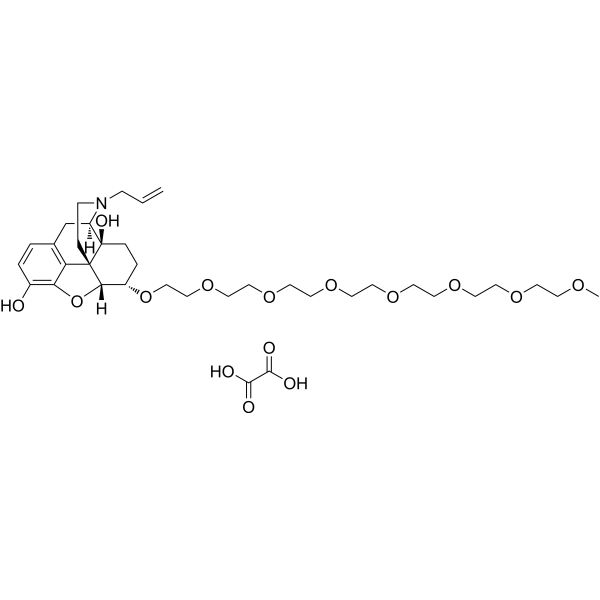
    Naloxegol oxalate
    2 Publications Verification

    NKTR-118 oxalate; AZ-13337019 oxalate

    Opioid Receptor Metabolic Disease
    Naloxegol oxalate (NKTR-118 oxalate; AZ-13337019 oxalate) is an orally active peripherally acting μ-opioid receptor antagonist with a target Ki of 7.42 nM. Naloxegol oxalate inhibits the binding of opioids to μ-opioid receptors in the gastrointestinal tract, and alleviates opioid-induced gastrointestinal hypomotility, delayed transit, hypertonicity, and increased fluid reabsorption. Naloxegol oxalate is applicable to research related to opioid-induced constipation .
    Naloxegol oxalate
  • HY-145404
    Mitragynine pseudoindoxyl
    1 Publications Verification

    Opioid Receptor Metabolic Disease
    Mitragynine pseudoindoxyl is a potent orally active agonist of the μ-opioid receptor (MOR-1, Ki=0.8 nM) and an antagonist of the δ-opioid receptor (DOR-1, Ki=3.0 nM). Mitragynine pseudoindoxyl has moderate affinity for the κ-opioid receptor (KOR-1, Ki=24 nM) and does not recruit β-arrestin-2, acting through G protein-mediated signaling pathways without β-arrestin-2-related activation. Mitragynine pseudoindoxyl produces potent analgesic activity through a mixed μ-agonist/δ-antagonist mechanism, with low side effects such as physical dependence, respiratory depression, and constipation, and no rewarding or aversive behaviors. Mitragynine pseudoindoxyl reduces hyperactivity, inhibits GI transit, and enhances characteristics, making it a potential analgesic .
    Mitragynine pseudoindoxyl
  • HY-108229

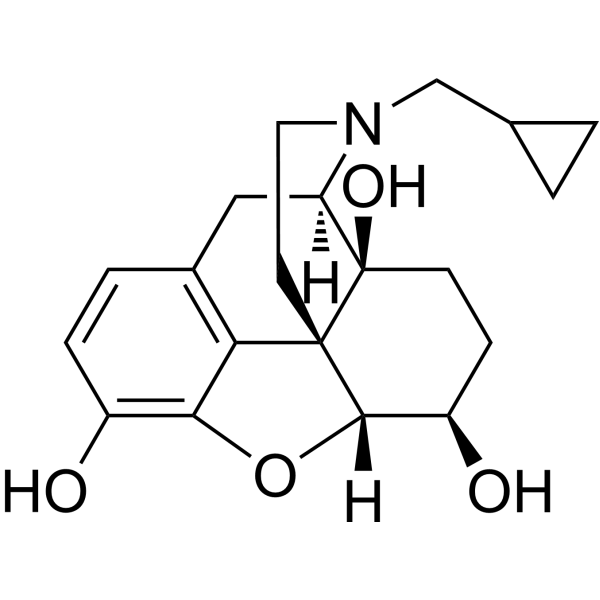
    6β-Hydroxynaltrexone

    Drug Metabolite Opioid Receptor Neurological Disease
    6β-Naltrexol (6β-Hydroxynaltrexone), the primary metabolite of Naltrexone, is a peripherally selective opioid antagonist. 6β-Naltrexol selectively inhibits gastrointestinal opioid effects in human subjects and inhibits Morphine-induced slowing of gastrointestinal transit .
    6β-Naltrexol
  • HY-108229S

    6β-Hydroxynaltrexone-d3

    Isotope-Labeled Compounds Opioid Receptor Drug Metabolite Neurological Disease
    6β-Naltrexol-d3 (6β-Hydroxynaltrexone-d3) is deuterium labeled 6β-Naltrexol. 6β-Naltrexol (6β-Hydroxynaltrexone), the primary metabolite of Naltrexone, is a peripherally selective opioid antagonist. 6β-Naltrexol selectively inhibits gastrointestinal opioid effects in human subjects and inhibits Morphine-induced slowing of gastrointestinal transit .
    6β-Naltrexol-d3
  • HY-N12281

    Apoptosis MDM-2/p53 PAK Calcium Channel Endocrinology Cancer
    Sennoside is an orally active apoptosis inducer and stimulant laxative, found in Senna (Cassia angustifolia). Sennoside induces overexpression of wild-type p53 and p21/WAF as part of pathways mediating colonic epithelial cell apoptosis. Sennoside stimulates colonic peristalsis, reverses net water, sodium, chloride absorption to secretion and enhances potassium and calcium secretion. Sennoside increases paracellular permeability to small molecules, accelerates colon transit and softens fecal pellets. Sennoside can be used for the research of constipation, melanosis coli, and colorectal cancer .
    Sennoside
  • HY-135319

    Bacterial Antibiotic ERK JNK NF-κB ROR Apoptosis Caspase GSK-3 Akt PI3K Infection Metabolic Disease Inflammation/Immunology Cancer
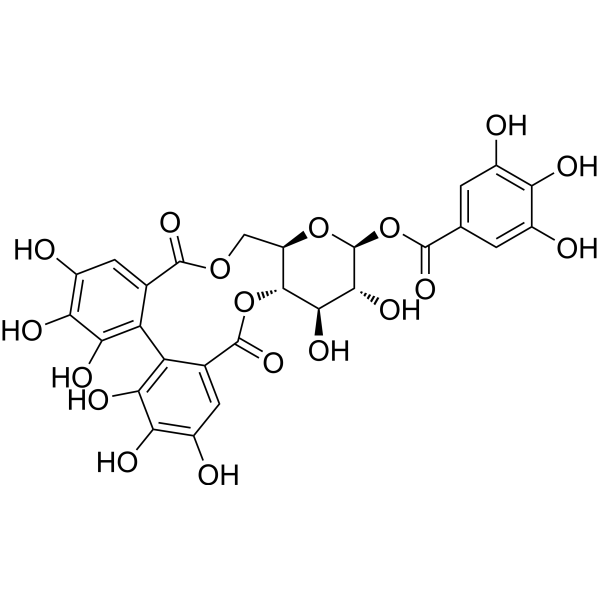
    Strictinin is an orally active phenolic compound. Strictinin reduces xanthine oxidase activity, uric acid production, and the activation of ERK1/2, JNK, NF-κB, and NLRP3 inflammasome components in hepatocytes treated with Xanthine (HY-W017389). Strictinin decreases elevated serum uric acid levels and enhanced xanthine oxidase activity in mice treated with potassium oxonate. Strictinin acts as a ROR1 inhibitor and exhibits anticancer activity against highly aggressive non-androgen-dependent prostate cancer. Strictinin induces cancer cell apoptosis (apoptosis), arrests cell cycle, and inhibits cancer cell migration, invasion, and epithelial-mesenchymal transition. Strictinin modulates gut microbiota, inhibits bacterial growth and biofilm formation, accelerates small intestinal transit, and blocks viral entry and replication. Strictinin can be used in research related to hyperuricemia, androgen receptor-negative non-androgen-dependent prostate cancer, triple-negative breast cancer, bacterial infections, constipation, coronavirus infections, dental caries, and infections caused by influenza A, influenza B, and human parainfluenza virus type 1 .
    Strictinin
  • HY-N10144

    PI3K Akt Keap1-Nrf2 Bcl-2 Family SOD Reactive Oxygen Species (ROS) Inflammation/Immunology
    Shinpterocarpin is a flavonoid compound. Shinpterocarpin can be isolated from the air-dried roots of Glycyrrhiza glabra L. and Xuanshen Decoction. Shinpterocarpin binds to the targets PI3K, AKT, Nrf2, Bcl-2, Bax, CAT and SOD. Shinpterocarpin enhances immunity and exerts antioxidant effects by reducing the production of ROS .
    Shinpterocarpin
  • HY-A0118

    NKTR-118; AZ-13337019

    Opioid Receptor Neurological Disease Cancer
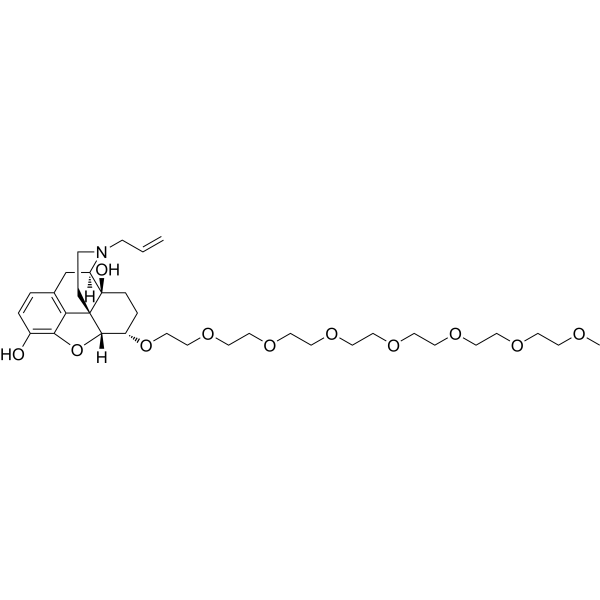
    Naloxegol (NKTR-118; AZ-13337019) is an orally active peripherally acting μ-opioid receptor antagonist with a target Ki of 7.42 nM. Naloxegol inhibits the binding of opioids to μ-opioid receptors in the gastrointestinal tract, and alleviates opioid-induced gastrointestinal hypomotility, delayed transit, hypertonicity, and increased fluid reabsorption. Naloxegol is applicable to research related to opioid-induced constipation .
    Naloxegol
  • HY-178236

    TRP Channel Metabolic Disease
    TRPM5 agonist-1 is an orally active TRPM5 agonist with a pEC50 of 8.1. TRPM5 agonist-1 shows excellent selectivity (> 100-fold) versus related cation channels (TRPM8, TRPV1, TRPV4, TRPA1, TRPM4). TRPM5 agonist-1 exhibits locally acting stimulatory effect on gastrointestinal transit in mice. TRPM5 agonist-1 can be used for research on promoting gastric motility .
    TRPM5 agonist-1
  • HY-14495

    EX-1314

    GHSR Metabolic Disease
    BMS-604992 (EX-1314) is a selective, orally active small-molecule growth hormone secretagogue receptor (GHSR) agonist. BMS-604992 demonstrates high-affinity binding (Ki=2.3 nM) and potent functional activity (EC50=0.4 nM). BMS-604992 can stimulate food intake in rodents .
    BMS-604992
  • HY-P3597

    CFTR Others
    Urocortin III (mouse) (free acid) is a selective CRF2 receptor agonist (with high affinity for the CRF2 receptor). Urocortin III (mouse) (free acid) significantly inhibits gastric emptying without modifying colonic transit .
    Urocortin III (mouse) free acid
  • HY-U00121A

    5-HT Receptor Metabolic Disease
    Lintopride hydrochloride, a benzamide, is a potent 5HT-4 antagonist with moderate 5HT-3 antagonist properties. Lintopride hydrochloride increases gastric emptying, stimulates antral and duodenal motility and accelerates intestinal transit in animal. Lintopride hydrochloride significantly increases the lower oesophageal sphincter (LOS) basal tone .
    Lintopride hydrochloride
  • HY-10919

    Topoisomerase Mitosis Cancer
    C-1311 shows to inhibit the catalytic activity of DNA topoisomerase II in vitro and in tumour cells. C-1311 prolongs G2 arrest followed by G2 to M transit and cell death during mitosis in the process of mitotic catastrophe .
    C-1311
  • HY-U00121

    5-HT Receptor Metabolic Disease
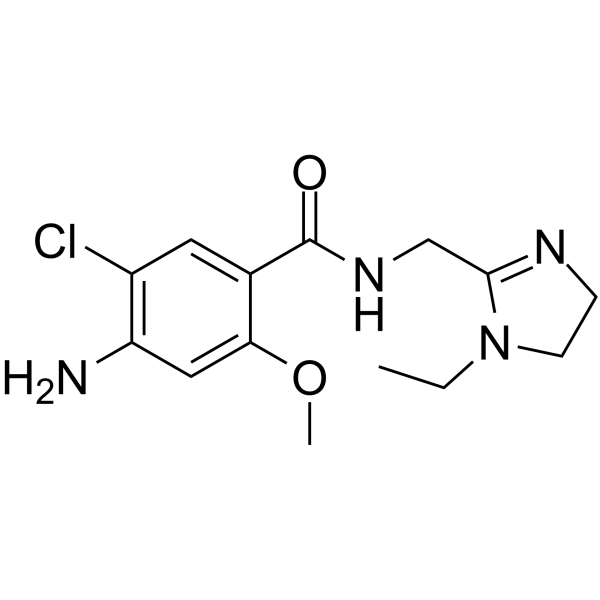
    Lintopride, a benzamide, is a potent 5HT-4 antagonist with moderate 5HT-3 antagonist properties. Lintopride increases gastric emptying, stimulates antral and duodenal motility and accelerates intestinal transit in animal. Lintopride significantly increases the lower oesophageal sphincter (LOS) basal tone .
    Lintopride
  • HY-118696

    GABA Receptor Neurological Disease
    MGAT2-IN-5 (Compound 17b) is a selective inhibitor for mouse GABA transit protection subsidity 2 (mGAT2) with an IC50 of 45 μM. MGAT2-IN-5 exhibits anticonvulsive efficacy in audiogenic seizure (AGS) susceptible frings mouse model with an ED50 of 20.4 mg/kg .
    MGAT2-IN-5
  • HY-173131

    5-HT Receptor Others
    5-HT4R agonist-2 (Compound 4) is a selective 5-HT4R agonist with an EC50 value of 0.41 nM. 5-HT4R agonist-2 can significantly enhance whole gut and colonic transit, increase fecal output and water content, while maintaining minimal systemic absorption, and it shows promise for the research of chronic idiopathic constipation .
    5-HT4R agonist-2
  • HY-14495A

    EX-1314 free base

    GHSR Metabolic Disease
    BMS-604992 (EX-1314) free base is a selective, orally active small-molecule growth hormone secretagogue receptor (GHSR) agonist. BMS-604992 free base demonstrates high-affinity binding (ki=2.3 nM) and potent functional activity (EC50=0.4 nM). BMS-604992 free base can stimulate food intake in rodents .
    BMS-604992 free base
  • HY-14495B

    EX-1314 dihydrochloride

    GHSR Metabolic Disease
    BMS-604992 (EX-1314) dihydrochloride is a selective, orally active small-molecule growth hormone secretagogue receptor (GHSR) agonist. BMS-604992 dihydrochloride demonstrates high-affinity binding (ki=2.3 nM) and potent functional activity (EC50=0.4 nM). BMS-604992 dihydrochloride can stimulate food intake in rodents .
    BMS-604992 dihydrochloride
  • HY-181103

    Opioid Receptor Potassium Channel Neurological Disease
    ERG-IN-6 (compound (+)-(S)-5a) is a μ-opioid receptor activator with an EC50 of 0.12 nM. ERG-IN-6 also is a hERG (Kv11.1) potassium channel inhibitor with an IC50 of 0.681 μM. ERG-IN-6 can be used for the research of pain .
    ERG-IN-6

Inquiry Online

Your information is safe with us. * Required Fields.

Salutation


Country or Region *

Applicant Name *


Organization Name *

Department *


Email Address *


Product Name *

Cat. No.


Requested quantity *

Phone Number *


Remarks

Inquiry Online

Inquiry Information

Product Name:
Cat. No.:
Quantity:
MCE Japan Authorized Agent:

