1. Search Result
Search Result
Results for "

trypanosomes

" in MedChemExpress (MCE) Product Catalog:

23

Inhibitors & Agonists

2

Peptides

3

Natural
Products

Cat. No. Product Name Target Research Areas Chemical Structure
  • HY-12404
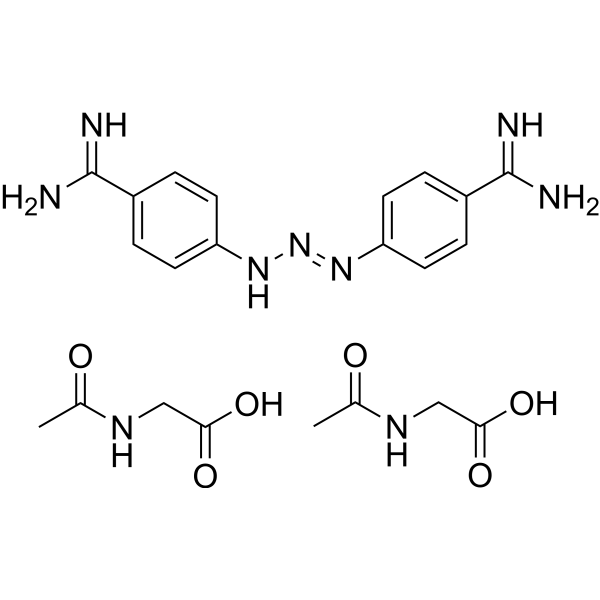
    Diminazene aceturate
    10+ Cited Publications

    Diminazene diaceturate

    Parasite Angiotensin-converting Enzyme (ACE) Infection Inflammation/Immunology
    Diminazene aceturate (Diminazene diaceturate) is an anti-trypanosome agent for livestock. The main biochemical mechanism of the trypanocidal actions of Diminazene aceturate is by binding to trypanosomal kinetoplast DNA (kDNA) in a non-intercalative manner through specific interaction with sites rich in adenine-thymine base pairs. Diminazene aceturate is also an angiotensin-converting enzyme 2 (ACE2) activator and has strong and potent anti-inflammatory properties .
    Diminazene aceturate
  • HY-N0397

    Parasite Infection Inflammation/Immunology
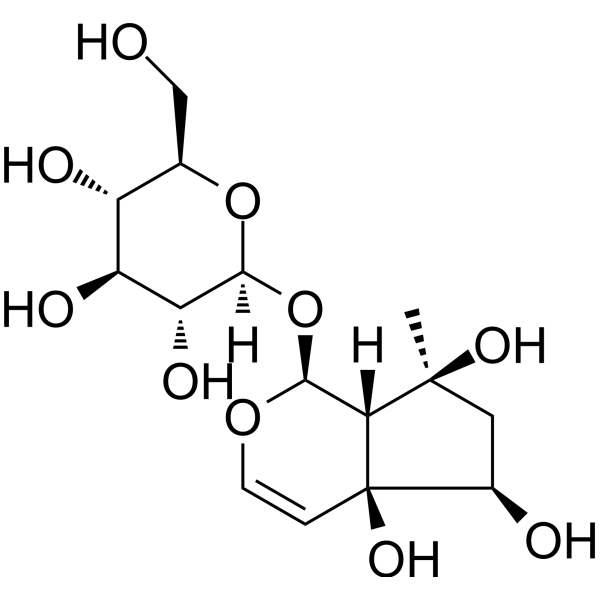
    Harpagide is a class of iridoid glycoside isolated from Scrophularia ningpoensis and has antiparasitic activity, which exhibits good in vitro trypanocidal activities against African trypanosomes (T.b. rhodesiense) with an IC50 of 21 μg/mL. Harpagide exerts significant antileishmanial activity against L. donovani with an IC50 value of 2.0 μg/mL. Harpagide also possess significant anti-inflammatory activities .
    Harpagide
  • HY-169932

    Apolipoprotein Infection
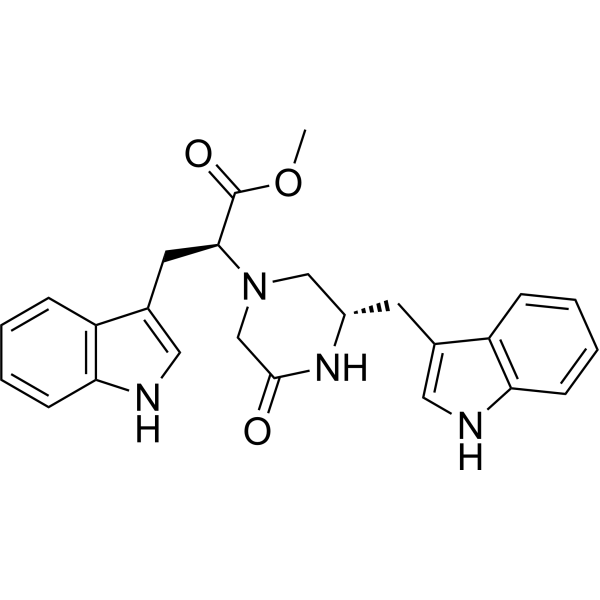
    APOL1-IN-2 (Compound 467) is the inhibitor for Apolipoprotein 1 (APOL1). APOL1-IN-2 reduces the APOL1 G2/G1 induced cell death in HEK293 with EC50 of 4.74 nM and 14.3 nM. APOL1-IN-2 reduces the APOL1 G2/G1/G0 induced death of trypanosomes with EC50 of 2.24, 6.03 and 3.72 nM, respectively .
    APOL1-IN-2
  • HY-155531

    Biochemical Assay Reagents Infection
    PEX5-PEX14 PPI-IN-2 (compound 12) is a PEX14-PEX5 protein-protein interaction (PPI) inhibitor. PEX5-PEX14 PPI-IN-2 inhibits PEX14-PEX5 PPI with EC50 values of 5 and 17 µM in T. b. brucei and HepG2 cells, respectively. PEX5-PEX14 PPI-IN-2 can be used in the research of diseases related to trypanosome infection .
    PEX5-PEX14 PPI-IN-2
  • HY-121405

    Antibiotic K16

    Antibiotic Parasite Infection
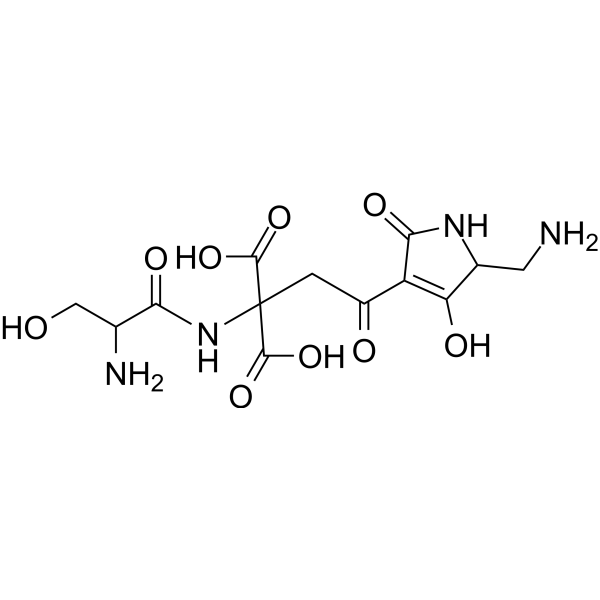
    Malonomicin (Antibiotic K16) is an antibiotic with anti-protozoa and anti-trypanosome activities. Malonomicin also shows anti-trypanosome activity in vivo .
    Malonomicin
  • HY-W342283

    Parasite Angiotensin-converting Enzyme (ACE) Angiotensin Receptor p38 MAPK STAT NF-κB TNF Receptor 5-HT Receptor Cardiovascular Disease Infection Inflammation/Immunology
    Diminazene is an antiparasitic agent widely used to treat parasitic diseases caused by hemoparasites (such as trypanosomes and babesia). Diminazene acts as an ACE2 activator and exerts cardiovascular protective effects by activating the ACE2/Ang-(1-7)/Mas receptor axis. By regulating gut microbiota-tryptophan metabolism, Diminazene inhibits the activation of core inflammatory signaling pathways including MAPK, STAT and NF-κB, increases central 5-HT levels, and suppresses splenic TNF-α production, thereby alleviating systemic inflammation .
    Diminazene
  • HY-118996B

    Parasite Infection
    Isometamidium chloride hydrochloride is an antiprotozoal agent, that exhibits activity against trypanosome. Isometamidium chloride hydrochloride can be used in research of african sleeping sickness .
    Isometamidium chloride hydrochloride
  • HY-118996A

    Parasite Infection
    Isometamidium chloride is an antiprotozoal agent, that exhibits activity against trypanosome. Isometamidium chloride can be used in research of african sleeping sickness .
    Isometamidium chloride
  • HY-112905

    Parasite mRNA Infection
    AN11736 is a CPSF3 inhibitor. AN11736 exerts a potent anti-trypsin effect by specifically inhibiting the activity of the trypanosome CPSF3 endonuclease, disrupting the mRNA maturation process. AN11736 exhibits IC50s against T. congolense and T. vivax of 0.14 and 1.3 nM, respectively. AN11736 exhibits strong anti-trypsin activity in mouse and cattle models .
    AN11736
  • HY-149985

    Parasite Infection
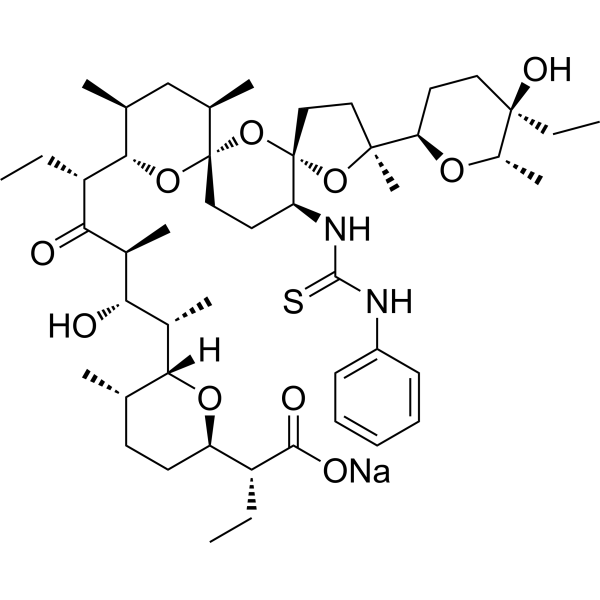
    Antitrypanosomal agent 12 is a C20-phenylthiourea with trypanocidal and cytotoxic activities. Antitrypanosomal agent 12 shows antitrypanosomal activity with 50% growth inhibition (GI50) values of 0.22 μM. Antitrypanosomal agent 12 induces faster cell swelling in bloodstream-form trypanosomes than Salinomycin (HY-15597) .
    Antitrypanosomal agent 12
  • HY-N1985

    Parasite Infection
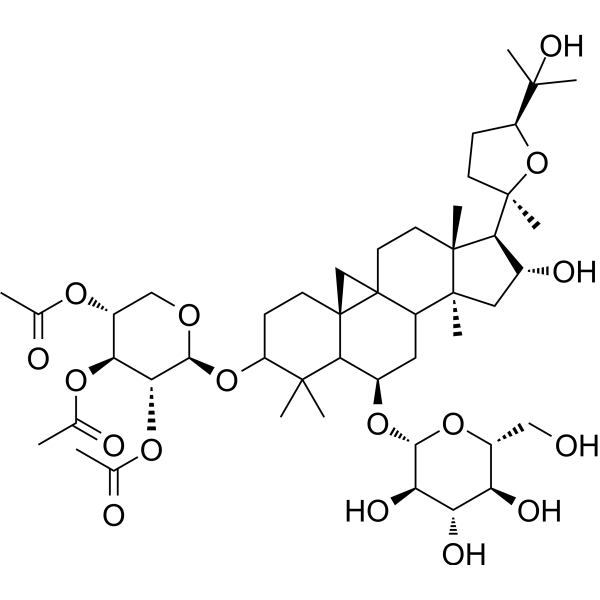
    Acetylastragaloside I is a glycoside that can be isolated from the roots of Astragalus baibutensis. Acetylastragaloside I is the first cycloartane-type triterpene with remarkable trypanocidal activity with IC50 values of 9.5 and 5.0 μg/mL for T. brucei rhodesiense and T. cruzi, respectively. Acetylastragaloside I can be used for the research of trypanosome infection .
    Acetylastragaloside I
  • HY-178064

    Parasite Mitochondrial Metabolism Infection
    Antiparasitic agent-29 (Compound 5) is a Trypanosome alternative oxidase (TAO) inhibitor with an IC50 of 1.3 nM in Trypanosoma brucei. Antiparasitic agent-29 has a broad-spectrum antiparasitic activity against Trypanosoma and Leishmania spp. Antiparasitic agent-29 accumulates in parasite mitochondria, selectively disrupting its energy metabolism and has potent membrane-perturbing activity with no cross-resistance. Antiparasitic agent-29 shows low ecotoxicity in zebrafish and Daphnia magna models. Antiparasitic agent-29 can be used for parasitic diseases like surra and dourine research .
    Antiparasitic agent-29
  • HY-176253

    Parasite Infection
    Antitrypanosomal agent 26 (Compound 1) is an allosteric trypanosome alternative oxidase (TAO) inhibitor. Antitrypanosomal agent 26 exhibits potent activity against African animal trypanosomes (e.g., Trypanosoma brucei, etc.) with an IC50 value of 1.3 nM for recombinant TAO. Antitrypanosomal agent 26 blocks the mitochondrial electron transport chain of trypanosomes and inhibits glucose-dependent respiration. Antitrypanosomal agent 26 is promising for research of African animal trypanosomiasis, such as bovine trypanosomiasis .
    Antitrypanosomal agent 26
  • HY-P10795

    Antibiotic NK 2

    Parasite Bacterial Fungal Infection
    NK-2 (Antibiotic NK 2), a shortened linear amphipathic NK-Lysin analog (comprising residues 39 to 65 of NK-lysin), is an antimicrobial peptide that exhibits potent activities against trypanosoma cruzi, Candida albicans, gram-positive and gram-negative bacteria. NK-2 can kill trypanosomes residing inside the human glioblastoma cell line 86HG39, left the host cells apparently unharmed .
    NK-2
  • HY-N0397R

    Reference Standards Parasite Infection Inflammation/Immunology
    Harpagide (Standard) is the analytical standard of Harpagide. This product is intended for research and analytical applications. Harpagide is a class of iridoid glycoside isolated from Scrophularia ningpoensis and has antiparasitic activity, which exhibits good in vitro trypanocidal activities against African trypanosomes (T.b. rhodesiense) with an IC50 of 21 μg/mL. Harpagide exerts significant antileishmanial activity against L. donovani with an IC50 value of 2.0 μg/mL. Harpagide also possess significant anti-inflammatory activities .
    Harpagide (Standard)
  • HY-12404R

    Diminazene diaceturate (Standard)

    Reference Standards Parasite Angiotensin-converting Enzyme (ACE) Infection Inflammation/Immunology
    Diminazene (aceturate) (Standard) is the analytical standard of Diminazene (aceturate). This product is intended for research and analytical applications. Diminazene aceturate (Diminazene diaceturate) is an anti-trypanosome agent for livestock. The main biochemical mechanism of the trypanocidal actions of Diminazene aceturate is by binding to trypanosomal kinetoplast DNA (kDNA) in a non-intercalative manner through specific interaction with sites rich in adenine-thymine base pairs. Diminazene aceturate is also an angiotensin-converting enzyme 2 (ACE2) activator and has strong and potent anti-inflammatory properties .
    Diminazene aceturate (Standard)
  • HY-114734

    Parasite Infection
    Didesmethylpromazine (Compound 18) is a trypanothione reductase inhibitor with an I50of 1412  μM against T. cruzi trypanothione reductase. Didesmethylpromazine can be used in the research of trypanosome and leishmania infections .
    Didesmethylpromazine
  • HY-178326

    Parasite Infection
    NEU-5123 is a human kinase inhibitor with potent inhibitory activity to several kinases. NEU-5123 is a Trypanosome proliferation inhibitor. NEU-5123 can be used for the research of infection .
    NEU-5123
  • HY-180418

    Parasite Infection
    Homidium chloride is a potent antiparasitic agent exhibiting activity against Trypanosoma rhodesiense and Trypanosoma congolense. Homidium chloride can reduce parasitaemia in murine models of infection. Homidium chloride can be used for trypanosomiasis research .
    Homidium chloride
  • HY-125188

    Parasite DNA/RNA Synthesis AMPK Clathrin Infection
    NEU-4438 is an antimalarial agent. NEU-4438 inhibits DNA synthesis, reduces AMPK-γ, and increases Clathrin heavy chain. NEU-4438 exhibits antiparasitic activity against Trypanosoma brucei. NEU-4438 reduces trypanosome tissue burden in a chronic HAT mouse model .
    NEU-4438
  • HY-183747

    Parasite Infection
    Antitrypanosomal agent 32 is a antitrypanosomal agent with nanomolar potency against multiple Trypanosoma cruzi strains, including CL-Brener, Y, Dm28c-Luc and Tulahuen. Antitrypanosomal agent 32 sustains inhibition of parasite growth after washing and reduces parasitemia levels in BALB/c mice. Antitrypanosomal agent 32 can be used for the research of trypanosome infection .
    Antitrypanosomal agent 32
  • HY-180158

    Parasite Reactive Oxygen Species (ROS) Infection Cancer
    Antitrypanosomal agent 28 (Compound 2a) is a trypanocidal agent. Antitrypanosomal agent 28 effectively inhibits Trypanosoma cruzi by inducing the generation of ROS and mitochondrial damage, with an IC₅₀ of 49.4 μM. Antitrypanosomal agent 28 exhibits broad-spectrum anti-tumor activity against various tumor cell lines, especially being sensitive to leukemia, colon cancer, and breast cancer. Antitrypanosomal agent 28 can be used for research on anti-cancer and anti-trypanosome activities .
    Antitrypanosomal agent 28
  • HY-P11367

    Fluorescent Dye Ser/Thr Protease Infection Metabolic Disease
    Boc-Ala-Gly-Pro-Arg-AMC is a synthetic fluorescent substrate, widely used for the detection of protease activity. Boc-Ala-Gly-Pro-Arg-AMC can be used to detect the activity of serine proteases and the oligopeptide enzyme B of Trypanosoma brucei .
    Boc-Ala-Gly-Pro-Arg-AMC

Inquiry Online

Your information is safe with us. * Required Fields.

Salutation


Country or Region *

Applicant Name *


Organization Name *

Department *


Email Address *


Product Name *

Cat. No.


Requested quantity *

Phone Number *


Remarks

Inquiry Online

Inquiry Information

Product Name:
Cat. No.:
Quantity:
MCE Japan Authorized Agent:

