1. Search Result
Search Result
Results for "

urinary bladder contractions

" in MedChemExpress (MCE) Product Catalog:

25

Inhibitors & Agonists

5

Peptides

2

Natural
Products

3

Isotope-Labeled Compounds

Cat. No. Product Name Target Research Areas Chemical Structure
  • HY-B0549A

    Rec-7-0040; DW61

    Calcium Channel Adenosine Receptor mAChR Dopamine Receptor Adrenergic Receptor Cardiovascular Disease Infection Neurological Disease Cancer
    Flavoxate hydrochloride (Rec-7-0040; DW61) is an orally active L-type Ca 2+ channel inhibitor and antispasmodic. Flavoxate hydrochloride inhibits cyclic adenosine monophosphate production by blocking voltage-dependent inward Ba 2+ currents, regulating the brainstem micturition center, and stimulating G protein-coupled receptors. Consequently, Flavoxate hydrochloride induces relaxation of bladder smooth muscle and inhibits isovolumetric rhythmic contractions. Flavoxate hydrochloride effectively increases bladder capacity and alleviates symptoms of urgent urination frequency and pollakiuria caused by overactive bladder. Flavoxate hydrochloride can be used in research on overactive bladder and related voiding dysfunctions .
    Flavoxate hydrochloride
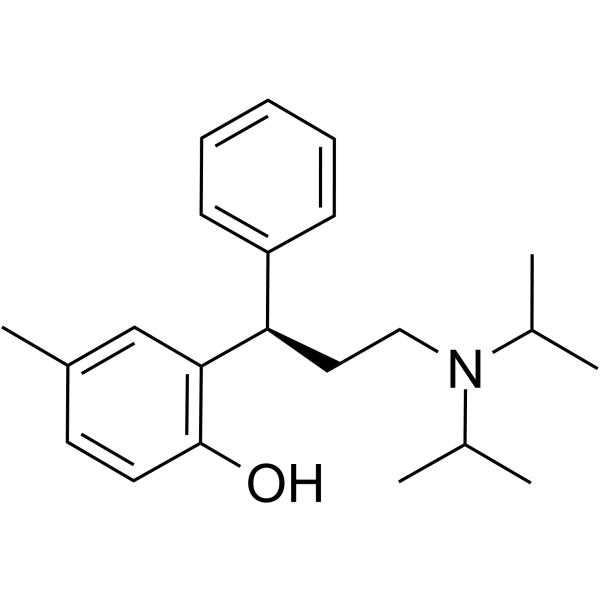
  • HY-A0024

    (R)-(+)-Tolterodine; (+)-Tolterodine; (R)-Tolterodine; PNU-200583

    mAChR Cytochrome P450 Neurological Disease Cancer
    Tolterodine ((R)-(+)-Tolterodine) is a mAChR inhibitor and substrate for cytochrome P450 enzymes. Tolterodine competitively binds acetylcholine, reduces sympathetic excitation, and inhibits involuntary bladder muscle contraction. Tolterodine restores the Nrf2/NF-κB signaling pathway, mediates protection against inflammatory response and ferroptosis. Tolterodine ameliorates LPS (HY-D1056)-induced reactive oxygen species production and lipid oxidation. Tolterodine can be used for the research of urinary tract infections and overactive bladder .
    Tolterodine
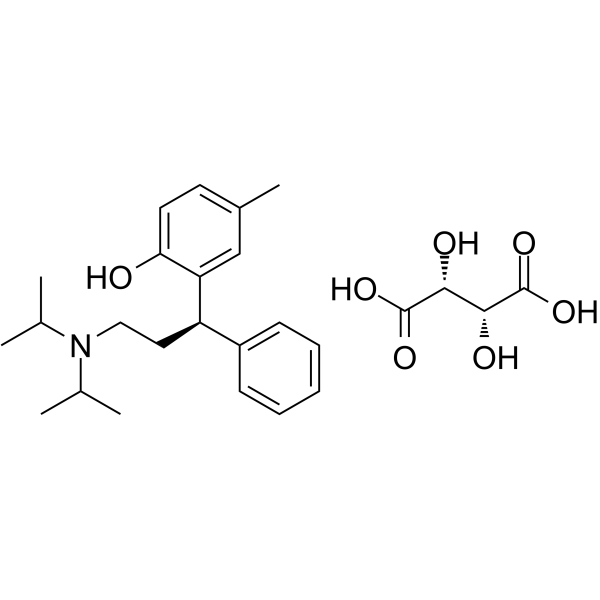
  • HY-90010

    Kabi-2234; PNU-200583E

    mAChR Cytochrome P450 Neurological Disease Cancer
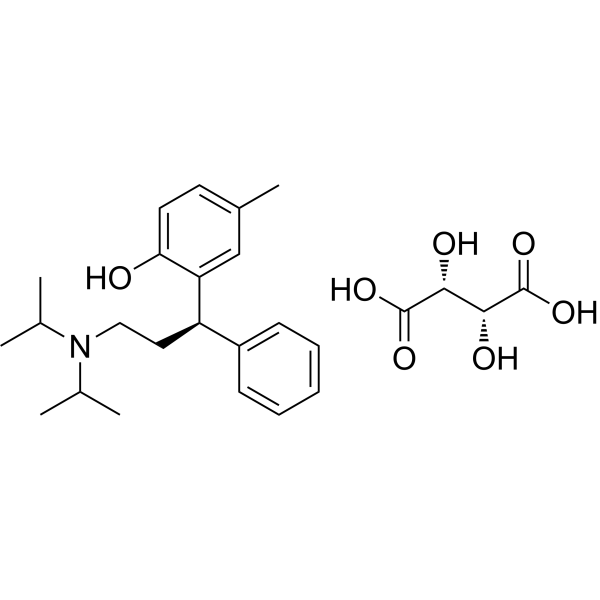
    Tolterodine tartrate (Kabi-2234) is a mAChR inhibitor and substrate for cytochrome P450 enzymes. Tolterodine tartrate competitively binds acetylcholine, reduces sympathetic excitation, and inhibits involuntary bladder muscle contraction. Tolterodine tartrate restores the Nrf2/NF-κB signaling pathway, mediates protection against inflammatory response and ferroptosis. Tolterodine tartrate ameliorates LPS (HY-D1056)-induced reactive oxygen species production and lipid oxidation. Tolterodine tartrate can be used for the research of urinary tract infections and overactive bladder .
    Tolterodine tartrate
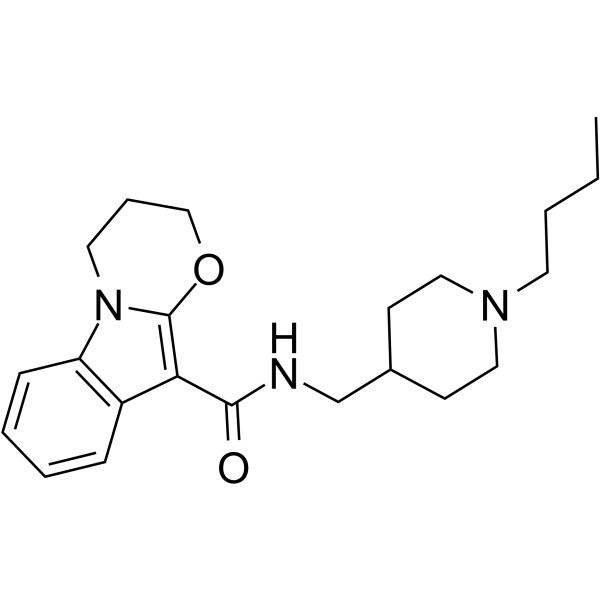
  • HY-15574
    Piboserod
    4 Publications Verification

    SB-207266

    5-HT Receptor Cardiovascular Disease
    Piboserod is an orally available selective antagonist of the 5-HT4 receptor, with a Ki value of approximately 0.1 nM for human 5-HT4 receptors. Piboserod can competitively bind to the 5-HT4 receptor and block the activation of the 5-HT4 receptor. Piboserod can inhibit the enhancing effect of 5-HT on the nerve-mediated contraction response of the human bladder detrusor muscle. Piboserod is mainly used in the research of urinary system diseases (such as overactive bladder) and cardiovascular diseases (such as chronic heart failure) .
    Piboserod
  • HY-P0004A
    Lysipressin acetate
    2 Publications Verification

    Lysine vasopressin acetate; [Lys8]-Vasopressin acetate

    Adenylate Cyclase Others
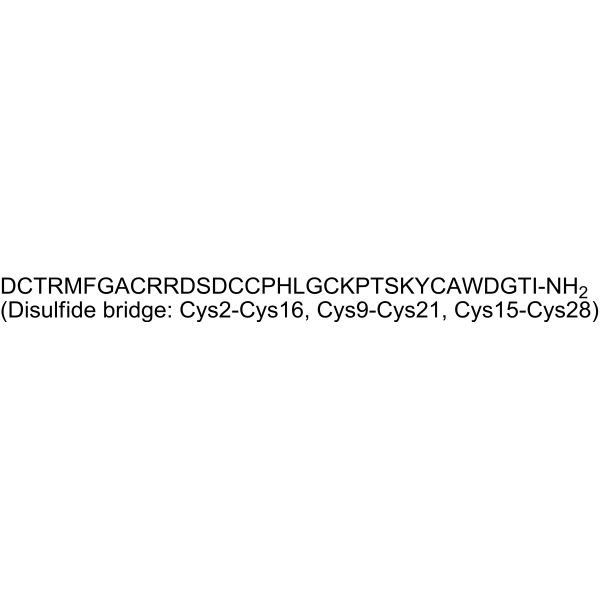
    Lysipressin (Lysine vasopressin) acetate is antidiuretic hormone that have been found in pigs and some marsupial families. Lysipressin acetate induces contraction of the rabbit urinary bladder smooth muscle, activate adenylate-cyclase .
    Lysipressin acetate
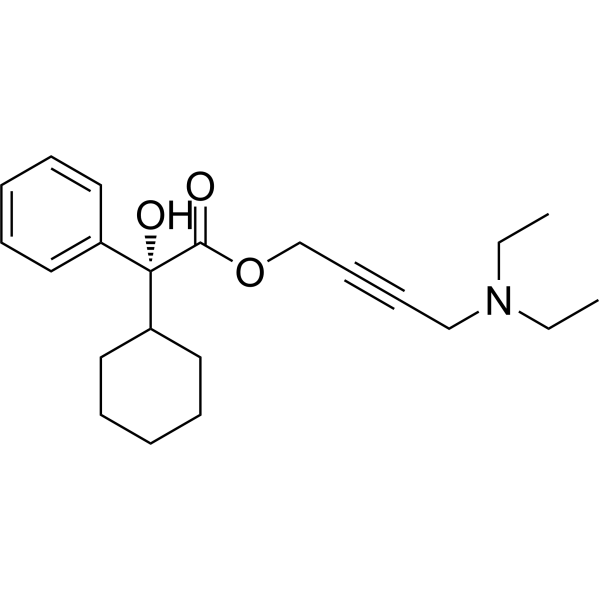
  • HY-B0267C

    Aroxybutynin

    mAChR Neurological Disease
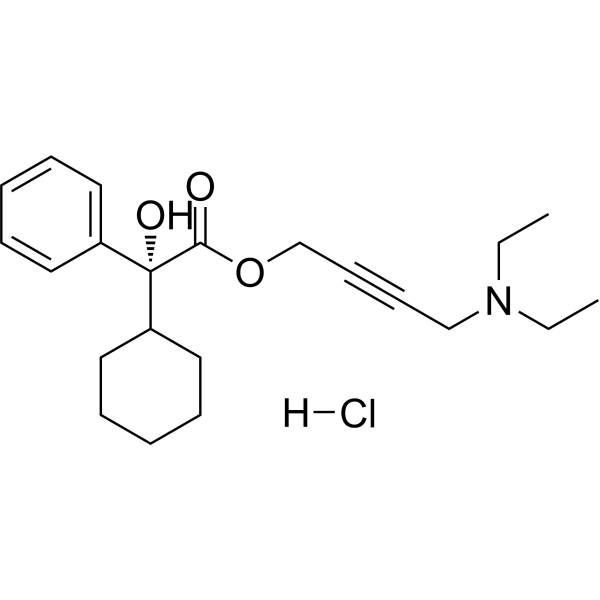
    (R)-Oxybutynin (Aroxybutynin) is the racemic isomer of Oxybutynin and an orally active muscarinic receptor antagonist. (R)-Oxybutynin has antispasmodic, antimuscarinic, and anticholinergic activities and competitively antagonizes carbachol-induced contractions. (R)-Oxybutynin can be used to study urinary incontinence caused by neurogenic bladder dysfunction .
    (R)-Oxybutynin
  • HY-122086

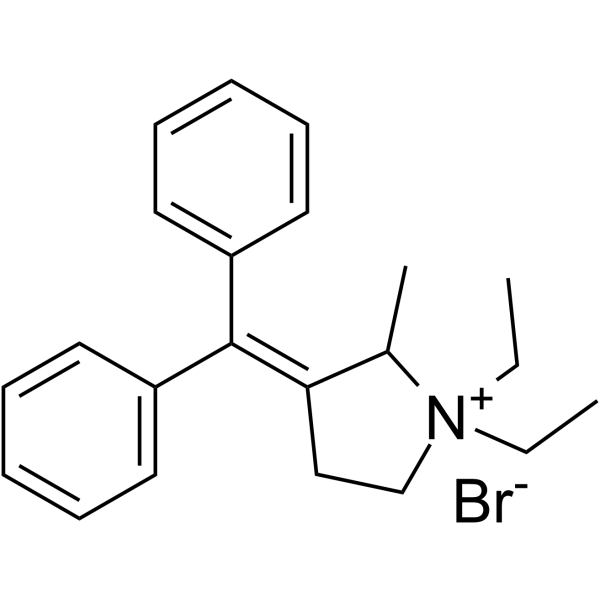
    mAChR Neurological Disease
    Prifinium bromide is an anticholinergic drug with anticholinergic and antispasmodic activities, and it exhibits oral activity. Prifinium bromide competitively antagonizes cholinergic receptors and relieves symptoms of spasm or hypermotility in the digestive and urinary tracts, with its anticholinergic activity representing the core mechanism underlying the inhibition of bladder smooth muscle contraction. Prifinium bromide can be used in research related to spasms and diverticular disease .
    Prifinium bromide
  • HY-101230

    Opioid Receptor Neurological Disease
    ICI 174864 is a selective and brain-penetrant δ-opioid receptor antagonist with Ke values of 22.0 nM to 30.6 nM at δ-opioid receptor in mouse vas deferens. ICI 174864 selectively blocks biological effects mediated by the δ-opioid receptor agonist DPDPE (HY-P1334) after central administration. ICI 174864 reverses hypotension in rats with endotoxic shock and inhibits acetic acid-induced writhing in mice. ICI 174864 can be used for the research of opioid receptor subtypes, endotoxic hypotension and analgesic pathways .
    ICI 174864
  • HY-120473

    Adrenergic Receptor Metabolic Disease
    TAK-259 is an orally active α1D-adrenergic receptor antagonist with a Ki value of 1.1 nM for human α1D-adrenergic receptors. TAK-259 can inhibit the contraction of isolated bladder strips in rats with bladder outlet obstruction, reduce non-voiding bladder contractions, and improve urinary frequency symptoms. TAK-259 can be used in research related to overactive bladder .
    TAK-259
  • HY-114865

    RGS Protein Calcium Channel Neurological Disease
    BMS-192364 is targeting the Gα-RGS interaction to produce an inactive Gα-RGS complex. BMS-192364 reduces urinary bladder contraction and exert RGS-agonist properties by increasing the action of GAPs on Gq proteins. BMS-192364 inhibits calcium flux .
    BMS-192364
  • HY-121020

    SARS-CoV Infection Others Inflammation/Immunology
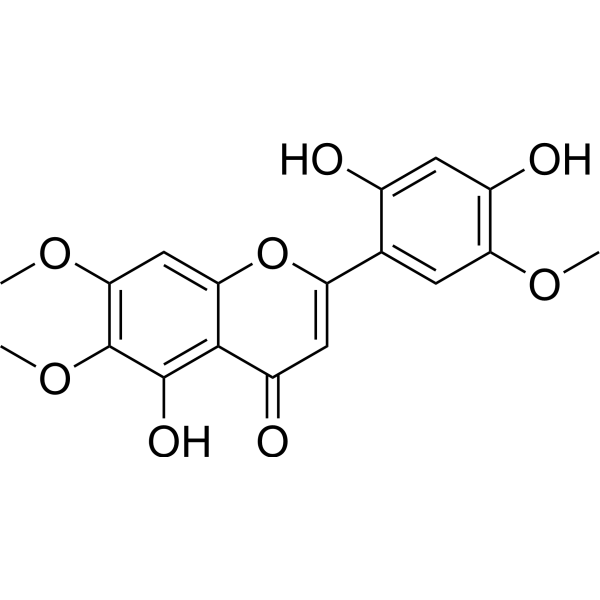
    Arcapillin is a flavonoid that can be isolated from Artemisia capillaris Thunb. Arcapillin induces dose-dependent relaxation of ileum and pulmonary artery smooth muscle, causes slight urinary bladder smooth muscle contraction at highest tested concentrations. Arcapillin binds to the active site of SARS-CoV-2 Mpro via interactions with Gln139, His163, and His164, exhibits antiviral activity against SARS-CoV-2 and MERS-CoV. Arcapillin can be used for the research of gastrointestinal disorders, COVID-19, and Middle East respiratory syndrome (MERS) .
    Arcapillin
  • HY-P5155

    Potassium Channel Neurological Disease
    Stromatoxin 1 is an inhibitor of Potassium Channel, a peptide which can be isolated from tarantulas. Stromatoxin 1 selectively inhibits K(V)2.1, K(V)2.2, K(V)4.2, and K(V)2.1/9.3 channels. K(V)2.1 and K(V)2.2, but not K(V)4.2, channel subunits play a key role in opposing both myogenic and neurogenic urinary bladder smooth muscle (UBSM) contractions in rats .
    Stromatoxin 1
  • HY-P2436

    Neurokinin Receptor Neurological Disease
    L-659837 is a NK2 receptor antagonist, and can antagonize GR 64349 (HY-P1278)-induced contraction. L-659837 can be used for study of urinary bladder disorders .
    L-659837
  • HY-16489

    Potassium Channel mAChR Calcium Channel Metabolic Disease
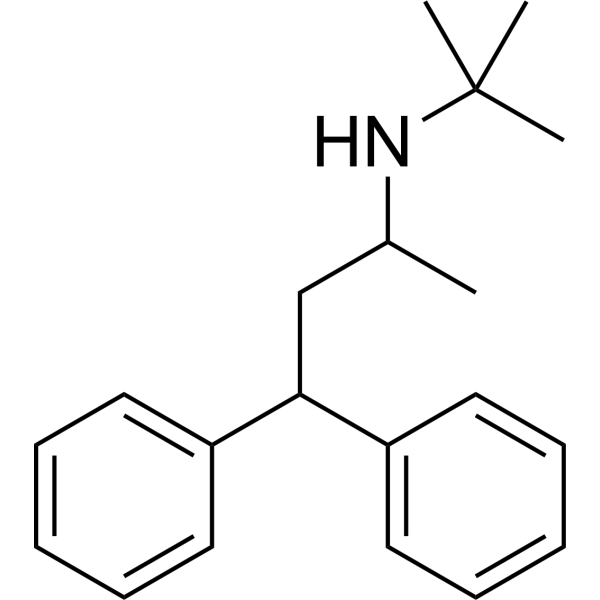
    Terodiline, an antispasmodic agent, blocks hERG current with the IC50 of 375 nM. Terodiline has both anticholinergic and calcium antagonist properties, and effectively reduces abnormal bladder contractions caused by detrusor instability. Terodiline can be used for the research of urinary incontinence .
    Terodiline
  • HY-P0004R

    Lysine vasopressin (Standard); [Lys8]-Vasopressin (Standard)

    Reference Standards Adenylate Cyclase Others
    Lysipressin (Standard) is the analytical standard of Lysipressin. This product is intended for research and analytical applications. Lysipressin (Lysine vasopressin) is antidiuretic hormone that have been found in pigs and some marsupial families. Lysipressin induces contraction of the rabbit urinary bladder smooth muscle, activate adenylate-cyclase .
    Lysipressin (Standard)
  • HY-N0584B

    6-Hydroxyhyoscyamine hydrochloride

    Adrenergic Receptor Inflammation/Immunology Cancer
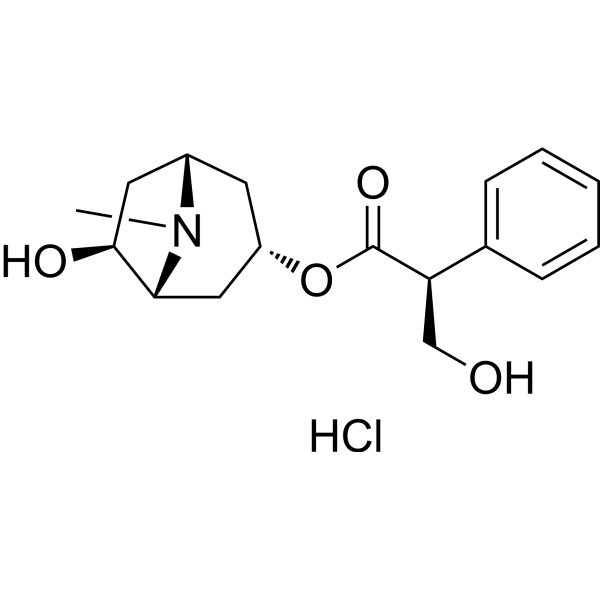
    Anisodamine hydrochloride is an anticholinergic and α1 adrenergic receptor antagonist. Anisodamine hydrochloride can be used for improving blood flow in circulatory disorders such as septic shock, Anisodamine hydrochloride displays a spectrum of pharmacological effects similar to Atropine (HY-B1205) and Sopolamine (HY-B2065) including inhibition of salivation, gastrointestinal and sweat secretion, gastrointestinal motility, respiratory secretion and urinary bladder contraction in vivo .
    Anisodamine hydrochloride
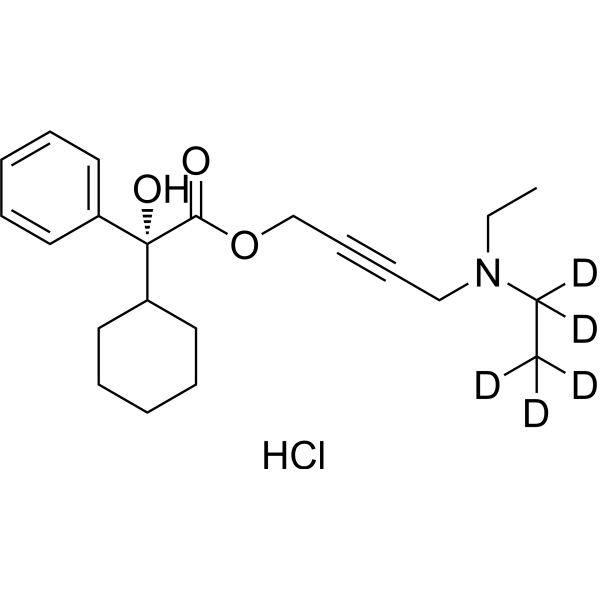
  • HY-B0267CS

    Aroxybutynin-d10

    Isotope-Labeled Compounds mAChR Neurological Disease
    (R)-Oxybutynin-d10 (Aroxybutynin-d10) is deuterium labeled (R)-Oxybutynin. (R)-Oxybutynin (Aroxybutynin) is the racemic isomer of Oxybutynin and an orally active muscarinic receptor antagonist. (R)-Oxybutynin has antispasmodic, antimuscarinic, and anticholinergic activities and competitively antagonizes carbachol-induced contractions. (R)-Oxybutynin can be used to study urinary incontinence caused by neurogenic bladder dysfunction .
    (R)-Oxybutynin-d10
  • HY-A0024S

    (R)-(+)-Tolterodine-d14 hydrochloride; (+)-Tolterodine-d14 hydrochloride; (R)-Tolterodine-d14 hydrochloride; PNU-200583-d14 hydrochloride

    Isotope-Labeled Compounds mAChR Cytochrome P450 Neurological Disease
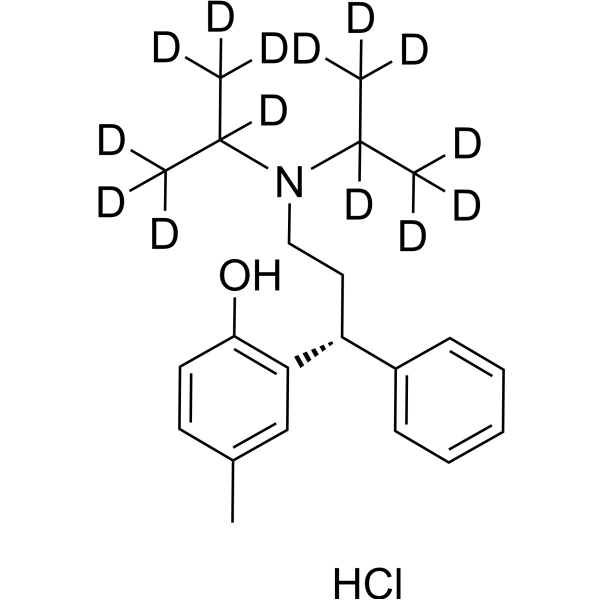
    Tolterodine-d14 (hydrochloride) is the deuterium labeled Tolterodine hydrochloride . Tolterodine ((R)-(+)-Tolterodine) is a mAChR inhibitor and substrate for cytochrome P450 enzymes. Tolterodine competitively binds acetylcholine, reduces sympathetic excitation, and inhibits involuntary bladder muscle contraction. Tolterodine restores the Nrf2/NF-κB signaling pathway, mediates protection against inflammatory response and ferroptosis. Tolterodine ameliorates LPS (HY-D1056)-induced reactive oxygen species production and lipid oxidation. Tolterodine can be used for the research of urinary tract infections and overactive bladder.
    Tolterodine-d14 hydrochloride
  • HY-A0024R

    (R)-(+)-Tolterodine (Standard); (+)-Tolterodine (Standard); (R)-Tolterodine (Standard); PNU-200583 (Standard)

    Reference Standards mAChR Cytochrome P450 Neurological Disease Cancer
    Tolterodine (Standard) is the analytical standard of Tolterodine. This product is intended for research and analytical applications. Tolterodine ((R)-(+)-Tolterodine) is a mAChR inhibitor and substrate for cytochrome P450 enzymes. Tolterodine competitively binds acetylcholine, reduces sympathetic excitation, and inhibits involuntary bladder muscle contraction. Tolterodine restores the Nrf2/NF-κB signaling pathway, mediates protection against inflammatory response and ferroptosis. Tolterodine ameliorates LPS (HY-D1056)-induced reactive oxygen species production and lipid oxidation. Tolterodine can be used for the research of urinary tract infections and overactive bladder.
    Tolterodine (Standard)
  • HY-90010R

    Kabi-2234 (Standard); PNU-200583E (Standard)

    Reference Standards mAChR Cytochrome P450 Neurological Disease Cancer
    Tolterodine (tartrate) (Standard) is the analytical standard of Tolterodine tartrate. This product is intended for research and analytical applications. Tolterodine ((R)-(+)-Tolterodine) is a mAChR inhibitor and substrate for cytochrome P450 enzymes. Tolterodine competitively binds acetylcholine, reduces sympathetic excitation, and inhibits involuntary bladder muscle contraction. Tolterodine restores the Nrf2/NF-κB signaling pathway, mediates protection against inflammatory response and ferroptosis. Tolterodine ameliorates LPS (HY-D1056)-induced reactive oxygen species production and lipid oxidation. Tolterodine can be used for the research of urinary tract infections and overactive bladder.
    Tolterodine tartrate (Standard)
  • HY-148252

    Adrenergic Receptor Endocrinology
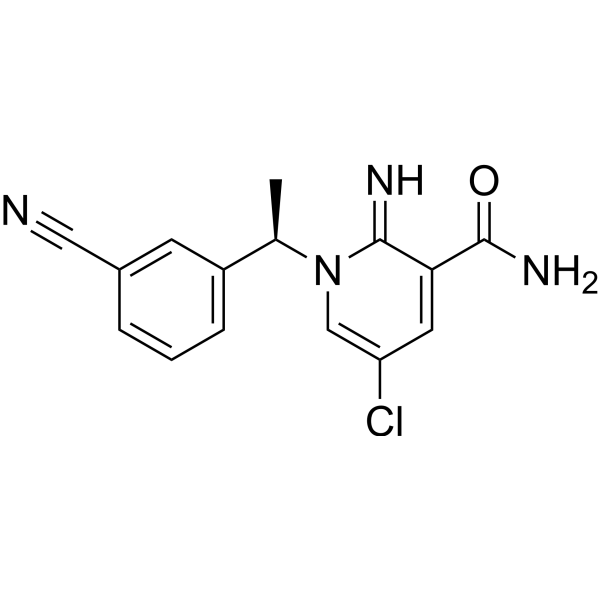
    ADRA1D receptor antagonist 1 (free base) (compound (R)-9s) is an orally active, potent and selective human α1D-adrenoceptor (α1D-AR) antagonist (Ki=1.6 nM). ADRA1D receptor antagonist 1 (free base) dose-dependently inhibits bladder contraction with an IC30 value of 15 nM. ADRA1D receptor antagonist 1 (free base) can be used in studies of overactive bladder disorders such as urinary urgency, frequency and incontinence.
    ADRA1D receptor antagonist 1 free base
  • HY-15574R

    SB-207266 (Standard)

    5-HT Receptor Reference Standards Cardiovascular Disease
    Piboserod (Standard) is the analytical standard of Piboserod. This product is intended for research and analytical applications. Piboserod is an orally available selective antagonist of the 5-HT4 receptor, with a Ki value of approximately 0.1 nM for human 5-HT4 receptors. Piboserod can competitively bind to the 5-HT4 receptor and block the activation of the 5-HT4 receptor. Piboserod can inhibit the enhancing effect of 5-HT on the nerve-mediated contraction response of the human bladder detrusor muscle. Piboserod is mainly used in the research of urinary system diseases (such as overactive bladder) and cardiovascular diseases (such as chronic heart failure) .
    Piboserod (Standard)
  • HY-120473A

    Adrenergic Receptor Metabolic Disease
    TAK-259 hydrochloride is an orally active α1D-adrenergic receptor antagonist with a Ki value of 1.1 nM for human α1D-adrenergic receptors. TAK-259 hydrochloride can inhibit the contraction of isolated bladder strips in rats with bladder outlet obstruction, reduce non-voiding bladder contractions, and improve urinary frequency symptoms. TAK-259 hydrochloride can be used in research related to overactive bladder .
    TAK-259 hydrochloride
  • HY-182599

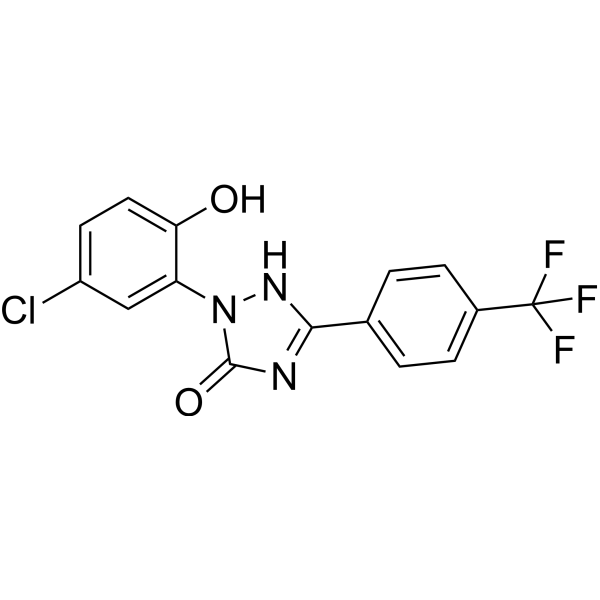
    Calcium Channel mAChR Neurological Disease
    RCC-36 hydrochloride is an L-type calcium channel inhibitor and competitive muscarinic receptor antagonist. RCC-36 hydrochloride inhibits L-type calcium currents in voltage- and concentration-dependent fashion with no effect on cardiac K + currents. RCC-36 hydrochloride suppresses maximum acetylcholine-induced contractile responses, inhibits detrusor muscle contractions induced by potassium chloride, calcium chloride, and electric field stimulation, including atropine-resistant contractions. RCC-36 hydrochloride can be used for the research of urinary frequency, urinary incontinence, and bladder overactivity .
    RCC-36 hydrochloride
  • HY-90010S

    Kabi-2234-d14; PNU-200583E-d14

    Isotope-Labeled Compounds mAChR Cytochrome P450 Neurological Disease Cancer
    Tolterodine tartrate-d14 (Kabi-2234-d14) is deuterium labeled Tolterodine tartrate. Tolterodine ((R)-(+)-Tolterodine) is a mAChR inhibitor and substrate for cytochrome P450 enzymes. Tolterodine competitively binds acetylcholine, reduces sympathetic excitation, and inhibits involuntary bladder muscle contraction. Tolterodine restores the Nrf2/NF-κB signaling pathway, mediates protection against inflammatory response and ferroptosis. Tolterodine ameliorates LPS (HY-D1056)-induced reactive oxygen species production and lipid oxidation. Tolterodine can be used for the research of urinary tract infections and overactive bladder.
    Tolterodine tartrate-d14

Inquiry Online

Your information is safe with us. * Required Fields.

Salutation


Country or Region *

Applicant Name *


Organization Name *

Department *


Email Address *


Product Name *

Cat. No.


Requested quantity *

Phone Number *


Remarks

Inquiry Online

Inquiry Information

Product Name:
Cat. No.:
Quantity:
MCE Japan Authorized Agent:

