
1. Search Result
Search Result
Results for "

vasodilator agent

" in MedChemExpress (MCE) Product Catalog:

56

Inhibitors & Agonists

2

Peptides

2

Natural
Products

7

Isotope-Labeled Compounds

Cat. No. Product Name Target Research Areas Chemical Structure
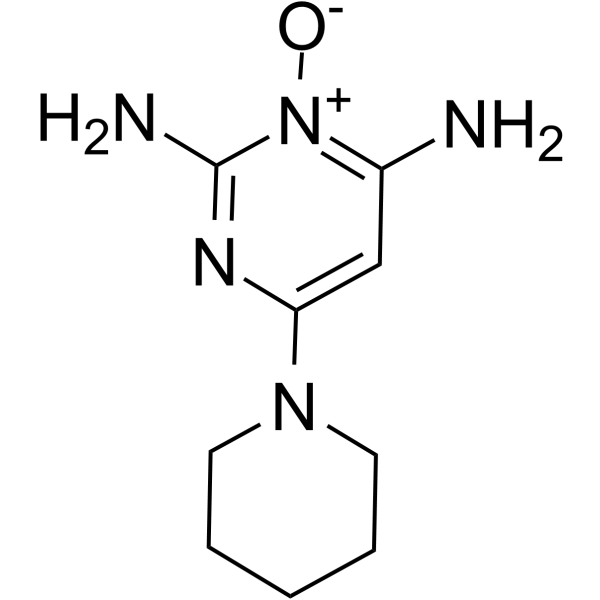
  • HY-B0112
    Minoxidil
    10+ Cited Publications

    U10858

    Potassium Channel Endogenous Metabolite Cardiovascular Disease Cancer
    Minoxidil (U10858) is an ATP-sensitive potassium (KATP) channel opener, a potent oral antihypertensive agent and a peripheral vasodilator that promotes vasodilation also affects hair growth. Minoxidil is also a potent inhibitor of soybean lipoxygenaseare with an IC50 of 20 μM .
    Minoxidil
  • HY-B0233

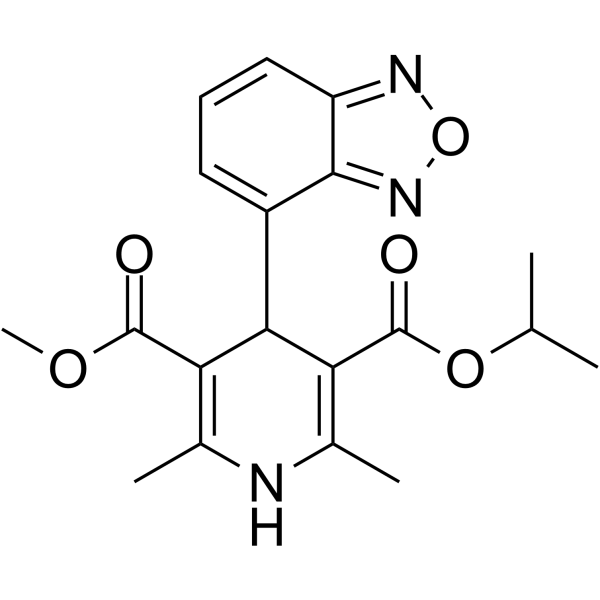
    PN 200-110

    Calcium Channel Autophagy Cardiovascular Disease Neurological Disease
    Isradipine (PN 200-110) is an orally active and blood-brain barrier permeability L-type calcium channel blocker. Isradipine, as a powerful peripheral vasodilator, is a dihydropyridine calcium antagonist with selective actions on the heart as well as the peripheral circulation. Isradipine is a potentially viable neuroprotective agent for Parkinson's disease .
    Isradipine
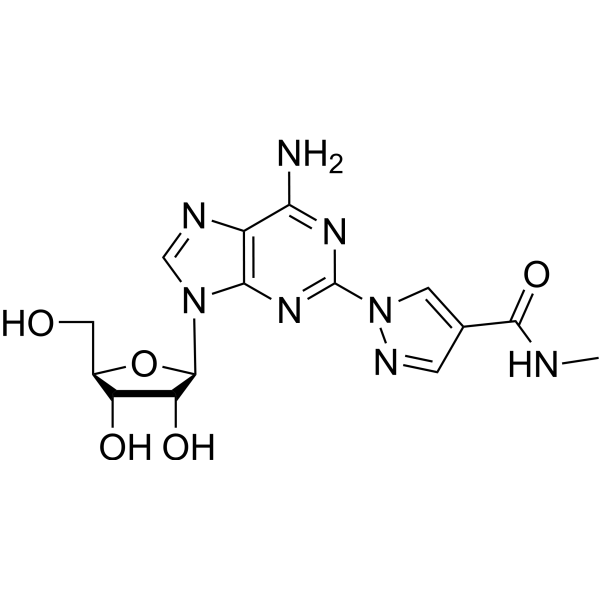
  • HY-A0168
    Regadenoson
    3 Publications Verification

    CVT-3146

    Adenosine Receptor Cardiovascular Disease Cancer
    Regadenoson (CVT-3146) is a selective A2A adenosine receptor agonist and vasodilator that increases coronary blood flow, can be used in study of myocardial perfusion imaging. Regadenoson also increases the permeability of the blood-brain barrier (BBB) in rodents, can be used to study increased delivery of agents to the human CNS .
    Regadenoson
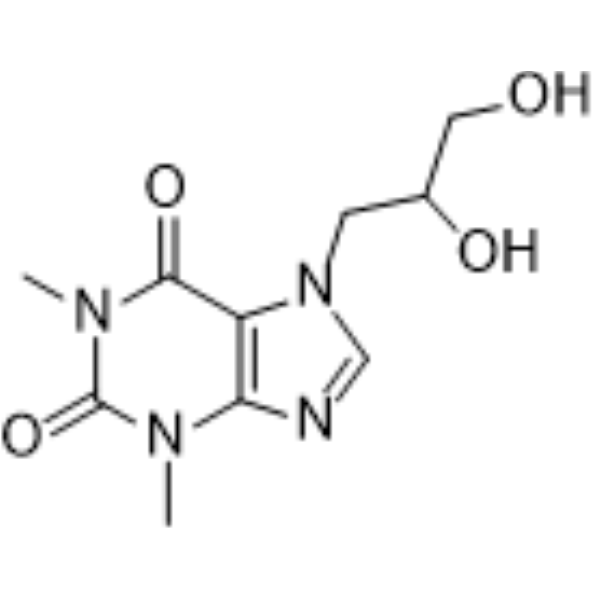
  • HY-B0128
    Diphylline
    1 Publications Verification

    Diprophylline

    Adenosine Receptor Phosphodiesterase (PDE) Cardiovascular Disease Inflammation/Immunology
    Diphylline (Diprophylline) is a potent A1/A2 adenosine receptor antagonist and cyclic nucleotide phosphodiesterase inhibitor. Diphylline, a xanthine derivative, is a bronchodilator and vasodilator agent and has the potential for chronic bronchitis and emphysema .
    Diphylline
  • HY-B1294

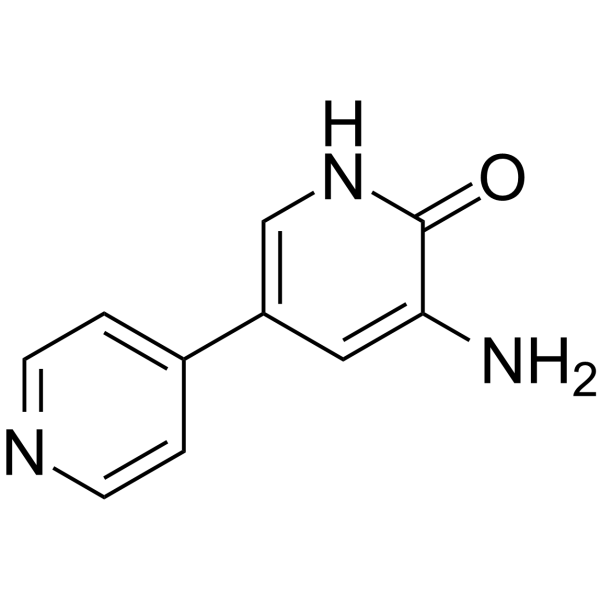
    Inamrinone

    Phosphodiesterase (PDE) Cardiovascular Disease
    Amrinone (Inamrinone) is a positive inotropic-vasodilator agent. Amrinone is a selective phosphodiesterase III inhibitor that increases cyclic adenosine monophosphate by preventing its breakdown. Amrinone is also an orally active, non-glycosidic and non-catecholamine cardiotonic agent .
    Amrinone
  • HY-B1901

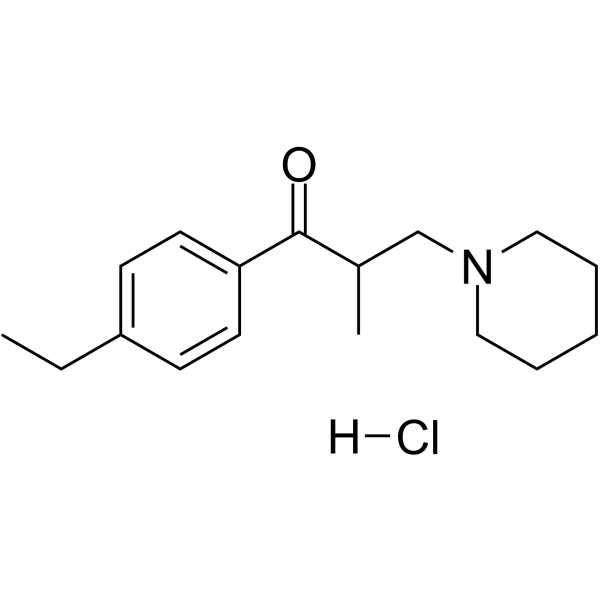
    (±)-Eperisone hydrochloride

    P2X Receptor Neurological Disease
    Eperisone Hydrochloride ((±)-Eperisone hydrochloride) is an orally active antispastic agent with a vasodilator effect, used for the research of muscle stiffness and pain. Eperisone Hydrochloride is a potent and selectively P2X7 receptor antagonist, also shows antagonism for human P2X3. Eperisone Hydrochloride works by relaxing both skeletal muscles and vascularsmooth muscles, demonstrating a variety of effects such as reduction ofmyotonia, improvement of circulationand and suppression of the pain reflex .
    Eperisone hydrochloride
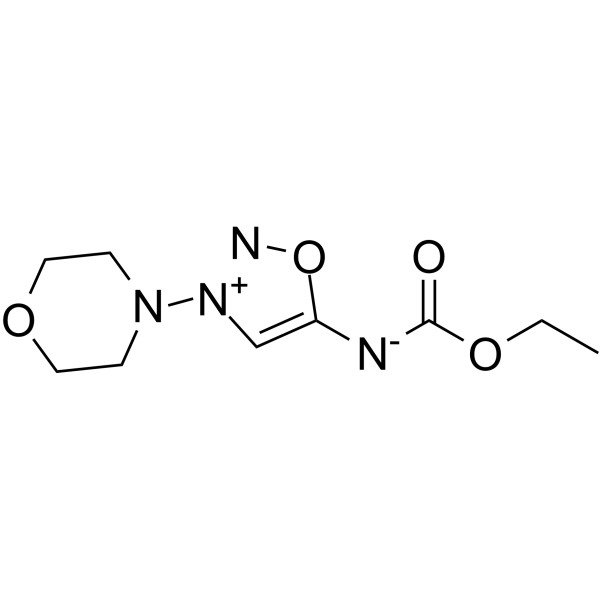
  • HY-B1069
    Molsidomine
    1 Publications Verification

    SIN-10; Morsydomine

    Drug Metabolite Cardiovascular Disease Neurological Disease Metabolic Disease
    Molsidomine, a nitric oxide (NO) donor, is an orally active vasodilator agent. Molsidomine is a prodrug that can be rapidly metabolized in the liver to its active metabolite, Linsidomine (HY-101200). Molsidomine can be used for the study of angina pectoris, mental disorders and diabetic complications .
    Molsidomine
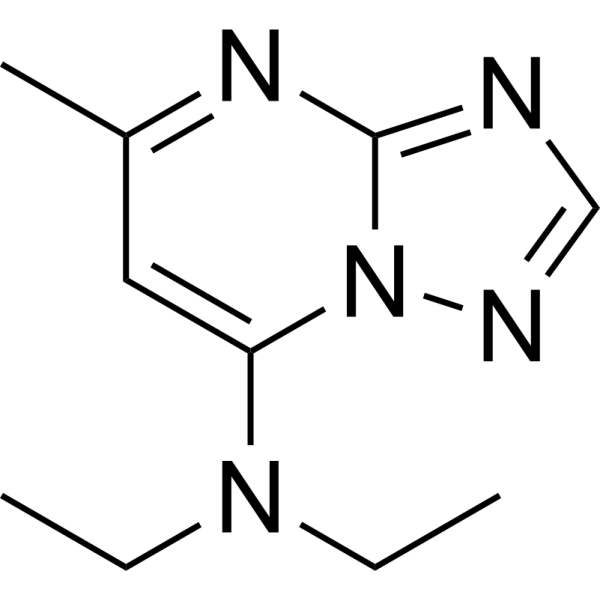
  • HY-B1016

    AR-12008

    PDGFR Phosphodiesterase (PDE) Prostaglandin Receptor Cardiovascular Disease Neurological Disease
    Trapidil (AR-12008) is an orally active vasodilator and antiplatelet agent. Trapidil antagonizes platelet-derived growth factor (PDGF), inhibits phosphodiesterase, thromboxane A2 synthesis and pro-inflammatory cytokine production. Trapidil promotes prostacyclin biosynthesis, reduces lipid peroxidation, regulates nitric oxide metabolism, and inhibits cell proliferation and migration. Trapidil exerts tissue-protective effects, regulates bone turnover, and inhibits pyroptosis via the GPX3/Nrf2 pathway. Trapidil is applicable to research related to renal ischemia-reperfusion injury, chronic stable angina, restenosis, meningioma, diabetic cardiomyopathy and peripheral nerve crush injury .
    Trapidil
  • HY-N7065

    Potassium Channel Cardiovascular Disease
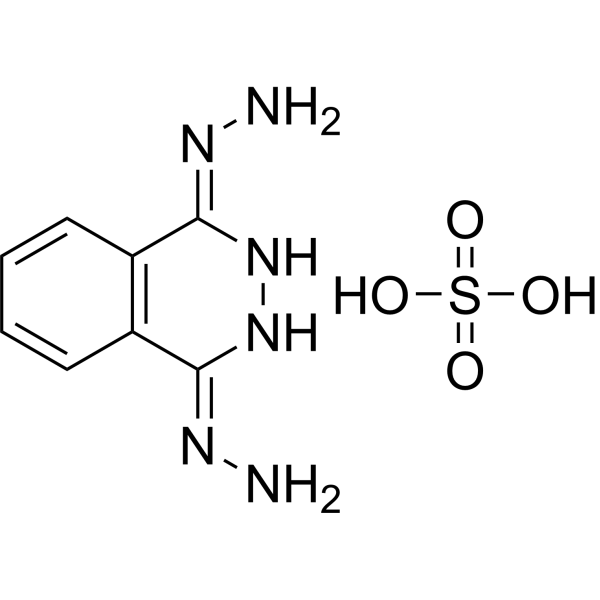
    Dihydralazine sulfate is a vasodilator and an antihypertensive agent .
    Dihydralazine sulfate
  • HY-B0112R

    U10858 (Standard)

    Reference Standards Potassium Channel Endogenous Metabolite Cardiovascular Disease Cancer
    Minoxidil (Standard) is the analytical standard of Minoxidil. This product is intended for research and analytical applications. Minoxidil (U10858) is an ATP-sensitive potassium (KATP) channel opener, a potent oral antihypertensive agent and a peripheral vasodilator that promotes vasodilation also affects hair growth. Minoxidil is also a potent inhibitor of soybean lipoxygenaseare with an IC50 of 20 μM .
    Minoxidil (Standard)
  • HY-B1440

    Calcium Channel Monoamine Oxidase Cardiovascular Disease
    Ethaverine hydrochloride, a derivative of papaverine, inhibits cardiac L-type calcium channel. Ethaverine hydrochloride is a peripheral vasodilator and antispasmodic agent. Ethaverine hydrochloride can be used for research of peripheral vascular disease .
    Ethaverine hydrochloride
  • HY-23196S

    Potassium Channel Neurological Disease
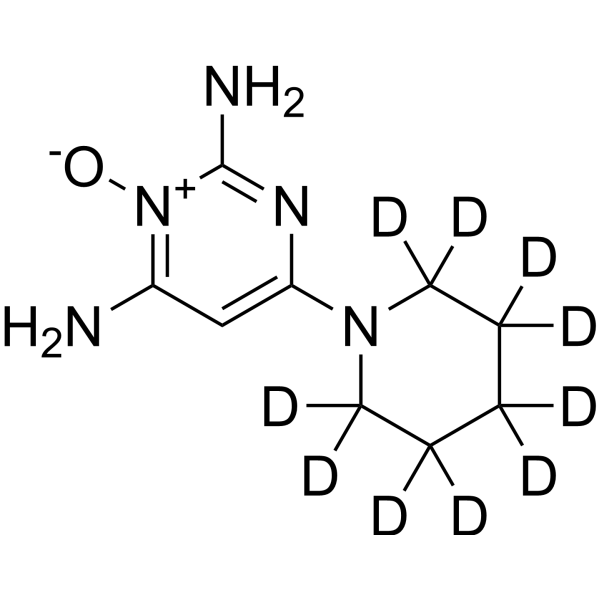
    Minoxidil-d10 (U10858-d10) is the deuterium labeled Minoxidil. Minoxidil (U10858) is an ATP-sensitive potassium (KATP) channel opener, a potent oral antihypertensive agent and a peripheral vasodilator that promotes vasodilation also affects hair growth. Minoxidil is also a potent inhibitor of soybean lipoxygenaseare with an IC50 of 20 μM[1][2][3].
    Minoxidil-d10
  • HY-B0484

    Adrenergic Receptor Cardiovascular Disease
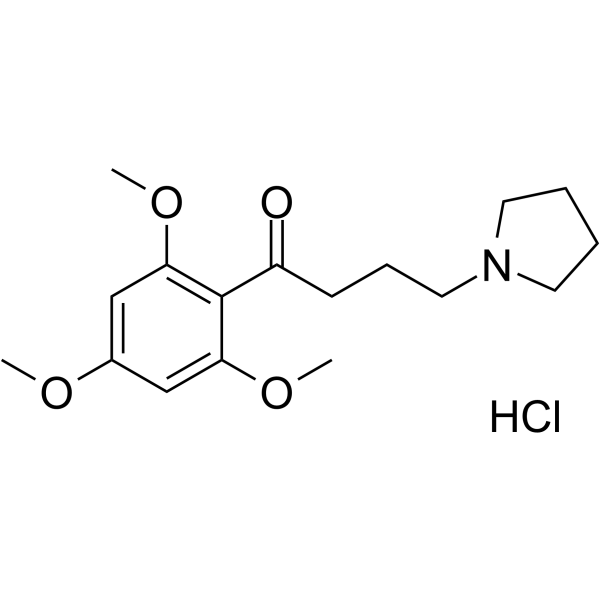
    Buflomedil hydrochloride, a vasodilator agent, is an orally active α1A-adrenoceptor antagonist with Kis of 4.06 µM and 6.84 µM for α1A-AR and α1B-AR, respectively. Buflomedil hydrochloride can be used for the study of peripheral circulatory disorders .
    Buflomedil hydrochloride
  • HY-B1901R

    (±)-Eperisone hydrochloride (Standard)

    P2X Receptor Reference Standards Neurological Disease
    Eperisone (hydrochloride) (Standard) is the analytical standard of Eperisone (hydrochloride). This product is intended for research and analytical applications. Eperisone Hydrochloride ((±)-Eperisone hydrochloride) is an orally active antispastic agent with a vasodilator effect, used for the research of muscle stiffness and pain. Eperisone Hydrochloride is a potent and selectively P2X7 receptor antagonist, also shows antagonism for human P2X3. Eperisone Hydrochloride works by relaxing both skeletal muscles and vascularsmooth muscles, demonstrating a variety of effects such as reduction ofmyotonia, improvement of circulationand and suppression of the pain reflex .
    Eperisone hydrochloride (Standard)
  • HY-14276A

    Methoxyverapamil hydrochloride

    Calcium Channel Cardiovascular Disease
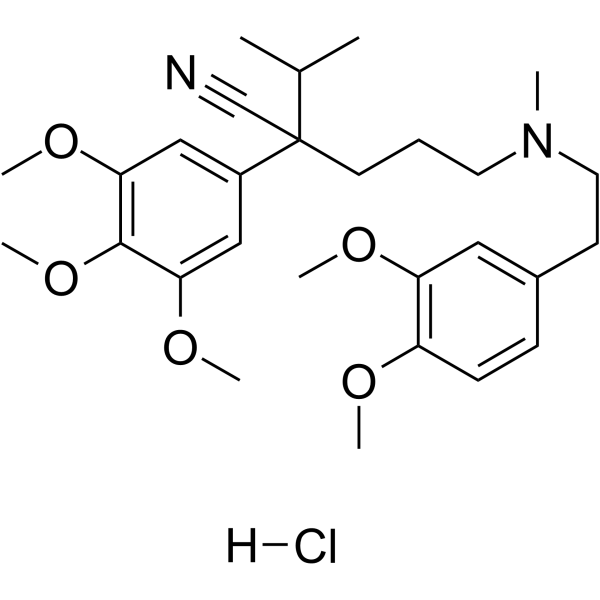
    Gallopamil hydrochloride (Methoxyverapamil hydrochloride), a methoxy derivative of Verapamil, is a phenylalkylamine calcium antagonist . Gallopamil hydrochloride inhibits acid secretion in a concentration-dependent manner with an IC50 of 10.9 μM . Gallopamil hydrochloride is a potent antiarrhythmic and vasodilator agent .
    Gallopamil hydrochloride
  • HY-127026

    Angiotensin-converting Enzyme (ACE) Cardiovascular Disease
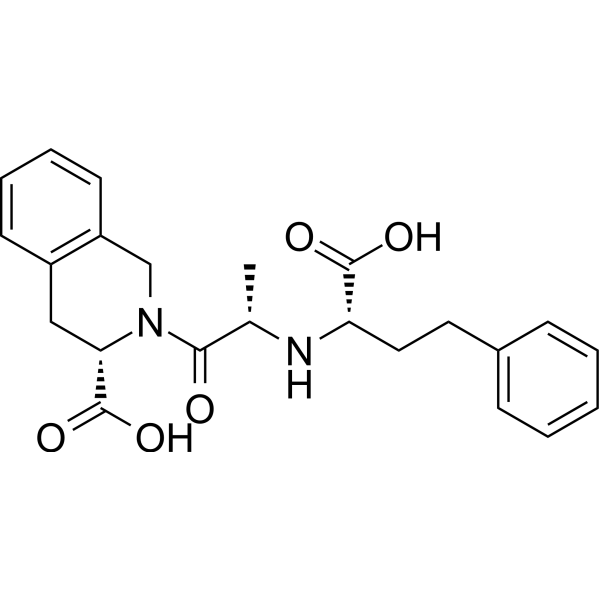
    Quinaprilat is an orally active non-mercapto Angiotensin Converting Enzyme (ACE) inhibitor, the active metabolite of Quinapril. Quinaprilat specifically blocks the conversion of angiotensin I to the vasoconstrictor angiotensin II and inhibits the degradation of bradykinin. Quinaprilat acts as anti-hypertensive agent and vasodilator .
    Quinaprilat
  • HY-B2198

    Actinomin chloride

    Cholinesterase (ChE) Neurological Disease
    Carpronium (Actinomin) chloride is an orally active cholinergic agonist, local vasodilator and parasympathomimetic agent. Carpronium chloride is structurally similar to acetylcholine. Carpronium chloride promotes hair growth, and oral overdose induces cholinergic crisis. Carpronium chloride is applicable to research related to alopecia areata .
    Carpronium chloride
  • HY-165439

    LY195115

    Phosphodiesterase (PDE) Cardiovascular Disease
    Indolidan (LY195115) is an orally active cardiotonic agent and a selective cyclic nucleotide phosphodiesterase inhibitor. Indolidan has a Ki of 80 nM for sarcoplasmic reticulum phosphodiesterase (SR-PDE). Indolidan exhibits positive inotropic and vasodilator effects. Indolidan can be used in the research of diseases such as congestive heart failure .
    Indolidan
  • HY-153168

    Phosphodiesterase (PDE) Cardiovascular Disease
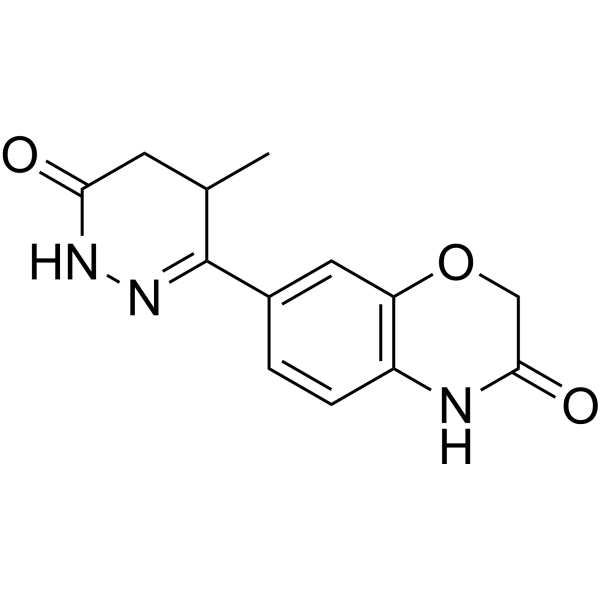
    Bemoradan (compound 10a) is an orally active and selective canine Phosphodiesterase (PDE) fraction III inhibitor. Bemoradan is a long-acting, potent, inotropic vasodilator and a novel cardiotonic agent, and can be used in congestive heart failure research .
    Bemoradan
  • HY-106538

    ISF 2469

    Drug Derivative Cardiovascular Disease
    Cadralazine (ISF 2469) is an orally active antihypertensive agent. Cadralazine is a peripheral arteriolar vasodilator .
    Cadralazine
  • HY-105559A

    Quinotoxine hydrochloride

    Drug Isomer Cardiovascular Disease
    Viquidil hydrochloride (Quinotoxine hydrochloride), an isomer of Quinidine, is a cerebral vasodilator agent. Viquidil hydrochloride shows antithrombotic activity .
    Viquidil hydrochloride
  • HY-105559

    Quinotoxine

    Potassium Channel Cardiovascular Disease
    Viquidil (Quinotoxine), an isomer of Quinidine, is a cerebral vasodilator agent. Viquidil shows antithrombotic activity .
    Viquidil
  • HY-19102

    Phosphodiesterase (PDE) Cardiovascular Disease
    NSP-805 is a potent and selective inhibitor of guinea pig cardiac phosphodiesterase 3 (PDE3), and a cardiotonic agent with vasodilator properties.
    NSP-805
  • HY-W103372

    Adrenergic Receptor Cardiovascular Disease
    Vasorelaxant agent-2 (Compound 8h) targets α1A-adrenergic receptor with an affinity of pD2=5.4. Vasorelaxant agent-2 exhibits vasodilator activity in rats aortic rings with an EC50 of 0.79 μM .
    Vasorelaxant agent-2
  • HY-14276

    Methoxyverapamil

    Calcium Channel Cardiovascular Disease
    Gallopamil (Methoxyverapamil), a methoxy derivative of Verapamil, is a phenylalkylamine calcium antagonist . Gallopamil inhibits acid secretion in a concentration-dependent manner with an IC50 of 10.9 μM . Gallopamil is a potent antiarrhythmic and vasodilator agent .
    Gallopamil
  • HY-B1901S

    Isotope-Labeled Compounds Neurological Disease
    Eperisone-d10 (hydrochloride) is the deuterium labeled Eperisone hydrochloride. Eperisone Hydrochloride ((±)-Eperisone hydrochloride) is an antispastic agent used for treatment of diseases characterized by muscle stiffness and pain. It works by relaxing both skeletal muscles and vascularsmooth muscles, thus demonstrating avariety of effects such as reduction ofmyotonia, improvement of circulationand suppression of the pain reflex. Eperisone Hydrochloride ((±)-Eperisone hydrochloride) is a centrally acting muscle relaxant inhibiting the pain reflex pathway, having a vasodilator effect [2 .
    Eperisone-d10 hydrochloride
  • HY-B1016R

    AR-12008 (Standard)

    Reference Standards PDGFR Phosphodiesterase (PDE) Prostaglandin Receptor Cardiovascular Disease Cancer
    Trapidil (Standard) (AR-12008 (Standard)) is the analytical standard of Trapidil (HY-B1016R). This product is intended for research and analytical applications. Trapidil (AR-12008) is an orally active vasodilator and antiplatelet agent. Trapidil antagonizes platelet-derived growth factor (PDGF), inhibits phosphodiesterase, thromboxane A2 synthesis and pro-inflammatory cytokine production. Trapidil promotes prostacyclin biosynthesis, reduces lipid peroxidation, regulates nitric oxide metabolism, and inhibits cell proliferation and migration. Trapidil exerts tissue-protective effects, regulates bone turnover, and inhibits pyroptosis via the GPX3/Nrf2 pathway. Trapidil is applicable to research related to renal ischemia-reperfusion injury, chronic stable angina, restenosis, meningioma, diabetic cardiomyopathy and peripheral nerve crush injury.
    Trapidil (Standard)
  • HY-106499A

    Adrenergic Receptor Cardiovascular Disease
    Sulfinalol hydrochloride is an orally active β-adrenoceptor antagonist with direct vasodilator activity. Sulfinalol hydrochloride is an antihypertensive agent .
    Sulfinalol hydrochloride
  • HY-B0484A

    Adrenergic Receptor Cardiovascular Disease
    Buflomedil, a vasodilator agent, is an orally active α1A-adrenoceptor antagonist with Kis of 4.06 µM and 6.84 µM for α1A-AR and α1B-AR, respectively. Buflomedil can be used for the study of peripheral circulatory disorders .
    Buflomedil
  • HY-B0484R

    Reference Standards Adrenergic Receptor Cardiovascular Disease
    Buflomedil hydrochloride (Standard) is the analytical standard of Buflomedil hydrochloride (HY-B0484). This product is intended for research and analytical applications. Buflomedil hydrochloride (Standard), a vasodilator agent, is an orally active α1A-adrenoceptor antagonist with Kis of 4.06 µM and 6.84 µM for α1A-AR and α1B-AR, respectively. Buflomedil hydrochloride can be used for the study of peripheral circulatory disorders .
    Buflomedil hydrochloride (Standard)
  • HY-164004

    Parasite Cardiovascular Disease Infection
    Stevaladil, an vasodilator, is a amebicide agent .
    Stevaladil
  • HY-B1538S

    DL-Bamethane-d9 acetate

    Isotope-Labeled Compounds Cardiovascular Disease
    Bamethan-d9 (DL-Bamethane-d9) acetate is the deuterium labeled Bamethan. Bamethan is a vasodilator agent .
    Bamethan-d9 acetate
  • HY-16256

    Phosphodiesterase (PDE) Cardiovascular Disease
    Amrinone lactate is a positive inotropic-vasodilator agent. Amrinone lactate is a selective phosphodiesterase III inhibitor that increases cyclic adenosine monophosphate by preventing its breakdown. Amrinone lactate is also an orally active, non-glycosidic and non-catecholamine cardiotonic agent .
    Amrinone lactate
  • HY-B1294R

    Inamrinone (Standard)

    Reference Standards Phosphodiesterase (PDE) Cardiovascular Disease
    Amrinone (Standard) is the analytical standard of Amrinone. This product is intended for research and analytical applications. Amrinone (Inamrinone) is a positive inotropic-vasodilator agent. Amrinone is a selective phosphodiesterase III inhibitor that increases cyclic adenosine monophosphate by preventing its breakdown. Amrinone is also an orally active, non-glycosidic and non-catecholamine cardiotonic agent .
    Amrinone (Standard)
  • HY-127026A

    Angiotensin-converting Enzyme (ACE) Cardiovascular Disease
    Quinaprilat hydrate is a non-mercapto Angiotensin Converting Enzyme (ACE) inhibitor, the active metabolite of Quinapril. Quinaprilat hydrate specifically blocks the conversion of angiotensin I to the vasoconstrictor angiotensin II and inhibits the degradation of bradykinin. Quinaprilat hydrate acts as anti-hypertensive agent and vasodilator .
    Quinaprilat hydrate
  • HY-127026B

    Angiotensin-converting Enzyme (ACE) Cardiovascular Disease
    Quinaprilat hydrochloride is an orally active non-mercapto Angiotensin Converting Enzyme (ACE) inhibitor, the active metabolite of Quinapril. Quinaprilat hydrochloride specifically blocks the conversion of angiotensin I to the vasoconstrictor angiotensin II and inhibits the degradation of bradykinin. Quinaprilat hydrochloride acts as anti-hypertensive agent and vasodilator .
    Quinaprilat hydrochloride
  • HY-B1440R

    Reference Standards Calcium Channel Monoamine Oxidase Cardiovascular Disease
    Ethaverine (hydrochloride) (Standard) is the analytical standard of Ethaverine (hydrochloride). This product is intended for research and analytical applications. Ethaverine hydrochloride, a derivative of papaverine, inhibits cardiac L-type calcium channel. Ethaverine hydrochloride is a peripheral vasodilator and antispasmodic agent. Ethaverine hydrochloride can be used for research of peripheral vascular disease .
    Ethaverine hydrochloride (Standard)
  • HY-101128R

    FR2054 (Standard)

    Reference Standards Bacterial Antibiotic Infection
    Ethaverine (hydrochloride) (Standard) is the analytical standard of Ethaverine (hydrochloride). This product is intended for research and analytical applications. Ethaverine hydrochloride, a derivative of papaverine, inhibits cardiac L-type calcium channel. Ethaverine hydrochloride is a peripheral vasodilator and antispasmodic agent. Ethaverine hydrochloride can be used for research of peripheral vascular disease .
    Bicyclomycin benzoate (Standard)
  • HY-A0168A

    CVT-3146 hydrate

    Adenosine Receptor Cardiovascular Disease
    Regadenoson hydrate (NSC 169186) is a selective A2A adenosine receptor agonist and vasodilator that increases coronary blood flow, can be used in study of myocardial perfusion imaging. Regadenoson hydrate also increases the permeability of the blood-brain barrier (BBB) in rodents, can be used to study increased delivery of agents to the human CNS .
    Regadenoson hydrate
  • HY-B0128R

    Diprophylline (Standard)

    Reference Standards Adenosine Receptor Phosphodiesterase (PDE) Cardiovascular Disease Inflammation/Immunology
    Diphylline (Standard) is the analytical standard of Diphylline. This product is intended for research and analytical applications. Diphylline (Diprophylline) is a potent A1/A2 adenosine receptor antagonist and cyclic nucleotide phosphodiesterase inhibitor. Diphylline, a xanthine derivative, is a bronchodilator and vasodilator agent and has the potential for chronic bronchitis and emphysema .
    Diphylline (Standard)
  • HY-A0168S

    CVT-3146-d3

    Isotope-Labeled Compounds Adenosine Receptor Cardiovascular Disease Cancer
    Regadenoson-d3 is the deuterium labeled Regadenoson. Regadenoson (CVT-3146) is a potent and selective A2A adenosine receptor agonist, with Kis of 290 and 1120 nM for rat and pig adenosine A2A receptor, respectively. Regadenoson is selective for the adenosine A2A receptor over adenosine A1 and A2B receptors, and shows 13-fold selectivity over the human adenosine A1 receptor. Regadenoson is a vasodilator stress agent has shifted the landscape of vasodilator myocardial perfusion imaging. Regadenoson increases blood-brain barrier (BBB) permeability in rodents .
    Regadenoson-d3
  • HY-P5978

    ANP 127-150 (rat)

    Natriuretic Peptide Receptor (NPR) Cardiovascular Disease
    Atriopeptin III (ANP 127-150) (rat), a 24-amino acid atrial peptide, is a potent vasodilator and natriuretic/diuretic agent. Atriopeptin III (rat) improves renal functions and decreases blood pressure in a ureter-obstructed rat kidney model. Atriopeptin III (rat) can be used for research of chronic renal failure .
    Atriopeptin III (rat)
  • HY-B0233S1

    PN 200-110-d6

    Calcium Channel Autophagy Neurological Disease
    Isradipine-d6 is the deuterium labeled Isradipine . Isradipine (PN 200-110) is an orally active L-type calcium channel blocker. Isradipine, as a powerful peripheral vasodilator, is a dihydropyridine calcium antagonist with selective actions on the heart as well as the peripheral circulation. Isradipine is a potentially viable neuroprotective agent for Parkinson's disease .
    Isradipine-d6
  • HY-B0233R

    PN 200-110 (Standard)

    Reference Standards Calcium Channel Autophagy Cardiovascular Disease Neurological Disease
    Isradipine (Standard) is the analytical standard of Isradipine. This product is intended for research and analytical applications. Isradipine (PN 200-110) is an orally active L-type calcium channel blocker. Isradipine, as a powerful peripheral vasodilator, is a dihydropyridine calcium antagonist with selective actions on the heart as well as the peripheral circulation. Isradipine is a potentially viable neuroprotective agent for Parkinson's disease .
    Isradipine (Standard)
  • HY-B0233S2

    PN 200-110-d7

    Calcium Channel Autophagy Isotope-Labeled Compounds Cardiovascular Disease Neurological Disease
    Isradipine-d7 is deuterated labeled Isradipine (HY-B0233). Isradipine (PN 200-110) is an orally active L-type calcium channel blocker. Isradipine, as a powerful peripheral vasodilator, is a dihydropyridine calcium antagonist with selective actions on the heart as well as the peripheral circulation. Isradipine is a potentially viable neuroprotective agent for Parkinson's disease .
    Isradipine-d7
  • HY-127026R

    Reference Standards Angiotensin-converting Enzyme (ACE) Cardiovascular Disease
    Quinaprilat (Standard) is the analytical standard of Quinaprilat (HY-127026) . This product is intended for research and analytical applications. Quinaprilat is an orally active non-mercapto Angiotensin Converting Enzyme (ACE) inhibitor, the active metabolite of Quinapril. Quinaprilat specifically blocks the conversion of angiotensin I to the vasoconstrictor angiotensin II and inhibits the degradation of bradykinin. Quinaprilat acts as anti-hypertensive agent and vasodilator .
    Quinaprilat (Standard)
  • HY-B0233S

    Isotope-Labeled Compounds Calcium Channel Autophagy Cardiovascular Disease Neurological Disease
    Isradipine-d3 (PN 200-110-d3) is the deuterium labeled Isradipine. Isradipine (PN 200-110) is an orally active L-type calcium channel blocker. Isradipine, as a powerful peripheral vasodilator, is a dihydropyridine calcium antagonist with selective actions on the heart as well as the peripheral circulation. Isradipine is a potentially viable neuroprotective agent for Parkinson's disease .
    Isradipine-d3
  • HY-B1069R

    SIN-10 (Standard); Morsydomine (Standard)

    Reference Standards Drug Metabolite Cardiovascular Disease Neurological Disease Metabolic Disease
    Molsidomine (Standard) (SIN-10 (Standard)) is the analytical standard of Molsidomine (HY-B1069). This product is intended for research and analytical applications. Molsidomine, a nitric oxide (NO) donor, is an orally active vasodilator agent. Molsidomine is a prodrug that can be rapidly metabolized in the liver to its active metabolite, Linsidomine (HY-101200). Molsidomine can be used for the study of angina pectoris, mental disorders and diabetic complications.
    Molsidomine (Standard)
  • HY-A0168R

    CVT-3146 (Standard)

    Reference Standards Adenosine Receptor Cardiovascular Disease
    Regadenoson (Standard) is the analytical standard of Regadenoson. This product is intended for research and analytical applications. Regadenoson (CVT-3146) is a selective A2A adenosine receptor agonist and vasodilator that increases coronary blood flow, can be used in study of myocardial perfusion imaging. Regadenoson also increases the permeability of the blood-brain barrier (BBB) in rodents, can be used to study increased delivery of agents to the human CNS .
    Regadenoson (Standard)
  • HY-106538R

    ISF 2469 (Standard)

    Drug Derivative Reference Standards Cardiovascular Disease
    Cadralazine (Standard) is the analytical standard of Cadralazine. This product is intended for research and analytical applications. Cadralazine (ISF 2469) is an orally active antihypertensive agent. Cadralazine is a peripheral arteriolar vasodilator .
    Cadralazine (Standard)

Inquiry Online

Your information is safe with us. * Required Fields.

Salutation


Country or Region *

Applicant Name *


Organization Name *

Department *


Email Address *


Product Name *

Cat. No.


Requested quantity *

Phone Number *


Remarks

Inquiry Online

Inquiry Information

Product Name:
Cat. No.:
Quantity:
MCE Japan Authorized Agent:

