Search Result
Results for "
visible light
" in MedChemExpress (MCE) Product Catalog:
3
Biochemical Assay Reagents
| Cat. No. |
Product Name |
Target |
Research Areas |
Chemical Structure |
-
- HY-D0989
-
|
|
Fluorescent Dye
|
Others
|
|
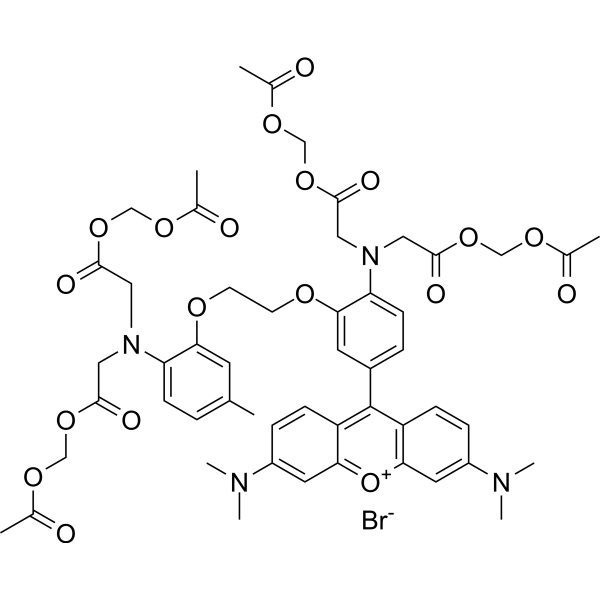
Rhod-2 is a high-affinity visible light excitation wavelength Ca 2+ fluorescent probe, Rhod-2, AM is an acetyl methyl ester derivative of Rhod-2, which has cell membrane permeability and can easily enter cells with simple culture. Once it enters the cell, it is sheared by its lactesterase to produce Rhod-2 without membrane permeability, which remains in the cell to perform the corresponding physiological functions. Maximum excitation/emission wavelength: 549/578 nm .
|
-
-
- HY-W075707
-
|
Iron(III) meso-Tetra(4-carboxyphenyl)porphine chloride
|
MOFs
|
Others
|
|
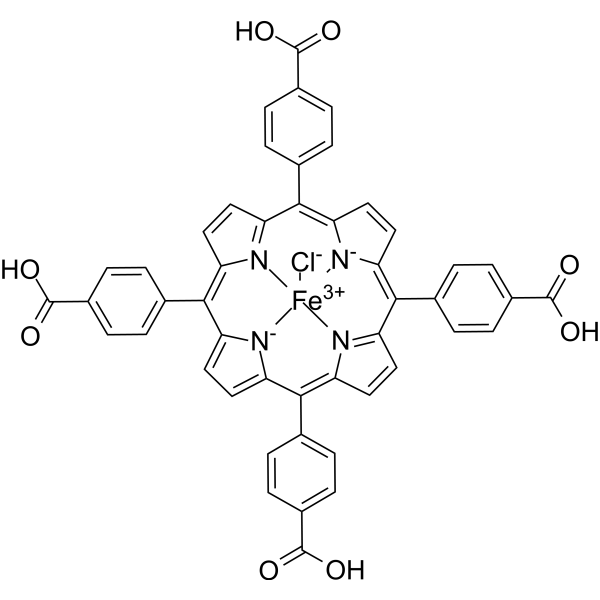
FeTCPP chloride (Iron(III) meso-Tetra(4-carboxyphenyl)porphine chloride) is a metallic porphyrin compound formed by the coordination of a central iron ion (Fe 3+) with four 4-carboxyphenylporphyrins (TCPP). FeTCPP chloride can be used as a catalyst for catalytic, electrochemical, photochemical and biomedical research. FeTCPP chloride has high photocatalytic performance for p-nitrophenol under visible light. FeTCPP chloride also has peroxisase-like activity, which is used in bionic catalysis research .
|
-
-
- HY-D0367
-
|
Calcofluor White M2R
|
Fluorescent Dye
|
Others
|
|
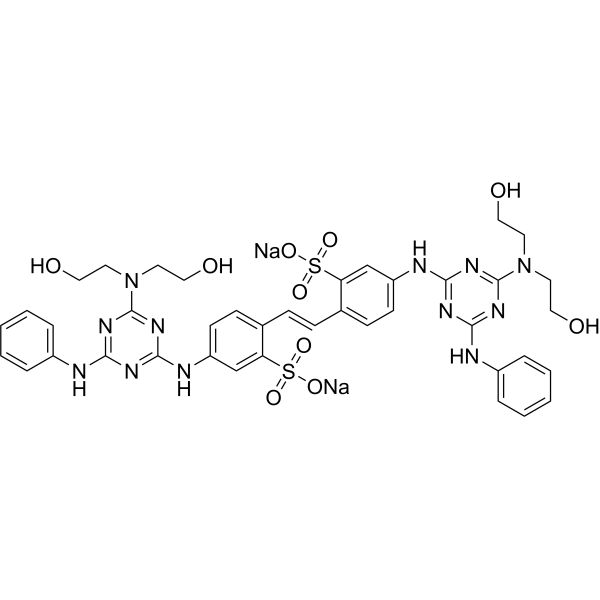
Fluorescent brightener 28 is a fluorescent whitening agent commonly used in the padding process of the textile industry. Fluorescent brightener 28 is capable of staining polysaccharides such as cellulose, and when the plasma membrane ruptures, it also weakly stains the cytoplasm and strongly stains the cell nucleus. Additionally, Fluorescent brightener 28 can be utilized to detect intracellular chitin in living cells. Fluorescent Brightener 28 also is a visible light emitting diode (LED)-light sensitive photoinitiator for free radical photopolymerizations .
|
-
-
- HY-13615A
-
|
|
Fluorescent Dye
Folate Receptor (FR)
|
Cancer
|
|
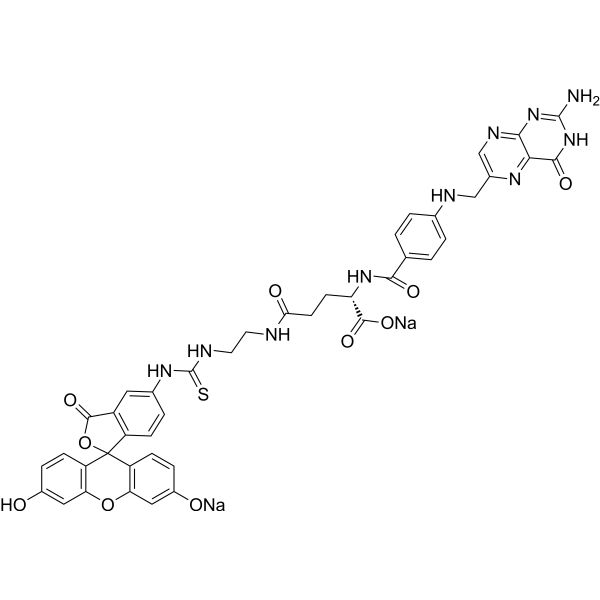
EC-17 disodium salt is a folate receptor alpha (FRα) targeting contrast agent with fluorescent properties in the visible light spectrum. The EC-17 maximum excitation and emission wavelengths are 490 nm and 520 nm, respectively .
|
-
-
- HY-13615
-
|
EC-17
|
Fluorescent Dye
Folate Receptor (FR)
|
Cancer
|
|
Folate-FITC (EC-17) is a folate receptor alpha (FRα) targeting contrast agent with fluorescent properties in the visible light spectrum. The Folate-FITC maximum excitation and emission wavelengths are 490 nm and 520 nm, respectively .
|
-
-
- HY-137822
-
|
4-Nitrophenyl a-D-mannopyranoside
|
Glycosidase
|
Others
|
|
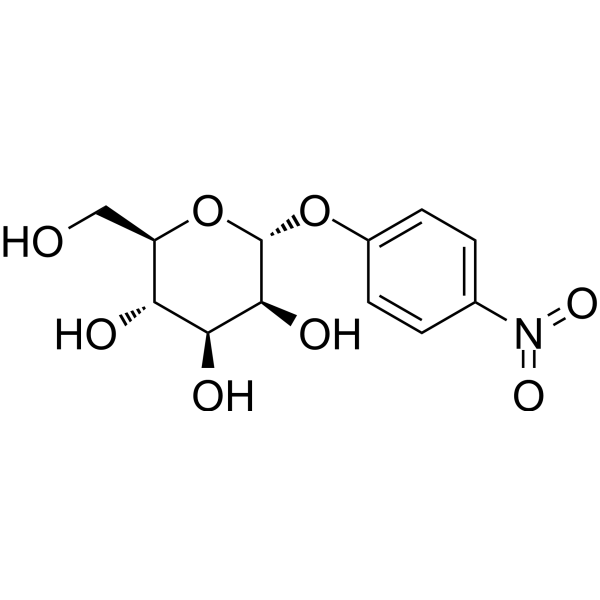
p-Nitrophenyl α-D-mannopyranoside (4-Nitrophenyl α-D-mannopyranoside) is a chromogenic glycosidic ligand. p-Nitrophenyl α-D-mannopyranoside features a sugar moiety (α-D-mannopyranose) with the mannose-characteristic axial hydroxyl group at the C2 position and a ligand portion (p-nitrophenol) that provides ultraviolet-visible light absorption properties. p-Nitrophenyl α-D-mannopyranoside can be used to determine glycosidase activity and characterize the sugar recognition properties of lectins (such as Concanavalin A (HY-P2149)) .
|
-
-
- HY-158231
-
|
F127DA
|
Integrin
FAK
|
Inflammation/Immunology
|
|
Polyether F127 Diacrylate (F127DA) is an acrylated polyethylene glycol-polypropylene glycol-polyethylene glycol triblock copolymer. Polyether F127 Diacrylate rapidly crosslinks and cures into a gel under ultraviolet or visible light with the action of a photoinitiator. Polyether F127 Diacrylate exhibits excellent thermogelation properties and favorable biosafety. Polyether F127 Diacrylate can upregulate the Integrin-FAK pathway, enhance collagen production, increase the protein and gene expression levels of COL-1/SCX, and promote fibroblastic differentiation of periodontal ligament stem cells. Polyether F127 Diacrylate promotes periodontal ligament regeneration and reduces abnormal healing in a rat model of delayed replanted teeth . Polyether F127 Diacrylate promotes functional osteochondral regeneration in a rat model of osteoarthritis. Polyether F127 Diacrylate supports adipose tissue survival, rendering it suitable for breast reconstruction applications. Polyether F127 Diacrylate can be used in studies related to periodontal ligament injury, breast defect and osteoarthritis .
|
-
-
- HY-DY1020
-
|
|
Fluorescent Dye
|
Others
|
Rhod-2 (solution) is a high-affinity visible light excitation wavelength Ca 2+ fluorescent probe, Rhod-2, AM is an acetyl methyl ester derivative of Rhod-2, which has cell membrane permeability and can easily enter cells with simple culture. Once it enters the cell, it is sheared by its lactesterase to produce Rhod-2 without membrane permeability, which remains in the cell to perform the corresponding physiological functions. Maximum excitation/emission wavelength: 549/578 nm . Solvent and concentration: DMSO: 1 mM
|
-
-
- HY-N4139
-
|
|
Drug Intermediate
|
Cancer
|
|
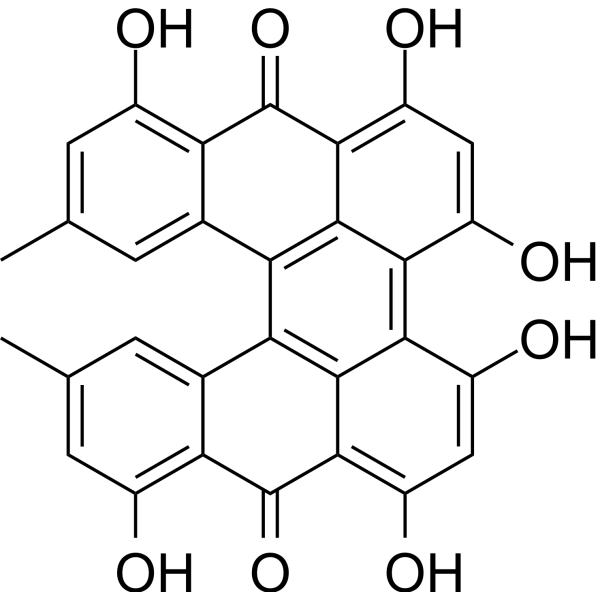
Protohypericin is a compound that can be extracted from Hypericum perforatum. Protohypericin has low photocytotoxicity but can be efficiently photoconverted into Hypericin (HY-N0453) with high phototoxicity under visible light. Protohypericin can be used in cancer research .
|
-
-
- HY-W075770
-
|
Nickel monoxide
|
Environmental Pollutants
Apoptosis
Reactive Oxygen Species (ROS)
Caspase
TGF-beta/Smad
p38 MAPK
Akt
PI3K
|
Infection
Metabolic Disease
Cancer
|
|
Nickel(II) oxide (nickel monoxide) is a chemical warfare agent that can enter the body through the respiratory tract and other routes, distributing to organs such as the lungs and testes. The nanoparticle form of nickel(II) oxide (NiO NPs) exhibits antibacterial, anti-leishmanial, anti-diabetic, and anti-cancer activities. NiO NPs can be activated by ultraviolet and visible light, generating reactive oxygen species (ROS). Nickel(II) oxide induces oxidative stress by generating reactive oxygen species, activating the TGF-β1-mediated MAPK and PI3K/AKT pathways, disrupting the MMPs/TIMPs balance, and upregulating the expression of inflammatory factors (IL-1β, IL-6) and apoptosis-related molecules (Bax, caspase-3, p53), while inhibiting the activity of the anti-apoptotic molecule Bcl-2. Nickel(II) oxide induces cytotoxicity, promotes fibrosis, triggers inflammatory responses, and causes apoptosis. Nickel(II) oxide can be applied in research on the safety assessment of nanomaterials, such as in the context of pulmonary fibrosis and reproductive system toxicity .
|
-
-
- HY-W750459
-
|
|
Fluorescent Dye
|
Others
|
|
Fluorescent brightener 28 (Technical Grade) is a fluorescent whitening agent commonly used in the padding process of the textile industry. Fluorescent brightener 28 is capable of staining polysaccharides such as cellulose, and when the plasma membrane ruptures, it also weakly stains the cytoplasm and strongly stains the cell nucleus. Additionally, Fluorescent brightener 28 can be utilized to detect intracellular chitin in living cells. Fluorescent Brightener 28 also is a visible light emitting diode (LED)-light sensitive photoinitiator for free radical photopolymerizations .
|
-
-
- HY-161092
-
|
|
HCN Channel
Potassium Channel
|
Neurological Disease
|
|
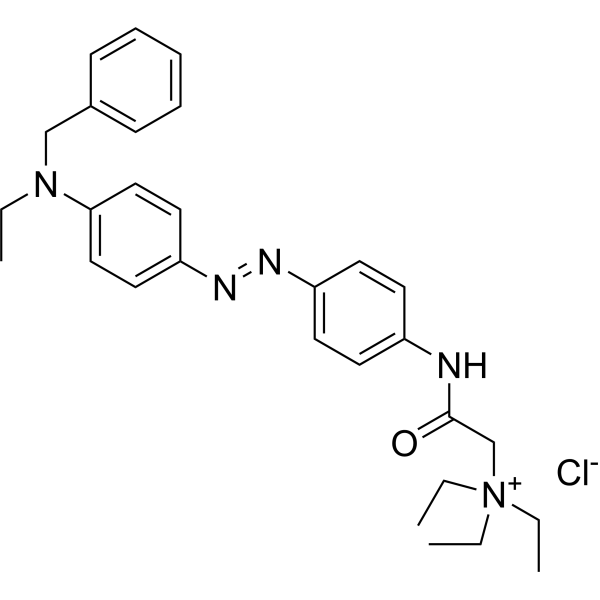
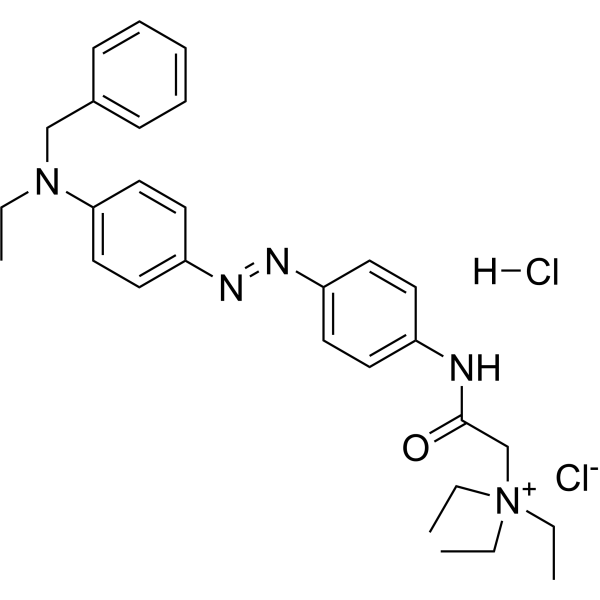
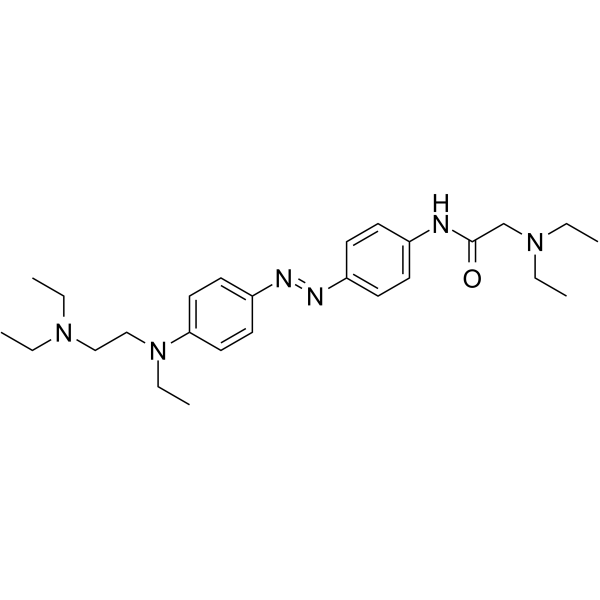
KIO-301 chloride is an azobenzene photoswitch compound that can block voltage-gated ion channels, including hyperpolarisation-activated cyclic nucleotide-gated (HCN) and voltage-gated potassium channels during exposure to visible light .
|
-
-
- HY-161092A
-
|
|
HCN Channel
Potassium Channel
|
Neurological Disease
|
|
KIO-301 chloride hydrochloride is an azobenzene photoswitchable compound that blocks voltage-gated ion channels, including hyperpolarization-activated cyclic nucleotide gating (HCN, during exposure to visible light) ) and voltage-gated potassium channels (voltage-gated potassium channels) .
|
-
-
- HY-161685
-
-
-
- HY-W086630
-
|
2,3-Bornanedione
|
Biochemical Assay Reagents
|
Others
|
|
Camphorquinone (2,3-Bornanedione) is a photoinitiator. Camphorquinone enhances free radical production under visible light (VL) irradiation and exhibits minimal cytotoxicity to HPF cells. Camphorquinone is used in the research of dental resin polymers .
|
-
-
- HY-23497
-
|
|
Others
|
Others
|
|
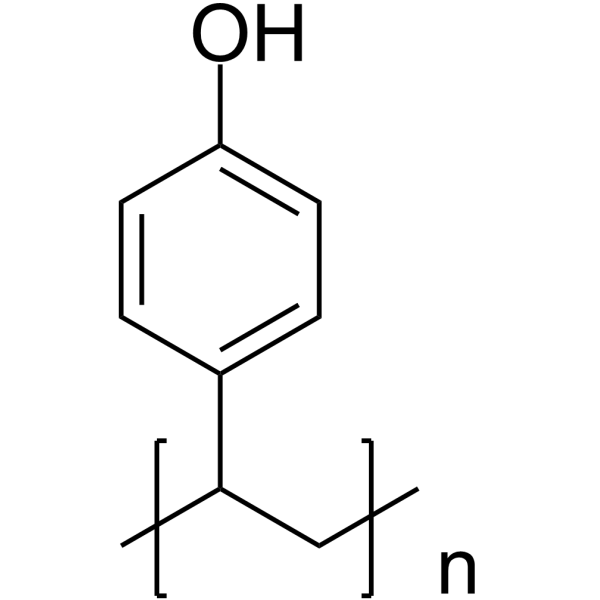
Poly(4-vinylphenol) is a polymer cross-linking agent that can be used to prepare non-toxic films. Poly(4-vinylphenol) is a sensitizer of titania for visible light photocatalysis. Poly(4-vinylphenol) also can be used as a water resistive wood adhesive, as a gate dielectric insulator in organic field effect transistors, and as a responsive surface coating .
|
-
-
- HY-W923132
-
|
Acryloyloxy fluorescein
|
Fluorescent Dye
Endogenous Metabolite
|
Others
|
|
Fluorescein O-acrylate (Acryloyloxy fluorescein) is a highly efficient fluorescent monomer that exhibits strong quantum yield in aqueous solutions, with its excitation and emission wavelengths situated within the visible light spectrum. This versatile monomer can be copolymerized with various compounds, including styrene, and acrylamide, enhancing its ability to bond with macromolecules.
|
-
-
- HY-144368
-
|
|
TNF Receptor
|
Inflammation/Immunology
|
|
CO delivery molecule 1 (compound 4) localizes to the endoplasmic reticulum, mitochondria, and lysosomes. Subcellular localization of CO delivery molecule 1 results in CO-induced toxicity effects. Anti-inflammatory effects of CO delivery molecule 1, as measured by TNF-α suppression, occur at the nanomolar level in the absence of CO release, and are enhanced with visible-light-induced CO release .
|
-
-
- HY-161093
-
|
|
PROTACs
|
Cancer
|
|
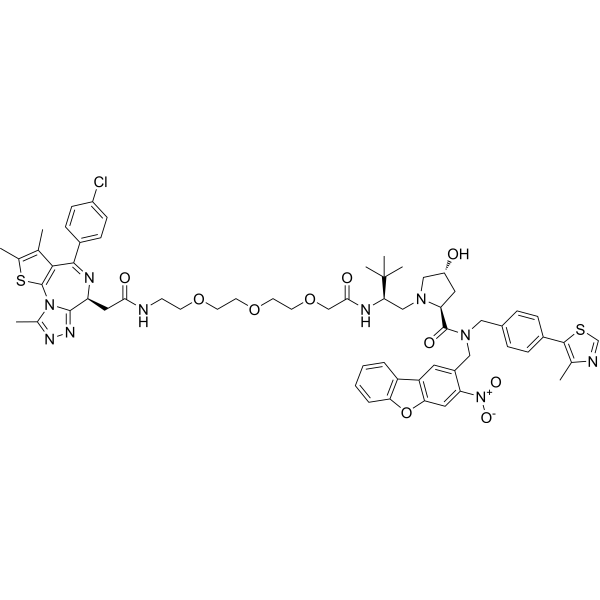
PROTAC BRD4 Degrader-23 (compound 17) is an
effective visible-light-controlled degrader. PROTAC BRD4 Degrader-23 can
inhibit tumor cell proliferation under 405 nm light irradiation .
|
-
-
- HY-136564A
-
|
|
Potassium Channel
|
Neurological Disease
|
|
DAD is a type of ion channel blocker that blocks voltage-gated potassium channels. DAD is a third-generation photoswitch that responds to visible light. DAD has the potential for restoring visual function .
|
-
-
- HY-136564
-
|
|
Potassium Channel
|
Neurological Disease
|
|
DAD dichloride is a type of ion channel blocker that blocks voltage-gated potassium channels. DAD dichloride is a third-generation photoswitch that responds to visible light. DAD dichloride has the potential for restoring visual function .
|
-
-
- HY-131019
-
|
|
mGluR
|
Neurological Disease
|
|
JF-NP-26, an inactive photocaged derivative of raseglurant, is the first caged mGlu5 receptor negative allosteric modulator. Uncaging of JF-NP-26 is elicited with light pulses in the visible spectrum (405 nm). JF-NP-26 induces light-dependent analgesia in models of inflammatory and neuropathic pain in freely behaving animals .
|
-
-
- HY-162132
-
|
|
GLUT
|
Cancer
|
|
WZB117-PPG is a glucose transporter 1 (GLUT1) inhibitor with anticancer activity. WZB117-PPG has remarkable photolysis efficiency and cytotoxicity to cancer cells under visible light irradiation .
|
-
-
- HY-162045
-
|
|
Biochemical Assay Reagents
|
Cancer
|
|
Ru-4T is a phototherapy agent. Ru-4T has phototherapeutic efficacy (PI = 114,000) against melanoma cells (SK-MEL-28) under broad-band visible light (400-700 nm) with EC50 values of 740 pM .
|
-
-
- HY-120106
-
|
|
HDAC
|
Others
|
|
BG14 is a chemical optical modulation of epigenetic regulation of transcription (COMET) probe. BG14 enables high-resolution optical control of epigenetic mechanisms using visible light and can photochromically inhibit human histone deacetylases (HDACs). BG14 can be used to study the dynamic regulation of the human genome .
|
-
-
- HY-171481
-
|
SACD
|
CDK
|
Cancer
|
|
Thio-acridone (SACD) is a photosensitizer (HAF-PSs). Thio-acridone forms a long-lived triplet state upon excitation by 470 nm visible light,, ultimately generating singlet oxygen to damage the structures and functions of target cells such as cancer cells. Thio-acridone is promising for research of cancers . Thio-acridone is a CDK4/Cyclin D1 inhibitor (IC50 = 2 uM) .
|
-
-
- HY-168497
-
|
|
Histone Methyltransferase
|
Cancer
|
|
C-MS023 is a photo-activatable MS023 (HY-19615) prodrug, achieving spatiotemporal inhibition of Histone Arginine Asymmetric Dimethylation. C-MS023 inhibits PRMT6 mediated asymmetric dimethylation of H3 arginine 2 (H3R2me2a), with an estimate IC50 of 0.2224 μM. The photolysis of C-MS023 could be triggered by visible light irradiation at 420 nm, thereby liberating MS023 for effective downregulation of histone arginine asymmetric dimethylation and DNA replication-related transcriptomic activities .
|
-
-
- HY-121642
-
|
|
Others
|
Others
|
|
SL-017 is a novel photoacoustic sensitizer and a derivative of photofrin B. It can be taken up by cells to the maximum extent within 30 minutes and is mainly localized in mitochondria. After being activated by visible light or ultrasound, SL-017 can significantly increase the production of reactive oxygen species (ROS). Low concentrations of SL-017 can rapidly cause the loss of mitochondrial membrane potential. SL-017 can also cause mitochondrial fragmentation, a process that occurs after the loss of membrane potential. Epoxyeicosatrienoic acids (EETs) can alleviate the loss of mitochondrial membrane potential caused by SL-017, but the antioxidant ascorbic acid has no such effect. These characteristics indicate that SL-017 mainly targets mitochondria and exerts its cytotoxic effect by triggering the collapse of mitochondrial membrane potential, generating ROS, and causing mitochondrial fragmentation. As a novel photoacoustic sensitizer, SL-017 has potential application value in photodynamic therapy and sonodynamic therapy.
|
-
-
- HY-W072530
-
|
|
Fluorescent Dye
|
Others
|
|
[Ir (ppy)2 (bpy)]PF6 is a cyclometalated iridium (III) photosensitizer. [Ir (ppy)2 (bpy)]PF6 can be used in homogeneous photocatalytic systems to achieve visible light-induced water splitting for hydrogen production. [Ir (ppy)2 (bpy)]PF6 functions in homogeneous photocatalytic systems for visible light-driven water splitting to produce hydrogen .
|
-
-
- HY-W034053
-
|
|
Fluorescent Dye
|
Others
|
|
Ir[p-F (Me) ppy]2 (dtbbpy) PF6 is a cyclometalated iridium (III) complex. Ir[p-F (Me) ppy]2 (dtbbpy) PF6 absorbs visible light (460 nm) to form a long-lived charge-separated excited state. Ir[p-F (Me) ppy]2 (dtbbpy) PF6 is applicable to visible light-mediated photocatalytic organic transformation reactions .
|
-
-
- HY-W075731
-
|
|
Biochemical Assay Reagents
|
Others
|
|
(Ir[dF (F) ppy]2 (dCF3)) PF6 is a cyclometalated iridium (III) complex that is used in visible light-mediated photocatalytic organic transformations .
|
-
-
- HY-D2976
-
|
|
Fluorescent Dye
|
Cardiovascular Disease
|
|
CN-N2 is a visible light fluorescent probe. CN-N2 has high selectivity, rapid penetration, good biocompatibility, and imaging effects. CN-N2 is suitable for intraoperative rapid imaging of atherosclerotic plaque .
|
-
-
- HY-N4139R
-
|
|
Reference Standards
Drug Intermediate
|
Cancer
|
|
Protohypericin is a compound that can be extracted from Hypericum perforatum. Protohypericin has low photocytotoxicity but can be efficiently photoconverted into Hypericin (HY-N0453) with high phototoxicity under visible light. Protohypericin can be used in cancer research .
|
-
-
- HY-W075708
-
|
Cu(II) Meso-Tetra(4-carboxyphenyl)porphyrin
|
MOFs
|
Others
|
|
Cu (II) MTCPP (Cu (II) Meso-Tetra (4-carboxyphenyl) porphyrin) is a copper coordination complex. Cu (II) MTCPP-sensitized TiO2 nanotubes are a type of visible-light photocatalyst. Cu (II) MTCPP-sensitized TiO2 nanotubes can expand the wavelength response range, transfer excited electrons more efficiently, and separate photogenerated electron-hole pairs .
|
-
-
- HY-180985
-
|
|
PROTACs
Bcr-Abl
|
Cancer
|
|
Azo-PROTAC-4C-cis is a BCR-ABL PROTAC degrader, and its degradation efficiency of BCR-ABL is much lower than that of its trans isomer Azo-PROTAC-4C-trans (HY-180983). Azo-PROTAC-4C-cis is the product of the conformational transformation of Azo-PROTAC-4C-trans under ultraviolet (UV) light irradiation. Azo-PROTAC-4C-cis can be converted into highly active Azo-PROTAC-4C-trans under visible light, thereby initiating protein degradation. Azo-PROTAC-4C-cis can be used for the study of myeloid leukemia .
|
-
-
- HY-133240
-
|
|
DNA Alkylator/Crosslinker
Calcium Channel
Potassium Channel
Sodium Channel
|
Infection
|
|
trans-AzoTAB is a photoresponsive potassium/sodium/calcium channel modulator and DNA-binding agent. trans-AzoTAB undergoes trans-cis isomerization driven by light, with variable polarity and DNA affinity. trans-AzoTAB also enhances voltage-gated potassium currents and inhibits sodium and calcium currents in cardiomyocytes, thereby reducing spontaneous electrical activity and excitation conduction velocity. In addition, trans-AzoTAB induces compaction and frozen conformation of λ-phage DNA, and non-sequence-dependently inhibits transcription and translation processes in the dark; its activity can be reversed and restored by visible light after activation with ultraviolet irradiation. trans-AzoTAB can serve as a probe for two-photon optical regulation of myocardial excitability, and is used to construct photoresponsive interfacial polymer structures .
|
-
-
- HY-180983
-
|
|
PROTACs
Bcr-Abl
|
Cancer
|
|
Azo-PROTAC-4C-trans is a BCR-ABL PROTAC degrader that can efficiently degrade the BCR-ABL fusion protein and ABL protein. Azo-PROTAC-4C-trans exhibits potent selective anti-proliferative activity against K562 cells. Azo-PROTAC-4C-trans allows real-time, reversible regulation of its activity via UV (to inactivate it) /visible light (to activate it) irradiation. Azo-PROTAC-4C-trans can be used for the study of myeloid leukemia .
|
-
| Cat. No. |
Product Name |
Type |
-
- HY-D0989
-
|
|
Fluorescent Dyes
|
|
Rhod-2 is a high-affinity visible light excitation wavelength Ca 2+ fluorescent probe, Rhod-2, AM is an acetyl methyl ester derivative of Rhod-2, which has cell membrane permeability and can easily enter cells with simple culture. Once it enters the cell, it is sheared by its lactesterase to produce Rhod-2 without membrane permeability, which remains in the cell to perform the corresponding physiological functions. Maximum excitation/emission wavelength: 549/578 nm .
|
-
- HY-D0367
-
|
Calcofluor White M2R
|
Fluorescent Dyes
|
|
Fluorescent brightener 28 is a fluorescent whitening agent commonly used in the padding process of the textile industry. Fluorescent brightener 28 is capable of staining polysaccharides such as cellulose, and when the plasma membrane ruptures, it also weakly stains the cytoplasm and strongly stains the cell nucleus. Additionally, Fluorescent brightener 28 can be utilized to detect intracellular chitin in living cells. Fluorescent Brightener 28 also is a visible light emitting diode (LED)-light sensitive photoinitiator for free radical photopolymerizations .
|
-
- HY-DY1020
-
|
|
Fluorescent Dyes
|
Rhod-2 (solution) is a high-affinity visible light excitation wavelength Ca 2+ fluorescent probe, Rhod-2, AM is an acetyl methyl ester derivative of Rhod-2, which has cell membrane permeability and can easily enter cells with simple culture. Once it enters the cell, it is sheared by its lactesterase to produce Rhod-2 without membrane permeability, which remains in the cell to perform the corresponding physiological functions. Maximum excitation/emission wavelength: 549/578 nm . Solvent and concentration: DMSO: 1 mM
|
-
- HY-W923132
-
|
Acryloyloxy fluorescein
|
Fluorescent Dyes
|
|
Fluorescein O-acrylate (Acryloyloxy fluorescein) is a highly efficient fluorescent monomer that exhibits strong quantum yield in aqueous solutions, with its excitation and emission wavelengths situated within the visible light spectrum. This versatile monomer can be copolymerized with various compounds, including styrene, and acrylamide, enhancing its ability to bond with macromolecules.
|
-
- HY-W072530
-
|
|
Fluorescent Dyes
|
|
[Ir (ppy)2 (bpy)]PF6 is a cyclometalated iridium (III) photosensitizer. [Ir (ppy)2 (bpy)]PF6 can be used in homogeneous photocatalytic systems to achieve visible light-induced water splitting for hydrogen production. [Ir (ppy)2 (bpy)]PF6 functions in homogeneous photocatalytic systems for visible light-driven water splitting to produce hydrogen .
|
-
- HY-W034053
-
|
|
Fluorescent Dyes
|
|
Ir[p-F (Me) ppy]2 (dtbbpy) PF6 is a cyclometalated iridium (III) complex. Ir[p-F (Me) ppy]2 (dtbbpy) PF6 absorbs visible light (460 nm) to form a long-lived charge-separated excited state. Ir[p-F (Me) ppy]2 (dtbbpy) PF6 is applicable to visible light-mediated photocatalytic organic transformation reactions .
|
-
- HY-W075731
-
|
|
Fluorescent Dyes
|
|
(Ir[dF (F) ppy]2 (dCF3)) PF6 is a cyclometalated iridium (III) complex that is used in visible light-mediated photocatalytic organic transformations .
|
-
- HY-D2976
-
|
|
Fluorescent Dyes
|
|
CN-N2 is a visible light fluorescent probe. CN-N2 has high selectivity, rapid penetration, good biocompatibility, and imaging effects. CN-N2 is suitable for intraoperative rapid imaging of atherosclerotic plaque .
|
| Cat. No. |
Product Name |
Type |
-
- HY-W075707
-
|
Iron(III) meso-Tetra(4-carboxyphenyl)porphine chloride
|
Biochemical Assay Reagents
|
|
FeTCPP chloride (Iron(III) meso-Tetra(4-carboxyphenyl)porphine chloride) is a metallic porphyrin compound formed by the coordination of a central iron ion (Fe 3+) with four 4-carboxyphenylporphyrins (TCPP). FeTCPP chloride can be used as a catalyst for catalytic, electrochemical, photochemical and biomedical research. FeTCPP chloride has high photocatalytic performance for p-nitrophenol under visible light. FeTCPP chloride also has peroxisase-like activity, which is used in bionic catalysis research .
|
-
- HY-137822
-
|
4-Nitrophenyl a-D-mannopyranoside
|
Biochemical Assay Reagents
|
|
p-Nitrophenyl α-D-mannopyranoside (4-Nitrophenyl α-D-mannopyranoside) is a chromogenic glycosidic ligand. p-Nitrophenyl α-D-mannopyranoside features a sugar moiety (α-D-mannopyranose) with the mannose-characteristic axial hydroxyl group at the C2 position and a ligand portion (p-nitrophenol) that provides ultraviolet-visible light absorption properties. p-Nitrophenyl α-D-mannopyranoside can be used to determine glycosidase activity and characterize the sugar recognition properties of lectins (such as Concanavalin A (HY-P2149)) .
|
-
- HY-158231
-
|
F127DA
|
Biochemical Assay Reagents
|
|
Polyether F127 Diacrylate (F127DA) is an acrylated polyethylene glycol-polypropylene glycol-polyethylene glycol triblock copolymer. Polyether F127 Diacrylate rapidly crosslinks and cures into a gel under ultraviolet or visible light with the action of a photoinitiator. Polyether F127 Diacrylate exhibits excellent thermogelation properties and favorable biosafety. Polyether F127 Diacrylate can upregulate the Integrin-FAK pathway, enhance collagen production, increase the protein and gene expression levels of COL-1/SCX, and promote fibroblastic differentiation of periodontal ligament stem cells. Polyether F127 Diacrylate promotes periodontal ligament regeneration and reduces abnormal healing in a rat model of delayed replanted teeth . Polyether F127 Diacrylate promotes functional osteochondral regeneration in a rat model of osteoarthritis. Polyether F127 Diacrylate supports adipose tissue survival, rendering it suitable for breast reconstruction applications. Polyether F127 Diacrylate can be used in studies related to periodontal ligament injury, breast defect and osteoarthritis .
|
| Cat. No. |
Product Name |
Category |
Target |
Chemical Structure |
Your information is safe with us. * Required Fields.
Inquiry Information
- Product Name:
- Cat. No.:
- Quantity:
- MCE Japan Authorized Agent:

