1. Search Result
Search Result
Results for "

weed growth

" in MedChemExpress (MCE) Product Catalog:

26

Inhibitors & Agonists

1

Biochemical Assay Reagents

2

Natural
Products

2

Isotope-Labeled Compounds

Cat. No. Product Name Target Research Areas Chemical Structure
  • HY-B2050

    Environmental Pollutants Herbicide Microtubule/Tubulin Others
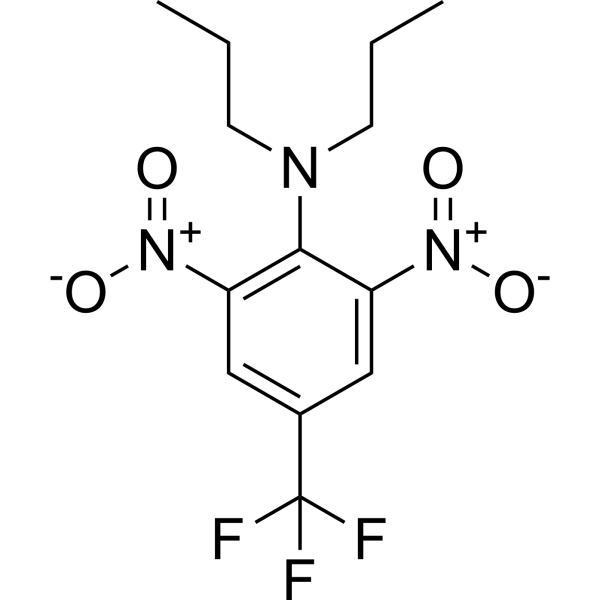
    Trifluralin is a selective, preemergence, soil-applied herbicide providing control of many important annual grass and broadleaf weed species. Trifluralin prevents weed growth by inhibiting root development through the interruption of mitosis. Trifluralin binds to tubulin and results in the failure of spindle apparatus and cell plate formation. Trifluralin inhibits radicle development on roots. Trifluralin inhibits cell mitosis. Trifluralin is considered to be neurotoxic and haematotoxic .
    Trifluralin
  • HY-136373

    BAS 479H

    Herbicide Cytochrome P450 DNA/RNA Synthesis Others
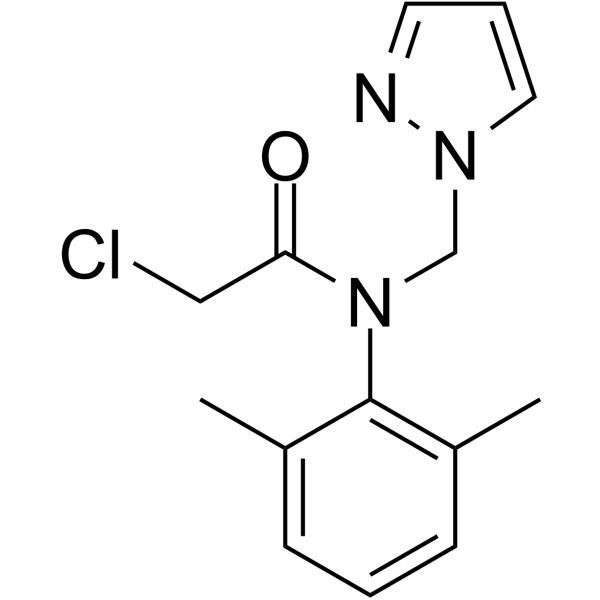
    Metazachlor (BAS 479H) is a herbicide belonging to the chloroacetamides class. Metazachlor can inhibit the synthesis of very long chain fatty acids during the germination and emergence of weed seeds, thereby interfering with cell division and tissue differentiation, and thus hindering the normal growth and development of weeds .
    Metazachlor
  • HY-139731

    Transketolase Herbicide Others
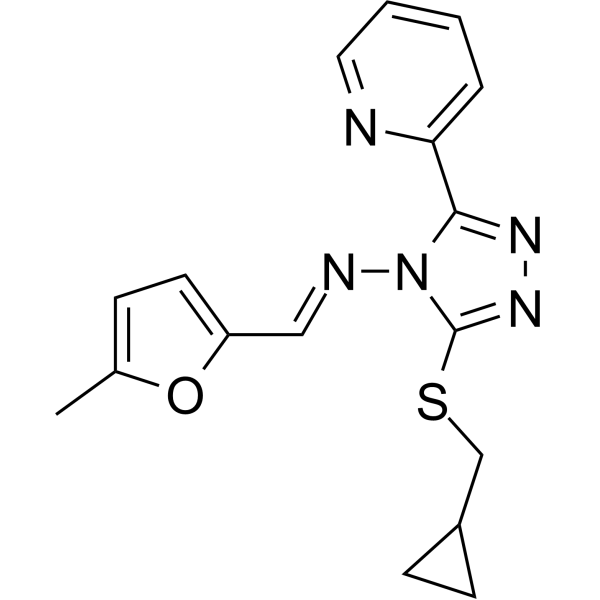
    Transketolase-IN-1 is a transketolase inhibitor and a herbicide. Transketolase-IN-1 inhibits weed growth and exhibits safety for maize and wheat at specified application rates. Transketolase-IN-1 can be used for the research of weed control in wheat and maize fields .
    Transketolase-IN-1
  • HY-B0865
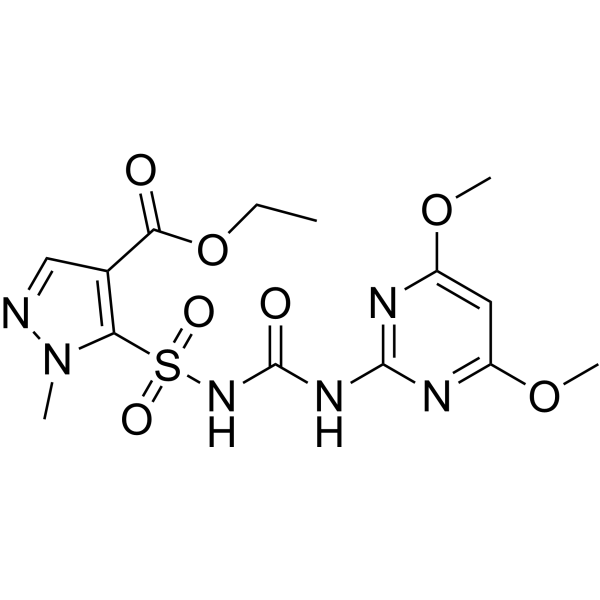
    Pyrazosulfuron-ethyl
    1 Publications Verification

    Acetolactate Synthase (ALS) Others
    Pyrazosulfuron-ethyl, one of the acetolactate synthase inhibiting herbicides in the sulphonylurea family, has been widely used to control weed growth in commercial cereal, soybean, and vegetable fields .
    Pyrazosulfuron-ethyl
  • HY-136373S

    BAS 479H-d6

    Isotope-Labeled Compounds Herbicide Cytochrome P450 DNA/RNA Synthesis Others
    Metazachlor-d6 (BAS 479H-d6) is a deuterium labeled Metazachlor (HY-136373). Metazachlor (BAS 479H) is a herbicide belonging to the chloroacetamides class. Metazachlor can inhibit the synthesis of very long chain fatty acids during the germination and emergence of weed seeds, thereby interfering with cell division and tissue differentiation, and thus hindering the normal growth and development of weeds .
    Metazachlor-d6
  • HY-136633R

    Herbicide Reference Standards Others
    Pyroxasulfone (Standard) is the analytical standard of Pyroxasulfone. This product is intended for research and analytical applications. Pyroxasulfone is a broad-spectrum pyrazole herbicide used primarily for all-season residual weed control in corn and soybeans. Pyroxasulfone is active against a variety of annual grasses and some broad-leaved weeds, and can be absorbed through roots and stems to inhibit early seedling growth of sensitive plants. Pyroxasulfone can be used to study herbicide effects and weed resistance .
    Pyroxasulfone (Standard)
  • HY-W264306

    Herbicide
    (2,4,6-Trimethyl-phenoxy)-acetic acid is an organic compound with excellent herbicide activity. This compound can effectively inhibit weed growth and help increase crop yields. (2,4,6-Trimethyl-phenoxy)-acetic acid shows strong selectivity against specific types of weeds.
    (2,4,6-Trimethyl-phenoxy)-acetic acid
  • HY-175736

    Herbicide Others
    Herbicidal agent 11 (Compound 8a) is a herbicidal agent. Herbicidal agent 11 has significant postemergence herbicidal activities against the monocotyledonous weed Echinochloa crusgalli with inhibition of potent root and stem growth and has a good crop selectivity against wheat, maize, and oilseed rape. Herbicidal agent 11 also has effective inhibitory effects on Digitaria sanguinalis, Eclipta prostrate and Eleusine indica. Herbicidal agent 11 can be used for the development of herbicides .
    Herbicidal agent 11
  • HY-W414724

    Herbicide Others
    Methabenzthiazuron is a herbicide, which inhibits the plants' growth through inhibition of photosynthesis. Methabenzthiazuron can be used for weed control in cereal crops .
    Methabenzthiazuron
  • HY-W874850

    Herbicide
    Fluorodifen is a selective herbicide with the activity of inhibiting weed growth. Fluorodifen can effectively control the growth of various annual and perennial broadleaf weeds and some grass weeds, and is widely used in the field management of various crops. By acting on the photosynthesis of plants and the regulation of their growth hormones, Fluorodifen ensures the healthy growth and harvest of crops.
    Fluorodifen
  • HY-W414724R

    Herbicide Reference Standards Others
    Methabenzthiazuron (Standard) is the analytical standard of Methabenzthiazuron. This product is intended for research and analytical applications. Methabenzthiazuron is a herbicide, which inhibits the plants' growth through inhibition of photosynthesis. Methabenzthiazuron can be used for weed control in cereal crops .
    Methabenzthiazuron (Standard)
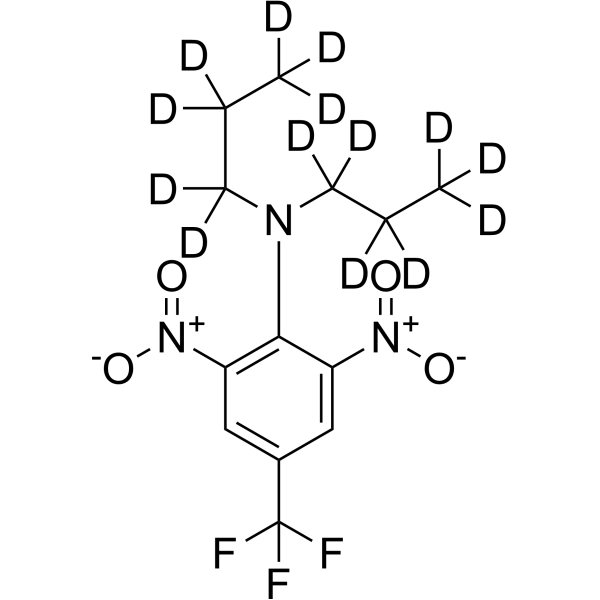
  • HY-B2050S

    Isotope-Labeled Compounds Microtubule/Tubulin Others
    Trifluralin-d14 is the deuterium labeled Trifluralin. Trifluralin is a selective, preemergence, soil-applied herbicide providing control of many important annual grass and broadleaf weed species. Trifluralin prevents weed growth by inhibiting root development through the interruption of mitosis. Trifluralin binds to tubulin and results in the failure of spindle apparatus and cell plate formation. Trifluralin inhibits radicle development on roots. Trifluralin inhibits cell mitosis. Trifluralin is considered to be neurotoxic and haematotoxic .
    Trifluralin-d14
  • HY-B2050R

    Reference Standards Microtubule/Tubulin Herbicide Others
    Trifluralin (Standard) is the analytical standard of Trifluralin. This product is intended for research and analytical applications. Trifluralin is a selective, preemergence, soil-applied herbicide providing control of many important annual grass and broadleaf weed species. Trifluralin prevents weed growth by inhibiting root development through the interruption of mitosis. Trifluralin binds to tubulin and results in the failure of spindle apparatus and cell plate formation. Trifluralin inhibits radicle development on roots. Trifluralin inhibits cell mitosis. Trifluralin is considered to be neurotoxic and haematotoxic .
    Trifluralin (Standard)
  • HY-162421

    Herbicide Others
    SL antagonist 1 (Compound D12) is strigolactones antagonists and can strongly interact with SL receptor proteins.SL antagonist 1 can combat root-parasitic weed infestations. SL antagonist 1 has no side effects on the germination or seedling growth .
    SL antagonist 1
  • HY-B0865R

    Reference Standards Acetolactate Synthase (ALS) Others
    Pyrazosulfuron-ethyl (Standard) is the analytical standard of Pyrazosulfuron-ethyl. This product is intended for research and analytical applications. Pyrazosulfuron-ethyl, one of the acetolactate synthase inhibiting herbicides in the sulphonylurea family, has been widely used to control weed growth in commercial cereal, soybean, and vegetable fields .
    Pyrazosulfuron-ethyl (Standard)
  • HY-W040286

    Herbicide Endogenous Metabolite
    Cinosulfuron is a selective herbicide with excellent inhibitory activity against a variety of broadleaf weeds and is widely used in crop fields to protect the growth of crops. Cinosulfuron can effectively manage weed problems by inhibiting specific enzyme activity. Cinosulfuron is used in agriculture to increase crop yield and quality and ensure efficient use of farmland.
    Cinosulfuron
  • HY-N15454

    Altertenuol

    Herbicide Bacterial Infection
    Altenuisol is a compound that can be found in the pathogenic fungus of the genus Alternaria in Xanthium italicum. It has herbicidal activity. At a low concentration of Altenuisol (10 μg/mL), it promotes the root growth of Pennisetum alopecuroides and Medicago sativa by 75.2% and 51.0% respectively. At a high concentration of Altenuisol (1000 μg/mL), the inhibition rates of root growth of Pennisetum alopecuroides and Medicago sativa are 52.0% and 42.0% respectively. In addition, Altenuisol is cytotoxic to HeLa cells and also exhibits antibacterial and antioxidant activities. Altenuisol is expected to be used in research in fields such as agricultural weeding, anti - tumor, and anti - infection .
    Altenuisol
  • HY-136373R

    BAS 479H (Standard)

    Herbicide Reference Standards Cytochrome P450 DNA/RNA Synthesis Others
    Metazachlor (Standard) (BAS 479H (Standard)) is the analytical standard of Metazachlor (HY-136373). This product is intended for research and analytical applications. Metazachlor (BAS 479H) is a herbicide belonging to the chloroacetamides class. Metazachlor can inhibit the synthesis of very long chain fatty acids during the germination and emergence of weed seeds, thereby interfering with cell division and tissue differentiation, and thus hindering the normal growth and development of weeds .
    Metazachlor (Standard)
  • HY-W728891

    Herbicide Others
    Pentoxazone is a protoporphyrinogen IX oxidase (PPO)-inhibiting herbicide. Pentoxazone inhibits chlorophyll and heme synthesis, drives protoporphyrinogen IX accumulation and oxidation, and generates singlet oxygen to oxidize cell membranes and induce cell damage.Pentoxazone suppresses fresh weight growth of multiple weed species and shows low activity against weedy rice. Pentoxazone can be used for the research of direct-seeding rice field weed management .
    Pentoxazone
  • HY-W874850R

    Endogenous Metabolite Reference Standards
    Fluorodifen (Standard) is the analytical standard of Fluorodifen. This product is intended for research and analytical applications. Fluorodifen is a selective herbicide with the activity of inhibiting weed growth. Fluorodifen can effectively control the growth of various annual and perennial broadleaf weeds and some grass weeds, and is widely used in the field management of various crops. By acting on the photosynthesis of plants and the regulation of their growth hormones, Fluorodifen ensures the healthy growth and harvest of crops.
    Fluorodifen (Standard)
  • HY-124889

    Apoptosis Herbicide Others
    Dimethenamid is an acetamide herbicide that is widely used on soybeans and corns to inhibit weed growth. Dimethenamid not only lead to morphological abnormalities in zebrafish larvae but also reduces their viability. ROS production and inflammation responses were promoted in zebrafish larvae.
    Dimethenamid
  • HY-W040279

    Herbicide Acetolactate Synthase (ALS) Others
    Prosulfuron is a fluorinated sulfonylurea herbicide with a reported acute oral LD50 of 546 mg/kg in female rats. Prosulfuron acts by inhibiting acetolactate synthase (ALS) to block the biosynthesis of branched-chain amino acids (valine, leucine and isoleucine) in plants, thereby suppressing weed growth. Prosulfuron may disrupt the soil microbial community balance in alkaline soils with minimal chemical degradation. Prosulfuron has low toxicity to humans and mammals, and can be used for the research of broadleaf weed control in maize and sweet corn .
    Prosulfuron
  • HY-W714199

    Potablan

    Herbicide Others
    Monalide (Potablan) is a soil-applied and contact herbicide that acts both via absorption by plant roots from the soil and through contact with the aboveground parts of plants. Monalide inhibits weed growth. Monalide decomposes within several weeks in soil and leaves no residues on crops .
    Monalide
  • HY-W040286R

    Endogenous Metabolite Reference Standards
    Cinosulfuron (Standard) is the analytical standard of Cinosulfuron. This product is intended for research and analytical applications. Cinosulfuron is a selective herbicide with excellent inhibitory activity against a variety of broadleaf weeds and is widely used in crop fields to protect the growth of crops. Cinosulfuron can effectively manage weed problems by inhibiting specific enzyme activity. Cinosulfuron is used in agriculture to increase crop yield and quality and ensure efficient use of farmland.
    Cinosulfuron (Standard)
  • HY-N0970

    Others Others
    (4Z)-Lachnophyllum lactone is a enyne derivative. (4Z)-Lachnophyllum lactone shows growth inhibitory activity against Lemna paucicostata (IC50=104 μM), which is a problematic and invasive weed . (4Z)-Lachnophyllum lactone is a click chemistry reagent, it contains an Alkyne group and can undergo copper-catalyzed azide-alkyne cycloaddition (CuAAc) with molecules containing Azide groups.
    (4Z)-Lachnophyllum lactone
  • HY-167959

    Herbicide Infection
    MCPA-isooctyl is a selective conductive phenoxycarboxylate herbicide and an alternative to 2,4-D Butyl ester (HY-B0867). MCPA-isooctyl effectively controls broadleaf weeds in various crop fields via post-emergence foliar or soil treatment. MCPA-isooctyl is absorbed by the roots, stems and leaves of plants; it is easily metabolized and detoxified in gramineous crops, but difficult to metabolize in dicotyledonous weeds, causing stem and leaf distortion, root deformation, and eventually weed death. When formulated into chitosan nanoparticles, MCPA-isooctyl still significantly inhibits the growth of weeds in wheat fields, and reduces their chlorophyll content and biomass at low doses .
    MCPA-isooctyl

Inquiry Online

Your information is safe with us. * Required Fields.

Salutation


Country or Region *

Applicant Name *


Organization Name *

Department *


Email Address *


Product Name *

Cat. No.


Requested quantity *

Phone Number *


Remarks

Inquiry Online

Inquiry Information

Product Name:
Cat. No.:
Quantity:
MCE Japan Authorized Agent:

