



Sorbitan trioleate

Based on 1 Customer Validation
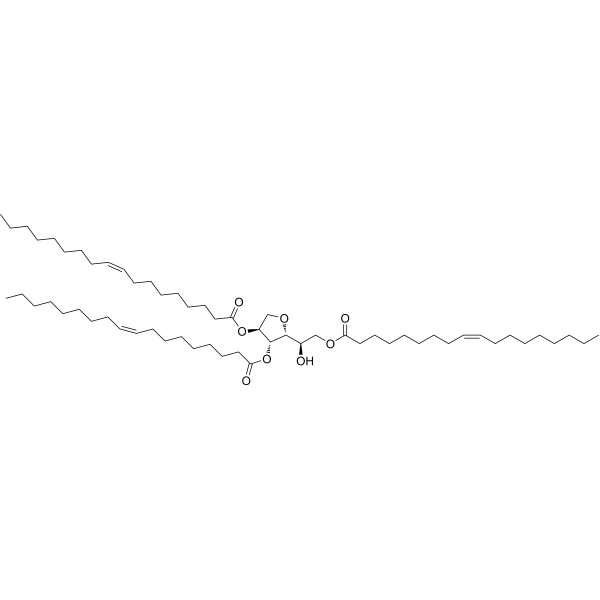
Sorbitan trioleate (Span 85) is an orally active non-ionic surface active agent. Sorbitan trioleate can be used as an excipient, such as surfactant, emulsifier, lubricant, wetting agent, dispersant, thickener, defoamer.
For research use only. We do not sell to patients.
- CAS No.: 26266-58-0
-
Storage:Pure form -20°C, 3 years , 4°C, 2 years ; In solvent -80°C, 6 months , -20°C, 1 month

To place orders, for customer services and technical support, please contact: MedChemExpress USA
Tel: 609-228-6898 E-mail: [email protected] [email protected]


-
 Biological Activity
-
Chemical Information
-
Solvent & Solubility
- Purity & Documentation
- References
-
 Help & FAQs


-
HY-N1214
SqualeneHypolipidemic Agent -
HY-Y1891
Tween 80 -
HY-141415
Tween 20Nonionic Surfactant -
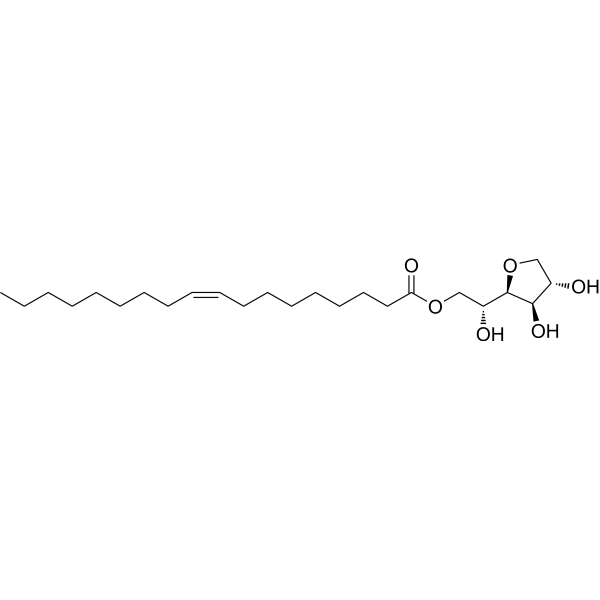
HY-N1446C
Sorbitan monooleateEmulsifier -
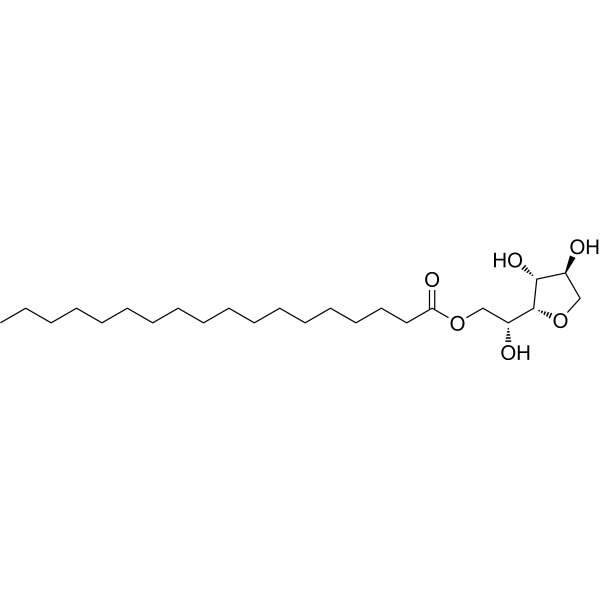
HY-W129593
Sorbitan monooctadecanoateNonionic Surfactant -

HY-W115819
Polysorbate 40Biochemical Assay Reagent -
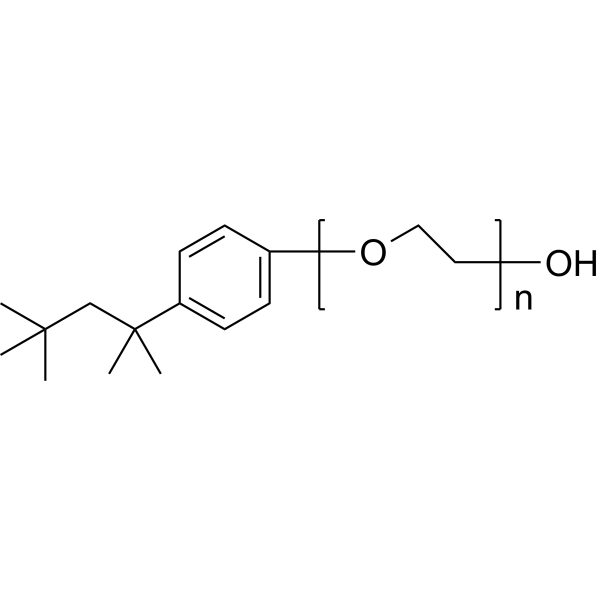
HY-Y1883
Polyethylene glycol mono(4-tert-octylphenyl) ether surfactantNonionic Surfactant -
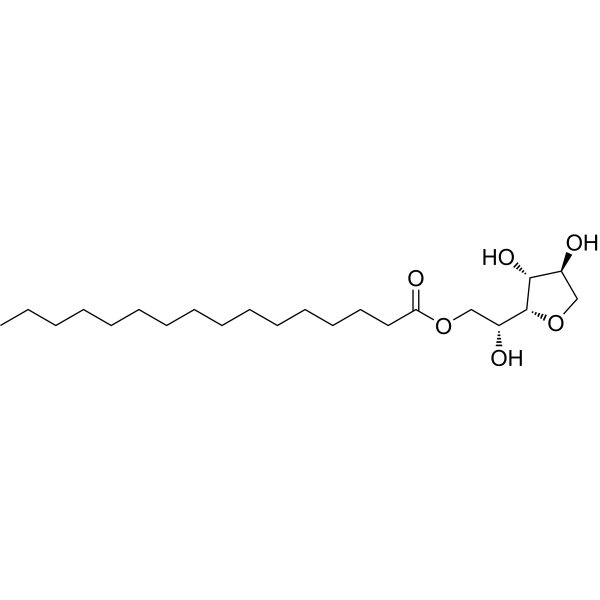
HY-W129513
Sorbitan monopalmitateNon-ionic Emulsifier -
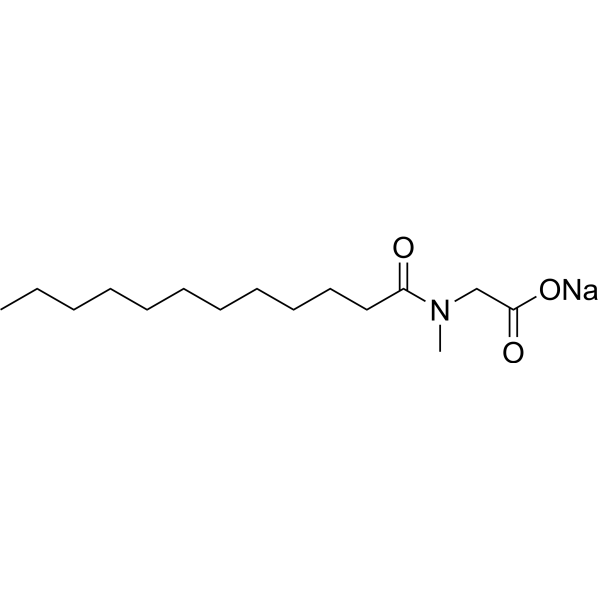
HY-125920
Lauroylsarcosine sodiumBiochemical Assay Reagent -
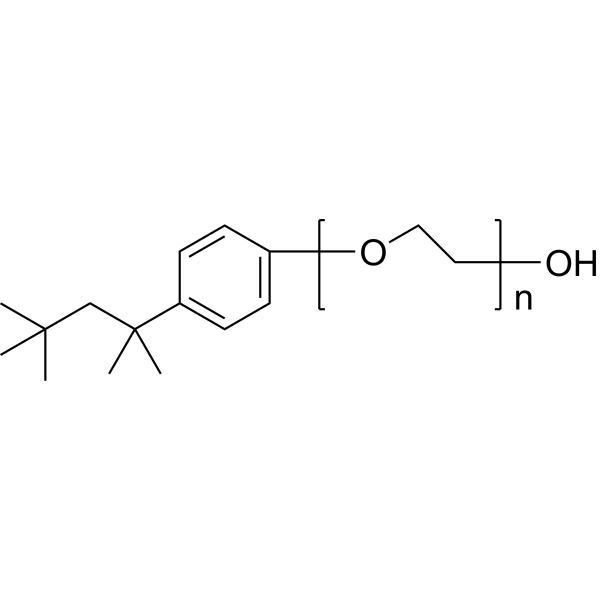
HY-Y1883A
Polyethylene glycol mono(4-tert-octylphenyl) etherNonionic Surfactant -
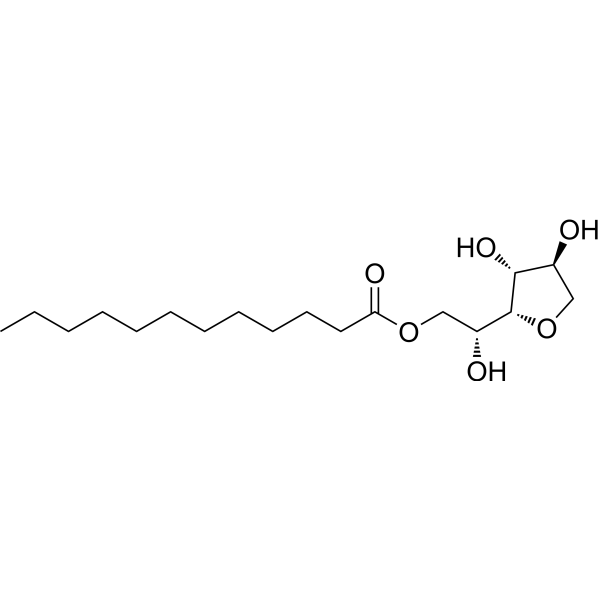
HY-W129988
Sorbitan monododecanoatePharmaceutical Excipient -
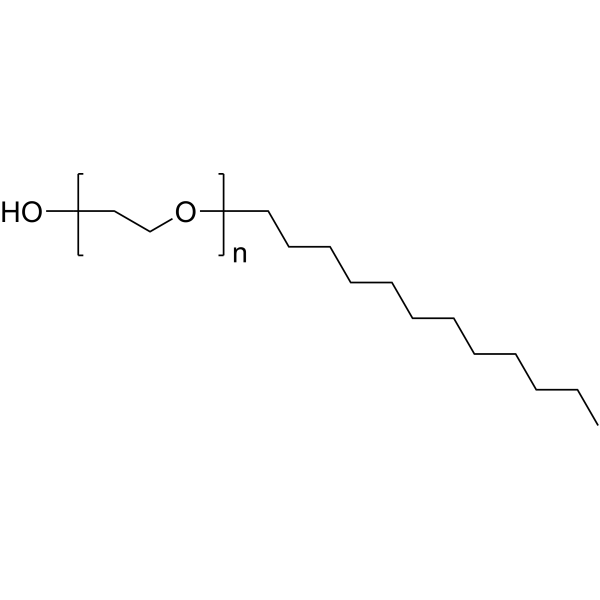
HY-B2106
Polidocanol,Hydroxyl Value 40-60 mgKOH/gSclerosing Agent


Biological Activity
Description
In Vitro
Pharmaceutical excipients, refer to other chemical substances used in the pharmaceutical process other than pharmaceutical ingredients. Pharmaceutical excipients generally refer to inactive ingredients in pharmaceutical preparations, which can improve the stability, solubility and processability of pharmaceutical preparations. Pharmaceutical excipients also affect the absorption, distribution, metabolism, and elimination (ADME) processes of co-administered drugs[1][2][3].
MedChemExpress (MCE) has not independently confirmed the accuracy of these methods. They are for reference only.
In Vivo
MedChemExpress (MCE) has not independently confirmed the accuracy of these methods. They are for reference only.
-
Animal Model:Wistar rats (5-week-old)[2]
-
Dosage:12.5; 50.0; 200.0 mg/kg
-
Administration:i.v.; daily; 35 days
-
Result:Showed no abnormalities in general symptoms, body weight gain, or food/water consumption compared to controls at all doses.
Observed only a significant decrease in Na and Cl levels in males at 12.5 mg/kg.
Found any statistically significant changes in hematological, serum biochemical, or organ weight parameters fell within normal ranges at 12.5 mg/kg and 50.0 mg/kg.
Showed no meaningful gross or histological tissue changes beyond minor, non-toxic effects at 12.5 mg/kg and 50.0 mg/kg.
Induced significant decreases in red blood cell count, hemoglobin, and hematocrit, alongside significant increases in prothrombin time and reticulocyte count, indicating mild anemia at 200.0 mg/kg.
Caused significant increase in total cholesterol; significant decreases in male alkaline phosphatase, blood urea nitrogen, albumin, A/G ratio, sodium, chloride, and creatinine; significant decreases in female glutamic-oxaloacetic transaminase, glutamic-pyruvic transaminase, albumin, A/G ratio, sodium, chloride, and creatinine at 200.0 mg/kg.


Chemical Information
-
CAS No. 26266-58-0
-
Appearance Liquid (Density: 0.94 g/cm3)
-
Color Colorless to light yellow
-
SMILES
CCCCCCCC/C=C\CCCCCCCC(OC[C@@H](O)[C@@H]1[C@H](OC(CCCCCCC/C=C\CCCCCCCC)=O)[C@@H](OC(CCCCCCC/C=C\CCCCCCCC)=O)CO1)=O
-
Synonyms
Span 85
-
Shipping
Room temperature in continental US; may vary elsewhere.
-
Storage
Pure form -20°C 3 years 4°C 2 years In solvent -80°C 6 months -20°C 1 month


Solvent & Solubility
In Vitro:
DMSO : 200 mg/mL (Need ultrasonic; Hygroscopic DMSO has a significant impact on the solubility of product, please use newly opened DMSO)


Purity & Documentation
-
Data Sheet (266 KB)
-
SDS (393 KB)
- English - EN (393 KB)
- Français - FR (393 KB)
- Deutsch - DE (393 KB)
- Norwegian - NO (393 KB)
- Español - ES (393 KB)
- Swedish - SV (393 KB)
- Italian - IT (393 KB)
- Korean - KR (393 KB)
- Portuguese - PT (393 KB)
-
Handling Instructions (2659 KB)
References
[1]. Sonwai S, et al. Crystallization kinetics of cocoa butter in the presence of sorbitan esters. Food Chem. 2017;214:497-506. [Content Brief]
[2]. Yamamoto H, et al. Study on subacute toxicity of intravenous sorbitan trioleate (STO) in Wistar rats. J Toxicol Sci. 1983;8(4):301-310. [Content Brief]
[3]. Lanigan RS, et al. Final report on the safety assessment of sorbitan caprylate, sorbitan cocoate, sorbitan diisostearate, sorbitan dioleate, sorbitan distearate, sorbitan isostearate, sorbitan olivate, sorbitan sesquiisostearate, sorbitan sesquistearate, and sorbitan triisostearate. Int J Toxicol. 2002;21 Suppl 1:93-112. [Content Brief]

Calculators
Concentration (start) × Volume (start) = Concentration (final) × Volume (final)


Sorbitan trioleate Related Classifications
HY-W115716 Related Classifications
 Powered by Bioz