



UNC6934
Based on 1 Customer Validation
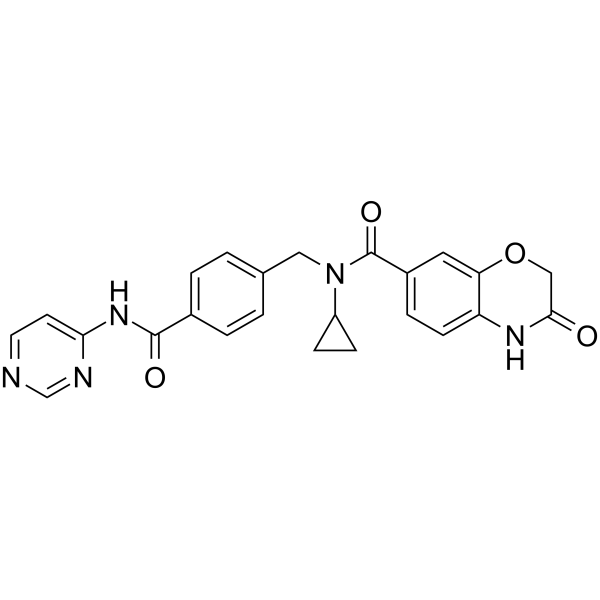
UNC6934 is a selective NSD2-PWWP1 antagonist with a Kd of 91 nM against human targets. UNC6934 binds to the canonical methyl-lysine binding pocket of NSD2-PWWP1 and directly competes with H3K36me2 for binding. UNC6934 induces the aggregation of NSD2 within the nucleolus, without altering ribosomal RNA transcription, global H3K36me2 levels or the proliferation of KMS-11 cells. UNC6934 can be used in studies related to multiple myeloma and diffuse intrinsic pontine glioma.
For research use only. We do not sell to patients.
- Purity : 98.24%
- CAS No.: 2561494-77-5
- Formula: C24H21N5O4
- Molecular Weight:443.45
-
Storage:Powder -20°C, 3 years ; In solvent -80°C, 6 months , -20°C, 1 month

To place orders, for customer services and technical support, please contact: MedChemExpress USA
Tel: 609-228-6898 E-mail: [email protected] [email protected]


-
 Biological Activity
-
Chemical Information
-
Solvent & Solubility
- Protocols
- Purity & Documentation
- References
-
 Help & FAQs


-
HY-15763
ErastinFerroptosis Inducer -
HY-108696
GNE-781CBP Inhibitor -
HY-138283
MR837NSD2-PWWP1 Inhibitor -
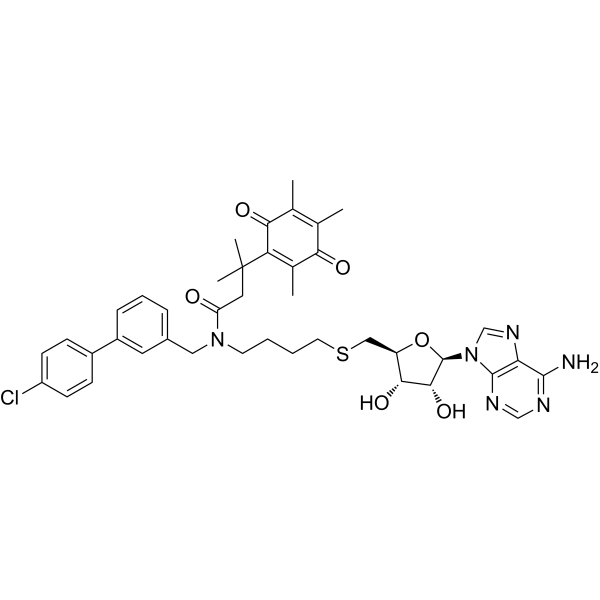
HY-112445
SGC3027Histone Methyltransferase Inhibitor -
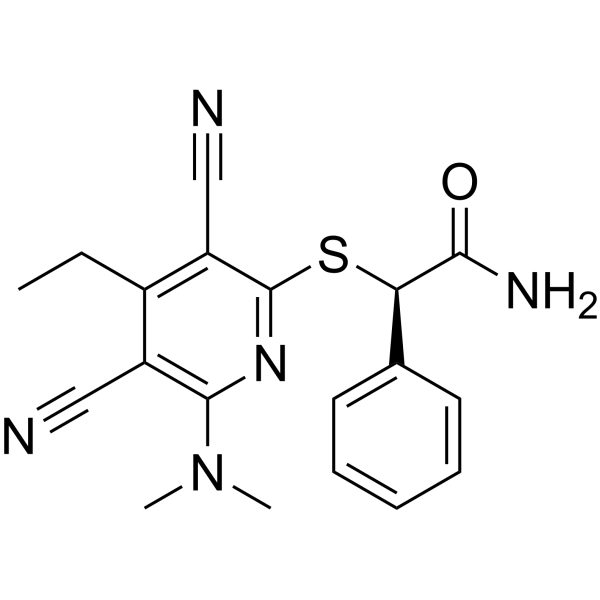
HY-135146
GSK-3484862DNMT1 Inhibitor -
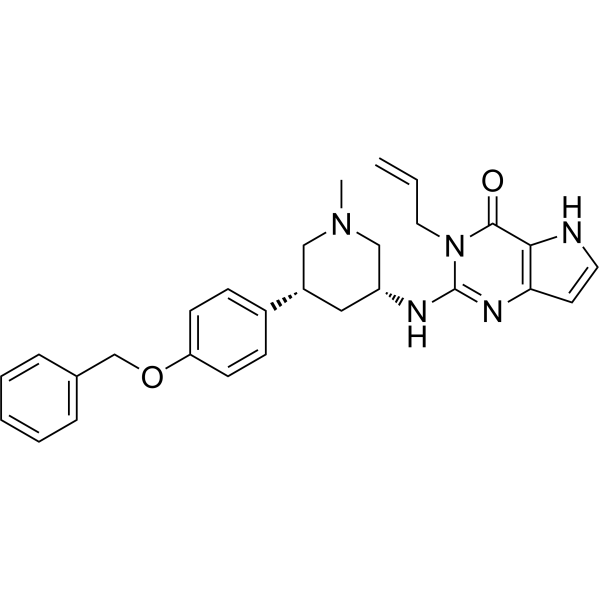
HY-141539
SETDB1-TTD-IN-1SETDB1 Methyltransferase Activator/SETDB1-TTD Inhibitor -
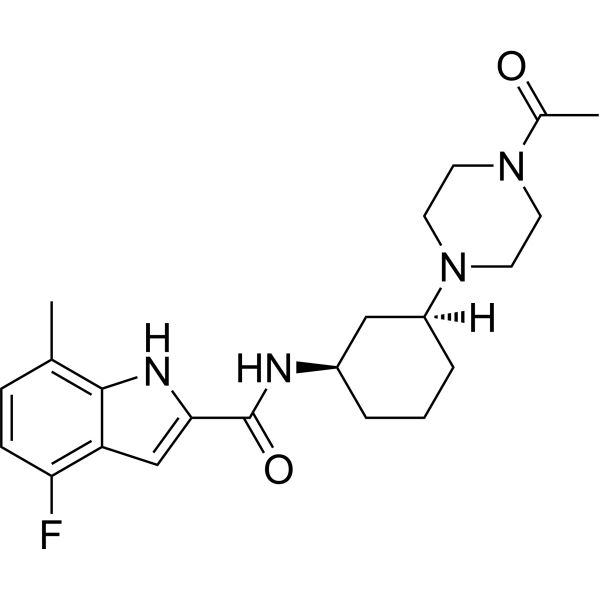
HY-144858
EZM0414SETD2 Inhibitor -
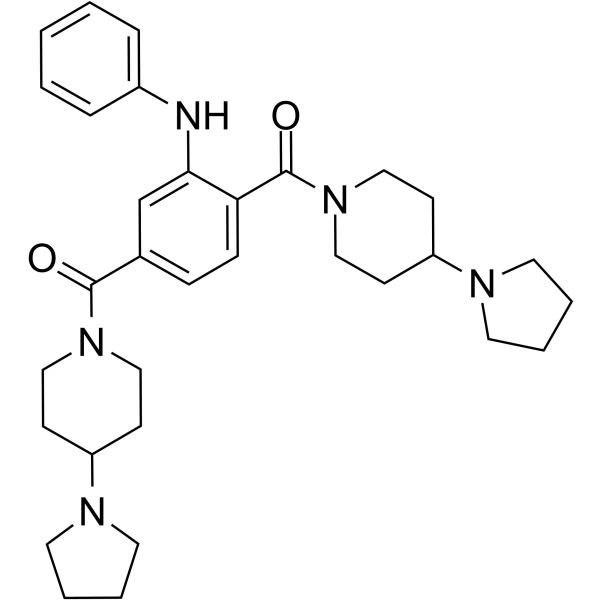
HY-15649
UNC1215L3MBTL3 Inhibitor -
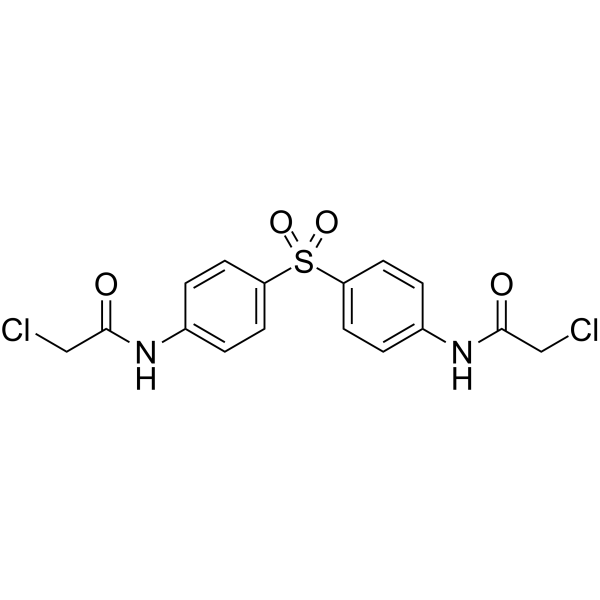
HY-107574
TC-E 5003PRMT1 Inhibitor -

HY-135146G
GSK-3484862 (GMP)DNMT1 Inhibitor -

HY-107574R
TC-E 5003 (Standard)Reference Standard
All Histone Methyltransferase Isoforms
More

Biological Activity
Description
In Vitro
UNC6934 (2 μM) potently binds purified human NSD2-PWWP1 domain with a Kd of 91 nM, as measured by SPR[1].
UNC6934 (15 min pre-incubation, 30 min incubation with nucleosomes) inhibits the interaction between purified human NSD2-PWWP1 domain and H3K36me2 nucleosomes with an IC50 of 104 nM, as measured by AlphaScreen[1].
UNC6934 (15 min pre-incubation, 30 min incubation with nucleosomes) inhibits the interaction between purified full-length human NSD2 and H3K36me2 nucleosomes (in the presence of salmon sperm DNA) with an IC50 of 78 nM, as measured by AlphaScreen[1].
UNC6934 (up to 25 μM; 30 min) does not inhibit the interaction between purified human NSD2-PWWP1 domain and double-stranded DNA[1].
UNC6934 (20 μM; 1 h) selectively engages endogenous NSD2 in KMS-11 multiple myeloma whole-cell lysate[1].
UNC6934 (20 h) selectively engages the wild-type human NSD2-PWWP1 domain in live U2OS cells, with an EC50 of 1.23 μM as measured by NanoBRET PPI assay[1].
UNC6934 (5 μM; 4 h) induces accumulation of endogenous NSD2 in the nucleolus of U2OS cells[1].
UNC6934 (10 μM; 30 min) partially displaces endogenous NSD2 from chromatin in KMS-11 multiple myeloma cells[1].
UNC6934 (10 nM-100 μM; 3-5 days) reduces the viability of DIPG 13 cells in a dose- and time-dependent manner, with an IC50 of 17.99 μM after 5-day treatment[2].
UNC6934 (10 nM-10000 nM; 5 days) produces only a minimal reduction in the viability of DIPG IV cells, with 94.83% viability remaining after 5-day treatment with 10000 nM UNC6934[2].
UNC6934 (1 μM-100 μM; 5 days) reduces fibroblast cell viability to a lesser degree than it reduces DIPG 13 cell viability, indicating greater selectivity for DIPG 13 cells over non-transformed fibroblast cells[2].
MedChemExpress (MCE) has not independently confirmed the accuracy of these methods. They are for reference only. Further protocols information, click here.
-
Cell Line:U2OS cells
-
Concentration:5 μM
-
Incubation Time:4 h
-
Result:Significantly increased the colocalization of endogenous NSD2 with fibrillarin (median PCC = 0.86) compared to DMSO control (median PCC = 0.70) and UNC7145 control (median PCC = 0.71).
-
Cell Line:KMS-11 multiple myeloma cells
-
Concentration:10 μM
-
Incubation Time:30 min on ice
-
Result:Increased the amount of NSD2 in the 150 mM NaCl-extracted nucleoplasmic fraction (S3), indicating partial displacement from chromatin.


Chemical Information
-
CAS No. 2561494-77-5
-
Appearance Solid
-
Molecular Weight 443.45
-
Formula C24H21N5O4
-
Color Off-white to gray
-
SMILES
O=C(C1=CC=C(CN(C2CC2)C(C3=CC=C4NC(COC4=C3)=O)=O)C=C1)NC5=CC=NC=N5
-
Shipping
Room temperature in continental US; may vary elsewhere.
-
Storage
Powder -20°C 3 years In solvent -80°C 6 months -20°C 1 month


Solvent & Solubility
In Vitro:
DMSO : 25 mg/mL (56.38 mM; Need ultrasonic; Hygroscopic DMSO has a significant impact on the solubility of product, please use newly opened DMSO)
Please refer to the solubility information to select the appropriate solvent. Once prepared, please aliquot and store the solution to prevent product inactivation from repeated freeze-thaw cycles.
Storage method and period of stock solution: -80°C, 6 months; -20°C, 1 month. When stored at -80°C, please use it within 6 months. When stored at -20°C, please use it within 1 month.
Please refer to the solubility information to select the appropriate solvent. Once prepared, please aliquot and store the solution to prevent product inactivation from repeated freeze-thaw cycles.
Storage method and period of stock solution: -80°C, 6 months; -20°C, 1 month. When stored at -80°C, please use it within 6 months. When stored at -20°C, please use it within 1 month.
Concentration (start) × Volume (start) = Concentration (final) × Volume (final)
In Vivo:
Select the appropriate dissolution method based on your experimental animal and administration route.
- For the following dissolution methods, please ensure to first prepare a clear stock solution using an In Vitro approach and then sequentially add co-solvents:
- To ensure reliable experimental results, the clarified stock solution can be appropriately stored based on storage conditions. As for the working solution for In Vivo experiments, it is recommended to prepare freshly and use it on the same day.
- The percentages shown for the solvents indicate their volumetric ratio in the final prepared solution. If precipitation or phase separation occurs during preparation, heat and/or sonication can be used to aid dissolution.
Add each solvent one by one: 10% DMSO 40% PEG300 5% Tween-80 45% Saline
Solubility: ≥ 2.5 mg/mL (5.64 mM); Clear solution
This protocol yields a clear solution of ≥ 2.5 mg/mL (saturation unknown).
Taking 1 mL working solution as an example, add 100 μL DMSO stock solution (25.0 mg/mL) to 400 μL PEG300, and mix evenly; then add 50 μL Tween-80 and mix evenly; then add 450 μL Saline to adjust the volume to 1 mL.
Preparation of Saline: Dissolve 0.9 g sodium chloride in ddH₂O and dilute to 100 mL to obtain a clear Saline solution.
Add each solvent one by one: 10% DMSO 90% (20% SBE-β-CD in Saline)
Solubility: ≥ 2.5 mg/mL (5.64 mM); Clear solution
This protocol yields a clear solution of ≥ 2.5 mg/mL (saturation unknown).
Taking 1 mL working solution as an example, add 100 μL DMSO stock solution (25.0 mg/mL) to 900 μL 20% SBE-β-CD in Saline, and mix evenly.
Preparation of 20% SBE-β-CD in Saline (4°C, storage for one week): 2 g SBE-β-CD powder is dissolved in 10 mL Saline, completely dissolve until clear.
In Vivo Dissolution Calculator
Please enter the basic information of animal experiments:
-
-
-
-
Recommended: Prepare an additional quantity of animals to account for potential losses during experiments.
Please enter your animal formula composition:
-
%DMSO +
Recommended: Keep the proportion of DMSO in working solution below 2% if your animal is weak.
-
%+
-
+%Tween-80 + +
-
%Saline +
The co-solvents required include: DMSO, . All of co-solvents are available by MedChemExpress (MCE). , Tween 80. All of co-solvents are available by MedChemExpress (MCE).
Working solution concentration: 0.22 mg/mL
Method for preparing stock solution: mg drug dissolved in μL DMSO. Stock solution concentration: mg/mL.
1. Take μL DMSO stock solution;
2. Add μL .
μL , mix evenly;
3. Then add μL Tween 80, mix evenly;
4. Then add μL
Please ensure that the stock solution in the first step is dissolved to a clear state, and add co-solvents in sequence. You can use ultrasonic heating (ultrasonic cleaner, recommended frequency 20-40 kHz), vortexing, etc. to assist dissolution.

Protocols
-
Cell Viability Determination by MTT Colorimetric Assay
The following protocol uses the MTT colorimetric assay as a classic literature-established method for assessing cell viability/metabolic activity in cultured mammalian cells. MTT[3-(4,5-dimethylthiazol-2-yl)-2,5-diphenyltetrazolium bromide] is reduced by metabolically active cells to a colored formazan product; the amount of formazan is quantified spectrophotometrically and provides an indirect measure of metabolically active viable cells. Importantly, MTT reduction reflects cellular oxidoreductase/metabolic activity rather than an absolute direct count of living cells, so changes in cellular metabolism can alter the signal independently of cell number.


Purity & Documentation
-
Data Sheet (274 KB)
-
SDS (252 KB)
- English - EN (252 KB)
- Français - FR (252 KB)
- Deutsch - DE (252 KB)
- Norwegian - NO (252 KB)
- Español - ES (252 KB)
- Swedish - SV (252 KB)
- Italian - IT (252 KB)
- Korean - KR (252 KB)
- Portuguese - PT (252 KB)
-
Handling Instructions (2659 KB)
References


Complete Stock Solution Preparation Table
Please refer to the solubility information to select the appropriate solvent. Once prepared, please aliquot and store the solution to prevent product inactivation from repeated freeze-thaw cycles.
Storage method and period of stock solution: -80°C, 6 months; -20°C, 1 month. When stored at -80°C, please use it within 6 months. When stored at -20°C, please use it within 1 month.
| Optional Solvent | Concentration Solvent Mass | 1 mg | 5 mg | 10 mg | 25 mg |
|---|---|---|---|---|---|
| DMSO | 1 mM | 2.2550 mL | 11.2752 mL | 22.5505 mL | 56.3761 mL |
| 5 mM | 0.4510 mL | 2.2550 mL | 4.5101 mL | 11.2752 mL | |
| 10 mM | 0.2255 mL | 1.1275 mL | 2.2550 mL | 5.6376 mL | |
| 15 mM | 0.1503 mL | 0.7517 mL | 1.5034 mL | 3.7584 mL | |
| 20 mM | 0.1128 mL | 0.5638 mL | 1.1275 mL | 2.8188 mL | |
| 25 mM | 0.0902 mL | 0.4510 mL | 0.9020 mL | 2.2550 mL | |
| 30 mM | 0.0752 mL | 0.3758 mL | 0.7517 mL | 1.8792 mL | |
| 40 mM | 0.0564 mL | 0.2819 mL | 0.5638 mL | 1.4094 mL | |
| 50 mM | 0.0451 mL | 0.2255 mL | 0.4510 mL | 1.1275 mL |


UNC6934 Related Classifications
HY-145103 Related Classifications
 Powered by Bioz