



α-Phellandrene

Based on 1 Customer Validation
α-Phellandrene (alpha-Phellandrene) is an orally active monoterpenoid and insecticide. α-Phellandrene can be isolated from plant essential oils. α-Phellandrene induces Apoptosis and Autophagy. α-Phellandrene promotes cAMP signaling pathway and increases NO production. α-Phellandrene has anti-inflammatory and anticancer (sarcoma) activities. α-Phellandrene shows insecticidal activity against Lucilia cuprina L3. α-Phellandrene reduces mechanical hyperalgesia.
Nur für Forschungszwecke. Wir verkaufen nicht an Patienten.
- Reinheit : 85.70%
- CAS. Nr.: 99-83-2
- Formel: C10H16
- Molecular Weight:136.23
-
Speicherung:
4°C, stored under nitrogen
* In solvent : -80°C, 6 months; -20°C, 1 month (stored under nitrogen)

To place orders, for customer services and technical support, please contact: MedChemExpress USA
Tel: 609-228-6898 E-mail: [email protected] [email protected]


-
 Biologische Aktivität
-
Chemical Information
-
Lösungsmittel & Löslichkeit
- Protokoll
- Reinheit & Dokumentation
- Verweise
-
 Help & FAQs


-
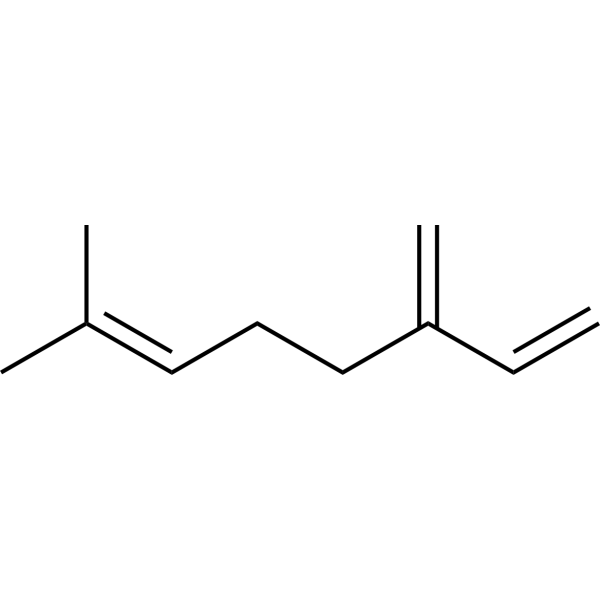
HY-N0803
Myrcene,75% (stabilized with BHT)NF-κB Inhibitor -
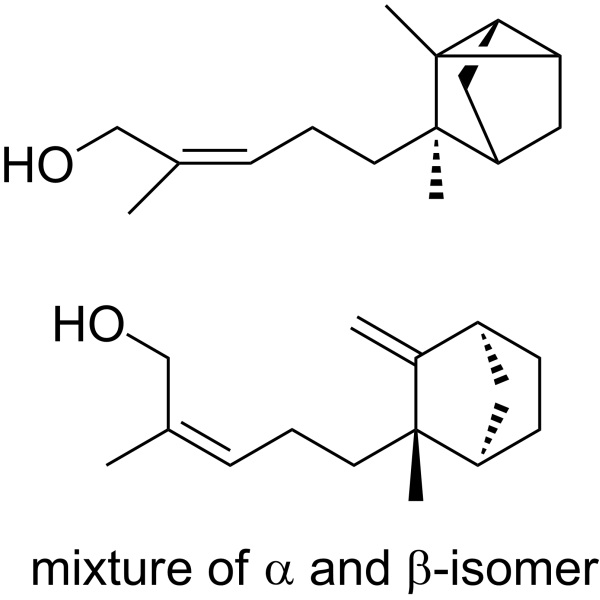
HY-N2059
Santalolα/ β-Isoform Santalol Mixture -
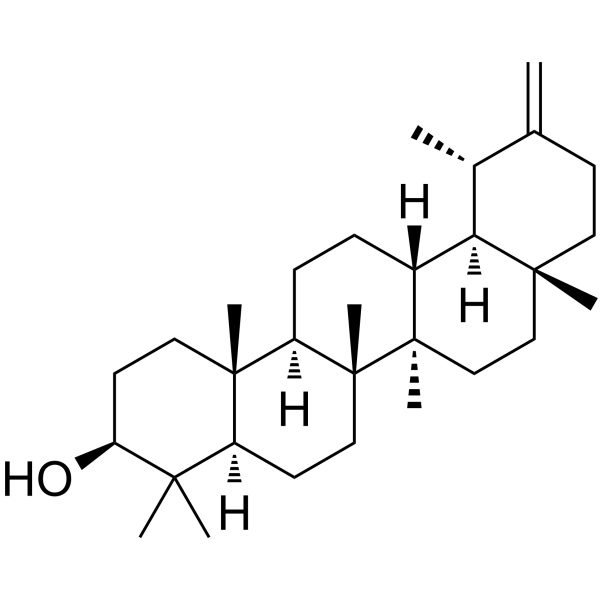
HY-N1178
TaraxasterolAnti-Inflammatory Agent; LXRα Activator -
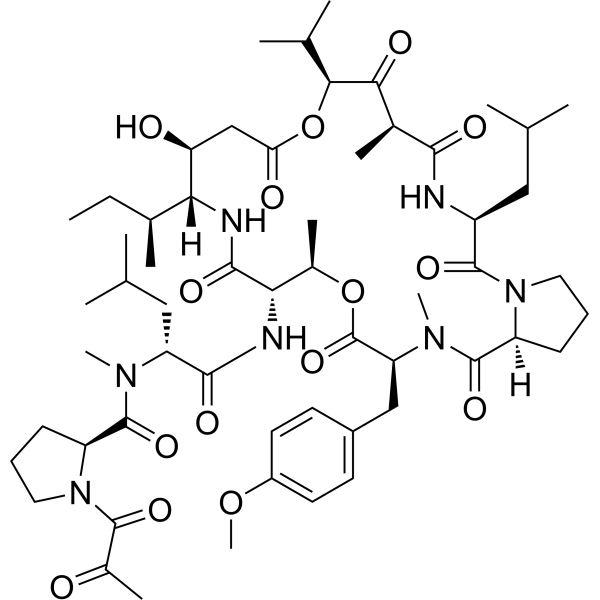
HY-16050
PlitidepsineEF1A2 Inhibitor -
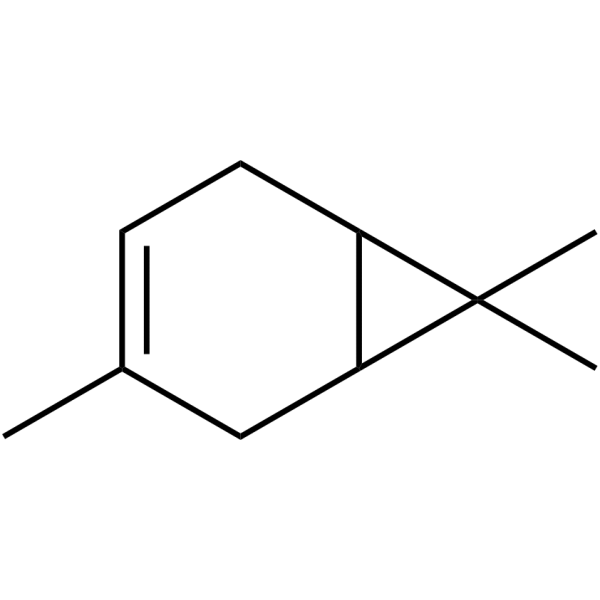
HY-N6663
3-CareneTCA Cycle Enzyme Inhibitor -
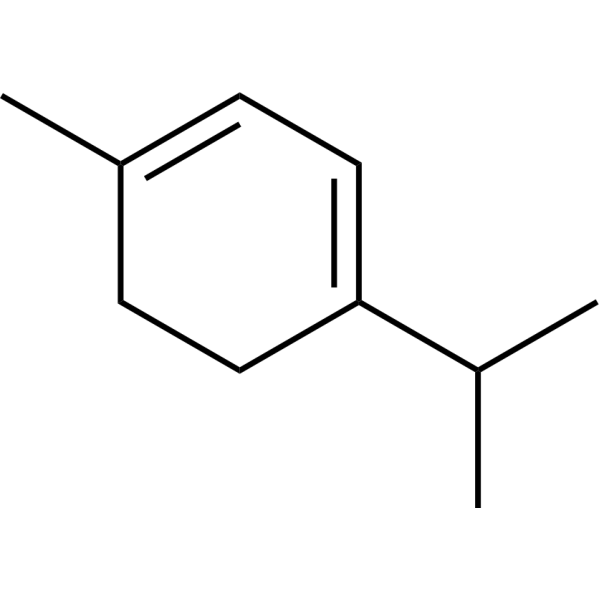
HY-W020182
α-TerpineneAntifungal Agent -
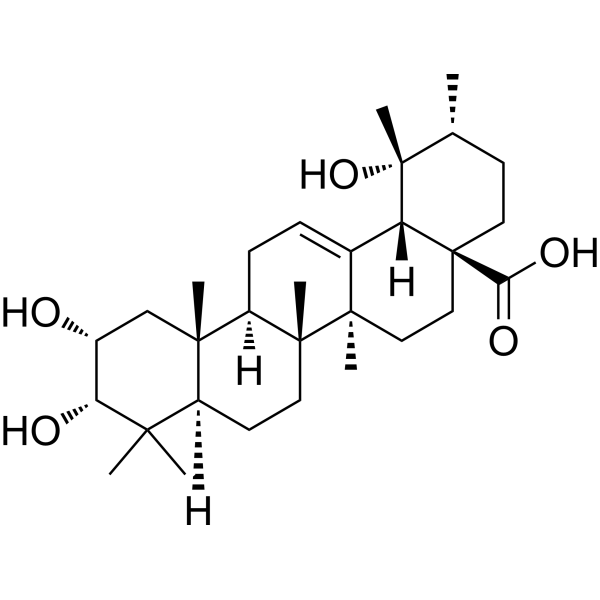
HY-N2566
Euscaphic acidApoptosis Inducer -
HY-110018S
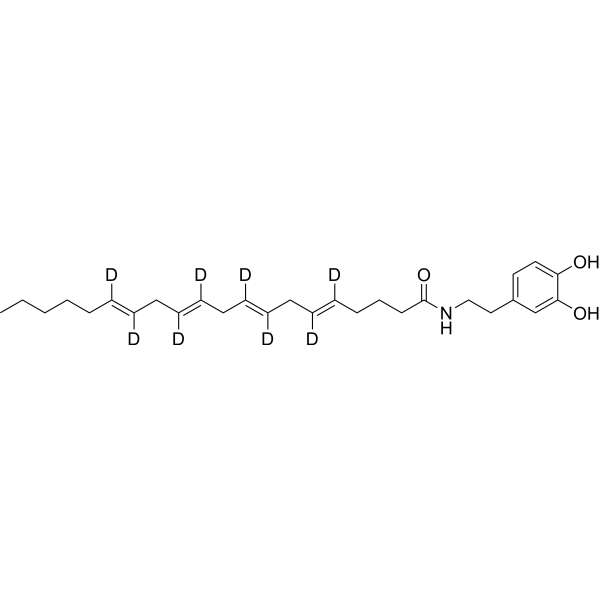
N-Arachidonyldopamine-d8Stable Isotope -

HY-W020182R
α-Terpinene (Standard)Antifungal Agent


Biologische Aktivität
Beschreibung
In Vitro
α-Phellandrene (10-200 μM; 16 h) significantly enhances the proliferation and migration of L929 fibroblasts in a dose-dependent manner[1].
α‑Phellandrene (50-250 μM; 72 h) enhances the apoptosis of HT‑29 cells induced by 5‑fluorouracil (HY-90006) by modulating the mitochondria‑dependent pathway[2].
α-Phellandrene (30 μM; 24 h) significantly increases the necrotic cell number, NO production, LDH leakage and ATP depletion in J5 cells[3].
α-Phellandrene (10 μM; 48 h) alters expression of genes associated with DNA damage, cell cycle, and apoptosis in murine leukemia WEHI-3 cells[4].
α-Phellandrene (12.5 μM; 48 h) promotes dermal papilla cell proliferation via promoting cAMP signaling pathway[5].
α-Phellandrene (10-50 μM; 24 h) induces autophagy in human liver cancer J5 cells, as indicated by an increase in autophagic vacuole staining[6].
α-Phellandrene (0.29-1.47 μL/cm2) inhibits the emergence of adult Lucilia cuprina L3 larvae, causes damage to the larval body surface and induces histological changes in target organs such as the digestive tract, fat body, and brain of the larvae[7].
MedChemExpress (MCE) has not independently confirmed the accuracy of these methods. They are for reference only.
-
Cell Line:J5 cells
-
Concentration:30 μM
-
Incubation Time:6, 12, 24 h
-
Result:Had no significant effect on the protein expressions of Bax, Bcl-2, full-length PARP and caspase-3 activity.
In Vivo
α-Phellandrene (6.25-50 mg/kg; p.o.; acute assay starts on day 8 after inoculation with S-180; the early regimen is once daily for 8 days; subacute experiment begins on the 17th day) inhibits tumor growth in mice inoculated with Sarcoma 180 cells, reduces mechanical hyperalgesia, decreases direct (peritumoral tissue in the subaxillary region) and indirect (right leg) mechanical nociception[9].
α-Phellandrene (6.25-100 mg/kg; i.p.; 30 min before the administration of Ifosfamide) attenuates tissular damage, oxidative stress, and TNF-α levels on acute model Ifosfamide (HY-17419)-induced hemorrhagic cystitis in mice[10].
α-Phellandrene (50-200 mg/kg; p.o.; 1 h before subsequent experiments) attenuates inflammatory response through neutrophil migration inhibition and mast cell degranulation in Wistar rats or Swiss mice[11].
MedChemExpress (MCE) has not independently confirmed the accuracy of these methods. They are for reference only.
-
Animal Model:Male BALB/c mice (aged eight weeks, around 22-25 g in weight)[8]
-
Dosage:1 mg/kg, 5 mg/kg, 25 mg/kg (dissolved in olive oil)
-
Administration:Oral gavage, daily for 27 days
-
Result:Affected the cell population of normal mice.
Increased the levels of CD3 at 1 mg/kg, increased CD19 level at 5 and 25 mg/kg, and increased Mac-3 level at 25 mg/kg.
Significantly suppressed the CD11b level at 5 and 25 mg/kg.
Promoted phagocytotic activity of macrophages obtained from PBMCs at 5 and 25 mg/kg.
Promoted NK cell activity and B- and T-cell proliferation at 25 mg/kg.


Chemical Information
-
CAS. Nr. 99-83-2
-
Appearance Liquid (Density: 0.848 g/cm3)
-
Molecular Weight 136.23
-
Formel C10H16
-
Color Colorless to light yellow
-
SMILES
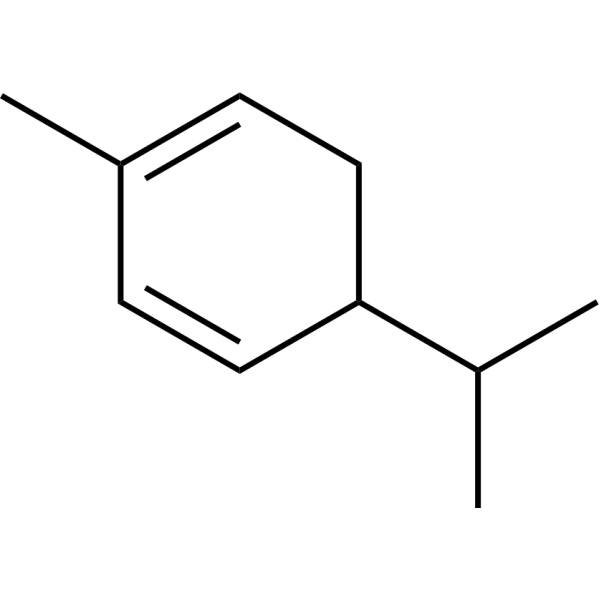
CC1=CCC(C=C1)C(C)C
-
Synonyms
alpha-Phellandrene
-
Structure Classification
-
Initial Source
-
Versand
Room temperature in continental US; may vary elsewhere.
-
Speicherung
4°C, stored under nitrogen
* In solvent : -80°C, 6 months; -20°C, 1 month (stored under nitrogen)


Lösungsmittel & Löslichkeit
In Vitro:
DMSO : 200 mg/mL (1468.11 mM; Need ultrasonic; Hygroscopic DMSO has a significant impact on the solubility of product, please use newly opened DMSO)
Please refer to the solubility information to select the appropriate solvent. Once prepared, please aliquot and store the solution to prevent product inactivation from repeated freeze-thaw cycles.
Storage method and period of stock solution: -80°C, 6 months; -20°C, 1 month (stored under nitrogen). When stored at -80°C, please use it within 6 months. When stored at -20°C, please use it within 1 month.
Please refer to the solubility information to select the appropriate solvent. Once prepared, please aliquot and store the solution to prevent product inactivation from repeated freeze-thaw cycles.
Storage method and period of stock solution: -80°C, 6 months; -20°C, 1 month (stored under nitrogen). When stored at -80°C, please use it within 6 months. When stored at -20°C, please use it within 1 month.
Konzentration (Stammlösung) × Volumen (Stammlösung) = Konzentration (Ziellösung) × Volumen (Ziellösung)
In Vivo:
Select the appropriate dissolution method based on your experimental animal and administration route.
- For the following dissolution methods, please ensure to first prepare a clear stock solution using an In Vitro approach and then sequentially add co-solvents:
- To ensure reliable experimental results, the clarified stock solution can be appropriately stored based on storage conditions. As for the working solution for In Vivo experiments, it is recommended to prepare freshly and use it on the same day.
- The percentages shown for the solvents indicate their volumetric ratio in the final prepared solution. If precipitation or phase separation occurs during preparation, heat and/or sonication can be used to aid dissolution.
Add each solvent one by one: 10% DMSO 40% PEG300 5% Tween-80 45% Saline
Solubility: ≥ 2.5 mg/mL (18.35 mM); Clear solution
This protocol yields a clear solution of ≥ 2.5 mg/mL (saturation unknown).
Taking 1 mL working solution as an example, add 100 μL DMSO stock solution (25.0 mg/mL) to 400 μL PEG300, and mix evenly; then add 50 μL Tween-80 and mix evenly; then add 450 μL Saline to adjust the volume to 1 mL.
Preparation of Saline: Dissolve 0.9 g sodium chloride in ddH₂O and dilute to 100 mL to obtain a clear Saline solution.
Add each solvent one by one: 10% DMSO 90% (20% SBE-β-CD in Saline)
Solubility: 2.5 mg/mL (18.35 mM); Suspended solution; Need ultrasonic
This protocol yields a suspended solution of 2.5 mg/mL. Suspended solution can be used for oral and intraperitoneal injection.
Taking 1 mL working solution as an example, add 100 μL DMSO stock solution (25.0 mg/mL) to 900 μL 20% SBE-β-CD in Saline, and mix evenly.
Preparation of 20% SBE-β-CD in Saline (4°C, storage for one week): 2 g SBE-β-CD powder is dissolved in 10 mL Saline, completely dissolve until clear.
In Vivo Dissolution Calculator
Please enter the basic information of animal experiments:
-
-
-
-
Recommended: Prepare an additional quantity of animals to account for potential losses during experiments.
Please enter your animal formula composition:
-
%DMSO +
Recommended: Keep the proportion of DMSO in working solution below 2% if your animal is weak.
-
%+
-
+%Tween-80 + +
-
%Saline +
The co-solvents required include: DMSO, . All of co-solvents are available by MedChemExpress (MCE). , Tween 80. All of co-solvents are available by MedChemExpress (MCE).
Working solution concentration: 0.22 mg/mL
Method for preparing stock solution: mg drug dissolved in μL DMSO. Stock solution concentration: mg/mL. * In solvent : -80°C, 6 months; -20°C, 1 month (stored under nitrogen)
1. Take μL DMSO stock solution;
2. Add μL .
μL , mix evenly;
3. Then add μL Tween 80, mix evenly;
4. Then add μL
Please ensure that the stock solution in the first step is dissolved to a clear state, and add co-solvents in sequence. You can use ultrasonic heating (ultrasonic cleaner, recommended frequency 20-40 kHz), vortexing, etc. to assist dissolution.


Reinheit & Dokumentation
-
Data Sheet (280 KB)
-
SDS (631 KB)
- English - EN (631 KB)
- Français - FR (631 KB)
- Deutsch - DE (631 KB)
- Norwegian - NO (631 KB)
- Español - ES (631 KB)
- Swedish - SV (631 KB)
- Italian - IT (631 KB)
- Korean - KR (631 KB)
- Portuguese - PT (631 KB)
-
Handling Instructions (2659 KB)
Verweise
[1]. Abdouli I, et al. TiO2 Catalyzed Dihydroxyacetone (DHA) Conversion in Water: Evidence That This Model Reaction Probes Basicity in Addition to Acidity. Molecules. 2022 Nov 24;27(23):8172. [Content Brief]
[2]. Susanto AC, et al. α‑Phellandrene enhances the apoptosis of HT‑29 cells induced by 5‑fluorouracil by modulating the mitochondria‑dependent pathway. Oncol Rep. 2024 Apr;51(4):61. [Content Brief]
[3]. Hsieh SL, et al. Induction of necrosis in human liver tumor cells by α-phellandrene. Nutr Cancer. 2014;66(6):970-9. [Content Brief]
[4]. Lin JJ, et al. α-Phellandrene alters expression of genes associated with DNA damage, cell cycle, and apoptosis in murine leukemia WEHI-3 cells. Anticancer Res. 2014 Aug;34(8):4161-80. [Content Brief]
[5]. Kang W, et al. Activation of cAMP Signaling in Response to α-Phellandrene Promotes Vascular Endothelial Growth Factor Levels and Proliferation in Human Dermal Papilla Cells. Int J Mol Sci. 2022 Aug 11;23(16):8959. [Content Brief]
[6]. Hsieh LC, et al. Induction of α-phellandrene on autophagy in human liver tumor cells. Am J Chin Med. 2015;43(1):121-36. [Content Brief]
[7]. Chaaban A, et al. Insecticide activity of Curcuma longa (leaves) essential oil and its major compound α-phellandrene against Lucilia cuprina larvae (Diptera: Calliphoridae): Histological and ultrastructural biomarkers assessment. Pestic Biochem Physiol. 2019 Jan;153:17-27. [Content Brief]
[8]. Lin JJ, et al. Alpha-phellandrene promotes immune responses in normal mice through enhancing macrophage phagocytosis and natural killer cell activities. In Vivo. 2013 Nov-Dec;27(6):809-14. [Content Brief]
[9]. Pinheiro-Neto FR, et al. α-Phellandrene exhibits antinociceptive and tumor-reducing effects in a mouse model of oncologic pain. Toxicol Appl Pharmacol. 2021 May 1;418:115497. [Content Brief]
[11]. Siqueira HDS, et al. α-Phellandrene, a cyclic monoterpene, attenuates inflammatory response through neutrophil migration inhibition and mast cell degranulation. Life Sci. 2016 Sep 1;160:27-33. [Content Brief]


Complete Stock Solution Preparation Table
Please refer to the solubility information to select the appropriate solvent. Once prepared, please aliquot and store the solution to prevent product inactivation from repeated freeze-thaw cycles.
Storage method and period of stock solution: -80°C, 6 months; -20°C, 1 month (stored under nitrogen). When stored at -80°C, please use it within 6 months. When stored at -20°C, please use it within 1 month.
| Optional Solvent | Concentration Solvent Mass | 1 mg | 5 mg | 10 mg | 25 mg |
|---|---|---|---|---|---|
| DMSO | 1 mM | 7.3405 mL | 36.7026 mL | 73.4053 mL | 183.5132 mL |
| 5 mM | 1.4681 mL | 7.3405 mL | 14.6811 mL | 36.7026 mL | |
| 10 mM | 0.7341 mL | 3.6703 mL | 7.3405 mL | 18.3513 mL | |
| 15 mM | 0.4894 mL | 2.4468 mL | 4.8937 mL | 12.2342 mL | |
| 20 mM | 0.3670 mL | 1.8351 mL | 3.6703 mL | 9.1757 mL | |
| 25 mM | 0.2936 mL | 1.4681 mL | 2.9362 mL | 7.3405 mL | |
| 30 mM | 0.2447 mL | 1.2234 mL | 2.4468 mL | 6.1171 mL | |
| 40 mM | 0.1835 mL | 0.9176 mL | 1.8351 mL | 4.5878 mL | |
| 50 mM | 0.1468 mL | 0.7341 mL | 1.4681 mL | 3.6703 mL | |
| 60 mM | 0.1223 mL | 0.6117 mL | 1.2234 mL | 3.0586 mL | |
| 80 mM | 0.0918 mL | 0.4588 mL | 0.9176 mL | 2.2939 mL | |
| 100 mM | 0.0734 mL | 0.3670 mL | 0.7341 mL | 1.8351 mL |


α-Phellandrene Related Classifications
HY-121615 Related Classifications
 Powered by Bioz