



Others
-
Others Related Products (76358)
Related Products (76358)

-
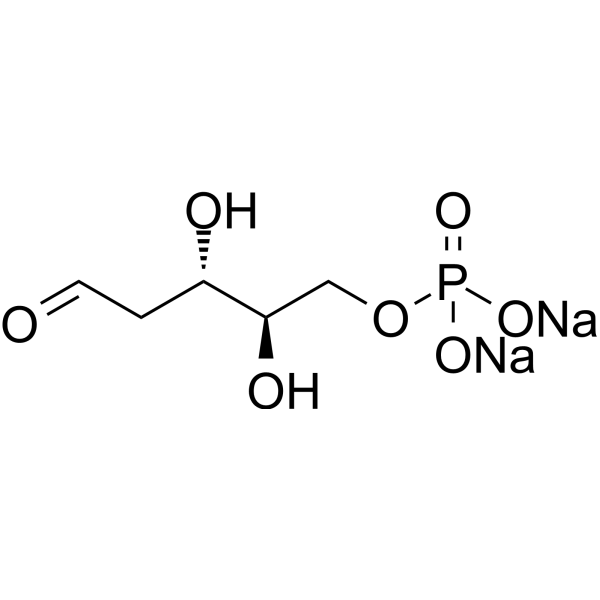
2-Deoxyribose 5-phosphate disodium
 0 Images
2-Deoxyribose 5-phosphate disodium is a substrate of 2-deoxyribose-5-phosphate aldolase (DERA). DERA belongs to class I aldolases, catalyzes reversible aldol reactions, and does not require any cofactors.
-
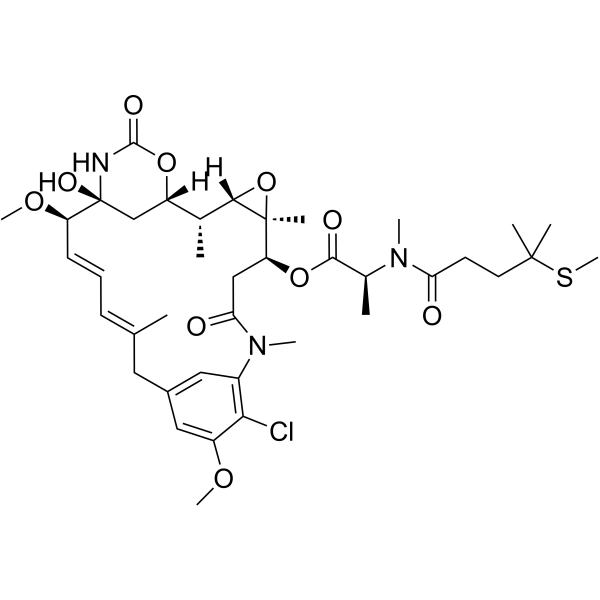
S-Me-DM4
 0 Images
S-Me-DM4 is a metabolite of DM4 S-methylated by intracellular enzyme. DM4 (HY-100503) is a microtubule-depolymerizing maytansinoid with strong cytotoxicity. DM4 can be used as an ADC Cytotoxin molecule.
-
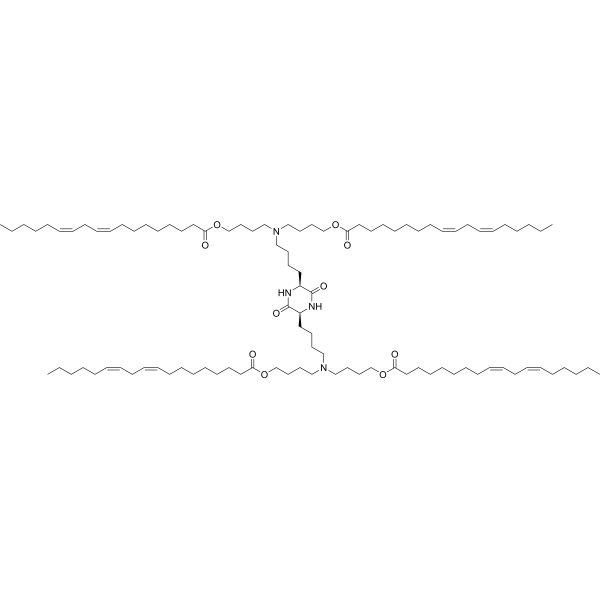
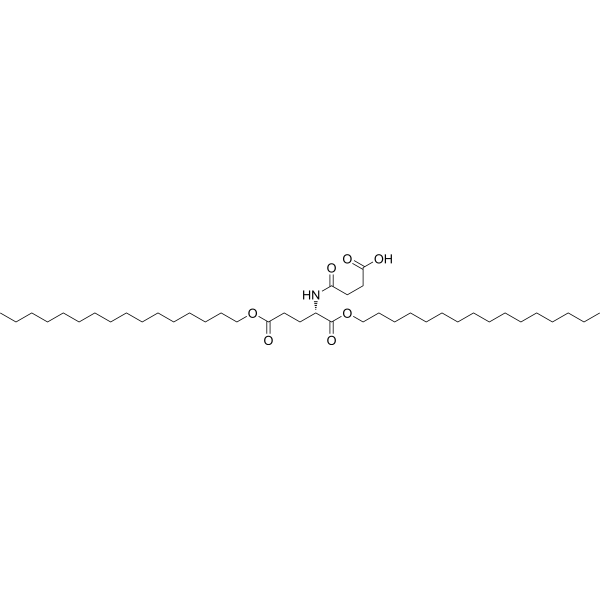
1,5-Dihexadecyl N-(3-carboxy-1-oxopropyl)-L-glutamate
 0 Images
1,5-Dihexadecyl N-(3-carboxy-1-oxopropyl)-L-glutamate is a lipid used in the synthesis of phospholipid vesicles. 1,5-Dihexadecyl N-(3-carboxy-1-oxopropyl)-L-glutamate works with other lipids to convert polydisperse vesicles into vesicles of uniform size by freeze-thaw and extrusion techniques. 1,5-Dihexadecyl N-(3-carboxy-1-oxopropyl)-L-glutamate can enhance protein encapsulation efficiency for drug delivery and biochemical applications.
-
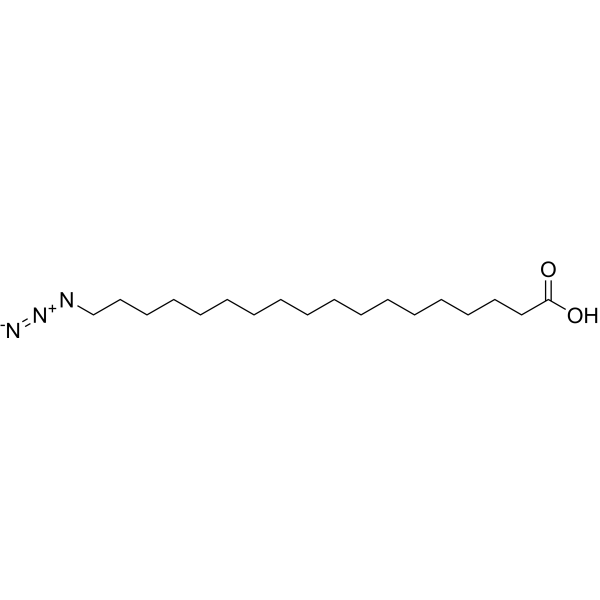
18-Azido-stearic acid
 0 ImagesCat. No.: HY-151692CAS No.: 1529763-58-3
18-Azido-stearic acid is a click chemistry reagent containing an azide group. 18-Azido-stearic acid can be used as a hydrophobic bioconjugation linker (using N-Myristoyltransferase) that can be further modified at the azido-position using Click-chemistry. It contains an azide group and can undergo copper-catalyzed azide-alkyne cycloaddition (CuAAc) with molecules containing alkyne groups. It can also undergo ring strain-promoted alkyne-azide cycloaddition (SPAAC) with molecules containing DBCO or BCN groups.
-
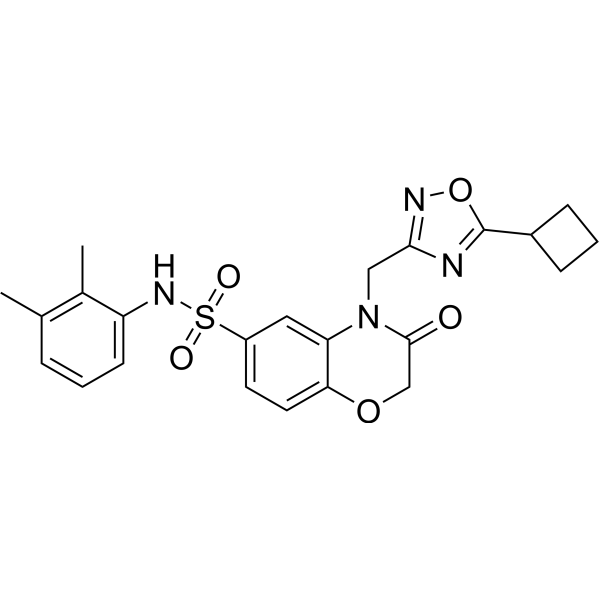
Beclin1-ATG14L interaction inhibitor 1
 0 Images
Beclin1-ATG14L interaction inhibitor 1 (com 19) is a selective Beclin1-ATG14L interaction inhibitor. This protein interaction mechanism specifically targets complex I of the lipid kinase VPS34 without affecting complex II. Because the integrity of VPS34 complex II depends on the Beclin 1-UVRAG interaction. Beclin1-ATG14L interaction inhibitor 1 can disrupt the formation of VPS34 complex I and inhibit autophagy, but does not affect complex II-related vesicle transport.
-
DiSC3(5) (solution)
 0 ImagesCat. No.: HY-DY1021CAS No.: 53213-94-8
DiSC3 (5) (solution) is a fluorescent probe commonly used as a tracer dye to evaluate mitochondrial membrane potential. The excitation/emission wavelength of DiSC3 (5) is up to 622/670 nm. DiSC3 (5) can inhibit the respiratory system associated with mitochondrial NAD, and the IC50 value is 8 μM. DiSC3 (5) in the presence of Na+/K+-ATPase inhibitor ouabain 2 can induce membrane hyperpolarization of Ehrlich ascites tumor cells.
Solvent and concentration: DMSO: 1 mM
The 1 mL volume is defined as the base specification. All larger sizes correspond to incremental volumes of this base.
-
RhoNox-1 (solution)
 0 ImagesCat. No.: HY-DY1030CAS No.: 1447815-38-4
RhoNox-1 (solution) is a fluorescent probe for the specific detection of divalent iron ions, and when RhoNox-1 reacts with Fe2+. RhoNox-1 can generate an irreversible orange (red) fluorescent product (Ex/Em:540/575 nm). FeRhoNox-1 can enter the cell well, suitable for the detection of Fe2+ in living cells, and tends to be localized in the Golgi apparatus.
Solvent and concentration: DMSO: 5 mM
-
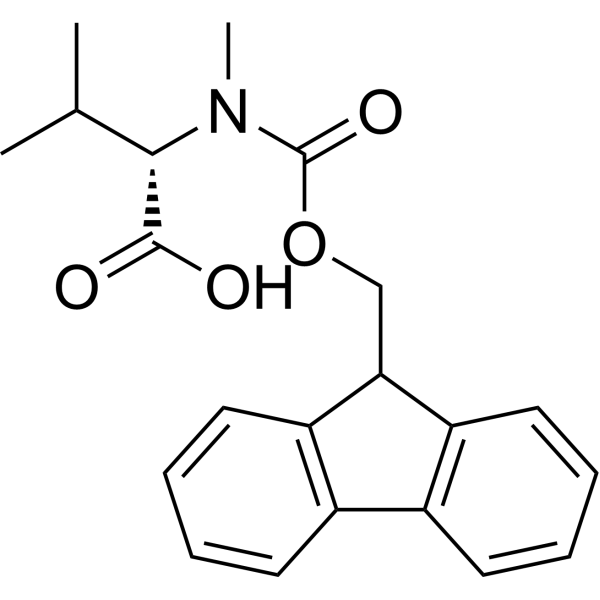
Fmoc-N-Me-Val-OH
 0 Images
Fmoc-N-Me-Val-OH is a modified peptide.

-
1.5M Tris-HCl Buffer, pH 8.8
 0 ImagesCat. No.: HY-179669I
1.5M Tris-HCl Buffer, pH 8.8 is a plant protein extraction buffer. 1.5M Tris-HCl Buffer, pH 8.8 can isolate cytoplasmic proteins from Marchantia, but the protein yield is low and the SDS-PAGE band profile is poor. 1.5M Tris-HCl Buffer, pH 8.8 can be used for proteomic studies on the liverwort Dumortiera hirsuta.

-
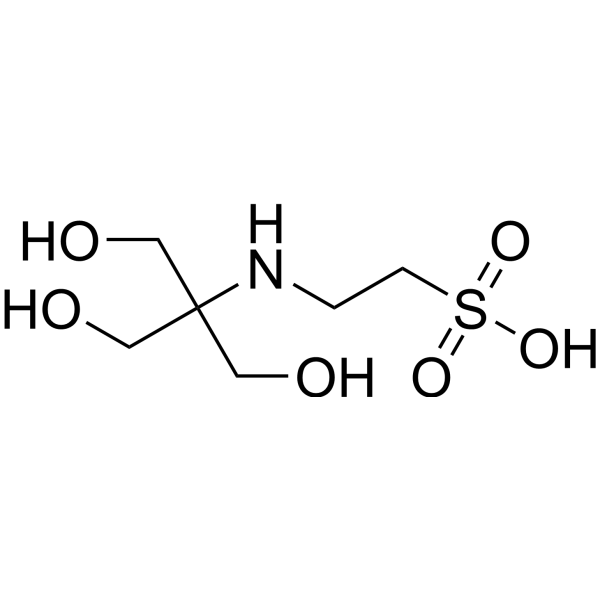
TES
 0 Images
TES is an excellent hydrogen ion buffer. TES has characteristics such as an appropriate dissociation constant, a low metal-binding constant, and high water solubility. TES can be used in the research of mammalian cell culture, viruses, and so on.
-
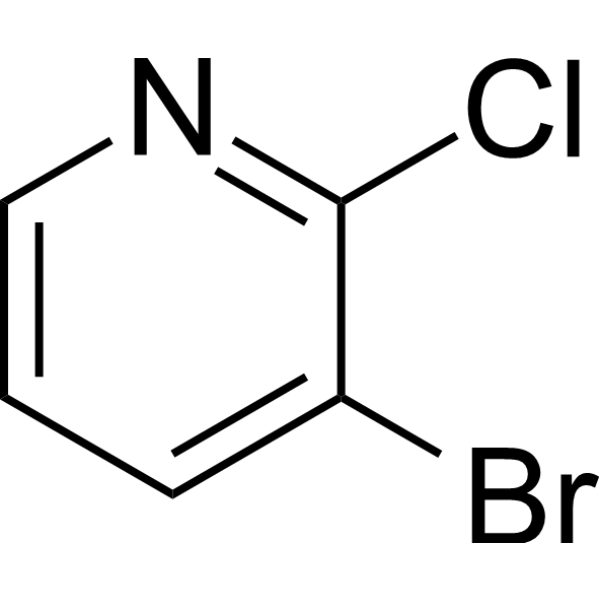
3-Bromo-2-chlorolpyridine
 0 Images
3-Bromo-2-chlorolpyridine is a biochemical reagent that can be used as a biological material or organic compound for life science related research.
-
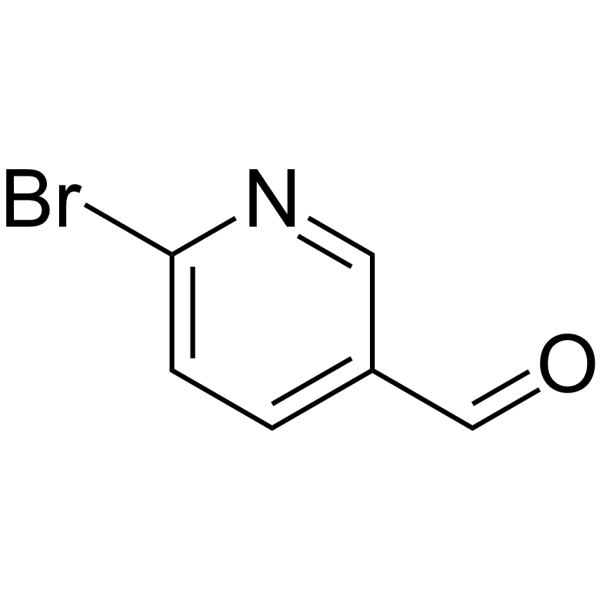
6-Bromonicotinaldehyde
 0 Images
6-Bromonicotinaldehyde is a brominated derivative of nicotinaldehyde (pyridine-3-aldehyde), and it can be used as a key intermediate in the synthesis of Fusaric acid.
-
1-Boc-Nipecotic acid
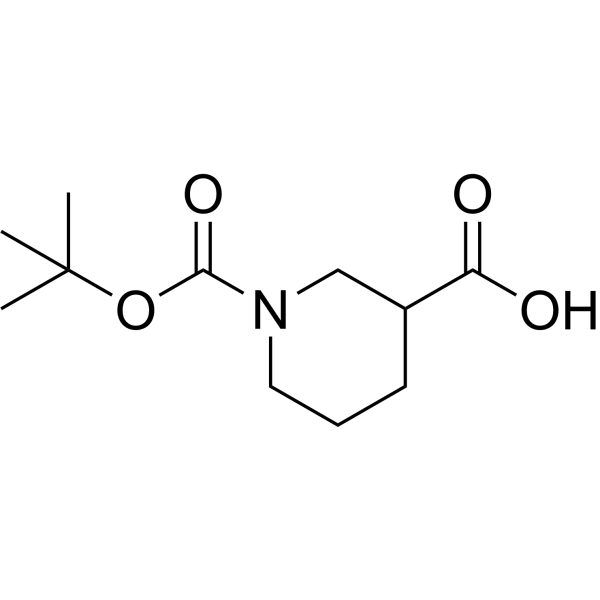 0 ImagesCat. No.: HY-40014CAS No.: 84358-12-3Synonyms: 1-Boc-Piperidine-3-carboxylic acid
1-Boc-piperidine-3-carboxylic acid is a biochemical reagent that can be used as a biological material or organic compound for life science related research.
-
(S)-1-Boc-3-aminopiperidine
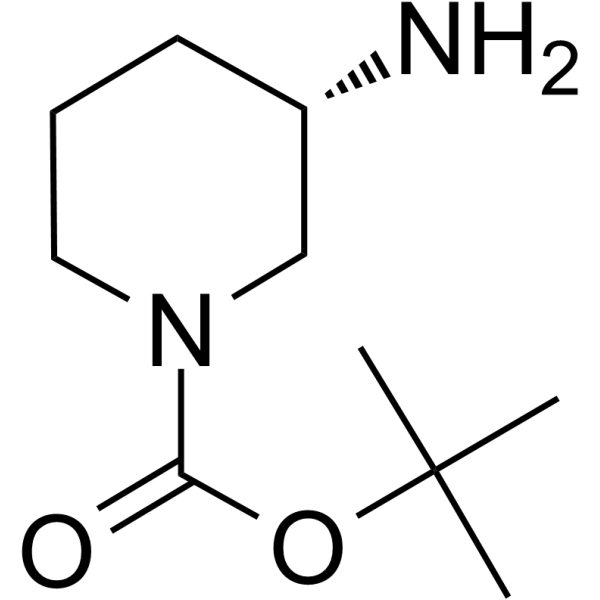 0 ImagesSynonyms: (S)-(+)-3-Amino-1-boc-piperidine
-
5-Amino-3H-imidazole-4-carboxamide hydrochloride
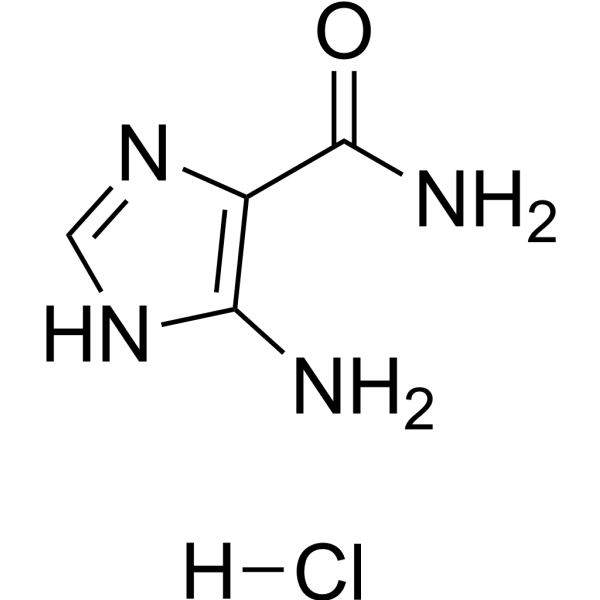 0 ImagesSynonyms: 5-Aminoimidazole-4-carboxamide hydrochloride; AICA hydrochloride
5-Amino-3H-imidazole-4-Carboxamide (AICA) hydrochloride is an important precursor for the synthesis of purines in general and of the nucleobases adenine and guanine in particular.



