



Apoptosis
Apoptosis
Apoptosis is a distinctive form of cell death exhibiting specific morphological and biochemical characteristics, including cell membrane blebbing, chromatin condensation, genomic DNA fragmentation, and exposure of specific phagocytosis signaling molecules on the cell surface. Cells undergoing apoptosis differ from those dying through necrosis. Necrotic cells are usually recognized by the immune system as a danger signal and, thus, resulting in inflammation; in contrast, apoptotic death is quiet and orderly.
There are two major pathways of apoptotic cell death induction: The intrinsic pathway, also called the Bcl-2-regulated or mitochondrial pathway, is activated by various developmental cues or cytotoxic insults, such as viral infection, DNA damage and growth-factor deprivation, and is strictly controlled by the BCL-2 family of proteins. The extrinsic or death-receptor pathway is triggered by ligation of death receptors (members of the tumor necrosis factor (TNF) receptor family, such as Fas or TNF receptor-1 (TNFR1)) that contain an intracellular death domain, which can recruit and activate caspase-8 through the adaptor protein Fas-associated death domain (FADD; also known as MORT1) at the cell surface. This recruitment causes subsequent activation of downstream (effector) caspases, such as caspase-3, -6 or -7, without any involvement of the BCL-2 family.
Studies suggest that alterations in cell survival contribute to the pathogenesis of a number of human diseases, including cancer, viral infections, autoimmune diseases, neurodegenerative disorders, and AIDS (acquired immunodeficiency syndrome). Treatments designed to specifically alter the apoptotic threshold may have the potential to change the natural progression of some of these diseases.
All Product Categories
-
Apoptosis Inhibitors
(854)
View all products
-
Apoptosis Agonists
(7)
View all products
-
Apoptosis Antagonists
(9)
View all products
-
Apoptosis Activators
(345)
View all products
-
Apoptosis Modulators
(57)
View all products
-
Apoptosis Inducers
(7601)
View all products
-
Apoptosis Degrader
(1)
View all products
-
Apoptosis Controls
(33)
View all products
-
Apoptosis Related Products (9448)
Related Products (9448)

-
Antibodies (120)
-
2,4-D (Standard)
 0 ImagesSynonyms: 2,4-Dichlorophenoxyacetic acid (Standard)2,4-D (Standard) is the analytical standard of 2,4-D (HY-18572). This product is intended for research and analytical applications. 2,4-D (2, 4-dichlorophenoxyacetic acid) is a selective herbicide that can be used for the control of broad-leaved weeds. 2,4-D can induce apoptosis. 2,4-D inhibits DNA and protein synthesis, thereby preventing normal plant growth and development.

-
4-Oxofenretinide-d4
 0 ImagesCat. No.: HY-109583SCAS No.: 2991099-34-2Synonyms: 4-Oxo-4-HPR-d44-Oxofenretinide-d4 (4-Oxo-4-HPR-d4) is deuterium labeled 4-Oxofenretinide. 4-Oxofenretinide (4-Oxo-4-HPR) is a metabolite of Fenretinide (HY-15373). 4-Oxofenretinide induces cell growth inhibition in ovarian, breast, and neuroblastoma tumor cell lines. 4-Oxofenretinide causes a marked accumulation of cells in G2-M. 4-Oxofenretinide induces cancer cell apoptosis through caspase-9.
-
Aphidicolin (Standard)
 0 ImagesCat. No.: HY-N6733RCAS No.: 38966-21-1Aphidicolin (Standard) is the analytical standard of Aphidicolin. This product is intended for research and analytical applications. Aphidicolin is an inhibitor of DNA polymerase α and δ, prevents mitotic cell division by interfering DNA polymerase activity. Aphidicolin is an antibiotic produced by mold Cephalosporium aphidicola, inhibits cellular deoxyribonucleic acid synthesis and the growth of herpes simplex virus. Aphidicolin exhibits anti-orthopoxvirus activity and potentiates apoptosis induced by arabinosyl nucleosides in a human promyelocytic leukemia cell line.
-
Taltobulin intermediate-2
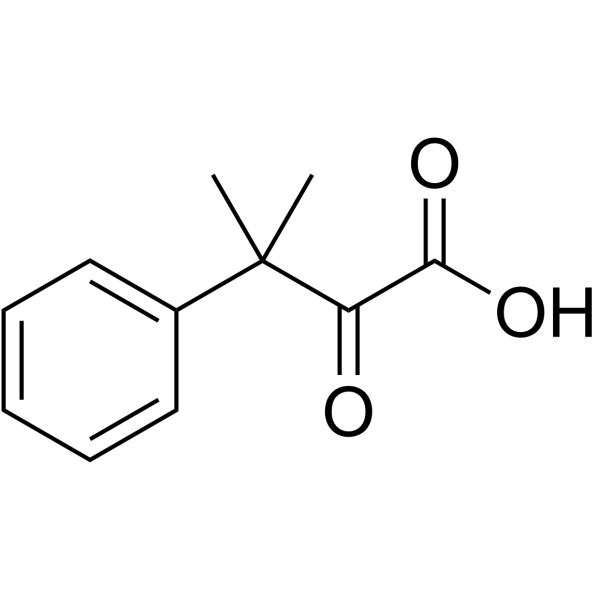 0 ImagesCat. No.: HY-41043CAS No.: 91133-59-4Taltobulin intermediate-2 is an intermediate in the synthesis of Taltobulin (HY-15584). Taltobulin is a common toxin component in ADC preparation (ADC Cytotoxin), and it is also a powerful tubulin (Microtubule/Tubulin) inhibitor. Taltobulin disrupts tubulin polymerization, induces mitotic arrest, and induces apoptosis.
-
Simazine (Standard)
 0 ImagesSimazine (Standard) is the analytical standard of Simazine (HY-B2046). This product is intended for research and analytical applications. Simazine is a triazine herbicide. Simazine is widely used in agriculture, potted plant and tree production. In addition, Simazine can induce the apoptosis of immune cells in the spleen of mice and inhibit the proliferation of B cells and T cells in mice.
-
Losmapimod (Standard)
 0 ImagesSynonyms: GSK-AHAB (Standard); GW856553X (Standard); SB856553 (Standard)Losmapimod (GSK-AHAB; GW856553X) (Standard) is the analytical standard of Losmapimod (HY-10402). This product is intended for research and analytical applications. Losmapimod (GSK-AHAB; GW856553X) is an orally active p38α/β MAPK inhibitor, with pKi values of 8.1 and 7.6 for p38α and p38β, respectively. Losmapimod reduces DUX4 expression, thus exerting efficacy in facioscapulohumeral muscular dystrophy. By inhibiting MAPK/NF-κB, Losmapimod reduces apoptosis of epileptiform hippocampal neurons, and exhibits anti-allodynia and anti-hyperalgesic activities. Losmapimod blocks the entry and fusion of Lassa fever virus (LASV). Losmapimod overcomes tyrosine kinase inhibitor resistance in non-small cell lung cancer (NSCLC). Losmapimod inhibits myocardial senescence and inflammation, and possesses cardioprotective activity against cardiotoxicity.
-
DL-Sulforaphane N-acetyl-L-cysteine (Standard)
 0 ImagesCat. No.: HY-132242RCAS No.: 334829-66-2Synonyms: SFN-NAC (Standard)Pipemidic acid (trihydrate) (Standard) is the analytical standard of Pipemidic acid (trihydrate). This product is intended for research and analytical applications. Pipemidic acid trihydrate, a derivative of Piromidic acid, is an antibacterial agent. Pipemidic acid trihydrate inhibits DNA gyrase. Pipemidic acid trihydrate is active against gram-negative bacteria including Pseudomonas aeruginosa as well as some gram-positive bacteria. Pipemidic acid trihydrate can be used for the research of intestinal, urinary, and biliary tract infections.
-
Lacidipine-d10
 0 ImagesCat. No.: HY-B0347SCAS No.: 1185245-62-8Lacidipine-d10 is the deuterium labeled Lacidipine. Lacidipine (Lacipil, Motens) is a L-type calcium channel blocker.
-
SZL P1-41 (Standard)
 0 ImagesCat. No.: HY-100237RCAS No.: 222716-34-9SZL P1-41 (Standard) is the analytical standard of SZL P1-41 (HY-100237). This product is intended for research and analytical applications. SZL P1-41 is a specific Skp2 inhibitor, binds to the F-box domain of Skp2 to prevent Skp1 association and Skp2 SCF complex formation. SZL P1-41, like Skp2 deficiency, augments p27-mediated apoptosis/senescence, while it impairs Akt-driven glycolysis. Anti-tumor activities.
-
1A-116 (Standard)
 0 ImagesCat. No.: HY-104064RCAS No.: 1430208-73-31A-116 (Standard) is the analytical standard of 1A-116 (HY-104064). This product is intended for research and analytical applications. 1A-116, a potent Rac1 inhibitor, is specific for W56 residues, can prevent EGF-induced Rac1 activation and block Rac1-P-Rex1 interaction. 1A-116 can induce apoptosis and inhibit cell proliferation, migration and cycle progression in a concentration-dependent manner. 1A-116 also demonstrates a high antimetastatic activity in vivo.

-
Doxycycline fosfatex
 0 ImagesCat. No.: HY-N0565DCAS No.: 83038-87-3Doxycycline fosfatex is an orally active highly lipophilic, tissue-permeable MMP inhibitor with broad-spectrum antibacterial activity. Doxycycline fosfatex is also a semi-synthetic antibiotic with chelating properties, which blocks bacterial protein synthesis and inhibits extracellular matrix degradation through interactions with zinc and calcium atoms. Doxycycline fosfatex also inhibits mitochondrial biogenesis, translation, and the expression of respiratory chain proteins. Doxycycline fosfatex induces apoptosis, inhibits autophagy and EMT, downregulates stem cell markers, and activates the PI3K-AKT pathway, thereby effectively inhibiting the viability and proliferation of cancer cells such as breast cancer cells. Doxycycline fosfatex also promotes the survival and self-renewal of embryonic stem cells and neural stem cells, and reduces the frequency of medium changes in culture. Doxycycline fosfatex has been applied in studies related to breast cancer, prostate cancer, bladder cancer, and other cancers.
-
LQB-118
 0 ImagesCat. No.: HY-124068CAS No.: 1219104-20-7LQB-118 is an orally active compound derived from sandalwood. LQB-118 can inhibit the migration of glioblastoma cells and induce cell death. LQB-118 can suppress the migration and invasion of prostate cancer cells by regulating the AKT/GSK3β pathway and the expression of the MMP-9/reck genes. LQB-118 can also inhibit yeast polysaccharide-induced inflammation both in vivo and in vitro. Additionally, LQB-118 selectively induces ROS-triggered and mitochondrial-dependent apoptosis in Leishmania amazonensis. LQB-118 can be used in studies related to inflammation, infections, and cancer diseases.
-
Masitinib (Standard)
 0 ImagesSynonyms: AB1010 (Standard)Masitinib (Standard) is the analytical standard of Masitinib. This product is intended for research and analytical applications. Masitinib (AB1010) is a potent, orally bioavailable, and selective inhibitor of c-Kit (IC50=200 nM for human recombinant c-Kit). It also inhibits PDGFRα/β (IC50s=540/800 nM), Lyn (IC50= 510 nM for LynB), Lck, and, to a lesser extent, FGFR3 and FAK. Masitinib (AB1010) has anti-proliferative, pro-apoptotic activity and low toxicity.
-
Vildagliptin-d6
 0 ImagesCat. No.: HY-14291S5Synonyms: LAF237-d6 ; NVP-LAF 237-d6Vildagliptin-d6 (LAF237-d6 ) is deuterium labeled Vildagliptin. Vildagliptin (LAF237) is a potent, stable, selective dipeptidyl peptidase IV (DPP-IV) inhibitor with an IC50 of 3.5 nM in human Caco-2 cells. Vildagliptin possesses excellent oral bioavailability and potent antihyperglycemic activity.
-
CHS-828 (Standard)
 0 ImagesSynonyms: GMX1778 (Standard)CHS-828 (Standard) is the analytical standard of CHS-828. This product is intended for research and analytical applications. CHS-828 (GMX1778) is a competitive inhibitor of nicotinamide phosphoribosyltransferase (NAMPT), with an IC50 less than 25 nM. CHS-828 (GMX1778) exerts a cytotoxic effect by decreasing the cellular level of NAD+ and exhibits a potent anticancer activity.
-
Oleoylestrone
 0 ImagesCat. No.: HY-125088CAS No.: 180003-17-2Oleoylestrone, an adipose tissue-derived hormonal signal, is a slimming agent that decreases food intake and maintains energy expenditure.
-
Alda-1 (Standard)
 0 ImagesAlda-1 (Standard) is the analytical standard of Alda-1. This product is intended for research and analytical applications. Alda-1 is a potent and selective ALDH2 agonist, which activates wild-type ALDH2 and restores near wild-type activity to ALDH2*2.
-
Oxythiamine chloride hydrochloride (Standard)
 0 ImagesCat. No.: HY-107430ARCAS No.: 614-05-1Synonyms: Hydroxythiamine chloride hydrochloride (Standard)Oxythiamine chloride hydrochloride (Standard) is the analytical standard of Oxythiamine chloride hydrochloride (HY-107430A). This product is intended for research and analytical applications. Oxythiamine (Hydroxythiamine) chloride hydrochloride, an analogue of anti-metabolite, can suppress the non-oxidative synthesis of ribose and induce cell apoptosis. Oxythiamine chloride hydrochloride is a thiamine antagonist and inhibits transketolase (TK). Oxythiamine chloride hydrochloride inhibits cancer cell apoptosis and inhibits cell proliferation.




