



Pregnane X Receptor (PXR)
Pregnane X Receptor
Pregnane X Receptor (PXR), a member of the nuclear receptor (NR) superfamily, is a ligand-activated transcription factor that plays a crucial role in the metabolism of xenobiotics and endobiotics in mammals. PXR was first recognized as an exogenous substance receptor regulating metabolizing enzymes and transporters and functioning in detoxification and drug metabolism in the liver. However, further research revealed that PXR acts as an equally important endogenous substance receptor in the metabolism and homeostasis of endogenous substances. PXR is highly distributed in small intestine, liver, rectum, colon and bladder, while its expression in other organs and tissues is either moderate, low or undetectable. PXR can be activated by numerous chemical compounds. Activated PXR, through direct binding to the genomic regions or indirect crosstalk with other transcriptional factors, controls various genes involved in biotransformation, transport, inflammation, oxidative stress and etc.
As a master regulator of xenobiotic response PXR adjusts the expression of many drug metabolizing enzymes (DME), such as cytochrome P450, uridine diphosphate (UDP)-glucuronosyltransferases, sulfotransferases and carboxylesterases. PXR also regulates drug-efflux pumps multi-drug resistance gene 1 (MDR1), MDR2, ATP-binding cassette transporter C 2 (ABCC) and anion-transporting polypeptide 2 (OATP). PXR is participated in tumor cell proliferation and growth, apoptosis and metastasis as well as in liver regeneration and hepatic proliferation, indicating the important role of PXR in cancer[1][2].
As a master regulator of xenobiotic response PXR adjusts the expression of many drug metabolizing enzymes (DME), such as cytochrome P450, uridine diphosphate (UDP)-glucuronosyltransferases, sulfotransferases and carboxylesterases. PXR also regulates drug-efflux pumps multi-drug resistance gene 1 (MDR1), MDR2, ATP-binding cassette transporter C 2 (ABCC) and anion-transporting polypeptide 2 (OATP). PXR is participated in tumor cell proliferation and growth, apoptosis and metastasis as well as in liver regeneration and hepatic proliferation, indicating the important role of PXR in cancer[1][2].
References:
All Product Categories
-
Pregnane X Receptor (PXR) Inhibitor
(1)
View all products
-
Pregnane X Receptor (PXR) Agonists
(12)
View all products
-
Pregnane X Receptor (PXR) Antagonists
(3)
View all products
-
Pregnane X Receptor (PXR) Activators
(13)
View all products
-
Pregnane X Receptor (PXR) Chemicals
(2)
View all products
-
Pregnane X Receptor (PXR) Degraders
(3)
View all products
-
Pregnane X Receptor (PXR) Ligands
(4)
View all products
-
Pregnane X Receptor (PXR) Related Products (41)
Related Products (41)

-
FKBP12 PROTAC dTAG-13
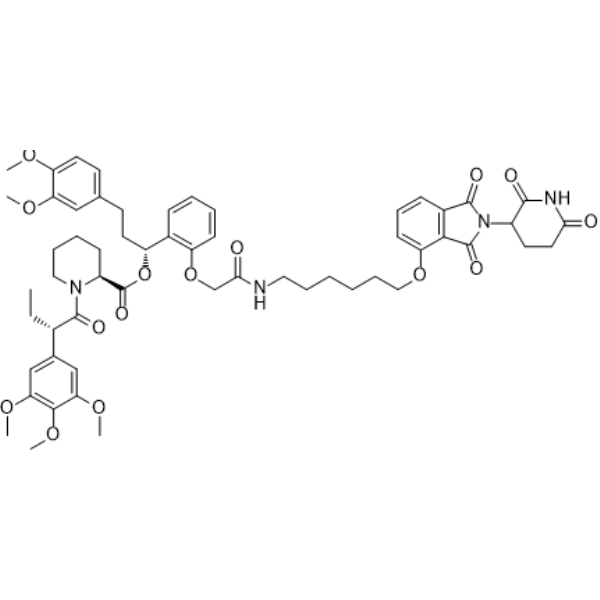 0 ImagesSynonyms: dTAG-13FKBP12 PROTAC dTAG-13 (dTAG-13) is a FKBP12F36V PROTAC degrader and a PXR partial agonist. FKBP12 PROTAC dTAG-13 induces ubiquitination and proteasomal degradation of proteins tagged with FKBP12F36V, without degrading wild-type FKBP12 or un-fused PXR. It weakly promotes the recruitment of SRC-1, strongly inhibits the interaction between NCoR and PXR, and upregulates the expression of CYP3A4 and other drug metabolism-related genes. FKBP12 PROTAC dTAG-13 is applicable to research related to breast cancer and leukemia[1].
-
Pregnenolone 16α-carbonitrile
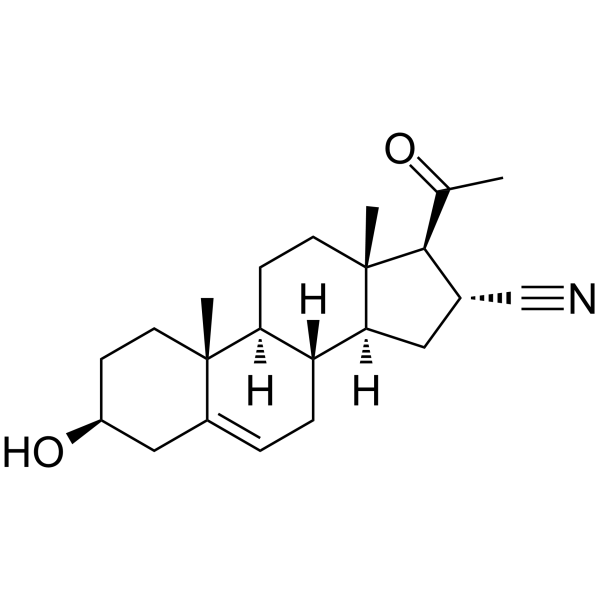 0 ImagesPregnenolone 16α-carbonitrile is an orally active prototypical and effective rodent-PXR activator. Pregnenolone 16α-carbonitrile, a synthetic steroid, induces cytochrome P450 3A expression. Pregnenolone 16α-carbonitrile exhibits increased resistance to subsequent stressful insults.
-
SR12813
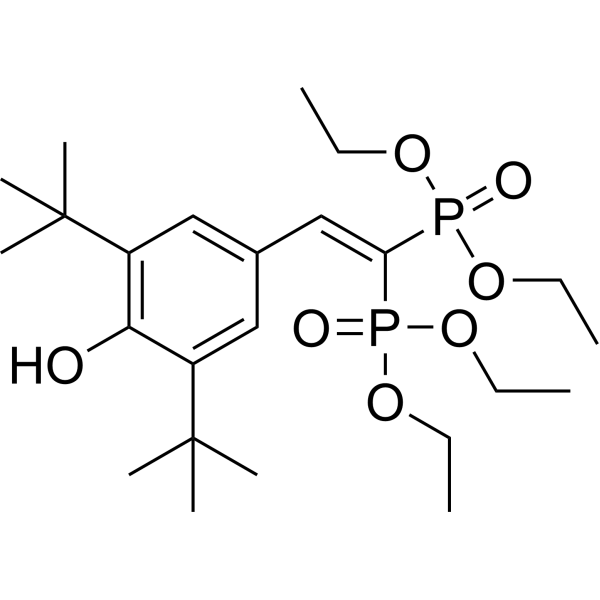 0 ImagesSynonyms: GW 485801SR12813 (GW 485801) is an inhibitor of 3-hydroxy-3-methylglutaryl-coenzyme A (HMG-CoA) reductase, with an IC50 value of 0.85 μM. SR12813 is also an efficient agonist of human pregnane X receptor (hPXR). SR12813 can strongly bind to hPXR but not to mouse PXR (mPXR).
-
Fluopyram
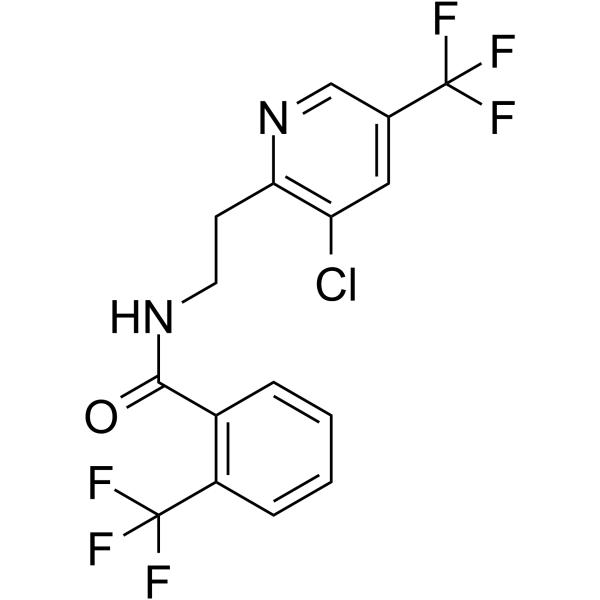 0 ImagesFluopyram is an orally active succinate dehydrogenase inhibitor, antifungal and nematicide. Fluopyram inhibits succinate dehydrogenase activity, activates CAR/PXR nuclear receptors, and increases caspase-3, TNF-α and NF-κB. Fluopyram inhibits the growth of F. virguliforme, Botrytis cinerea and Alternaria solani with EC50 values of 3.35, 5.389 and 0.244 µg/mL, respectively. Fluopyram induces liver and thyroid tumor formation. Fluopyram is nephrotoxic and embryotoxic.
-
Praeruptorin E
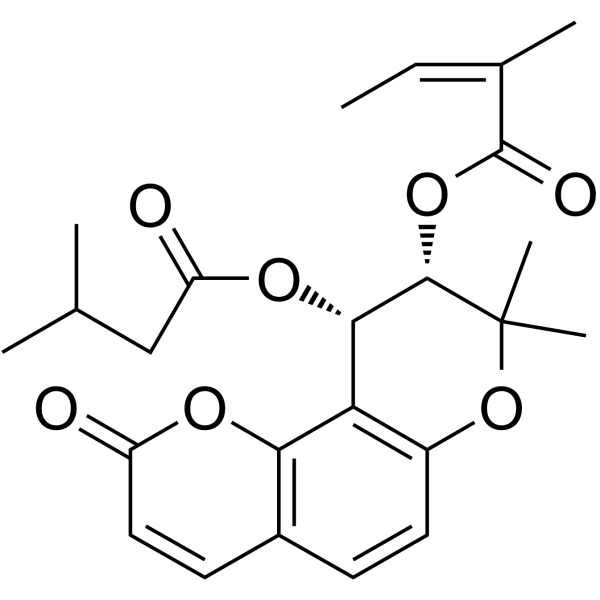 0 ImagesPraeruptorin E is an orally active pyranocoumarin compound. Praeruptorin E can be isolated from the dried roots of Peucedanum praeruptorum Dunn. Praeruptorin E reduces the expression of NF-κB. Praeruptorin E upregulates the expression of PXR and CYP3A4. Praeruptorin E inhibits Th2 cytokines, TNF-α, IL6, MPO, and blocks the Ca2+ slow channel. Praeruptorin E promotes pulmonary tissue repair and relaxes porcine coronary artery strips. Praeruptorin E protects mice from lipopolysaccharide- and hydrochloric acid-induced acute lung injury. Praeruptorin E can be used in studies related to asthma and acute lung injury.
-
SJPYT-195
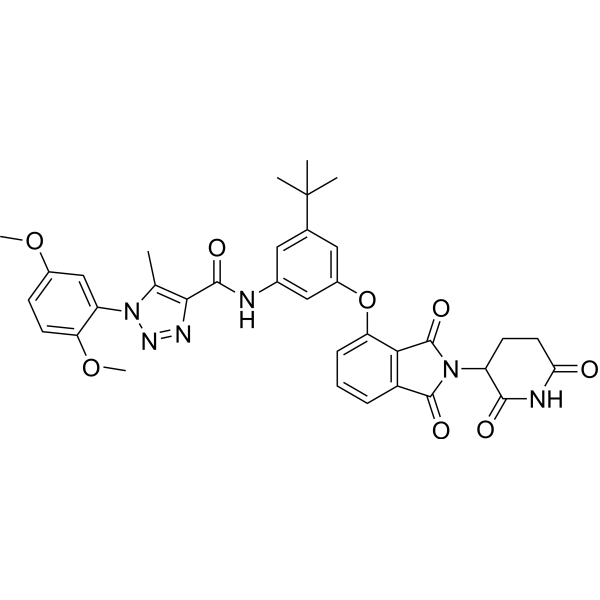 0 ImagesSJPYT-195 is a molecular glue degrader targeting GSPT1, with a DC50 of 310 nM. SJPYT-195 mediates CRBN-dependent and proteasome-dependent degradation of GSPT1 by forming a stable ternary complex with CRBN and GSPT1. As a secondary effect of GSPT1 degradation, SJPYT-195 induces a decrease in PXR protein levels. SJPYT-195 is applicable to research related to acute myeloid leukemia.
-
Glycybridin C
 0 ImagesCat. No.: HY-N19818CAS No.: 2088505-67-1Glycybridin C is a Protein tyrosine phosphatase 1B (PTP1B) inhibitor and pregnane X receptor (PXR) ligand. Glycybridin C inhibits insulin and leptin signaling pathway negative regulation, LPS (HY-D1056)-induced NF-κB transcriptional activity. Glycybridin C forms hydrophobic and π-π stacking interactions with Met243, Phe288, Tyr306, and His407 residues of PXR. Glycybridin C can be used for the research of hepatocellular carcinoma, colorectal adenocarcinoma, breast carcinoma.
-
Lynestrenol (Standard)
 0 ImagesLynestrenol (Standard) is the analytical standard of Lynestrenol. This product is intended for research and analytical applications. Lynestrenol is a pregnane X receptor (PXR) agonist with the EC50s of 41 and 0.23 μM for hPXR and zfPXR, respectively. Lynestrenol, a synthetic progesteronelike agent possess immunostimulatory properties.
-
Imazalil
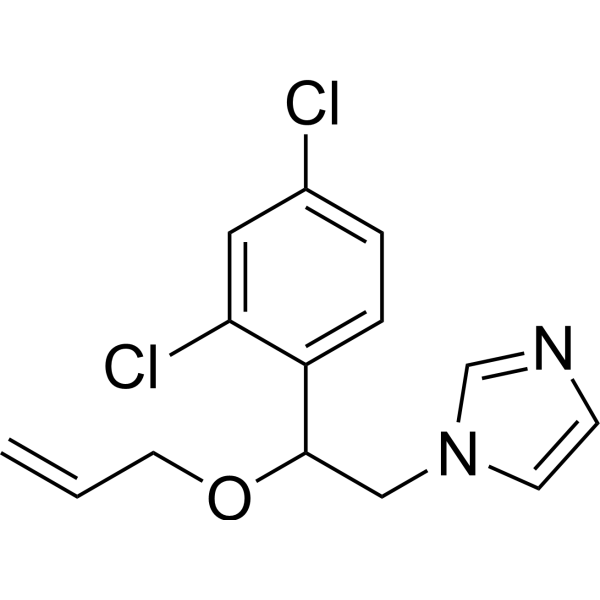 0 ImagesSynonyms: EnilconazoleImazalil (Enilconazole) is a fungicide. Imazalil has oral activity and strongly activates mPXR but not mCAR in mouse liver. Imazalil is commonly used to protect various agricultural crops against fungal attack. Imazalil induces developmental abnormalities, gut microbiota dysbiosis, and hepatic metabolism disorder.
-
SJPYT-310
 0 ImagesSJPYT-310 is a selective PXR antagonist. SJPYT-310 shows no significant cytotoxicity.
-
Benzophenone-2
 0 ImagesSynonyms: 2,2′,4,4′-TetrahydroxybenzophenoneBenzophenone-2 (2,2',4,4'-Tetrahydroxybenzophenone) is an organic ultraviolet absorber that is widely used in personal care products and industrial products such as plastics and coatings. Benzophenone-2 is an endocrine disruptor that can interfere with estrogen receptors (ERα receptor) and pregnane X receptor (PXR receptor) activity, leading to reproductive toxicity, immune disorders, and metabolic abnormalities. Benzophenone-2 can inhibit the activity of α-glucosidase (IC50 = 49.72 μM), and can be used for research on diabetes.
-
Lynestrenol
 0 ImagesLynestrenol is a pregnane X receptor (PXR) agonist with the EC50s of 41 and 0.23 μM for hPXR and zfPXR, respectively. Lynestrenol, a synthetic progesteronelike agent possess immunostimulatory properties.
-
Bacopaside I
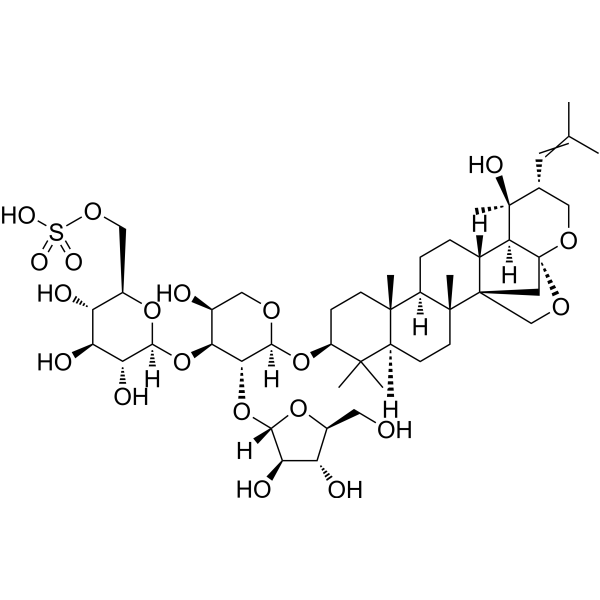 0 ImagesBacopaside I is an orally active aquaporin AQP1 inhibitor and PKC modulator with neuroprotective and anticancer activities. Bacopaside I specifically blocks the water channel and cGMP-gated ion channel activities of AQP1 without affecting AQP4, thereby inhibiting the migration of colon cancer cells expressing AQP1. Bacopaside I activates the Akt pathway by interacting with PI3K, specifically inhibits MAO-A, effectively alleviates neuron necrosis and apoptosis induced by oxygen-glucose deprivation, reduces oxidative stress, and regulates the surface expression of neuroreceptors. When combined with Bacopaside II (HY-N6016), Bacopaside I significantly reduces the viability, proliferation and invasion ability of breast cancer cells, and binds to the pregnane X receptor (PXR). Bacopaside I is applicable to the research of colon cancer, breast cancer, vascular dementia, cerebral ischemia and other related diseases.
-
4,8-Dioxa-3H-perfluorononanoic acid
 0 ImagesCat. No.: HY-W587839CAS No.: 919005-14-44,8-Dioxa-3H-perfluorononanoic acid is an ether-substituted polyfluoroalkyl compound and also a ligand of human pregnane X receptor (hPXR), which binds to the ligand-binding domain of hPXR. 4,8-Dioxa-3H-perfluorononanoic acid targets Arg-410, Lys-210, Lys-226, Met-323 and His-327 residues. Its binding process relies on long-range electrostatic interactions, and no significant hydrogen bonds form with hPXR residues. 4,8-Dioxa-3H-perfluorononanoic acid is used as a substitute for PFOA in Germany. 4,8-Dioxa-3H-perfluorononanoic acid is detectable in environmental matrices such as river water near fluoride production plants, accumulates in organisms including grass, deer liver and locusts, and is present in plasma samples of populations in southern Germany.
-
MI-883
 0 ImagesMI-883 is orally active constitutive androstane receptor (CAR) (EC50 of 73 nM) agonist and pregnane X Receptor (PXR) (IC50 of 100 nM) antagonist. MI-883 binds to CAR and PXR ligand-binding domains, promotes CAR LBD assembly, activates CAR3 variant, stimulates CAR cytoplasmic-nuclear translocation, upregulates CAR target genes, recruits coactivators NCOA1, NCOA2, NCOA3, inhibits basal and agonist-induced PXR activation, downregulates PXR target genes, disrupts PXR-NCOR2 interaction, blocks agonist-mediated PXR-NCOA1 recruitment. MI-883 reduces plasma total cholesterol, LDL cholesterol, and hepatic free cholesterol levels, increases fecal bile acid excretion, regulates genes involved in xenobiotic metabolism, cholesterol homeostasis, and bile acid homeostasis. MI-883 exhibits metabolic stability, liver-predominant distribution, a safety profile with no observed toxicity, and does not stimulate human hepatocyte hypertrophy or hyperplasia. MI-883 can be used for the research of diet-induced hypercholesterolemia.
-
4-Chloro-2-(trifluoroacetyl)aniline
 0 ImagesCat. No.: HY-W023836CAS No.: 154598-53-54-Chloro-2-(trifluoroacetyl)aniline (Compound 10), an analog of Efavirenz (HY-10572), is a Pregnane X receptor (PXR) ligand. 4-Chloro-2-(trifluoroacetyl)aniline has no PXR activation activity without induction of Cyp3a11 mRNA expression.
-
MI1013
 0 ImagesCat. No.: HY-175266Purity: 99.10%MI1013 is a PROTAC PXR degrader (DC50 = 89 nM, Dmax = 82%). MI1013 degrades PXR in human hepatocellular carcinoma RG cells (HepaRG). MI1013 specifically and safely regulates CYP3A4 promoter activity through PXR degradation. MI1013 affects several key genes involved in sulfate conjugation (e.g., SULT1E1), bile acid synthesis (CYP7A1), gluconeogenesis (PCK1), ketone synthesis (HMGCS20), and hepatocyte proliferation (MKI67). (Pink: PXR ligand 3: HY-175267, Blue: Pomalidomide-propargyl ligand: HY-W410002, Pink + Black: PXR ligand-Linker Conjugate 1: HY-175268).
-
MI891
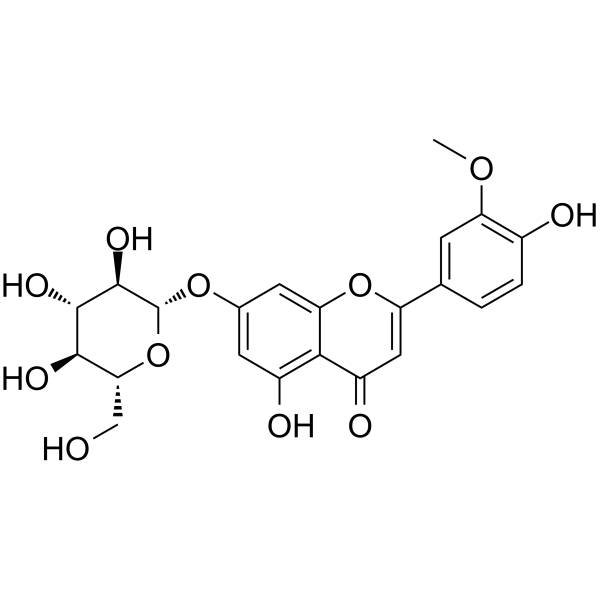
 0 ImagesMI891 is a highly selective PXR antagonist (IC50 = 3.76 μM, Kd = 1.7 μM) and inverse agonist (IC50 = 6.1 μM). MI891 selectively disrupts the interaction between PXR and its coactivator SRC1. MI891 effectively inhibits Rifampicin (HY-B0272)-induced PXR activation. MI891 is useful for the study of metabolic diseases and other diseases.
-
Garcinoic acid
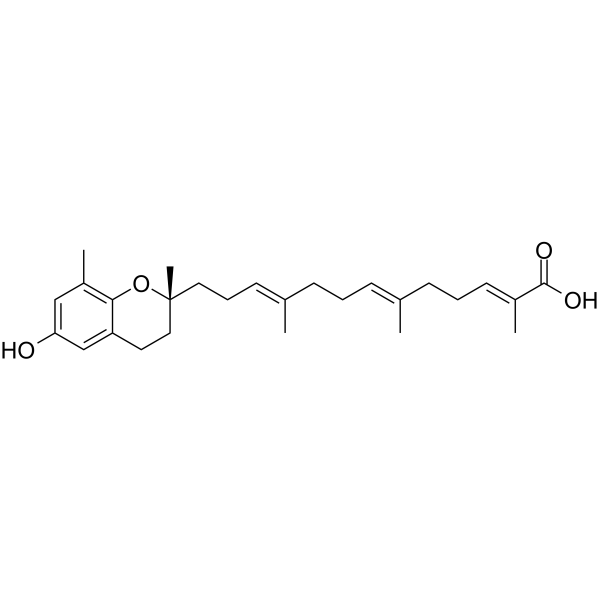 0 ImagesCat. No.: HY-N9454CAS No.: 91893-83-3Garcinoic acid is an orally active anti-inflammatory agent that crosses the blood-brain barrier. Garcinoic acid also enhances efferocytosis and enzyme/receptor regulation, and selectively inhibits human COX-2, porcine α-amylase, Saccharomyces cerevisiae α-glucosidase and human DNA polymerase β (IC50=11 μM), as well as activates human PXR. Garcinoic acid enhances macrophage efferocytosis via receptors such as MerTK and LRP-1, and promotes the production of pro-resolving lipid mediators. Garcinoic acid inhibits NF-κB activation and pro-inflammatory cytokine secretion, interferes with Aβ aggregation, downregulates NLRP3 inflammasome activity, and binds to targets including CD44 and EGFR to inhibit leukemia cell proliferation. The pharmacological activities of Garcinoic acid, such as antioxidant, anti-inflammatory and lipid metabolism-regulating effects, are widely used in studies related to various diseases including atherosclerosis, Alzheimer's disease, type 2 diabetes, inflammatory bowel disease and viral pneumonia.



