



ROCK
Rho-associated protein kinase; Rho-associated kinase; Rho-kinase; ROK
ROCK (Rho-associated protein kinase) is a kinase belonging to the AGC (PKA/ PKG/PKC) family of serine-threonine kinases. ROCKs (ROCK1 and ROCK2) occur in mammals, zebrafish, Xenopus, invertebrates and chicken. Human ROCK1 has a molecular mass of 158 kDa and is a major downstream effector of the small GTPase RhoA. Mammalian ROCK consists of a kinase domain, acoiled-coil region and a Pleckstrin homology (PH) domain, which reduces the kinase activity of ROCKs by an autoinhibitory intramolecular fold if RhoA-GTP is not present. ROCK plays a role in a wide range of different cellular phenomena, as ROCK is a downstream effector protein of the small GTPase Rho, which is one of the major regulators of the cytoskeleton.
ROCK Isoform Specific Products
All Product Categories
-
ROCK Related Products (197)
Related Products (197)

-
Antibodies (12)
-
ROCK Isoform Comparison
-
GSK317354A
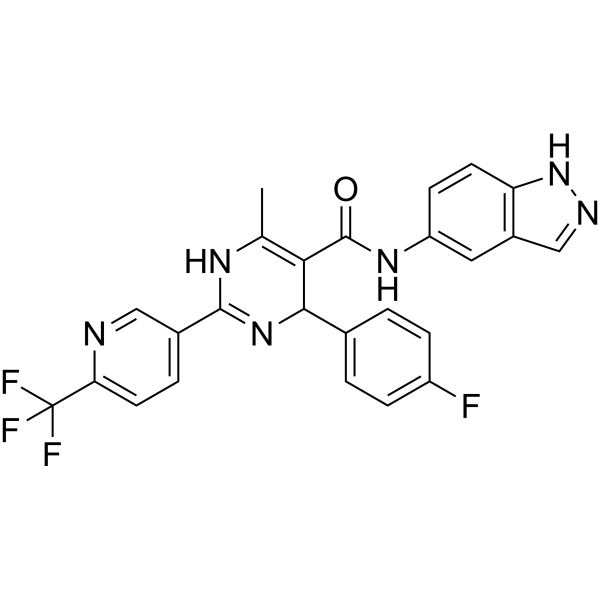 0 ImagesCat. No.: HY-111239CAS No.: 874119-13-8GSK317354A is a ROCK and GRK inhibitor. GSK317354A can be used for heart failure and Parkinson’s disease research.
-
1-Oleoyl lysophosphatidic acid sodium (GMP)
 0 ImagesCat. No.: HY-107614GCAS No.: 325465-93-8Synonyms: 1-Oleoyl-sn-glycero-3-phosphate sodium (GMP); 1-Oleoyl-LPA sodium (GMP)1-Oleoyl lysophosphatidic acid sodium (GMP) is the GMP-grade form of 1-Oleoyl lysophosphatidic acid sodium (HY-107614). GMP-grade small molecules serve as auxiliary reagents in cell therapy. 1-Oleoyl lysophosphatidic acid sodium is a bioactive lipid signaling molecule. 1-Oleoyl lysophosphatidic acid sodium inhibits lysoPLD-catalyzed hydrolysis of lysophosphatidylcholine and FS-3. 1-Oleoyl lysophosphatidic acid sodium activates LPA1 and LPA2, thereby triggering calcium mobilization, NFATc1 translocation, Rho/ROCK activation, Smad2/3 phosphorylation and c-Fos expression. 1-Oleoyl lysophosphatidic acid sodium induces anxiety-like, depression-like and hypoactivity phenotypes, regulates osteoclast cytoskeleton and viability, reduces osteoclast bone resorptive activity, and drives mesenchymal stem cell differentiation into myofibroblast-like cells. 1-Oleoyl lysophosphatidic acid sodium stimulates the secretion of transforming growth factor-β1 and stromal cell-derived factor-1. 1-Oleoyl lysophosphatidic acid sodium is applicable to research related to anxiety, depression and ovarian cancer.
-
ROCK-IN-7
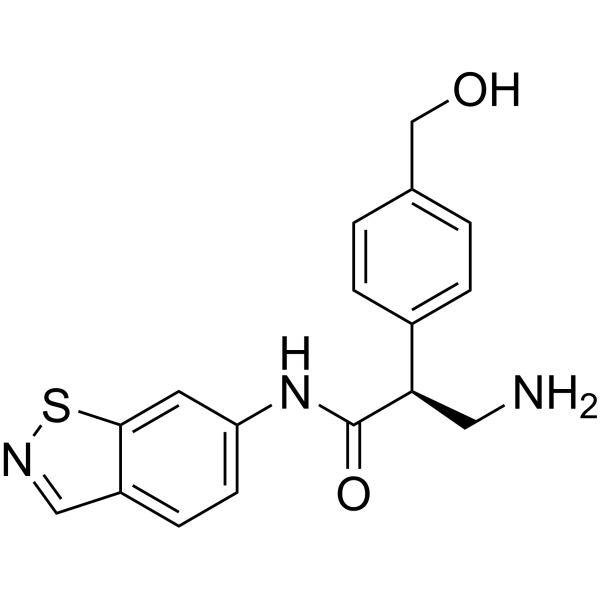 0 ImagesCat. No.: HY-153569CAS No.: 2376635-95-7ROCK-IN-7 (compound 9) is a ROCK kinase inhibitor. ROCK-IN-7 can be used for research in ocular diseases (such as glaucoma and retinal diseases).
-
4-(Indolin-1-yl)pyrimidin-2-amine
 0 ImagesCat. No.: HY-W1058961CAS No.: 1401661-20-84-(Indolin-1-yl) pyrimidin-2-amine (13a, non-salt form) is a ROCK inhibitor.
-
ROCK-IN-8
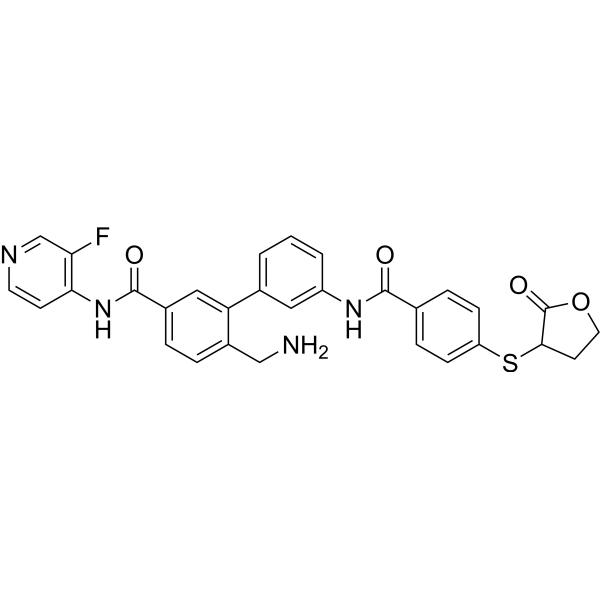 0 ImagesCat. No.: HY-156550CAS No.: 1621103-79-4ROCK-IN-8 (Example 4) is a ROCK inhibitor, with an IC50 value less than 100 nM. ROCK-IN-8 has anti-inflammatory activity. ROCK-IN-8 can be used for research of respiratory and gastro-intestinal diseases.
-
GSK2163632A
 0 ImagesCat. No.: HY-118046CAS No.: 1123163-20-1GSK2163632A is a selective G protein-coupled receptor kinase (GRK) inhibitor that can be used as a probe for studying heart failure and Parkinson's disease. GSK2163632A potently inhibits GRK1 and GRK5, and also inhibits Rho-associated coiled-coil kinase (ROCK) and insulin-like growth factor receptor IGF-1R. GSK2163632A binds to GRK2 in a manner similar to Paroxetine (HY-122272).
-
Desisopropyle-belumosudil
 0 ImagesCat. No.: HY-164809CAS No.: 911417-89-5
-
Chloroxoquinoline
 0 ImagesCat. No.: HY-W110138CAS No.: 23833-97-8Chloroxoquinoline is an anticancer agent. Chloroxoquinoline damages the DNA templates of cancer cells, inducing DNA breaks and cell death, and inhibits cell invasion via down-regulating Rho/Rho kinase signaling pathway. Chloroxoquinoline enhances the radiation sensitivity of Lewis lung cancer cells and xenograft tumors in tumor-bearing mouse models but decreases efficacy after long term exposure in rat models by auto-induction effects on CYP1A and CYP3A. Chloroxoquinoline has a broad-spectrum anticancer activity, such as non-small-cell lung carcinoma (NSCLC), breast cancer and gastric cancer.
-
ROCK-IN-9
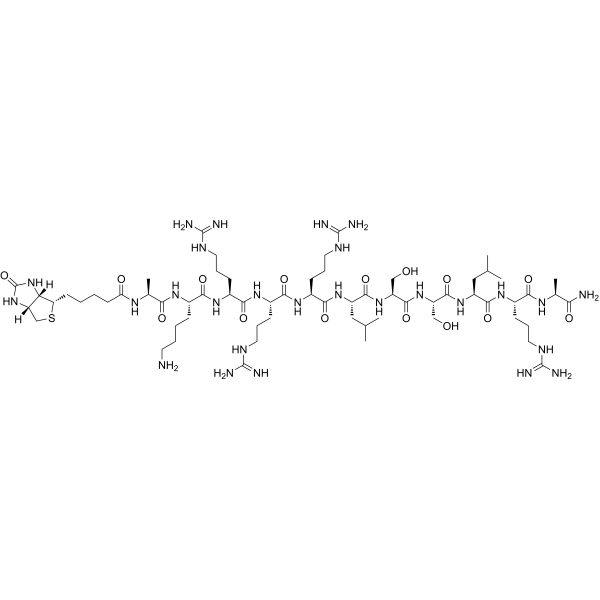
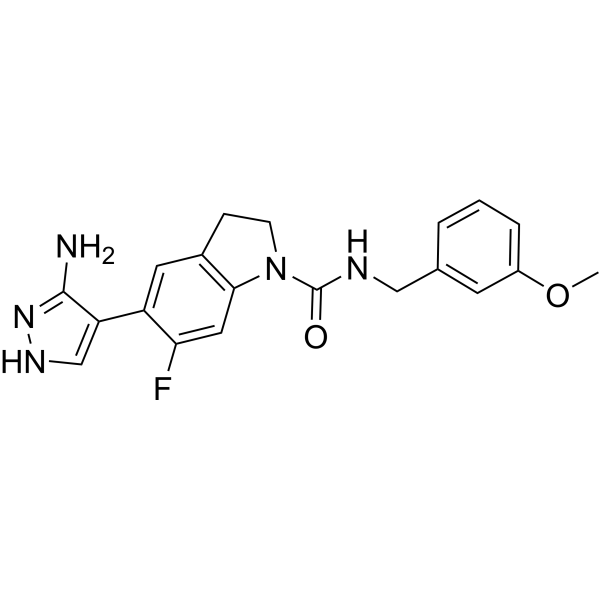 0 ImagesCat. No.: HY-156593CAS No.: 2643334-76-1ROCK-IN-9 (Compound T345) is a ROCK inhibitor. ROCK-IN-9 shows cytotoxicity in HepG2 cell, with an IC50 of 40.8 μM. ROCK-IN-9 has good pharmacokinetic properties in mice, and shows high in vivo exposure and oral bioavailability at lower doses.

-
ROCK2-IN-15
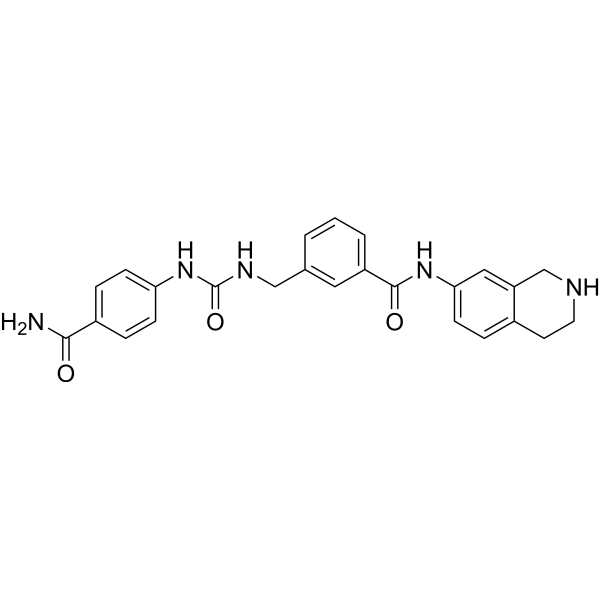
 0 ImagesCat. No.: HY-185667CAS No.: 3060005-08-2ROCK2-IN-15 (2-11) is a ROCK2 inhibitor with selective activity against Rho-kinase mediated phosphorylation of myosin light chain phosphates .ROCK2-IN-15 can be used for the research of cardiovascular diseases, pulmonary diseases, inflammatory diseases, neurological diseases, proliferative diseases .
-
ROCK2-IN-13
 0 ImagesCat. No.: HY-179498ROCK2-IN-13 is a selective ROCK2 inhibitor. ROCK2-IN-13 reduces nuclear expression by disrupting the interaction of ROCK2 with transcriptional co activators p300> and PGC 1α, repressing oncogenic transcription. ROCK2-IN-13 activates FOXO1 driven PTEN expression, leading to suppression of the PI3K/Akt pathway, induction of G2/M cell cycle arrest, and promotion of apoptosis. ROCK2-IN-13 ablates the nuclear transcriptional function of ROCK2 that sustains oncogenic signaling and restores the tumor suppressive PTEN/FOXO1 axis. ROCK2-IN-13 can be used for prostate cancer reseach.
-
SB772077B
 0 ImagesCat. No.: HY-123958CAS No.: 785774-34-7SB772077B is a ROCK inhibitor. SB772077B has an anti-inflammatory activity and enhances aqueous outflow facility (OF) by inactivating RhoA/ROCK signal pathway. SB772077B significantly reduces the mRNA level of β-catenin and protein level of fibrotic markers, such as vinculin, fibronectin, collagen 1 A and vimentin. SB772077B also has vasodialatory activity and decreases pulmonary and systemic blood pressure. SB772077B can be used for glaucoma research and pulmonary hypertensive disorder research.
-
20:4 Lyso PI
 0 ImagesCat. No.: HY-150187CAS No.: 1246430-04-520:4 Lyso PI acts as an activator of GPR55 and RhoA. 20:4 Lyso PI activates the GPR55-RhoA-ROCK pathway, thereby inducing morphological changes, cytoskeleton assembly, cell rounding and stress fiber formation. 20:4 Lyso PI can be used in research related to diseases such as those of the nervous system.
-
HA-100 hydrochloride
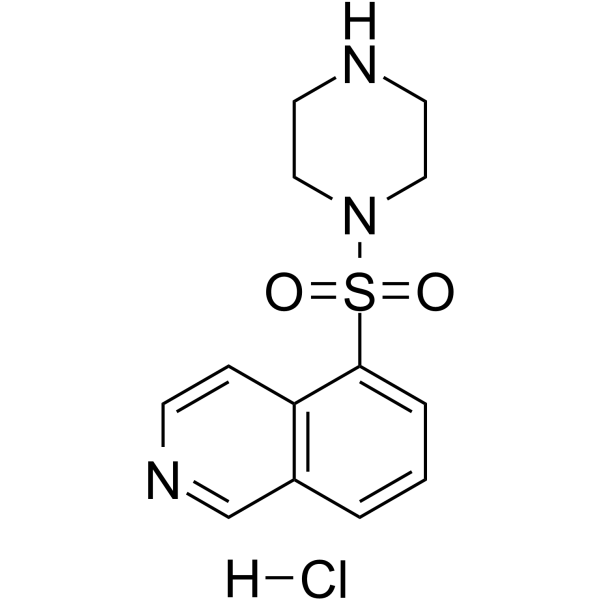 0 ImagesCat. No.: HY-100984ACAS No.: 141543-63-7
-
Centaureidin
 0 ImagesCat. No.: HY-N10341CAS No.: 17313-52-9Centaureidin is an orally active IFN-promoter that can be isolated from Bidens pilosa with an EC50 of 0.9 μg/mL. Centaureidin activates the Rho signal pathway, leading to actin and tubulin disassembly, and resulting in dendrite retraction and stress fiber formation in melanocytes. Centaureidin shows high tumor cell growth inhibitory activities. Centaureidin significantly inhibits paw edema in mice[1][2][3][4][5].
-
SR-3677 dihydrochloride
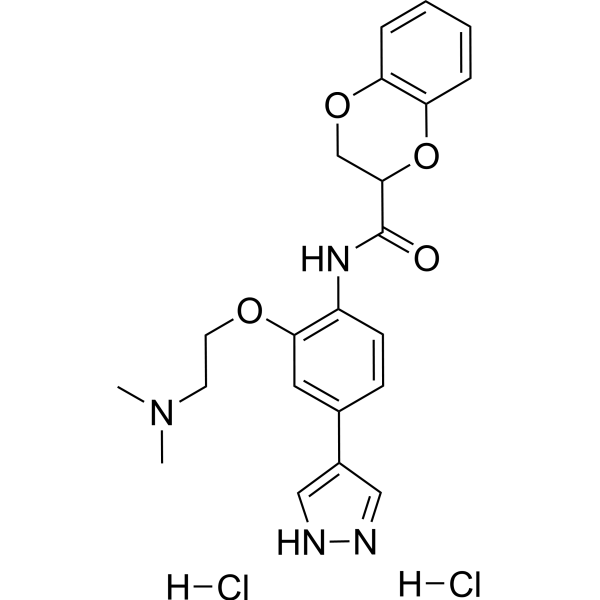 0 ImagesCat. No.: HY-13300ACAS No.: 1781628-88-3SR-3677 dihydrochloride (compound 5) is a potent and selective ROCK-I and ROCK-II inhibitor with an IC50 values of 56 nM and 3 nM.
-
Glycerophosphoinositol 4-phosphate
 0 ImagesCat. No.: HY-171909CAS No.: 129830-96-2Synonyms: GroPIns-4-PGlycerophosphoinositol 4-phosphate (GroPIns-4-P) is a metabolite of phospholipase A and an inhibitor of adenylylcyclase. Glycerophosphoinositol 4-phosphate can regulate cAMP-dependent cellular functions. Glycerophosphoinositol 4-phosphate can also induce the formation of membrane ruffles and stress fibers in serum-starved Swiss 3T3 cells by activating the small GTPases Rac and Rho, respectively. Glycerophosphoinositol 4-phosphate can be used in research on cancer cell motility and invasiveness.




