



CPS I
Carbamoyl phosphate synthetase I (CPS1) is a mitochondrial matrix enzyme that catalyzes the first and rate-limiting step of the urea cycle, converting ammonia and bicarbonate into carbamoyl phosphate and thereby initiating hepatic nitrogen detoxification through urea synthesis[1][2]. CPS1 directly incorporates ammonia into urea cycle intermediates and serves as a central regulator of ammonia clearance in ureotelic organisms[1]. Mechanistically, CPS1 activity is essential for maintaining nitrogen homeostasis, and disruption of CPS1 function impairs urea cycle flux, resulting in hyperammonemia and neurological injury associated with urea cycle disorders[1][3][4]. In disease settings, inherited CPS1 deficiency is an autosomal recessive metabolic disorder characterized by severe hyperammonemia, encephalopathy, and potentially life-threatening clinical manifestations, making CPS1 an important experimental model for studying ammonia detoxification and urea cycle regulation[3][4]. Compared with the related isoform CPS2, which functions in the cytosol and participates in pyrimidine biosynthesis, CPS1 is localized to mitochondria and is dedicated to the urea cycle, highlighting distinct biological roles despite catalyzing carbamoyl phosphate synthesis[5]. Structural and biochemical studies further demonstrate that CPS1 is activated by N-acetyl-L-glutamate (NAG), an essential allosteric activator that functions as an on-off regulatory signal for ureagenesis[1]. For experimental applications, NAG-responsive regulation and CPS1 deficiency models provide valuable systems for investigating urea cycle control, hyperammonemia pathogenesis, and therapeutic strategies targeting nitrogen metabolism[1][3].
References:
- [1]. Nitzahn M, et al. CPS1: Looking at an ancient enzyme in a modern light. Mol Genet Metab. 2020 Nov;131(3):289-298. [Content Brief]
- [2]. Reactome Database.
- [3]. Díez-Fernández C, et al. The Study of Carbamoyl Phosphate Synthetase 1 Deficiency Sheds Light on the Mechanism for Switching On/Off the Urea Cycle. J Genet Genomics. 2015 May 20;42(5):249-60. [Content Brief]
- [4]. Kurokawa K, et al. Molecular and clinical analyses of Japanese patients with carbamoylphosphate synthetase 1 (CPS1) deficiency. J Hum Genet. 2007;52:349-354.
- [5]. Wikipedia.
All Product Categories
-
CPS I Related Products (3)
Related Products (3)

-
H3B-120
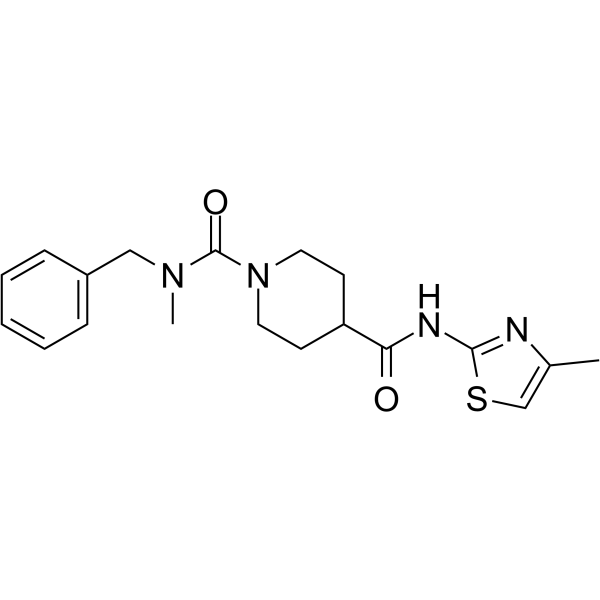 0 ImagesH3B-120 is a highly selective, competitive and allosteric carbamoyl phosphate synthetase 1 (CPS1) inhibitor with an IC50 of 1.5 μM and a Ki of 1.4 μM. H3B-120 has anti-cancer activity.
-
Carglumic Acid
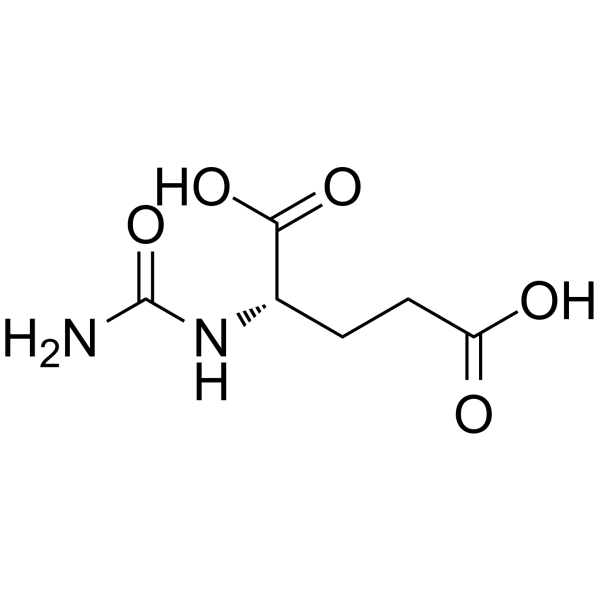 0 ImagesCarglumic acid (N-Carbamyl-L-glutamic acid), a functional analogue of N-acetylglutamate (NAG) and a carbamoyl phosphate synthetase 1 (CPS1) activator, is used to treat acute and chronic hyperammonemia associated with NAG synthase (NAGS) deficiency.
-
H3B-616
 0 ImagesCat. No.: HY-183888CAS No.: 2468199-06-4H3B-616 is a selective carbamoyl phosphate synthetase 1 (CPS1) inhibitor with a human IC50 of 66 nM. H3B-616 binds to an allosteric pocket in the CPS1 integrating domain to exert target engagement and inhibit enzyme activity. H3B-616 can be used for the research of nonsmall cell lung cancer and gastric cancer.



