



Drug Intermediate
Drug Iintermediate
Drug intermediates are used as raw materials for the production of bulk drugs, or they can refer to a material produced during synthesis of an API that must undergo further molecular change or processing before it becomes an API. Drug intermediates are hygienically formulated using high grade raw materials and they are used in the pharmaceutical and cosmetic industry[1][2].
References:
- [1]. Ma HC, et al. Homochiral Covalent Organic Framework for Catalytic Asymmetric Synthesis of a Drug Intermediate. J Am Chem Soc. 2020 Jul 22;142(29):12574-12578. [Content Brief]
- [2]. Ramachary D B, et al. Development of pharmaceutical drugs, drug intermediates and ingredients by using direct organo‐click reactions[J]. 2008.
All Product Categories
-
Drug Intermediate Related Products (4615)
Related Products (4615)

-
2-(4-Chloro-phenoxy)-phenylacetic acid
 0 Images2-(4-Chloro-phenoxy)-phenylacetic acid is a drug intermediate for synthesis of various active compounds.

-
(R)-N-(1-(Naphthalen-1-yl)ethyl)-3-(3-(trifluoromethyl)phenyl)propanamide
 0 Images(R)-N-(1-(Naphthalen-1-yl)ethyl)-3-(3-(trifluoromethyl)phenyl)propanamide is a drug intermediate for synthesis of various active compounds.
-
Boc-3,3-DicPr-Ala-OH
 0 ImagesCat. No.: HY-W453851CAS No.: 2548967-22-0
-
(1R,2S)-1-Amino-2-indanol
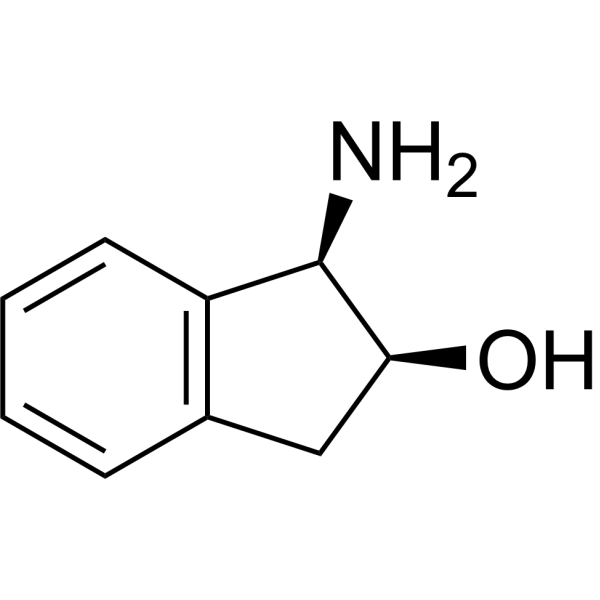 0 Images(1R,2S)-1-Amino-2-indanol is a β-amino alcohol and pharmaceutical intermediate, serving as a structural component of the HIV protease inhibitor Indinavir (HY-B0689). (1R,2S)-1-Amino-2-indanol can be used in research related to organic synthesis.
-
Methyl 4-formylbenzoate
 0 ImagesSynonyms: 4-Carbomethoxybenzaldehyde; 4-Carboxybenzaldehyde methyl ester; Terephthalaldehydic acid methyl ester; Methyl 4-formylbenzoateMethyl 4-formylbenzoate (4-Carbomethoxybenzaldehyde; 4-Carboxybenzaldehyde methyl ester; Terephthalaldehydic acid methyl ester; Methyl 4-formylbenzoate) is a intermediate that can be used for the synthesis of chalcone amide α-glucosidase inhibitors.
-
7-Ethylcamptothecin
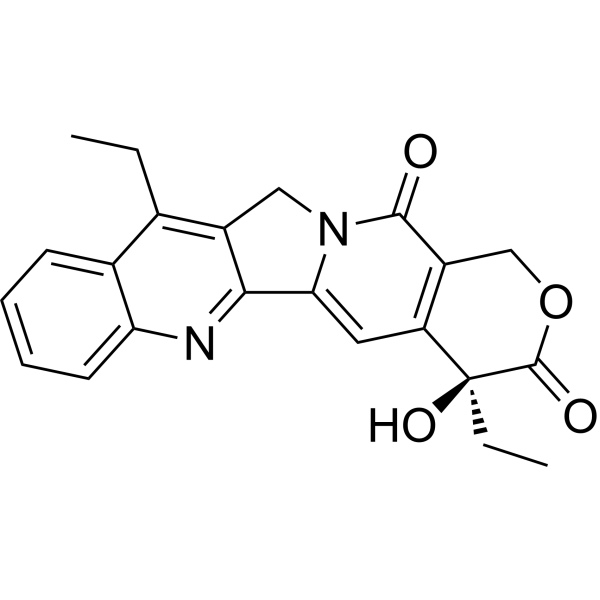 0 Images7-Ethylcamptothecin is a derivative of Camptothecin (HY-16560) and a DNA topoisomerase I inhibitor that exhibits significant antitumor activity against tumor cells. 7-Ethylcamptothecin serves as a key precursor for the synthesis of 20 (S)-O-substituted benzoyl-7-ethylcamptothecin compounds. 7-Ethylcamptothecin is widely used in various tumor-related scientific studies.
-
NH2-Gly-PAB-Exatecan-D-glucuronic acid formic
 0 ImagesCat. No.: HY-160885APurity: 98.87%NH2-Gly-PAB-Exatecan-D-glucuronic acid formic (Compound 8) is an intermediate that reacts with NHS-group-containing molecules to generate the ADC drug-linker conjugate Mal-Gly-PAB-Exatecan-D-glucuronic acid (HY-153179).
-
1,3-Bis(diphenylphosphino)propane
 0 Images1,3-Bis (diphenylphosphino) propane (1,3-DPPP) is a Pd2+-targeting ligand and anticancer agent. 1,3-Bis (diphenylphosphino) propane forms stable Pd2+ complexes with acetate or trifluoroacetate auxiliary ligands. 1,3-Bis (diphenylphosphino) propane exhibits anticancer activity against colon cancer. 1,3-Bis (diphenylphosphino) propane can be used in research related to breast cancer, lung adenocarcinoma, prostate cancer and Gram-positive bacterial infections.
-
6-Bromonicotinaldehyde
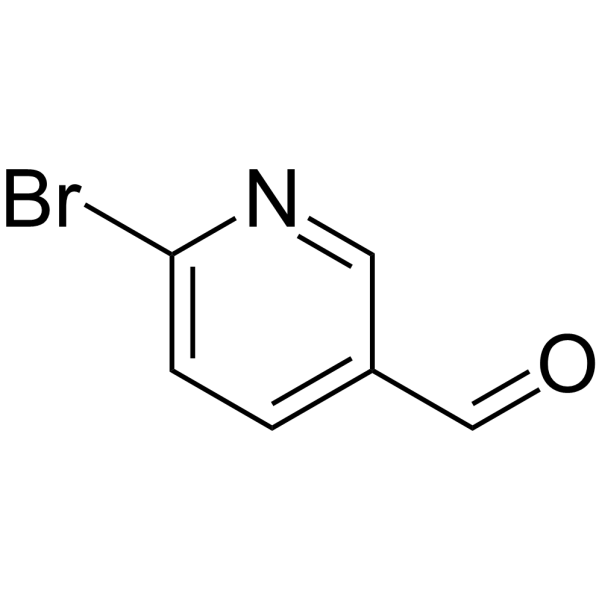 0 Images6-Bromonicotinaldehyde is a brominated derivative of nicotinaldehyde (pyridine-3-aldehyde), and it can be used as a key intermediate in the synthesis of Fusaric acid.
-
(3-Hydroxyphenyl)boronic acid
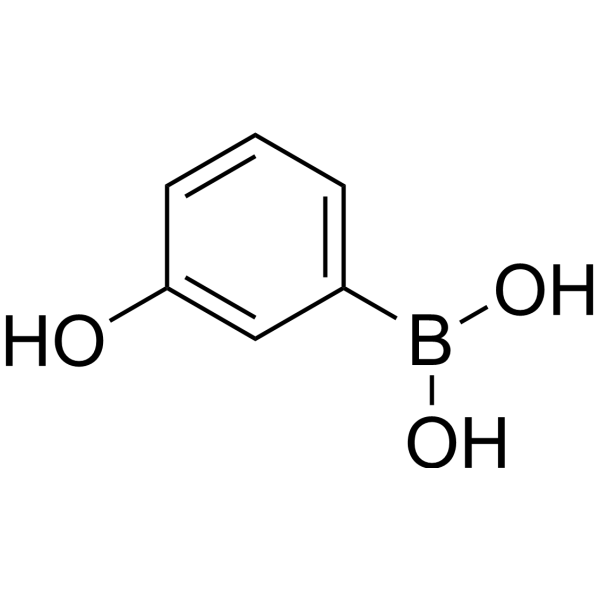 0 ImagesSynonyms: 3-Hydroxybenzeneboronic acid(3-Hydroxyphenyl)boronic acid (3-Hydroxybenzeneboronic acid) is a drug intermediate that can be used for the synthesis of 17β-hydroxysteroid dehydrogenase type 1 inhibitors.
-
p-Toluenesulfonamide
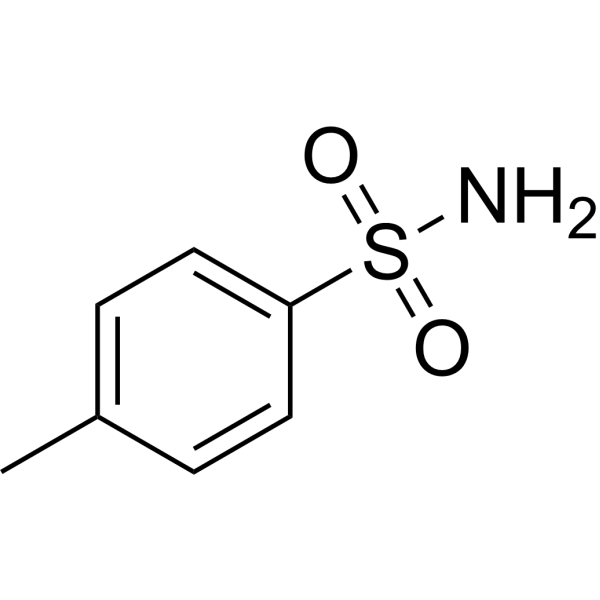 0 Imagesp-Toluenesulfonamide is a small-molecule anticancer agent and plasticizer. p-Toluenesulfonamide exerts antitumor activity by inducing lysosomal membrane permeabilization, cathepsin B release and lysosome-mediated cell death. p-Toluenesulfonamide modulates cholesterol distribution in lipid rafts of tumor cell membranes and the Akt/mTOR/p70S6K pathway. p-Toluenesulfonamide shows activity against various cancers including hepatocellular carcinoma, non-small cell lung cancer and tongue squamous cell carcinoma; intrapleural injection effectively reduces malignant pleural effusion without causing pleural adhesion. p-Toluenesulfonamide is also the main degradation product of the disinfectant Chloramine-T (HY-B0959) in water. p-Toluenesulfonamide facilitates the localization of fluorescent probes to the endoplasmic reticulum. p-Toluenesulfonamide can be used in cancer-related research.
-
7-Bromo-1-heptanol
 0 ImagesSynonyms: 7-Bromoheptan-1-ol7-Bromo-1-heptanol (7-Bromoheptan-1-ol) acts as a HaloTag-GPSM2 inhibitor and an organic synthesis intermediate. It forms a covalent irreversible bond with HaloTag-GPSM2, thereby blocking the subsequent labeling effect of fluorescent HaloTag ligands and enabling pulse-chase analysis of protein turnover. 7-Bromo-1-heptanol can be used to synthesize PROTAC BET degraders and multivalent glycoporphyrin antiviral compounds. It is applicable to cancer-related research.
-
5-Methoxyindole
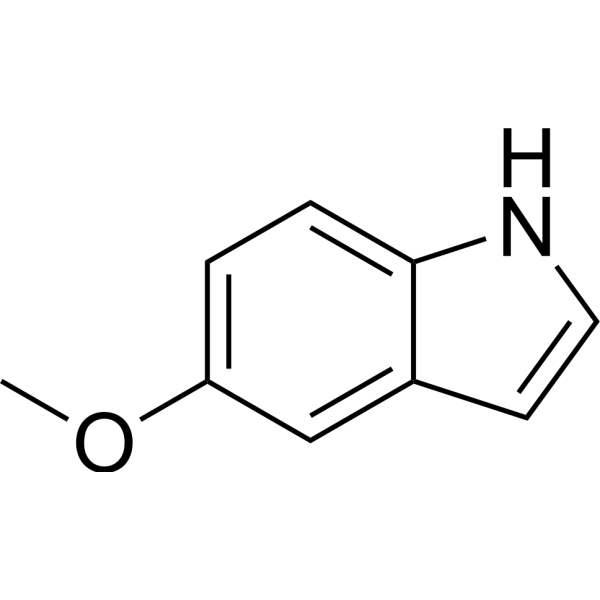 0 Images5-Methoxyindole is an L-tryptophan metabolite with antifungal activity, and also serves as a pharmaceutical intermediate. Metabolites of 5-Methoxyindole exhibit COX-2 inhibitory, anti-inflammatory and anti-tumor activities. 5-Methoxyindole induces morphological distortion of hyphae and conidia, ROS accumulation, apoptosis and cell death in Gaeumannomyces graminis. 5-Methoxyindole can be used in studies related to fungal infections and organic synthesis.
-
(S)-1-Boc-3-aminopiperidine
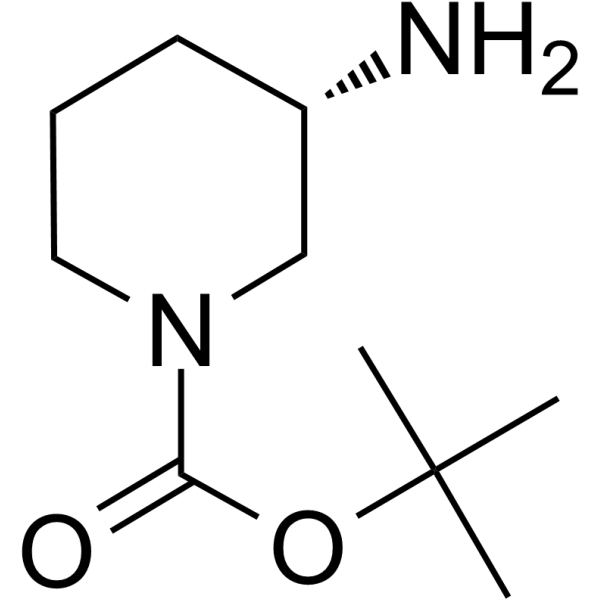 0 ImagesSynonyms: (S)-(+)-3-Amino-1-boc-piperidine
-
L-Alaninol
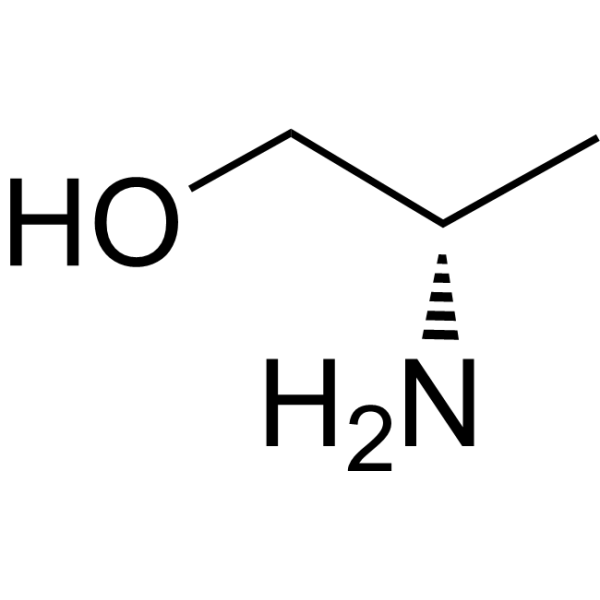 0 ImagesSynonyms: (S)-2-Amino-1-propanol; (S)-2-Aminopropanol; (S)-AlaninolL-Alaninol ((S)-2-Amino-1-propanol; (S)-2-Aminopropanol; (S)-Alaninol) is a chiral amino alcohol that serves as a precursor for Levofloxacin (HY-B0330) and Metolachlor (HY-B1871). L-Alaninol acts as the sole carbon source for Pseudomonas sp. strain KIE171, and it is a metabolite produced by the hydrolysis of γ-glutamyl-L-alaninol. L-Alaninol functions as a substrate for oxidative/deaminative degradation and undergoes enzymatic glutamylation via IpuC. It is used as a synthetic building block in the fields of agriculture, pharmaceuticals, and peptide chemistry, and also serves as a chiral auxiliary.



