



NMDA Receptor
NMDA receptor (NMDAR) ionotropic glutamate receptors support synaptogenesis, synaptic maturation, long-term plasticity, neuronal network activity, and cognition[1]. Mechanistically, NMDARs act as glutamate-gated, calcium-permeable ion channels that mediate synaptic transmission and underpin learning and memory[2]. Their activation requires coordinated agonist binding, with glutamate binding GluN2 and glycine or D-serine binding GluN1[3]. In disease contexts, abnormal NMDAR-mediated signaling is associated with neurological and psychiatric disorders, while NMDAR dysfunction is implicated in seizure and ischemia models[1][2]. Anti-NMDA receptor encephalitis further links receptor-targeting antibodies with rapidly progressive neuropsychiatric disease mechanisms and experimental models[4]. Compared with related NMDA receptor isoforms, subunit composition creates receptor subtypes with distinct biophysical, pharmacological, and signaling properties[5]. Therefore, GluN2A, GluN2B, GluN2C, GluN2D, and GluN3-containing receptors should be separated in experimental design when subtype-specific function, synaptic plasticity, or disease signaling is tested[5]. For experimental applications, agonists and inhibitors provide mechanistic tools because agonists stabilize ligand-binding-domain gating arrangements, whereas competitive antagonists disrupt receptor activation[2]. D-serine also provides a useful ligand model because it binds GluN1, interacts with GluN2A, and can inhibit NMDAR current at high concentration[3].
References:
- [1]. Dupuis JP, et al. NMDA receptor functions in health and disease: Old actor, new dimensions. Neuron. 2023 Aug 2;111(15):2312-2328. [Content Brief]
- [2]. Zhu S, et al. Mechanism of NMDA Receptor Inhibition and Activation. Cell. 2016 Apr 21;165(3):704-14. [Content Brief]
- [3]. Yovanno RA, et al. Excitatory and inhibitory D-serine binding to the NMDA receptor. Elife. 2022 Oct 27;11:e77645. [Content Brief]
- [4]. Dalmau J, et al. An update on anti-NMDA receptor encephalitis for neurologists and psychiatrists: mechanisms and models. Lancet Neurol. 2019 Nov;18(11):1045-1057. [Content Brief]
- [5]. Paoletti P, et al. NMDA receptor subunit diversity: impact on receptor properties, synaptic plasticity and disease. Nat Rev Neurosci. 2013 Jun;14(6):383-400. [Content Brief]
All Product Categories
-
NMDA Receptor Inhibitors
(28)
View all products
-
NMDA Receptor Agonists
(45)
View all products
-
NMDA Receptor Antagonists
(121)
View all products
-
NMDA Receptor Activators
(5)
View all products
-
NMDA Receptor Modulators
(14)
View all products
-
NMDA Receptor MDM2 Inhibitor
(1)
View all products
-
NMDA Receptor Control
(1)
View all products
-
NMDA Receptor Ligands
(2)
View all products
-
NMDA Receptor Related Products (242)
Related Products (242)

-
CGP 31358
 0 ImagesCat. No.: HY-120524CAS No.: 125652-47-3CGP 31358 is an anticonvulsant agent that binds to a site on the NMDA receptor complex that is coupled to both the transmitter recognition site and to the channel domain. CGP 31358 inhibits the binding of L-Glutamate to the NMDA receptor complex with an IC50 of 53 μM.
-
LY 233053
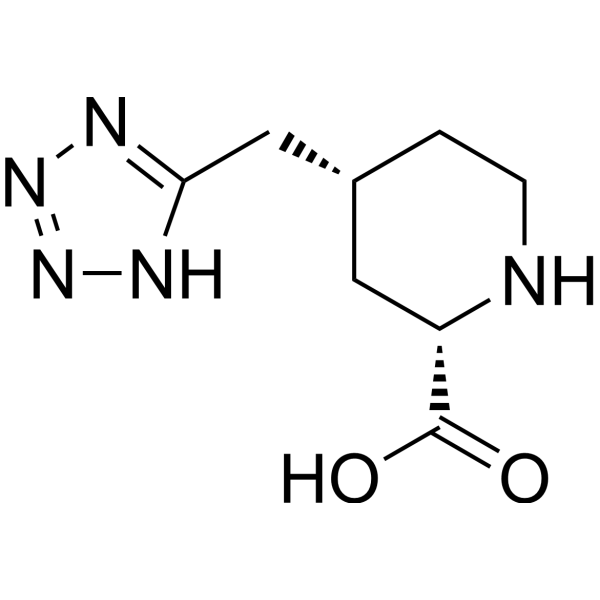 0 ImagesCat. No.: HY-107710CAS No.: 125546-04-5LY 233053 is a potent and competitive NMDA-receptor antagonist with anticonvulsant and antiepileptic efficacy.
-
CL-NC
 0 ImagesCat. No.: HY-D3370CAS No.: 3114128-41-2CL-NC is a chemiluminescent probe used for in vivo imaging of N-methyl-D-aspartate receptors (NMDARs), and its detection mechanism relies on bioorthogonal activation achieved via a tetrazine-triggered click-to-release reaction. The isonitrile group of CL-NC undergoes a click reaction with tetrazine, followed by hydrolysis and β-elimination to release a phenoxide anion, which induces the departure of adamantane and generates chemiluminescence. CL-NC has a maximum absorption wavelength of approximately 425 nm, a maximum fluorescence emission wavelength of approximately 670 nm, and a maximum chemiluminescence emission wavelength of 710 nm. When used in combination with Tz-IFDL (HY-D3369), an NMDAR ligand conjugated with tetrazine, CL-NC enables targeted imaging of NMDARs in living cells, as well as in the brain and spinal cord of living mice.
-
Dimethyl L-glutamate
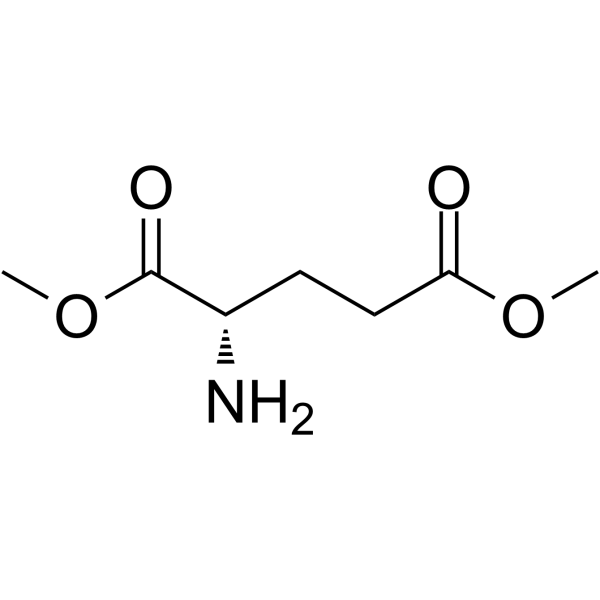 0 ImagesCat. No.: HY-W037817CAS No.: 6525-53-7Synonyms: Dimethyl glutamateDimethyl L-glutamate (Dimethyl glutamate) is a NMDA receptor ligand and a cell membrane-permeable glutamate precursor. Dimethyl L-glutamate binds to NMDA receptors to regulate osteoblast maturation, and promotes osteoblast proliferation, adhesion, extracellular calcium deposition, and alkaline phosphatase activity. Dimethyl L-glutamate replenishes the glutamate pool in insulin-secreting β cells. Dimethyl L-glutamate can be used in research related to bone defects and non-insulin-dependent diabetes mellitus.
-
MDL 100748
 0 ImagesCat. No.: HY-182479CAS No.: 130613-18-2MDL 100748 is an NMDA receptor glycine site antagonist. MDL 100748 modulates NMDA receptor function by acting at the strychnine-insensitive glycine site, which is required for NMDA receptor activation alongside glutamate. MDL 100748 decreases response rates in operant conditioning sessions in phencyclidin (PCP)-trained rats. MDL 100748 can be used for reserach on dementias and schizophrenia.
-
Orphenadrine-d3 citrate
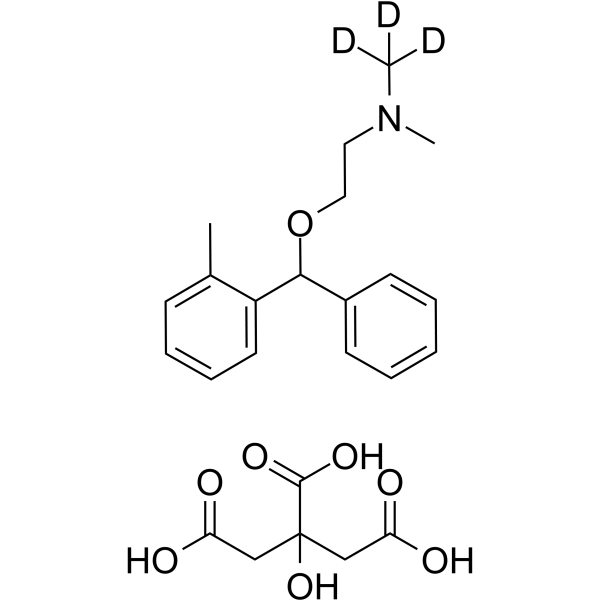 0 ImagesCat. No.: HY-B0369ASOrphenadrine-d3 (citrate) is the deuterium labeled Orphenadrine citrate. Orphenadrine citrate is a NMDA receptor antagonist with Ki of 6.0 +/- 0.7 μM, HERG potassium channel blocker.
-
GluN2A Allosteric modulator 1
 0 ImagesCat. No.: HY-168494GluN2A Allosteric modulator 1 (Compound 11) is an orally active, BBB-penetrable and highly selective GluN2A negative allosteric modulator. GluN2A Allosteric modulator 1 has IC50 values of 0.042 μM and 13 μM for GluN2A and GluN2B, respectively. GluN2A Allosteric modulator 1 can be used for the research of nervous system diseases.
-
Flupirtine-d4 hydrochloride
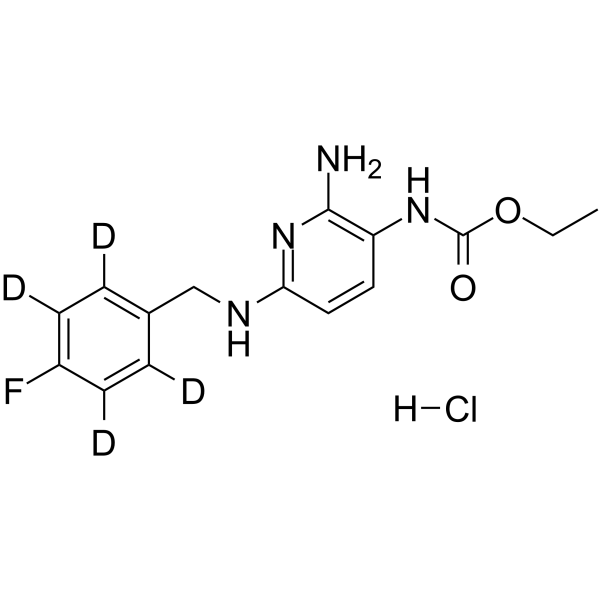 0 ImagesSynonyms: D 9998-d4 hydrochlorideFlupirtine-d4 (D 9998-d4) hydrochloride is the deuterium labeled Flupirtine hydrochloride (HY-W709349). Flupirtine hydrochloride is an orally active, blood-brain barrier-crossing non-opioid analgesic and neuroprotective agent. Flupirtine hydrochloride is a neuronal potassium channel opener (Kv7 activator), a NMDA receptor antagonist and a GABA receptor activator. Flupirtine hydrochloride stabilizes blood-brain-barrier integrity, reduces oxidative stress and brain leukocyte infiltration, enhances angioneurogenesis, suppresses calcium influx, stabilizes neuronal resting membrane potential, and counteracts focal cerebral ischemia. Flupirtine hydrochloride exhibits analgesic, muscle relaxant properties, protects neurons from excitotoxic, ischemic, or cytokine-mediated death. Flupirtine hydrochloride functions as a non-opioid analgesic without antipyretic or antiphlogistic properties, shows no relevant affinity to opiate receptor. Flupirtine hydrochloride can be used for the research of focal cerebral ischemia, pain, Alzheimer’s disease, or multiple sclerosis.
-
NMDA receptor antagonist 11
 0 ImagesCat. No.: HY-183201CAS No.: 26727-26-4NMDA receptor antagonist 11 is a NMDA receptor antagonist with an IC50 of 65 μM. NMDA receptor antagonist 11 inhibits glycine action at the NMDA receptor glycine site. NMDA receptor antagonist 11 can be used for research on neurological diseases.
-
Indantadol hydrochloride
 0 ImagesCat. No.: HY-101440ACAS No.: 202914-18-9Synonyms: CHF-3381Indantadol hydrochloride (CHF-3381) is an orally active, non-selective NMDA antagonist and MAO inhibitor. Indantadol hydrochloride blocks the binding of [³H]-MK-801 to NMDA receptors in a non-competitive manner, with an IC50 of 8.1 μM. Indantadol hydrochloride completely inhibits dopamine release caused by NMDA. Indantadol hydrochloride protects neurons, with an ED₅₀ of 35 μM. Indantadol hydrochloride has anticonvulsant and anti-high pain hypersensitivity activities.
-
Tz-IFDL
 0 ImagesCat. No.: HY-D3369CAS No.: 3114128-44-5Tz‑IFDL is a chemiluminescent probe for in vivo imaging of N‑methyl‑D‑aspartate receptors (NMDAR), which specifically binds to the NR2B subunit of NMDAR. Tz‑IFDL undergoes a bioorthogonal reaction with probe CL‑NC (HY-D3370), triggering molecular fragment release and chemiluminescence. The CL‑NC/Tz‑IFDL system composed of Tz‑IFDL exhibits a chemiluminescence emission wavelength of 710 nm. When combined with CL‑NC, Tz‑IFDL can be used for deep tissue imaging to distinguish NMDAR expression levels between Alzheimer's disease model mice and normal mice.
-
SGE-301
 0 ImagesCat. No.: HY-15787CAS No.: 1427208-12-5SGE-301 is a positive, allosteric NMDAR modulator. SGE-301 recovers NMDAR density and long-term potentiation to normal values. SGE-301 can be used in the research of neurological disorders.
-
NMDAR antagonist 5
 0 ImagesCat. No.: HY-173398CAS No.: 3038464-68-2NMDAR antagonist 5 (Compound A17) is a multi-target antagonist against NMDAR and monoamine transporters (SERT、DAT and NET). NMDAR antagonist 5 shows good NMDAR antagonistic potency (IC50 = 0.3 μM) and monoamine transporter activities (SERT IC50 = 1.1 μM、DAT IC50 = 0.7 μM、NET IC50 = 2.7 μM). NMDAR antagonist 5 is highly safe and has low toxicity (hepatotoxicity and nephrotoxicity (IC50 > 100 μM); cardiotoxicity (IC50 = 24.5 μM)). NMDAR antagonist 5 has antidepressant effects and can be used in the study of depression.
-
Antidepressant agent 8
 0 ImagesCat. No.: HY-170898CAS No.: 3066104-04-6Antidepressant agent 8 (Compound 1f) is a selective antagonist for the NMDA receptor GluN1/2A with an IC50 of 2.94 μmol/L. Antidepressant agent 8 exhibits antidepressant-like effects in Hydrocortisone (HY-N0583)-induced zebrafish depression model. Antidepressant agent 8 can cross blood-brain barrier.
-
DL-AP5 lithium
 0 ImagesCat. No.: HY-100714DCAS No.: 125229-62-1Synonyms: 2-APV lithium; DL-2-Amino-5-phosphonovaleric acid lithiumDL-AP5 (2-APV) lithium is a competitive NMDA (N-methyl-D-aspartate) receptor antagonist. DL-AP5 lithium shows significantly antinociceptive activity. DL-AP5 lithium specifically blocks on channels in the rabbit retina.
-
L-Aspartic aicd sodium (Standard)
 0 ImagesCat. No.: HY-N0666CRCAS No.: 3792-50-5Synonyms: Sodium L-aspartate (Standard)L-Aspartic aicd sodium (Standard) (Sodium L-aspartate (Standard)) is the analytical standard of L-Aspartic aicd sodium (HY-N0666C). This product is intended for research and analytical applications. L-Aspartic acid sodium (Sodium L-aspartate) is a NMDA receptor agonist and acidic amino acid. L-Aspartic acid sodium has no independent analgesic activity. L-Aspartic acid sodium can antagonize the analgesic effects of D-Aspartic acid and Morphine. L-Aspartic acid sodium regulates polymorph transformation, crystal growth/aggregation and nucleation processes of calcium carbonate, and can serve as a biomineralization template. L-Aspartic acid sodium promotes burst firing of central neurons. L-Aspartic acid sodium can be used in studies related to cerebral ischemia and epilepsy.
-
Delucemine hydrochloride
 0 ImagesCat. No.: HY-106397ACAS No.: 186495-99-8Synonyms: NPS-1506 hydrochlorideDelucemine hydrochloride is a selective serotonin reuptake inhibitor (SSRI) and NMDAR antagonist. Delucemine hydrochloride can be used as an antidepressant.
-
O-Phosphono-L-homoserine
 0 ImagesCat. No.: HY-W051199CAS No.: 4210-66-6Synonyms: o-PhosphohomoserineO-Phosphono-L-homoserine (o-Phosphohomoserine) is an intermediate in threonine synthesis in bacteria and plants, and can also be hijacked by MetM in some Streptomyces species to enter a novel methionine synthesis pathway. O-Phosphono-L-homoserine acts as a weak antagonist of the NMDA receptor. O-Phosphono-L-homoserine can be used as a substrate for studies on amino acid metabolism of the aspartate family, a control for mechanism studies of PLP enzymes, and a reference for structure-activity relationship studies of NMDA receptor ligands.
-
WMS-1410
 0 ImagesCat. No.: HY-183871CAS No.: 1253197-38-4WMS-1410 is a selective GluN2B-containing NMDA receptor inhibitor with an IC50 of 18.4 nM. WMS-1410 regulates intracellular calcium levels and protects cells from Apoptosis. WMS-1410 inhibits glutamate-induced excitotoxicity. WMS-1410 reverses NMDA/glycine-induced reduction in glucose-stimulated insulin secretion without altering physiological insulin secretion or baseline redox status, but fails to counteract insulin content loss induced by glucolipotoxicity. WMS-1410 exhibits analgesic activity against advanced neuropathic pain. WMS-1410 can be used in studies related to stroke, brain injury, Alzheimer's disease, Parkinson's disease, type 2 diabetes, and neuropathic pain.
-
Nefiracetam (Standard)
 0 ImagesSynonyms: DM9384 (Standard); DZL-221 (Standard)Nefiracetam (Standard) is a cognition-enhancing agent. Nefiracetam is an activator of nAChR, N-methyl-D-aspartate receptor (NMDAR), mGluR5, PKC, gamma-aminobutyric acid (GABA), and N/L-type Ca2+ channels. Nefiracetam promotes neuroplasticity and enhances neuroprotection. Nefiracetam can be used in Alzheimer's disease, epilepsy, and cerebral ischemia research.



