nAChR
Nicotinic acetylcholine receptors
nAChRs (nicotinic acetylcholine receptors) are neuron receptor proteins that signal for muscular contraction upon a chemical stimulus. They are cholinergic receptors that form ligand-gated ion channels in the plasma membranes of certain neurons and on the presynaptic and postsynaptic sides of theneuromuscular junction. Nicotinic acetylcholine receptors are the best-studied of the ionotropic receptors. Like the other type of acetylcholine receptor-the muscarinic acetylcholine receptor (mAChR)-the nAChR is triggered by the binding of the neurotransmitter acetylcholine (ACh). Just as muscarinic receptors are named such because they are also activated by muscarine, nicotinic receptors can be opened not only by acetylcholine but also by nicotine —hence the name "nicotinic".
All Product Categories
-
nAChR Related Products (474)
Related Products (474)

-
Antibodies (5)
-
Anagyrine
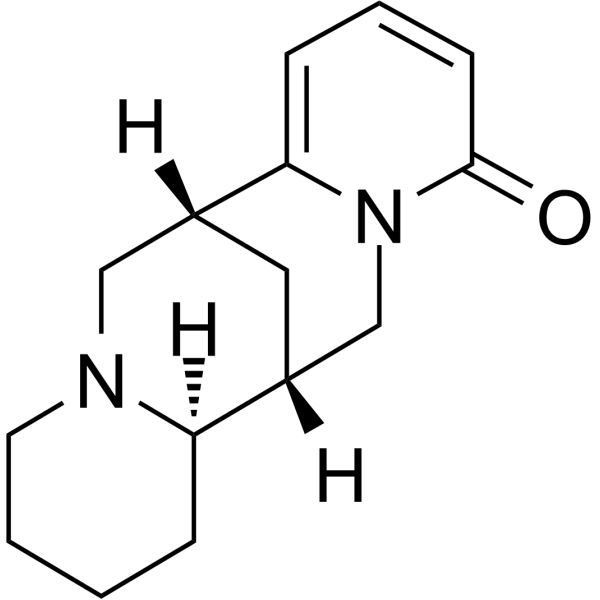 0 ImagesSynonyms: (-)-Anagyrine; Monolupine; RhombinineAnagyrine ((-)-Anagyrine) is a quinolizidine alkaloid that has been found in Lupinus albus. Anagyrine binds to muscarinic and nicotinic acetylcholine receptors with IC50 values of 132 and 2096 µM respectively. Anagyrine is a potent and effective desensitizer of nAChR, and Anagyrine can directly, without metabolism, desensitize nAChR.
-
Cytisinicline (Standard)
 0 ImagesSynonyms: Cytisine (Standard); Sophorine (Standard); Baptitoxine (Standard)Cytisinicline (Standard) is the analytical standard of Cytisinicline. This product is intended for research and analytical applications. Cytisinicline (Cytisine) is an alkaloid. Cytisinicline (Cytisine) is a partial agonist of α4β2 nAChRs, and partial to full agonist at β4 containing receptors and α7 receptors. Has been used medically to help with smoking cessation.
-
ABT-107
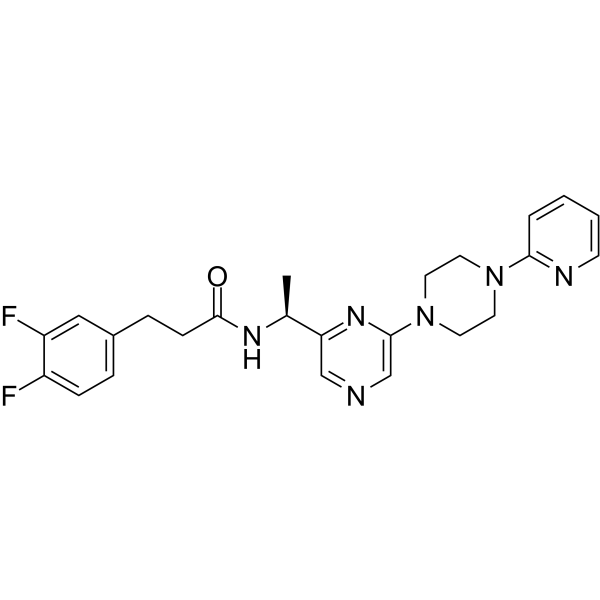
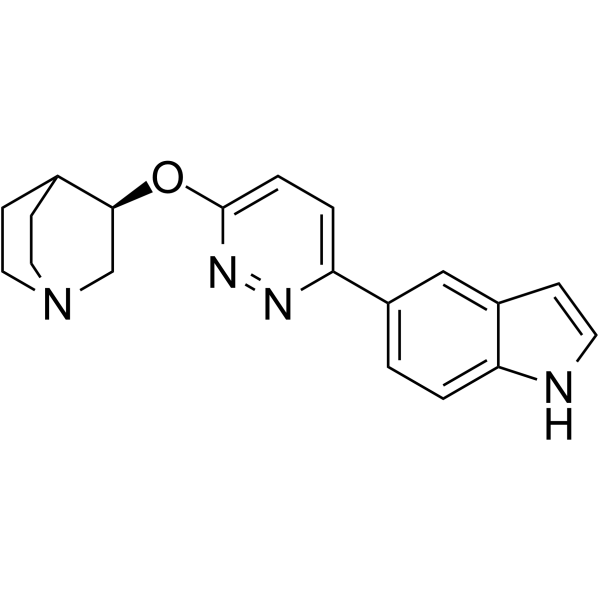 0 ImagesABT-107 is a selective α7 neuronal nicotinic receptor agonist. ABT-107 protects against nigrostriatal damage in rats with unilateral 6-hydroxydopamine lesions.
-
(±)-Nornicotine-d4
 0 ImagesSynonyms: Nornicotine-d4(±)-Nornicotine-d4 is the deuterium labeled (±)-Nornicotine (HY-W002112). (±)-Nornicotine is a major metabolite of Nicotine. (±)-Nornicotine is a partial nAChRs agonist, specifically activating receptor subtypes containing α7 and α6 subunits. (±)-Nornicotine disrupts β-catenin and ZO-1, and induces F-actin depolymerization. (±)-Nornicotine supports self-administration behavior. (±)-Nornicotine can be used in the research of atherosclerosis, Alzheimer's disease, and schizophrenia.
-
Rivanicline hemioxalate
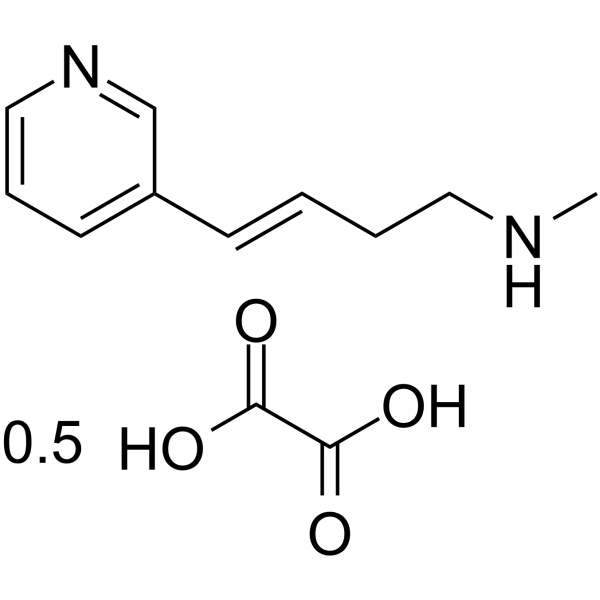 0 ImagesCat. No.: HY-13225BPurity: 99.78%Synonyms: RJR-2403 hemioxalate; (E)-Metanicotine hemioxalateRivanicline (RJR-2403) hemioxalate is a neuronal nicotinic receptor agonist. Rivanicline hemioxalate is highly selective for the rat brain cortex nAChRs (Ki = 26 nM, EC50 of 732 nM) and α4β2 subtype (Ki = 26 nM, EC50 = 16 μM). Rivanicline hemioxalate can significantly restore the learning impairment and cognitive dysfunction. Rivanicline hemioxalate can be used for the study of neurodegenerative diseases (such as schizophrenia or Alzheimer's disease).
-
CCMI
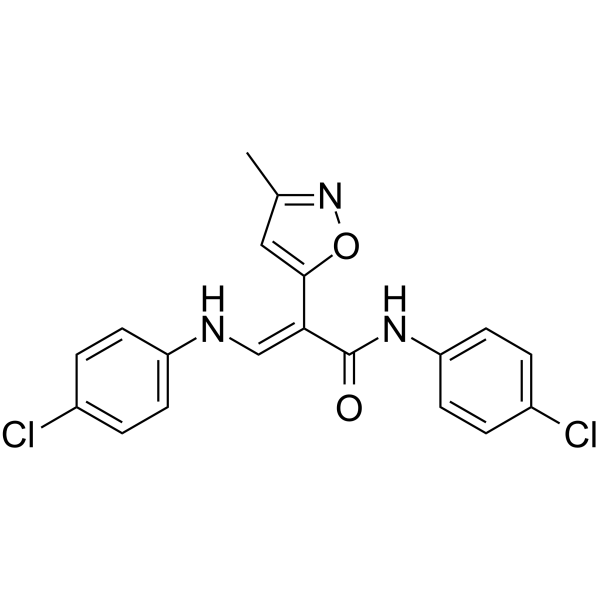 0 ImagesSynonyms: AVL-3288; UCI-4083CCMI (AVL-3288) is a potent and selective α7 nAChR-positive allosteric modulator, does not bind to or activate α7 nAChRs via the orthosteric site, and causes significant positive modulation of agonist-induced currents at α7 nAChRs. CCMI has potential in CNS diseases with cognitive dysfunction.
-
VQW-765
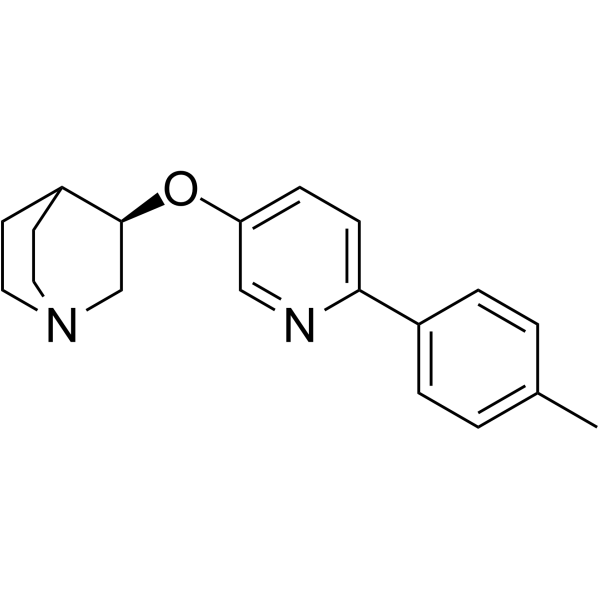 0 ImagesSynonyms: AQW-051VQW-765 (AQW-051) is a selective and orally active alpha-7 nicotinic acetylcholine receptor (α7-nAChR) agonist with a pKD value of 7.56 to recombinantly expressed human α7-nAChR. VQW-765 shows anxiolytic-like effect in vivo. VQW-765 can be used for the research of anxiety disorder and acute performance anxiety.

-
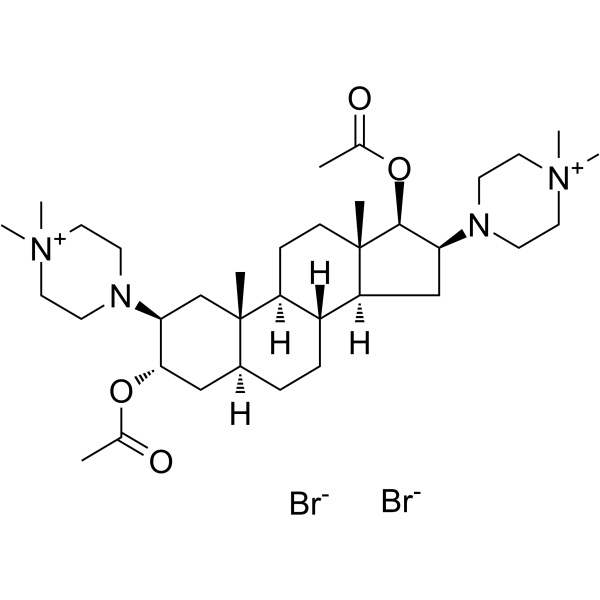
Mivacurium dichloride
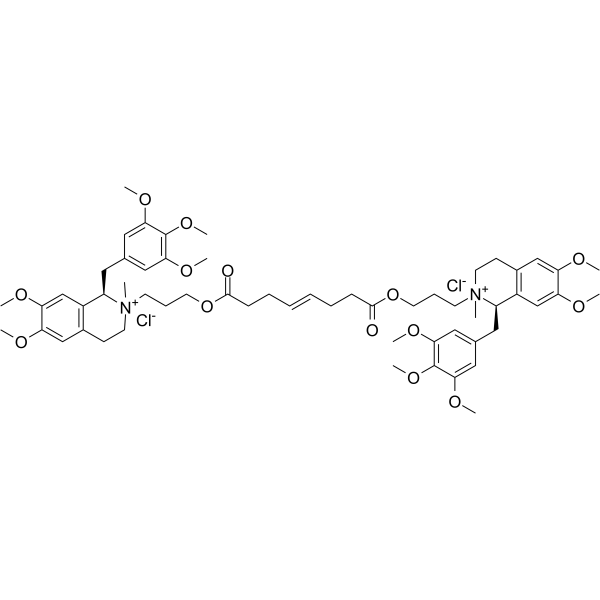 0 ImagesMivacurium dichloride is a benzylisoquinoline derivative and is a short-acting non-depolarizing neuromuscular blocking agent and skeletal muscle relaxant. Mivacurium dichloride couples with the nAChR to reduce or inhibit the depolarizing effect of acetylcholine on the terminal disc of the muscle cell.
-
SSR180711 hydrochloride
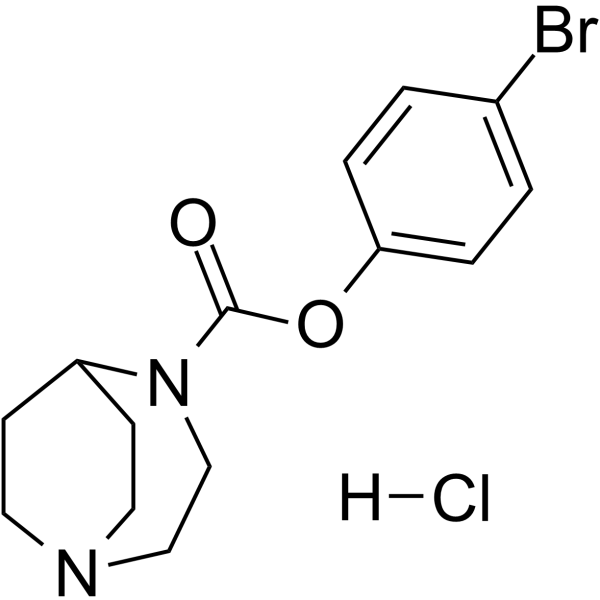 0 ImagesSSR180711 hydrochloride is an orally active, selective and reversible α7 acetylcholine nicotinic receptor (n-AChRs) partial agonist. SSR180711 hydrochloride can act on rat α7 n-AChR (Ki=22 nM; IC50=30 nM) and human α7 n-AChR (Ki=14 nM; IC50=18 nM). SSR180711 hydrochloride increases glutamatergic neurotransmission, ACh release and long-term potentiation (LTP) in the hippocampus.
-
Sulfoxaflor
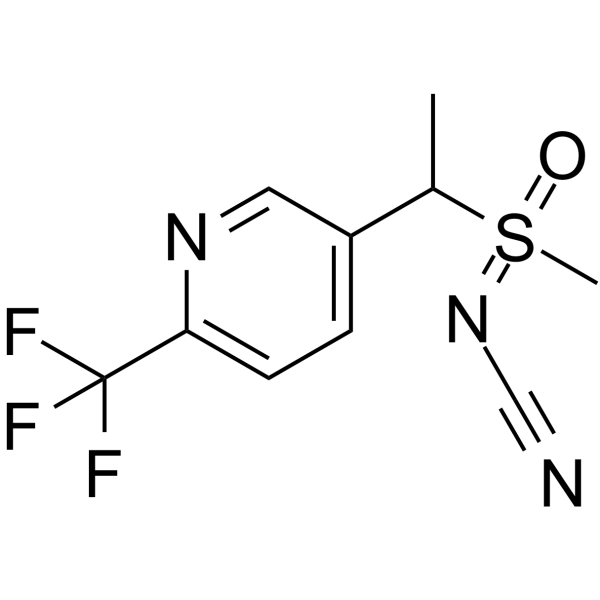 0 ImagesSulfoxaflor is an orally active full agonist of insect nicotinic acetylcholine receptors (nAChRs), targeting the α-bungarotoxin-insensitive nAChR1 and nAChR2 subtypes. Sulfoxaflor binding to nACh is not inhibited by d-Tubocurarine (HY-125901), but is partially inhibited by Mecamylamine (HY-B1395A). Sulfoxaflor induces inward currents by activating nAChRs, leading to insect neurotoxicity. Sulfoxaflor can be used in the research of agricultural pest control, pesticide toxicology, insect neural receptor pharmacology, etc.
-
Iptakalim hydrochloride
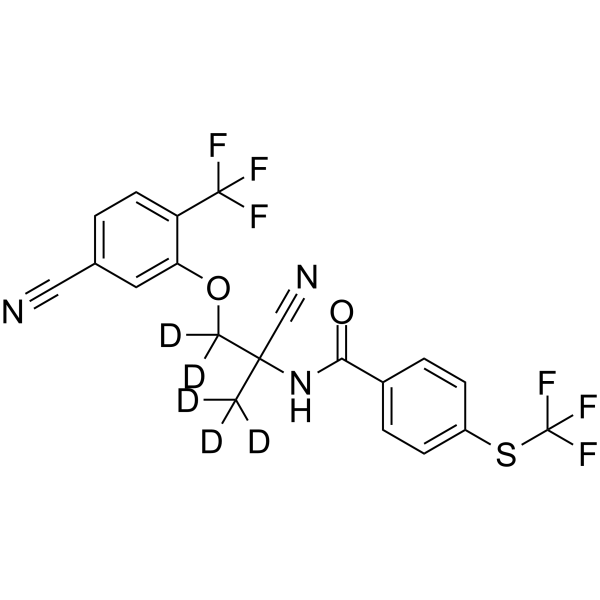
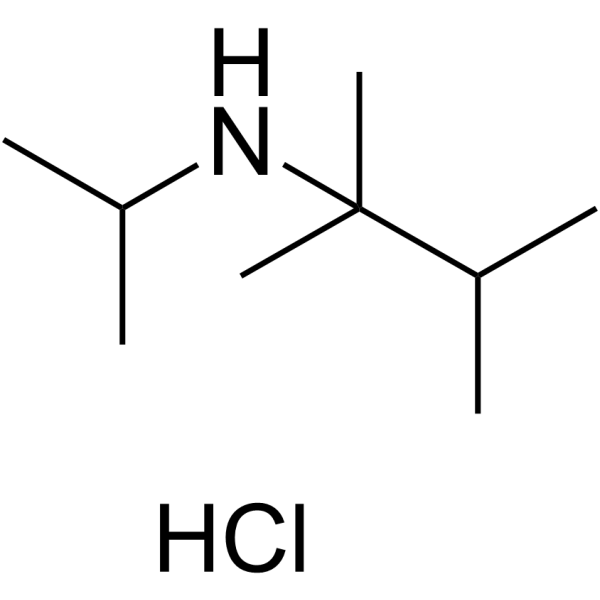 0 ImagesIptakalim hydrochloride, a lipophilic para-amino compound, is a novel ATP-sensitive potassium channel (KATP) opener, as well as an α4β2-containing nicotinic acetylcholine receptor (nAChR) antagonist.
-
NS 9283
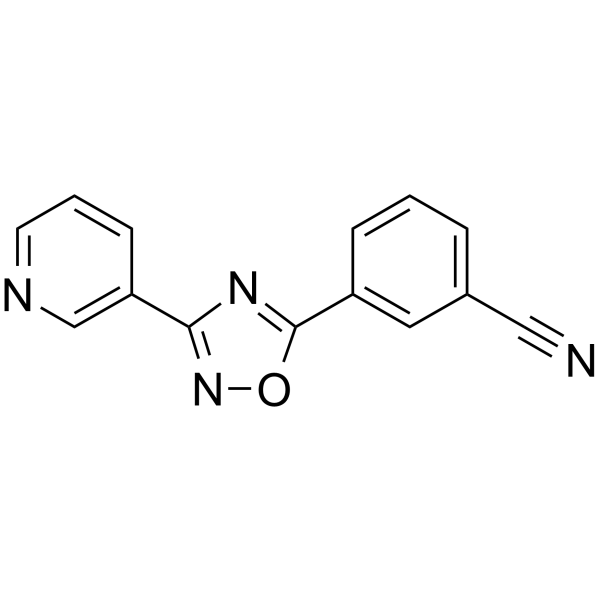 0 ImagesNS9283 is a positive positive allosteric modulator of (α4)3(β2)2 nicotinic ACh receptors. NS9283 can be used in a series of neurological conditions such as attention deficit hyperactivity disorder (ADHD), schizophrenia, Parkinson's disease and Alzheimer's disease.
-
N-Biotinyl p-aminophenyl arsenic acid
 0 ImagesN-Biotinyl p-aminophenyl arsenic acid is a bifunctional reagent that can bind to both streptavidin and dithiols. N-Biotinyl p-aminophenyl arsenic acid decreases the Rbungarotoxin-binding sites in reduced Torpedo nicotinic receptors (IC50 is 10-300 nM), and protects the receptor from irreversible alkylation by bromoacetylcholine.