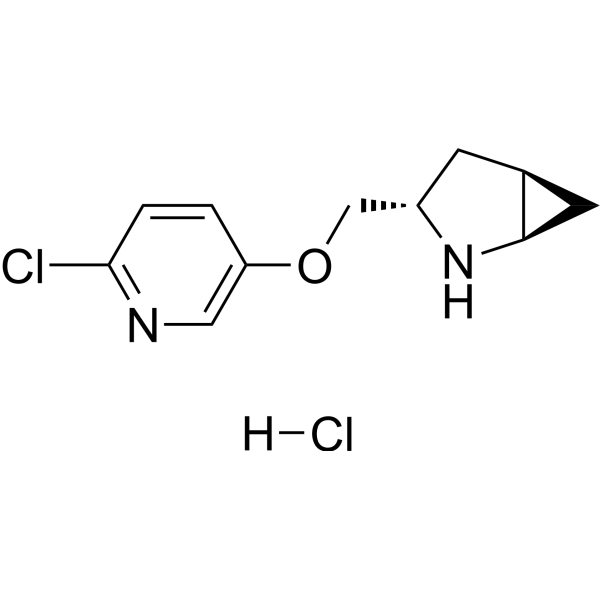
nAChR
Nicotinic acetylcholine receptors
nAChRs (nicotinic acetylcholine receptors) are neuron receptor proteins that signal for muscular contraction upon a chemical stimulus. They are cholinergic receptors that form ligand-gated ion channels in the plasma membranes of certain neurons and on the presynaptic and postsynaptic sides of theneuromuscular junction. Nicotinic acetylcholine receptors are the best-studied of the ionotropic receptors. Like the other type of acetylcholine receptor-the muscarinic acetylcholine receptor (mAChR)-the nAChR is triggered by the binding of the neurotransmitter acetylcholine (ACh). Just as muscarinic receptors are named such because they are also activated by muscarine, nicotinic receptors can be opened not only by acetylcholine but also by nicotine —hence the name "nicotinic".
All Product Categories
-
nAChR Related Products (474)
Related Products (474)

-
Antibodies (5)
-
Thiamethoxam (Standard)
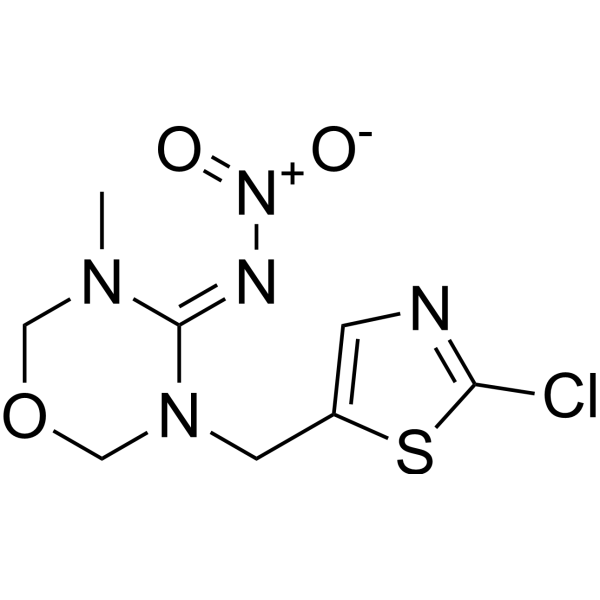 0 ImagesThiamethoxam (Standard) is the analytical standard of Thiamethoxam. This product is intended for research and analytical applications. Thiamethoxam is a broad spectrum neonicotinoid insecticide.
-
(±) Anabasine
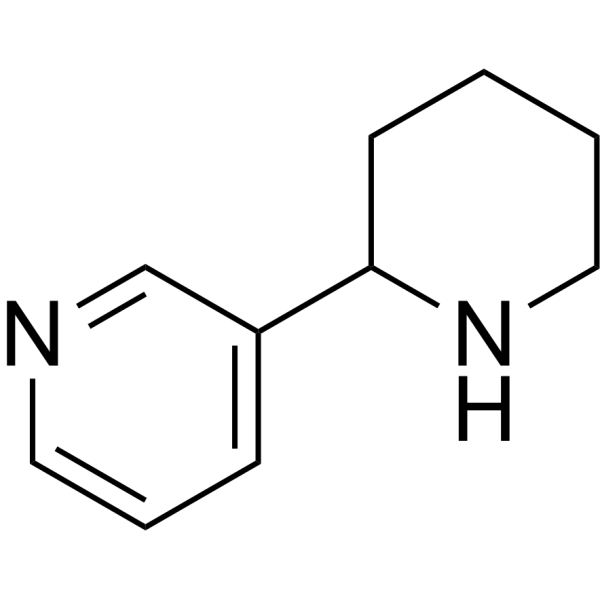 0 Images(±) Anabasine is the racemic form of Anabasine (HY-B1532). (±) Anabasine stimulates the release of [3H]-Dopamine from mouse striatal synaptosomes. (±) Anabasine inhibits the high-affinity binding of [3H]-S-(-)-Nicotine to the striatal membrane. Anabasine is an agonist of α7nAChR and possesses anti-inflammatory and insecticidal activities.
-
CVN417
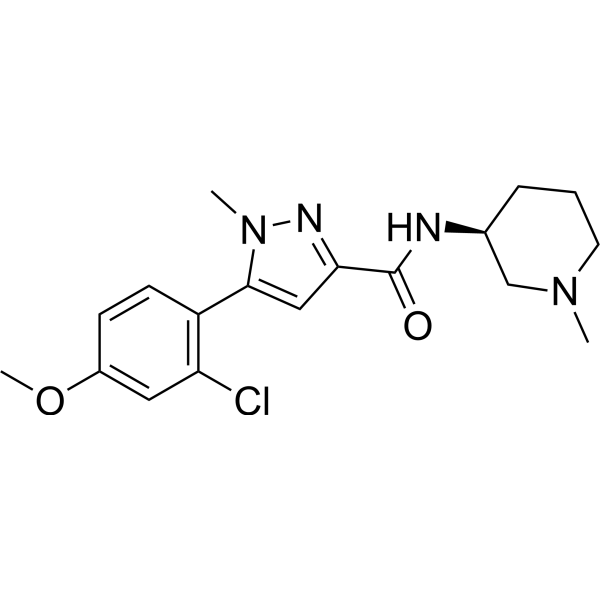 0 ImagesCVN417 is an orally active α6 subunit-containing nAChR antagonist, modulating phasic dopaminergic neurotransmission in an impulse-dependent manner. CVN417 inhibits Ca(2+) effluents mediated by nAChR subunits with IC50s of 0.086 μM (α6), 2.56 μM (α3) and 0.657 μM (α4), respectively. CVN417 attenuates resting tremor in Rodent models, displays the potential to improve movement dysfunction, in conditions such as Parkinson's disease.
-
AN317
 0 ImagesAN317 is a selective agonist for α6β2-containing nicotinic acetylcholine receptor (nAChR) with Ki of 6.2 nM and 4.1 nM, for α6/α3β2β3 receptor and α4β2 receptor, respectively. AN317 induces dopamine release in the synaptosomes of the rat striatum, enhances dopaminergic neuronal activity in substantia nigra, and exhibits protective efficacy to rat neurons against dopamine neurotoxin MPP+. AN317 exhibits good pharmacokinetic characteristics in rats. AN317 penetrates the blood-brain barrier (BB).
-
Pyrantel pamoate (Standard)
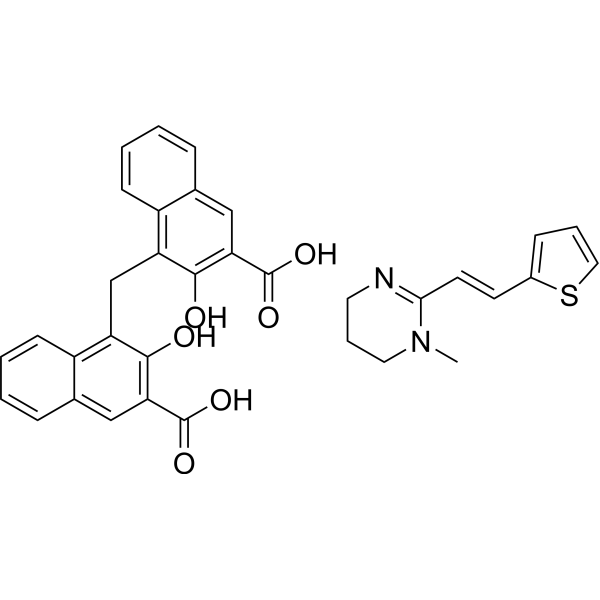 0 ImagesCat. No.: HY-12640RCAS No.: 22204-24-6Synonyms: Pyrantel embonate (Standard)Pyrantel pamoate (Standard) (Pyrantel embonate (Standard)) is the analytical standard of Pyrantel pamoate (HY-12640). This product is intended for research and analytical applications. Pyrantel pamoate is an orally active antiparasitic agent. Pyrantel pamoate induces spastic paralysis in parasites via actions on neural and muscular cholinergic receptors as a nicotinic acetylcholine receptor (nAChR) agonist. Pyrantel pamoate eliminates both immature and mature endoparasites in horses. Pyrantel pamoate can be used in research related to parasitic infections.
-
Triflumezopyrim
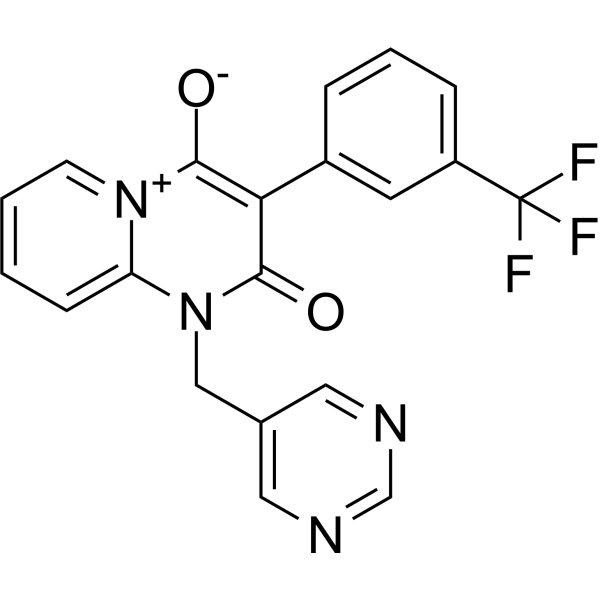 0 ImagesTriflumezopyrim, a mesoionic insecticide, has high efficiency at a low dosage, and is mainly used to control hopper species. Triflumezopyrim mainly acts on the nicotinic acetylcholine receptor (nAChR) inhibition, which is very highly efficient, rapidly effective, and nearly nontoxic to nontarget arthropods.
-
A-582941 dihydrochloride
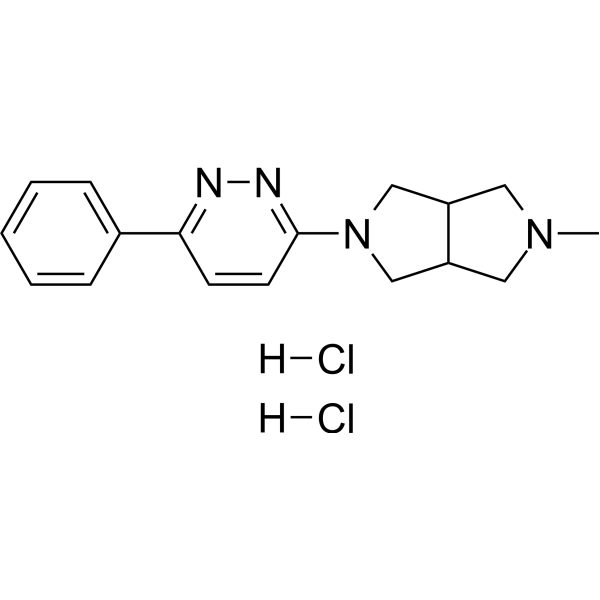 0 ImagesA-582941 dihydrochloride is a selective, orally active, blood-brain barrier-permeable α7 nAChR agonist, with Ki values of 10.8 nM and 17 nM in rat brain and human frontal cortex, respectively. A-582941 dihydrochloride exhibits agonistic activity at 5-HT3 receptors, with a Ki of 150 nM. A-582941 dihydrochloride triggers phosphorylation of ERK1/2 and CREB, inhibits GSK-3β via Ser-9 phosphorylation, increases acetylcholine release, induces the expression of Arc and c-Fos, activates brain regions associated with working memory and attention, and reduces cell death caused by nerve growth factor (NGF) deprivation. A-582941 dihydrochloride is applicable for the research of Alzheimer's disease and schizophrenia.
-
PSEM 89S TFA
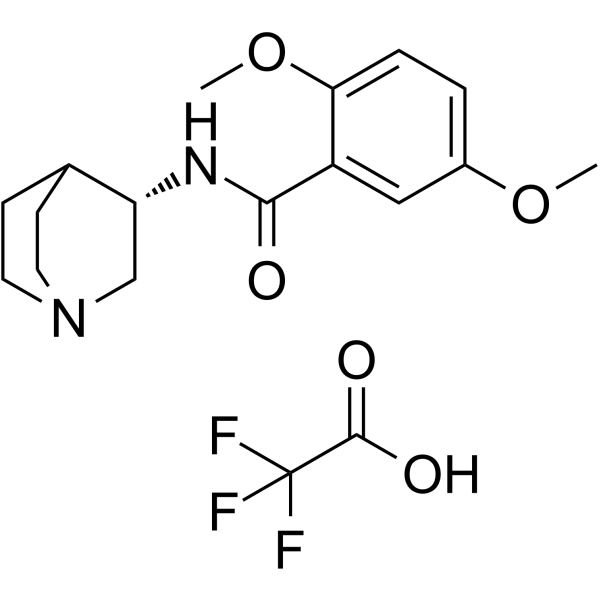 0 ImagesPSEM 89S TFA is a selective and brain penetrant agonists for the resulting ion channels. PSEM 89S TFA is orthogonally selective for Q79G and L141F, respectively.
-
Pentapeptide-3
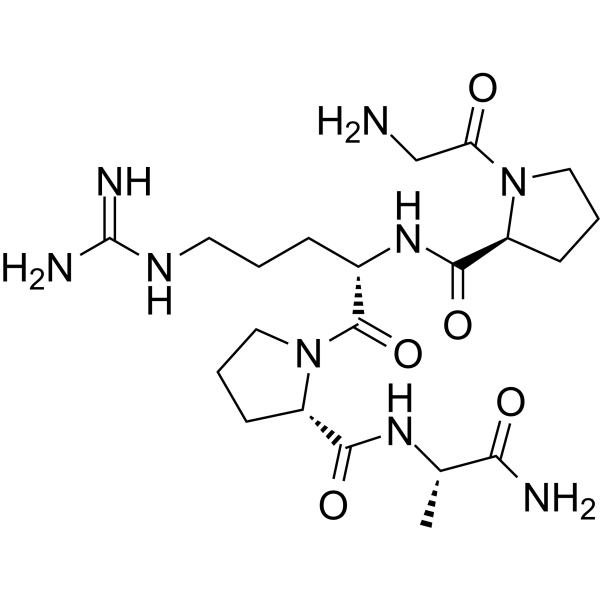 0 ImagesPentapeptide-3 is a pentapeptide fragment of neurotoxin waglerin-1, it can be extracted from the venom of Temple Viper. Pentapeptide-3 is a competitive antagonist of nicotinic acetylcholine receptors (nAChRs), it can blocks nerves at the post-synaptic membrane. Pentapeptide-3 has anti-aging effects and it can be used together with other cosmetic peptides.

-
Dianicline dihydrochloride
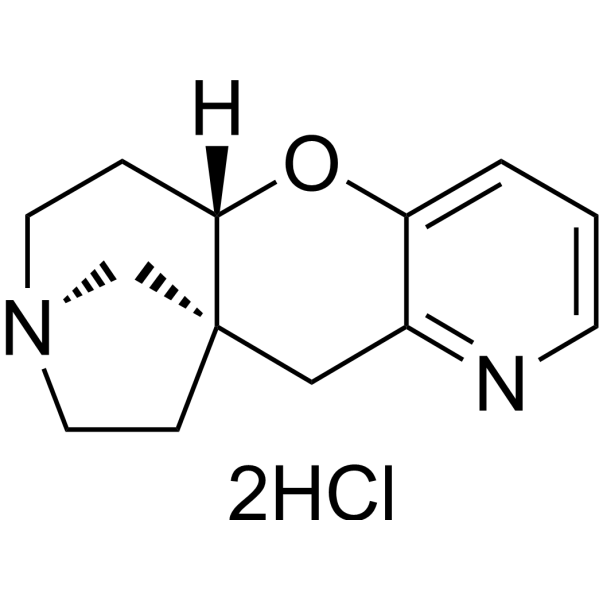 0 ImagesDianicline dihydrochloride is a α4β2 nicotinic acetylcholine receptor partial agonist, a class of agents that includes varenicline and cytisine for smoking cessation. Dianicline dihydrochloride increases cessation rates in a dose-dependent manner.
-
Catestatin
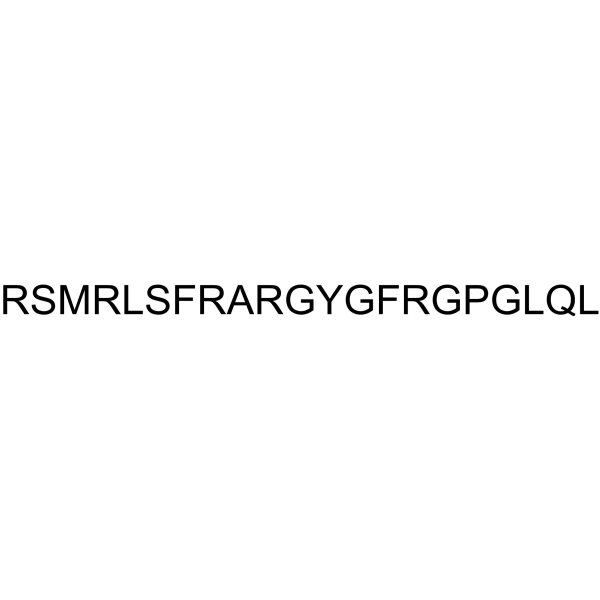 0 ImagesSynonyms: Catestatin (cattle)Catestatin is a 21-amino acid residue, cationic and hydrophobic peptide. Catestatin is an endogenous peptide that regulates cardiac function and blood pressure. Catestatin is a non-competitive nicotinic antagonist acting through nicotinic acetylcholine receptors (nAChRs) to inhibit catecholamine release.
-
(1′S,2′S)-Nicotine-1'-oxide-d3
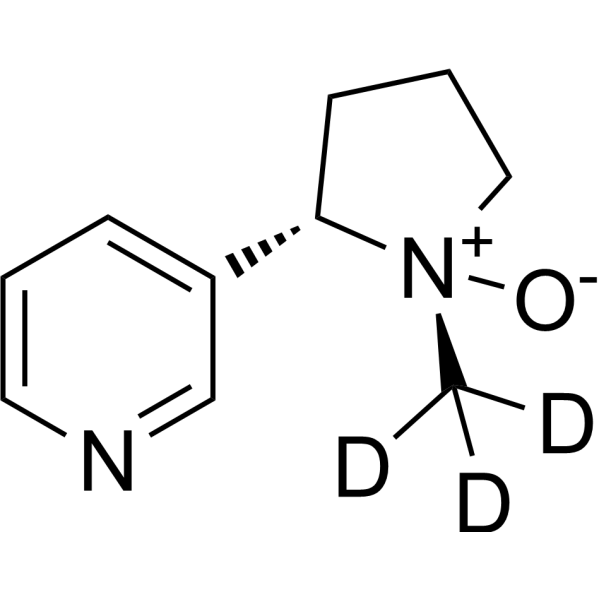 0 ImagesCat. No.: HY-N8723SPurity: 99.76%(1′S,2′S)-Nicotine-1'-oxide-d3 is the d3-labeled (1′S,2′S)-Nicotine-1'-oxide (HY-N8723). (1′S,2′S)-Nicotine-1'-oxide is a nicotine derivative and also a non/weakly potent α3β4 neuronal nicotinic acetylcholine receptor (nAChR) ligand.
-
Harmane hydrochloride
 0 ImagesHarmane hydrochloride is a benzodiazepine receptor inhibitor (IC50=7 μM), with IC50 values for mACh, Opioid Receptor, MAO-A/B, and α2-adrenergic receptor of 24 μM, 2.8 μM, 0.5 μM, 5 μM, and 18 μM, respectively. Harmane hydrochloride inhibits the I1 imidazoline receptor (IC50 = 30 nM) to reduce blood pressure and has antidepressant, anti-anxiety, anticonvulsant, and analgesic effects. Harmane hydrochloride inhibits dopamine biosynthesis by decreasing tyrosine hydroxylase (TH) activity and enhancing L-DOPA-induced cytotoxicity in PC12 cells. Additionally, Harmane hydrochloride can increase the mutagenic effect induced by 2-acetylaminofluorene (AAF).
-
Vinblastine sulfate (Standard)
 0 ImagesSynonyms: Vincaleukoblastine sulfate salt (Standard)Vinblastine (sulfate) (Standard) is the analytical standard of Vinblastine (sulfate). This product is intended for research and analytical applications. Vinblastine sulfate is a cytotoxic alkaloid used against various cancer types. Vinblastine sulfate inhibits the formation of microtubule and suppresses nAChR with an IC50 of 8.9 μM.
-
Soclenicant
 0 ImagesSynonyms: BNC210; IW-2143Soclenicant (BNC210) is an orally active α7 nAChR negative alteration modulator (NAM) with no apparent side effects. Soclenicant exhibits acute anxiolytic activity in rodent models of anxiety. Soclenicant inhibits rat and human α7 nAChR currents (in stably transfected cell lines) induced by acetylcholine, nicotine, choline, and the a7-specific agonist PNU-282987 (HY-12560A) with IC50 values in the range of 1.2 to 3 μM. Soclenicant can be used in studies of anxiety, trauma, and stressor-related disorders.