



PREP
PREP (Prolyl endopeptidase) primarily functions as a cytosolic serine protease that cleaves proline-containing peptides, regulating intracellular peptide turnover and modulating bioactive peptide signaling[1]. Mechanistically, PREP interacts with pathways involved in neuropeptide maturation and degradation, impacting peptide-mediated neurotransmission and cellular signaling cascades[2][3]. In disease models, PREP activity has been implicated in neurodegenerative disorders, including Alzheimer's disease, where abnormal peptide accumulation contributes to pathology[4][5]. Compared with related isoforms such as DPP4 and FAP, PREP exhibits distinct substrate specificity for short proline-containing peptides, and its expression is predominantly cytosolic rather than membrane-bound[1][6]. Pharmacological inhibition of PREP with small-molecule inhibitors has demonstrated modulation of peptide levels in both in vitro and in vivo models, supporting its role in cognitive and neurodegenerative research applications[7][8]. These inhibitors selectively alter PREP activity without significantly affecting structurally similar serine proteases, allowing for isoform-specific experimental interventions[6][7]. Therefore, PREP serves as a target for studying peptide-mediated signaling, neurodegeneration, and the functional consequences of peptide homeostasis in experimental neuroscience models[3][4][8].
References:
- [1]. Rabezanahary H, et al. Live virus neutralizing antibodies against pre and post Omicron strains in food and retail workers in Québec, Canada. Heliyon. 2024 May 21;10(10):e31026. [Content Brief]
- [2]. Feng XL, et al. Characterization and immunomodulatory function comparison of various bursal-derived peptides isolated from the humoral central immune organ. Peptides. 2012 Feb;33(2):258-64. [Content Brief]
- [3]. Ternianov A, et al. Overexpression of CB2 cannabinoid receptors results in neuroprotection against behavioral and neurochemical alterations induced by intracaudate administration of 6-hydroxydopamine. Neurobiol Aging. 2012 Feb;33(2):421.e1-16. [Content Brief]
- [4]. Peterson DA, et al. Convergent evidence for abnormal striatal synaptic plasticity in dystonia. Neurobiol Dis. 2010 Mar;37(3):558-73. [Content Brief]
- [5]. Kundu LR, et al. Biphasic chromatin binding of histone chaperone FACT during eukaryotic chromatin DNA replication. Biochim Biophys Acta. 2011 Jun;1813(6):1129-36. [Content Brief]
- [6]. Horn AH, et al. The effect of fulvic acid on pre- and postaggregation state of Aβ17-42: molecular dynamics simulation studies, S. Verma, A. Singh and A. Mishra, Biochim Biophys Acta 1834 (2013) 24-33. Biochim Biophys Acta. 2013 Dec;1834(12):2867-8. [Content Brief]
- [7]. ElEssawy B, et al. Type 1 diabetes and T regulatory cells. Pharmacol Res. 2015 Aug;98:22-30. [Content Brief]
- [8]. Pan HC, et al. Quercetin promotes cell apoptosis and inhibits the expression of MMP-9 and fibronectin via the AKT and ERK signalling pathways in human glioma cells. Neurochem Int. 2015 Jan;80:60-71. [Content Brief]
All Product Categories
-
PREP Related Products (3)
Related Products (3)

-
Y-29794 tosylate
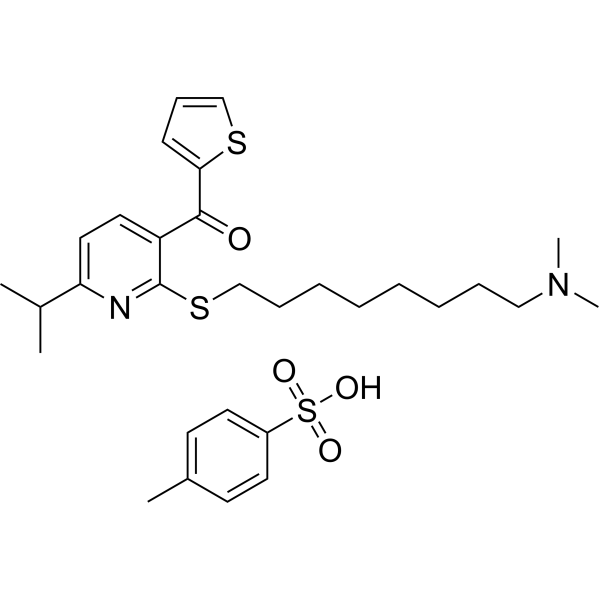 0 ImagesY-29794 tosylate is a selective, orally active inhibitor for non-peptide prolyl endopeptidase (PREP), with an IC50 of 3 nM and a Ki of 0.95 nM. Y-29794 tosylate enhances the effect of thyrotropin-releasing hormone (TRH) on the release of ACh in the rat hippocampus, exhibits potential neuroprotective efficacy. Y-29794 tosylate exhibits anticancer activity through inhibition of the IRS1-AKT-mTORC1 pathway. Y-29794 tosylate penetrates the brain-blood barrier (BBB).
-
Y-29794
 0 ImagesCat. No.: HY-15113CAS No.: 129184-48-1Y-29794 is a selective, orally active inhibitor for non-peptide prolyl endopeptidase (PREP), with an IC50 of 3 nM and a Ki of 0.95 nM. Y-29794 enhances the effect of thyrotropin-releasing hormone (TRH) on the release of ACh in the rat hippocampus, exhibits potential neuroprotective efficacy. Y-29794 exhibits anticancer activity through inhibition of the IRS1-AKT-mTORC1 pathway. Y-29794 penetrates the brain-blood barrier (BBB).
-
Z-Pro-Pro-aldehyde-dimethyl acetal
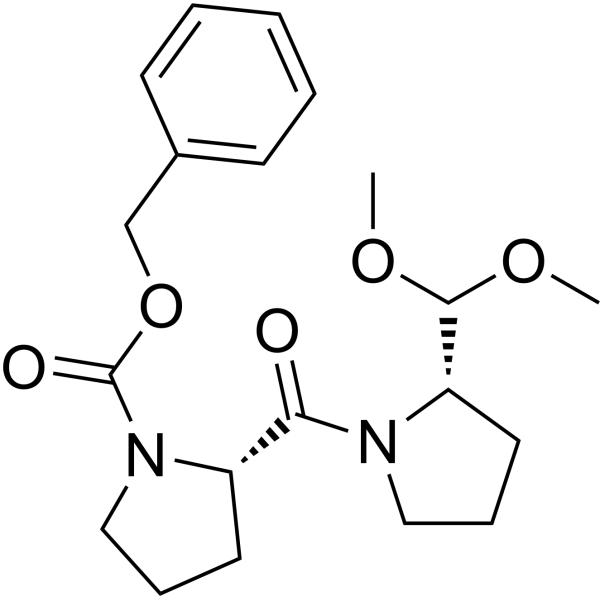 0 ImagesCat. No.: HY-P4308CAS No.: 170116-63-9Z-Pro-Pro-aldehyde-dimethyl acetal is a potent inhibitor of prolyl endopeptidase (PREP), a cytoplasmic serine endoprotease (IC50= 12 nM). Z-Pro-Pro-aldehyde-dimethyl acetal plays an important role in cognitive dysfunction in aging and neurodegenerative diseases including Alzheimer's disease.



