



RIOK2
RIOK2 (RIO kinase 2) is an evolutionarily conserved atypical serine/threonine kinase that functions primarily as a ribosome biogenesis factor required for the export, assembly, and cytoplasmic maturation of pre-40S ribosomal subunits, thereby supporting efficient mRNA translation and protein synthesis[1][2]. Mechanistically, RIOK2 associates with late pre-40S particles and participates in the final steps of small ribosomal subunit maturation, where its regulated release and nuclear recycling are required for productive ribosome assembly[2][3]. The Ras/MAPK pathway directly connects extracellular growth signals to ribosome biogenesis through RSK-mediated phosphorylation of RIOK2, which promotes pre-40S particle maturation, optimal protein synthesis, and cell proliferation[2]. Consistent with its central role in translational control, RIOK2 is essential for hematopoietic stem and progenitor cell differentiation and for maintenance of mature blood cells in vivo, highlighting the physiological importance of RIOK2-dependent ribosome production[1]. Disease studies further implicate RIOK2 in multiple malignancies, including glioblastoma, acute myeloid leukemia, liver cancer, prostate cancer, and non-small cell lung cancer, where elevated expression is associated with tumor progression and proliferative phenotypes[4][5]. Compared with related isoforms, RIOK1, RIOK2, and RIOK3 belong to the same atypical kinase family; however, RIOK2 is most strongly linked to pre-40S maturation, whereas RIOK3 is not required for canonical 40S biogenesis and RIOK1 displays distinct context-dependent functions in cell growth regulation[1][5]. Therefore, modulation of RIOK2 activity and phosphorylation status provides a valuable experimental framework for investigating ribosome biogenesis, translational regulation, hematopoiesis, and cancer biology[2][1][4].
References:
- [1]. Messling JE, et al. RIO-kinase 2 is essential for hematopoiesis. PLoS One. 2024 Apr 2;19(4):e0300623. [Content Brief]
- [2]. Xu Z, et al. A transferrable and integrative type I-F Cascade for heterologous genome editing and transcription modulation. Nucleic Acids Res. 2021 Sep 20;49(16):e94. [Content Brief]
- [3]. Uniprotkb.
- [4]. Li K, et al. Pan-cancer analyses reveal multi-omics and clinical characteristics of RIO kinase 2 in cancer. Front Chem. 2022 Nov 28;10:1024670. [Content Brief]
- [5]. Asquith CRM, et al. RIOK2: straddling the kinase/ATPase line. Nat Rev Drug Discov. 2019 Jul;18(8):574. [Content Brief]
All Product Categories
-
RIOK2 Related Products (7)
Related Products (7)

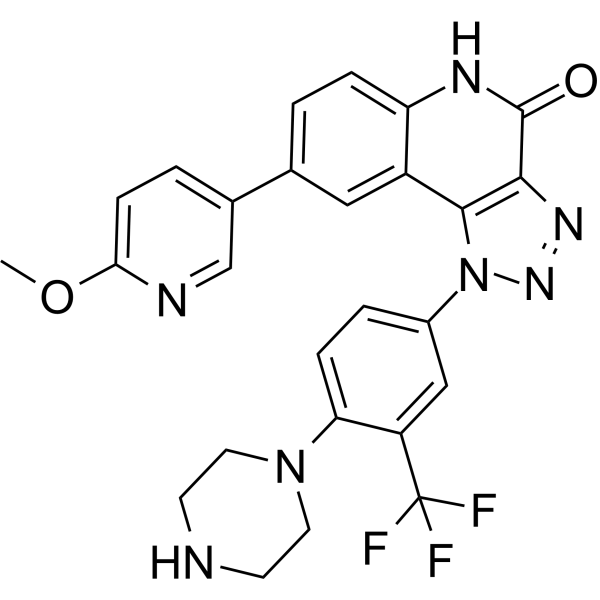
-
NSC139021
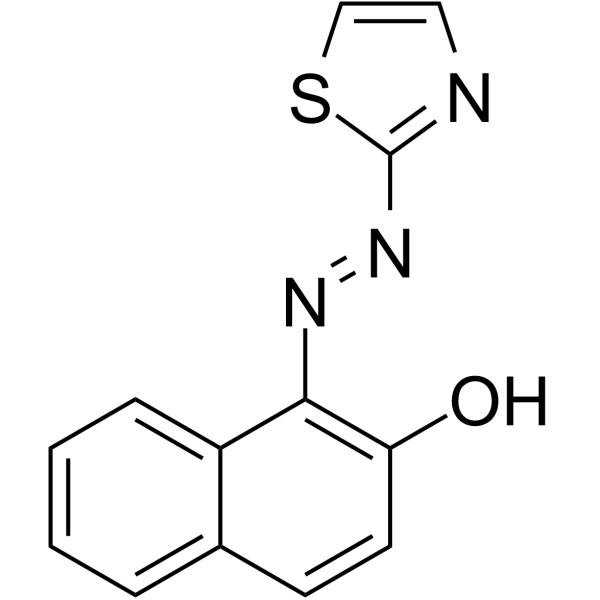 0 ImagesNSC139021 (ERGi-USU) is a RIOK2 inhibitor with anticancer activity. RIOK2 can highly selectively inhibit the growth of ERG-positive cancer cells with IC50s of 30-400 nM against cell lines. RIOK2 also causes cell cycle arrest and apoptosis in glioblastoma via induction of Skp2 and Skp2-p27/p21-Cyclin E/CDK2-pRb signaling.
-
ERGi-USU-6 mesylate
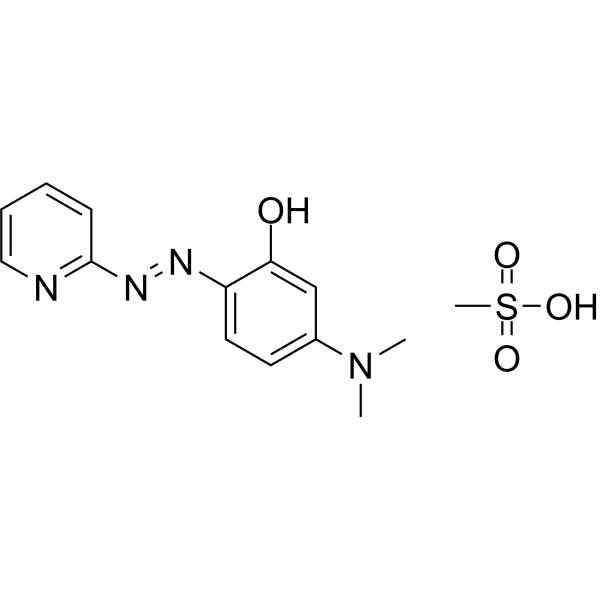 0 ImagesCat. No.: HY-139893CAS No.: 2756327-67-8ERGi-USU-6 mesylate (Compound 7b) is an inhibitor of ERG and RIOK2 (IC50 values: 0.17 and 0.13 μM in VCaP cells, respectively). ERGi-USU-6 mesylate exhibits anticancer activity against ERG-positive prostate cancer.
-
CQ627
 0 ImagesCQ627 is a molecular glue degrader of right open reading frame kinase 2 (RIOK2). CQ627 inhibits the ATPase activity of RIOK2 in MOLT-4 cells with an IC50 of 98 nM. By recruiting the E3 ubiquitin ligase RNF126, CQ627 promotes RIOK2 ubiquitination and induces its degradation via the ubiquitin-proteasome system (UPS), while inhibiting RIOK2-dependent mTOR/AKT signaling, suppressing cancer cell proliferation, and inducing G2/M cell cycle arrest and apoptosis. CQ627 can be used in studies related to RIOK2-targeted protein degradation and leukemia.
-
CQ3196
 0 ImagesCat. No.: HY-175733CAS No.: 3105591-09-8CQ3196 is an orally active RIOK2 inhibitor with a Kd of 14 nM. CQ3196 effectively inhibits the ATPase activity of RIOK2, with an IC50 value of 72 nM. CQ3196 inhibits cell proliferation and colony formation in gastric cancer cell lines. CQ3196 induces cell apoptosis in HGC-27 and AGS cells. CQ3196 suppresses downstream signal pathway of RIOK2. CQ3196 reduces phosphorylation of mTOR and AKT. CQ3196 modulates ribosome function and protein synthesis. CQ3196 inhibits tumor growth and can be used for gastric cancer invtro and invivo research.
-
RIOK2-IN-1
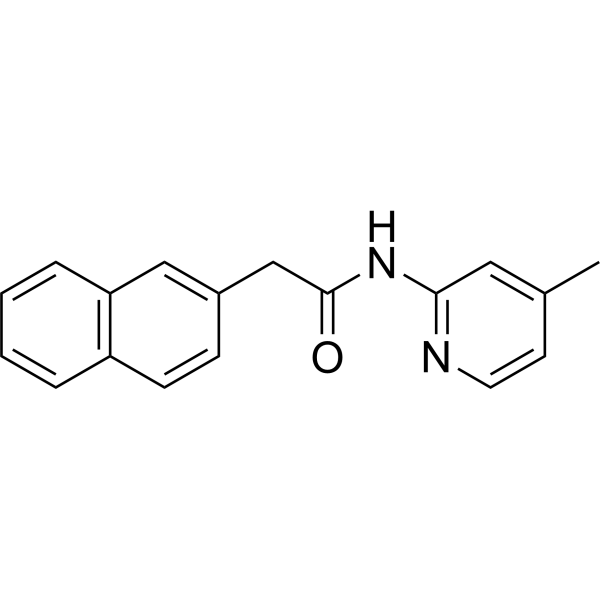 0 ImagesCat. No.: HY-156792CAS No.: 1088216-72-1RIOK2-IN-1 (com 4) is a potent and selective RIOK2 inhibitor (Kd=150 nM), but has low cellular activity (IC50=14,600 nM). RIOK2 is an atypical kinase associated with a variety of human cancers and is involved in ribosome maturation and cell cycle progression. The small molecule inhibitor CQ211 (HY-147655), an improvement of RIOK2-IN-1 as the lead compound, has good in vivo and in vitro activity, inhibits the proliferation of MKN-1 and HT-29 cancer cells, and can xenograft MKN in mice -1 model inhibits tumor progression.
-
RIOK2-IN-2
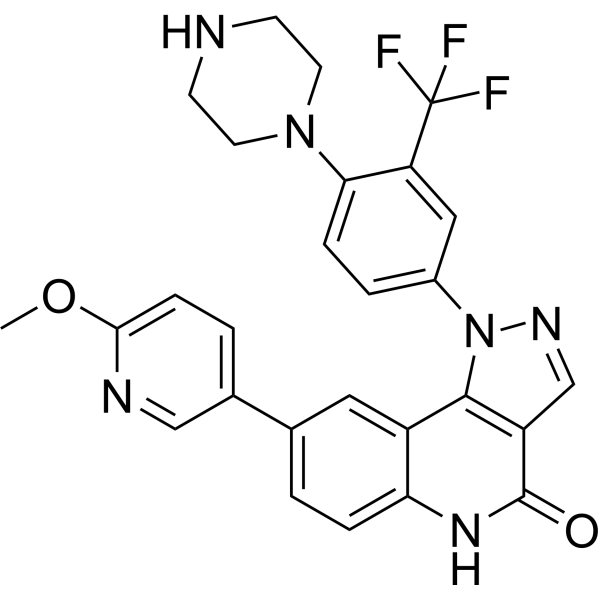 0 ImagesCat. No.: HY-156465CAS No.: 2648987-17-9RIOK2-IN-2 (8) is a RIOK2 inhibitor, with IC50 values of 3.02 μM and 5.34 μM in MKN-1 and MOLT4 cells, respectively.



