



Uracil
Based on 5 publication(s) in Google Scholar
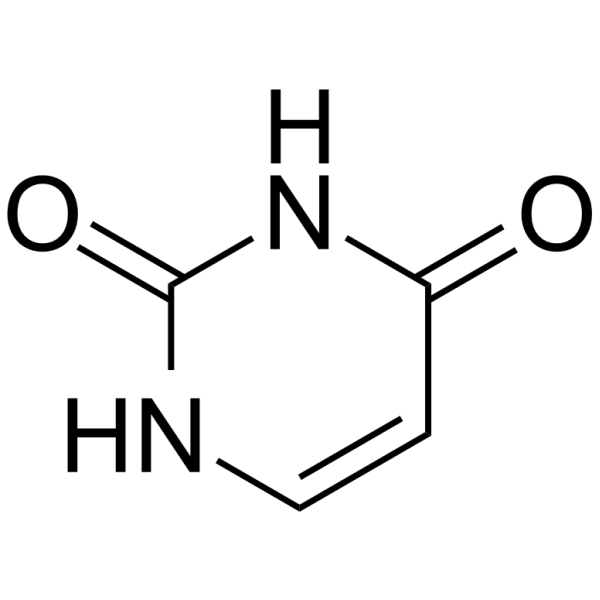
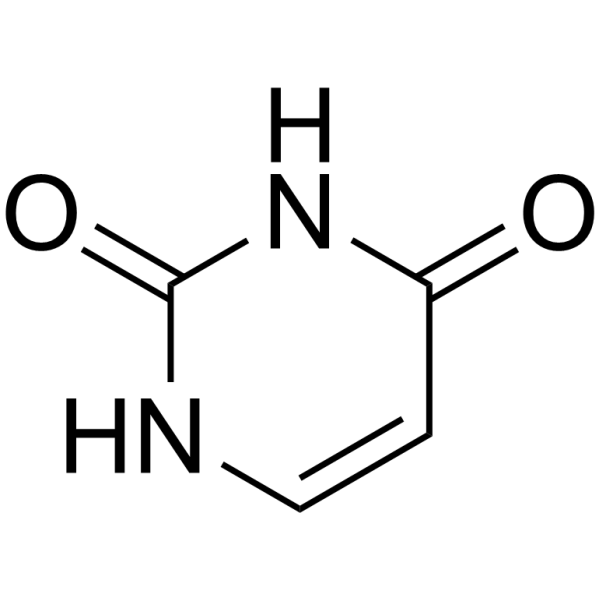
Uracil is a pyrimidine derivative and one of the four nucleobases in the nucleic acid of RNA. Uracil is a frequently occurring DNA base damage that results from the spontaneous or chemically induced deamination of cytosine and is mutagenic at the level of replication. Uracil could potentially alter transcriptional fidelity, resulting in production of mutant proteins.
For research use only. We do not sell to patients.
- Purity: 99.94%
- CAS No.: 66-22-8
- Formula: C4H4N2O2
- Molecular Weight:112.09
-
Storage:
Store at room temperature 3 years.
In solvent -80°C, 2 years , -20°C, 1 year

To place orders, for customer services and technical support, please contact: MedChemExpress USA
Tel: 609-228-6898 E-mail: [email protected] [email protected]


-
 Biological Activity
-
Chemical Information
-
Solvent & Solubility
- Purity & Documentation
- References
-
 Help & FAQs


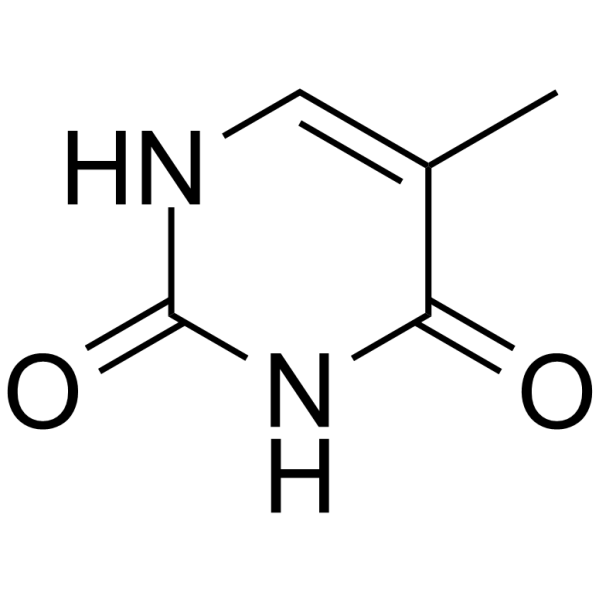
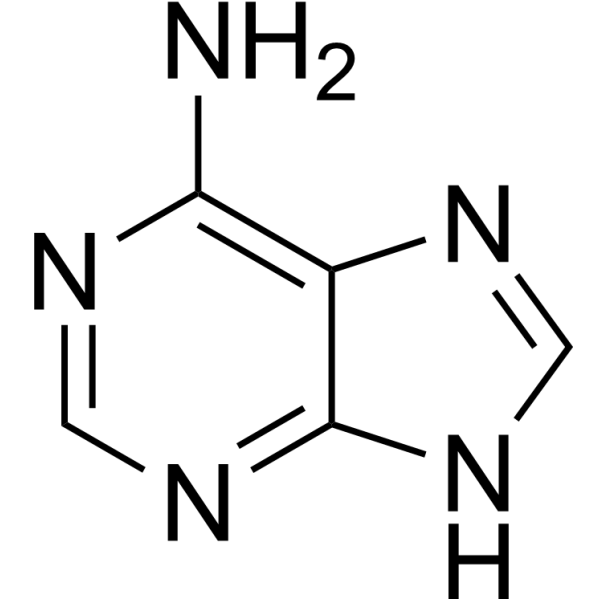
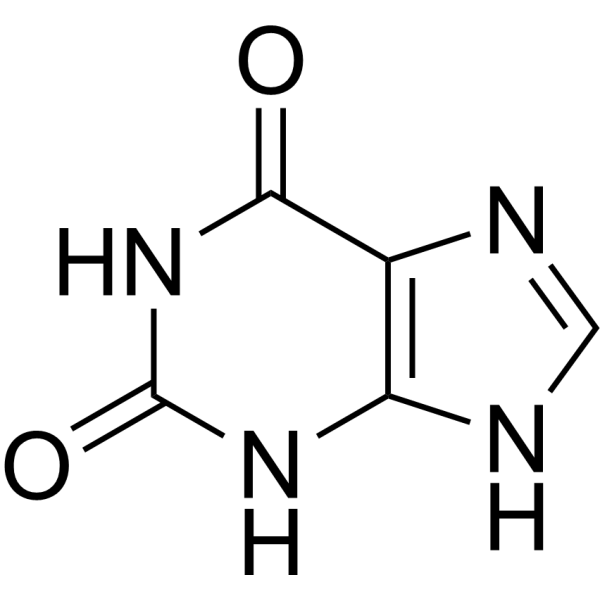
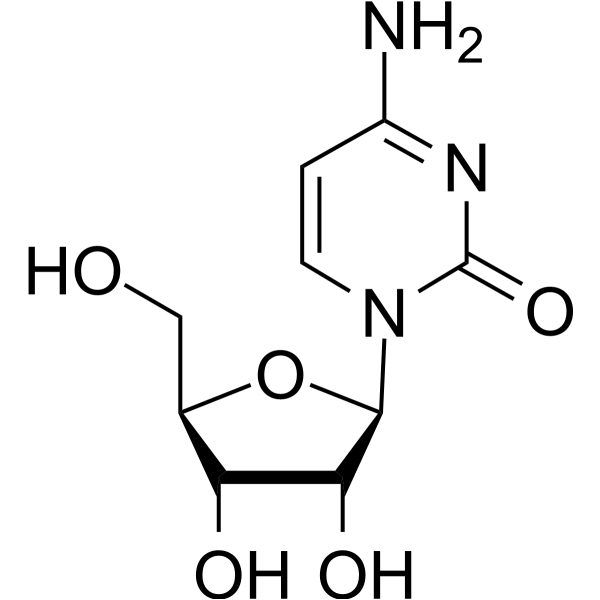
Publications Citing Use of MedChemExpress (MCE) Uracil
MoreAll Endogenous Metabolite Isoforms
More

Biological Activity
|
Human Endogenous Metabolite |
|
Cell Line

|
Type | Value | Description | References |
|---|---|---|---|---|
| BV-2 | IC50 |
>100 μM
Compound: 9
|
Antineuroinflammatory activity in mouse BV2 cells assessed as inhibition of LPS-induced NO production after 24 hrs in presence of LPS by Griess reaction based assay
Antineuroinflammatory activity in mouse BV2 cells assessed as inhibition of LPS-induced NO production after 24 hrs in presence of LPS by Griess reaction based assay
|
[PMID: 27919656] |
| MDCK | EC50 |
25 μg/mL
Compound: 18
|
Antiviral activity against Influenza A virus H5N1 Vietnam/1203/2004H infected in MDCK cells
Antiviral activity against Influenza A virus H5N1 Vietnam/1203/2004H infected in MDCK cells
|
[PMID: 20674371] |
| MDCK | EC50 |
34 μg/mL
Compound: 18
|
Antiviral activity against Influenza B virus Florida/4/2006 infected in MDCK cells
Antiviral activity against Influenza B virus Florida/4/2006 infected in MDCK cells
|
[PMID: 20674371] |
| MDCK | IC50 |
>100 μg/mL
Compound: 18
|
Cytotoxicity against MDCK cells
Cytotoxicity against MDCK cells
|
[PMID: 20674371] |
Uracil (2500μM) mainly phosphorylates 5-FU (2.5-250 μM) with slightly degradation in Yoshida sarcoma cells, whereas in liver slices, degradation of 5- FU is greater than its phosphorylation[4].
MedChemExpress (MCE) has not independently confirmed the accuracy of these methods. They are for reference only.
| NCT Number | Sponsor | Condition | Start Date |
Phase
|
|---|---|---|---|---|
| NCT01329991 | Plexxikon| | 2011-05 | PHASE1 |


Chemical Information
-
CAS No. 66-22-8
-
Appearance Solid
-
Molecular Weight 112.09
-
Formula C4H4N2O2
-
Color White to light yellow
-
SMILES
O=C1NC(C=CN1)=O
-
Structure Classification
-
Shipping
Room temperature in continental US; may vary elsewhere.
-
Storage
Store at room temperature 3 years
In solvent -80°C 2 years -20°C 1 year


Publications (5)
-
Journal Impact Factor
-
Most Recent
-
Microbiome
Species-specific enhancement of enterohemorrhagic E. coli pathogenesis mediated by microbiome metabolites. [Abstract]2019 Mar 20;7(1):43. PMID: 30890187 -
Cell Mol Life Sci
FOXA2-initiated transcriptional activation of INHBA induced by methylmalonic acid promotes pancreatic neuroendocrine neoplasm progression. [Abstract]2024 Jan 22;81(1):50. PMID: 38252148 -
Pestic Biochem Physiol
Plumbagin targets dihydroorotase in Magnaporthe oryzae to inhibit infection and shows antifungal activity against multiple phytopathogenic fungi. [Abstract]2026 Jun:221:107096. PMID: 42264707 -
J Pharm Biomed Anal
A novel UHPLC-MS/MS approach for simultaneous quantification of pyrimidine metabolites in human biofluids. [Abstract]2025 Nov 15:265:117026. PMID: 40544701 -


Solvent & Solubility
DMSO : ≥ 25 mg/mL (223.04 mM; Hygroscopic DMSO has a significant impact on the solubility of product, please use newly opened DMSO)
H2O : 2.5 mg/mL (22.30 mM; ultrasonic and warming and heat to 60°C)
* "≥" means soluble, but saturation unknown.
Please refer to the solubility information to select the appropriate solvent. Once prepared, please aliquot and store the solution to prevent product inactivation from repeated freeze-thaw cycles.
Storage method and period of stock solution: -80°C, 2 years; -20°C, 1 year. When stored at -80°C, please use it within 2 years. When stored at -20°C, please use it within 1 year.
* Note: If you choose water as the stock solution, please dilute it to the working solution, then filter and sterilize it with a 0.22 μm filter before use.
Please refer to the solubility information to select the appropriate solvent. Once prepared, please aliquot and store the solution to prevent product inactivation from repeated freeze-thaw cycles.
Storage method and period of stock solution: -80°C, 2 years; -20°C, 1 year. When stored at -80°C, please use it within 2 years. When stored at -20°C, please use it within 1 year.
* Note: If you choose water as the stock solution, please dilute it to the working solution, then filter and sterilize it with a 0.22 μm filter before use.
Concentration (start) × Volume (start) = Concentration (final) × Volume (final)
Select the appropriate dissolution method based on your experimental animal and administration route.
- For the following dissolution methods, please ensure to first prepare a clear stock solution using an In Vitro approach and then sequentially add co-solvents:
- To ensure reliable experimental results, the clarified stock solution can be appropriately stored based on storage conditions. As for the working solution for In Vivo experiments, it is recommended to prepare freshly and use it on the same day.
- The percentages shown for the solvents indicate their volumetric ratio in the final prepared solution. If precipitation or phase separation occurs during preparation, heat and/or sonication can be used to aid dissolution.
Add each solvent one by one: 10% DMSO 40% PEG300 5% Tween-80 45% Saline
Solubility: ≥ 2.5 mg/mL (22.30 mM); Clear solution
This protocol yields a clear solution of ≥ 2.5 mg/mL (saturation unknown).
Taking 1 mL working solution as an example, add 100 μL DMSO stock solution (25.0 mg/mL) to 400 μL PEG300, and mix evenly; then add 50 μL Tween-80 and mix evenly; then add 450 μL Saline to adjust the volume to 1 mL.
Preparation of Saline: Dissolve 0.9 g sodium chloride in ddH₂O and dilute to 100 mL to obtain a clear Saline solution.
Add each solvent one by one: 10% DMSO 90% (20% SBE-β-CD in Saline)
Solubility: ≥ 2.5 mg/mL (22.30 mM); Clear solution
This protocol yields a clear solution of ≥ 2.5 mg/mL (saturation unknown).
Taking 1 mL working solution as an example, add 100 μL DMSO stock solution (25.0 mg/mL) to 900 μL 20% SBE-β-CD in Saline, and mix evenly.
Preparation of 20% SBE-β-CD in Saline (4°C, storage for one week): 2 g SBE-β-CD powder is dissolved in 10 mL Saline, completely dissolve until clear.
Please enter the basic information of animal experiments:
-
-
-
-
Recommended: Prepare an additional quantity of animals to account for potential losses during experiments.
Please enter your animal formula composition:
-
%DMSO +
Recommended: Keep the proportion of DMSO in working solution below 2% if your animal is weak.
-
%+
-
+%Tween-80 + +
-
%Saline +
The co-solvents required include: DMSO, . All of co-solvents are available by MedChemExpress (MCE). , Tween 80. All of co-solvents are available by MedChemExpress (MCE).
Working solution concentration: 0.22 mg/mL
Method for preparing stock solution: mg drug dissolved in μL DMSO. Stock solution concentration: mg/mL.
1. Take μL DMSO stock solution;
2. Add μL .
μL , mix evenly;
3. Then add μL Tween 80, mix evenly;
4. Then add μL
Please ensure that the stock solution in the first step is dissolved to a clear state, and add co-solvents in sequence. You can use ultrasonic heating (ultrasonic cleaner, recommended frequency 20-40 kHz), vortexing, etc. to assist dissolution.


Purity & Documentation
-
Data Sheet (277 KB)
-
SDS (394 KB)
- English - EN (394 KB)
- Français - FR (394 KB)
- Deutsch - DE (394 KB)
- Norwegian - NO (394 KB)
- Español - ES (394 KB)
- Swedish - SV (394 KB)
- Italian - IT (394 KB)
- Korean - KR (394 KB)
- Portuguese - PT (394 KB)
-
Handling Instructions (2659 KB)
References
[1]. Pałasz A, et al. In search of uracil derivatives as bioactive agents. Uracils and fused uracils: Synthesis, biological activity and applications. Eur J Med Chem. 2015 Jun 5;97:582-611. [Content Brief]
[2]. Viswanathan A, et al. Phenotypic change caused by transcriptional bypass of uracil in nondividing cells. Science. 1999 Apr 2;284(5411):159-62. [Content Brief]
[3]. Visnes T, et al. Uracil in DNA and its processing by different DNA glycosylases. Philos Trans R Soc Lond B Biol Sci. 2009 Mar 12;364(1517):563-8. [Content Brief]
[4]. Ikenaka K, et al. Effect of uracil on metabolism of 5-fluorouracil in vitro. Gan. 1979 Jun;70(3):353-9. [Content Brief]
[5]. de Koning HP, et al. A highly selective, high-affinity transporter for uracil in Trypanosoma brucei brucei: evidence for proton-dependent transport. Biochem Cell Biol. 1998;76(5):853-8. [Content Brief]


Complete Stock Solution Preparation Table
Please refer to the solubility information to select the appropriate solvent. Once prepared, please aliquot and store the solution to prevent product inactivation from repeated freeze-thaw cycles.
Storage method and period of stock solution: -80°C, 2 years; -20°C, 1 year. When stored at -80°C, please use it within 2 years. When stored at -20°C, please use it within 1 year.
| Optional Solvent | Concentration Solvent Mass | 1 mg | 5 mg | 10 mg | 25 mg |
|---|---|---|---|---|---|
| H2O / DMSO | 1 mM | 8.9214 mL | 44.6070 mL | 89.2140 mL | 223.0351 mL |
| 5 mM | 1.7843 mL | 8.9214 mL | 17.8428 mL | 44.6070 mL | |
| 10 mM | 0.8921 mL | 4.4607 mL | 8.9214 mL | 22.3035 mL | |
| 15 mM | 0.5948 mL | 2.9738 mL | 5.9476 mL | 14.8690 mL | |
| 20 mM | 0.4461 mL | 2.2304 mL | 4.4607 mL | 11.1518 mL | |
| DMSO | 25 mM | 0.3569 mL | 1.7843 mL | 3.5686 mL | 8.9214 mL |
| 30 mM | 0.2974 mL | 1.4869 mL | 2.9738 mL | 7.4345 mL | |
| 40 mM | 0.2230 mL | 1.1152 mL | 2.2304 mL | 5.5759 mL | |
| 50 mM | 0.1784 mL | 0.8921 mL | 1.7843 mL | 4.4607 mL | |
| 60 mM | 0.1487 mL | 0.7435 mL | 1.4869 mL | 3.7173 mL | |
| 80 mM | 0.1115 mL | 0.5576 mL | 1.1152 mL | 2.7879 mL | |
| 100 mM | 0.0892 mL | 0.4461 mL | 0.8921 mL | 2.2304 mL |
* Note: If you choose water as the stock solution, please dilute it to the working solution, then filter and sterilize it with a 0.22 μm filter before use.


Uracil Related Classifications
HY-I0960 Related Classifications
 Powered by Bioz