



Abatacept
Based on 4 publication(s) in Google Scholar
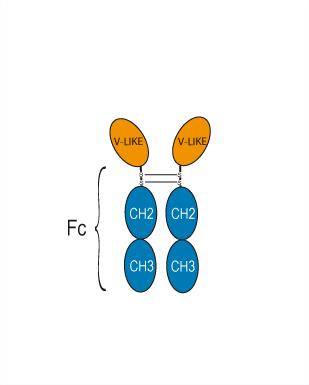
Abatacept (CTLA4lg) is a soluble fusion protein consisting of the extra-cellular domain of human CTLA4 and a fragment of the Fc portion of human IgG1 (hinge and CH2 and 3 domains). Abatacept is a selective T-cell co-stimulation modulator and a protein agent for the autoimmune diseases.
For research use only. We do not sell to patients.
- Purity : ≥99.0%
- CAS No.: 332348-12-6
- Molecular Weight:84.4 kDa
-
Storage:
Please store the product under the recommended conditions in the Certificate of Analysis.


To place orders, for customer services and technical support, please contact: MedChemExpress USA
Tel: 609-228-6898 E-mail: [email protected] [email protected]


-
 Biological Activity
-
Chemical Information
- Purity & Documentation
- References
-
 Help & FAQs


-
HY-108813
BelataceptT-cell Costimulation Blocker -

HY-P9917
TocilizumabIL-6R Neutralizing Antibody -

HY-P9901
IpilimumabCTLA-4 Inhibitor -
HY-10219
RapamycinmTOR Inhibitor -
HY-108847
EtanerceptTNF Inhibitor -
HY-108829A
Abatacept (powder)Immunomodulator -
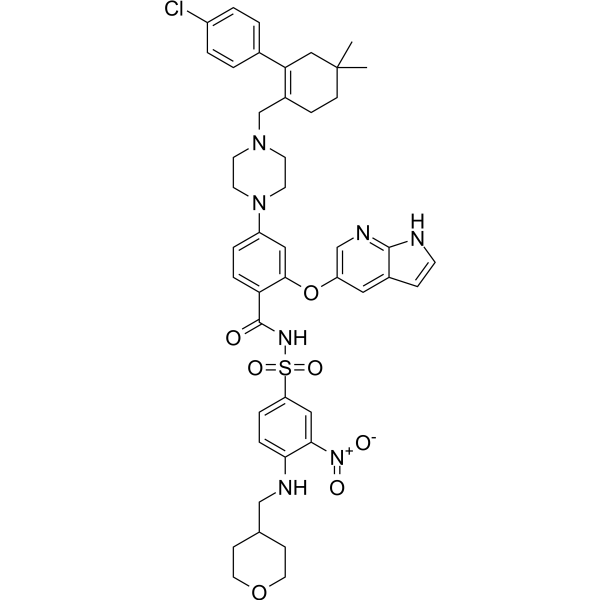
HY-15531
VenetoclaxBCL-2 Inhibitor -

HY-P9913
RituximabCD20 Inhibitor -

HY-P9908
AdalimumabTNF-α Inhibitor -

HY-P9926
DupilumabIL-4Rα Inhibitor -
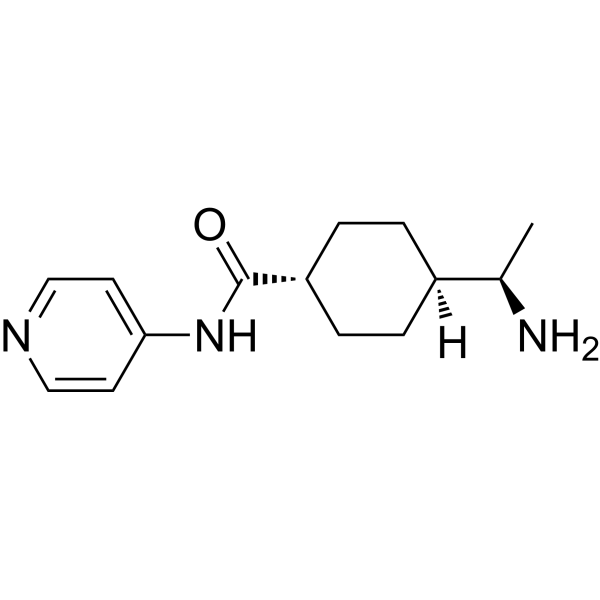
HY-10071
Y-27632ROCK Inhibitor -
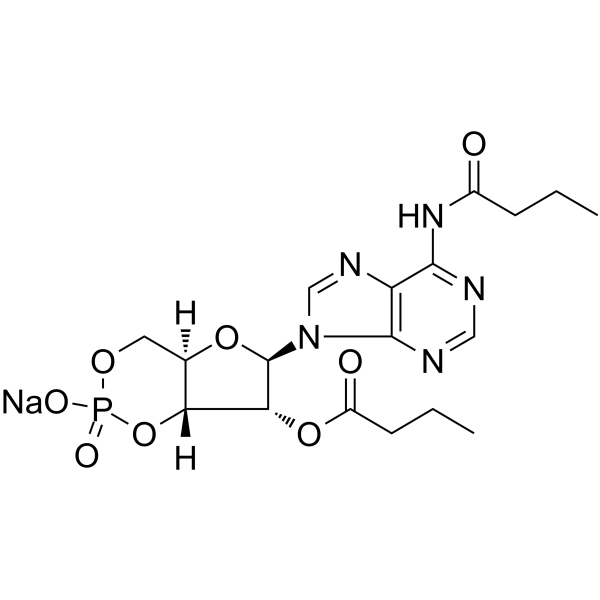
HY-B0764
Bucladesine sodiumcAMP Analog
Publications Citing Use of MedChemExpress (MCE) Abatacept
More Customer Validation & Images

-
In Vivo Efficacy Study
-
In Vivo Efficacy Study
-
In Vivo Efficacy Study


Biological Activity
Description
Species Reactivity
Human
In Vivo
Abatacept exhibits linear PK across the studied doses. The NCA clearance (CL) is 20.8 mL/day/kg, volume (Vss) is 146 mL/kg, and bioavailability (F) of the SC dose dosing is 57.7%[2].
Abatacept (oral; 10 mg/kg; every 2 days) reduces the proportion of activated T cells (CD44highCD62L–) and inhibits the up-regulation of ICOS and CD71 in homozygous DO11.10 RAG-2–/– BALB/c (H-2d/d) mice[3].
MedChemExpress (MCE) has not independently confirmed the accuracy of these methods. They are for reference only.
-
Animal Model:Male Lewis rats (6-9 weeks old) with weights of 150-175 g[2]
-
Dosage:10 mg/kg (IV), 20 mg/kg (SC single-dose), 20 mg/kg (SC Multiple-dose) on day 21 with 10 mg/kg SC doses on days 23, 25, 27, and 29
-
Administration:IV or SC
-
Result:Reduced paw edema, and the SC Multiple-dose group showed significantly greater (tobs = 2.50) paw edema reduction compared with the IV dose group.
-
Animal Model:Male Lewis rats (6-9 weeks old) with weights of 150-175 g[2]
-
Dosage:10 mg/kg (IV), 20 mg/kg (SC single-dose), 20 mg/kg (SC Multiple-dose) on day 21 with 10 mg/kg SC doses on days 23, 25, 27, and 29 (Pharmacokinetic Study)
-
Administration:IV or SC
-
Result:The NCA clearance (CL) is 20.8 mL/day/kg, volume (Vss) is 146 mL/kg, and bioavailability (F) of the SC dose dosing is 57.7%.
Clinical Trial
| NCT Number | Sponsor | Condition | Start Date |
Phase

|
|---|---|---|---|---|
| NCT01329991 | Plexxikon| | 2011-05 | PHASE1 |
Target
CD80 & CD86
Conjugated
Unconjugated
Reconsititution
The product can be reconstituted/diluted with sterile PBS or saline.
Format
-
[CTLA4 (cytotoxic T-lymphocyte-associated protein 4, CD152)]2-IGHG1 Fc (Fragment constant)
Verified Bioactivity


Chemical Information
-
CAS No. 332348-12-6
-
Appearance Liquid
-
Molecular Weight 84.4 kDa
-
Color Colorless to light yellow
-
SMILES
[Abatacept]
-
Synonyms
CTLA4lg; BMS-188667
-
Formulation
Please refer to the lot-specific COA for specific buffer information.
-
Storage
Please store the product under the recommended conditions in the Certificate of Analysis.


Publications (4)
-
Journal Impact Factor
-
Most Recent
-
-
-
Cell Rep
2024 Aug 22;43(9):114664. PMID: 39178113
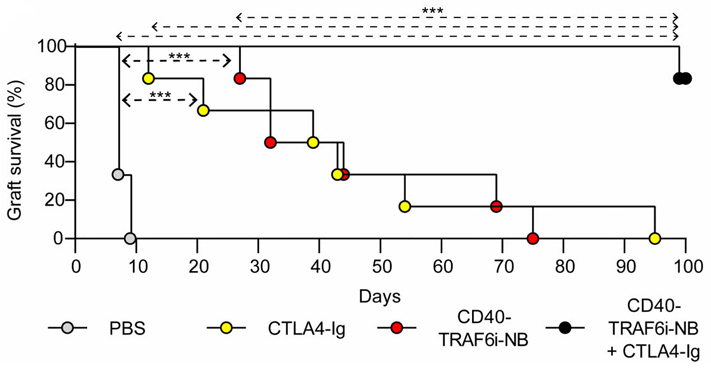
Abatacept purchased from MedChemExpress. Usage Cited in: Cell Rep. 2024 Aug 22;43(9):114664. [Abstract]
CTLA4-Ig (0.25 mg; ip). Kaplan-Meier curve with log-rank test for graft survival.
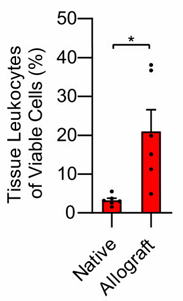
Abatacept purchased from MedChemExpress. Usage Cited in: Cell Rep. 2024 Aug 22;43(9):114664. [Abstract]
CTLA4-Ig (0.25 mg; ip). Leukocytes infiltrated in native hearts and allografts of CTLA4-Ig plus CD40-TRAF6i-NB-treated mice 100 days post-transplantation.
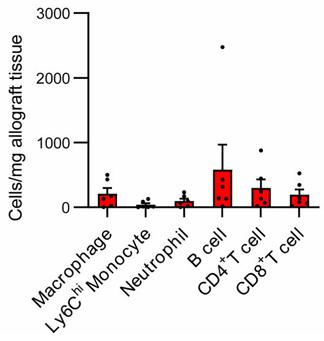
Abatacept purchased from MedChemExpress. Usage Cited in: Cell Rep. 2024 Aug 22;43(9):114664. [Abstract]
CTLA4-Ig (0.25 mg; ip). Immune cell subsets in allografts of CTLA4-Ig plus CD40-TRAF6i-NB-treated recipient mice 100 days post-transplantation.
-


Purity & Documentation
-
Data Sheet (261 KB)
-
SDS (251 KB)
- English - EN (251 KB)
- Français - FR (251 KB)
- Deutsch - DE (251 KB)
- Norwegian - NO (251 KB)
- Español - ES (251 KB)
- Swedish - SV (251 KB)
- Italian - IT (251 KB)
- Korean - KR (251 KB)
- Portuguese - PT (251 KB)
-
Inhibitory Antibodies User Guide (603 KB)
References
[1]. Kiykim A, et al. Abatacept as a Long-Term Targeted Therapy for LRBA Deficiency. J Allergy Clin Immunol Pract. 2019 Jun 22. [Content Brief]
[2]. Lon HK, et al. Modeling pharmacokinetics/pharmacodynamics of abatacept and disease progression in collagen-induced arthritic rats: a population approach. J Pharmacokinet Pharmacodyn. 2013 Dec;40(6):701-12. [Content Brief]
[3]. Patakas A, et al. Abatacept Inhibition of T Cell Priming in Mice by Induction of a Unique Transcriptional Profile That Reduces Their Ability to Activate Antigen-Presenting Cells. Arthritis Rheumatol. 2016 Mar;68(3):627-38. [Content Brief]

Calculators
Concentration (start) × Volume (start) = Concentration (final) × Volume (final)


Abatacept Related Classifications
HY-108829 Related Classifications
 Powered by Bioz