



ApoE Antibody (YA6477)
(Synonyms: AD2 antibody; Apo-E antibody; APOE antibody; APOE_HUMAN antibody; APOEA antibody; Apolipoprotein E antibody; Apolipoprotein E3 antibody; ApolipoproteinE antibody; Apoprotein antibody; LDLCQ5 antibody; AD2 antibody; Apo-E antibody; APOE antibody; APOE_HUMAN antibody; APOEA antibody; Apolipoprotein E antibody; Apolipoprotein E3 antibody; ApolipoproteinE antibody; Apoprotein antibody; LDLCQ5 antibody; LPG antibody; )
Based on 1 Customer Validation
ApoE Antibody (YA6477) is a Rat -derived and non-conjugated IgG1 monoclonal antibody, targeting to ApoE.
-
Host:
Rat
-
Isotype:
IgG
-
Application:
IHC-F, IHC-P, WB
-
Reactivity :
Mouse, Rat
-
Formulation:
Supplied in PBS (pH7.4), 0.1% BSA, 40% Glycerol. Preservative: 0.05% Sodium Azide.
-
Conjugation:
Non-conjugated


To place orders, for customer services and technical support, please contact: MedChemExpress USA
Tel: 609-228-6898 E-mail: [email protected] [email protected]





Applications
| Application |
WB

WB: Western Blot
|
IHC-F
IHC-F: Immunohistochemistry-Frozen
|
IHC-P
IHC-P: Immunohistochemistry-Paraffin
|
|---|---|---|---|
| Dilution Ratio | 1:5000 | 1:500 | 1:2000 |


Product Details
ApoE Antibody (YA6477) is a Rat -derived and non-conjugated IgG1 monoclonal antibody, targeting to ApoE.
-
Host Rat

-
Clonality Recombinant,Monoclonal

-
Species ReactivityMouse, Rat
-
Observed Molecular WeightObserved band size: 33 kDa
Note: Due to possible protein modifications or aggregation, the molecular weight should be confirmed by actual measurement, and the predicted value is for reference only.

-
Calculated Molecular Weight Predicted band size: 36 kDa

Recombinant protein within Mouse ApoE aa 19-311.
affinity purified.
Non-conjugated
Unmodified
IgG


Product Properties
-
Appearance
Solution
-
Formulation
Supplied in PBS (pH7.4), 0.1% BSA, 40% Glycerol. Preservative: 0.05% Sodium Azide.
-
Concentration
Batch-dependent, Please check the COA for the concentration of each lot. Check Lot Concentration
-
Storage & Stability
Stored at -20°C for 1 year. Avoid repeated freeze / thaw cycles.
-
Shipping
Shipping with blue ice.


Verification Images
-
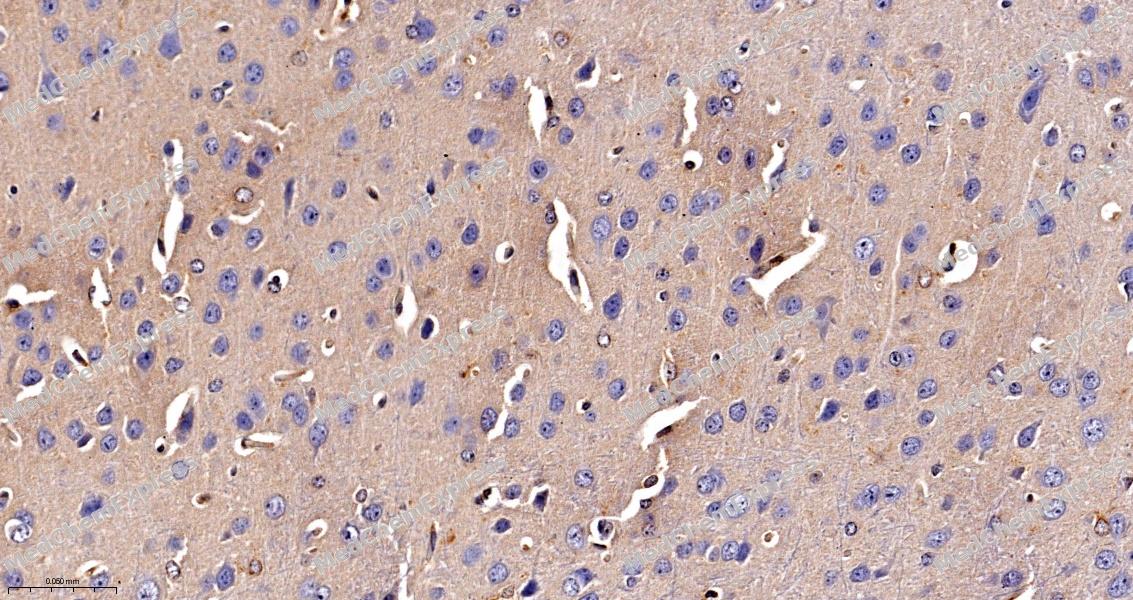 Immunohistochemical analysis of paraffin-embedded mouse hippocampus tissue using Apolipoprotein E Antibody (HY-P86784, 1/2000). The section was pretreated using heat mediated antigen retrieval with sodium citrate buffer (pH 6.0) for 8 minutes. The tissues were blocked with quick block buffer for 0.5 hours at room temperature, washed with PBS and PBST, and then incubated with the primary antibody overnight at 4℃. The detection was performed using an HRP conjugated compact polymer system. DAB was used as the chromogen. Tissues were counterstained with hematoxylin and mounted with DPX.
 -
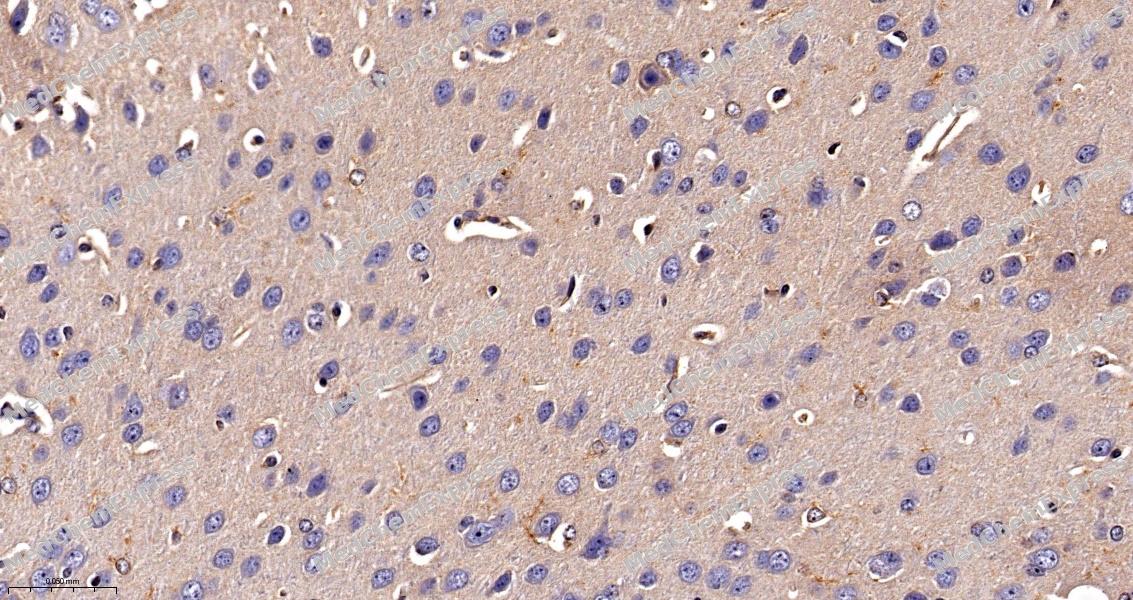 Immunohistochemical analysis of paraffin-embedded mouse caudate tissue using Apolipoprotein E Antibody (HY-P86784, 1/2000). The section was pretreated using heat mediated antigen retrieval with sodium citrate buffer (pH 6.0) for 8 minutes. The tissues were blocked with quick block buffer for 0.5 hours at room temperature, washed with PBS and PBST, and then incubated with the primary antibody overnight at 4℃. The detection was performed using an HRP conjugated compact polymer system. DAB was used as the chromogen. Tissues were counterstained with hematoxylin and mounted with DPX.
 -
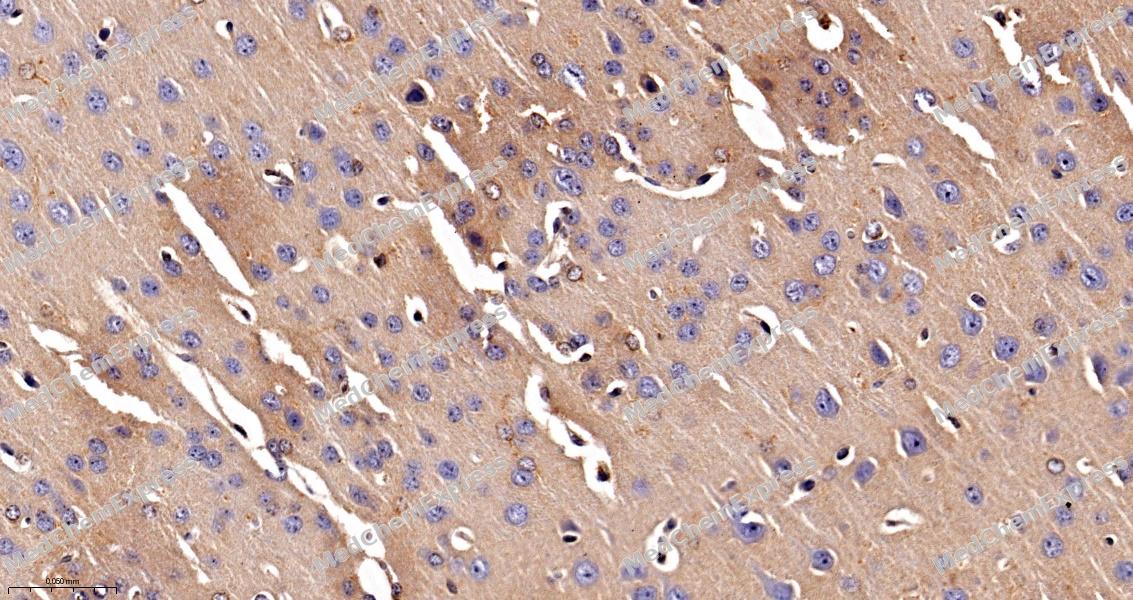 Immunohistochemical analysis of paraffin-embedded mouse cerebral cortex tissue using Apolipoprotein E Antibody (HY-P86784, 1/2000). The section was pretreated using heat mediated antigen retrieval with sodium citrate buffer (pH 6.0) for 8 minutes. The tissues were blocked with quick block buffer for 0.5 hours at room temperature, washed with PBS and PBST, and then incubated with the primary antibody overnight at 4℃. The detection was performed using an HRP conjugated compact polymer system. DAB was used as the chromogen. Tissues were counterstained with hematoxylin and mounted with DPX.
 -
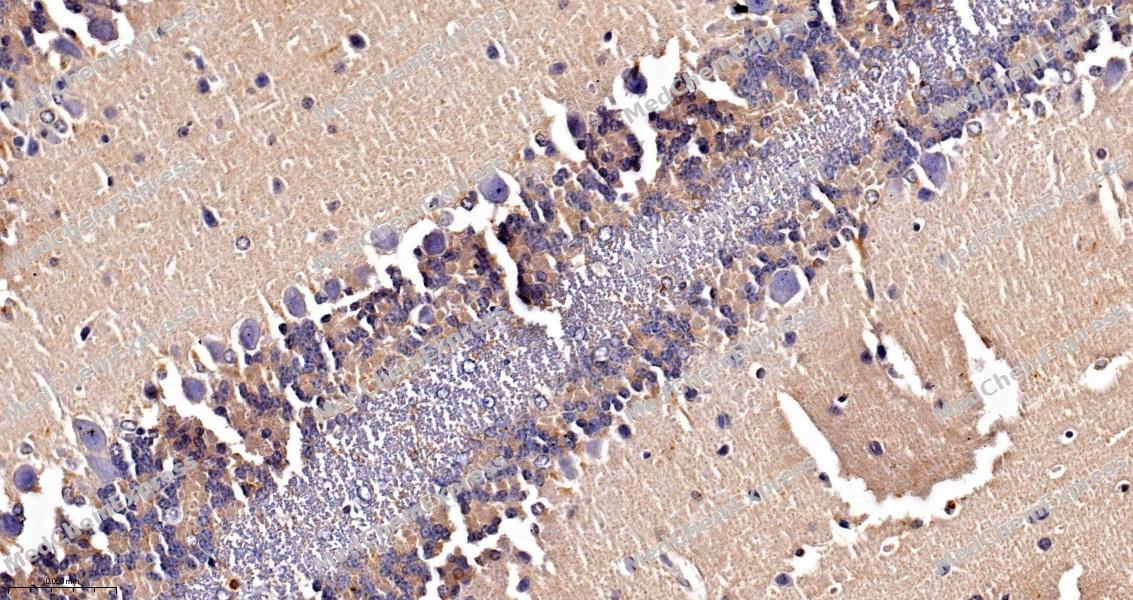 Immunohistochemical analysis of paraffin-embedded mouse cerebellum tissue using Apolipoprotein E Antibody (HY-P86784, 1/2000). The section was pretreated using heat mediated antigen retrieval with sodium citrate buffer (pH 6.0) for 8 minutes. The tissues were blocked with quick block buffer for 0.5 hours at room temperature, washed with PBS and PBST, and then incubated with the primary antibody overnight at 4℃. The detection was performed using an HRP conjugated compact polymer system. DAB was used as the chromogen. Tissues were counterstained with hematoxylin and mounted with DPX.
 -
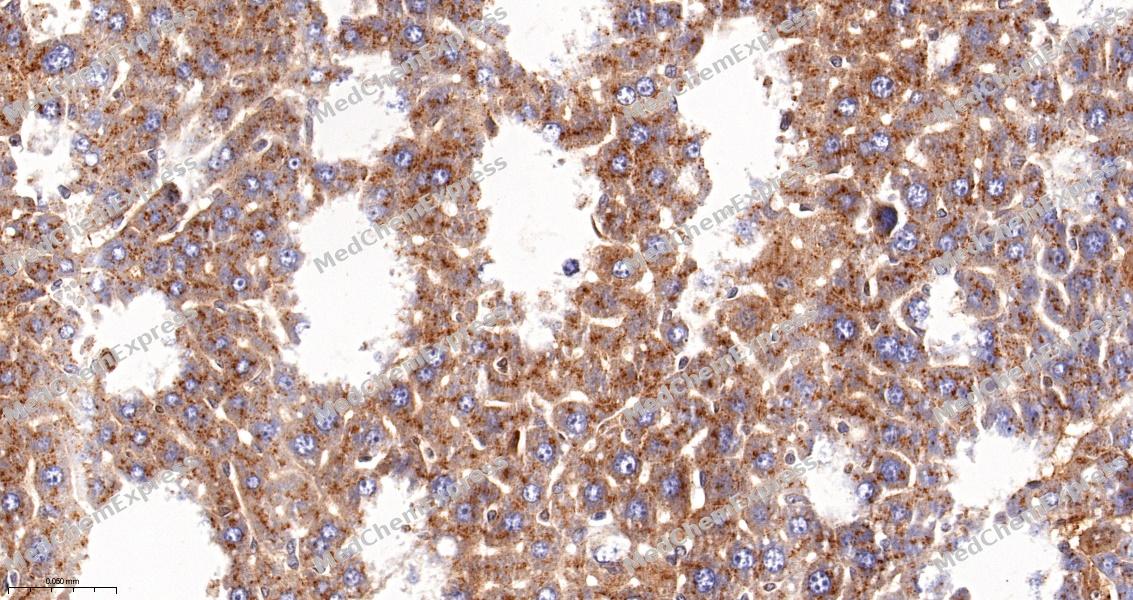 Immunohistochemical analysis of paraffin-embedded mouse liver tissue using Apolipoprotein E Antibody (HY-P86784, 1/2000). The section was pretreated using heat mediated antigen retrieval with sodium citrate buffer (pH 6.0) for 8 minutes. The tissues were blocked with quick block buffer for 0.5 hours at room temperature, washed with PBS and PBST, and then incubated with the primary antibody overnight at 4℃. The detection was performed using an HRP conjugated compact polymer system. DAB was used as the chromogen. Tissues were counterstained with hematoxylin and mounted with DPX.
 -
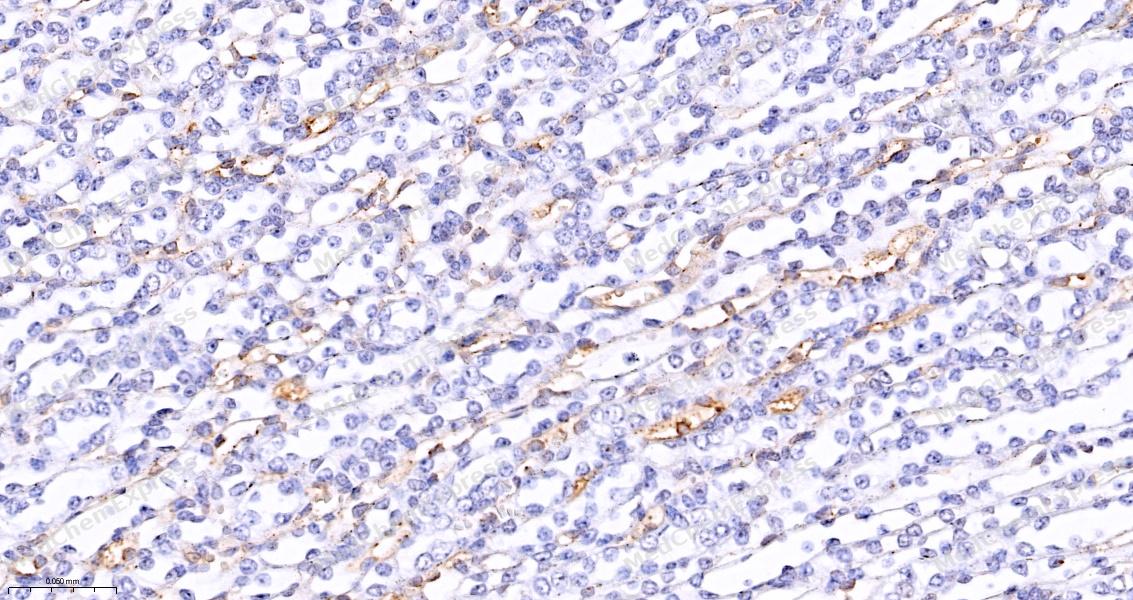 Immunohistochemical analysis of paraffin-embedded mouse kidney tissue using Apolipoprotein E Antibody (HY-P86784, 1/2000). The section was pretreated using heat mediated antigen retrieval with sodium citrate buffer (pH 6.0) for 8 minutes. The tissues were blocked with quick block buffer for 0.5 hours at room temperature, washed with PBS and PBST, and then incubated with the primary antibody overnight at 4℃. The detection was performed using an HRP conjugated compact polymer system. DAB was used as the chromogen. Tissues were counterstained with hematoxylin and mounted with DPX.


Background
-
Function
Apolipoprotein E is an APOE is an apolipoprotein, a protein associating with lipid particles, that mainly functions in lipoprotein-mediated lipid transport between organs via the plasma and interstitial fluids. APOE is a core component of plasma lipoproteins and is involved in their production, conversion and clearance. Apolipoproteins are amphipathic molecules that interact both with lipids of the lipoprotein particle core and the aqueous environment of the plasma. As such, APOE associates with chylomicrons, chylomicron remnants, very low density lipoproteins (VLDL) and intermediate density lipoproteins (IDL) but shows a preferential binding to high-density lipoproteins (HDL). It also binds a wide range of cellular receptors including the LDL receptor/LDLR and the very low-density lipoprotein receptor/VLDLR that mediate the cellular uptake of the APOE-containing lipoprotein particles. Finally, APOE also has a heparin-binding activity and binds heparan-sulfate proteoglycans on the surface of cells, a property that supports the capture and the receptor-mediated uptake of APOE-containing lipoproteins by cells[1].
-
Subcellular Localization
Secreted,Secreted, extracellular space,Secreted, extracellular space, extracellular matrix,Extracellular vesicle,Endosome, multivesicular body
-
Isoforms & Post-Translational Modification
P08226: 311 amino acids, molecular weight 35867 Da.
N- and O-glycosylated丨Phosphorylated on Tyr-628 and Tyr-644 by SRC; these phosphorylations promote endothelial cell adhesion and migration -
Subunit
Homotetramer
-
SwissProt ID
-
Synonyms
AD2 antibody; Apo-E antibody; APOE antibody; APOE_HUMAN antibody; APOEA antibody; Apolipoprotein E antibody; Apolipoprotein E3 antibody; ApolipoproteinE antibody; Apoprotein antibody; LDLCQ5 antibody; AD2 antibody; Apo-E antibody; APOE antibody; APOE_HUMAN antibody; APOEA antibody; Apolipoprotein E antibody; Apolipoprotein E3 antibody; ApolipoproteinE antibody; Apoprotein antibody; LDLCQ5 antibody; LPG antibody;


Documentation
-
Data Sheet (256 KB)
-
SDS (254 KB)
- English - EN (254 KB)
- Français - FR (254 KB)
- Deutsch - DE (254 KB)
- Norwegian - NO (254 KB)
- Español - ES (254 KB)
- Swedish - SV (254 KB)
- Italian - IT (254 KB)
- Korean - KR (254 KB)
- Portuguese - PT (254 KB)
-
User Guide for Antibodies (1077 KB)
References

 Powered by Bioz
