



Kininogen 1 Antibody (YA2140)
(Synonyms: BDK; Bradykinin; HMWK; Kallidin I; Kallidin II; KNG; KNG1; WILLIAMS FACTOR)
Based on 1 Customer Validation
Kininogen 1 Antibody (YA2140) is a Rabbit-derived and non-conjugated IgG monoclonal antibody, targeting to Kininogen 1.
-
Host:
Rabbit
-
Isotype:
IgG
-
Application:
WB, IHC-P, IP
-
Reactivity :
Human
-
Formulation:
Supplied in rabbit IgG in 50mM Tris-Glycine(pH 7.4), 0.15M NaCl, 40%Glycerol, 0.01% sodium azide and 0.05% BSA.
-
Conjugation:
Non-conjugated


To place orders, for customer services and technical support, please contact: MedChemExpress USA
Tel: 609-228-6898 E-mail: [email protected] [email protected]





Applications
| Application |
WB

WB: Western Blot
|
IHC-P
IHC-P: Immunohistochemistry-Paraffin
|
IP
IP: Immunoprecipitation
|
|---|---|---|---|
| Dilution Ratio | 1:500-1:1000 | 1:50-1:100 | 1:50 |


Product Details
Kininogen 1 Antibody (YA2140) is a Rabbit-derived and non-conjugated IgG monoclonal antibody, targeting to Kininogen 1.
-
Host Rabbit

-
Clonality Recombinant,Monoclonal

-
Species ReactivityHuman
-
Calculated Molecular Weight Predicted band size: 45-56,130 kDa

A synthesized peptide derived from human Kininogen 1 aa 600-644 aa600-644/644.
Endogenous
Affinity Chromatography
Non-conjugated
Unmodified
IgG


Product Properties
-
Appearance
Liquid
-
Formulation
Supplied in rabbit IgG in 50mM Tris-Glycine(pH 7.4), 0.15M NaCl, 40%Glycerol, 0.01% sodium azide and 0.05% BSA.
-
Concentration
Batch-dependent, Please check the COA for the concentration of each lot. Check Lot Concentration
-
Storage & Stability
Stored at -20°C for 1 year. Avoid repeated freeze / thaw cycles.
-
Shipping
Shipping with blue ice.


Verification Images
-
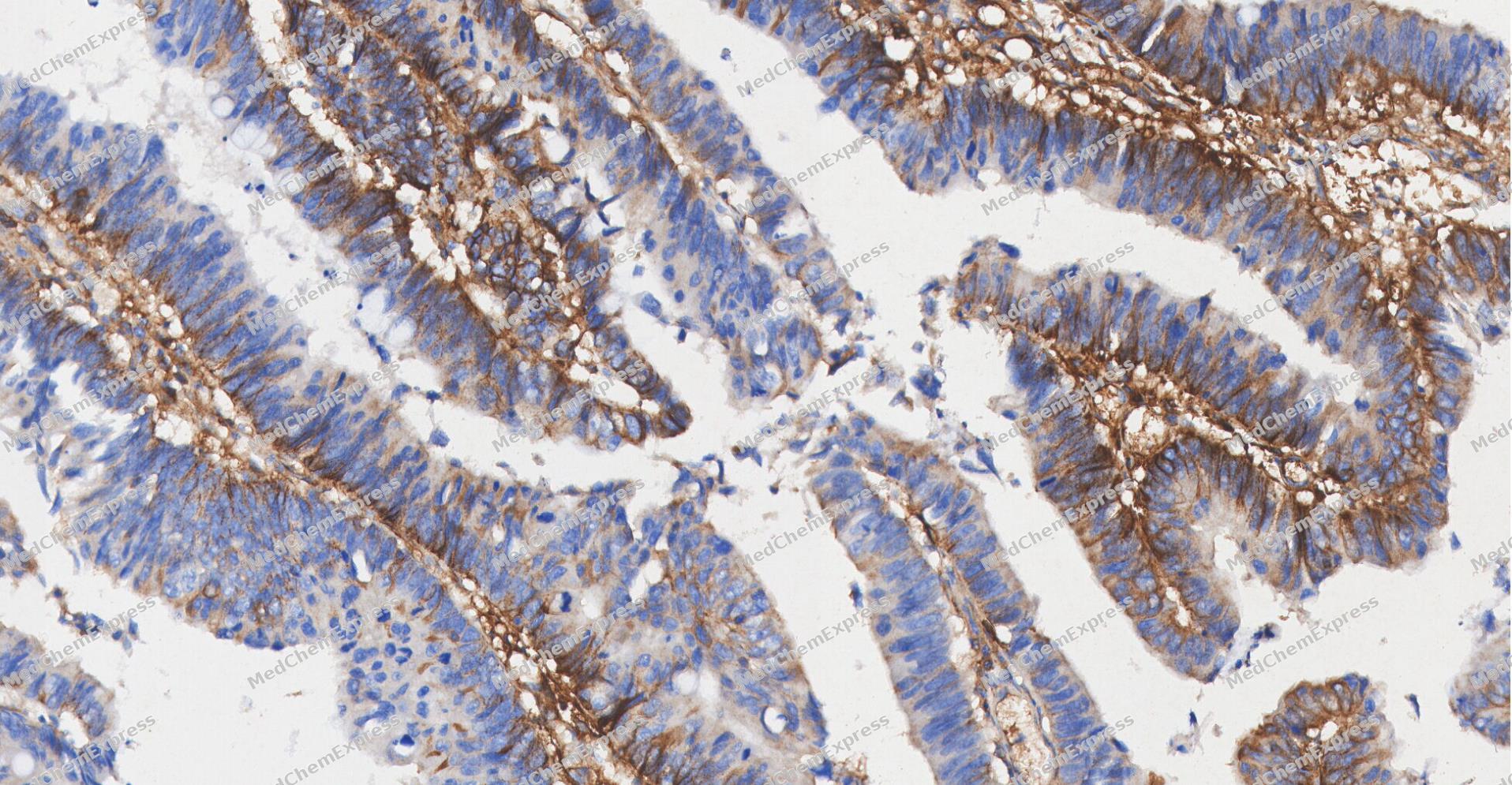 Immunohistochemical analysis of paraffin-embedded human Colon cancer tissue using Kininogen 1 antibody was performed. The section was pretreated using high-temperature and high-pressure mediated EDTA antigen retrieval buffer (pH 9.0), for 5 minutes. The tissues were incubated with primary antibody (HY-P82395, 1:100 dilution) at room temperature for 60 minutes.. Detection was performed using an HRP conjugated compact polymer system. DAB was used as the chromogen. The tissues were counterstained with hematoxylin and mounted with neutral balsam mounting medium.
 -
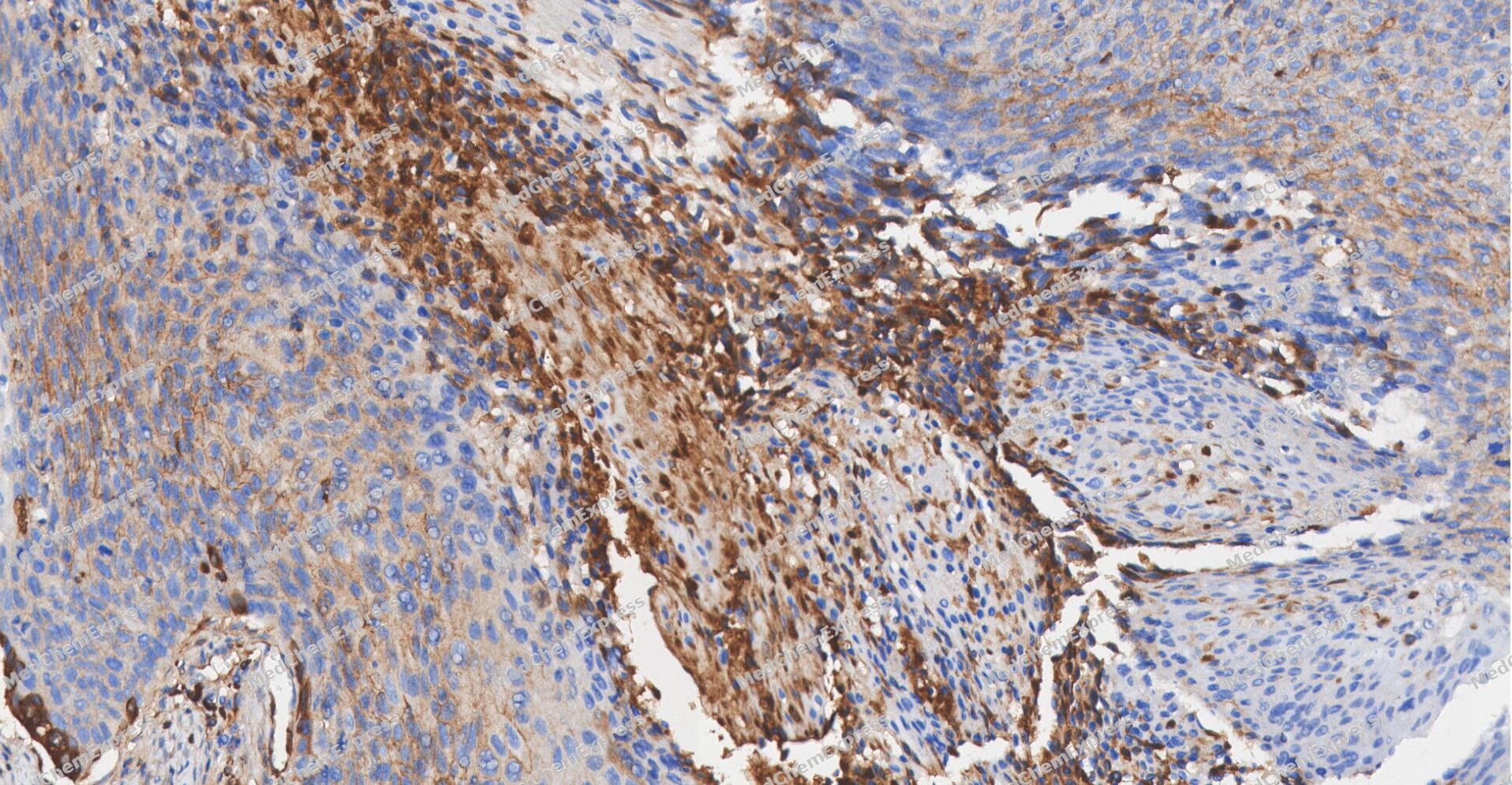 Immunohistochemical analysis of paraffin-embedded human Esophageal Carcinoma tissue using Kininogen 1 antibody was performed. The section was pretreated using high-temperature and high-pressure mediated EDTA antigen retrieval buffer (pH 9.0), for 5 minutes. The tissues were incubated with primary antibody (HY-P82395, 1:100 dilution) at room temperature for 60 minutes.. Detection was performed using an HRP conjugated compact polymer system. DAB was used as the chromogen. The tissues were counterstained with hematoxylin and mounted with neutral balsam mounting medium.
 -
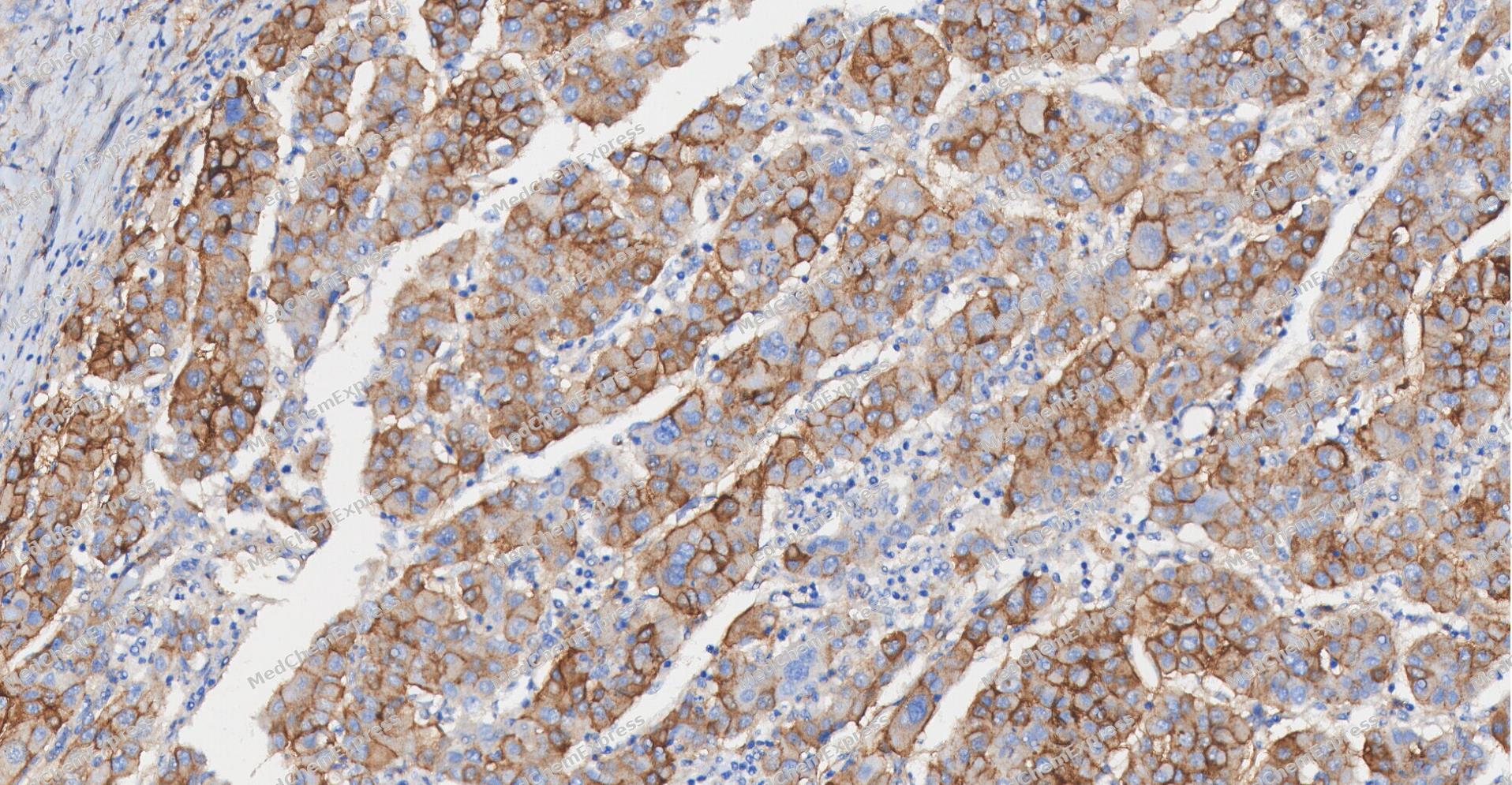 Immunohistochemical analysis of paraffin-embedded human Liver cancer tissue using Kininogen 1 antibody was performed. The section was pretreated using high-temperature and high-pressure mediated EDTA antigen retrieval buffer (pH 9.0), for 5 minutes. The tissues were incubated with primary antibody (HY-P82395, 1:100 dilution) at room temperature for 60 minutes.. Detection was performed using an HRP conjugated compact polymer system. DAB was used as the chromogen. The tissues were counterstained with hematoxylin and mounted with neutral balsam mounting medium.
 -
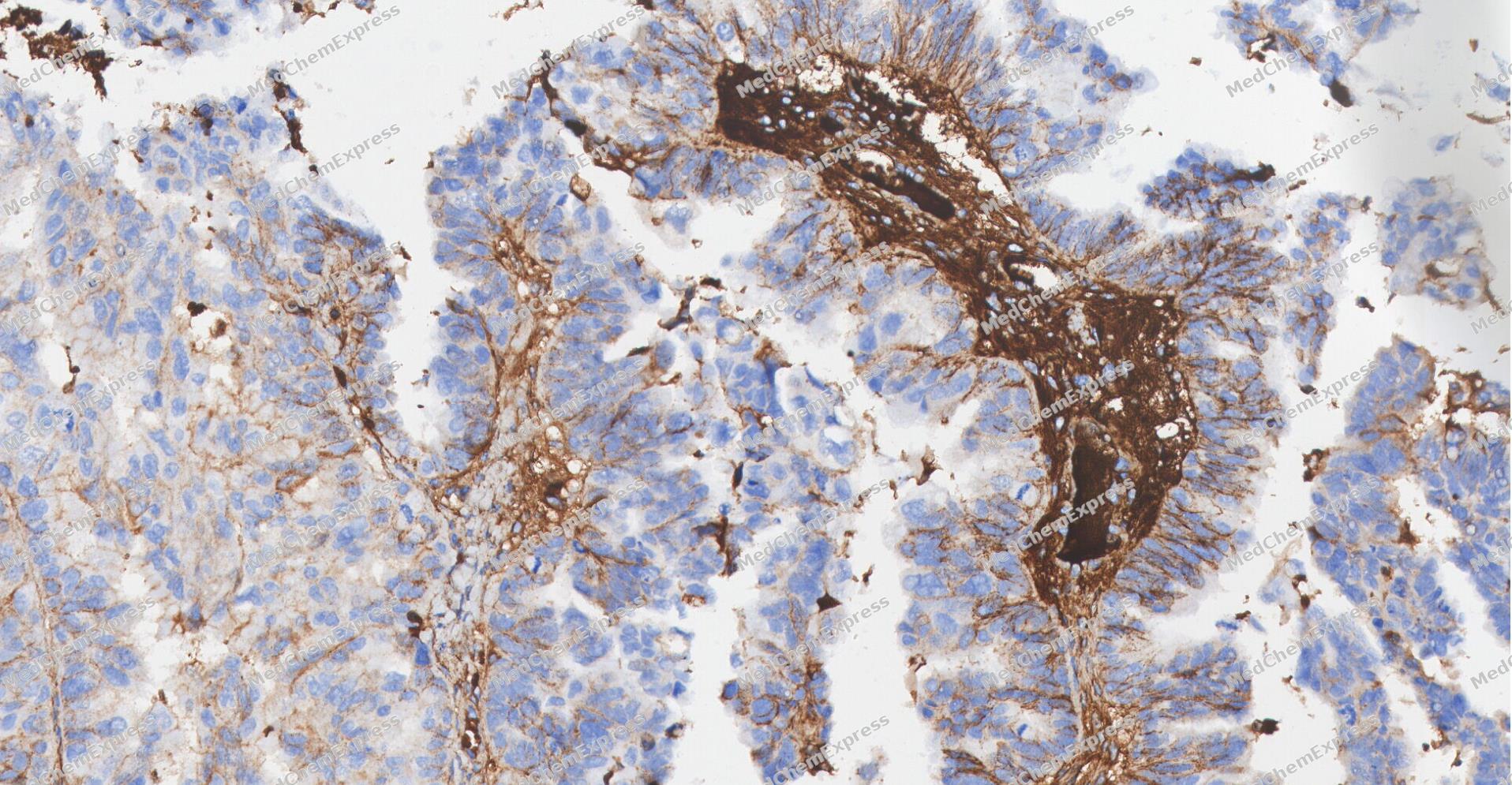 Immunohistochemical analysis of paraffin-embedded human ovarian carcinoma tissue using Kininogen 1 antibody was performed. The section was pretreated using high-temperature and high-pressure mediated EDTA antigen retrieval buffer (pH 9.0), for 5 minutes. The tissues were incubated with primary antibody (HY-P82395, 1:100 dilution) at room temperature for 60 minutes.. Detection was performed using an HRP conjugated compact polymer system. DAB was used as the chromogen. The tissues were counterstained with hematoxylin and mounted with neutral balsam mounting medium.
 -
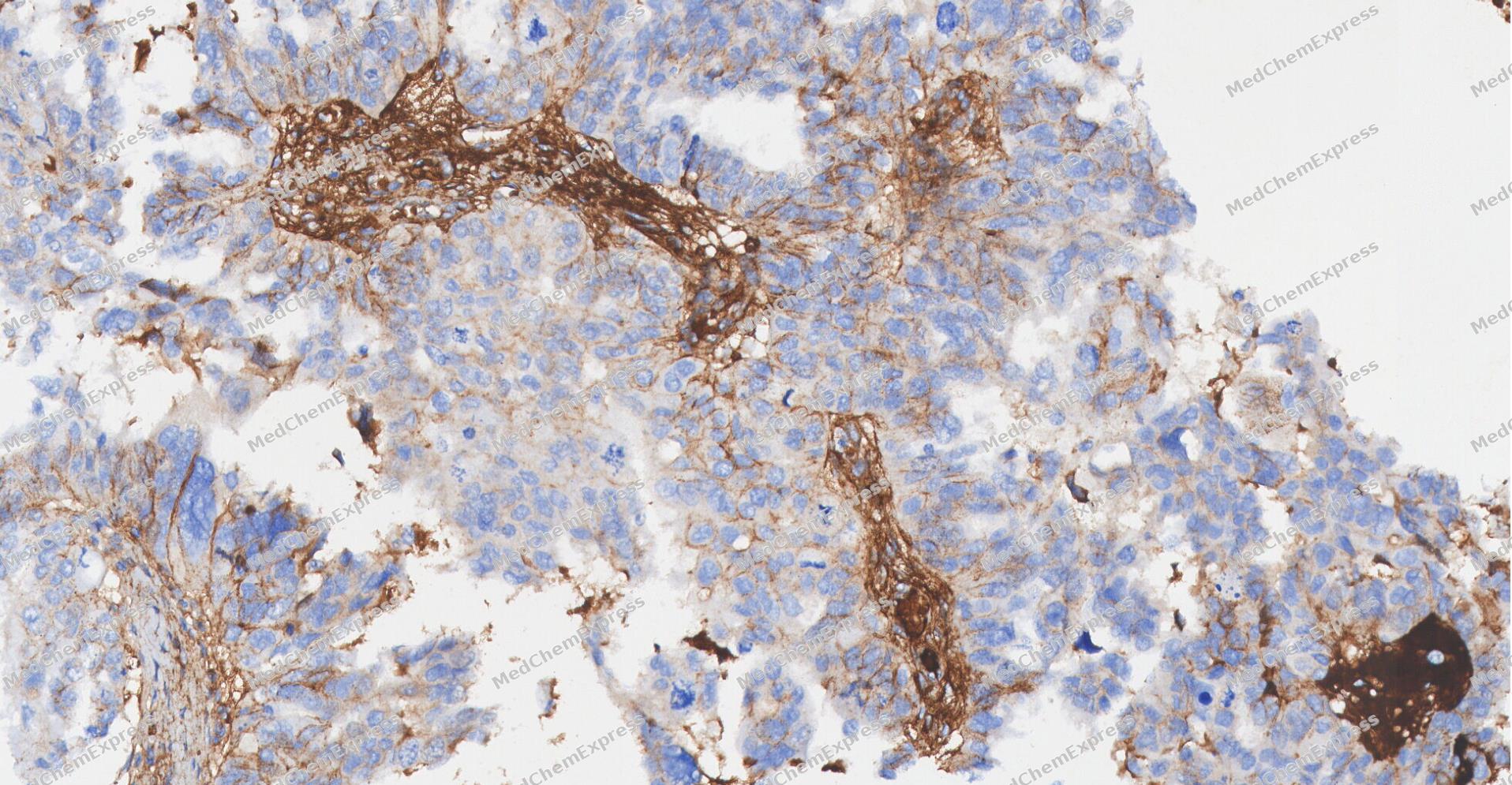 Immunohistochemical analysis of paraffin-embedded human ovarian carcinoma tissue using Kininogen 1 antibody was performed. The section was pretreated using high-temperature and high-pressure mediated EDTA antigen retrieval buffer (pH 9.0), for 5 minutes. The tissues were incubated with primary antibody (HY-P82395, 1:100 dilution) at room temperature for 60 minutes.. Detection was performed using an HRP conjugated compact polymer system. DAB was used as the chromogen. The tissues were counterstained with hematoxylin and mounted with neutral balsam mounting medium.
 -
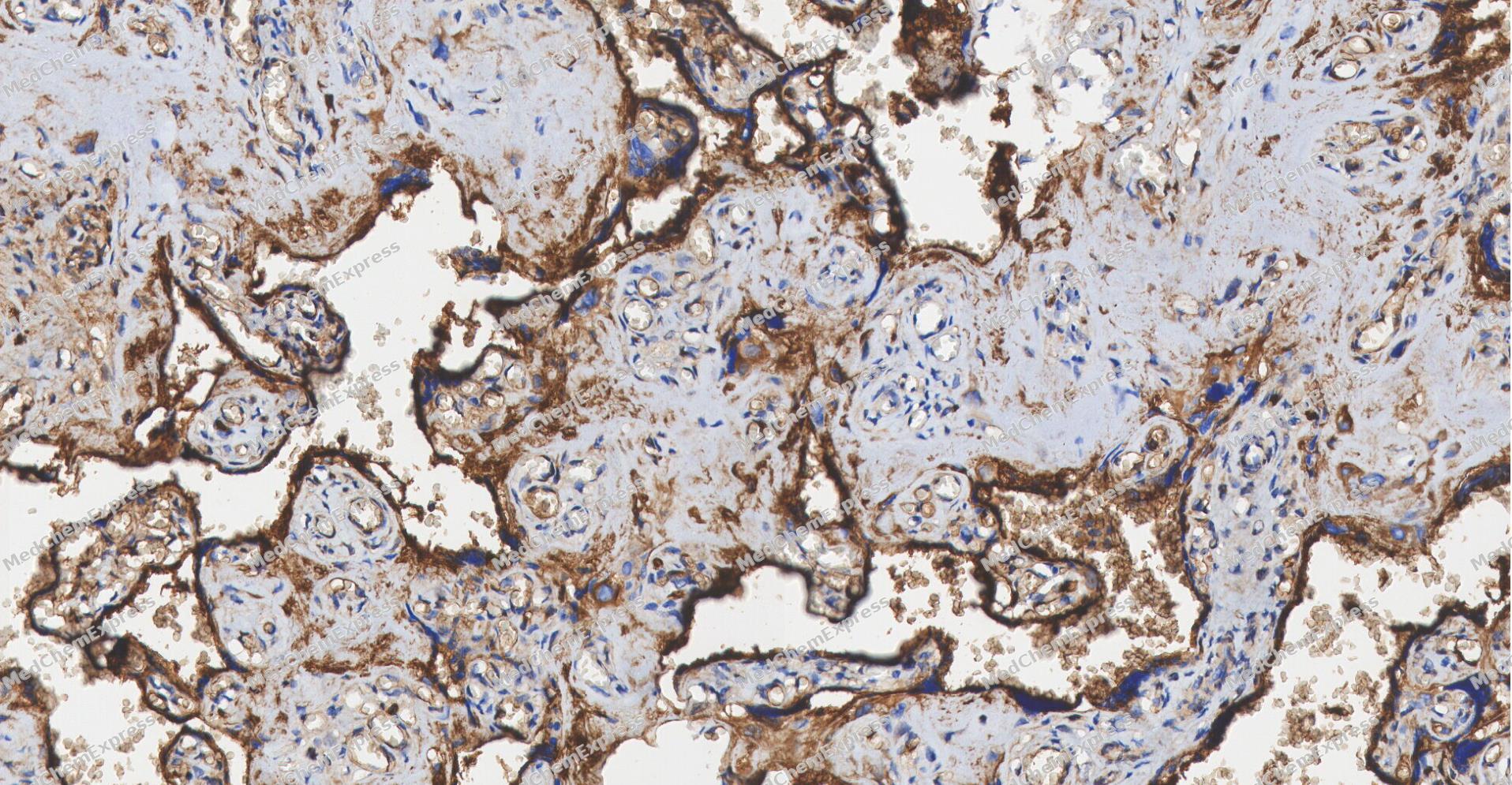 Immunohistochemical analysis of paraffin-embedded human placenta tissue using Kininogen 1 antibody was performed. The section was pretreated using high-temperature and high-pressure mediated EDTA antigen retrieval buffer (pH 9.0), for 5 minutes. The tissues were incubated with primary antibody (HY-P82395, 1:100 dilution) at room temperature for 60 minutes.. Detection was performed using an HRP conjugated compact polymer system. DAB was used as the chromogen. The tissues were counterstained with hematoxylin and mounted with neutral balsam mounting medium.
 -
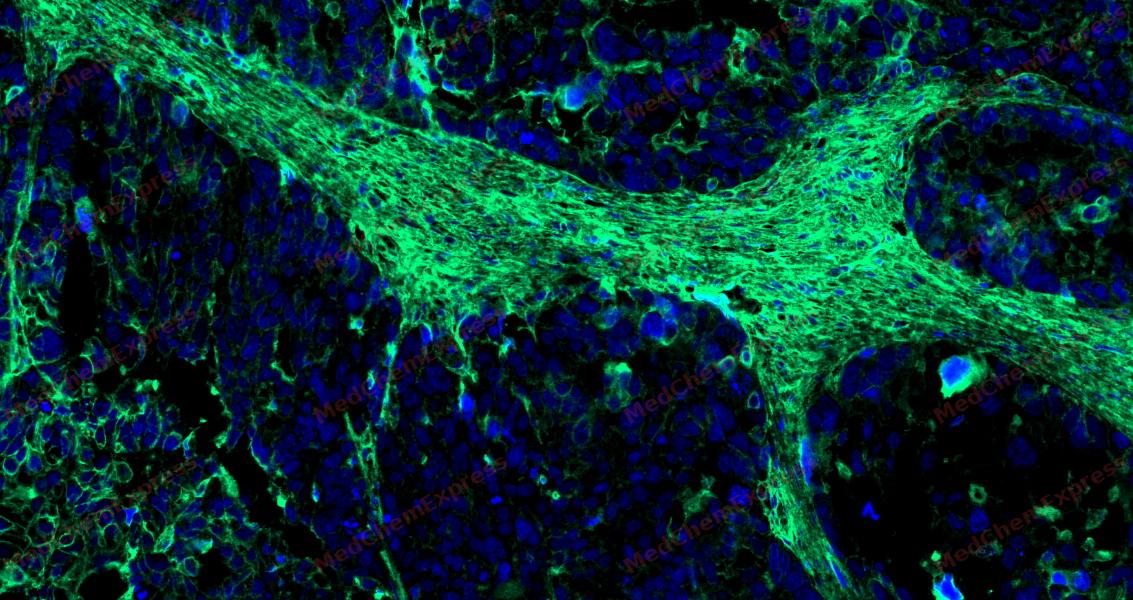 Tyramide signaling amplification based immunofluorescence was performed on paraffin-embedded human ovarian carcinoma tissue using Kininogen 1 antibody. Antigen retrieval was performed in EDTA buffer pH 9.0 (95 °C, 20 min) followed by cooling to RT. Then incubated with primary antibody (HY-P82395, 1:300 dilution) at room temperature for 60 minutes and HRP conjugated secondary antibody for 10 minutes. Fluorescence was then developed with Vari Fluor 532 TSA (200×)(HY-D1832). The tissues were counterstained with DAPI and mounted with Anti-fade mounting medium.
 -
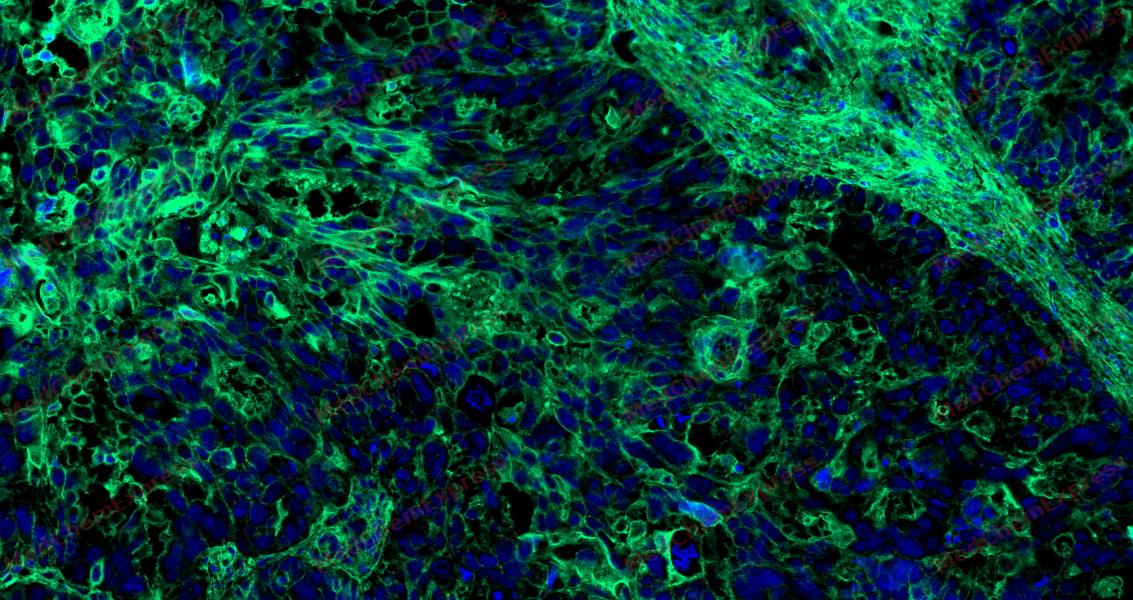 Tyramide signaling amplification based immunofluorescence was performed on paraffin-embedded human ovarian carcinoma tissue using Kininogen 1 antibody. Antigen retrieval was performed in EDTA buffer pH 9.0 (95 °C, 20 min) followed by cooling to RT. Then incubated with primary antibody (HY-P82395, 1:300 dilution) at room temperature for 60 minutes and HRP conjugated secondary antibody for 10 minutes. Fluorescence was then developed with Vari Fluor 532 TSA (200×)(HY-D1832). The tissues were counterstained with DAPI and mounted with Anti-fade mounting medium.
 -
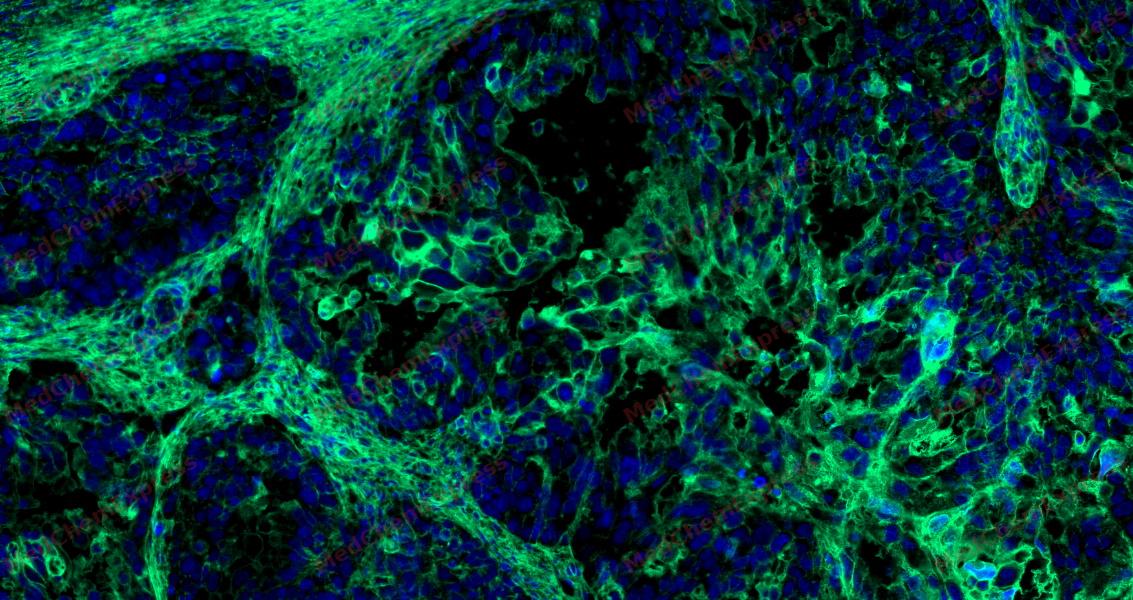 Tyramide signaling amplification based immunofluorescence was performed on paraffin-embedded human ovarian carcinoma tissue using Kininogen 1 antibody. Antigen retrieval was performed in EDTA buffer pH 9.0 (95 °C, 20 min) followed by cooling to RT. Then incubated with primary antibody (HY-P82395, 1:300 dilution) at room temperature for 60 minutes and HRP conjugated secondary antibody for 10 minutes. Fluorescence was then developed with Vari Fluor 532 TSA (200×)(HY-D1832). The tissues were counterstained with DAPI and mounted with Anti-fade mounting medium.
 -
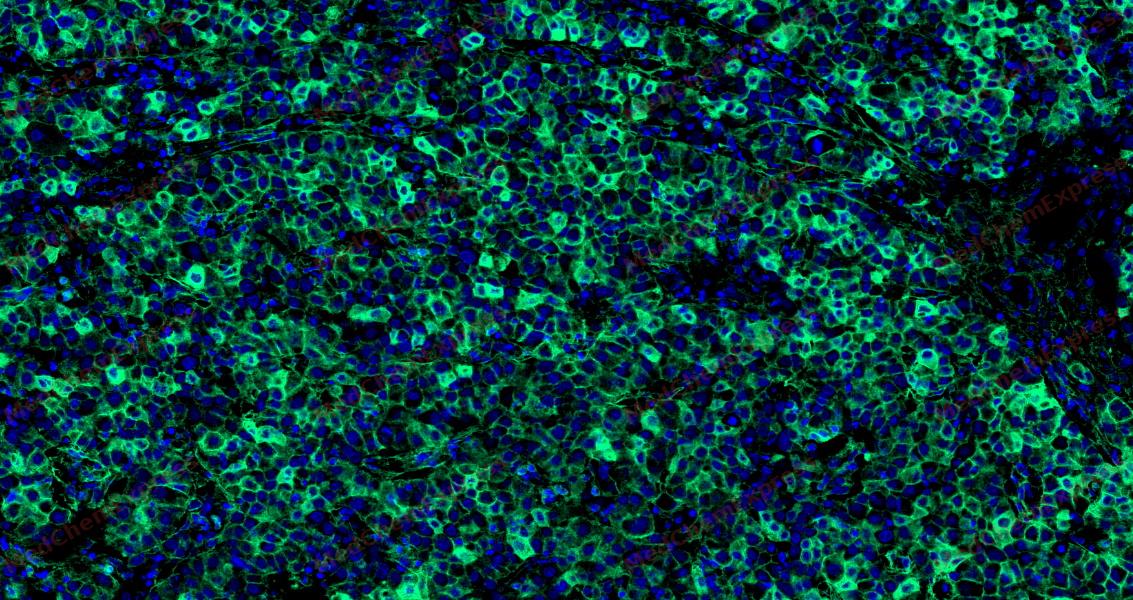 Tyramide signaling amplification based immunofluorescence was performed on paraffin-embedded human Liver cancer tissue using Kininogen 1 antibody. Antigen retrieval was performed in EDTA buffer pH 9.0 (95 °C, 20 min) followed by cooling to RT. Then incubated with primary antibody (HY-P82395, 1:300 dilution) at room temperature for 60 minutes and HRP conjugated secondary antibody for 10 minutes. Fluorescence was then developed with Vari Fluor 532 TSA (200×)(HY-D1832). The tissues were counterstained with DAPI and mounted with Anti-fade mounting medium.
 -
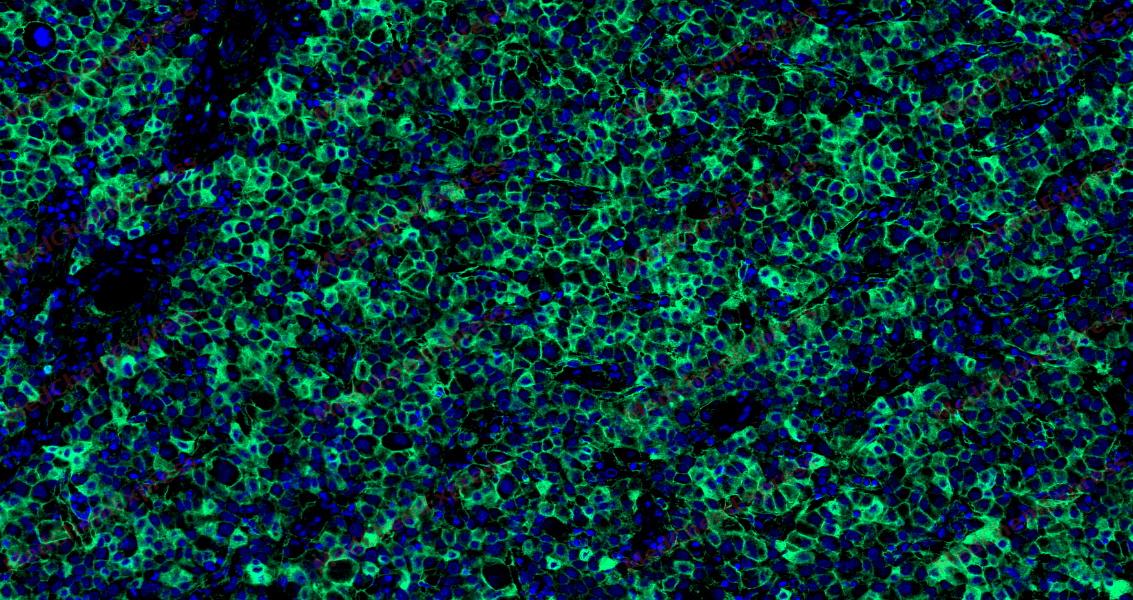 Tyramide signaling amplification based immunofluorescence was performed on paraffin-embedded human Liver cancer tissue using Kininogen 1 antibody. Antigen retrieval was performed in EDTA buffer pH 9.0 (95 °C, 20 min) followed by cooling to RT. Then incubated with primary antibody (HY-P82395, 1:300 dilution) at room temperature for 60 minutes and HRP conjugated secondary antibody for 10 minutes. Fluorescence was then developed with Vari Fluor 532 TSA (200×)(HY-D1832). The tissues were counterstained with DAPI and mounted with Anti-fade mounting medium.
 -
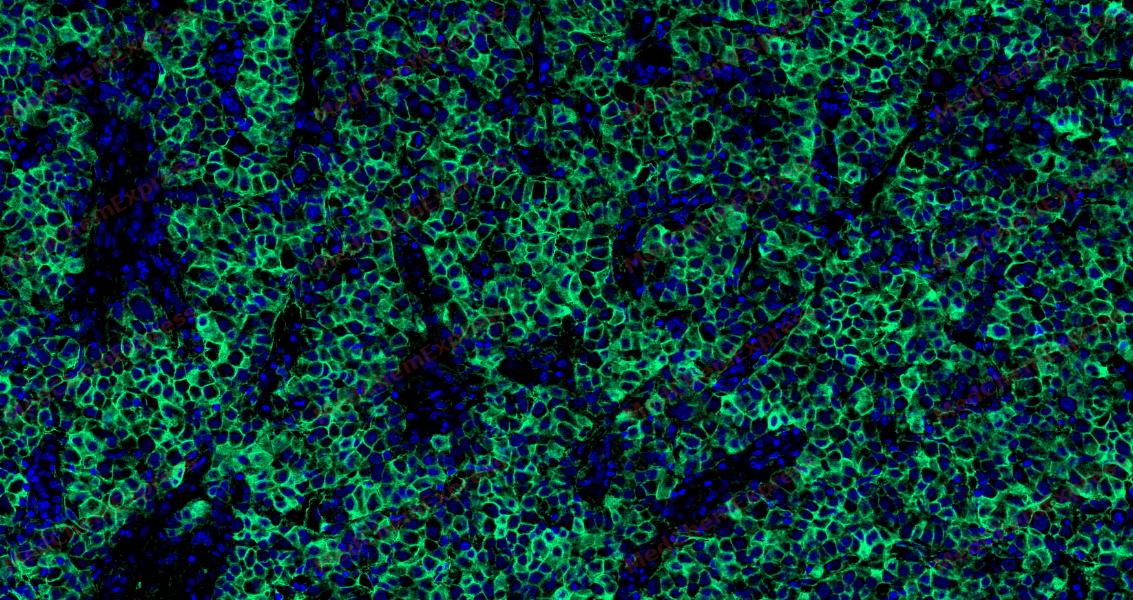 Tyramide signaling amplification based immunofluorescence was performed on paraffin-embedded human Liver cancer tissue using Kininogen 1 antibody. Antigen retrieval was performed in EDTA buffer pH 9.0 (95 °C, 20 min) followed by cooling to RT. Then incubated with primary antibody (HY-P82395, 1:300 dilution) at room temperature for 60 minutes and HRP conjugated secondary antibody for 10 minutes. Fluorescence was then developed with Vari Fluor 532 TSA (200×)(HY-D1832). The tissues were counterstained with DAPI and mounted with Anti-fade mounting medium.


Background
-
Function
Kininogen 1 is a Kininogens are inhibitors of thiol proteases. HMW-kininogen plays an important role in blood coagulation by helping to position optimally prekallikrein and factor XI next to factor XII; HMW-kininogen inhibits the thrombin- and plasmin-induced aggregation of thrombocytes. LMW-kininogen inhibits the aggregation of thrombocytes. LMW-kininogen is in contrast to HMW-kininogen not involved in blood clotting; The active peptide bradykinin is a potent vasodilatator that is released from HMW-kininogen shows a variety of physiological effects: (A) influence in smooth muscle contraction, (B) induction of hypotension, (C) natriuresis and diuresis, (D) decrease in blood glucose level, (E) it is a mediator of inflammation and causes (E1) increase in vascular permeability, (E2) stimulation of nociceptors (4E3) release of other mediators of inflammation (e.g. prostaglandins), (F) it has a cardioprotective effect (directly via bradykinin action, indirectly via endothelium-derived relaxing factor action)
-
Subcellular Localization
Secreted, extracellular space
-
Expression
Tissue_specificity:Secreted in plasma. T-kinin is detected in malignant ovarian, colon and breast carcinomas, but not in benign tumors -
Isoforms & Post-Translational Modification
P01042 has 3 isomers: P01042-1: 71957 Da (predicted); P01042-2: 47883 Da (predicted); P01042-3: 43822 Da (predicted).
Bradykinin is inactivated by ACE, which removes the dipeptide Arg-Phe from its C-terminus;Bradykinin is released from kininogen by plasma kallikrein;Hydroxylation of Pro-383 occurs prior to the release of bradykinin;Phosphorylated by FAM20C in the extracellular medium;N- and O-glycosylated. O-glycosylated with core 1 or possibly core 8 glycans;(Microbial infection) Bradykinin is generated upon proteolytic cleavage by S.pyogenes SpeB to produce hypotension during septic shock -
Subunit
Interacts (high molecular weight kininogen) (via amino acids 402-532) with triafestin-1 and triafestin-2, anticoagulant proteins from Triatoma infestans (PubMed:17645545). Interacts (high molecular weight kininogen) (via amino acids 402-532) with short form salivary protein D7R1, an anticoagulant protein from Anopheles stephensi (PubMed:17645545). Interacts (high molecular weight kininogen) (via amino acids 421-466 and 459-513) with haemaphysalin, an anticoagulant protein from Haemaphysalis longicornis (PubMed:15711755, PubMed:16169873)
-
SwissProt ID
-
Synonyms
BDK; Bradykinin; HMWK; Kallidin I; Kallidin II; KNG; KNG1; WILLIAMS FACTOR
-
Research Field
Cell Biology


Documentation
-
Data Sheet (235 KB)
-
SDS (251 KB)
- English - EN (251 KB)
- Français - FR (251 KB)
- Deutsch - DE (251 KB)
- Norwegian - NO (251 KB)
- Español - ES (251 KB)
- Swedish - SV (251 KB)
- Italian - IT (251 KB)
- Korean - KR (251 KB)
- Portuguese - PT (251 KB)
-
User Guide for Antibodies (1077 KB)

 Powered by Bioz
