



Fasentin
Based on 4 publication(s) in Google Scholar
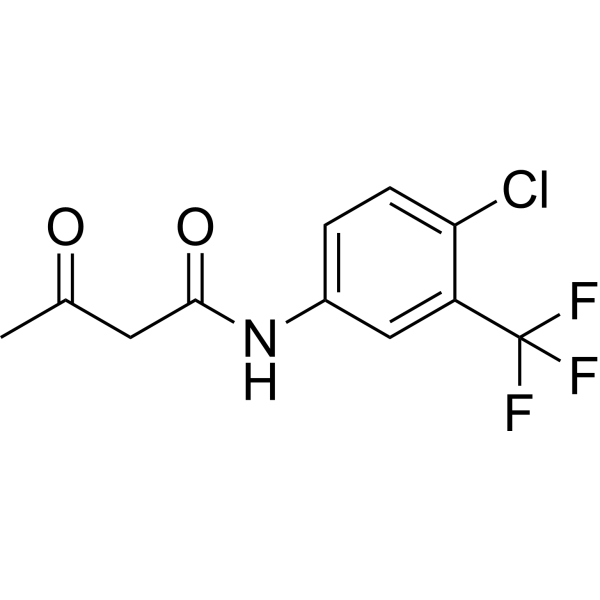
Fasentin, a potent glucose uptake inhibitor, inhibits GLUT-1/GLUT-4 transporters. Fasentin preferentially inhibits GLUT4 (IC50=68 μM) over GLUT1. Fasentin is a death receptor stimuli (FAS) sensitizer and sensitizes cells to FAS-induced cell death. Fasentin is also a tumor necrosis factor (TNF) apoptosis-inducing ligand sensitizer. Fasentin blocks glucose uptake in cancer cell lines and has anti-angiogenic activity.
For research use only. We do not sell to patients.
- Purity : 98.0%
- CAS No.: 392721-37-8
- Formula: C11H9ClF3NO2
- Molecular Weight:279.64
-
Storage:Pure form -20°C, 3 years , 4°C, 2 years ; In solvent -80°C, 6 months , -20°C, 1 month

To place orders, for customer services and technical support, please contact: MedChemExpress USA
Tel: 609-228-6898 E-mail: [email protected] [email protected]


-
 Biological Activity
-
Chemical Information
-
Solvent & Solubility
- Protocols
- Purity & Documentation
- References
-
 Help & FAQs


-
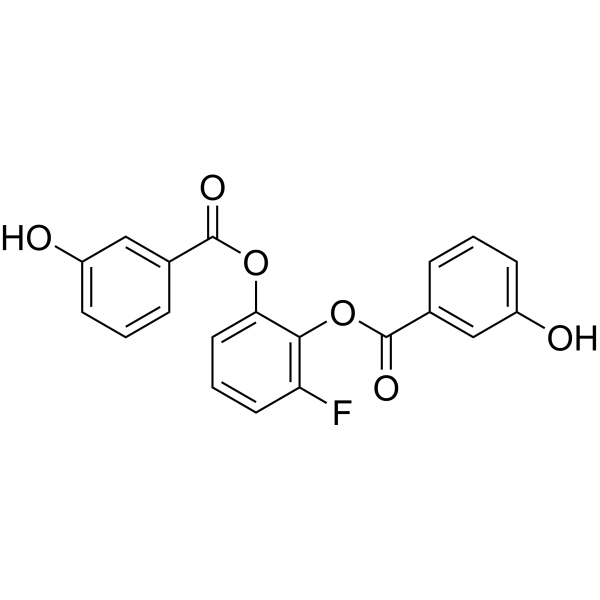
HY-19331
WZB117Glut1 Inhibitor -
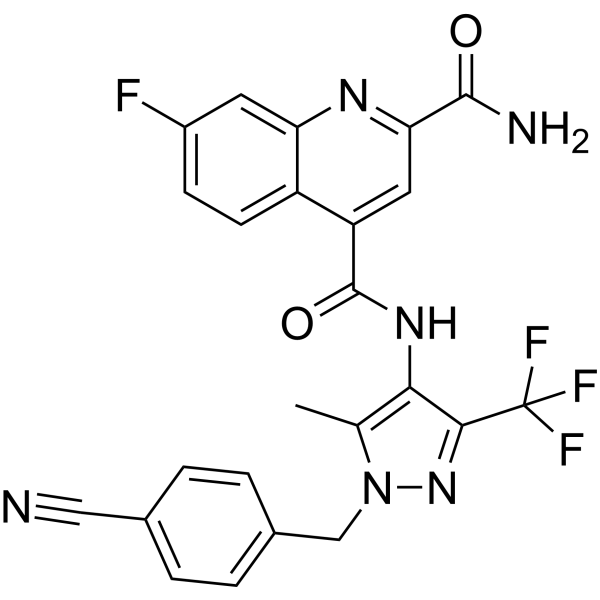
HY-100017
BAY-876GLUT1 Inhibitor -
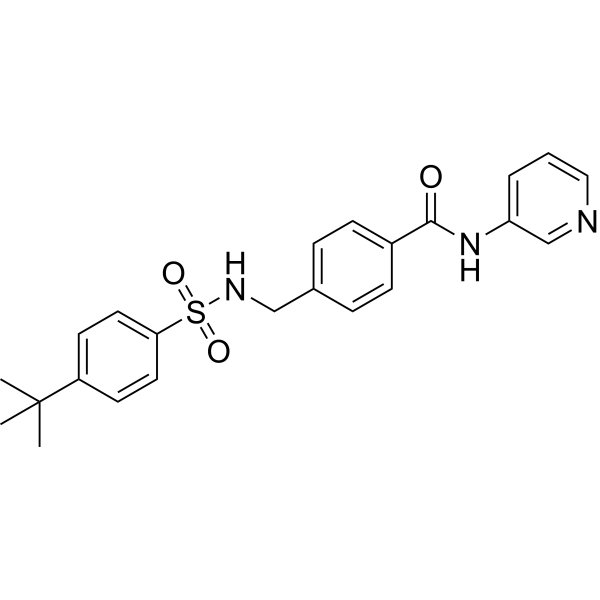
HY-18728
STF-31GLUT1 Inhibitor -
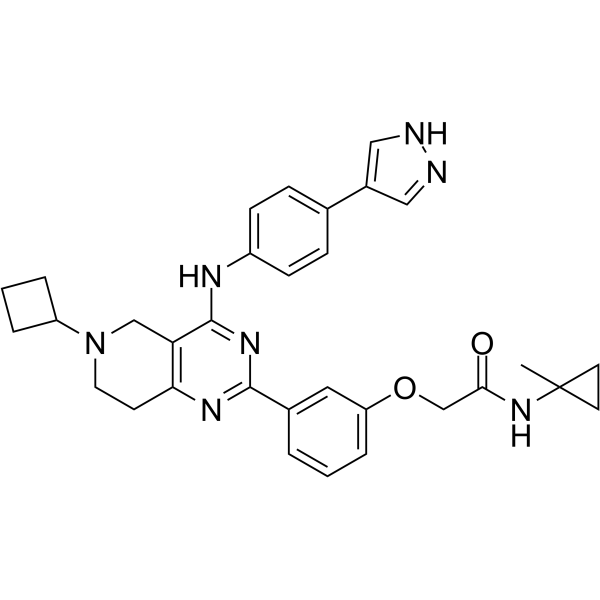
HY-139605
GLUT inhibitor-1GLUT1/GLUT3 Inhibitor -

HY-101849R
Fasentin (Standard)GLUT-1/GLUT-4 Inhibitor -
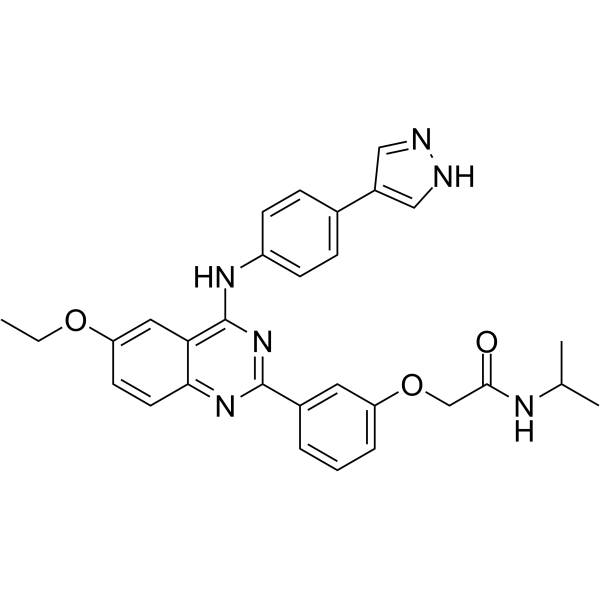
HY-145597
KL-11743GLUT1-4 Inhibitor -
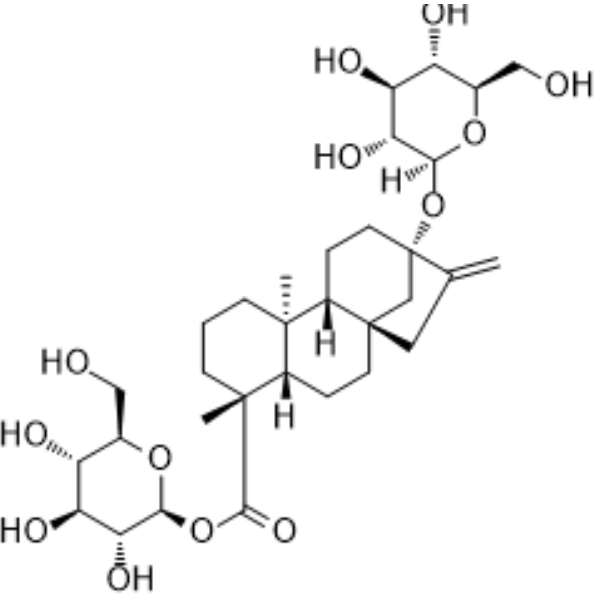
HY-N0668
RubusosideSolubilizing Agent -
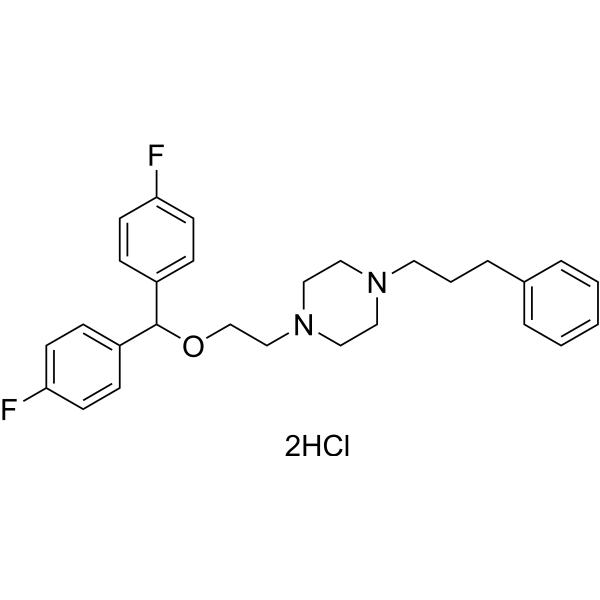
HY-13217
Vanoxerine dihydrochlorideDopamine Transporter Inhibitor -
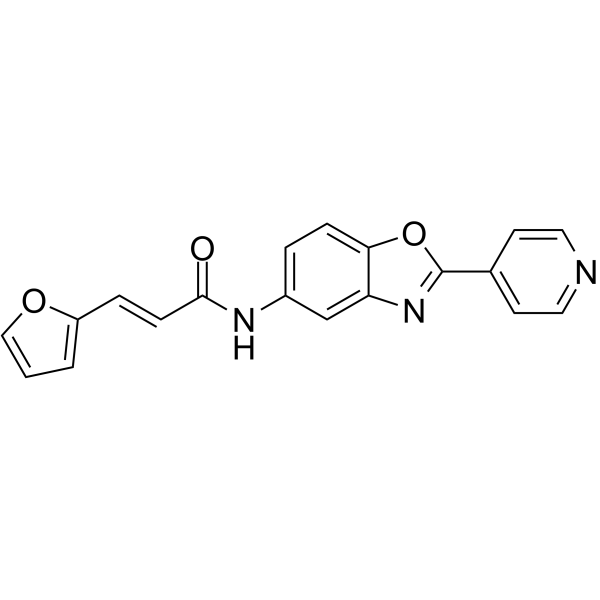
HY-139047
SW157765GLUT8 Inhibitor -
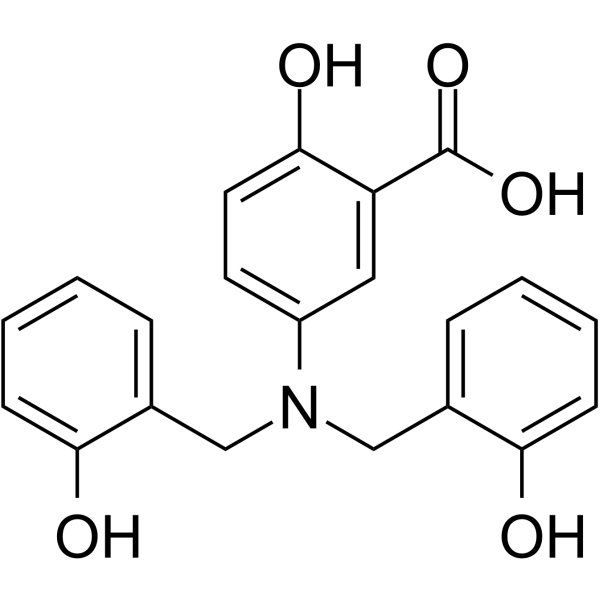
HY-108935
Lavendustin BHIV-1 Integrase Inhibitor -
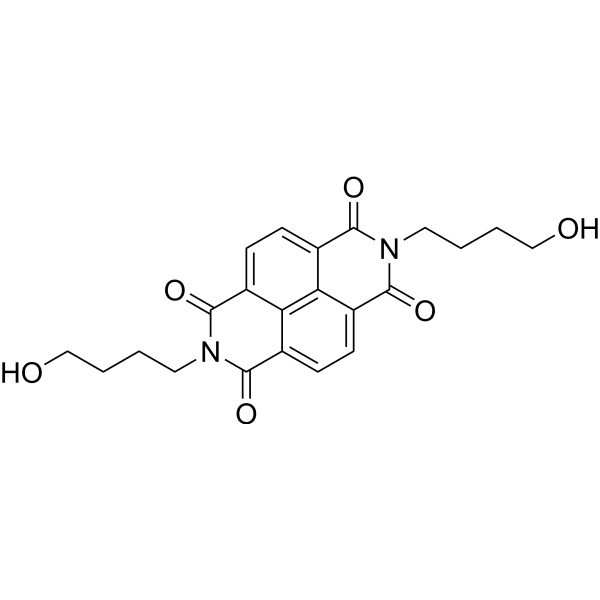
HY-153612
MMV009085PfHT1 Inhibitor -
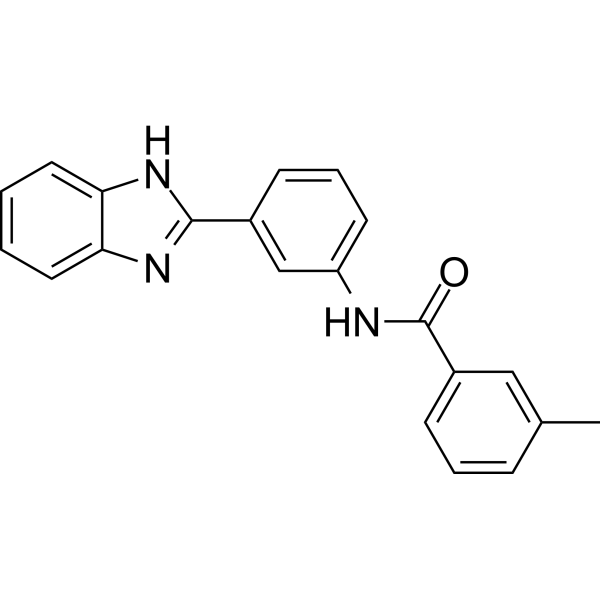
HY-148315
GLUT1-IN-2GLUT1 Inhibitor
Publications Citing Use of MedChemExpress (MCE) Fasentin
More

Biological Activity
Description
|
GLUT4 68 μM (IC50) |
GLUT1 |
In Vitro
Fasentin (0.1-1000 μM; 72 hours) inhibits endothelial, tumour and fibroblast cell growth without inducing cell death[1].
Fasentin (25-100 μM; 16-24 hours) induces a cell cycle arrest in G0/G1 phase and reduces the cell number in S phase in a dose-dependent manner[1].
Fasentin (50 μM; 16 hours) alters expression of genes associated with glucose deprivation such as AspSyn and PCK-2[2].
Fasentin (15, 30, 80 μM; pretreatment 1 hour) induces glucose deprivation, partially blocks glucose uptake in PPC-1, DU145, and U937 cells[2].
Fasentin (100 μM; 16 hours) does not affect the migratory capability of endothelial cells[1].
Fasentin (25-100 μM; 16 hours) lowers levels of phospho-ERK in HMECs, indicating a partial inhibition on the ERK signalling pathway, even though the effect is not statistically significant. Fasentin does not inhibit the tyrosine kinase activity of VEGFR2[1].
Fasentin interacts with a unique site in the intracellular channel of GLUT1[3].
MedChemExpress (MCE) has not independently confirmed the accuracy of these methods. They are for reference only.
-
Cell Line:Three types of endothelial cells ECs (HMEC, human microvascular endothelial cells; HUVEC, human umbilical vein endothelial cells; and BAEC, bovine aortic endothelial cells), three human tumour cell lines (MDA-MB-231 and MCF7 breast carcinoma cells, and HeLa cervix adenocarcinoma cells), and human gingival fibroblasts (HGF)
-
Concentration:0.1, 1, 10, 100, 1000 μM
-
Incubation Time:72 hours
-
Result:Inhibited endothelial, tumour and fibroblast cell growth (IC50=26.3-111.2 μM) without inducing cell death.
-
Cell Line:HMECs
-
Concentration:25, 50, 100 μM
-
Incubation Time:16, 24 hours
-
Result:Induced a cell cycle arrest in G0/G1 phase and reduced the cell number in S phase in a dose-dependent manner.
Did not increase the subG1 population.
-
Cell Line:PPC-1 cells[2]
-
Concentration:50 μM
-
Incubation Time:16 hours
-
Result:Altered expression of genes associated with glucose deprivation such as AspSyn and PCK-2 not FLIP mRNA expression.


Chemical Information
-
CAS No. 392721-37-8
-
Appearance Oil
-
Molecular Weight 279.64
-
Formula C11H9ClF3NO2
-
Color Light yellow to brown
-
SMILES
CC(CC(NC1=CC=C(Cl)C(C(F)(F)F)=C1)=O)=O
-
Shipping
Room temperature in continental US; may vary elsewhere.
-
Storage
Pure form -20°C 3 years 4°C 2 years In solvent -80°C 6 months -20°C 1 month


Publications (4)
-
Journal Impact Factor
-
Most Recent
-
Cell Metab
Cancer cells co-opt nociceptive nerves to thrive in nutrient-poor environments and upon nutrient-starvation therapies. [Abstract]2022 Dec 6;34(12):1999-2017.e10. PMID: 36395769 -
Cell Death Dis
2022 Mar 11;13(3):229. PMID: 35277475 -
mBio
Respiratory syncytial virus co-opts hypoxia-inducible factor-1α-mediated glycolysis to favor the production of infectious virus. [Abstract]2023 Oct 31;14(5):e0211023. PMID: 37796013 -
ACS Chem Biol
Discrimination of GLUTs by Fructose Isomers Enables Simultaneous Screening of GLUT5 and GLUT2 Activity in Live Cells. [Abstract]2023 May 19;18(5):1089-1100. PMID: 37116192


Solvent & Solubility
In Vitro:
DMSO : 100 mg/mL (357.60 mM; Need ultrasonic; Hygroscopic DMSO has a significant impact on the solubility of product, please use newly opened DMSO)
Please refer to the solubility information to select the appropriate solvent. Once prepared, please aliquot and store the solution to prevent product inactivation from repeated freeze-thaw cycles.
Storage method and period of stock solution: -80°C, 6 months; -20°C, 1 month. When stored at -80°C, please use it within 6 months. When stored at -20°C, please use it within 1 month.
Please refer to the solubility information to select the appropriate solvent. Once prepared, please aliquot and store the solution to prevent product inactivation from repeated freeze-thaw cycles.
Storage method and period of stock solution: -80°C, 6 months; -20°C, 1 month. When stored at -80°C, please use it within 6 months. When stored at -20°C, please use it within 1 month.
Concentration (start) × Volume (start) = Concentration (final) × Volume (final)
In Vivo:
Select the appropriate dissolution method based on your experimental animal and administration route.
- For the following dissolution methods, please ensure to first prepare a clear stock solution using an In Vitro approach and then sequentially add co-solvents:
- To ensure reliable experimental results, the clarified stock solution can be appropriately stored based on storage conditions. As for the working solution for In Vivo experiments, it is recommended to prepare freshly and use it on the same day.
- The percentages shown for the solvents indicate their volumetric ratio in the final prepared solution. If precipitation or phase separation occurs during preparation, heat and/or sonication can be used to aid dissolution.
Add each solvent one by one: 10% DMSO 40% PEG300 5% Tween-80 45% Saline
Solubility: ≥ 2.5 mg/mL (8.94 mM); Clear solution
This protocol yields a clear solution of ≥ 2.5 mg/mL (saturation unknown).
Taking 1 mL working solution as an example, add 100 μL DMSO stock solution (25.0 mg/mL) to 400 μL PEG300, and mix evenly; then add 50 μL Tween-80 and mix evenly; then add 450 μL Saline to adjust the volume to 1 mL.
Preparation of Saline: Dissolve 0.9 g sodium chloride in ddH₂O and dilute to 100 mL to obtain a clear Saline solution.
Add each solvent one by one: 10% DMSO 90% (20% SBE-β-CD in Saline)
Solubility: 2.5 mg/mL (8.94 mM); Suspended solution; Need ultrasonic
This protocol yields a suspended solution of 2.5 mg/mL. Suspended solution can be used for oral and intraperitoneal injection.
Taking 1 mL working solution as an example, add 100 μL DMSO stock solution (25.0 mg/mL) to 900 μL 20% SBE-β-CD in Saline, and mix evenly.
Preparation of 20% SBE-β-CD in Saline (4°C, storage for one week): 2 g SBE-β-CD powder is dissolved in 10 mL Saline, completely dissolve until clear.
In Vivo Dissolution Calculator
Please enter the basic information of animal experiments:
-
-
-
-
Recommended: Prepare an additional quantity of animals to account for potential losses during experiments.
Please enter your animal formula composition:
-
%DMSO +
Recommended: Keep the proportion of DMSO in working solution below 2% if your animal is weak.
-
%+
-
+%Tween-80 + +
-
%Saline +
The co-solvents required include: DMSO, . All of co-solvents are available by MedChemExpress (MCE). , Tween 80. All of co-solvents are available by MedChemExpress (MCE).
Working solution concentration: 0.22 mg/mL
Method for preparing stock solution: mg drug dissolved in μL DMSO. Stock solution concentration: mg/mL.
1. Take μL DMSO stock solution;
2. Add μL .
μL , mix evenly;
3. Then add μL Tween 80, mix evenly;
4. Then add μL
Please ensure that the stock solution in the first step is dissolved to a clear state, and add co-solvents in sequence. You can use ultrasonic heating (ultrasonic cleaner, recommended frequency 20-40 kHz), vortexing, etc. to assist dissolution.


Purity & Documentation
-
Data Sheet (278 KB)
-
SDS (393 KB)
- English - EN (393 KB)
- Français - FR (393 KB)
- Deutsch - DE (393 KB)
- Norwegian - NO (393 KB)
- Español - ES (393 KB)
- Swedish - SV (393 KB)
- Italian - IT (393 KB)
- Korean - KR (393 KB)
- Portuguese - PT (393 KB)
-
Handling Instructions (2659 KB)
References
[1]. Mª Carmen Ocaña, et al. Fasentin diminishes endothelial cell proliferation, differentiation and invasion in a glucose metabolism-independent manner. Sci Rep. 2020 Apr 9;10(1):6132. [Content Brief]
[2]. Tabitha E Wood, et al. A novel inhibitor of glucose uptake sensitizes cells to FAS-induced cell death. Mol Cancer Ther. 2008 Nov;7(11):3546-55. [Content Brief]
[3]. Qin Wu, et al. GLUT1 inhibition blocks growth of RB1-positive triple negative breast cancer. Nat Commun. 2020 Aug 21;11(1):4205. [Content Brief]


Complete Stock Solution Preparation Table
Please refer to the solubility information to select the appropriate solvent. Once prepared, please aliquot and store the solution to prevent product inactivation from repeated freeze-thaw cycles.
Storage method and period of stock solution: -80°C, 6 months; -20°C, 1 month. When stored at -80°C, please use it within 6 months. When stored at -20°C, please use it within 1 month.
| Optional Solvent | Concentration Solvent Mass | 1 mg | 5 mg | 10 mg | 25 mg |
|---|---|---|---|---|---|
| DMSO | 1 mM | 3.5760 mL | 17.8801 mL | 35.7603 mL | 89.4007 mL |
| 5 mM | 0.7152 mL | 3.5760 mL | 7.1521 mL | 17.8801 mL | |
| 10 mM | 0.3576 mL | 1.7880 mL | 3.5760 mL | 8.9401 mL | |
| 15 mM | 0.2384 mL | 1.1920 mL | 2.3840 mL | 5.9600 mL | |
| 20 mM | 0.1788 mL | 0.8940 mL | 1.7880 mL | 4.4700 mL | |
| 25 mM | 0.1430 mL | 0.7152 mL | 1.4304 mL | 3.5760 mL | |
| 30 mM | 0.1192 mL | 0.5960 mL | 1.1920 mL | 2.9800 mL | |
| 40 mM | 0.0894 mL | 0.4470 mL | 0.8940 mL | 2.2350 mL | |
| 50 mM | 0.0715 mL | 0.3576 mL | 0.7152 mL | 1.7880 mL | |
| 60 mM | 0.0596 mL | 0.2980 mL | 0.5960 mL | 1.4900 mL | |
| 80 mM | 0.0447 mL | 0.2235 mL | 0.4470 mL | 1.1175 mL | |
| 100 mM | 0.0358 mL | 0.1788 mL | 0.3576 mL | 0.8940 mL |


Fasentin Related Classifications
HY-101849 Related Classifications
 Powered by Bioz