



Bupivacaine
Based on 4 publication(s) in Google Scholar
Bupivacaine is a NMDA receptor inhibitor. Bupivacaine can block sodium, L-calcium, and potassium channels.Bupivacaine potently blocks SCN5A channels with the IC50 of 69.5 μM. Bupivacaine can be used for the research of chronic pain.
Nos produits utilisent uniquement pour la recherche. Nous ne vendons pas aux patients.
- Pureté : 99.95%
- CAS No.: 38396-39-3
- Formule: C18H28N2O
- Masse moléculaire:288.43
-
Stockage:Powder -20°C, 3 years , 4°C, 2 years ; In solvent -80°C, 6 months , -20°C, 1 month

To place orders, for customer services and technical support, please contact: MedChemExpress USA
Tel: 609-228-6898 E-mail: [email protected] [email protected]


-
 Activité biologique
-
Chemical Information
-
Solvant et solubilité
- Pureté et documentation
- Références
-
 Help & FAQs


-
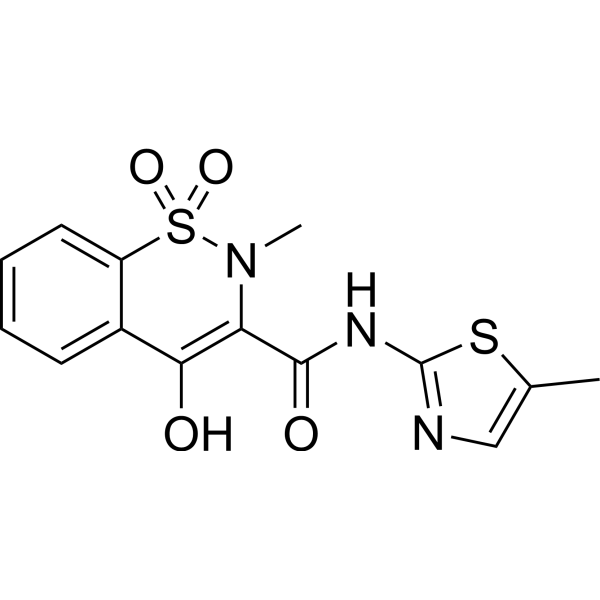
HY-B0261
MeloxicamCOX Inhibitor -
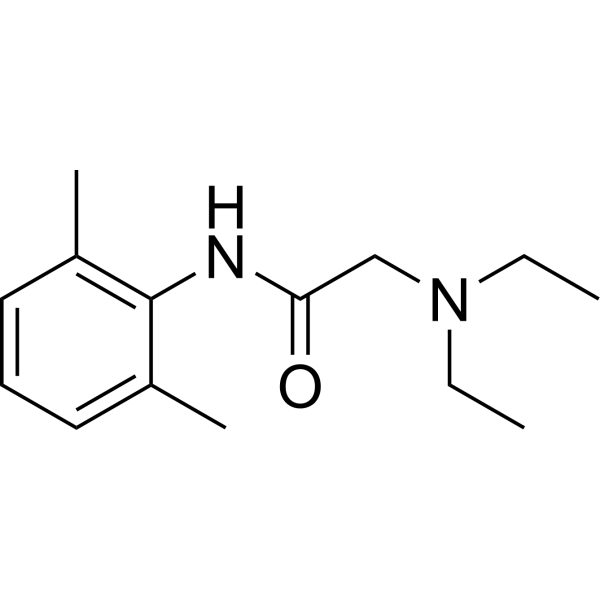
HY-B0185
LidocaineNa+ Channel Blocker -
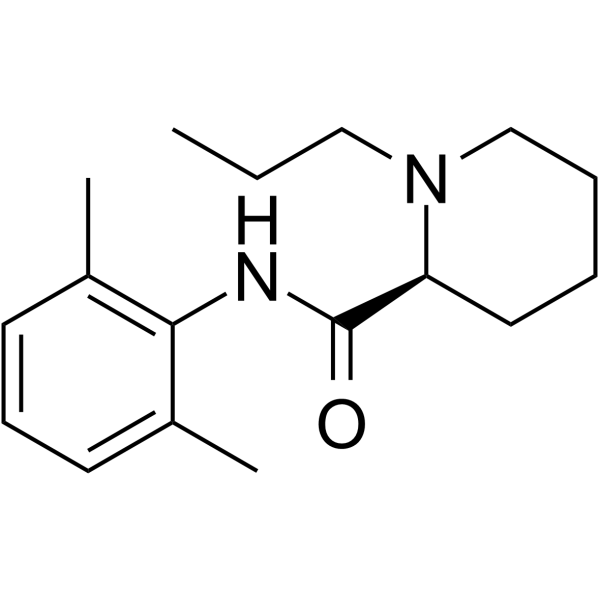
HY-B0563
RopivacaineSodium Channel Inhibitor -
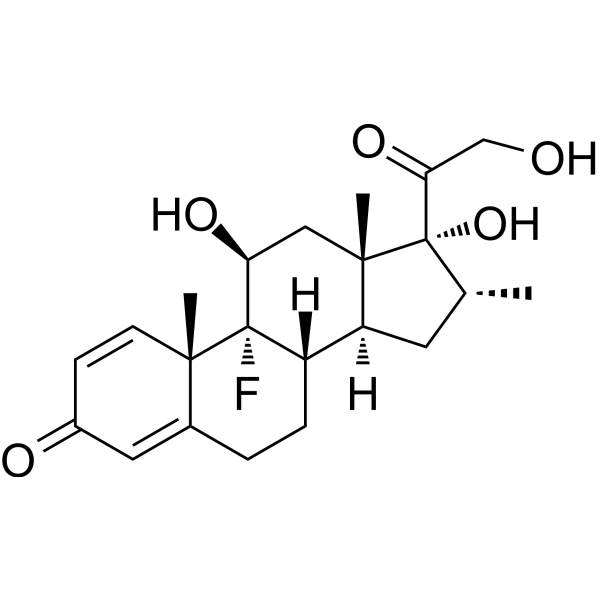
HY-14648
DexamethasoneGR Agonist -
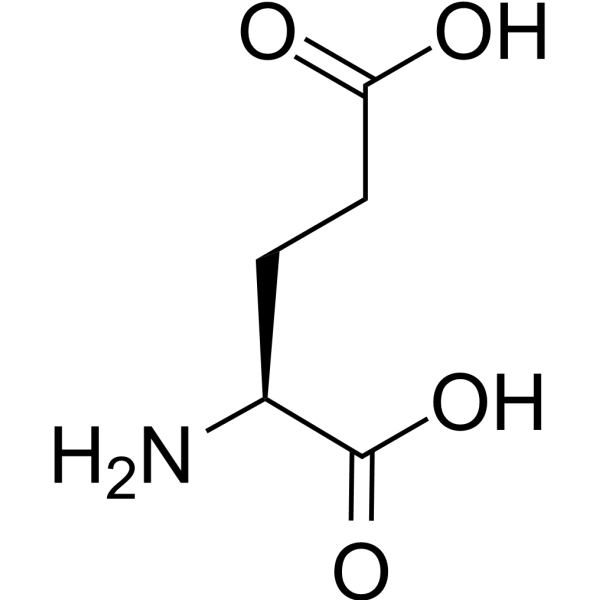
HY-14608
L-Glutamic acidGlutamate Receptors Agonist -
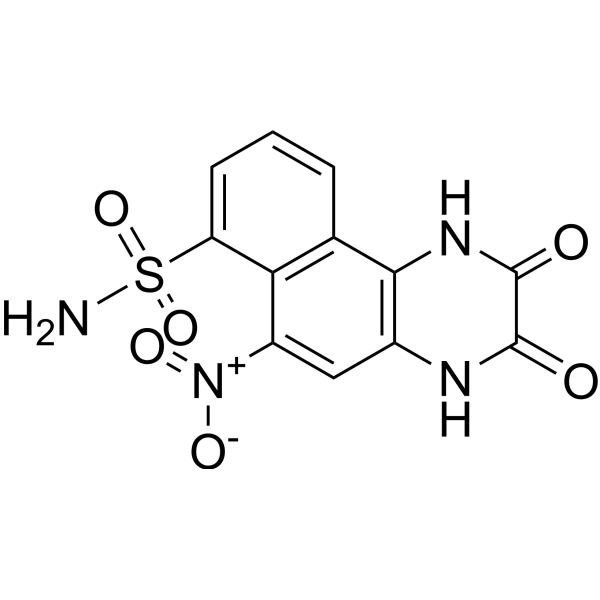
HY-15068
NBQXAMPA Receptor Antagonist -
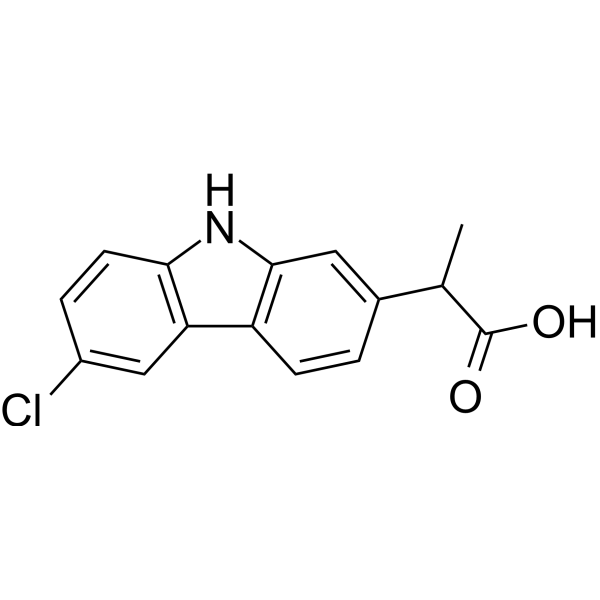
HY-B1227
CarprofenCOX Inhibitor -
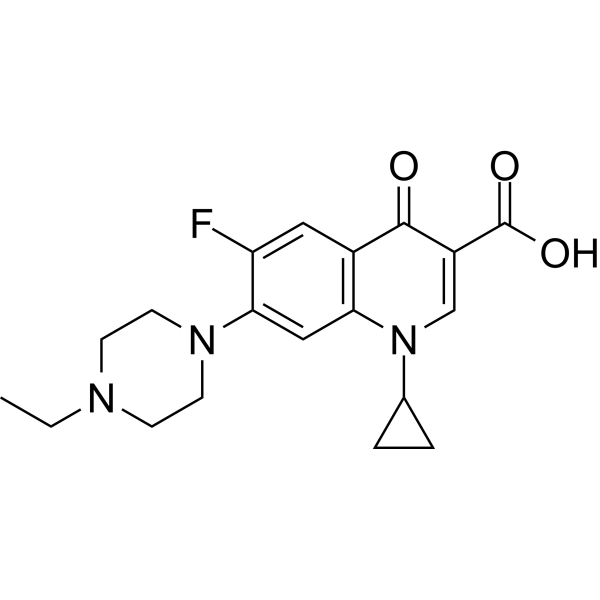
HY-B0502
EnrofloxacinBacterial Inhibitor -
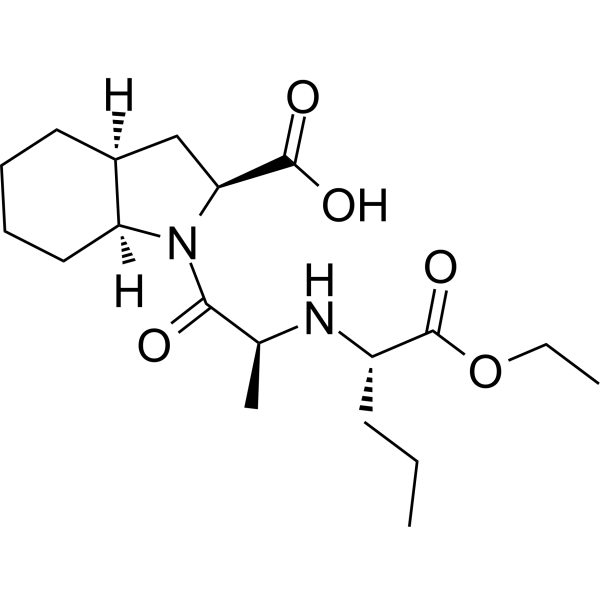
HY-B0130
PerindoprilAngiotensin-converting enzyme Inhibitor -
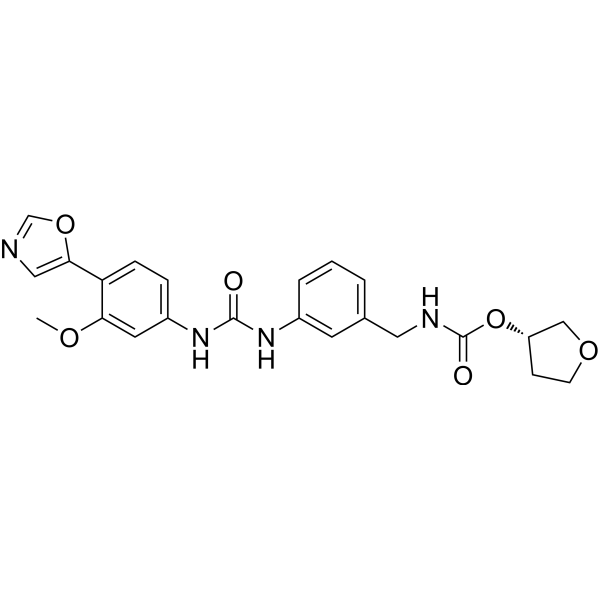
HY-13986
MerimepodibIMPDH Inhibitor -
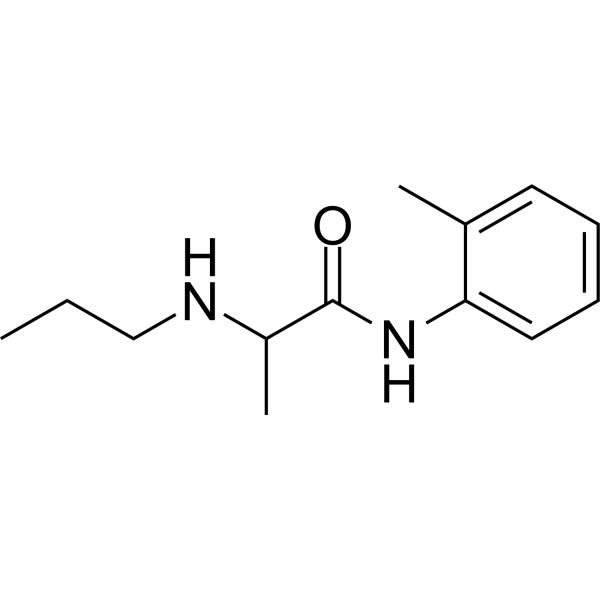
HY-B0137
PrilocaineNa, K-ATPase Inhibitor -

HY-B0405R
Bupivacaine (Standard)NMDA Receptor Inhibitor
Publications Citing Use of MedChemExpress (MCE) Bupivacaine
MoreVoir tous les produits spécifiques à Isoform iGluR
MoreVoir tous les produits spécifiques à Isoform Calcium Channel
More

Activité biologique
Description
IC50 & Target
|
NMDA Receptor |
In Vitro
Bupivacaine inhibits NMDA receptor-mediated synaptic transmission in the dorsal horn of the spinal cord, an area critically involved in central sensitization[1].
Bupivacaine influences the voltage dependency of channel activation and steady-state inactivation by shifting the membrane potential of half-maximal activation/inactivation toward somewhat more negative membrane potentials. In their inactivated state, SCN5A channels are slightly sensitive toward Bupivacaine IC50=2.18±0.16 μM[2].
Bupivacaine reversibly inhibits the SK2 channel in a dose-dependent manner with the IC 50 of 16.5 μM[3].
MedChemExpress (MCE) has not independently confirmed the accuracy of these methods. They are for reference only.
-
Cell Line:HEK 293 cells transfected with the SK2 gene (transfected cells were named SK2 cells)
-
Concentration:10, 100, 1000 µM
-
Incubation Time:
-
Result:The IC50 value was 16.5 µM.


Chemical Information
-
CAS No. 38396-39-3
-
Appearance Solid
-
Masse moléculaire 288.43
-
Formule C18H28N2O
-
Color White to off-white
-
SMILES
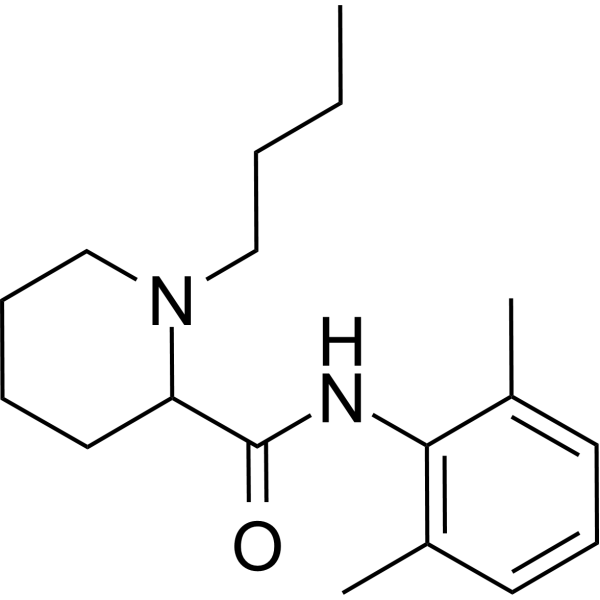
O=C(C1N(CCCC)CCCC1)NC2=C(C)C=CC=C2C
-
Livraison
Room temperature in continental US; may vary elsewhere.
-
Stockage
Powder -20°C 3 years 4°C 2 years In solvent -80°C 6 months -20°C 1 month


Publications (4)
-
Journal Impact Factor
-
Most Recent
-
Cell
2025 Nov 26;188(24):6754-6773.e29. PMID: 41138728 -
Nat Commun
2023 Jun 3;14(1):3224. PMID: 37270609 -
Sci Adv
EphB1-NR2B receptor signaling in glutamatergic neurons of the ventroposteromedial thalamic nucleus regulates emergence from anesthesia. [Abstract]2025 Dec 5;11(49):eadw7972. PMID: 41348875 -
Stem Cell Res Ther
Local anesthetics impair the growth and self-renewal of glioblastoma stem cells by inhibiting ZDHHC15-mediated GP130 palmitoylation. [Abstract]2021 Feb 4;12(1):107. PMID: 33541421


Solvant et solubilité
In Vitro:
DMSO : 100 mg/mL (346.70 mM; Need ultrasonic; Hygroscopic DMSO has a significant impact on the solubility of product, please use newly opened DMSO)
Please refer to the solubility information to select the appropriate solvent. Once prepared, please aliquot and store the solution to prevent product inactivation from repeated freeze-thaw cycles.
Storage method and period of stock solution: -80°C, 6 months; -20°C, 1 month. When stored at -80°C, please use it within 6 months. When stored at -20°C, please use it within 1 month.
Please refer to the solubility information to select the appropriate solvent. Once prepared, please aliquot and store the solution to prevent product inactivation from repeated freeze-thaw cycles.
Storage method and period of stock solution: -80°C, 6 months; -20°C, 1 month. When stored at -80°C, please use it within 6 months. When stored at -20°C, please use it within 1 month.
Concentration (start) × Volume (start) = Concentration (final) × Volume (final)
In Vivo:
Select the appropriate dissolution method based on your experimental animal and administration route.
- For the following dissolution methods, please ensure to first prepare a clear stock solution using an In Vitro approach and then sequentially add co-solvents:
- To ensure reliable experimental results, the clarified stock solution can be appropriately stored based on storage conditions. As for the working solution for In Vivo experiments, it is recommended to prepare freshly and use it on the same day.
- The percentages shown for the solvents indicate their volumetric ratio in the final prepared solution. If precipitation or phase separation occurs during preparation, heat and/or sonication can be used to aid dissolution.
In Vivo Dissolution Calculator
Please enter the basic information of animal experiments:
-
-
-
-
Recommended: Prepare an additional quantity of animals to account for potential losses during experiments.
Please enter your animal formula composition:
-
%DMSO +
Recommended: Keep the proportion of DMSO in working solution below 2% if your animal is weak.
-
%+
-
+%Tween-80 + +
-
%Saline +
The co-solvents required include: DMSO, . All of co-solvents are available by MedChemExpress (MCE). , Tween 80. All of co-solvents are available by MedChemExpress (MCE).
Working solution concentration: 0.22 mg/mL
Method for preparing stock solution: mg drug dissolved in μL DMSO. Stock solution concentration: mg/mL.
1. Take μL DMSO stock solution;
2. Add μL .
μL , mix evenly;
3. Then add μL Tween 80, mix evenly;
4. Then add μL
Please ensure that the stock solution in the first step is dissolved to a clear state, and add co-solvents in sequence. You can use ultrasonic heating (ultrasonic cleaner, recommended frequency 20-40 kHz), vortexing, etc. to assist dissolution.


Pureté et documentation
-
Fiche technique (278 KB)
-
SDS (480 KB)
- English - EN (480 KB)
- Français - FR (480 KB)
- Deutsch - DE (480 KB)
- Norwegian - NO (480 KB)
- Español - ES (480 KB)
- Swedish - SV (480 KB)
- Italian - IT (480 KB)
- Korean - KR (480 KB)
- Portuguese - PT (480 KB)
-
Instruction de manipulation (2659 KB)
Références
[1]. Meaghan A Paganelli, et al. Actions of Bupivacaine, a widely used local anesthetic, on NMDA receptor responses. J Neurosci. 2015 Jan 14;35(2):831-42. [Content Brief]
[2]. Alexander P Schwoerer, et al. A Comparative Analysis of Bupivacaine and Ropivacaine Effects on Human Cardiac SCN5A Channels. Anesth Analg. 2015 Jun;120(6):1226-34. [Content Brief]
[3]. Carsten Stoetzer, et al. Inhibition of Voltage-Gated Na+ Channels by Bupivacaine Is Enhanced by the Adjuvants Buprenorphine, Ketamine, and Clonidine. Reg Anesth Pain Med.Jul/Aug 2017;42(4):462-468. [Content Brief]


Complete Stock Solution Preparation Table
Please refer to the solubility information to select the appropriate solvent. Once prepared, please aliquot and store the solution to prevent product inactivation from repeated freeze-thaw cycles.
Storage method and period of stock solution: -80°C, 6 months; -20°C, 1 month. When stored at -80°C, please use it within 6 months. When stored at -20°C, please use it within 1 month.
| Optional Solvent | Concentration Solvent Mass | 1 mg | 5 mg | 10 mg | 25 mg |
|---|---|---|---|---|---|
| DMSO | 1 mM | 3.4670 mL | 17.3352 mL | 34.6705 mL | 86.6761 mL |
| 5 mM | 0.6934 mL | 3.4670 mL | 6.9341 mL | 17.3352 mL | |
| 10 mM | 0.3467 mL | 1.7335 mL | 3.4670 mL | 8.6676 mL | |
| 15 mM | 0.2311 mL | 1.1557 mL | 2.3114 mL | 5.7784 mL | |
| 20 mM | 0.1734 mL | 0.8668 mL | 1.7335 mL | 4.3338 mL | |
| 25 mM | 0.1387 mL | 0.6934 mL | 1.3868 mL | 3.4670 mL | |
| 30 mM | 0.1156 mL | 0.5778 mL | 1.1557 mL | 2.8892 mL | |
| 40 mM | 0.0867 mL | 0.4334 mL | 0.8668 mL | 2.1669 mL | |
| 50 mM | 0.0693 mL | 0.3467 mL | 0.6934 mL | 1.7335 mL | |
| 60 mM | 0.0578 mL | 0.2889 mL | 0.5778 mL | 1.4446 mL | |
| 80 mM | 0.0433 mL | 0.2167 mL | 0.4334 mL | 1.0835 mL | |
| 100 mM | 0.0347 mL | 0.1734 mL | 0.3467 mL | 0.8668 mL |


Bupivacaine Related Classifications
HY-B0405 Related Classifications
 Powered by Bioz