



Pyr10
Based on 3 publication(s) in Google Scholar
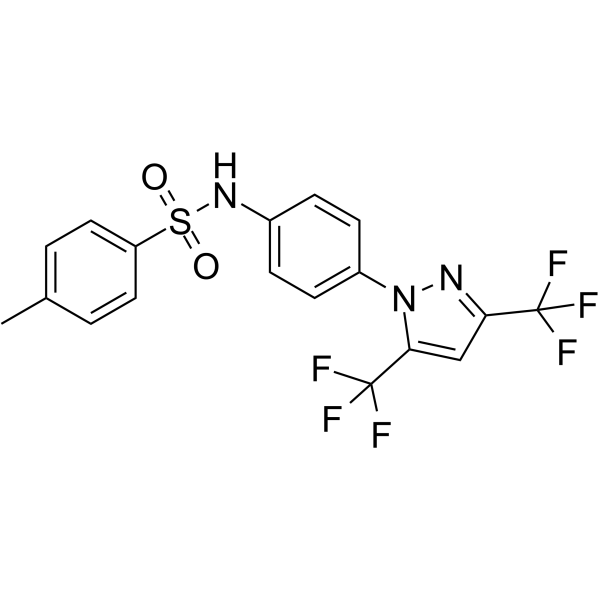
Pyr10 is a pyrazole derivative and a selective TRP cation 3 (TRPC3) inhibitor. Pyr10 inhibits Ca2+ influx in carbachol-stimulated TRPC3-transfected HEK293 cells with an IC50 of 0.72 μM (IC50 of 13.08 μM for store operated Ca2+ entry in BRL-2H3 cells). Pyr10 has the ability to distinguish between receptor-operated TRPC3 and native stromal interaction molecule 1 (STIM1)/Orai1 channels.
Nos produits utilisent uniquement pour la recherche. Nous ne vendons pas aux patients.
- Pureté : 99.95%
- CAS No.: 1315323-00-2
- Formule: C18H13F6N3O2S
- Masse moléculaire:449.37
-
Stockage:Powder -20°C, 3 years , 4°C, 2 years ; In solvent -80°C, 2 years , -20°C, 1 year

To place orders, for customer services and technical support, please contact: MedChemExpress USA
Tel: 609-228-6898 E-mail: [email protected] [email protected]


-
 Activité biologique
-
Chemical Information
-
Solvant et solubilité
- Protocole
- Pureté et documentation
- Références
-
 Help & FAQs


-
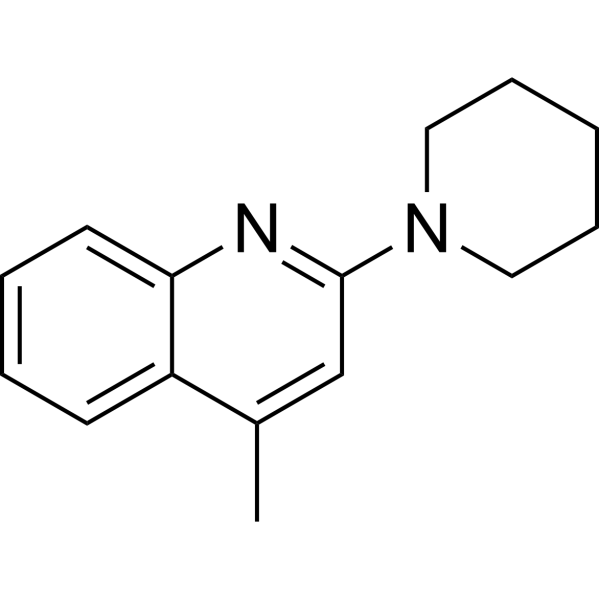
HY-12949
ML204TRPC4/TRPC5 Channel Inhibitor -
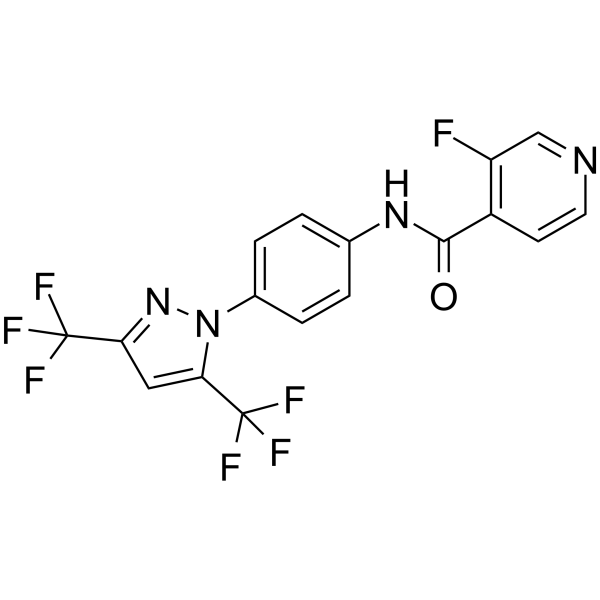
HY-12504
Pyr6SOCE Inhibitor -
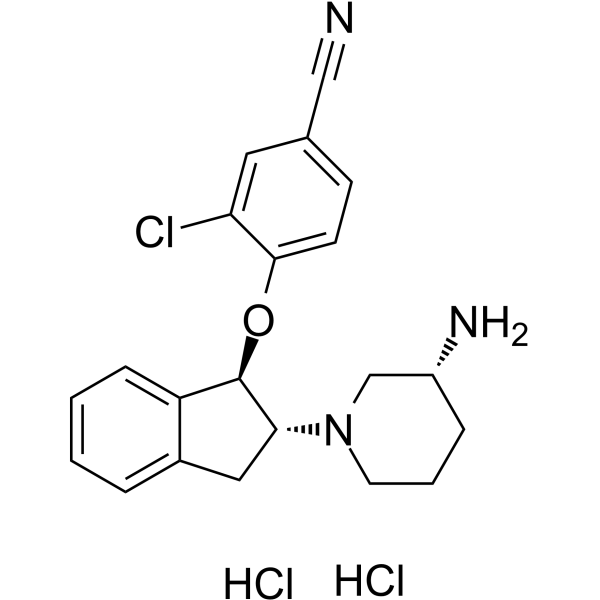
HY-15699A
SAR7334 hydrochlorideTRPC6 Inhibitor -
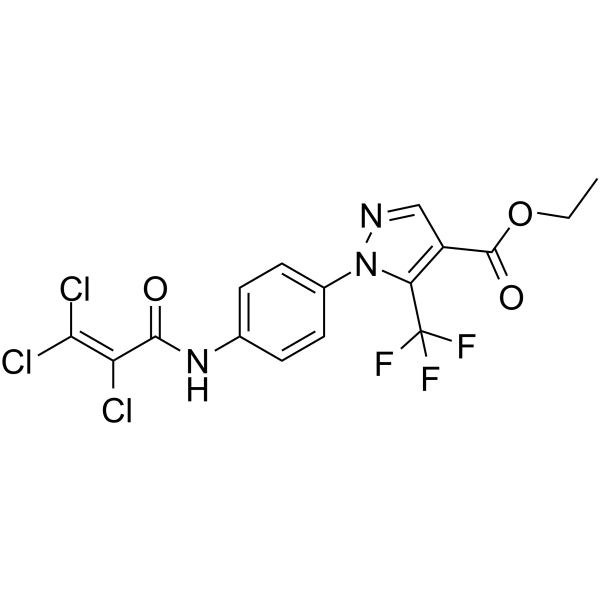
HY-108465
Pyr3TRPC3 Channel Inhibitor -
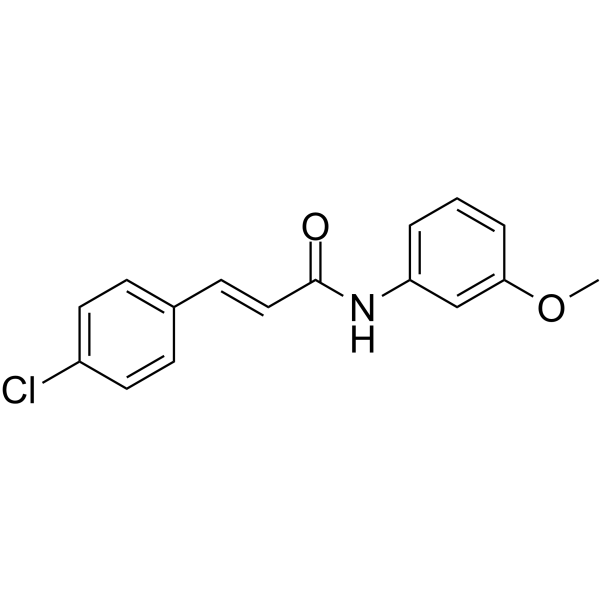
HY-12245
SB-366791VR1/TRPV1 Antagonist -
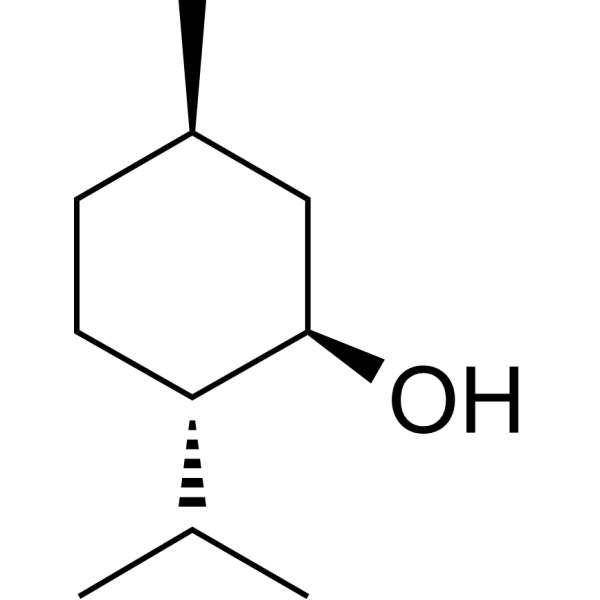
HY-75161
(-)-MentholEndogenous Metabolite -
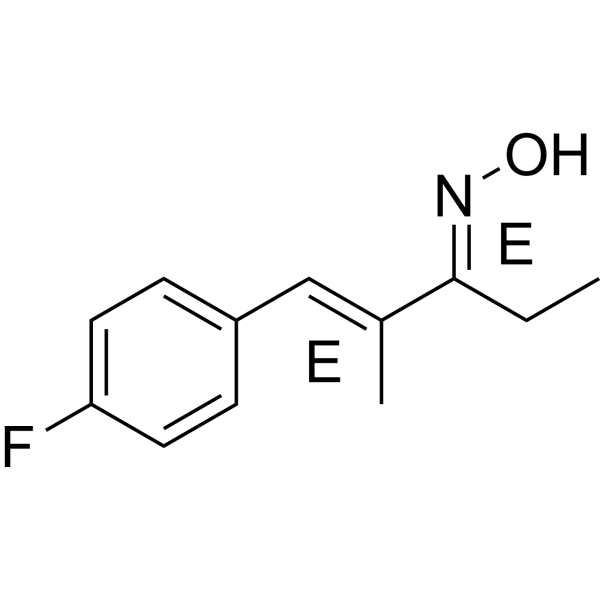
HY-108463
A-967079TRPA1 Receptor Antagonist -
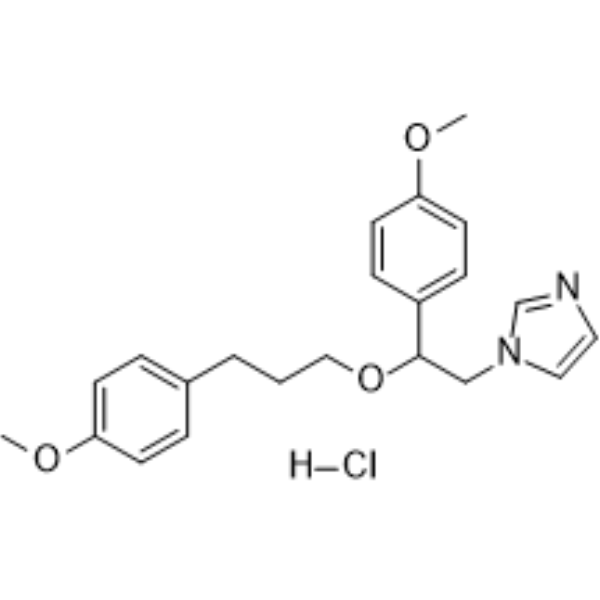
HY-100001
SKF-96365 (hydrochloride)TRPC Channel Antagonist, SOCE Inhibitor -
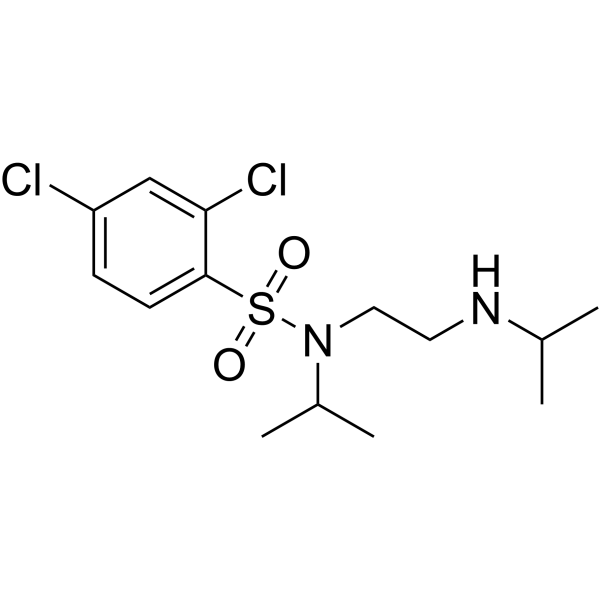
HY-19975
RN-1734TRP Channel Antagonist -
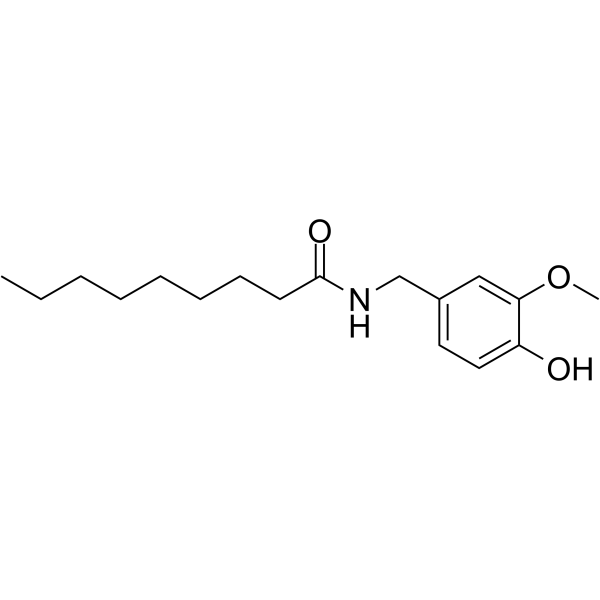
HY-17568
NonivamideTRP Channel Agonist -

HY-75161R
(-)-Menthol (Standard)Endogenous Metabolite -
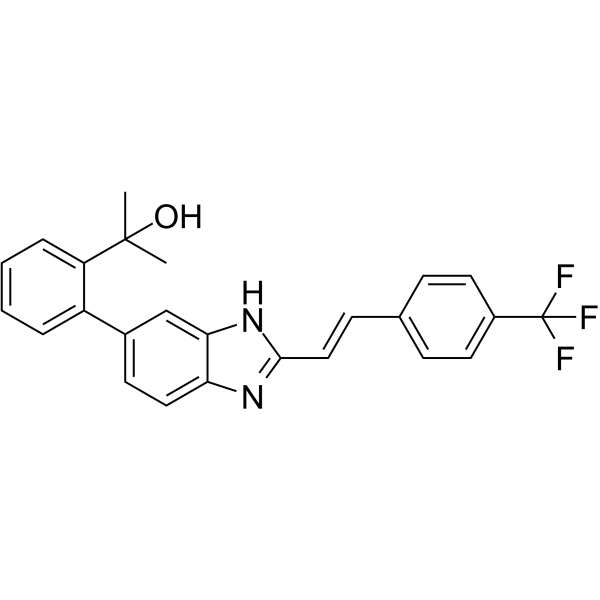
HY-16935
MavatrepTRPV1 Antagonist
Publications Citing Use of MedChemExpress (MCE) Pyr10
More

Activité biologique
Description
IC50 & Target
[1]|
TRPC3 0.72 μM (IC50) |
Cellular Effect
|
Cell Line

|
Type | Value | Description | References |
|---|---|---|---|---|
| HEK293 | IC50 |
0.72 μM
Compound: 35
|
Inhibition of YFP-tagged TRPC3 (unknown origin) expressed in HEK293 cells assessed as reduction carbhocol-induced receptor operated Calcium influx after 5 mins by fura-2-AM dye based assay
Inhibition of YFP-tagged TRPC3 (unknown origin) expressed in HEK293 cells assessed as reduction carbhocol-induced receptor operated Calcium influx after 5 mins by fura-2-AM dye based assay
|
[PMID: 30943030] |
In Vitro
Pyr10 has the ability to discriminate between the classical Orai-mediated, highly Ca2+ selective signalling pathway and the phospholipase C-dependent Ca2+ entry-mediated by TRPC channels, specifically by TRPC3. Pyr10 (3 μM) completely eliminates TRPC3 currents as well as Ca2+ entry while exerting modest effects on Orai-mediated responses. The selective block of TRPC3 channels by Pyr10 barely affected mast cell activation[1].
MedChemExpress (MCE) has not independently confirmed the accuracy of these methods. They are for reference only.
In Vivo
MedChemExpress (MCE) has not independently confirmed the accuracy of these methods. They are for reference only.


Chemical Information
-
CAS No. 1315323-00-2
-
Appearance Solid
-
Masse moléculaire 449.37
-
Formule C18H13F6N3O2S
-
Color White to light yellow
-
SMILES
O=S(C1=CC=C(C)C=C1)(NC2=CC=C(N3N=C(C(F)(F)F)C=C3C(F)(F)F)C=C2)=O
-
Livraison
Room temperature in continental US; may vary elsewhere.
-
Stockage
Powder -20°C 3 years 4°C 2 years In solvent -80°C 2 years -20°C 1 year


Publications (3)
-
Journal Impact Factor
-
Most Recent
-
J Cell Mol Med
2020 Jan;24(1):488-510. PMID: 31680473 -
Lab Invest
Increased transient receptor potential canonical 3 activity is involved in the pathogenesis of detrusor overactivity by dynamic interaction with Na+/Ca2+ exchanger 1. [Abstract]2022 Jan;102(1):48-56. PMID: 34497367 -
Environ Toxicol
MiRNA-26a-5p inhibits preterm labor initiation by targeting and regulating TRPC3 ion channel protein expression. [Abstract]2024 Jan;39(1):357-366. PMID: 37755144


Solvant et solubilité
In Vitro:
DMSO : 100 mg/mL (222.53 mM; Need ultrasonic; Hygroscopic DMSO has a significant impact on the solubility of product, please use newly opened DMSO)
Please refer to the solubility information to select the appropriate solvent. Once prepared, please aliquot and store the solution to prevent product inactivation from repeated freeze-thaw cycles.
Storage method and period of stock solution: -80°C, 2 years; -20°C, 1 year. When stored at -80°C, please use it within 2 years. When stored at -20°C, please use it within 1 year.
Please refer to the solubility information to select the appropriate solvent. Once prepared, please aliquot and store the solution to prevent product inactivation from repeated freeze-thaw cycles.
Storage method and period of stock solution: -80°C, 2 years; -20°C, 1 year. When stored at -80°C, please use it within 2 years. When stored at -20°C, please use it within 1 year.
Concentration (start) × Volume (start) = Concentration (final) × Volume (final)
In Vivo:
Select the appropriate dissolution method based on your experimental animal and administration route.
- For the following dissolution methods, please ensure to first prepare a clear stock solution using an In Vitro approach and then sequentially add co-solvents:
- To ensure reliable experimental results, the clarified stock solution can be appropriately stored based on storage conditions. As for the working solution for In Vivo experiments, it is recommended to prepare freshly and use it on the same day.
- The percentages shown for the solvents indicate their volumetric ratio in the final prepared solution. If precipitation or phase separation occurs during preparation, heat and/or sonication can be used to aid dissolution.
Add each solvent one by one: 10% DMSO 40% PEG300 5% Tween-80 45% Saline
Solubility: ≥ 2.5 mg/mL (5.56 mM); Clear solution
This protocol yields a clear solution of ≥ 2.5 mg/mL (saturation unknown).
Taking 1 mL working solution as an example, add 100 μL DMSO stock solution (25.0 mg/mL) to 400 μL PEG300, and mix evenly; then add 50 μL Tween-80 and mix evenly; then add 450 μL Saline to adjust the volume to 1 mL.
Preparation of Saline: Dissolve 0.9 g sodium chloride in ddH₂O and dilute to 100 mL to obtain a clear Saline solution.
In Vivo Dissolution Calculator
Please enter the basic information of animal experiments:
-
-
-
-
Recommended: Prepare an additional quantity of animals to account for potential losses during experiments.
Please enter your animal formula composition:
-
%DMSO +
Recommended: Keep the proportion of DMSO in working solution below 2% if your animal is weak.
-
%+
-
+%Tween-80 + +
-
%Saline +
The co-solvents required include: DMSO, . All of co-solvents are available by MedChemExpress (MCE). , Tween 80. All of co-solvents are available by MedChemExpress (MCE).
Working solution concentration: 0.22 mg/mL
Method for preparing stock solution: mg drug dissolved in μL DMSO. Stock solution concentration: mg/mL.
1. Take μL DMSO stock solution;
2. Add μL .
μL , mix evenly;
3. Then add μL Tween 80, mix evenly;
4. Then add μL
Please ensure that the stock solution in the first step is dissolved to a clear state, and add co-solvents in sequence. You can use ultrasonic heating (ultrasonic cleaner, recommended frequency 20-40 kHz), vortexing, etc. to assist dissolution.


Pureté et documentation
-
Fiche technique (274 KB)
-
SDS (393 KB)
- English - EN (393 KB)
- Français - FR (393 KB)
- Deutsch - DE (393 KB)
- Norwegian - NO (393 KB)
- Español - ES (393 KB)
- Swedish - SV (393 KB)
- Italian - IT (393 KB)
- Korean - KR (393 KB)
- Portuguese - PT (393 KB)
-
Instruction de manipulation (2659 KB)
Références
[1]. Schleifer H, et al. Novel pyrazole compounds for pharmacological discrimination between receptor-operated and store-operated Ca(2+) entry pathways. Br J Pharmacol. 2012 Dec;167(8):1712-1722. [Content Brief]
[2]. Saliba Y, et al. Transient Receptor Potential Canonical 3 and Nuclear Factor of Activated T Cells C3 Signaling Pathway Critically Regulates Myocardial Fibrosis. Antioxid Redox Signal. 2019 Jun 1;30(16):1851-1879. [Content Brief]


Complete Stock Solution Preparation Table
Please refer to the solubility information to select the appropriate solvent. Once prepared, please aliquot and store the solution to prevent product inactivation from repeated freeze-thaw cycles.
Storage method and period of stock solution: -80°C, 2 years; -20°C, 1 year. When stored at -80°C, please use it within 2 years. When stored at -20°C, please use it within 1 year.
| Optional Solvent | Concentration Solvent Mass | 1 mg | 5 mg | 10 mg | 25 mg |
|---|---|---|---|---|---|
| DMSO | 1 mM | 2.2253 mL | 11.1267 mL | 22.2534 mL | 55.6334 mL |
| 5 mM | 0.4451 mL | 2.2253 mL | 4.4507 mL | 11.1267 mL | |
| 10 mM | 0.2225 mL | 1.1127 mL | 2.2253 mL | 5.5633 mL | |
| 15 mM | 0.1484 mL | 0.7418 mL | 1.4836 mL | 3.7089 mL | |
| 20 mM | 0.1113 mL | 0.5563 mL | 1.1127 mL | 2.7817 mL | |
| 25 mM | 0.0890 mL | 0.4451 mL | 0.8901 mL | 2.2253 mL | |
| 30 mM | 0.0742 mL | 0.3709 mL | 0.7418 mL | 1.8544 mL | |
| 40 mM | 0.0556 mL | 0.2782 mL | 0.5563 mL | 1.3908 mL | |
| 50 mM | 0.0445 mL | 0.2225 mL | 0.4451 mL | 1.1127 mL | |
| 60 mM | 0.0371 mL | 0.1854 mL | 0.3709 mL | 0.9272 mL | |
| 80 mM | 0.0278 mL | 0.1391 mL | 0.2782 mL | 0.6954 mL | |
| 100 mM | 0.0223 mL | 0.1113 mL | 0.2225 mL | 0.5563 mL |


Pyr10 Related Classifications
HY-19408 Related Classifications
 Powered by Bioz