



PARP7
PARP7 (TIPARP, ARTD14) is a mono-ADP-ribosyltransferase that regulates innate immunity, transcription factor activity, and cellular stress responses through mono-ADP-ribosylation of protein substrates[1]. Mechanistically, PARP7 is a transcriptional target of the aryl hydrocarbon receptor (AHR) and functions as a negative feedback regulator of AHR signaling by mono-ADP-ribosylating AHR-associated substrates, thereby restricting AHR-dependent transcriptional programs[1][2]. PARP7 also participates in type I interferon (IFN-I) regulation and acts as a negative regulator of IFN signaling pathways in tumor cells, linking ADP-ribosylation to immune surveillance and antitumor responses[3][4]. In disease models, inhibition of PARP7 restores IFN-I signaling, suppresses tumor growth, and promotes antitumor immunity, supporting PARP7 as a therapeutic target in cancer research[3][4]. Beyond AHR signaling, PARP7 modulates the activity of nuclear receptors, including estrogen receptor α (ERα), through mono-ADP-ribosylation, resulting in reduced receptor-dependent transcription and proliferation in estrogen-responsive breast cancer models[1][5]. Compared with poly(ADP-ribose) polymerases that catalyze poly-ADP-ribosylation, PARP7 belongs to the mono-ADP-ribosyltransferase subgroup and exerts distinct regulatory effects on transcription factors and immune signaling pathways[1]. For experimental applications, selective PARP7 inhibitors such as RBN-2397 enhance IFN-I signaling and have demonstrated antitumor activity in preclinical cancer models, making them valuable tools for investigating PARP7-dependent immune and transcriptional mechanisms[1][3].
Références:
- [1]. Rasmussen M, et al. PARP7 and Mono-ADP-Ribosylation Negatively Regulate Estrogen Receptor α Signaling in Human Breast Cancer Cells. Cells. 2021 Mar 11;10(3):623. [Content Brief]
- [2]. Steen CB, et al. The landscape of tumor cell states and ecosystems in diffuse large B cell lymphoma. Cancer Cell. 2021 Oct 11;39(10):1422-1437.e10. [Content Brief]
All Product Categories
-
PARP7 Produits associés (24)
Produits associés (24)

- 1
- 2
-
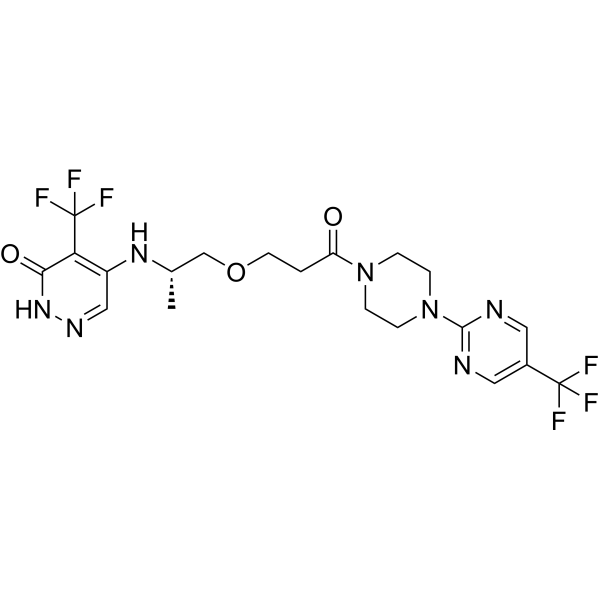
RBN012759
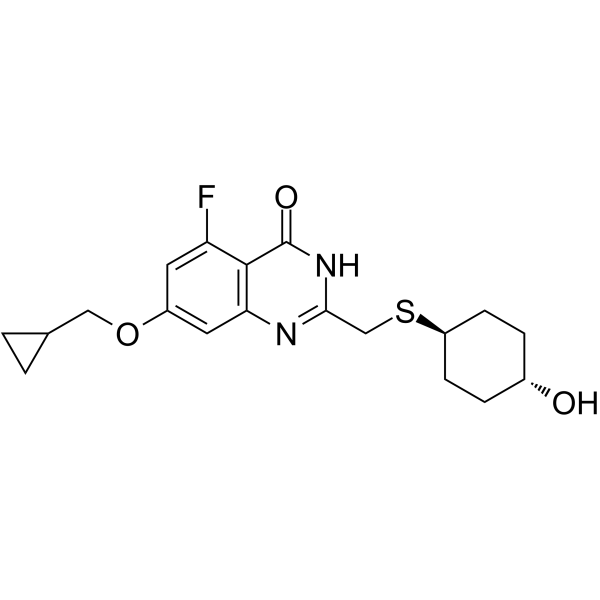 0 ImagesRBN012759 is a potent, selective and orally active inhibitor of PARP14, with an IC50 of <3 nM. RBN012759 displays 300-fold selectivity over the monoPARPs and 1000-fold selectivity over the polyPARPs. RBN012759 decreases pro-tumor macrophage function and elicits inflammatory responses in tumor explants.
-
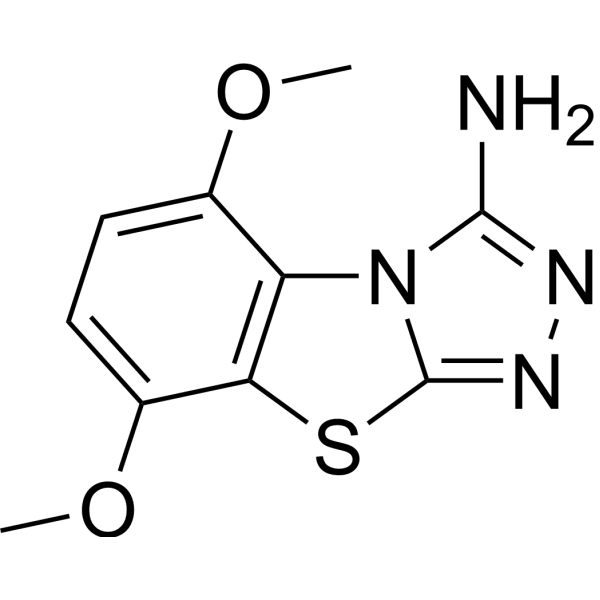
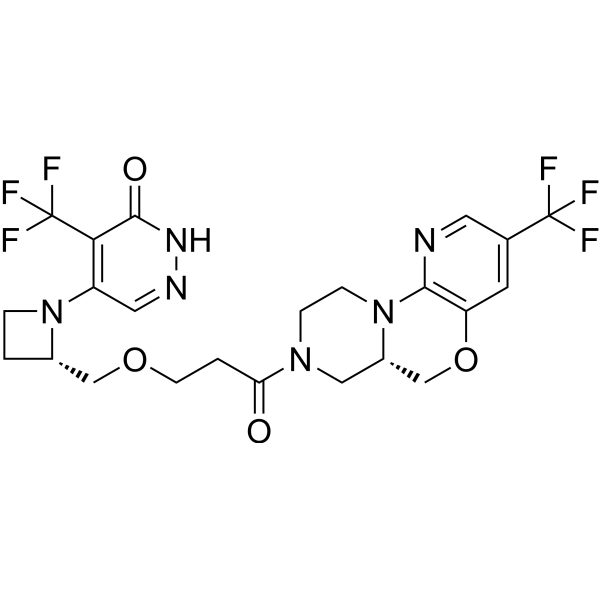
KMR-206
 0 ImagesKMR-206 is a PARP7 inhibitor with an IC50 of 13.7 nM. KMR-206 relieves AHR-mediated transcriptional repression and enhances CYP1A1 expression in the presence of TCDD. KMR-206 induces the STING-dependent IFN-β signaling pathway and increases the levels of STAT1, pSTAT1 and nuclear PARP7 in cancer cells. KMR-206 reduces the viability of lung adenocarcinoma cells, enhances radiation-induced immunogenic signals, and induces the production of immunogenic signals in glioblastoma cancer stem cells. KMR-206 destabilizes FRA1 to increase IRF1 levels and promotes the IRF3-CBP/p300 interaction. KMR-206 can be used in studies related to lung adenocarcinoma and glioblastoma.
-
TIPARP-IN-1
 0 ImagesCat. No.: HY-181027CAS No.: 3106183-96-1TIPARP-IN-1 (Compound 15) is a selective PARP7 (TIPARP) (2,3,7,8-Tetrachlorodiben-zo-p-dioxin(TCDD)-inducible PARP) inhibitor with an IC50 of 2.15 nM. TIPARP-IN-1 can restore IFN signaling pathway in tumors by inhibiting TIPARP. TIPARP-IN-1 selectively activates the anti-tumor immune response in the tumor microenvironment and avoids the production of systemic cytokines. TIPARP-IN-1 can be used for research of head and neck squamous cell carcinoma.

-
PARP7-IN-16
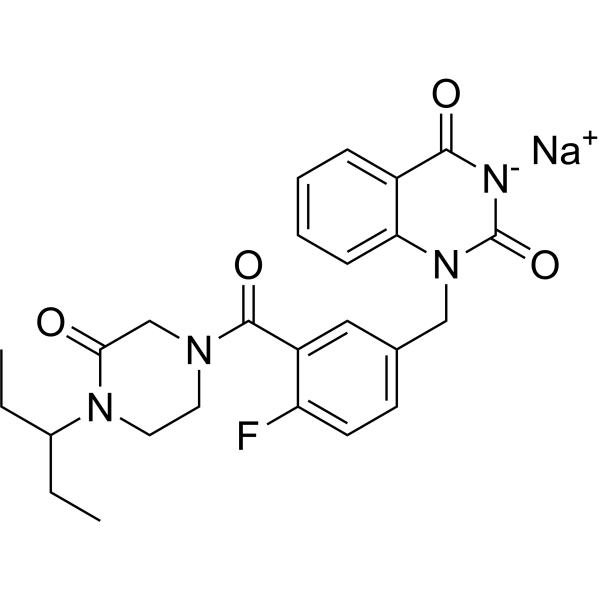 0 ImagesCat. No.: HY-156419CAS No.: 2435657-10-4
-
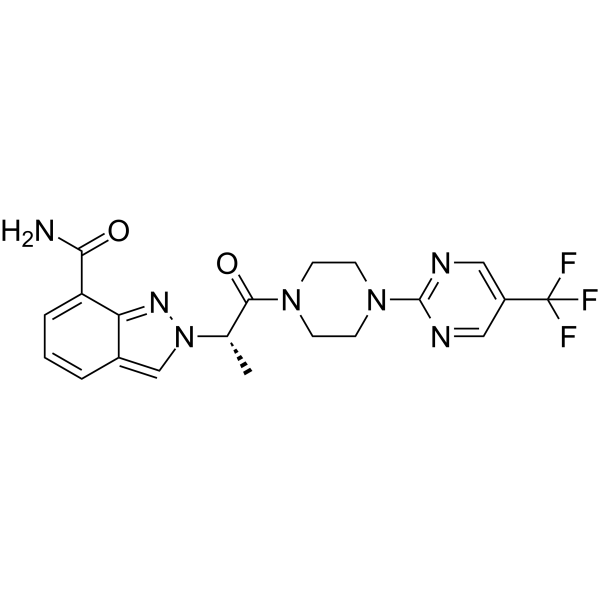
PARP7-IN-16 free base
 0 ImagesPARP7-IN-16 free base is the free base form of PARP7-IN-16 (HY-156419). PARP7-IN-16 free base is a selective and orally active inhibitor of PARP-1/2/7, with IC50s of 0.94, 0.87 and 0.21 nM, respectively. PARP7-IN-16 can be used for the research of breast cancer and prostate cancer.
-
PARP7-IN-22
 0 ImagesPARP7-IN-22 (XLY-1) is a PARP7 inhibitor with an IC50 of 0.6 nM. PARP7-IN-22 (XLY-1) is orally active, enhances type I interferon signaling in vitro, restores type I interferon signaling, promotes T cell infiltration into tumor tissues, and significantly inhibits tumor growth. PARP7-IN-22 shows promise for research in the field of cancer immunotherapy.
-
YCH1899
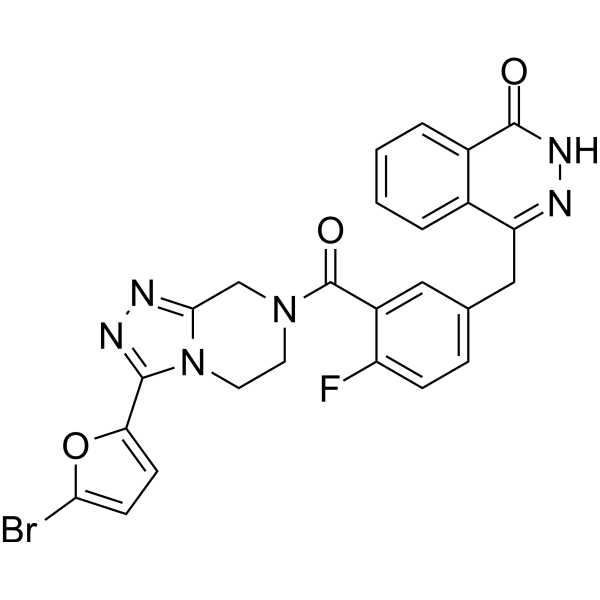 0 ImagesYCH1899 is an orally active PARP inhibitor, with an IC50< 0.001 nM for PARP1/2. YCH1899 exhibits distinct antiproliferation activity against Olaparib (HY-10162)-resistant and Talazoparib (HY-16106)-resistant Capan-1 cells (Capan-1/OP and Capan-1/TP cells) , with IC50 values of 0.89 and 1.13 nM, respectively. YCH1899 has acceptable pharmacokinetic properties in rats.
-
PARP1/2/TNKS1/2-IN-1
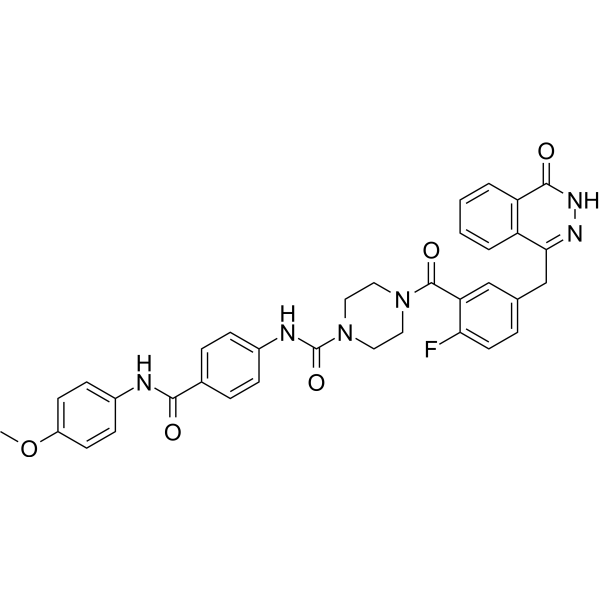 0 ImagesPARP1/2/TNKS1/2-IN-1 is a potent and selective dual PARP-1/2 and TNKS1/2 inhibitor with IC50 values of 0.25 nM, 1.2 nM, 13.5 nM and 4.15 nM for PARP-1, PARP-2, TNKS1 and TNKS2, respectively. PARP1/2/TNKS1/2-IN-1 suppresses Wnt/β-catenin signaling, decreases pADPr and BRCA1 expression, induces DNA damage, promotes apoptosis, and arrests the cell cycle at the G2/M phase. PARP1/2/TNKS1/2-IN-1 can be used for the study of on colorectal cancer and triple-negative breast cancer.
-
Antitumor agent-170
 0 ImagesCat. No.: HY-162644Antitumor agent-170 (Compound C6) exhibits inhibitory activities against PD-1/PD-L1 interaction and PARP7, with IC50 of 0.342 μM and 7.05 nM. Antitumor agent-170 exhibits a high affinity to human PD-L1, with a Ki of 9.31 nM. Antitumor agent-170 restores the T cell function and increases IFN-γ secretion. Antitumor agent-170 exhibits antitumor efficacy against melanoma in mouse models and good pharmacokinetic characteristics.
-
PARP1-IN-44
 0 ImagesCat. No.: HY-178032PARP1-IN-44, an Olaparib (HY-10162) derivative, is an orally active PARP1 inhibitor (IC50 = 0.6 nM), and also inhibits PARP2 (IC50 = 1.0 nM) and PARP7 (IC50 = 7.5 nM). PARP1-IN-44 has selective antiproliferative activity against BRCA-deficient cancer cells with minimal toxicity to normal cells. PARP1-IN-44 induces G2/M phase arrest, promotes apoptosis, elevates ROS levels, disrupts mitochondrial membrane potential. PARP1-IN-44 suppresses PARylation while increasing γH2AX accumulation. PARP1-IN-44 activates the cGAS-STING pathway, upregulating IFN-β and CXCL10 expression. PARP1-IN-44 enhancing CD8+ T cell infiltration in a CT26 tumor mouse model, demonstrating robust in vivo antitumor efficacy.
-
ATR/PARP1-IN-1
 0 ImagesCat. No.: HY-174828ATR/PARP1-IN-1 is a potent ATR and PARP1 dual inhibitor with IC50s of 17.3 nM and 0.38 nM, respectively. ATR/PARP1-IN-1 effectively reduces cell viability, induces apoptosis and DNA damage. ATR/PARP1-IN-1 significantly impairs triple-negative breast cancer (TNBC) colony formation, migration, and invasion. ATR/PARP1-IN-1 suppresses tumor growth effectively in MDA-MB-468 xenografted mice, with no significant body weight change.
-
PARP14 inhibitor 1
 0 ImagesCat. No.: HY-172806CAS No.: 3035493-13-8PARP14 inhibitor 1 is an orally active, selective PARP14 inhibitor with an IC50 of 5.52 nM. PARP14 inhibitor 1 exhibits favorable pharmacokinetic properties and in vivo safety. PARP14 inhibitor 1 enhances and stabilizes intracellular endogenous PARP14 protein levels, while effectively reducing the expression levels of IL-4, IL-13 and IL-17A. PARP14 inhibitor 1 can be used in research related to atopic dermatitis.
-
PARP7-IN-12
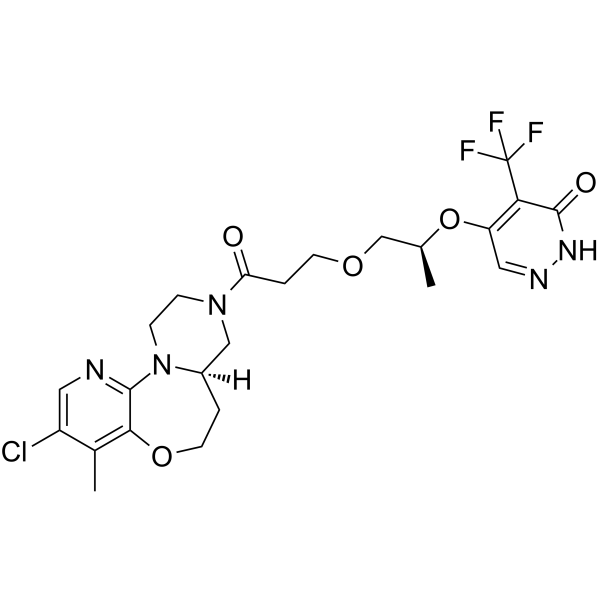 0 ImagesCat. No.: HY-151609CAS No.: 2819700-92-8
-
PARP7-IN-23
 0 ImagesCat. No.: HY-173259CAS No.: 3071875-24-3
-
Antitumor agent-169
 0 ImagesCat. No.: HY-162643Antitumor agent-169 (Compound B3) is a dual inhibitor PD-1/PD-L1 interaction and PARP7, with IC50s of 0.426 μM and 2.50 nM. Antitumor agent-169 exhibits an affinity to human PD-L1, with Ki of 20.2 nM. Antitumor agent-169 restores the T cell function, increases IFN-γ secretion. Antitumor agent-169 inhibits cell viability of MDA-MB-231 and Jurkat T, exhibits antitumor efficacy against melanoma in mouse model and good pharmacokinetic characteristics.
- 1
- 2



