



CCR5
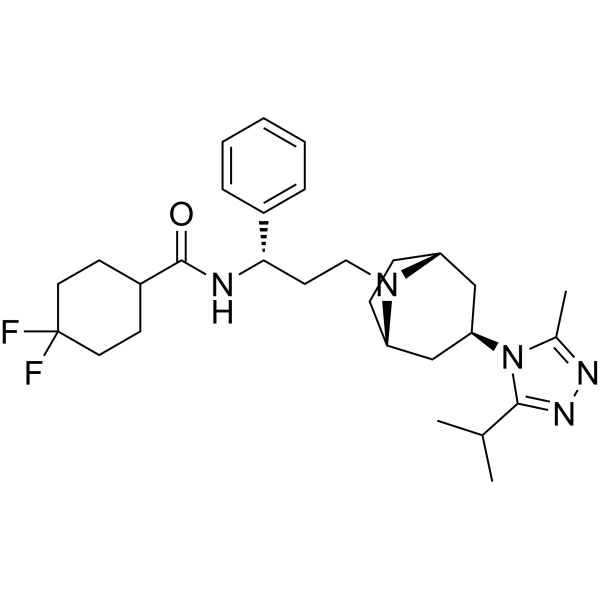
CCR5 is a human CC chemokine receptor and G protein-coupled receptor that responds to chemokines including RANTES/CCL5, MIP-1α/CCL3, and MIP-1β/CCL4[1]. Mechanistically, ligand-bound CCR5 couples to Gᵢ1 and supports chemokine recognition, receptor activation, immune surveillance, and inflammation[2]. In HIV research models, CCR5 functions as the principal cofactor for entry mediated by envelope glycoproteins of primary macrophage-tropic HIV-1 strains[3]. CCR5, when coexpressed with CD4, enables infection by most primary HIV-1 isolates, whereas CCR3 supports only a more restricted subset, defining an experimentally important distinction from related chemokine receptors[4]. A homozygous CCR5 defect was identified in some multiply exposed individuals resistant to HIV-1 infection, linking receptor expression to viral-entry susceptibility[5]. Compared with related isoforms CCR1 and CCR3, natural LD78β/MIP-1α isoforms show diverging binding capacities that affect CCR5-linked anti-HIV activity and CCR1/CCR3-linked chemotactic responses. For inhibitor studies, maraviroc-bound CCR5 reveals a ligand-binding site distinct from chemokine and gp120 recognition sites, supporting allosteric inhibition of chemokine signaling and viral entry[6]. Maraviroc is a CCR5 antagonist used to block gp120 interaction with CCR5 in HIV/AIDS research and treatment contexts[7].
References:
- [1]. Samson M, et al. Molecular cloning and functional expression of a new human CC-chemokine receptor gene. Biochemistry. 1996 Mar 19;35(11):3362-7. [Content Brief]
- [2]. Zhang H, et al. Structural basis for chemokine recognition and receptor activation of chemokine receptor CCR5. Nat Commun. 2021 Jul 6;12(1):4151. [Content Brief]
- [3]. Deng H, et al. Identification of a major co-receptor for primary isolates of HIV-1. Nature. 1996 Jun 20;381(6584):661-6. [Content Brief]
- [4]. Choe H, et al. The beta-chemokine receptors CCR3 and CCR5 facilitate infection by primary HIV-1 isolates. Cell. 1996 Jun 28;85(7):1135-48. [Content Brief]
- [5]. Liu R, et al. Homozygous defect in HIV-1 coreceptor accounts for resistance of some multiply-exposed individuals to HIV-1 infection. Cell. 1996 Aug 9;86(3):367-77. [Content Brief]
- [6]. Tan Q, et al. Structure of the CCR5 chemokine receptor-HIV entry inhibitor maraviroc complex. Science. 2013 Sep 20;341(6152):1387-90. [Content Brief]
- [7]. Xu GG, et al. Chemokine receptor CCR5 antagonist maraviroc: medicinal chemistry and clinical applications. Curr Top Med Chem. 2014;14(13):1504-14. [Content Brief]
-
CCR5 Related Products (31)
Related Products (31)

-
Recombinant Proteins (4)
- 1
- 2
-
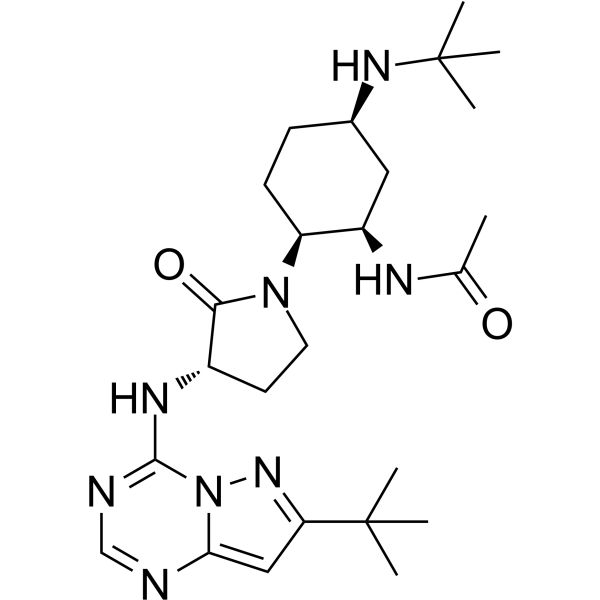
Cenicriviroc
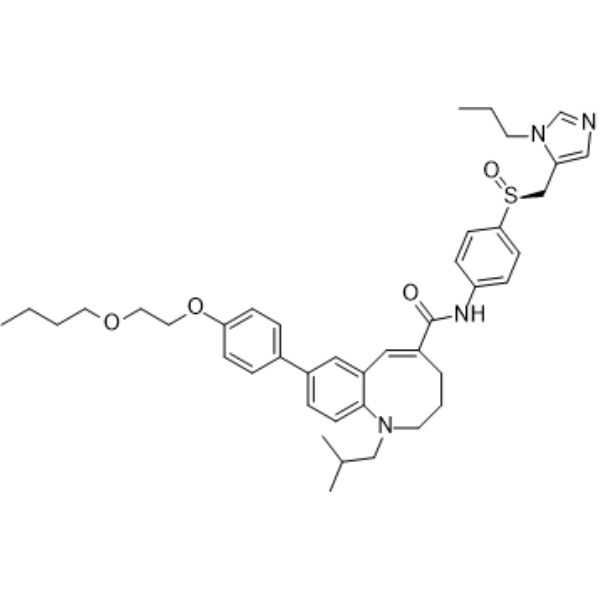 0 ImagesSynonyms: TAK-652; TBR-652
-
Cenicriviroc Mesylate
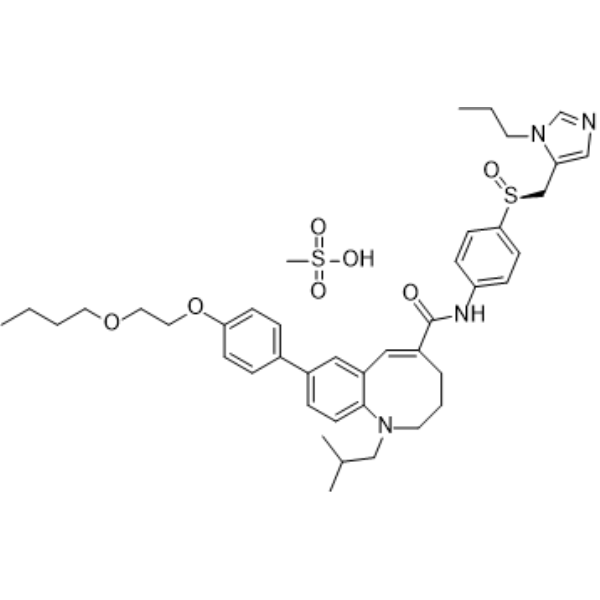 0 ImagesSynonyms: TAK-652 Mesylate; TBR-652 Mesylate
-
Met-RANTES (human) acetate
 0 ImagesCat. No.: HY-P4191APurity: 99.39%Met-RANTES (human) acetate is the acetate form of Met-RANTES (human) (HY-P4191). Met-RANTES (human) acetate is the antagonist for CCR1 and CCR5. Met-RANTES (human) acetate inhibits chemokines human MIP-1α and MIP-1β with IC50 of 5 and 2 nM. Met-RANTES (human) acetate reduces bone destruction and ameliorates rats adjuvant-induced arthritis (AIA).
-
TAK-220
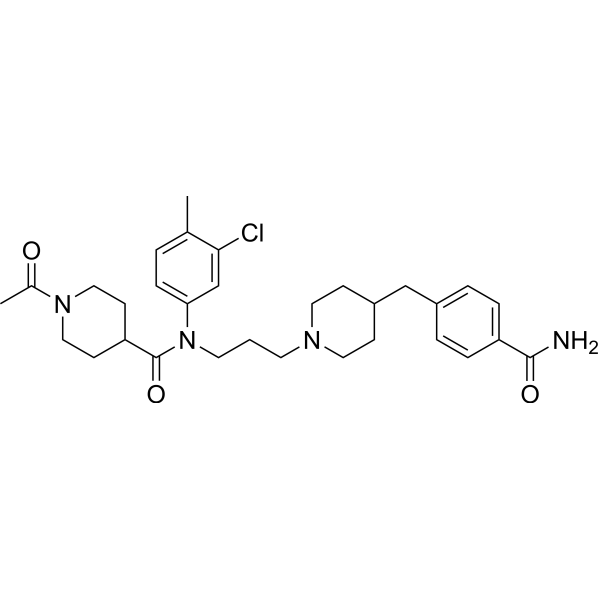 0 ImagesTAK-220 is a selective and orally bioavailable CCR5 antagonist, with IC50s of 3.5 nM and 1.4 nM for inhibition on the binding of RANTES and MIP-1α to CCR5, respectively, but shows no effect on the binding to CCR1, CCR2b, CCR3, CCR4, or CCR7; TAK-220 also selectively inhibits HIV-1, with EC50s of 1.2 nM (HIV-1 KK), 0.72 nM (HIV-1 CTV), 1.7 nM (HIV-1 HKW), 1.7 nM (HIV-1 HNK), 0.93 nM (HIV-1 HTN), and 0.55 nM (HIV-1 HHA), and EC90s of 12 nM (HIV-1 KK), 5 nM (HIV-1 CTV), 12 nM (HIV-1 HKW), 28 nM (HIV-1 HNK), 15 nM (HIV-1 HTN), and 4 nM (HIV-1 HHA) in PBMCs.
-
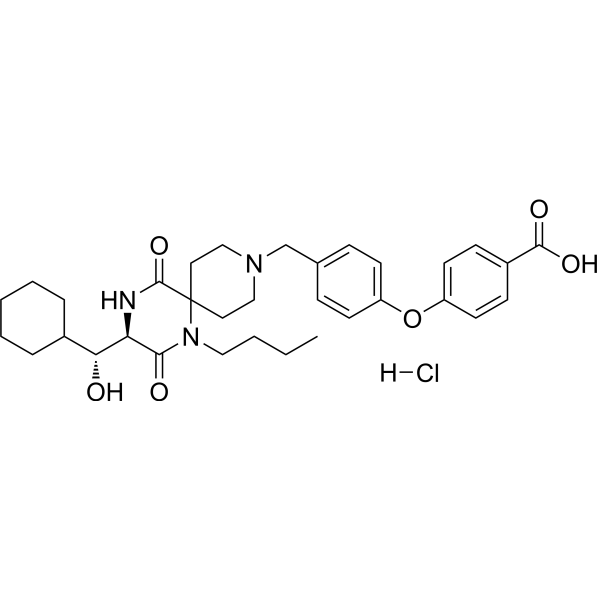
Vicriviroc maleate
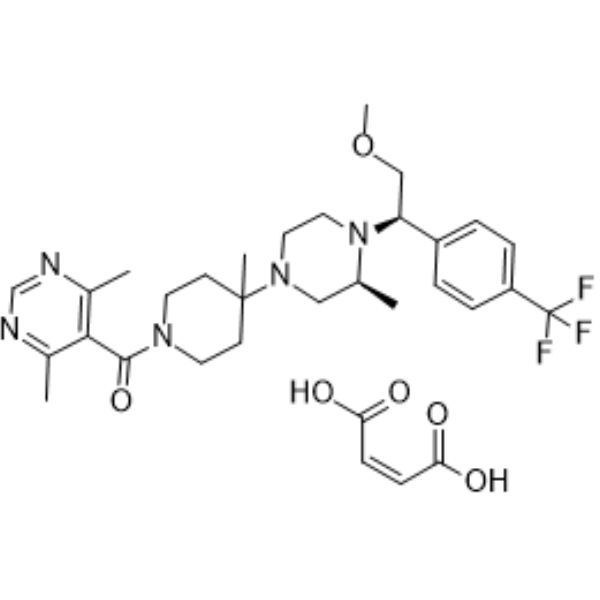 0 ImagesSynonyms: SCH-417690 maleate; SCH-D maleate
-
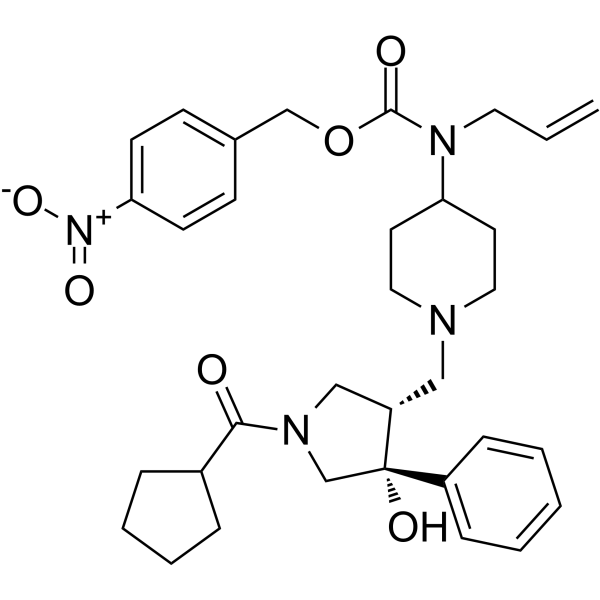
PF-04634817 succinate
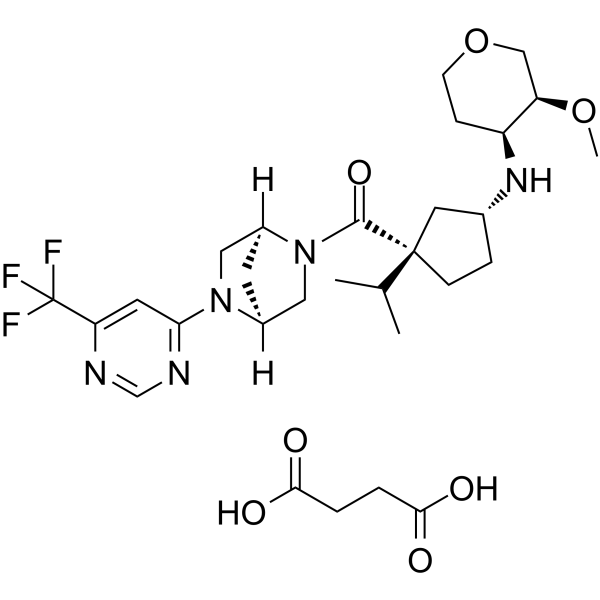 0 ImagesPF-0463481 succinate is a potent and orally active dual CCR2/CCR5 antagonist with comparable human and rodent CCR2 potency (rat IC50=20.8 nM), and displays 10-20 fold less rodent CCR5 potency (rat IC50=470 nM). PF-0463481 succinate is safe and well-tolerated and has the potential for the study of diabetic nephropathy.
-
PF-04634817
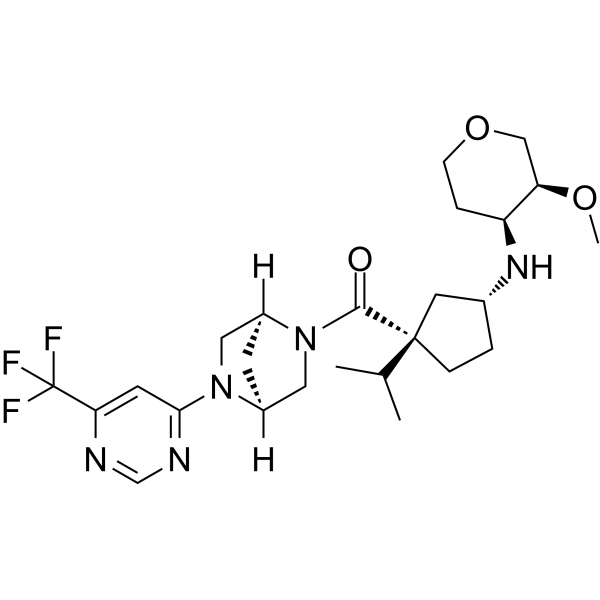 0 ImagesCat. No.: HY-117621CAS No.: 1228111-63-4
-
AZD-5672
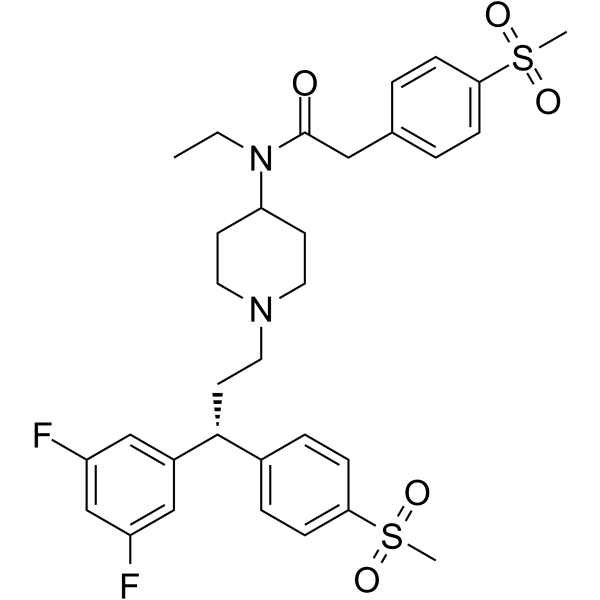 0 ImagesCat. No.: HY-119101CAS No.: 780750-65-4AZD-5672 is an orally active, potent, and selective CCR5 antagonist (IC50=0.32 nM). AZD-5672 shows moderate activity against the hERG ion channel (binding IC50=7.3 μM). AZD5672 is a substrate of human P-gp, and inhibits P-gp-mediated digoxin transport (IC50=32 μM). AZD-5672 can be used for the research of rheumatoid arthritis.
-
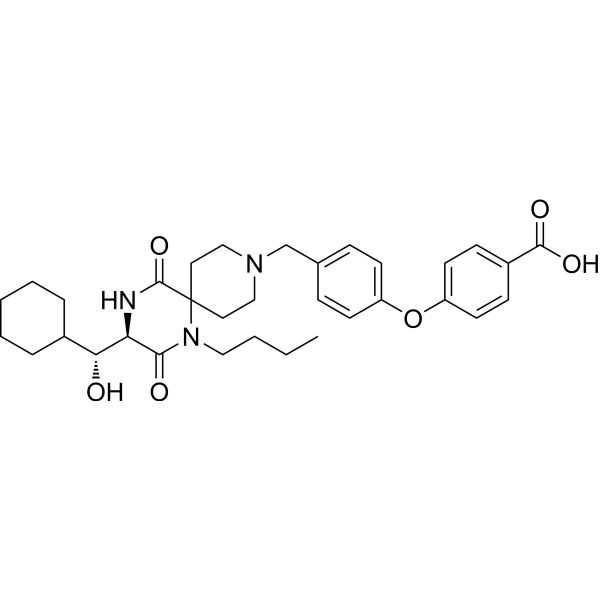
Met-RANTES (human)
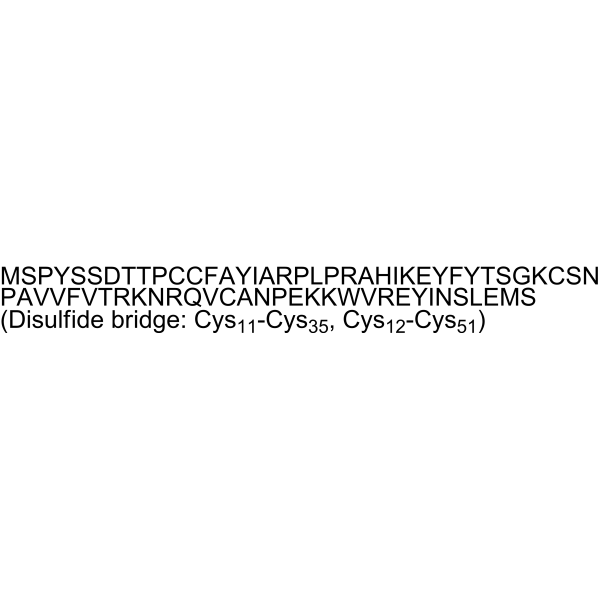 0 ImagesCat. No.: HY-P4191CAS No.: 1883816-50-9Synonyms: MSPYSSDTTPCCFAYIARPLPRAHIKEYFYTSGKCSN
-
CCR5 antagonist 3
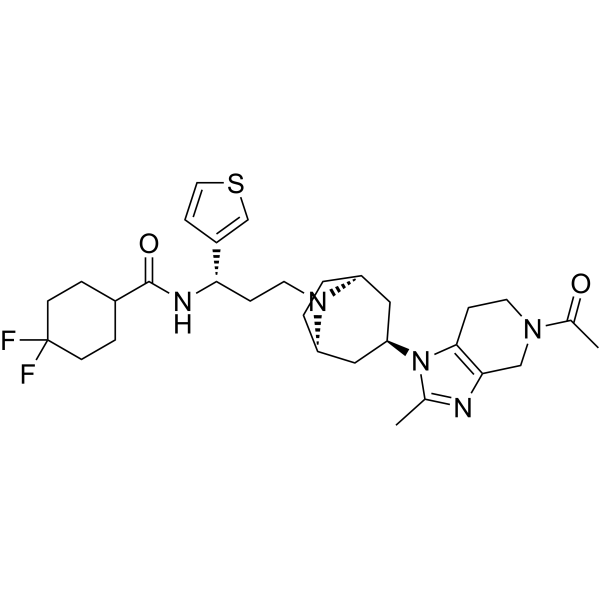 0 ImagesCat. No.: HY-152132CAS No.: 1800570-92-6CCR5 antagonist 3 (Compound 26) is a CCR5 antagonist with an IC50 of 15.90 nM. CCR5 antagonist 3 shows broad-spectrum anti-HIV-1 activities.
-
Ancriviroc
 0 ImagesCat. No.: HY-107401CAS No.: 370893-06-4Synonyms: SCH-351125Ancriviroc (SCH-351125) is an orally active CCR5 antagonist with an IC50 value of 13 nM against hCCR5. Ancriviroc specifically binds to hCCR5, blocks ligand-induced signal transduction, calcium influx, GTPγS binding, chemotaxis, ligand binding, and HIV-1 entry, induces conformational changes in CCR5, and inhibits infection and replication of R5-tropic HIV-1.
-
INCB9471
 0 ImagesCat. No.: HY-14230CAS No.: 869769-98-2INCB9471 is a potent, selective and orally active CCR5 antagonist. INCB9471 shows anti-HIV-1 activity.
- 1
- 2




