



NF-56-EJ40
Based on 16 publication(s) in Google Scholar
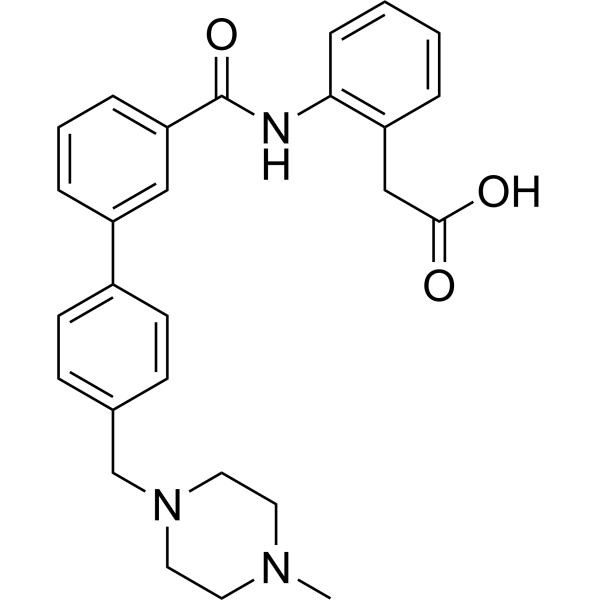
NF-56-EJ40 is a potent, high-affinity, and highly selective human SUCNR1 (GPR91) antagonist with an IC50 of 25 nM and a Ki of 33 nM, and shows almost no activity towards rat SUCNR1. NF-56-EJ40 has high affinity for humanized rat SUCNR1 with a Ki value of 17.4 nM.
For research use only. We do not sell to patients.
- Purity : 99.88%
- CAS No.: 2380230-73-7
- Formula: C27H29N3O3
- Molecular Weight:443.54
-
Storage:Powder -20°C, 3 years , 4°C, 2 years ; In solvent -80°C, 1 year , -20°C, 6 months

To place orders, for customer services and technical support, please contact: MedChemExpress USA
Tel: 609-228-6898 E-mail: [email protected] [email protected]


-
 Biological Activity
-
Chemical Information
-
Solvent & Solubility
- Purity & Documentation
- References
-
 Help & FAQs


-
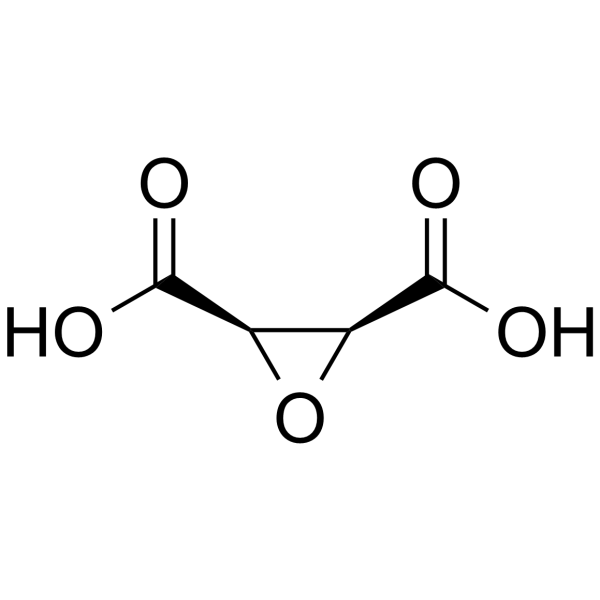
HY-125791
cis-Epoxysuccinic acidSUCNR1 Agonist -
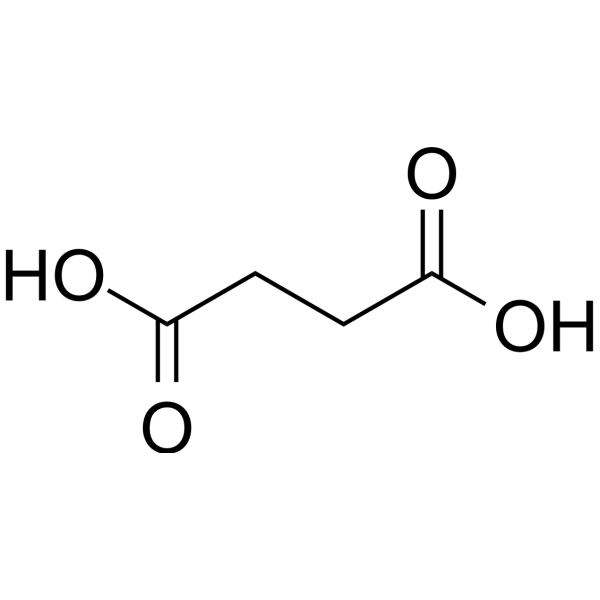
HY-N0420
Succinic acidFood Additive, Platform chemical -
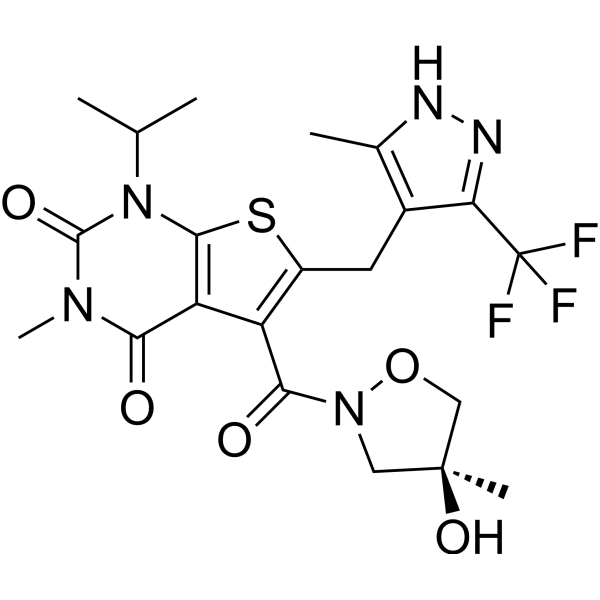
HY-12750
AZD3965MCT1 Inhibitor -
HY-126217
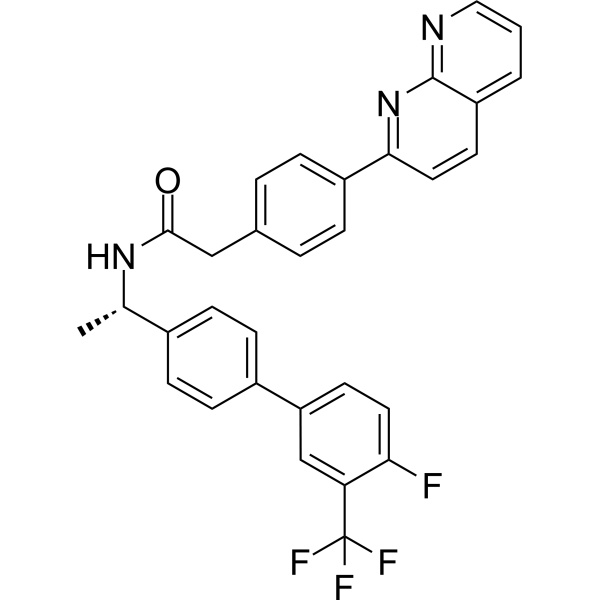
hGPR91 antagonist 1hGPR91 Antagonist -
HY-18739
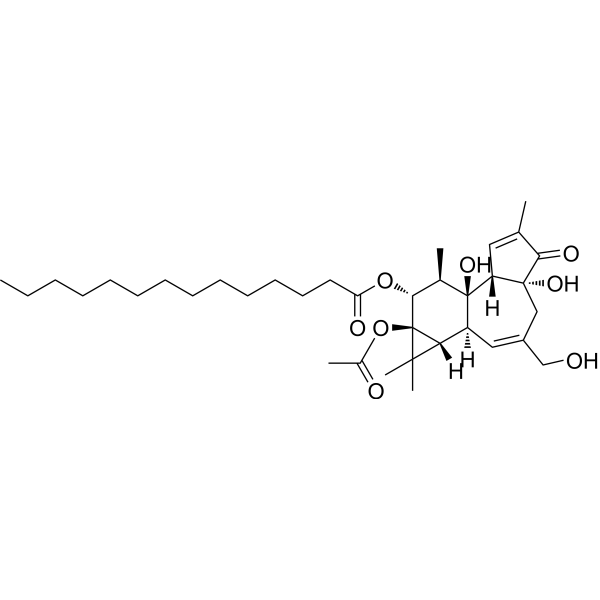
Phorbol 12-myristate 13-acetatePKC Activator -
HY-13419
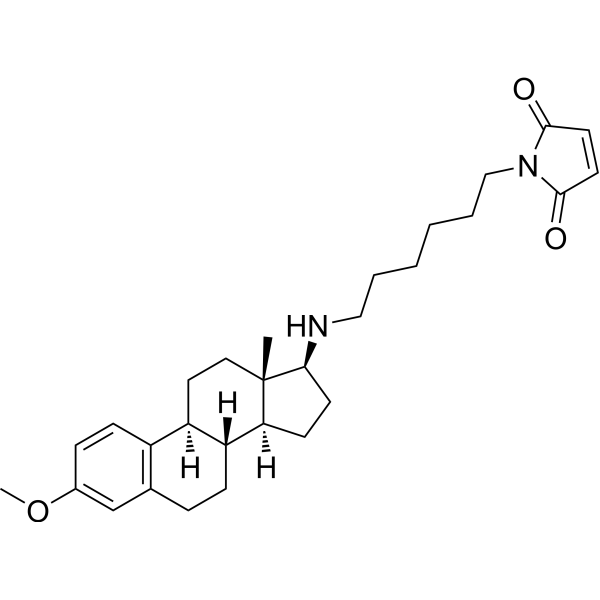
U-73122Phospholipase C Inhibitor -

HY-130246A
NF-56-EJ40 hydrochlorideSUCNR1 (GPR91) Antagonist
Publications Citing Use of MedChemExpress (MCE) NF-56-EJ40
More- Metabolism. 2023 Aug:145:155630. [Abstract]
- J Clin Invest. 2026 Jun 15;136(12):e200316. [Abstract]
- J Clin Invest. 2024 May 7;134(12):e173214. [Abstract]
- Sci Adv. 2026 Jun 12;12(24):eaec8873. [Abstract]
- Cardiovasc Res. 2024 Nov 25;120(14):1693-1712. [Abstract]
- Cancer Lett. 2022 Feb 1:526:91-102. [Abstract]
- Dev Cell. 2022 Sep 26;57(18):2221-2236.e5. [Abstract]
- Arch Pharm Res. 2025 Aug;48(7-8):782-797. [Abstract]
- J Agric Food Chem. 2024 Sep 25;72(38):21052-21064. [Abstract]
- Int Immunopharmacol. 2026 Oct 15:187:117198.
- Int J Mol Sci. 2026 Sep 5;27(17):7930.
- Cell Signal. 2025 Sep 10:136:112127. [Abstract]
- Oncol Res. 2026 Jan 19;34(2):25. [Abstract]
- J Physiol. 2025 Mar 31. [Abstract]
- Poult Sci. 2024 Dec 31;104(2):104754. [Abstract]
- bioRxiv. January 10, 2022.
 Customer Validation & Images

-
RT-PCR

-
ELISA

-
WB

-
WB

-
IF


Biological Activity
Description
IC50 & Target
SUCNR1 (GPR91)[1]
In Vitro
NF-56-EJ40 is bound deep inside the hydrophobic pocket, with the acid group coordinated by the hydroxyl groups of the conserved residues Y832.64 and Y301.39 on one side, and R2817.39 on the other side. The conserved E181.27 is predicted to form an additional hydrogen bond to the piperazine ring of NF-56-EJ40. E221.31 and N2747.32 in human SUCNR1 are replaced by K181.31 and K2697.32 in rat SUCNR1. These two amino acid exchanges could prevent the binding of NF-56-EJ40 to rat SUCNR1 owing to steric hindrance. Radioligand-binding studies with human SUCNR1 showed partial agreement with our homology model: the Y301.39F mutant of human SUCNR1, shows reduced binding of NF-56-EJ40. Similar effects are observed with the E181.27K and E181.27R mutants, probably owing to steric clashes of the Lys and Arg residues with NF-56-EJ40 and the loss of a hydrogen bond to its piperazine ring[1].
Human SUCNR1 residues are introduced into rat SUCNR1 to form the double mutant K181.31E/K2697.32N (hereafter denoted humanized rat SUCNR1) (Ki of 17.4 nM and 33.5 nM for human and humanized rat SUCNR1, respectively). NF-56-EJ40 increases the thermal stability of both humanized rat SUCNR1 and human SUCNR1, but not that of rat SUCNR1[1].
MedChemExpress (MCE) has not independently confirmed the accuracy of these methods. They are for reference only.


Chemical Information
-
CAS No. 2380230-73-7
-
Appearance Solid
-
Molecular Weight 443.54
-
Formula C27H29N3O3
-
Color Off-white to gray
-
SMILES
O=C(NC1=C(CC(O)=O)C=CC=C1)C2=CC=CC(C3=CC=C(CN4CCN(C)CC4)C=C3)=C2
-
Shipping
Room temperature in continental US; may vary elsewhere.
-
Storage
Powder -20°C 3 years 4°C 2 years In solvent -80°C 1 year -20°C 6 months


Publications (16)
-
Journal Impact Factor
-
Most Recent
-
Metabolism
2023 Aug:145:155630. PMID: 37315889 -
J Clin Invest
2026 Jun 15;136(12):e200316. PMID: 42294897
NF-56-EJ40 purchased from MedChemExpress. Usage Cited in: J Clin Invest. 2026 Jun 15;136(12):e200316. [Abstract]
NF-56-EJ40 (50 nM; 3 h) markedly dampened succinate-induced increase of CXCL9 and CXCL10 mRNA in Normal human keratinocytes (NHKs).
NF-56-EJ40 purchased from MedChemExpress. Usage Cited in: J Clin Invest. 2026 Jun 15;136(12):e200316. [Abstract]
NF-56-EJ40 (50 nM; 3 h) markedly dampened succinate-induced increase of CXCL9 and CXCL10 protein in Normal human keratinocytes (NHKs).
NF-56-EJ40 purchased from MedChemExpress. Usage Cited in: J Clin Invest. 2026 Jun 15;136(12):e200316. [Abstract]
NF-56-EJ40 (50 nM; 3 h) reversed succinate-induced HIF-1α upregulation in Normal human keratinocytes (NHKs).
NF-56-EJ40 purchased from MedChemExpress. Usage Cited in: J Clin Invest. 2026 Jun 15;136(12):e200316. [Abstract]
NF-56-EJ40 (50 nM; 3 h) decreased HIF-1α expression in the cell nucleus in Normal human keratinocytes (NHKs).
NF-56-EJ40 purchased from MedChemExpress. Usage Cited in: J Clin Invest. 2026 Jun 15;136(12):e200316. [Abstract]
NF-56-EJ40 (50 nM; 3 h) inhibited the succinate-induced nuclear translocation of HIF-1α in Normal human keratinocytes (NHKs).
-
J Clin Invest
SUCNR1 regulates insulin secretion and glucose elevates the succinate response in people with prediabetes. [Abstract]2024 May 7;134(12):e173214. PMID: 38713514
NF-56-EJ40 purchased from MedChemExpress. Usage Cited in: J Clin Invest. 2024 May 7;134(12):e173214. [Abstract]
NF-56-EJ40 (1 μM; 3 h) completely blocked succinate-induced insulin secretion in the presence of high glucose in EndoC-βH5 cells.
-
Sci Adv
SUCNR1 coordinates metabolic flux, mitochondrial function, and nutrient-dependent adaptation in hepatocytes. [Abstract]2026 Jun 12;12(24):eaec8873. PMID: 42284407 -
Cardiovasc Res
miR-369-3p ameliorates diabetes-associated atherosclerosis by regulating macrophage succinate-GPR91 signaling. [Abstract]2024 Nov 25;120(14):1693-1712. PMID: 38703377
NF-56-EJ40 purchased from MedChemExpress. Usage Cited in: Cardiovasc Res. 2024 Nov 25;120(14):1693-1712. [Abstract]
NF-56-EJ40 (5 μM; 30 min+24 h) significantly reduced the OxLDL-induced IL-1β secretion in healthy and diabetic monocytes compared to control.
-
Cancer Lett
Succinate receptor 1 inhibits mitochondrial respiration in cancer cells addicted to glutamine. [Abstract]2022 Feb 1:526:91-102. PMID: 34813893 -
Dev Cell
Pulmonary neuroendocrine cells sense succinate to stimulate myoepithelial cell contraction. [Abstract]2022 Sep 26;57(18):2221-2236.e5. PMID: 36108628 -
Arch Pharm Res
Silybin inhibits succinate production and secretion in hepatocytes to reverse liver fibrosis. [Abstract]2025 Aug;48(7-8):782-797. PMID: 40739373 -
J Agric Food Chem
Exposure to Succinate Leads to Steatosis in Non-Obese Non-Alcoholic Fatty Liver Disease by Inhibiting AMPK/PPARα/FGF21-Dependent Fatty Acid Oxidation. [Abstract]2024 Sep 25;72(38):21052-21064. PMID: 39268842 -
-
-
Cell Signal
GPR91 mediates low shear stress-induced endothelial ferroptosis via EGR1-dependent GPX4 repression. [Abstract]2025 Sep 10:136:112127. PMID: 40939914 -
Oncol Res
SDHA Deficiency in Hepatocellular Carcinoma Promotes Tumor Progression through Succinate-Induced M2 Macrophage Polarization. [Abstract]2026 Jan 19;34(2):25. PMID: 41613800 -
J Physiol
Impaired angiogenesis in gestational diabetes is linked to succinate/SUCNR1 axis dysregulation in late gestation. [Abstract]2025 Mar 31. PMID: 40163642 -
Poult Sci
Lactobacillus salivarius metabolite succinate enhances chicken intestinal stem cell activities via the SUCNR1-mitochondria axis. [Abstract]2024 Dec 31;104(2):104754. PMID: 39764876 -


Solvent & Solubility
In Vitro:
DMSO : 5 mg/mL (11.27 mM; Need ultrasonic; Hygroscopic DMSO has a significant impact on the solubility of product, please use newly opened DMSO)
H2O : 4.55 mg/mL (10.26 mM; ultrasonic and adjust pH to 9 with NaOH)
Please refer to the solubility information to select the appropriate solvent. Once prepared, please aliquot and store the solution to prevent product inactivation from repeated freeze-thaw cycles.
Storage method and period of stock solution: -80°C, 1 year; -20°C, 6 months. When stored at -80°C, please use it within 1 year. When stored at -20°C, please use it within 6 months.
* Note: If you choose water as the stock solution, please dilute it to the working solution, then filter and sterilize it with a 0.22 μm filter before use.
Please refer to the solubility information to select the appropriate solvent. Once prepared, please aliquot and store the solution to prevent product inactivation from repeated freeze-thaw cycles.
Storage method and period of stock solution: -80°C, 1 year; -20°C, 6 months. When stored at -80°C, please use it within 1 year. When stored at -20°C, please use it within 6 months.
* Note: If you choose water as the stock solution, please dilute it to the working solution, then filter and sterilize it with a 0.22 μm filter before use.
Concentration (start) × Volume (start) = Concentration (final) × Volume (final)


Purity & Documentation
-
Data Sheet (276 KB)
-
SDS (393 KB)
- English - EN (393 KB)
- Français - FR (393 KB)
- Deutsch - DE (393 KB)
- Norwegian - NO (393 KB)
- Español - ES (393 KB)
- Swedish - SV (393 KB)
- Italian - IT (393 KB)
- Korean - KR (393 KB)
- Portuguese - PT (393 KB)
-
Handling Instructions (2659 KB)
References


Complete Stock Solution Preparation Table
Please refer to the solubility information to select the appropriate solvent. Once prepared, please aliquot and store the solution to prevent product inactivation from repeated freeze-thaw cycles.
Storage method and period of stock solution: -80°C, 1 year; -20°C, 6 months. When stored at -80°C, please use it within 1 year. When stored at -20°C, please use it within 6 months.
| Optional Solvent | Concentration Solvent Mass | 1 mg | 5 mg | 10 mg | 25 mg |
|---|---|---|---|---|---|
| H2O / DMSO | 1 mM | 2.2546 mL | 11.2729 mL | 22.5459 mL | 56.3647 mL |
| 5 mM | 0.4509 mL | 2.2546 mL | 4.5092 mL | 11.2729 mL | |
| 10 mM | 0.2255 mL | 1.1273 mL | 2.2546 mL | 5.6365 mL |
* Note: If you choose water as the stock solution, please dilute it to the working solution, then filter and sterilize it with a 0.22 μm filter before use.


NF-56-EJ40 Related Classifications
HY-130246 Related Classifications
 Powered by Bioz