



Polylactic acid

Based on 1 Customer Validation
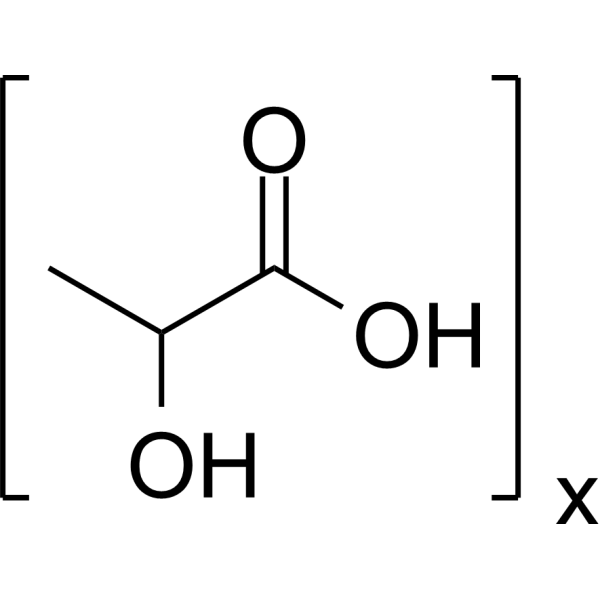
Polylactic acid (PLA) is a biodegradable and biocompatible polymer widely used as a carrier for drug delivery systems and a structural material for tissue engineering and medical implants. Polylactic acid acts as a controlled release matrix through the hydrolysis mechanism of ester bonds, gradually releasing the encapsulated drug and metabolizing to non-toxic lactic acid. Polylactic acid has adjustable degradation rate, mechanical properties and the ability to composite with other polymers, and can be used in local or systemic drug delivery, orthopedic fixation devices and 3D printed bone regeneration scaffolds.
For research use only. We do not sell to patients.
- CAS No.: 26100-51-6
- Formula: (C3H6O3)x
- Molecular Weight:60000(Average)
-
Storage:
4°C, sealed storage, away from moisture
* In solvent : -80°C, 6 months; -20°C, 1 month (sealed storage, away from moisture)

To place orders, for customer services and technical support, please contact: MedChemExpress USA
Tel: 609-228-6898 E-mail: [email protected] [email protected]


-
 Biological Activity
-
Chemical Information
-
Solvent & Solubility
- Protocols
- Purity & Documentation
- References
-
 Help & FAQs


-
HY-B2247
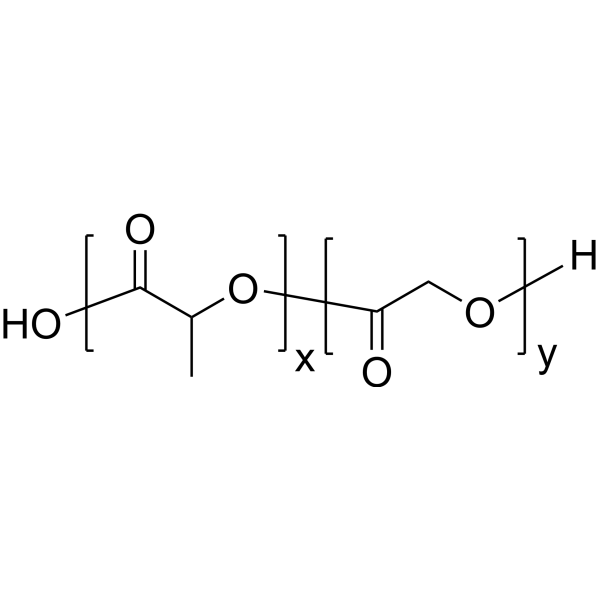
PLGA (50:50)Polymer drug Delivery Vehicle -
HY-Y0703
Sodium carboxymethyl cellulose (Viscosity:800-1200 mPa.s)Biochemical Assay Reagent -
HY-Y0703C
Sodium carboxymethyl cellulose (Viscosity:300-800mpa.s)Biochemical Assay Reagent -
HY-Y1889A
Sodium carboxymethyl cellulose (MW 250000)Anti-adhesion agent -
HY-Y0703A
Sodium carboxymethyl cellulose (Viscosity:1200-1400 mPa.s)Biochemical Assay Reagent -
HY-Y0703D
Sodium carboxymethyl cellulose (average Mw 90000)Biochemical Assay Reagent -
HY-Y1889
Sodium carboxymethyl cellulose (Viscosity:5000-15000 mPa.s) -

HY-B2221B1
Hydroxyethyl cellulose, Viscosity(2%):150mPa.sBiochemical Assay Reagents -

HY-W250312
PolycaprolactoneBiochemical Assay Reagent -
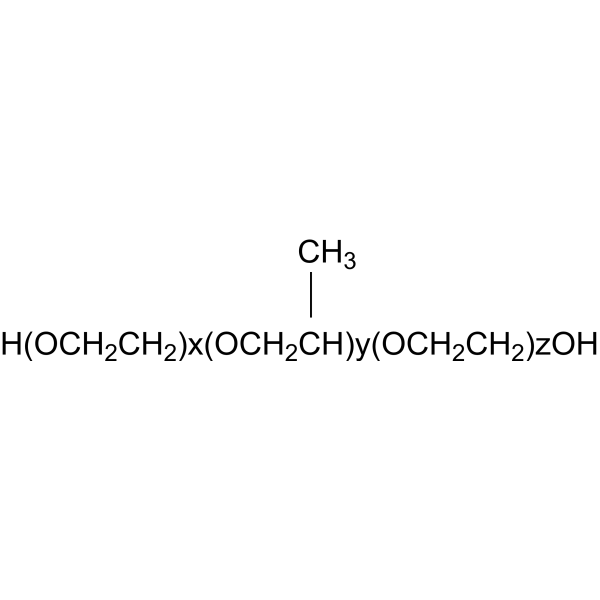
HY-D1005
Poloxamer 407 (F127)LPL Receptor Inhibitor -
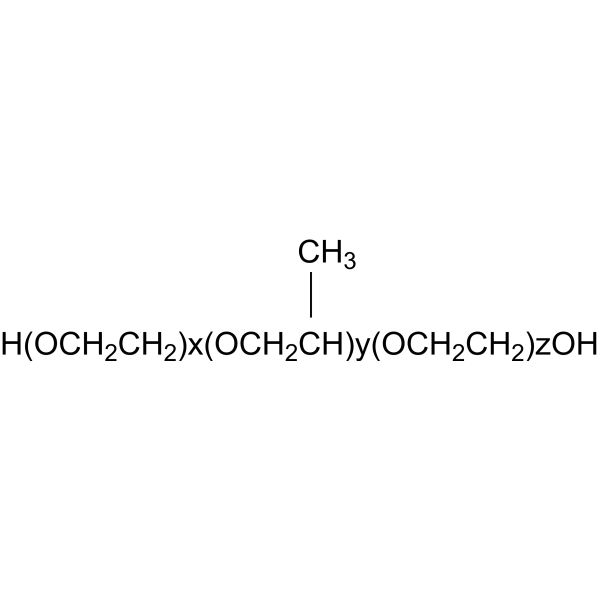
HY-D1005A
Poloxamer 188Linear Copolymer -
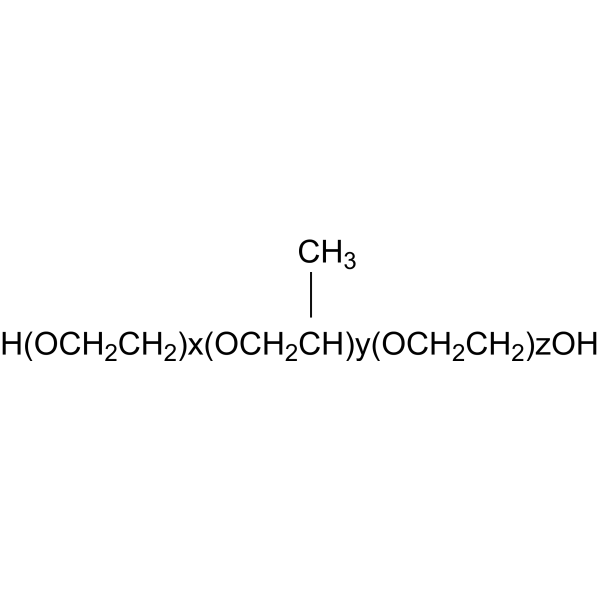
HY-D1005H
Poloxamer 188 (F68)Nonionic Linear Copolymer


Biological Activity
Description
Cellular Effect
|
Cell Line

|
Type | Value | Description | References |
|---|---|---|---|---|
| A549 | IC50 |
26.61 mM
Compound: Lactic acid
|
Cytotoxicity against human A549 cells assessed as reduction in cell viability after 48 hrs by MTT assay
Cytotoxicity against human A549 cells assessed as reduction in cell viability after 48 hrs by MTT assay
|
[PMID: 25299679] |
| MRC5 | IC50 |
23.93 mM
Compound: Lactic acid
|
Cytotoxicity against human MRC5 cells assessed as reduction in cell viability after 48 hrs by MTT assay
Cytotoxicity against human MRC5 cells assessed as reduction in cell viability after 48 hrs by MTT assay
|
[PMID: 25299679] |
In Vitro
Polylactic acid (PLA) showed more efficient release of 5-Fluorouracil (HY-90006) than pure polymer in electrospun hybrid nanofibers of 80:20 PLA/PCL ratio (20 g/L glucose). PLA microspheres (10 mg/mL; 35 days) achieved sustained release of Naltrexone (HY-76711) with a cumulative release rate of 67%. 3D-printed PLA/hydroxyapatite scaffolds (2 weeks in vivo) promoted osteoblast proliferation and bone formation in rabbit calvarial defects. PLA-based drug-eluting scaffolds (10 μg /cm2; 30 days) achieved controlled release of paclitaxel and reduced restenosis rate[1].
MedChemExpress (MCE) has not independently confirmed the accuracy of these methods. They are for reference only.
Clinical Trial
| NCT Number | Sponsor | Condition | Start Date |
Phase
|
|---|---|---|---|---|
| NCT01329991 | 2011-05 | PHASE1 |


Chemical Information
-
CAS No. 26100-51-6
-
Appearance Solid
-
Molecular Weight 60000(Average)
-
Formula (C3H6O3)x
-
Color White to off-white
-
SMILES
O=C(C(C)O)O.[x]
-
Synonyms
PLA
-
Shipping
Room temperature in continental US; may vary elsewhere.
-
Storage
4°C, sealed storage, away from moisture
* In solvent : -80°C, 6 months; -20°C, 1 month (sealed storage, away from moisture)


Solvent & Solubility
In Vitro:
DMSO : 200 mg/mL (Need ultrasonic; Hygroscopic DMSO has a significant impact on the solubility of product, please use newly opened DMSO)


Purity & Documentation
-
Data Sheet (269 KB)
-
SDS (394 KB)
- English - EN (394 KB)
- Français - FR (394 KB)
- Deutsch - DE (394 KB)
- Norwegian - NO (394 KB)
- Español - ES (394 KB)
- Swedish - SV (394 KB)
- Italian - IT (394 KB)
- Korean - KR (394 KB)
- Portuguese - PT (394 KB)
-
Handling Instructions (2659 KB)
References

Calculators
Concentration (start) × Volume (start) = Concentration (final) × Volume (final)


Polylactic acid Related Classifications
HY-W250313 Related Classifications
 Powered by Bioz