



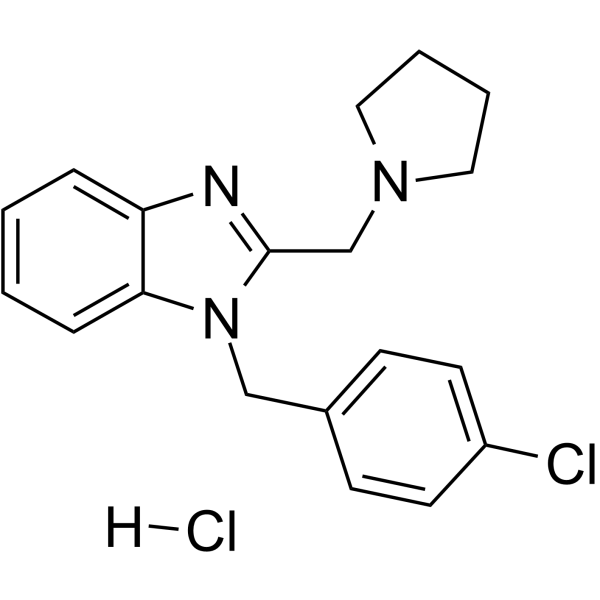
Clemizole hydrochloride
Based on 1 publication(s) in Google Scholar
Clemizole hydrochloride is an orally active, blood-brain barrier permeable TRPC5 inhibitor, with an IC50 value of 1.05-1.34 μM against mouse TRPC5. Clemizole hydrochloride blocks TRPC1:TRPC5, TRPC3, TRPC4, TRPC6, TRPC7, hERG, hKCNQ1/hKCNE1 and hKv1.5 channels, and activates TRPA1; it modulates 5HT-2B and HTR2A receptors; it inhibits HCV RNA replication, CrtN enzymatic activity, oxidative stress, neuroinflammation, cell apoptosis and bacterial virulence; it maintains blood-brain barrier (BBB) integrity; it enhances DNA repair capacity; it improves cell viability; and it alters cardiac electrophysiological properties. Clemizole hydrochloride can be used in the research of Dravet syndrome, hepatitis C virus infection, Staphylococcus aureus skin infection, Cisplatin (HY-17394)-induced nephrotoxicity, STXBP1-related diseases, traumatic brain injury and xeroderma pigmentosum type C.
For research use only. We do not sell to patients.
- Purity: 99.99%
- CAS No.: 1163-36-6
- Formula: C19H21Cl2N3
- Molecular Weight:362.30
-
Storage:
4°C, sealed storage, away from moisture
* In solvent : -80°C, 6 months; -20°C, 1 month (sealed storage, away from moisture)

To place orders, for customer services and technical support, please contact: MedChemExpress USA
Tel: 609-228-6898 E-mail: [email protected] [email protected]


-
 Biological Activity
-
Chemical Information
-
Solvent & Solubility
- Purity & Documentation
- References
-
 Help & FAQs
-

Bioactive Compound Library Max
HY-L181
-
Bioactive Compound Library
HY-L001
-
Anti-Infection Compound Library
HY-L002
-
Apoptosis Compound Library
HY-L003
-
Immunology/Inflammation Compound Library
HY-L007
-
Membrane Transporter/Ion Channel Compound Library
HY-L011
-
Neuronal Signaling Compound Library
HY-L013
-
FDA-Approved Drug Library
HY-L022
-
CNS-Penetrant Compound Library
HY-L028
-
Drug Repurposing Compound Library
HY-L035
-
Endocrinology Compound Library
HY-L047
-
Antibacterial Compound Library
HY-L049
-
Orally Active Compound Library
HY-L061
-
FDA Approved & Pharmacopeial Drug Library
HY-L066
-
Anti-Parkinson's Disease Compound Library
HY-L085
-
Neurodegenerative Disease-related Compound Library
HY-L086
-
Mechanoreceptors Compound Library
HY-L095
-
Targeted Diversity Library
HY-L099
-
Rare Diseases Drug Library
HY-L102
-
Heterocyclic Compound Library
HY-L138
-
Pain-Related Compound Library
HY-L139
-
Off-patent Drug Library
HY-L141
-
Membrane Protein-targeted Compound Library
HY-L149
-
Membrane Receptor-targeted Compound Library
HY-L150
-
Cell Death Library
HY-L162
-
Ion Channel Compound Library
HY-L166
-
MCE Bioactive Compound Library
HY-L001V
-
Drug Repurposing Compound Library Plus
HY-L035P
-
FDA-Approved Drug Library Plus
HY-L022P
-
FDA-Approved Drug Library Mini
HY-L022M
-
Non-Alcoholic Fatty Liver Disease (NAFLD) Compound Library
HY-L199
-
High-Throughput Bioactive Compound Library
HY-L205


Publications Citing Use of MedChemExpress (MCE) Clemizole hydrochloride
More

Biological Activity
|
TRPC5 1.05-1.34 μM (IC50) |
|
Cell Line

|
Type | Value | Description | References |
|---|---|---|---|---|
| Vero C1008 | CC50 |
>40 μM
Compound: Clemizole hydrochloride
|
Cytotoxicity (CC50) determination in Vero E6 cells measured by fluorescence (OD590nm)
Cytotoxicity (CC50) determination in Vero E6 cells measured by fluorescence (OD590nm)
|
10.1101/2020.04.03.023846 |
| Vero C1008 | EC50 |
23.94 μM
Compound: Clemizole hydrochloride
|
Antiviral efficacy against SARS-CoV-2 (strain BavPat1) in Vero E6 cells assessed by inhibition of viral RNA replication measured by RT-PCR after 2 days
Antiviral efficacy against SARS-CoV-2 (strain BavPat1) in Vero E6 cells assessed by inhibition of viral RNA replication measured by RT-PCR after 2 days
|
10.1101/2020.04.03.023846 |
Clemizole hydrochloride exhibits strong, synergistic anti-HCV activity in Huh 7.5 cells when combined with Boceprevir (HY-10237), with a synergy volume of 230 μM2%, and does not induce cellular toxicity at tested concentrations[9].
Clemizole hydrochloride (1-10 μM; 24 h) significantly increases the viability of XP-C patient-derived fibroblasts exposed to UVB irradiation, with a dose-dependent protective effect that enhances photo-resistance compared to DMSO-treated cells[11].
Clemizole hydrochloride (5 μM; 24 h) significantly promotes repair of UVB-induced 6-4PP DNA lesions in XP-C patient-derived fibroblasts[11].
Clemizole hydrochloride (0.1-10 μM; 24 h) mediates enhanced UVB photo-resistance in XP-C patient-derived fibroblasts through both pre- and post-UVB irradiation treatment, with the combined regimen yielding the highest bioactivity[11].
Clemizole hydrochloride (10 μM; 2-4 h) does not affect DNA replication or cell proliferation in XP-C patient-derived fibroblasts exposed to UVB irradiation[11].
Clemizole hydrochloride (10 μM; 24 h) does not reduce apoptosis or necrosis to mediate its protective effect in XP-C patient-derived fibroblasts exposed to UVB irradiation[11].
MedChemExpress (MCE) has not independently confirmed the accuracy of these methods. They are for reference only.
-
Cell Line:Xeroderma Pigmentosum C (XP-C) patient-derived immortalized fibroblasts (GM15983)
-
Concentration:10 μM (24 h pre-irradiation treatment); 10 μM (24 h post-irradiation treatment); 1-10 μM (both pre- and post-irradiation treatments)
-
Incubation Time:24 h (pre-irradiation treatment); 24 h (post-irradiation treatment)
-
Result:Showed ≥25% photo-resistance and a robust Z score above 2.6 in primary screen.
Induced a significant 20 to 40% increase in XP-C cell viability depending on UVB dose and reagent concentration, with increased bioactivity at higher concentrations.
Significantly enhanced photo-resistance in XP-C cells across increasing UVB doses, with viability remaining higher than DMSO-treated controls at all tested UVB doses.
-
Cell Line:Xeroderma Pigmentosum C (XP-C) patient-derived immortalized fibroblasts (GM15983)
-
Concentration:0.1-10 μM (pre-irradiation only; post-irradiation only; combined pre- and post-irradiation treatments)
-
Incubation Time:24 h post-UV
-
Result:Reached ~20% increased cell viability at 10 μM with pre-irradiation treatment alone.
Reached an average of ~50% increased viability at 10 μM with post-irradiation treatment alone.
Showed the highest bioactivity with combined pre- and post-irradiation treatment, with a significant increase compared to pre-treatment alone at both 5 μM and 10 μM, and no significant difference compared to post-treatment alone.
-
Cell Line:Xeroderma Pigmentosum C (XP-C) patient-derived immortalized fibroblasts (GM15983)
-
Concentration:10 μM (both pre- and post-irradiation treatments)
-
Incubation Time:2 h post-UV; 4 h post-UV
-
Result:Showed no significant increase in EdU mean fluorescence intensity (MFI) compared to DMSO-treated cells at 2 h or 4 h post-UV.
Showed no significant difference in the percentage of EdU-positive cells from DMSO-treated cells at either time point, indicating no enhancement of DNA replication or cell proliferation.
-
Cell Line:Xeroderma Pigmentosum C (XP-C) patient-derived immortalized fibroblasts (GM15983)
-
Concentration:10 μM (both pre- and post-irradiation treatments)
-
Incubation Time:24 h post-UV incubation
-
Result:Did not show a significant decrease in apoptotic (CellEvent-positive) or necrotic (PI-positive) cell populations compared to DMSO-treated cells.
Did not significantly increase the live cell population.
Clemizole (100-400 μM; p.o.; 30-min exposure; 90-min exposure) hydrochloride suppresses seizure-associated locomotion in scn1Lab mutant zebrafish larvae at doses of 100 μM (90-min exposure), 300 μM, and 400 μM (30-min exposure), with toxicity observed at higher concentrations during prolonged exposure[10].
Clemizole (250 μM; p.o.; single exposure) hydrochloride significantly suppresses seizure-associated locomotion in scn1Laa mutant zebrafish larvae, a second Dravet syndrome model[10].
MedChemExpress (MCE) has not independently confirmed the accuracy of these methods. They are for reference only.
-
Animal Model:Sprague-Dawley Rat (6-8 weeks old)[8]
-
Dosage:10 mg/kg; 30 mg/kg
-
Administration:i.p.; single dose
-
Result:Promoted neurological function recovery after TBI in a dose-dependent manner.
Improved sensorimotor dysfunction after TBI.
Reversed TBI-related anxiety-like behaviors.
Improved spatial learning and memory deficits after TBI without affecting motor function.
Alleviated TBI-induced oxidative stress and restored antioxidant defense capabilities.
Alleviated TBI-induced cortical cell damage.
Inhibited microglia and astrocyte activation, reduced pro-inflammatory cytokine levels, and restored tight junction protein expression, thus protecting the integrity of the blood-brain barrier.
Activated the PI3K-Akt pro-survival pathway, downregulated the Bax/Bcl-2 ratio, and inhibited the caspase cascade, thus exerting an anti-apoptotic effect.
-
Animal Model:TL strain (5 days post fertilization, undifferentiated sex)[10]
-
Dosage:100 μM (90-min exposure); 300 μM (30-min exposure); 400 μM (30-min exposure)
-
Administration:p.o.; 30-min exposure; 90-min exposure
-
Result:Suppressed seizure-related locomotion at 300 μM and 400 μM (30-min exposure) and at 100 μM (90-min exposure), reducing mean swim velocity by ≥40%.
Caused toxicity at 300 μM and 400 μM during prolonged 90-min exposure.
-
Animal Model:TL strain (5 days post fertilization, undifferentiated sex)[10]
-
Dosage:250 μM
-
Administration:p.o.; single exposure
-
Result:Significantly reduced mean swim velocity in scn1Laa mutant larvae, suppressing seizure behaviour similarly to known antiepileptic agents stiripentol and diazepam.


Chemical Information
-
CAS No. 1163-36-6
-
Appearance Solid
-
Molecular Weight 362.30
-
Formula C19H21Cl2N3
-
Color White to off-white
-
SMILES
ClC1=CC=C(C=C1)CN2C(CN3CCCC3)=NC4=CC=CC=C24.[H]Cl
-
Shipping
Room temperature in continental US; may vary elsewhere.
-
Storage
4°C, sealed storage, away from moisture
* In solvent : -80°C, 6 months; -20°C, 1 month (sealed storage, away from moisture)


Publications (1)
-
Journal Impact Factor
-
Most Recent
-
bioRxiv
2024 Aug 1:2024.08.01.606235. PMID: 39211253


Solvent & Solubility
DMSO : 33.33 mg/mL (92.00 mM; Need ultrasonic; Hygroscopic DMSO has a significant impact on the solubility of product, please use newly opened DMSO)
H2O : 20 mg/mL (55.20 mM; Need ultrasonic)
Please refer to the solubility information to select the appropriate solvent. Once prepared, please aliquot and store the solution to prevent product inactivation from repeated freeze-thaw cycles.
Storage method and period of stock solution: -80°C, 6 months; -20°C, 1 month (sealed storage, away from moisture). When stored at -80°C, please use it within 6 months. When stored at -20°C, please use it within 1 month.
* Note: If you choose water as the stock solution, please dilute it to the working solution, then filter and sterilize it with a 0.22 μm filter before use.
Please refer to the solubility information to select the appropriate solvent. Once prepared, please aliquot and store the solution to prevent product inactivation from repeated freeze-thaw cycles.
Storage method and period of stock solution: -80°C, 6 months; -20°C, 1 month (sealed storage, away from moisture). When stored at -80°C, please use it within 6 months. When stored at -20°C, please use it within 1 month.
* Note: If you choose water as the stock solution, please dilute it to the working solution, then filter and sterilize it with a 0.22 μm filter before use.
Concentration (start) × Volume (start) = Concentration (final) × Volume (final)
Select the appropriate dissolution method based on your experimental animal and administration route.
- For the following dissolution methods, please ensure to first prepare a clear stock solution using an In Vitro approach and then sequentially add co-solvents:
- To ensure reliable experimental results, the clarified stock solution can be appropriately stored based on storage conditions. As for the working solution for In Vivo experiments, it is recommended to prepare freshly and use it on the same day.
- The percentages shown for the solvents indicate their volumetric ratio in the final prepared solution. If precipitation or phase separation occurs during preparation, heat and/or sonication can be used to aid dissolution.
Add each solvent one by one: 10% DMSO 40% PEG300 5% Tween-80 45% Saline
Solubility: ≥ 2.08 mg/mL (5.74 mM); Clear solution
This protocol yields a clear solution of ≥ 2.08 mg/mL (saturation unknown).
Taking 1 mL working solution as an example, add 100 μL DMSO stock solution (20.8 mg/mL) to 400 μL PEG300, and mix evenly; then add 50 μL Tween-80 and mix evenly; then add 450 μL Saline to adjust the volume to 1 mL.
Preparation of Saline: Dissolve 0.9 g sodium chloride in ddH₂O and dilute to 100 mL to obtain a clear Saline solution.
Add each solvent one by one: 10% DMSO 90% (20% SBE-β-CD in Saline)
Solubility: ≥ 2.08 mg/mL (5.74 mM); Clear solution
This protocol yields a clear solution of ≥ 2.08 mg/mL (saturation unknown).
Taking 1 mL working solution as an example, add 100 μL DMSO stock solution (20.8 mg/mL) to 900 μL 20% SBE-β-CD in Saline, and mix evenly.
Preparation of 20% SBE-β-CD in Saline (4°C, storage for one week): 2 g SBE-β-CD powder is dissolved in 10 mL Saline, completely dissolve until clear.
Add each solvent one by one: 1% DMSO 99% Saline
Solubility: 0.5 mg/mL (1.38 mM); Clear solution; Need ultrasonic
Please enter the basic information of animal experiments:
-
-
-
-
Recommended: Prepare an additional quantity of animals to account for potential losses during experiments.
Working solution concentration: 0.22 mg/mL
This product has good water solubility, please refer to the measured solubility data in water/PBS/Saline for details.


Purity & Documentation
-
Data Sheet (294 KB)
-
SDS (596 KB)
- English - EN (596 KB)
- Français - FR (596 KB)
- Deutsch - DE (596 KB)
- Norwegian - NO (596 KB)
- Español - ES (596 KB)
- Swedish - SV (596 KB)
- Italian - IT (596 KB)
- Korean - KR (596 KB)
- Portuguese - PT (596 KB)
-
Handling Instructions (2659 KB)
References
[1]. Richter JM, et al. Clemizole hydrochloride is a novel and potent inhibitor of transient receptor potential channel TRPC5. Molecular pharmacology. 2014 Nov;86(5):514-21. [Content Brief]
[2]. Baraban SC, et al. Drug screening in Scn1a zebrafish mutant identifies clemizole as a potential Dravet syndrome treatment. Nature communications. 2013;4:2410. [Content Brief]
[3]. Jie LJ, et al. Clemizole hydrochloride blocks cardiac potassium currents stably expressed in HEK 293 cells. British journal of pharmacology. 2017 Feb;174(3):254-266. [Content Brief]
[4]. Einav S, et al. Discovery of a hepatitis C target and its pharmacological inhibitors by microfluidic affinity analysis. Nature biotechnology. 2008 Sep;26(9):1019-27. [Content Brief]
[5]. Yu H, et al. Clemizole inhibits CrtN-driven staphyloxanthin biosynthesis in Staphylococcus aureus to enhance host immune clearance. Communications biology. 2026 Feb 25;9(1):484. [Content Brief]
[6]. Kumaş-Kulualp M, et al. Clemizole hydrochloride, a potent TRPC5 calcium channel inhibitor, prevents cisplatin-induced nephrotoxicity in Spraque-Dawley rats. Journal of biochemical and molecular toxicology. 2023 Jul;37(7):e23372. [Content Brief]
[7]. Moog M, et al. Clemizole and trazodone are effective antiseizure treatments in a zebrafish model of STXBP1 disorder. Epilepsia open. 2022 Sep;7(3):504-511. [Content Brief]
[8]. Chauhan C, et al. Clemizole Mitigates Traumatic Brain Injury by Inhibiting Oxidative Stress, Neuroinflammation, and Apoptosis. ACS chemical neuroscience. 2026 May 06;17(9):1787-1801. [Content Brief]
[9]. Nishimura T, et al. Using chimeric mice with humanized livers to predict human drug metabolism and a drug-drug interaction. The Journal of pharmacology and experimental therapeutics. 2013 Feb;344(2):388-96. [Content Brief]
[10]. Griffin A, et al. Clemizole and modulators of serotonin signalling suppress seizures in Dravet syndrome. Brain : a journal of neurology. 2017 Mar 01;140(3):669-683. [Content Brief]
[11]. Kobaisi F, et al. Isoconazole and Clemizole Hydrochloride Partially Reverse the Xeroderma Pigmentosum C Phenotype. International journal of molecular sciences. 2021 Jul 29;22(15):8156. [Content Brief]


Complete Stock Solution Preparation Table
Please refer to the solubility information to select the appropriate solvent. Once prepared, please aliquot and store the solution to prevent product inactivation from repeated freeze-thaw cycles.
Storage method and period of stock solution: -80°C, 6 months; -20°C, 1 month (sealed storage, away from moisture). When stored at -80°C, please use it within 6 months. When stored at -20°C, please use it within 1 month.
| Optional Solvent | Concentration Solvent Mass | 1 mg | 5 mg | 10 mg | 25 mg |
|---|---|---|---|---|---|
| H2O / DMSO | 1 mM | 2.7601 mL | 13.8007 mL | 27.6014 mL | 69.0036 mL |
| 5 mM | 0.5520 mL | 2.7601 mL | 5.5203 mL | 13.8007 mL | |
| 10 mM | 0.2760 mL | 1.3801 mL | 2.7601 mL | 6.9004 mL | |
| 15 mM | 0.1840 mL | 0.9200 mL | 1.8401 mL | 4.6002 mL | |
| 20 mM | 0.1380 mL | 0.6900 mL | 1.3801 mL | 3.4502 mL | |
| 25 mM | 0.1104 mL | 0.5520 mL | 1.1041 mL | 2.7601 mL | |
| 30 mM | 0.0920 mL | 0.4600 mL | 0.9200 mL | 2.3001 mL | |
| 40 mM | 0.0690 mL | 0.3450 mL | 0.6900 mL | 1.7251 mL | |
| 50 mM | 0.0552 mL | 0.2760 mL | 0.5520 mL | 1.3801 mL | |
| DMSO | 60 mM | 0.0460 mL | 0.2300 mL | 0.4600 mL | 1.1501 mL |
| 80 mM | 0.0345 mL | 0.1725 mL | 0.3450 mL | 0.8625 mL |
* Note: If you choose water as the stock solution, please dilute it to the working solution, then filter and sterilize it with a 0.22 μm filter before use.


Clemizole hydrochloride Related Classifications
HY-30234A Related Classifications
 Powered by Bioz