



ACDQ

Based on 1 Customer Validation
ACDQ (4-Amino-2-chloro-6,7-dimethoxyquinazoline) is a pharmaceutical intermediate that can be used for the synthesis of quinazoline-based antibacterial agents. Molecular docking results of ACDQ indicate that it possesses potential acetylcholinesterase inhibitory activity, and it can be applied to Alzheimer's disease-related research.
For research use only. We do not sell to patients.
- Purity : 99.73%
- CAS No.: 23680-84-4
- Formula: C10H10ClN3O2
- Molecular Weight:239.66
-
Storage:
4°C, protect from light
* In solvent : -80°C, 6 months; -20°C, 1 month (protect from light)


To place orders, for customer services and technical support, please contact: MedChemExpress USA
Tel: 609-228-6898 E-mail: [email protected] [email protected]


-
 Biological Activity
-
Chemical Information
-
Solvent & Solubility
- Protocols
- Purity & Documentation
- References
-
 Help & FAQs


-
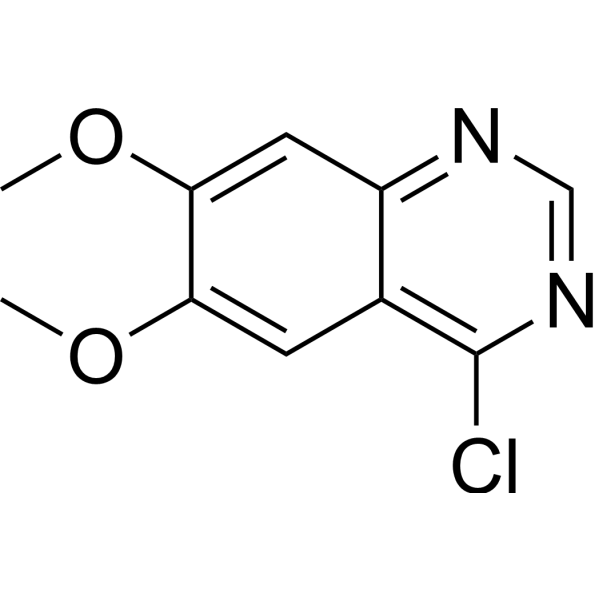
HY-Y0260
4-Chloro-6,7-dimethoxyquinazolineAcetylcholinesterase Binder -
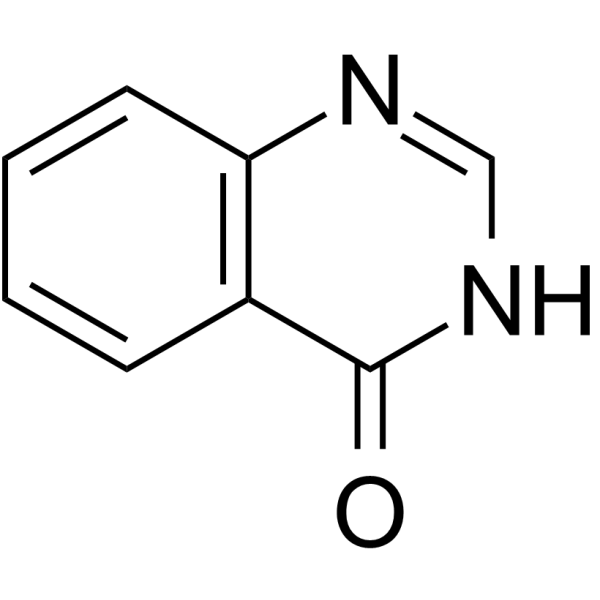
HY-W018800
4(3H)-QuinazolinoneAntibacterial agent -
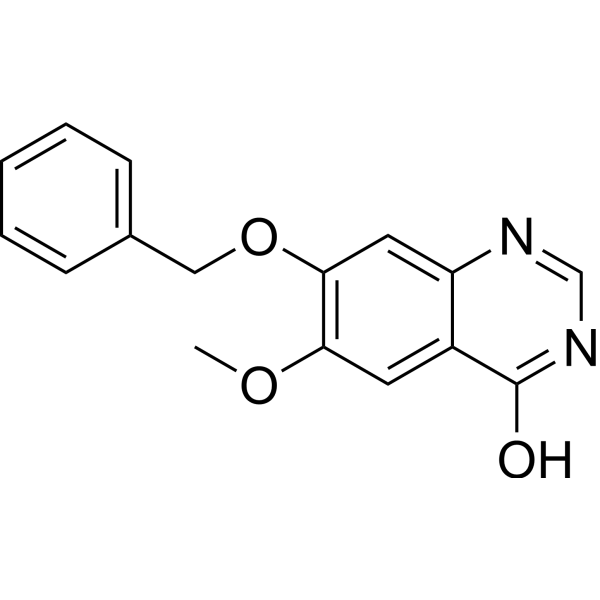
HY-W008531
7-(Benzyloxy)-6-methoxyquinazolin-4(3H)-oneBiochemical Reagent -
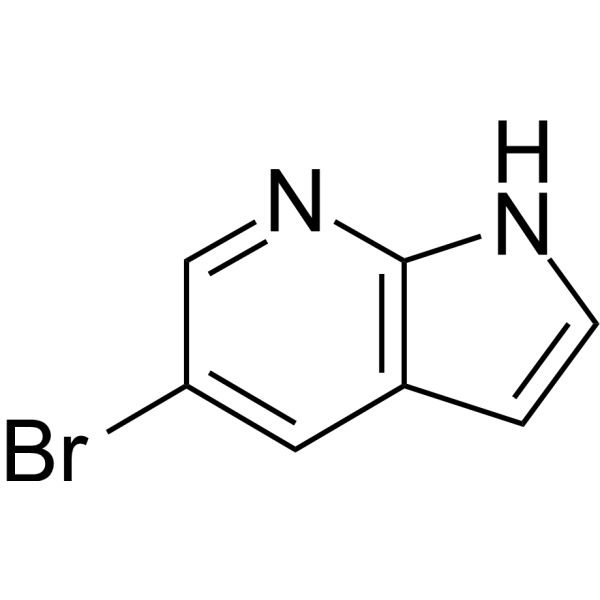
HY-30012
5-Bromo-7-azaindoleHaspin Inhibitor Intermediate -

HY-170811
DCDQAChE Inhibitor -
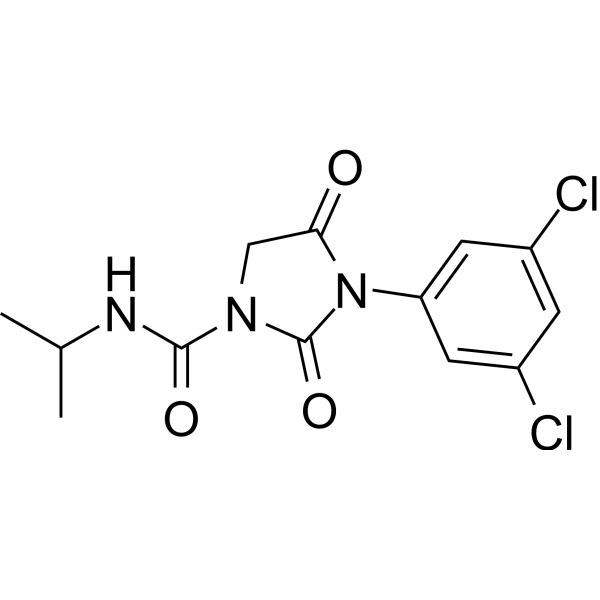
HY-B1978
IprodioneFungicide -

HY-W018800R
4(3H)-Quinazolinone (Standard)Antibacterial agent -
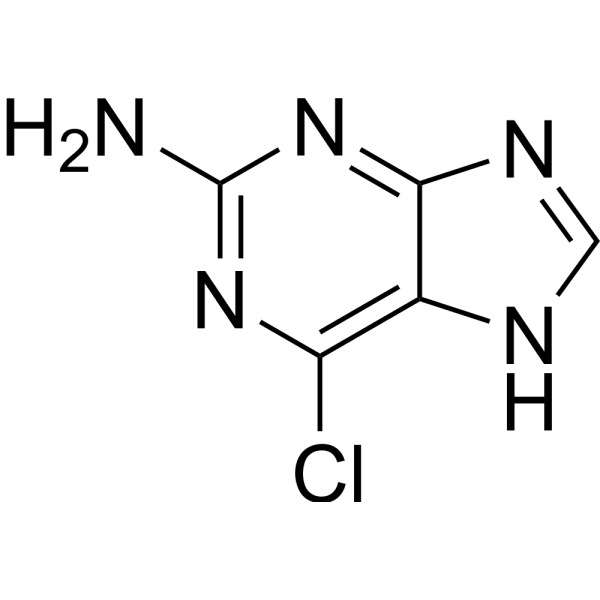
HY-Y0429
2-Amino-6-chloropurineBiochemical Reagent -

HY-B1978R
Iprodione (Standard)Fungicide -
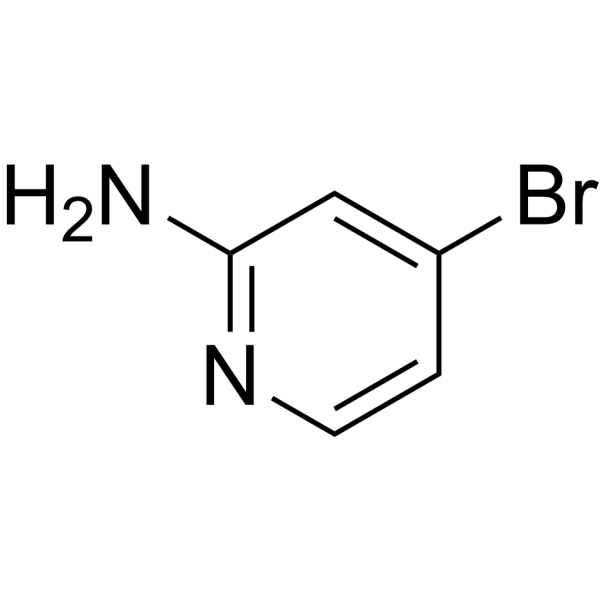
HY-41000
2-Amino-4-bromopyridineIntermediate -

HY-77910
4-(4-Bromophenyl)-4-hydroxypiperidineBromperidol metabolite -
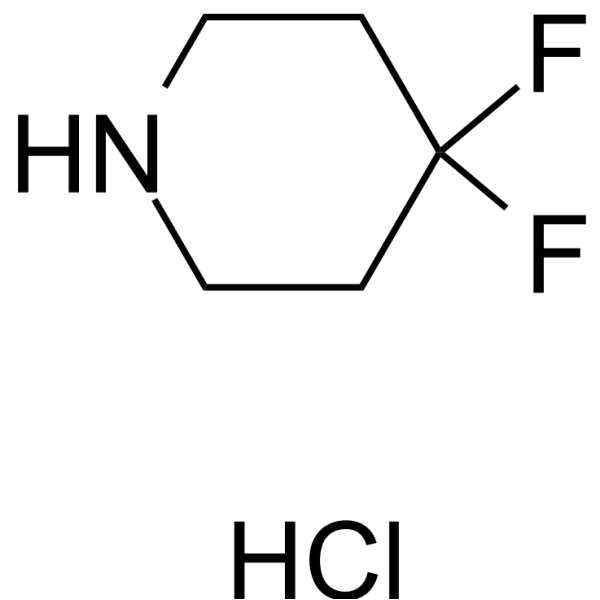
HY-W001440
4,4-Difluoropiperidine hydrochlorideIntermediate


Biological Activity
Description
In Vitro
ACDQ (4-Amino-2-chloro-6,7-dimethoxyquinazoline) displays the strongest binding affinity toward recombinant human acetylcholinesterase (4EY7) according to its molecular docking results, with a binding energy of -8.1 kcal mol−1, and it forms stable hydrogen bonds and non-covalent interactions with four distinct acetylcholinesterase proteins linked to Alzheimer's disease[2].
MedChemExpress (MCE) has not independently confirmed the accuracy of these methods. They are for reference only.


Chemical Information
-
CAS No. 23680-84-4
-
Appearance Solid
-
Molecular Weight 239.66
-
Formula C10H10ClN3O2
-
Color White to light yellow
-
SMILES
COC1=CC2=NC(Cl)=NC(N)=C2C=C1OC
-
Synonyms
4-Amino-2-chloro-6,7-dimethoxyquinazoline
-
Shipping
Room temperature in continental US; may vary elsewhere.
-
Storage
4°C, protect from light
* In solvent : -80°C, 6 months; -20°C, 1 month (protect from light)


Solvent & Solubility
In Vitro:
DMSO : 25 mg/mL (104.31 mM; ultrasonic and warming and heat to 60°C; Hygroscopic DMSO has a significant impact on the solubility of product, please use newly opened DMSO)
Please refer to the solubility information to select the appropriate solvent. Once prepared, please aliquot and store the solution to prevent product inactivation from repeated freeze-thaw cycles.
Storage method and period of stock solution: -80°C, 6 months; -20°C, 1 month (protect from light). When stored at -80°C, please use it within 6 months. When stored at -20°C, please use it within 1 month.
Please refer to the solubility information to select the appropriate solvent. Once prepared, please aliquot and store the solution to prevent product inactivation from repeated freeze-thaw cycles.
Storage method and period of stock solution: -80°C, 6 months; -20°C, 1 month (protect from light). When stored at -80°C, please use it within 6 months. When stored at -20°C, please use it within 1 month.
Concentration (start) × Volume (start) = Concentration (final) × Volume (final)
In Vivo:
Select the appropriate dissolution method based on your experimental animal and administration route.
- For the following dissolution methods, please ensure to first prepare a clear stock solution using an In Vitro approach and then sequentially add co-solvents:
- To ensure reliable experimental results, the clarified stock solution can be appropriately stored based on storage conditions. As for the working solution for In Vivo experiments, it is recommended to prepare freshly and use it on the same day.
- The percentages shown for the solvents indicate their volumetric ratio in the final prepared solution. If precipitation or phase separation occurs during preparation, heat and/or sonication can be used to aid dissolution.
Add each solvent one by one: 10% DMSO 40% PEG300 5% Tween-80 45% Saline
Solubility: ≥ 2.5 mg/mL (10.43 mM); Clear solution
This protocol yields a clear solution of ≥ 2.5 mg/mL (saturation unknown).
Taking 1 mL working solution as an example, add 100 μL DMSO stock solution (25.0 mg/mL) to 400 μL PEG300, and mix evenly; then add 50 μL Tween-80 and mix evenly; then add 450 μL Saline to adjust the volume to 1 mL.
Preparation of Saline: Dissolve 0.9 g sodium chloride in ddH₂O and dilute to 100 mL to obtain a clear Saline solution.
In Vivo Dissolution Calculator
Please enter the basic information of animal experiments:
-
-
-
-
Recommended: Prepare an additional quantity of animals to account for potential losses during experiments.
Please enter your animal formula composition:
-
%DMSO +
Recommended: Keep the proportion of DMSO in working solution below 2% if your animal is weak.
-
%+
-
+%Tween-80 + +
-
%Saline +
The co-solvents required include: DMSO, . All of co-solvents are available by MedChemExpress (MCE). , Tween 80. All of co-solvents are available by MedChemExpress (MCE).
Working solution concentration: 0.22 mg/mL
Method for preparing stock solution: mg drug dissolved in μL DMSO. Stock solution concentration: mg/mL. * In solvent : -80°C, 6 months; -20°C, 1 month (protect from light)
1. Take μL DMSO stock solution;
2. Add μL .
μL , mix evenly;
3. Then add μL Tween 80, mix evenly;
4. Then add μL
Please ensure that the stock solution in the first step is dissolved to a clear state, and add co-solvents in sequence. You can use ultrasonic heating (ultrasonic cleaner, recommended frequency 20-40 kHz), vortexing, etc. to assist dissolution.


Purity & Documentation
-
Data Sheet (275 KB)
-
SDS (394 KB)
- English - EN (394 KB)
- Français - FR (394 KB)
- Deutsch - DE (394 KB)
- Norwegian - NO (394 KB)
- Español - ES (394 KB)
- Swedish - SV (394 KB)
- Italian - IT (394 KB)
- Korean - KR (394 KB)
- Portuguese - PT (394 KB)
-
Handling Instructions (2659 KB)
References


Complete Stock Solution Preparation Table
Please refer to the solubility information to select the appropriate solvent. Once prepared, please aliquot and store the solution to prevent product inactivation from repeated freeze-thaw cycles.
Storage method and period of stock solution: -80°C, 6 months; -20°C, 1 month (protect from light). When stored at -80°C, please use it within 6 months. When stored at -20°C, please use it within 1 month.
| Optional Solvent | Concentration Solvent Mass | 1 mg | 5 mg | 10 mg | 25 mg |
|---|---|---|---|---|---|
| DMSO | 1 mM | 4.1726 mL | 20.8629 mL | 41.7258 mL | 104.3144 mL |
| 5 mM | 0.8345 mL | 4.1726 mL | 8.3452 mL | 20.8629 mL | |
| 10 mM | 0.4173 mL | 2.0863 mL | 4.1726 mL | 10.4314 mL | |
| 15 mM | 0.2782 mL | 1.3909 mL | 2.7817 mL | 6.9543 mL | |
| 20 mM | 0.2086 mL | 1.0431 mL | 2.0863 mL | 5.2157 mL | |
| 25 mM | 0.1669 mL | 0.8345 mL | 1.6690 mL | 4.1726 mL | |
| 30 mM | 0.1391 mL | 0.6954 mL | 1.3909 mL | 3.4771 mL | |
| 40 mM | 0.1043 mL | 0.5216 mL | 1.0431 mL | 2.6079 mL | |
| 50 mM | 0.0835 mL | 0.4173 mL | 0.8345 mL | 2.0863 mL | |
| 60 mM | 0.0695 mL | 0.3477 mL | 0.6954 mL | 1.7386 mL | |
| 80 mM | 0.0522 mL | 0.2608 mL | 0.5216 mL | 1.3039 mL | |
| 100 mM | 0.0417 mL | 0.2086 mL | 0.4173 mL | 1.0431 mL |


ACDQ Related Classifications
HY-W087019 Related Classifications
 Powered by Bioz
Keywords
- ACDQ
- 23680-84-4
- 4-Amino-2-chloro-6,7-dimethoxyquinazoline
- Drug Intermediate
- piperidine amine intermediates
- blood-brain barrier
- ADMET properties
- recombinant human acetylcholinesterase
- Alzheimer's disease
- GPCR ligand
- enzyme inhibitor
- acetylcholinesterase
- kinase inhibitor
- quinazoline-based antibacterial agents
- Inhibitor
- inhibitor
- inhibit