



Inflachromene
Based on 1 publication(s) in Google Scholar
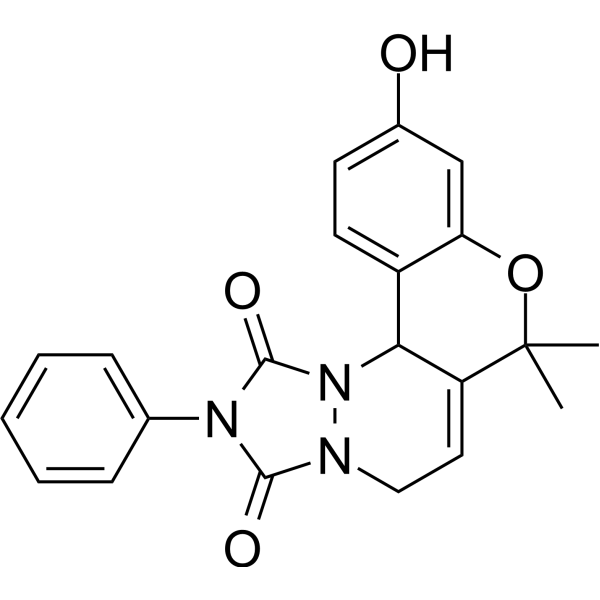
Inflachromene, a microglial inhibitor, binds to HMGB1 and HMGB2 and exerts anti-inflammatory effects. Inflachromene effectively downregulates proinflammatory functions of HMGB and reduces neuronal damage. Inflachromene can be used for the research of neuroinflammatory disorders.
For research use only. We do not sell to patients.
- Purity : 99.76%
- CAS No.: 908568-01-4
- Formula: C21H19N3O4
- Molecular Weight:377.39
-
Storage:
4°C, sealed storage, away from moisture and light
* In solvent : -80°C, 6 months; -20°C, 1 month (sealed storage, away from moisture and light)

To place orders, for customer services and technical support, please contact: MedChemExpress USA
Tel: 609-228-6898 E-mail: [email protected] [email protected]


-
 Biological Activity
-
Chemical Information
-
Solvent & Solubility
- Protocols
- Purity & Documentation
- References
-
 Help & FAQs


-
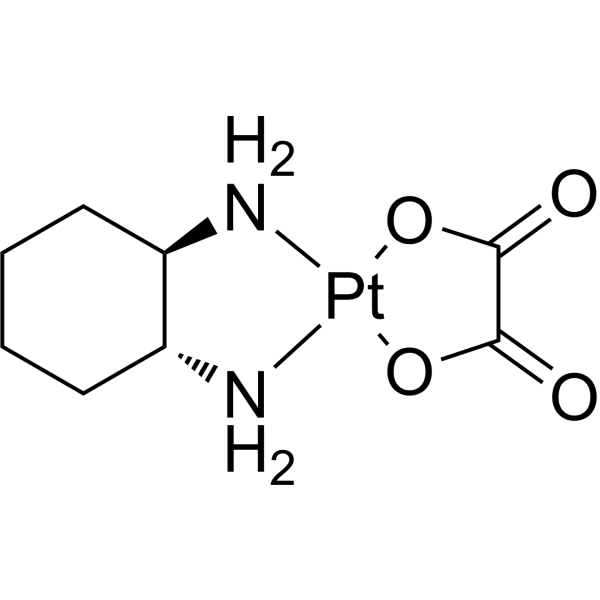
HY-17371
OxaliplatinDNA Synthesis Inhibitor -
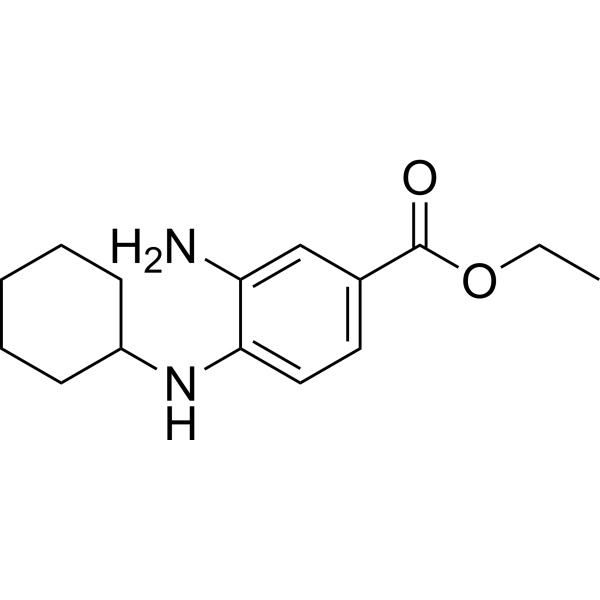
HY-100579
Ferrostatin-1Ferroptosis Inhibitor -
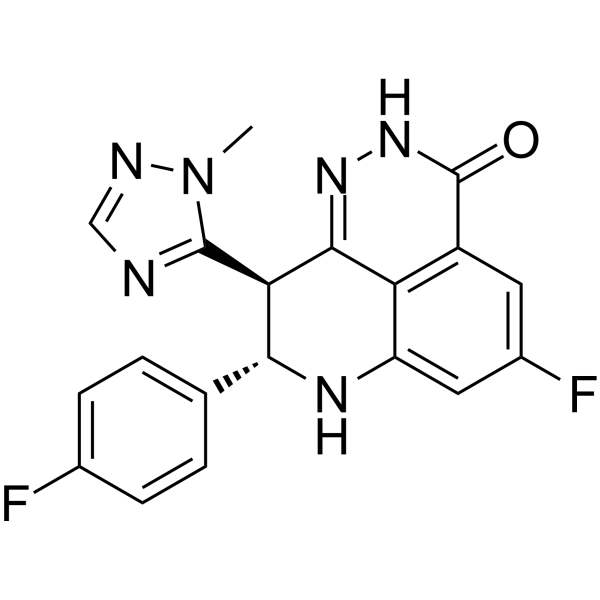
HY-16106
TalazoparibPARP Inhibitor -
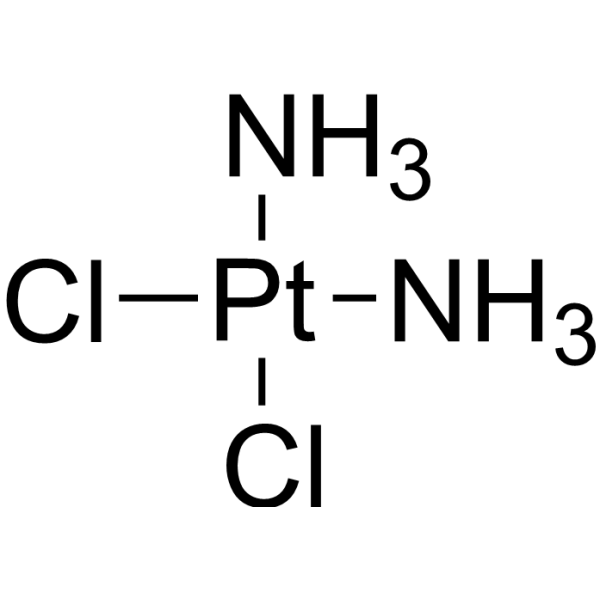
HY-17394
CisplatinDNA Alkylator -
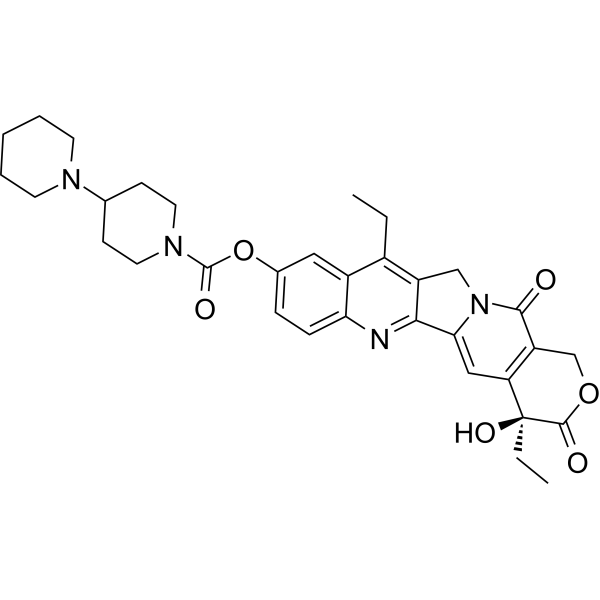
HY-16562
IrinotecanTopoisomerase I Inhibitor -
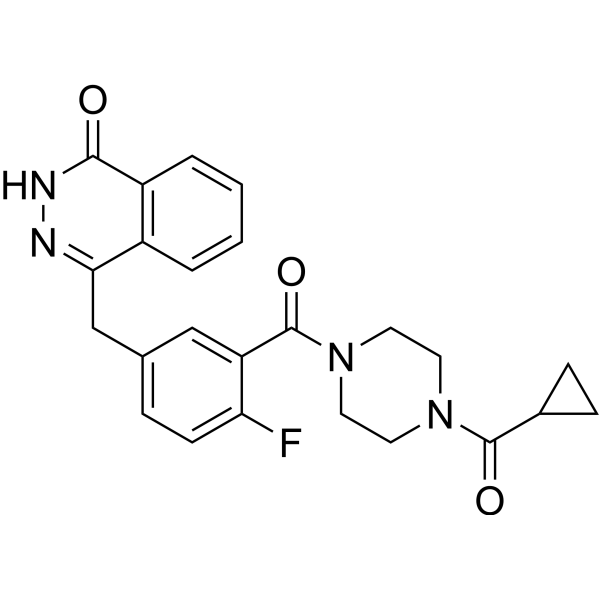
HY-10162
OlaparibPARP Inhibitor -
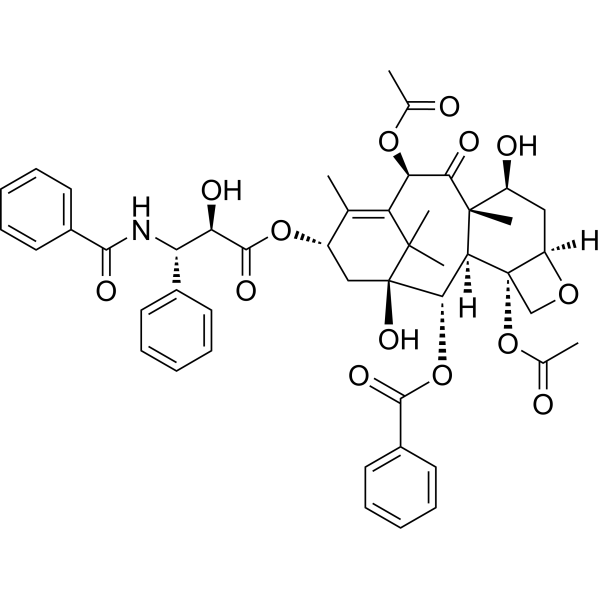
HY-B0015
PaclitaxelAntitumor Agent -
HY-34758
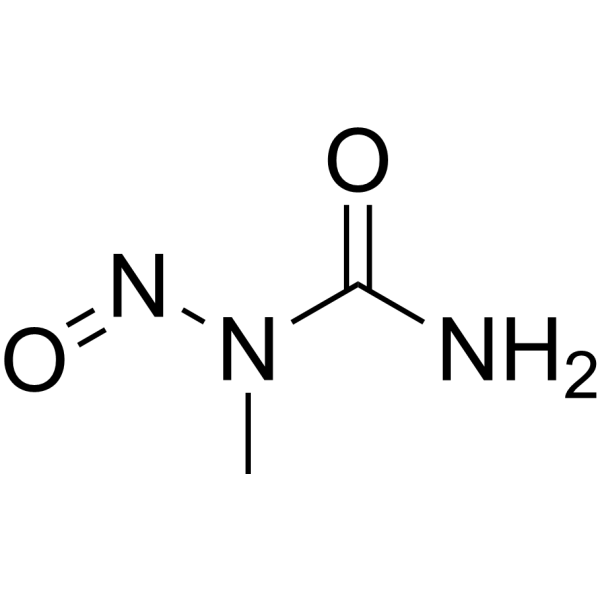
N-Nitroso-N-methylureaCarcinogen Agent -
HY-128612
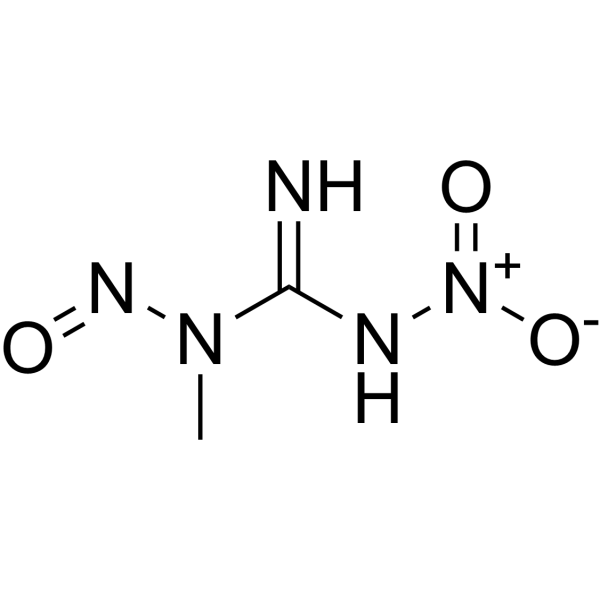
MethylnitronitrosoguanidineAlkylating Agent -
HY-15142
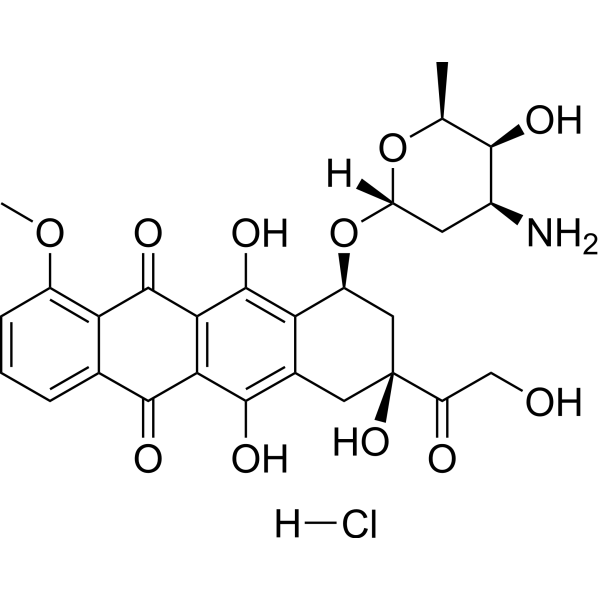
Doxorubicin hydrochlorideTopoisomerase Inhibitor -
HY-19323
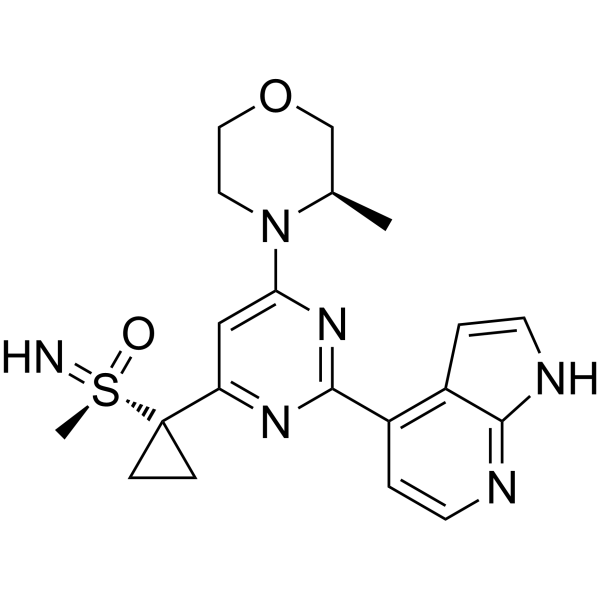
CeralasertibATR Inhibitor -
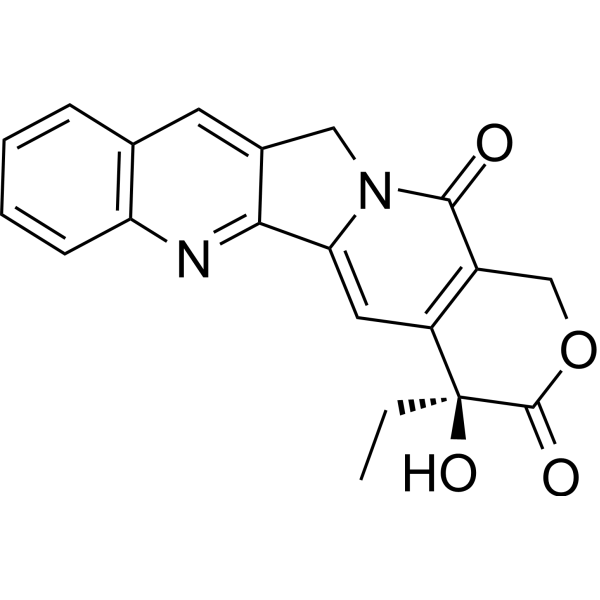
HY-16560
CamptothecinTopo I inhibitor
Publications Citing Use of MedChemExpress (MCE) Inflachromene
More

Biological Activity
Description
IC50 & Target
HMGB[2]
Cellular Effect
|
Cell Line

|
Type | Value | Description | References |
|---|---|---|---|---|
| Macrophage | IC50 |
6.13 μM
Compound: 7a
|
Inhibition of RANKL-induced osteoclastogenesis in BALB/c mouse Bone marrow macrophages assessed as decrease in TRAP-positive cells after 1 hr by microplate reader assay
Inhibition of RANKL-induced osteoclastogenesis in BALB/c mouse Bone marrow macrophages assessed as decrease in TRAP-positive cells after 1 hr by microplate reader assay
|
[PMID: 21114291] |
| RAW264.7 | IC50 |
7.07 μM
Compound: 7a
|
Inhibition of RANKL-induced osteoclastogenesis in mouse RAW264.7 cells assessed as decrease in TRAP-positive cells after 1 hr by microplate reader assay
Inhibition of RANKL-induced osteoclastogenesis in mouse RAW264.7 cells assessed as decrease in TRAP-positive cells after 1 hr by microplate reader assay
|
[PMID: 21114291] |
In Vitro
Inflachromene (0.01-100 μM; 24 h) efficiently blocks LPS-induced nitrite release in a dose-dependent manner without any toxicity in BV-2 microglial cells[2].
Inflachromene (1-10 μM) suppresses the increased levels of inflammation-related genes, such as Il6, Il1b, Nos2 and Tnf, after LPS stimulation[2].
Inflachromene (5 μM) reduces LPS-induced secretion of the proinflammatory cytokine TNF-α[2].
Inflachromene (5 μM; 30 min) substantially suppresses the nuclear translocation of NF-κB and the degradation of IκB[2].
Inflachromene (1-10 μM; 30 min) inhibits LPS-induced phosphorylation of ERK, JNK and p38 MAPK in microglia[2].
Inflachromene (10 μM; 30 min) completely prevents the death of cocultured neuroblastoma and primary neuronal cells by inhibiting microglia-mediated neurotoxicity[2].
Inflachromene (1-10 μM; 24 h) has no significant effect on the viability of neurons[2].
MedChemExpress (MCE) has not independently confirmed the accuracy of these methods. They are for reference only.
In Vivo
Inflachromene (10 mg/kg; i.p. once daily for 30 days) significantly reduces the progression of disease, as determined by EAE clinical score[2].
Inflachromene (1 mg/kg; i.v.) exhibits long half-life (14.1±6.43 h) and moderate Vss (2.02±1.02 L/kg)[1].
Inflachromene (1 mg/kg; p.o.) exhibits high oral bioavailability (94%) and Cmax (0.59±0.16 g/mL)[1].
MedChemExpress (MCE) has not independently confirmed the accuracy of these methods. They are for reference only.
-
Animal Model:Male C57BL/6 mice (11 weeks; 25-30 g) are treated with LPS[2]
-
Dosage:2, 10 mg/kg
-
Administration:I.p. once daily for 4 days
-
Result:Blocked LPS-mediated microglial activation, even at a dose of 2 mg/kg.
-
Animal Model:Sprague-Dawley (SD) rats (7 weeks; 230-250 g)[1]
-
Dosage:1 mg/kg (Pharmacokinetic Analysis)
-
Administration:I.v. and p.o. administration
-
Result:I.v.: t1/2=14.1±6.43 h; CL= 0.14±0.01 L/kg/h; Vss=2.02±1.02 L/kg.
P.o.: t1/2=7.96±1.16 h; F=94%; Cmax=0.59±0.16 g/mL.


Chemical Information
-
CAS No. 908568-01-4
-
Appearance Solid
-
Molecular Weight 377.39
-
Formula C21H19N3O4
-
Color White to yellow
-
SMILES
O=C1N(C2=CC=CC=C2)C(N3CC=C(C(C)(C)OC4=CC(O)=CC=C45)C5N31)=O
-
Shipping
Room temperature in continental US; may vary elsewhere.
-
Storage
4°C, sealed storage, away from moisture and light
* In solvent : -80°C, 6 months; -20°C, 1 month (sealed storage, away from moisture and light)


Publications (1)
-
Journal Impact Factor
-
Most Recent


Solvent & Solubility
In Vitro:
DMSO : 100 mg/mL (264.98 mM; Need ultrasonic; Hygroscopic DMSO has a significant impact on the solubility of product, please use newly opened DMSO)
Please refer to the solubility information to select the appropriate solvent. Once prepared, please aliquot and store the solution to prevent product inactivation from repeated freeze-thaw cycles.
Storage method and period of stock solution: -80°C, 6 months; -20°C, 1 month (sealed storage, away from moisture and light). When stored at -80°C, please use it within 6 months. When stored at -20°C, please use it within 1 month.
Please refer to the solubility information to select the appropriate solvent. Once prepared, please aliquot and store the solution to prevent product inactivation from repeated freeze-thaw cycles.
Storage method and period of stock solution: -80°C, 6 months; -20°C, 1 month (sealed storage, away from moisture and light). When stored at -80°C, please use it within 6 months. When stored at -20°C, please use it within 1 month.
Concentration (start) × Volume (start) = Concentration (final) × Volume (final)
In Vivo:
Select the appropriate dissolution method based on your experimental animal and administration route.
- For the following dissolution methods, please ensure to first prepare a clear stock solution using an In Vitro approach and then sequentially add co-solvents:
- To ensure reliable experimental results, the clarified stock solution can be appropriately stored based on storage conditions. As for the working solution for In Vivo experiments, it is recommended to prepare freshly and use it on the same day.
- The percentages shown for the solvents indicate their volumetric ratio in the final prepared solution. If precipitation or phase separation occurs during preparation, heat and/or sonication can be used to aid dissolution.
Add each solvent one by one: 10% DMSO 40% PEG300 5% Tween-80 45% Saline
Solubility: ≥ 2.5 mg/mL (6.62 mM); Clear solution
This protocol yields a clear solution of ≥ 2.5 mg/mL (saturation unknown).
Taking 1 mL working solution as an example, add 100 μL DMSO stock solution (25.0 mg/mL) to 400 μL PEG300, and mix evenly; then add 50 μL Tween-80 and mix evenly; then add 450 μL Saline to adjust the volume to 1 mL.
Preparation of Saline: Dissolve 0.9 g sodium chloride in ddH₂O and dilute to 100 mL to obtain a clear Saline solution.
Add each solvent one by one: 10% DMSO 90% (20% SBE-β-CD in Saline)
Solubility: ≥ 2.5 mg/mL (6.62 mM); Clear solution
This protocol yields a clear solution of ≥ 2.5 mg/mL (saturation unknown).
Taking 1 mL working solution as an example, add 100 μL DMSO stock solution (25.0 mg/mL) to 900 μL 20% SBE-β-CD in Saline, and mix evenly.
Preparation of 20% SBE-β-CD in Saline (4°C, storage for one week): 2 g SBE-β-CD powder is dissolved in 10 mL Saline, completely dissolve until clear.
In Vivo Dissolution Calculator
Please enter the basic information of animal experiments:
-
-
-
-
Recommended: Prepare an additional quantity of animals to account for potential losses during experiments.
Please enter your animal formula composition:
-
%DMSO +
Recommended: Keep the proportion of DMSO in working solution below 2% if your animal is weak.
-
%+
-
+%Tween-80 + +
-
%Saline +
The co-solvents required include: DMSO, . All of co-solvents are available by MedChemExpress (MCE). , Tween 80. All of co-solvents are available by MedChemExpress (MCE).
Working solution concentration: 0.22 mg/mL
Method for preparing stock solution: mg drug dissolved in μL DMSO. Stock solution concentration: mg/mL. * In solvent : -80°C, 6 months; -20°C, 1 month (sealed storage, away from moisture and light)
1. Take μL DMSO stock solution;
2. Add μL .
μL , mix evenly;
3. Then add μL Tween 80, mix evenly;
4. Then add μL
Please ensure that the stock solution in the first step is dissolved to a clear state, and add co-solvents in sequence. You can use ultrasonic heating (ultrasonic cleaner, recommended frequency 20-40 kHz), vortexing, etc. to assist dissolution.


Purity & Documentation
-
Data Sheet (280 KB)
-
SDS (252 KB)
- English - EN (252 KB)
- Français - FR (252 KB)
- Deutsch - DE (252 KB)
- Norwegian - NO (252 KB)
- Español - ES (252 KB)
- Swedish - SV (252 KB)
- Italian - IT (252 KB)
- Korean - KR (252 KB)
- Portuguese - PT (252 KB)
-
Handling Instructions (2659 KB)
References
[1]. Lee HH, et, al. A validated UPLC-MS/MS method for pharmacokinetic study of inflachromene, a novel microglia inhibitor. J Pharm Biomed Anal. 2019 Mar 20; 166: 183-188. [Content Brief]
[2]. Lee S, et, al. A small molecule binding HMGB1 and HMGB2 inhibits microglia-mediated neuroinflammation. Nat Chem Biol. 2014 Dec; 10(12): 1055-60. [Content Brief]


Complete Stock Solution Preparation Table
Please refer to the solubility information to select the appropriate solvent. Once prepared, please aliquot and store the solution to prevent product inactivation from repeated freeze-thaw cycles.
Storage method and period of stock solution: -80°C, 6 months; -20°C, 1 month (sealed storage, away from moisture and light). When stored at -80°C, please use it within 6 months. When stored at -20°C, please use it within 1 month.
| Optional Solvent | Concentration Solvent Mass | 1 mg | 5 mg | 10 mg | 25 mg |
|---|---|---|---|---|---|
| DMSO | 1 mM | 2.6498 mL | 13.2489 mL | 26.4978 mL | 66.2445 mL |
| 5 mM | 0.5300 mL | 2.6498 mL | 5.2996 mL | 13.2489 mL | |
| 10 mM | 0.2650 mL | 1.3249 mL | 2.6498 mL | 6.6244 mL | |
| 15 mM | 0.1767 mL | 0.8833 mL | 1.7665 mL | 4.4163 mL | |
| 20 mM | 0.1325 mL | 0.6624 mL | 1.3249 mL | 3.3122 mL | |
| 25 mM | 0.1060 mL | 0.5300 mL | 1.0599 mL | 2.6498 mL | |
| 30 mM | 0.0883 mL | 0.4416 mL | 0.8833 mL | 2.2081 mL | |
| 40 mM | 0.0662 mL | 0.3312 mL | 0.6624 mL | 1.6561 mL | |
| 50 mM | 0.0530 mL | 0.2650 mL | 0.5300 mL | 1.3249 mL | |
| 60 mM | 0.0442 mL | 0.2208 mL | 0.4416 mL | 1.1041 mL | |
| 80 mM | 0.0331 mL | 0.1656 mL | 0.3312 mL | 0.8281 mL | |
| 100 mM | 0.0265 mL | 0.1325 mL | 0.2650 mL | 0.6624 mL |


Inflachromene Related Classifications
HY-113772 Related Classifications
 Powered by Bioz