



TM-N1324

Based on 1 Customer Validation
TM-N1324 is an agonist of G-Protein-Coupled Receptor 39 (GPR39) with EC50s of 9 nM/5 nM in the presence of Zn2+, and 280 nM/180 nM in the absence of Zn2+ for human/murine GPR39.
연구목적의 판매만을 진행합니다. 환자를 대상으로 한 판매는 하지 않습니다.
- Purity: 99.90%
- CAS No.: 1144477-35-9
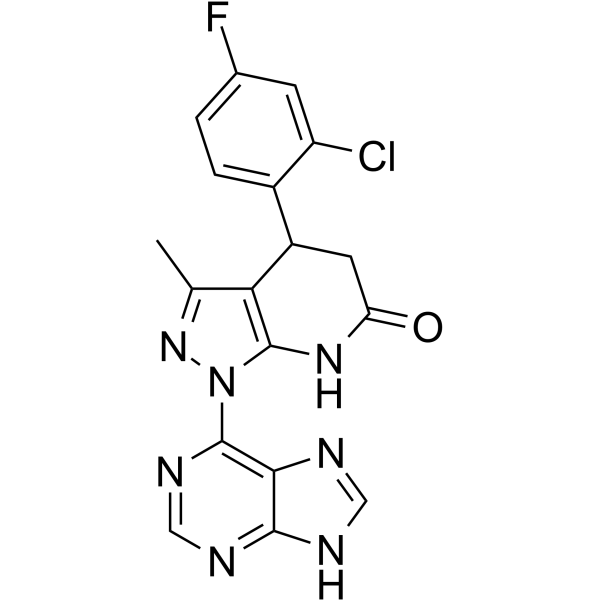
- 화학식: C18H13ClFN7O
- 분자량:397.79
-
보관:Powder -20°C, 3 years , 4°C, 2 years ; In solvent -80°C, 2 years , -20°C, 1 year

To place orders, for customer services and technical support, please contact: MedChemExpress USA
Tel: 609-228-6898 E-mail: [email protected] [email protected]


-
 Biological Activity
-
Chemical Information
-
용액&용해도
- Protocol
- 순도&문서
- References
-
 Help & FAQs


-
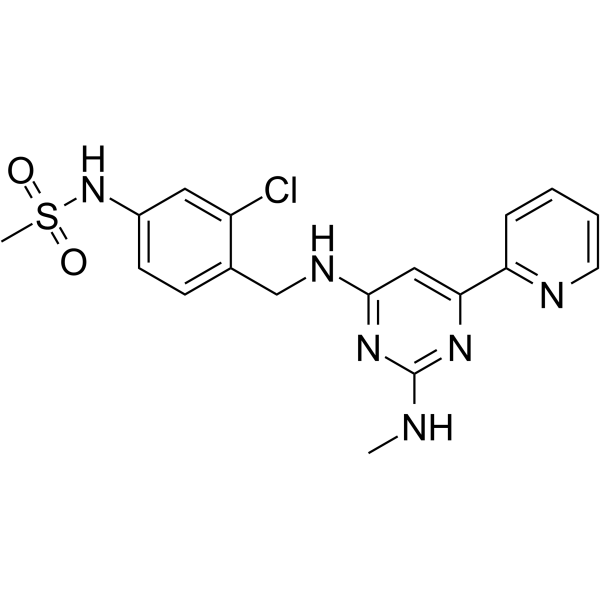
HY-103007
TC-G-1008 -
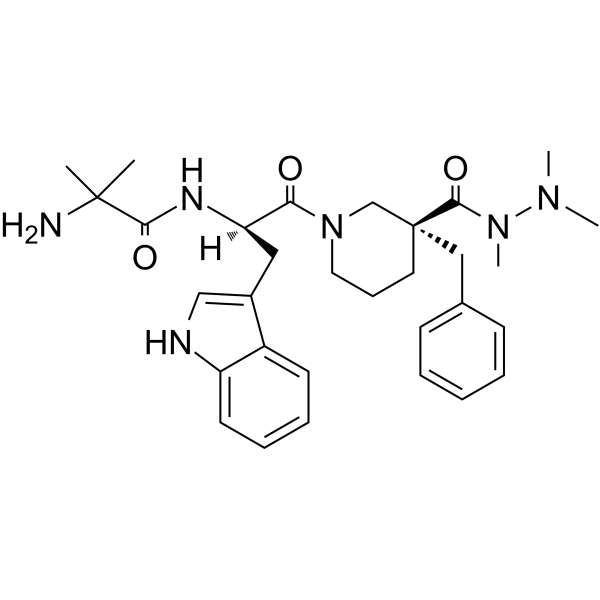
HY-14734
Anamorelin -
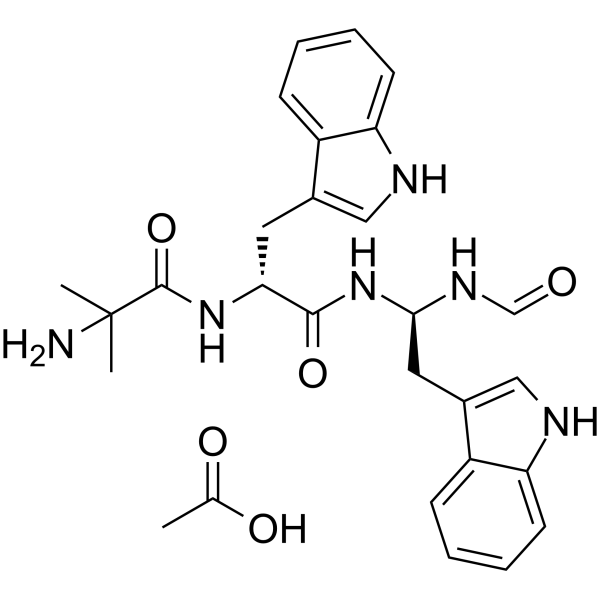
HY-14820A
Macimorelin acetate -
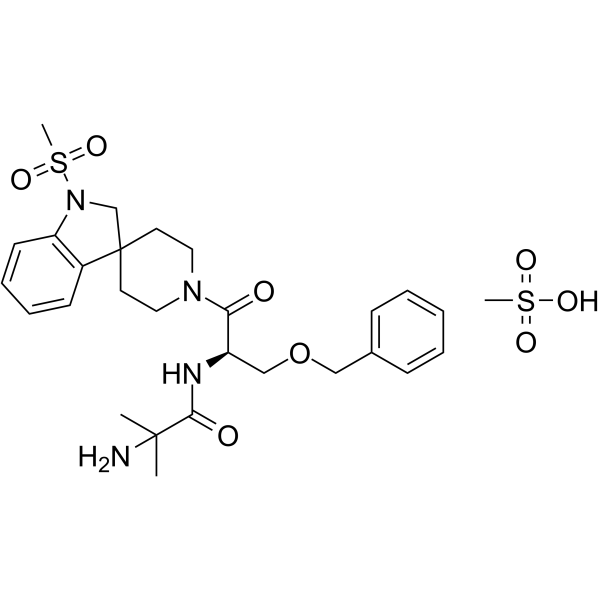
HY-50844
Ibutamoren Mesylate -
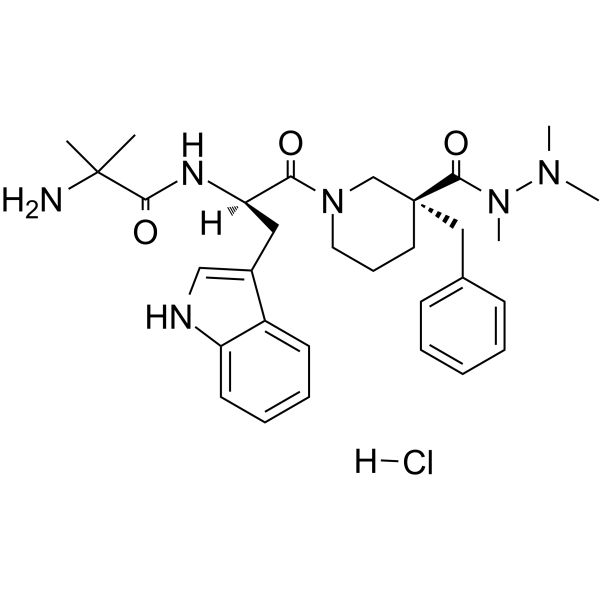
HY-14734A
Anamorelin hydrochloride -
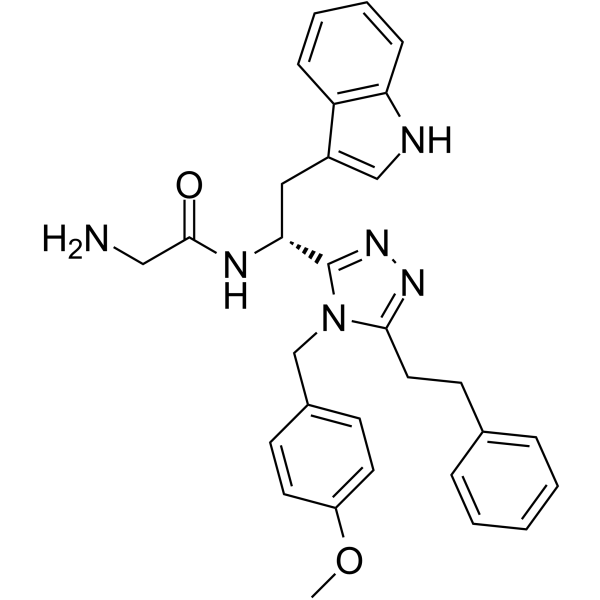
HY-U00433
JMV 2959 -
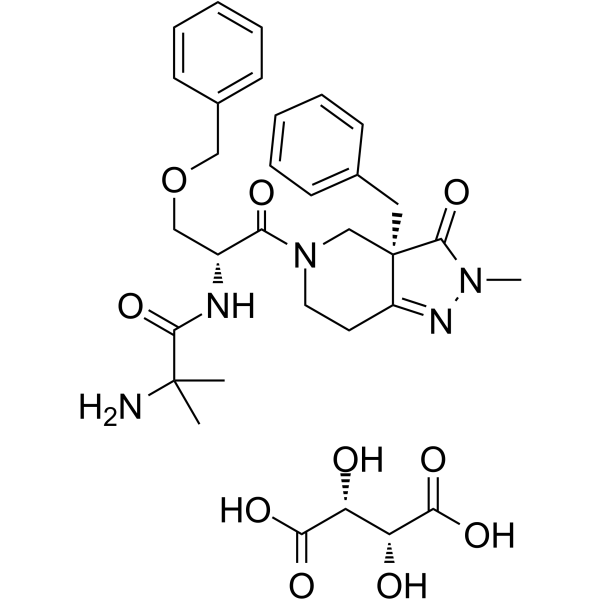
HY-15243
Capromorelin Tartrate -
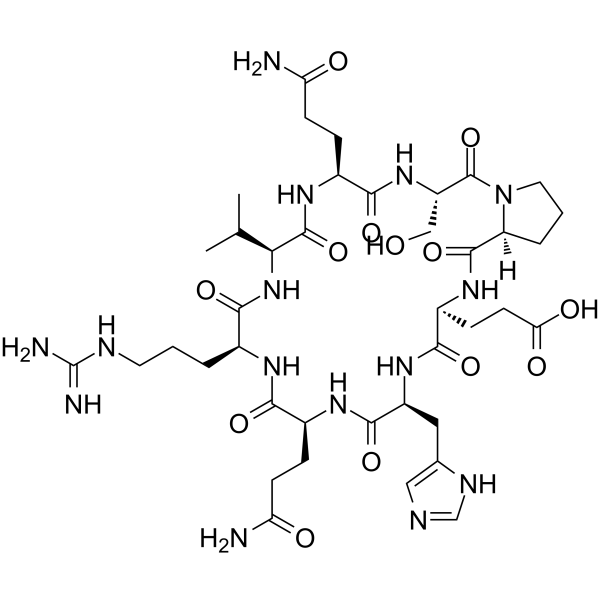
HY-P0231
AZP-531 -

HY-108699R
TM-N1324 (Standard) -
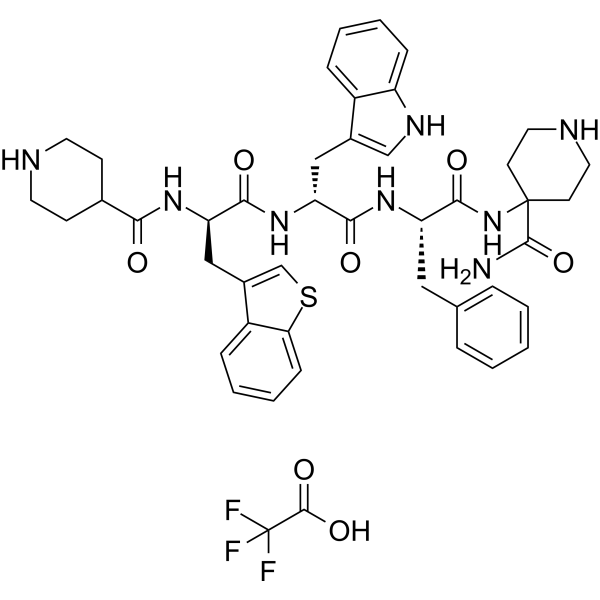
HY-19884B
Relamorelin TFA -
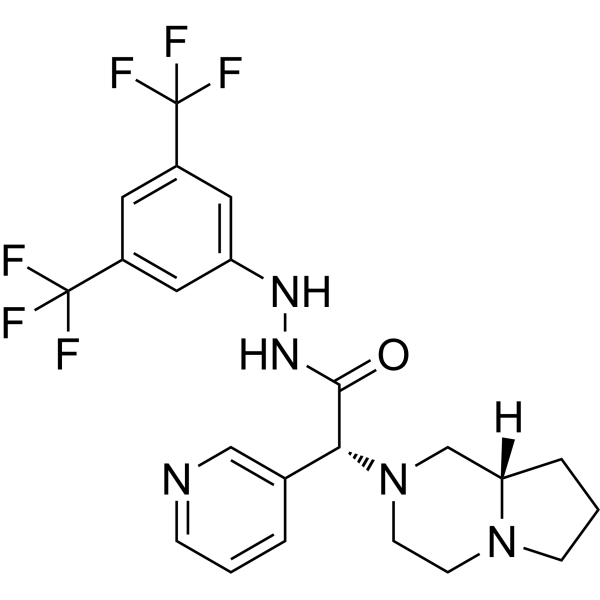
HY-113906A
(αR,8aS)-GSK1614343 -
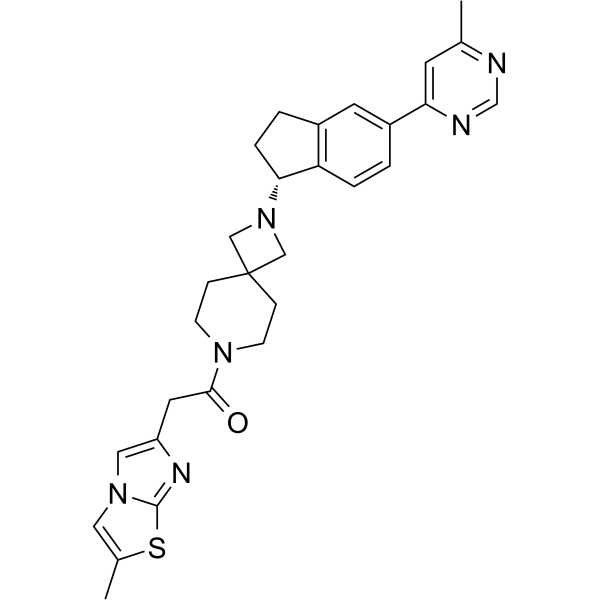
HY-12584
PF-5190457


Biological Activity
제품 설명
IC50 & Target
EC50: 280 nM (human GPR39 without Zn2+), 9 nM (human GPR39 with Zn2+), 180 nM (murine GPR39 without Zn2+), 5 nM (murine GPR39 with Zn2+)[1]
Cellular Effect
|
Cell Line

|
Type | Value | Description | References |
|---|---|---|---|---|
| HEK293 | EC50 |
280 nM
Compound: 8
|
Agonist activity at human GPR39 expressed in HEK293 cells co-expressing Galphaq assessed as myo-[2-3H]inositol phosphate accumulation measured after 75 mins by scintillation proximity assay
Agonist activity at human GPR39 expressed in HEK293 cells co-expressing Galphaq assessed as myo-[2-3H]inositol phosphate accumulation measured after 75 mins by scintillation proximity assay
|
[PMID: 28045522] |
| HEK293 | EC50 |
9 nM
Compound: 8
|
Agonist activity at human GPR39 expressed in HEK293 cells co-expressing Galphaq assessed as myo-[2-3H]inositol phosphate accumulation in presence of 10 uM Zn2+ measured after 75 mins by scintillation proximity assay
Agonist activity at human GPR39 expressed in HEK293 cells co-expressing Galphaq assessed as myo-[2-3H]inositol phosphate accumulation in presence of 10 uM Zn2+ measured after 75 mins by scintillation proximity assay
|
[PMID: 28045522] |
In Vitro
TM-N1324 activates human GPR39 with high efficacy and potencies of 280 nM and 9 nM in the absence and presence of Zn2+, respectively. TM-N1324 has similar potencies on murine GPR39, 180 nM and 5 nM. TM-N1324 is also found to have promising in vitro ADME properties. TM-N1324 has reasonably good aqueous solubility (65 μM at pH 7.0). Measurements of somatostatin confirms that the GPR39 agonist TM-N1324 increases somatostatin release by 53%[1].
MedChemExpress (MCE) has not independently confirmed the accuracy of these methods. They are for reference only.


Chemical Information
-
CAS No. 1144477-35-9
-
Appearance Solid
-
분자량 397.79
-
화학식 C18H13ClFN7O
-
Color White to off-white
-
SMILES
O=C1CC(C2=CC=C(F)C=C2Cl)C3=C(N(C4=C5N=CNC5=NC=N4)N=C3C)N1
-
선적
Room temperature in continental US; may vary elsewhere.
-
보관
Powder -20°C 3 years 4°C 2 years In solvent -80°C 2 years -20°C 1 year


용액&용해도
In Vitro:
DMSO : 5 mg/mL (12.57 mM; ultrasonic and warming and heat to 60°C; Hygroscopic DMSO has a significant impact on the solubility of product, please use newly opened DMSO)
Please refer to the solubility information to select the appropriate solvent. Once prepared, please aliquot and store the solution to prevent product inactivation from repeated freeze-thaw cycles.
Storage method and period of stock solution: -80°C, 2 years; -20°C, 1 year. When stored at -80°C, please use it within 2 years. When stored at -20°C, please use it within 1 year.
Please refer to the solubility information to select the appropriate solvent. Once prepared, please aliquot and store the solution to prevent product inactivation from repeated freeze-thaw cycles.
Storage method and period of stock solution: -80°C, 2 years; -20°C, 1 year. When stored at -80°C, please use it within 2 years. When stored at -20°C, please use it within 1 year.
Concentration (start) × Volume (start) = Concentration (final) × Volume (final)
In Vivo:
Select the appropriate dissolution method based on your experimental animal and administration route.
- For the following dissolution methods, please ensure to first prepare a clear stock solution using an In Vitro approach and then sequentially add co-solvents:
- To ensure reliable experimental results, the clarified stock solution can be appropriately stored based on storage conditions. As for the working solution for In Vivo experiments, it is recommended to prepare freshly and use it on the same day.
- The percentages shown for the solvents indicate their volumetric ratio in the final prepared solution. If precipitation or phase separation occurs during preparation, heat and/or sonication can be used to aid dissolution.
Add each solvent one by one: 10% DMSO 40% PEG300 5% Tween-80 45% Saline
Solubility: 1.22 mg/mL (3.07 mM); Suspended solution; Need ultrasonic
This protocol yields a suspended solution of 1.22 mg/mL. Suspended solution can be used for oral and intraperitoneal injection.
Taking 1 mL working solution as an example, add 100 μL DMSO stock solution (12.2 mg/mL) to 400 μL PEG300, and mix evenly; then add 50 μL Tween-80 and mix evenly; then add 450 μL Saline to adjust the volume to 1 mL.
Preparation of Saline: Dissolve 0.9 g sodium chloride in ddH₂O and dilute to 100 mL to obtain a clear Saline solution.
Add each solvent one by one: 10% DMSO 90% (20% SBE-β-CD in Saline)
Solubility: ≥ 1.22 mg/mL (3.07 mM); Clear solution
This protocol yields a clear solution of ≥ 1.22 mg/mL (saturation unknown).
Taking 1 mL working solution as an example, add 100 μL DMSO stock solution (12.2 mg/mL) to 900 μL 20% SBE-β-CD in Saline, and mix evenly.
Preparation of 20% SBE-β-CD in Saline (4°C, storage for one week): 2 g SBE-β-CD powder is dissolved in 10 mL Saline, completely dissolve until clear.
In Vivo Dissolution Calculator
Please enter the basic information of animal experiments:
-
-
-
-
Recommended: Prepare an additional quantity of animals to account for potential losses during experiments.
Please enter your animal formula composition:
-
%DMSO +
Recommended: Keep the proportion of DMSO in working solution below 2% if your animal is weak.
-
%+
-
+%Tween-80 + +
-
%Saline +
The co-solvents required include: DMSO, . All of co-solvents are available by MedChemExpress (MCE). , Tween 80. All of co-solvents are available by MedChemExpress (MCE).
Working solution concentration: 0.22 mg/mL
Method for preparing stock solution: mg drug dissolved in μL DMSO. Stock solution concentration: mg/mL.
1. Take μL DMSO stock solution;
2. Add μL .
μL , mix evenly;
3. Then add μL Tween 80, mix evenly;
4. Then add μL
Please ensure that the stock solution in the first step is dissolved to a clear state, and add co-solvents in sequence. You can use ultrasonic heating (ultrasonic cleaner, recommended frequency 20-40 kHz), vortexing, etc. to assist dissolution.

Protocol
Cell Assay
Caco-2 cells are used as an in vitro model of the human intestinal epithelium and permit assessment of the intestinal permeability of TM-N1324. TM-N1324 is added to either the apical or basolateral side of a confluent monolayer of Caco-2 cells and permeability is measured by monitoring the appearance of the TM-N1324 on the opposite side of the membrane using LC-MS/MS. TM-N1324 (3 µM) is incubated with pooled liver microsomes and incubated at 5 time points over the course of a 45 min experiment finally TM-N1324 is analyzed by LC-MS/MS. The intrinsic clearance (CLint) and t1/2 values for TM-N1324 in human and mouse microsomes are reported[1].
MedChemExpress (MCE) has not independently confirmed the accuracy of these methods. They are for reference only.


순도&문서
-
Data Sheet (277 KB)
-
SDS (394 KB)
- English - EN (394 KB)
- Français - FR (394 KB)
- Deutsch - DE (394 KB)
- Norwegian - NO (394 KB)
- Español - ES (394 KB)
- Swedish - SV (394 KB)
- Italian - IT (394 KB)
- Korean - KR (394 KB)
- Portuguese - PT (394 KB)
-
Handling Instructions (2659 KB)
References


Complete Stock Solution Preparation Table
Please refer to the solubility information to select the appropriate solvent. Once prepared, please aliquot and store the solution to prevent product inactivation from repeated freeze-thaw cycles.
Storage method and period of stock solution: -80°C, 2 years; -20°C, 1 year. When stored at -80°C, please use it within 2 years. When stored at -20°C, please use it within 1 year.
| Optional Solvent | Concentration Solvent Mass | 1 mg | 5 mg | 10 mg | 25 mg |
|---|---|---|---|---|---|
| DMSO | 1 mM | 2.5139 mL | 12.5694 mL | 25.1389 mL | 62.8472 mL |
| 5 mM | 0.5028 mL | 2.5139 mL | 5.0278 mL | 12.5694 mL | |
| 10 mM | 0.2514 mL | 1.2569 mL | 2.5139 mL | 6.2847 mL |


TM-N1324 Related Classifications
HY-108699 Related Classifications
 Powered by Bioz