



Resiniferatoxin
Based on 15 publication(s) in Google Scholar
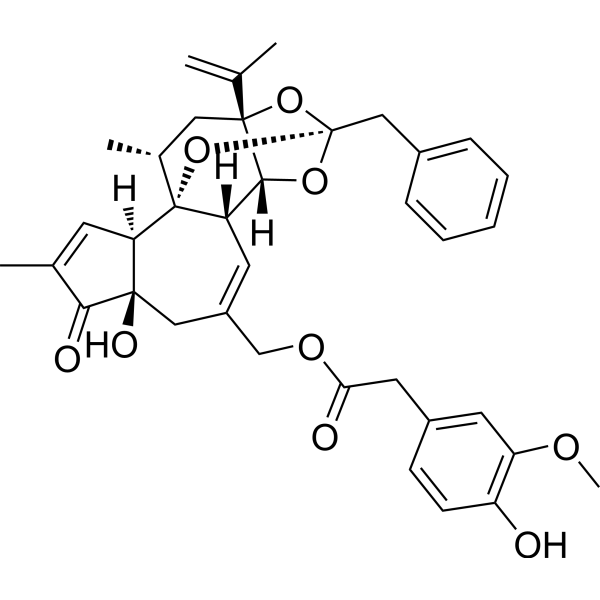
Resiniferatoxin ((+)-Resiniferatoxin), is a selective agonist of transient receptor potential vanilloid 1 (TRPV1) receptor agonist. Resiniferatoxin can be isolated from the Euphorbia resinifera plant. Resiniferatoxin eliminates TRPV1+ primary sensory afferents and blunt cardiac sympathetic afferent reflex for a relatively long period.
연구목적의 판매만을 진행합니다. 환자를 대상으로 한 판매는 하지 않습니다.
- Purity : 98.65%
- CAS No.: 57444-62-9
- 화학식: C37H40O9
- 분자량:628.71
-
보관:
-20°C, protect from light
* In solvent : -80°C, 6 months; -20°C, 1 month (protect from light)

To place orders, for customer services and technical support, please contact: MedChemExpress USA
Tel: 609-228-6898 E-mail: [email protected] [email protected]


-
 Biological Activity
-
Chemical Information
-
용액&용해도
- 순도&문서
- References
-
 Help & FAQs


-
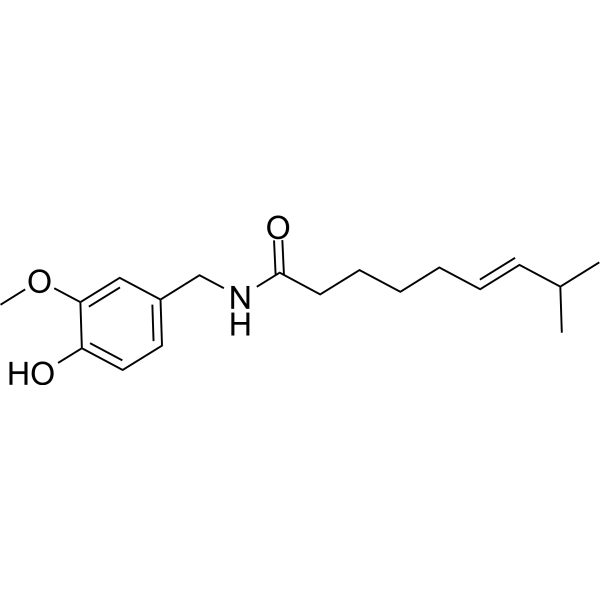
HY-10448
CapsaicinTRPV1 Agonist -

HY-Y1891
Tween 80 -
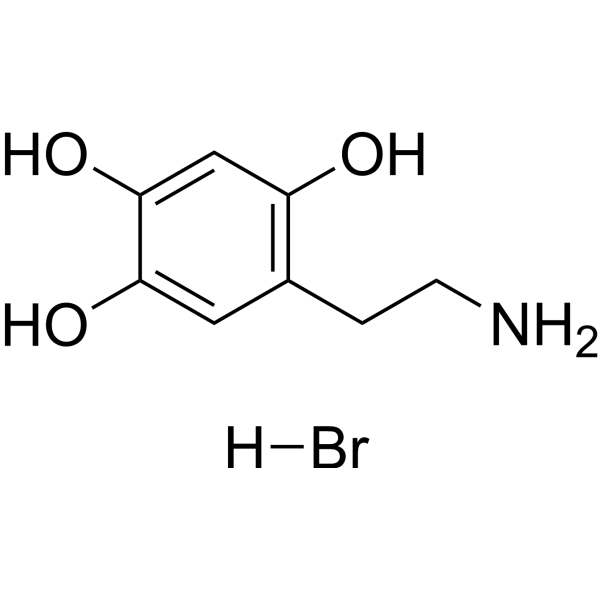
HY-B1081A
Oxidopamine hydrobromideNeurotoxin -
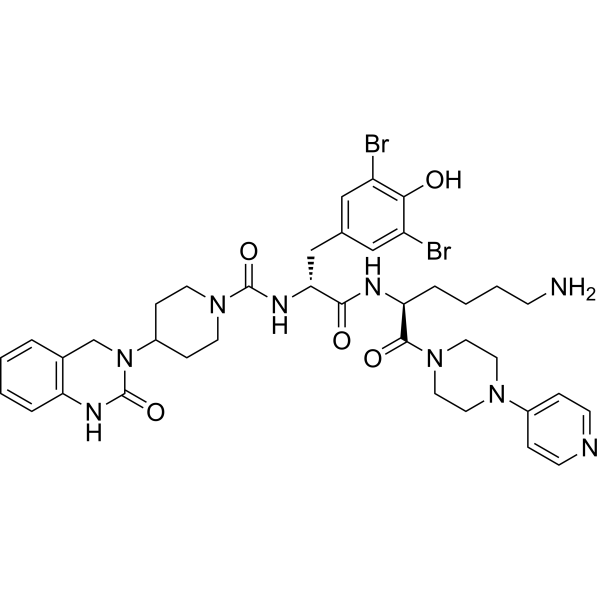
HY-10095
OlcegepantCGRP Antagonist -
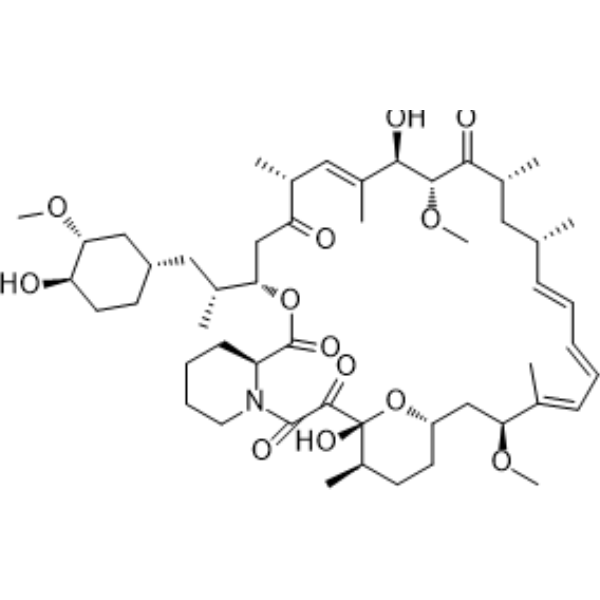
HY-10219
RapamycinmTOR Inhibitor -
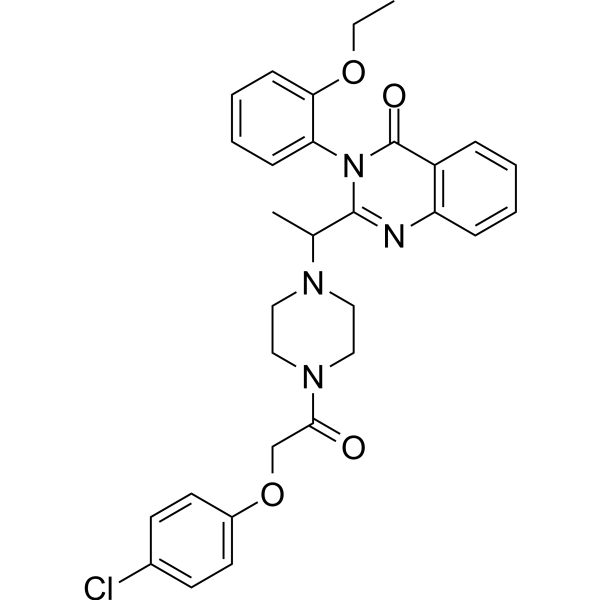
HY-15763
ErastinFerroptosis Inducer -
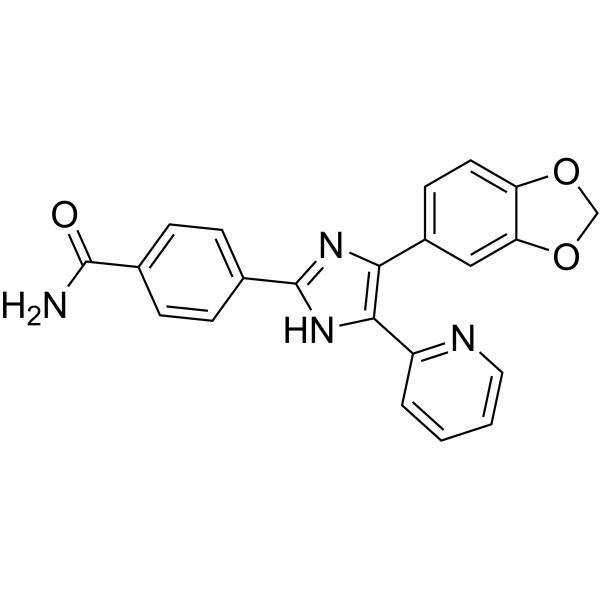
HY-10431
SB-431542TGF-β Receptor Kinase Inhibitor -
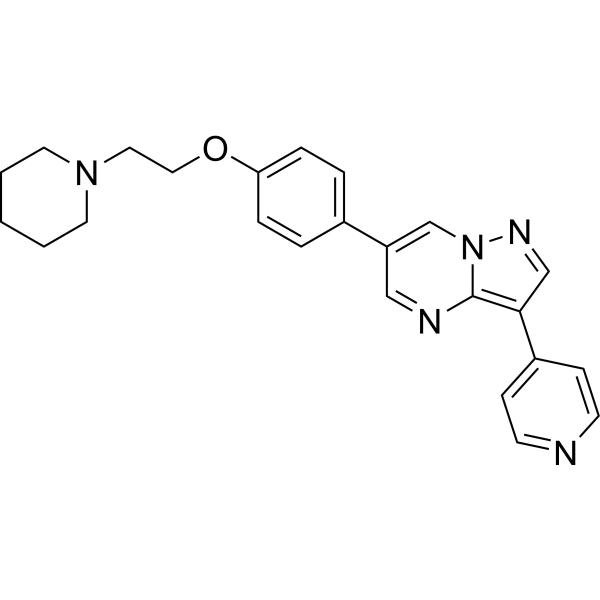
HY-13418A
DorsomorphinAMPK Inhibitor -
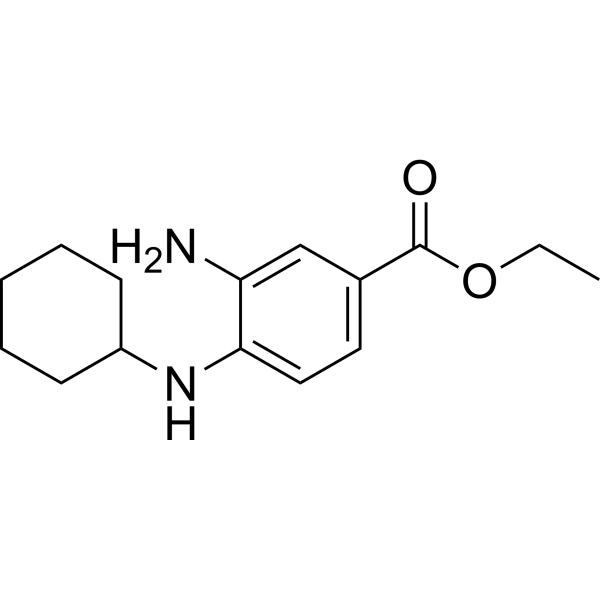
HY-100579
Ferrostatin-1Ferroptosis Inhibitor -
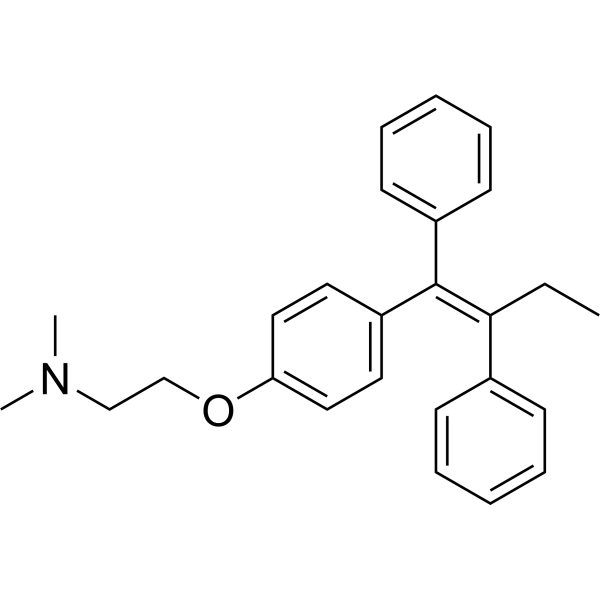
HY-13757A
TamoxifenEstrogen Receptor Modulator -
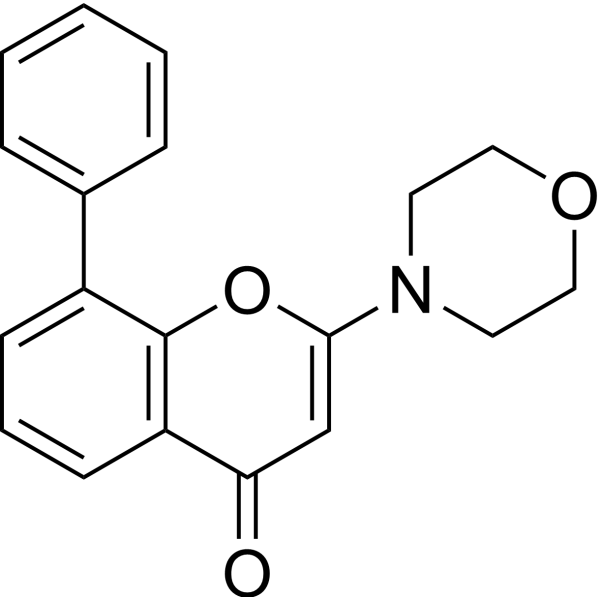
HY-10108
LY294002PI3K Inhibitor -
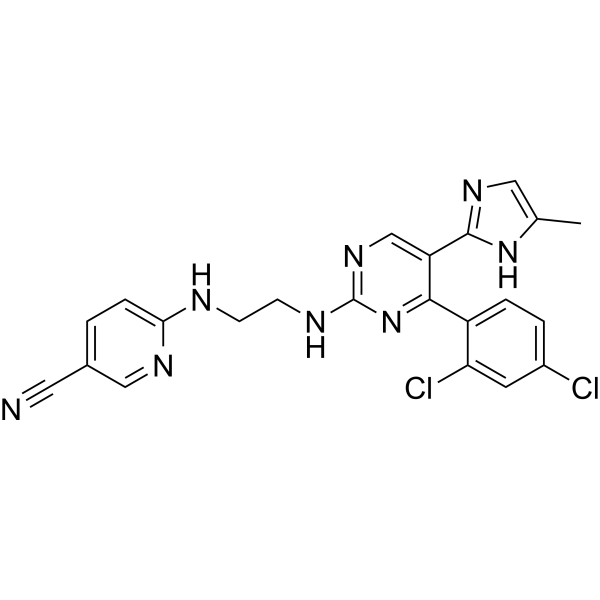
HY-10182
LaduviglusibGSK-3 Inhibitor
Publications Citing Use of MedChemExpress (MCE) Resiniferatoxin
More- Cell. 2025 Nov 26;188(24):6754-6773.e29. [Abstract]
- Adv Sci (Weinh). 2025 Sep 23:e07128. [Abstract]
- Int J Biol Macromol. 2025 Jun:312:144092. [Abstract]
- Cell Rep. 2026 Mar 24;45(3):117086. [Abstract]
- Cell Rep. 2024 Oct 15;43(10):114859. [Abstract]
- Br J Pharmacol. 2025 Aug 9. [Abstract]
- Life Sci. 2026 Aug 1:398:124435. [Abstract]
- Invest Ophthalmol Vis Sci. 2026 Apr 1;67(4):60. [Abstract]
- Sci Rep. 2025 Nov 18;15(1):40630. [Abstract]
- iScience. 2025 Jan 17;28(2):111831. [Abstract]
- J Mol Histol. 2025 Oct 22;56(6):348. [Abstract]
- Biochem Biophys Res Commun. 2026 Sep 10:830:154222.
- Cytotechnology. 2025 Aug;77(4):141. [Abstract]
- Biochem Genet. 2026 May 8. [Abstract]
- bioRxiv. 2026 Aug 12.
 Customer Validation & Images

-
In Vivo Efficacy Study
-
IHC
-
WB
-
RT-PCR
-
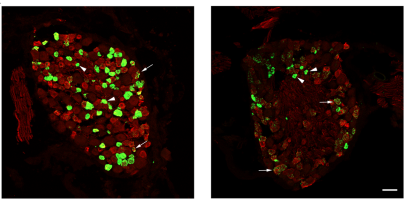
IHC


Biological Activity
제품 설명
Cellular Effect
|
Cell Line

|
Type | Value | Description | References |
|---|---|---|---|---|
| 5637 | IC50 |
19.9 μM
Compound: 5; RTX
|
Antiproliferative activity against human 5637 cells assessed as inhibition of cell growth measured after 24 hrs by MTT assay
Antiproliferative activity against human 5637 cells assessed as inhibition of cell growth measured after 24 hrs by MTT assay
|
[PMID: 37000154] |
| CHO | EC50 |
0.27 nM
Compound: 1, RTX
|
Agonist activity at rat TRPV1 expressed in CHO cells assessed as 45Ca2+ uptake
Agonist activity at rat TRPV1 expressed in CHO cells assessed as 45Ca2+ uptake
|
[PMID: 21111618] |
| CHO | EC50 |
0.27 nM
Compound: RTX
|
Agonist activity at rat TRPV1 receptor expressed in CHO cells assessed as calcium uptake
Agonist activity at rat TRPV1 receptor expressed in CHO cells assessed as calcium uptake
|
[PMID: 19135377] |
| CHO | EC50 |
0.92 nM
Compound: 1, RTX
|
Agonist activity at human TRPV1 expressed in CHO cells assessed as stimulation of Ca2+ uptake
Agonist activity at human TRPV1 expressed in CHO cells assessed as stimulation of Ca2+ uptake
|
[PMID: 23981530] |
| CHO | EC50 |
0.92 nM
Compound: 1, RTX
|
Agonist activity at human TRPV1 expressed in CHO cells assessed as 45Ca2+ uptake after 20 mins by liquid scintillation counting analysis
Agonist activity at human TRPV1 expressed in CHO cells assessed as 45Ca2+ uptake after 20 mins by liquid scintillation counting analysis
|
[PMID: 24321344] |
| HEK293 | EC50 |
0.019 nM
Compound: 1a, RTX
|
Agonist activity at human recombinant TRPV1 expressed in human HEK293 cells
Agonist activity at human recombinant TRPV1 expressed in human HEK293 cells
|
[PMID: 17046253] |
| HEK293 | EC50 |
1.9 nM
Compound: 1
|
Induced [Ca2+] influx in Vanilloid receptor subtype 1 expressing HEK 293 cells
Induced [Ca2+] influx in Vanilloid receptor subtype 1 expressing HEK 293 cells
|
[PMID: 11934585] |
| HEK293 | EC50 |
19 pM
Compound: 2a, RTX
|
Agonist activity at human TRPV1 expressed in HEK293 cells assessed as increase in intracellular calcium level
Agonist activity at human TRPV1 expressed in HEK293 cells assessed as increase in intracellular calcium level
|
[PMID: 19951840] |
| MT4 | EC50 |
22.6 μM
Compound: 29
|
Antiviral activity against HIV2 ROD infected in MT4 cells assessed as cell viability after 5 days by MTT assay
Antiviral activity against HIV2 ROD infected in MT4 cells assessed as cell viability after 5 days by MTT assay
|
[PMID: 25970561] |
| MT4 | EC50 |
26 μM
Compound: 29
|
Antiviral activity against HIV1 3B infected in MT4 cells assessed as cell viability after 5 days by MTT assay
Antiviral activity against HIV1 3B infected in MT4 cells assessed as cell viability after 5 days by MTT assay
|
[PMID: 25970561] |
| T-24 | IC50 |
~21.4 μM
Compound: 5; RTX
|
Antiproliferative activity against human T24 cells assessed as inhibition of cell growth measured after 24 hrs by MTT assay
Antiproliferative activity against human T24 cells assessed as inhibition of cell growth measured after 24 hrs by MTT assay
|
[PMID: 37000154] |
| Vero | EC50 |
1.8 μM
Compound: 29
|
Antiviral activity against chikungunya virus Indian ocean strain 899 infected in Vero cells assessed as virus-induced cytopathic effect after 6 to 7 days
Antiviral activity against chikungunya virus Indian ocean strain 899 infected in Vero cells assessed as virus-induced cytopathic effect after 6 to 7 days
|
[PMID: 25970561] |
In Vitro
In Vivo
MedChemExpress (MCE) has not independently confirmed the accuracy of these methods. They are for reference only.
Clinical Trial
| NCT Number | Sponsor | Condition | Start Date |
Phase
|
|---|---|---|---|---|
| NCT01329991 | Plexxikon| | 2011-05 | PHASE1 |


Chemical Information
-
CAS No. 57444-62-9
-
Appearance Solid
-
분자량 628.71
-
화학식 C37H40O9
-
Color White to off-white
-
SMILES
C[C@H]1[C@]23[C@](C=C(C[C@]4([C@@]3([H])C=C(C4=O)C)O)COC(CC5=CC(OC)=C(C=C5)O)=O)([H])[C@]6([H])[C@](C1)(O[C@](O2)(O6)CC7=CC=CC=C7)C(C)=C
-
Synonyms
(+)-Resiniferatoxin
-
Structure Classification
-
Initial Source
-
선적
Room temperature in continental US; may vary elsewhere.
-
보관
-20°C, protect from light
* In solvent : -80°C, 6 months; -20°C, 1 month (protect from light)


Publications (15)
-
Journal Impact Factor
-
Most Recent
-
Cell
2025 Nov 26;188(24):6754-6773.e29. PMID: 41138728 -
Adv Sci (Weinh)
Nociceptive Nerve-Derived CGRP Exacerbates Uterine Fibrogenesis in Adenomyosis by Promoting CD140b+ CD146+ Fibroblast Differentiation. [Abstract]2025 Sep 23:e07128. PMID: 40985151
Resiniferatoxin purchased from MedChemExpress. Usage Cited in: Adv Sci (Weinh). 2025 Sep 23:e07128. [Abstract]
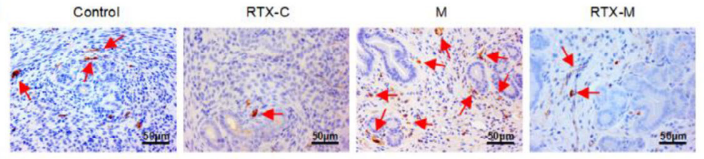
Representative images of IHC staining of uteri from mice with PGP9.5. Scale bar, 50 μm. Red arrows: positive PGP9.5 staining. Twenty‐four female mice were randomly assigned to four groups (n = 6 per group): 1) Control (vehicle + vehicle), 2) RTX‐C (vehicle + RTX), 3) M (tamoxifen + vehicle), and 4) RTX‐M (tamoxifen + RTX). Sensory denervation was induced by intraperitoneal injection of RTX (Resiniferatoxin) at 150 µg/kg every 5 days, beginning on day 42. All mice were euthanized on day 63.
Resiniferatoxin purchased from MedChemExpress. Usage Cited in: Adv Sci (Weinh). 2025 Sep 23:e07128. [Abstract]
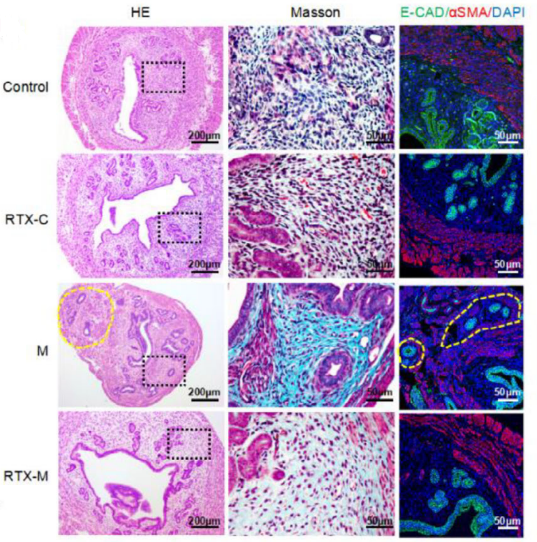
RH&E, Masson trichrome staining of mice uteri at Day 63 and the corresponding horizon of multiple IF staining of E‐CAD (green), αSMA (red), and nucleus (DAPI, Blue). The yellow dotted circle showed the location of the ectopic lesion. The black dotted frame was the zoomed‐out version of the middle picture. Twenty‐four female mice were randomly assigned to four groups (n = 6 per group): 1) Control (vehicle + vehicle), 2) RTX‐C (vehicle + RTX), 3) M (tamoxifen + vehicle), and 4) RTX‐M (tamoxifen + RTX). Sensory denervation was induced by intraperitoneal injection of RTX (Resiniferatoxin) at 150 µg/kg every 5 days, beginning on day 42. All mice were euthanized on day 63.
Resiniferatoxin purchased from MedChemExpress. Usage Cited in: Adv Sci (Weinh). 2025 Sep 23:e07128. [Abstract]
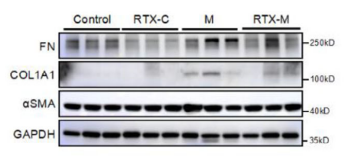
Twenty‐four female mice were randomly assigned to four groups (n = 6 per group): 1) Control (vehicle + vehicle), 2) RTX‐C (vehicle + RTX), 3) M (tamoxifen + vehicle), and 4) RTX‐M (tamoxifen + RTX). Sensory denervation was induced by intraperitoneal injection of RTX (Resiniferatoxin) at 150 µg/kg every 5 days, beginning on day 42. All mice were euthanized on day 63.
Resiniferatoxin purchased from MedChemExpress. Usage Cited in: Adv Sci (Weinh). 2025 Sep 23:e07128. [Abstract]
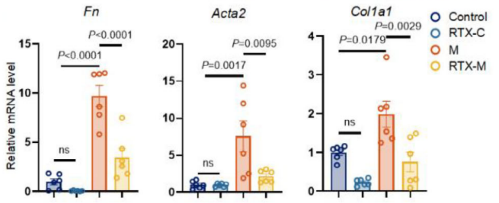
Relative expression levels of Fn, Col1a1, Acta2 (gene name of αSMA) in Control, RTX-C, M and RTX-M groups detected by qPCR. Twenty‐four female mice were randomly assigned to four groups (n = 6 per group): 1) Control (vehicle + vehicle), 2) RTX‐C (vehicle + RTX), 3) M (tamoxifen + vehicle), and 4) RTX‐M (tamoxifen + RTX). Sensory denervation was induced by intraperitoneal injection of RTX (Resiniferatoxin) at 150 µg/kg every 5 days, beginning on day 42. All mice were euthanized on day 63.
-
Int J Biol Macromol
Born with Silurian global warming: Defensive role of TRPV1 in caudal neurosecretory system (CNSS) in flounder. [Abstract]2025 Jun:312:144092. PMID: 40350111 -
Cell Rep
2026 Mar 24;45(3):117086. PMID: 41831232 -
Cell Rep
ILC2-derived CGRP triggers acute inflammation and nociceptive responses in bacterial cystitis. [Abstract]2024 Oct 15;43(10):114859. PMID: 39412984 -
Br J Pharmacol
Synthesis and evaluation of a novel inhibitor for the α5-GABAA receptor in the treatment of peripheral neuralgia: Evidence from MD simulation and in vivo studies. [Abstract]2025 Aug 9. PMID: 40782001 -
Life Sci
Sensory nerve desensitisation exerts differential effects on the severity of acute pancreatitis in rodent models. [Abstract]2026 Aug 1:398:124435. PMID: 42107689 -
Invest Ophthalmol Vis Sci
Corneal Nerves Promote Alkali Burn Repair by Modulating Macrophages and Neutrophils via Calcitonin Gene-Related Peptide. [Abstract]2026 Apr 1;67(4):60. PMID: 42041175 -
Sci Rep
PTPRK promotes resiniferatoxin-induced postherpetic neuralgia via activating DUSP1/p38 MAPK signaling pathway in dorsal root ganglia. [Abstract]2025 Nov 18;15(1):40630. PMID: 41253902 -
iScience
Stimulation of TRPV1+ peripheral somatosensory nerves suppress inflammation via the somato-autonomic reflex. [Abstract]2025 Jan 17;28(2):111831. PMID: 39967868
Resiniferatoxin purchased from MedChemExpress. Usage Cited in: iScience. 2025 Jan 17;28(2):111831. [Abstract]
RTX was dissolved in 2% DMSO with 0.15% Tween 80 in PBS. 4-week-old C57BL/6J male mice were injected s.c. in the flank on consecutive days with three increasing doses of RTX (Resiniferatoxin, 30, 70, and 100 μg/kg). Control mice were treated with vehicle alone. Mice were rested for 4 weeks before experiments.
-
J Mol Histol
Shentong Zhuyu decoction ameliorates postherpetic neuralgia in rats by regulating cAMP/PKA/p-CREB signaling. [Abstract]2025 Oct 22;56(6):348. PMID: 41123684 -
-
Cytotechnology
S1P receptor 1 antagonist ponesimod alleviates postherpetic neuralgia in rats by normalizing spinal TRPV1 expression and inhibiting MAPK-mediated glial activation. [Abstract]2025 Aug;77(4):141. PMID: 40642600 -
Biochem Genet
Saikosaponin D Attenuates Postherpetic Neuralgia and Reduces Inflammation by Regulating Gut Microbiota in a Rodent Model. [Abstract]2026 May 8. PMID: 42101756 -


용액&용해도
In Vitro:
DMSO : 50 mg/mL (79.53 mM; Need ultrasonic; Hygroscopic DMSO has a significant impact on the solubility of product, please use newly opened DMSO)
Please refer to the solubility information to select the appropriate solvent. Once prepared, please aliquot and store the solution to prevent product inactivation from repeated freeze-thaw cycles.
Storage method and period of stock solution: -80°C, 6 months; -20°C, 1 month (protect from light). When stored at -80°C, please use it within 6 months. When stored at -20°C, please use it within 1 month.
Please refer to the solubility information to select the appropriate solvent. Once prepared, please aliquot and store the solution to prevent product inactivation from repeated freeze-thaw cycles.
Storage method and period of stock solution: -80°C, 6 months; -20°C, 1 month (protect from light). When stored at -80°C, please use it within 6 months. When stored at -20°C, please use it within 1 month.
Concentration (start) × Volume (start) = Concentration (final) × Volume (final)
In Vivo:
Select the appropriate dissolution method based on your experimental animal and administration route.
- For the following dissolution methods, please ensure to first prepare a clear stock solution using an In Vitro approach and then sequentially add co-solvents:
- To ensure reliable experimental results, the clarified stock solution can be appropriately stored based on storage conditions. As for the working solution for In Vivo experiments, it is recommended to prepare freshly and use it on the same day.
- The percentages shown for the solvents indicate their volumetric ratio in the final prepared solution. If precipitation or phase separation occurs during preparation, heat and/or sonication can be used to aid dissolution.
Add each solvent one by one: 10% DMSO 40% PEG300 5% Tween-80 45% Saline
Solubility: ≥ 1.25 mg/mL (1.99 mM); Clear solution
This protocol yields a clear solution of ≥ 1.25 mg/mL (saturation unknown).
Taking 1 mL working solution as an example, add 100 μL DMSO stock solution (12.5 mg/mL) to 400 μL PEG300, and mix evenly; then add 50 μL Tween-80 and mix evenly; then add 450 μL Saline to adjust the volume to 1 mL.
Preparation of Saline: Dissolve 0.9 g sodium chloride in ddH₂O and dilute to 100 mL to obtain a clear Saline solution.
In Vivo Dissolution Calculator
Please enter the basic information of animal experiments:
-
-
-
-
Recommended: Prepare an additional quantity of animals to account for potential losses during experiments.
Please enter your animal formula composition:
-
%DMSO +
Recommended: Keep the proportion of DMSO in working solution below 2% if your animal is weak.
-
%+
-
+%Tween-80 + +
-
%Saline +
The co-solvents required include: DMSO, . All of co-solvents are available by MedChemExpress (MCE). , Tween 80. All of co-solvents are available by MedChemExpress (MCE).
Working solution concentration: 0.22 mg/mL
Method for preparing stock solution: mg drug dissolved in μL DMSO. Stock solution concentration: mg/mL. * In solvent : -80°C, 6 months; -20°C, 1 month (protect from light)
1. Take μL DMSO stock solution;
2. Add μL .
μL , mix evenly;
3. Then add μL Tween 80, mix evenly;
4. Then add μL
Please ensure that the stock solution in the first step is dissolved to a clear state, and add co-solvents in sequence. You can use ultrasonic heating (ultrasonic cleaner, recommended frequency 20-40 kHz), vortexing, etc. to assist dissolution.


순도&문서
-
Data Sheet (284 KB)
-
SDS (642 KB)
- English - EN (642 KB)
- Français - FR (642 KB)
- Deutsch - DE (642 KB)
- Norwegian - NO (642 KB)
- Español - ES (642 KB)
- Swedish - SV (642 KB)
- Italian - IT (642 KB)
- Korean - KR (642 KB)
- Portuguese - PT (642 KB)
-
Handling Instructions (2659 KB)
References
[1]. Brown DC. Resiniferatoxin: The Evolution of the "Molecular Scalpel" for Chronic Pain Relief. Pharmaceuticals (Basel). 2016;9(3):47. Published 2016 Aug 11. [Content Brief]
[2]. Wu Y, et al. Resiniferatoxin reduces ventricular arrhythmias in heart failure via selectively blunting cardiac sympathetic afferent projection into spinal cord in rats. Eur J Pharmacol. 2020;867:172836. [Content Brief]


Complete Stock Solution Preparation Table
Please refer to the solubility information to select the appropriate solvent. Once prepared, please aliquot and store the solution to prevent product inactivation from repeated freeze-thaw cycles.
Storage method and period of stock solution: -80°C, 6 months; -20°C, 1 month (protect from light). When stored at -80°C, please use it within 6 months. When stored at -20°C, please use it within 1 month.
| Optional Solvent | Concentration Solvent Mass | 1 mg | 5 mg | 10 mg | 25 mg |
|---|---|---|---|---|---|
| DMSO | 1 mM | 1.5906 mL | 7.9528 mL | 15.9056 mL | 39.7640 mL |
| 5 mM | 0.3181 mL | 1.5906 mL | 3.1811 mL | 7.9528 mL | |
| 10 mM | 0.1591 mL | 0.7953 mL | 1.5906 mL | 3.9764 mL | |
| 15 mM | 0.1060 mL | 0.5302 mL | 1.0604 mL | 2.6509 mL | |
| 20 mM | 0.0795 mL | 0.3976 mL | 0.7953 mL | 1.9882 mL | |
| 25 mM | 0.0636 mL | 0.3181 mL | 0.6362 mL | 1.5906 mL | |
| 30 mM | 0.0530 mL | 0.2651 mL | 0.5302 mL | 1.3255 mL | |
| 40 mM | 0.0398 mL | 0.1988 mL | 0.3976 mL | 0.9941 mL | |
| 50 mM | 0.0318 mL | 0.1591 mL | 0.3181 mL | 0.7953 mL | |
| 60 mM | 0.0265 mL | 0.1325 mL | 0.2651 mL | 0.6627 mL |


Resiniferatoxin Related Classifications
HY-N2333 Related Classifications
 Powered by Bioz