
1057 Results for "

Ca(2+)

" in MedChemExpress (MCE) Product Catalog:
Products (1057)

1057 Results for "Ca(2+)" in MCE Product Catalog:

14
14 Cited Publications
Cat. No.: HY-A0057
CAS No.: 60142-96-3
Target:  

Calcium Channel

Research Areas:  

Neurological Disease Cancer

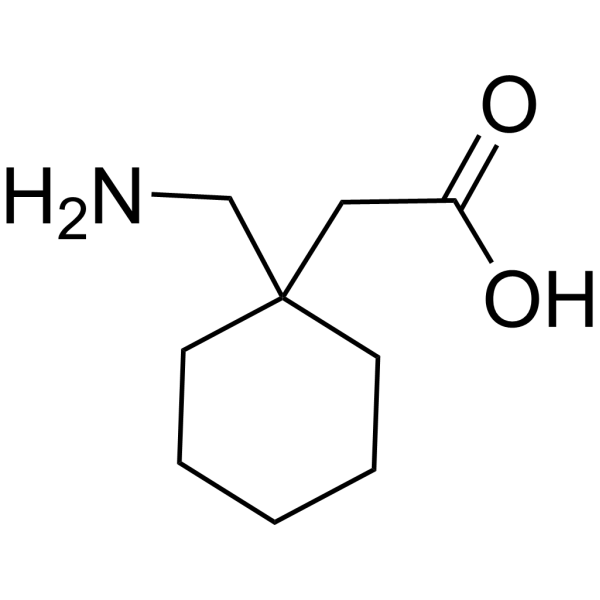
Gabapentin is a potent, orally active P/Q type Ca 2+ channel blocker. Gabapentin inhibits neuronal Ca 2+ influx and reduction of neurotransmitter release. Gabapentin is a GABA analog that can be used to relieve neuropathic pain [2] .
14
14 Cited Publications
Cat. No.: HY-A0057A
CAS No.: 60142-95-2
Target:  

Calcium Channel

Research Areas:  

Neurological Disease Cancer

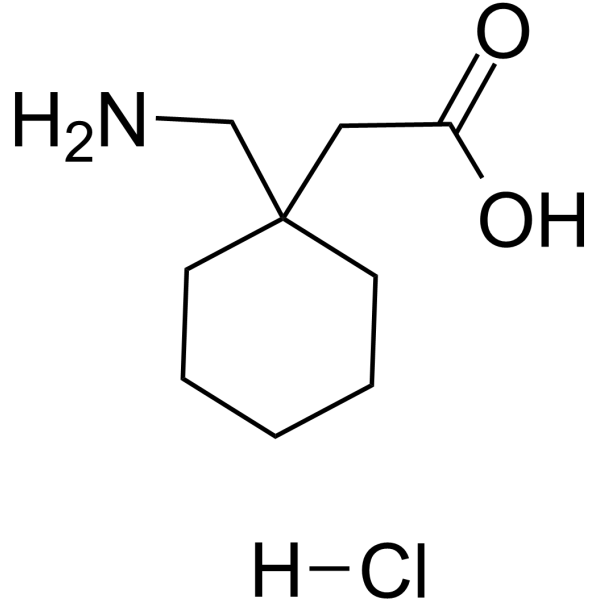
Gabapentin hydrochloride is a potent, orally active P/Q type Ca 2+ channel blocker. Gabapentin hydrochloride inhibits neuronal Ca 2+ influx and reduction of neurotransmitter release. Gabapentin hydrochloride is a GABA analog that can be used to relieve neuropathic pain [2] .
14
14 Cited Publications
Cat. No.: HY-15553A
CAS No.: 116666-63-8
Synonyms: Ro 40-5967 dihydrochloride
Target:  

Calcium Channel

Research Areas:  

Cardiovascular Disease Cancer

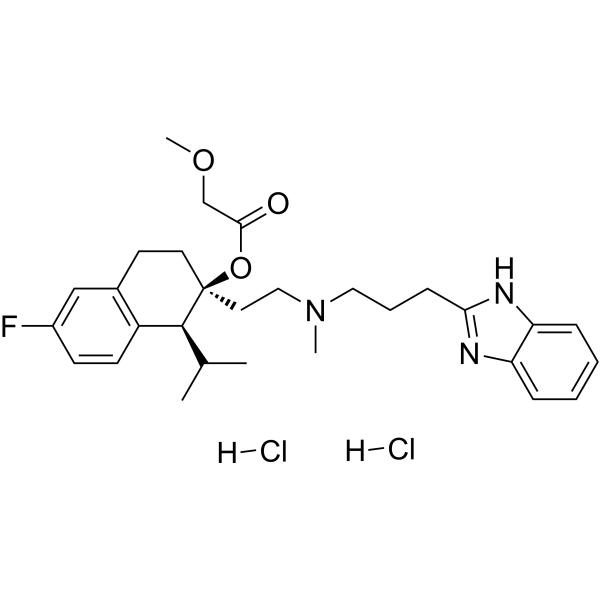
Mibefradil dihydrochloride (Ro 40-5967 dihydrochloride) is a calcium channel blocker with moderate selectivity for T-type Ca 2+ channels (IC50s of 2.7 μM and 18.6 μM for T-type and L-type currents, respectively) .
13
13 Cited Publications
Cat. No.: HY-120691A
CAS No.: 1263068-83-2
Purity:  99.47%
Target:  

TRP Channel

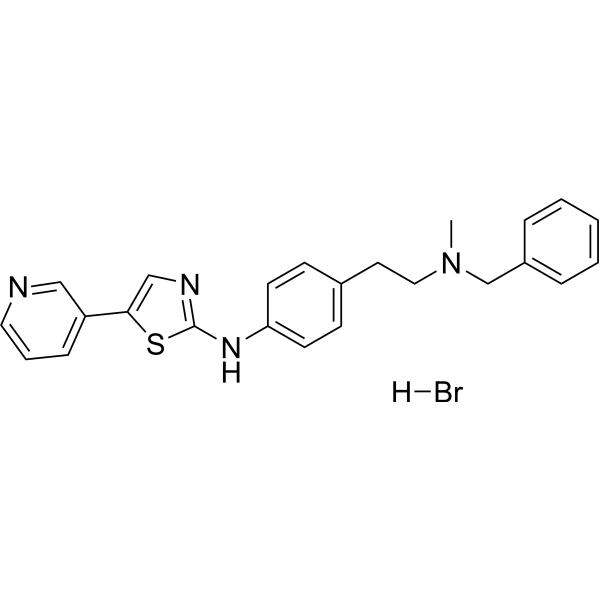
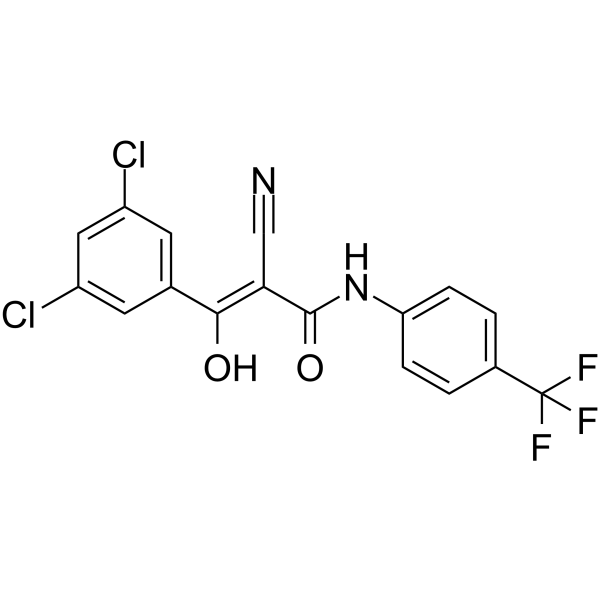
GSK205 is a potent, selective TRPV4 antagonist with an IC50 of 4.19  μM for inhibiting TRPV4-mediated Ca 2+ influx [2].
12
12 Cited Publications
Cat. No.: HY-D0716
CAS No.: 121714-22-5
Synonyms: Fluo-3-pentaacetoxymethyl ester
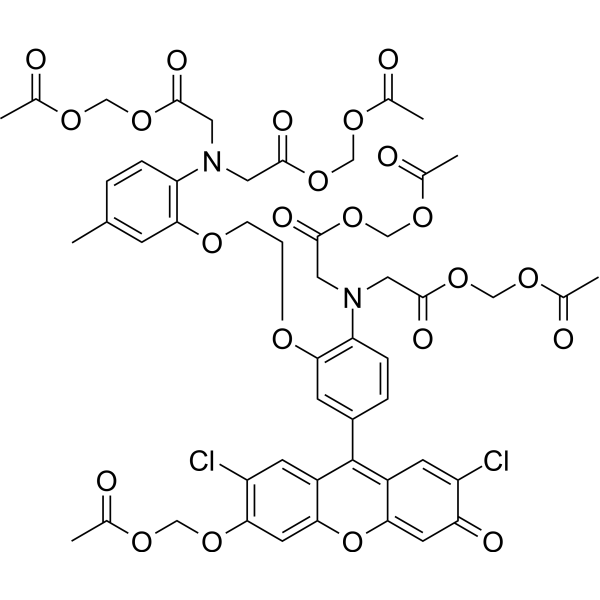
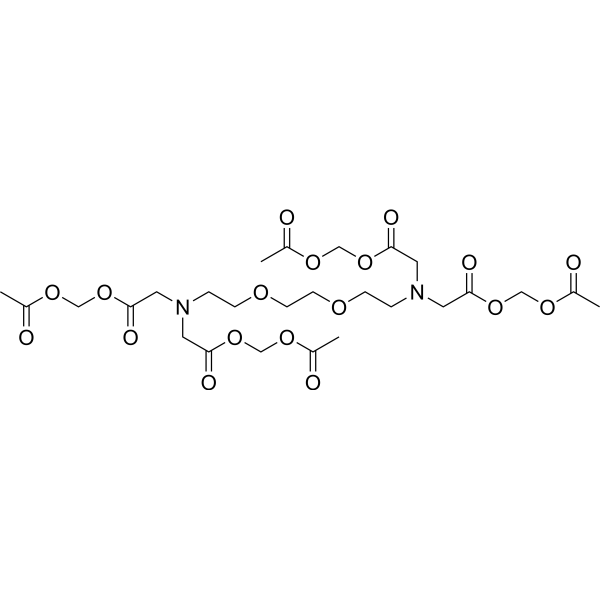
Fluo-3 AM is a fluorecent Ca 2+ chelator, with high affinity for calcium. Fluo-3 AM can specifically identify intracellular calcium ions, with high sensitivity, low cytotoxicity, increased AM acetylmethyl ester can enter the cell well, after being sheared by the intracellular esterase stay in the cell to bind to calcium ions, produce strong fluorescence .
12
12 Cited Publications
Cat. No.: HY-118630
CAS No.: 351986-85-1
Purity:  98.93%
Target:  

PIKfyve Autophagy

Research Areas:  

Cancer

Vacuolin-1 is a potent and cell-permeable lysosomal exocytosis inhibitor. Vacuolin-1 blocks the Ca 2+-dependent exocytosis of lysosomes and prevents the release of lysosomal content without affecting the process of resealing. vacuolin‐1 is a potent and selective PIKfyve inhibitor and inhibits late‐stage autophagy by impairing lysosomal maturation. Vacuolin-1 can induce vacuole formation and increase the percentage of enucleated cells [2] .
11
11 Cited Publications
Cat. No.: HY-50694
CAS No.: 289656-45-7
Synonyms: ICA-17043
Target:  

Potassium Channel

Research Areas:  

Others

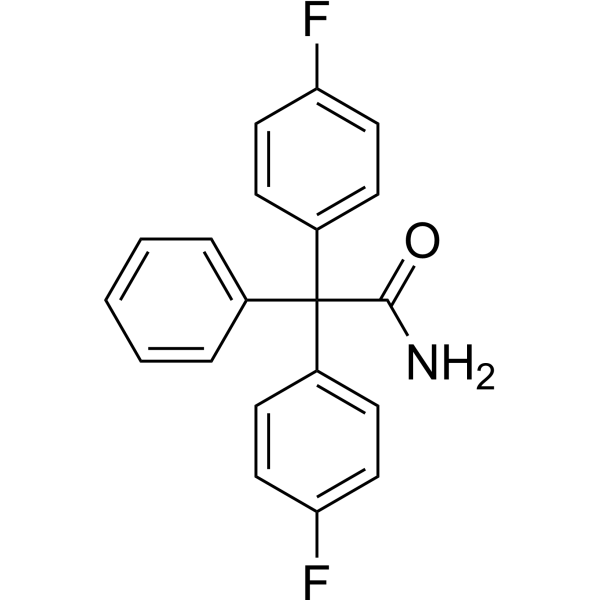
Senicapoc (ICA-17043) is a potent and selective Gardos channel (Ca 2+-activated K + channel; KCa3.1) blocker with an IC50 of 11 nM. Senicapoc blocks Ca 2+-induced rubidium flux from human RBCs with an IC50 value of 11 nM and inhibits RBC dehydration with IC50 of 30 nM .
11
11 Cited Publications
Cat. No.: HY-12323
CAS No.: 832115-62-5
Purity:  99.19%
Synonyms: Isoxazole 9
Target:  

Calcium Channel

Research Areas:  

Neurological Disease

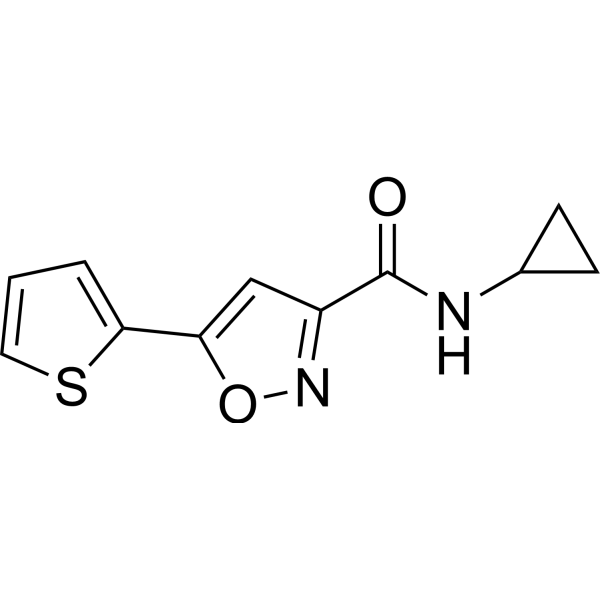
ISX-9 (Isoxazole 9) is a potent inducer of adult neural stem cell differentiation. ISX-9 activates Ca 2+ influx through both voltage-gated Ca 2+ channels and NMDA receptors and increases neuroD expression. ISX-9 also induces cardiomyogenic differentiation of Notch-activated epicardium-derived cells (NECs) [2] .
11
11 Cited Publications
Cat. No.: HY-P0256
CAS No.: 24345-16-2
Synonyms: Apamine
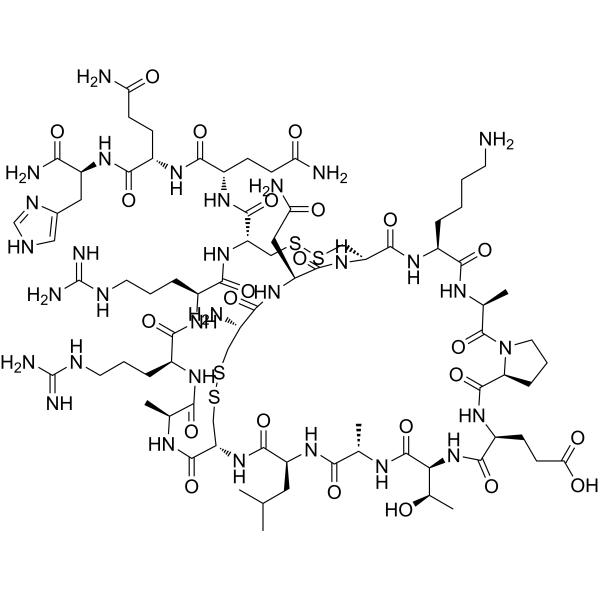
Apamin (Apamine) is an 18 amino acid peptide neurotoxin found in apitoxin (bee venom), is known as a specifically selective blocker of Ca 2+-activated K + (SK) channels and exhibits anti-inflammatory and anti-fibrotic activity .
11
11 Cited Publications
Cat. No.: HY-P0256A
Synonyms: Apamine TFA
Apamin TFA (Apamine TFA) is an 18 amino acid peptide neurotoxin found in apitoxin (bee venom), is known as a specifically selective blocker of Ca 2+-activated K + (SK) channels and exhibits anti-inflammatory and anti-fibrotic activity .
11
11 Cited Publications
Cat. No.: HY-123071
CAS No.: 1206604-29-6
Purity:  99.24%
Target:  

Wnt

Research Areas:  

Cancer

Box5 is a potent Wnt5a antagonist. Box5 inhibits Wnt5a signaling and inhibits Wnt5a-mediated Ca 2+ release. Box5 inhibits cell migration. Box5 has the potential for the research of melanoma .
11
11 Cited Publications
Cat. No.: HY-123071A
Purity:  99.24%
Target:  

Wnt

Research Areas:  

Cancer

Box5 TFA is a potent Wnt5a antagonist. Box5 TFA inhibits Wnt5a signaling and inhibits Wnt5a-mediated Ca 2+ release. Box5 TFA inhibits cell migration. Box5 TFA has the potential for the research of melanoma .
10
10 Cited Publications
Cat. No.: HY-14656
CAS No.: 33286-22-5
Purity:  99.47%
Synonyms: CRD-401
Target:  

Calcium Channel

Research Areas:  

Cardiovascular Disease Cancer

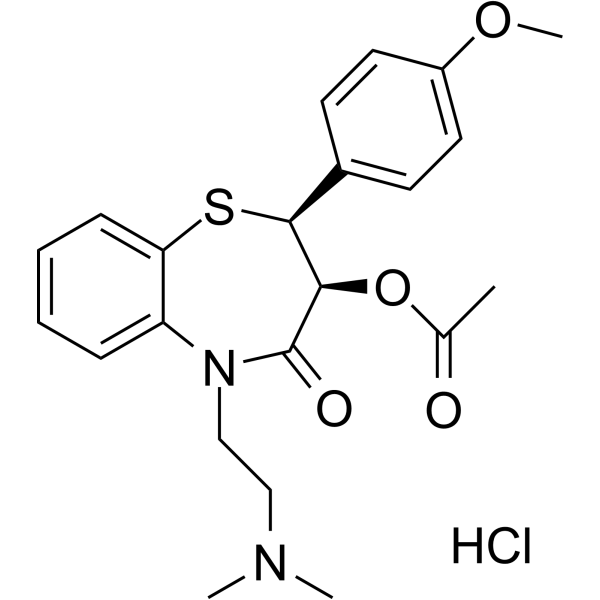
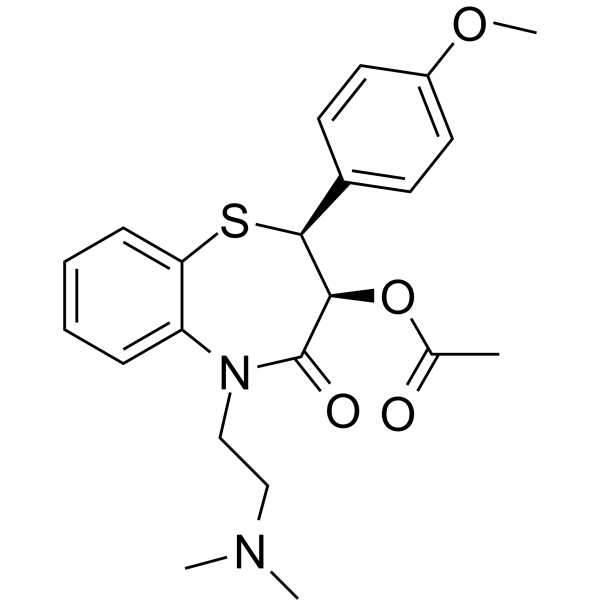
Diltiazem hydrochloride is a Ca 2+ influx inhibitor (slow channel blocker or calcium antagonist).
10
10 Cited Publications
Cat. No.: HY-D0973
CAS No.: 99590-86-0
Synonyms: EGTA Acetoxymethyl ester
EGTA-AM is a membrane permeable form of EGTA, can be passively loaded into cells to generate intracellular EGTA; EGTA-AM is also a Ca 2+ chelator with slow chelating dynamics.
10
10 Cited Publications
Cat. No.: HY-B0632
CAS No.: 42399-41-7
Target:  

Calcium Channel

Research Areas:  

Cardiovascular Disease Cancer

Diltiazem is an orally active L-type Ca 2+ channel blocker. Diltiazem shows antihypertensive and antiarrhythmic effects. Diltiazem can be used for the research of cardiac arrhythmia, hypertension, and angina pectoris [2] .
10
10 Cited Publications
Cat. No.: HY-131614
CAS No.: 136186-07-7
Purity:  99.86%
Target:  

Calcium Channel

Research Areas:  

Others

TPC2-A1-N is a powerful and Ca 2+-permeable agonist of two pore channel 2 (TPC2), which plays its role by mimicking the physiological actions of NAADP. TPC2-A1-P reproducibly evokes significant Ca 2+ responses from TPC2 (EC50=7.8 μM), and the effect can be blocked by several TPC blockers. TPC2-A1-N can be used to probe different functions of TPC2 channels in intact cells [2].
10
10 Cited Publications
Cat. No.: HY-N6778
CAS No.: 57186-25-1
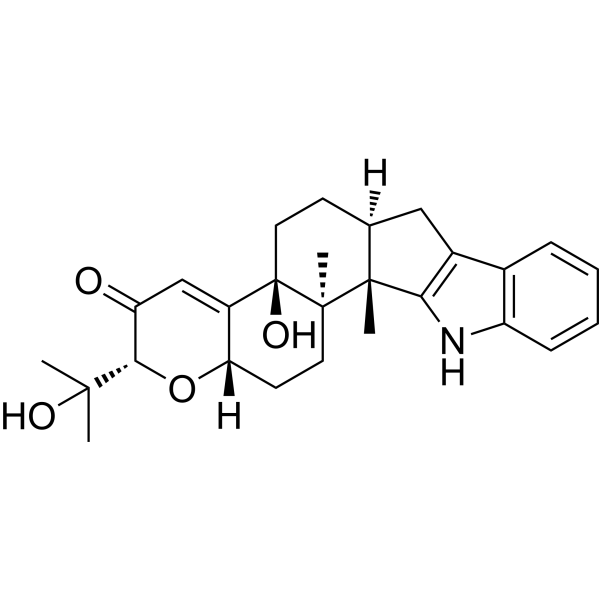
Paxilline is an indole alkaloid mycotoxin derived from Penicillium paxilli, which effectively inhibits the BK channel through a channel-blocking mechanism. Paxilline also inhibits sarco/endoplasmic reticulum Ca 2+-stimulated ATPase (SERCA), with IC50 values ranging from 5 μM to 50 μM for different SERCA isoforms. Paxilline exhibits significant anticonvulsant and neuroprotective effects, as well as certain antioxidant activity [2] .
10
10 Cited Publications
Cat. No.: HY-101044
CAS No.: 192575-19-2
Purity:  ≥95.0%
Research Areas:  

Neurological Disease

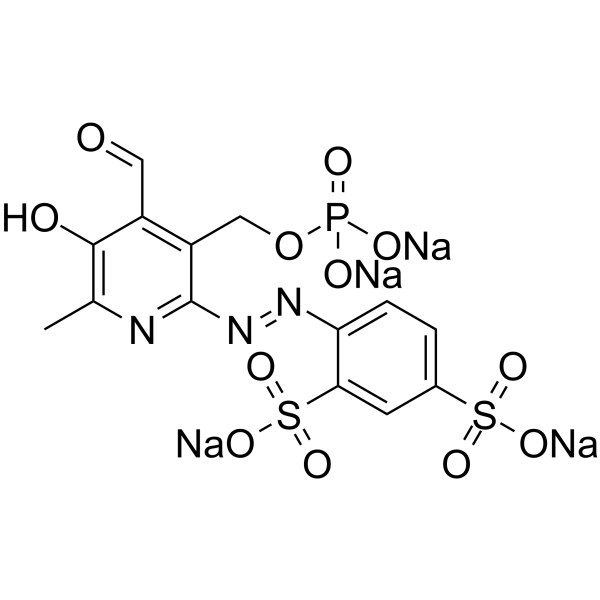
PPADS tetrasodiuma is a non-selective P2X receptor antagonist. PPADS tetrasodiuma blocks recombinant P2X1, -2, -3, -5 with IC50s ranging from 1 to 2.6 μM. PPADS tetrasodiuma blocks native P2Y2-like (IC50~0.9 mM) and recombinant P2Y4 (IC50~15 mM) receptors. PPADS tetrasodiuma is an inhibitor of the reverse mode of the Na/Ca 2+ exchanger in guinea pig airway smooth muscle [2].
9
9 Cited Publications
Cat. No.: HY-16952A
CAS No.: 74764-40-2
Synonyms: (±)-Bepridil hydrochloride hydrate; Org 5730 hydrochloride hydrate
Target:  

Calcium Channel

Research Areas:  

Cardiovascular Disease

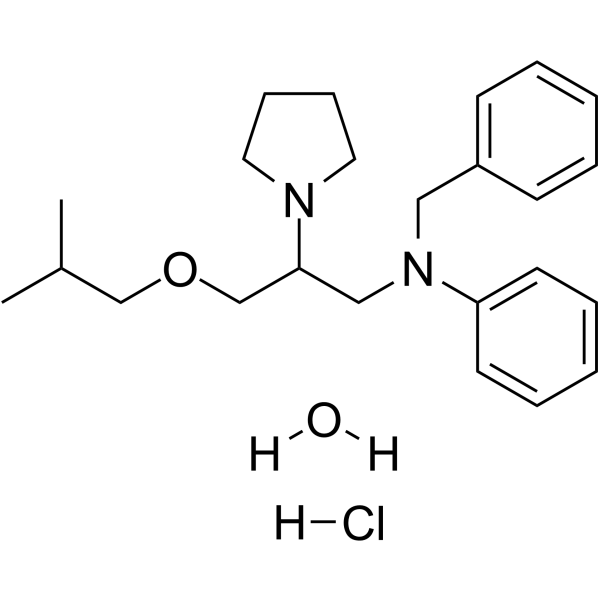
Bepridil hydrochloride hydrate ((±)-Bepridil hydrochloride hydrate) is a non-selective, long-acting Ca + channel antagonist and Na +, K + channel inhibitor, with antianginal and type I antiarrhythmic effects. Bepridil hydrochloride hydrate also acts as a cardiac Na +/Ca2 + exchange (NCX1) inhibitor. Bepridil hydrochloride hydrate can be used for the research of cardiovascular disorders [2] .
9
9 Cited Publications
Cat. No.: HY-B1077
CAS No.: 26864-56-2
Synonyms: R-16341
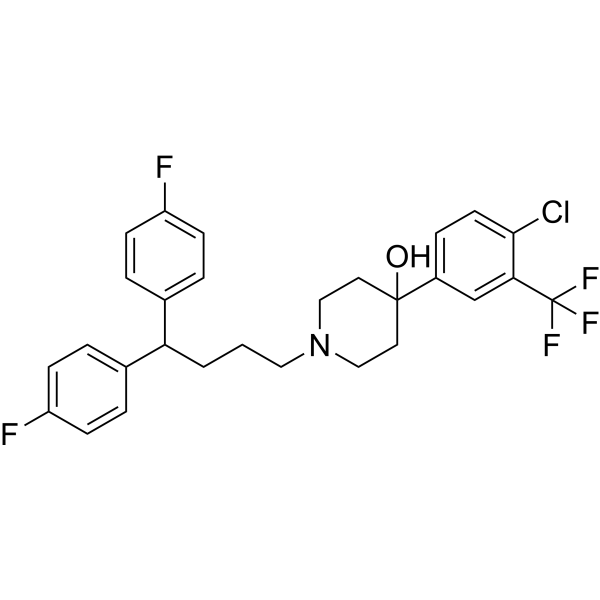
Penfluridol (R-16341) is a potent, long-acting, first-generation, oral diphenylbutylpiperidine antipsychotic agent by targeting D2-like dopamine receptor. Penfluridol effectively inhibits TNFα-induced NF-κB activation and alleviates the severity of arthritis and colitis in vivo. Penfluridol is a Ca2+-calmodulin inhibitor. Penfluridol induces apoptosis and autophagy. Penfluridol is used for chronic schizophrenia, acute psychosis, Tourette syndrome and autoimmune diseases. Penfluridol inhibites the growth of E. faecalis planktonic cells with the MIC of 7.81 μg/ml [2] .

