63 Results for "

5-HT Receptor Activators

" in MedChemExpress (MCE) Product Catalog:
Products (63)

63 Results for "5-HT Receptor Activators" in MCE Product Catalog:

7
7 Cited Publications
Cat. No.: HY-N6771
CAS No.: 18172-33-3
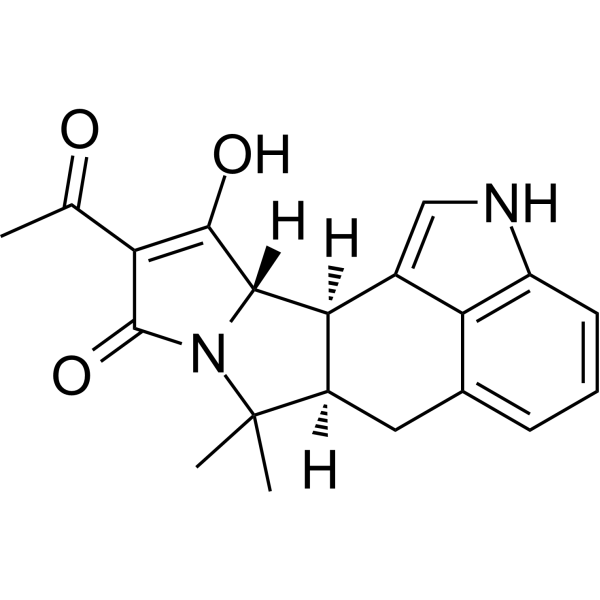
Cyclopiazonic acid is an endoplasmic reticulum calcium ATPase (ECAs) inhibitor and human respiratory syncytial virus (RSV) inhibitor (EC50 value of 4.13 μ M), which can reduce the antagonistic effect of 5-HT receptors in rat thoracic aorta, induce p53 dependent cell apoptosis and reproductive toxicity in mouse testes, and inhibit the biological activation of aflatoxin B [1][4][5].
loading...
    loading...
4
4 Cited Publications
Cat. No.: HY-15574
CAS No.: 152811-62-6
Purity:  99.09%
Synonyms: SB-207266
Target:  

5-HT Receptor

Research Areas:  

Cardiovascular Disease

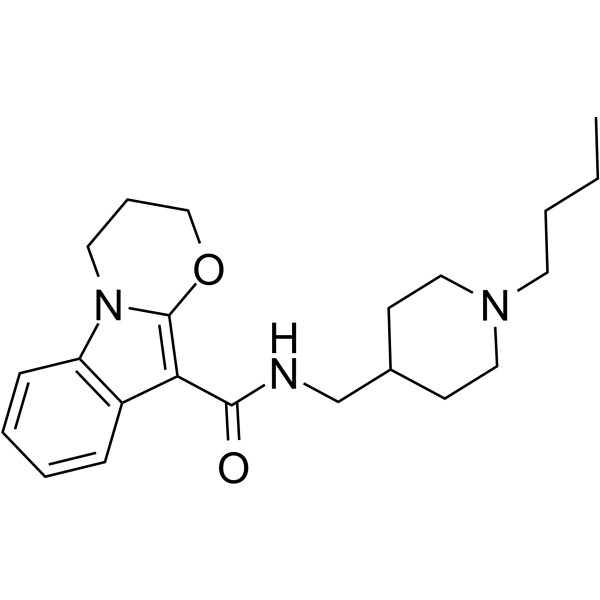
Piboserod is an orally available selective antagonist of the 5-HT4 receptor, with a Ki value of approximately 0.1 nM for human 5-HT4 receptors. Piboserod can competitively bind to the 5-HT4 receptor and block the activation of the 5-HT4 receptor. Piboserod can inhibit the enhancing effect of 5-HT on the nerve-mediated contraction response of the human bladder detrusor muscle. Piboserod is mainly used in the research of urinary system diseases (such as overactive bladder) and cardiovascular diseases (such as chronic heart failure) .
loading...
    loading...
3
3 Cited Publications
Cat. No.: HY-B1371A
CAS No.: 2022-29-9
Synonyms: Spiroperidol hydrochloride
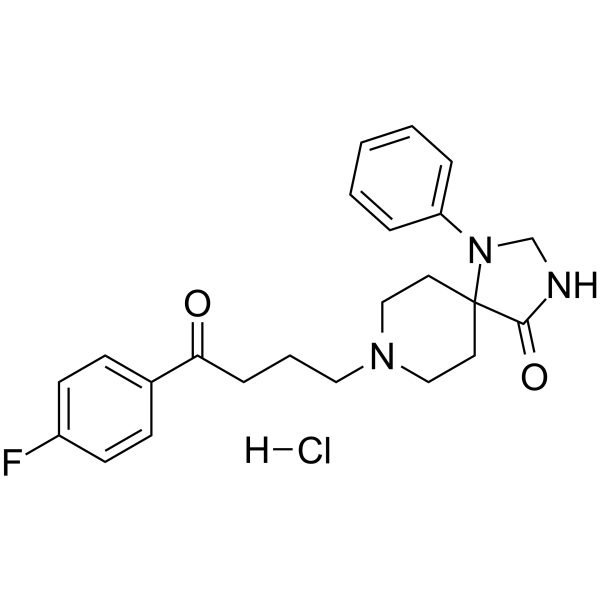
Spiperone hydrochloride (Spiroperidol hydrochloride) is a selective dopamine D2 receptor (Ki values of 0.06 nM, 0.6 nM, 0.08 nM, ~350 nM, ~3500 nM for D2, D3, D4, D1 and D5 receptors, respectively) and 5-HT2A/5-HT1A receptor (Kis of 1 nM/49 nM) antagonist. Spiperone hydrochloride is also a selective α1B-adrenoceptor antagonist. Spiperone hydrochloride activates calcium-activated chloride channel (CaCC). Antipsychotic and anti-inflammatory activities .
loading...
    loading...
2
2 Cited Publications
Cat. No.: HY-B2132
CAS No.: 61-54-1
Synonyms: 3-(2-Aminoethyl)indole~2-(3-Indolyl)ethylamine
Tryptamine is a selective, blood-brain-penetrating 5-HT4 receptor agonist (EC50=1-3 mM) and an endogenous ligand of the aryl hydrocarbon receptor (AHR) (Kd=10-50 nM). Tryptamine promotes intestinal anion secretion and fluid transport by activating G protein-coupled receptors (GPCRs) and accelerates gastrointestinal motility. Tryptamine regulates Th17/Treg balance to inhibit neuroinflammation, competitively binds to 5-HT receptors to regulate central nervous system activity, and participates in temperature regulation and spinal reflex regulation as a neuromodulator. Tryptamine can be used to study intestinal motility disorders such as functional constipation, and has shown significant efficacy in multiple sclerosis models .
loading...
    loading...
2
2 Cited Publications
Cat. No.: HY-107613
CAS No.: 93076-89-2
Purity:  99.82%
Synonyms: DKGI-I; Diacylglycerol kinase inhibitor I
Target:  

PKC 5-HT Receptor

Research Areas:  

Inflammation/Immunology

R 59-022 (DKGI-I) is a DGK inhibitor (IC50: 2.8 µM). R 59-022 inhibits the phosphorylation of OAG to OAPA. R 59-022 is a 5-HT Receptor antagonist, and activates protein kinase C (PKC). R 59-022 potentiates thrombin-induced diacylglycerol production in platelets and inhibits phosphatidic acid production in neutrophils .
loading...
    loading...
2
2 Cited Publications
Cat. No.: HY-B0197A
CAS No.: 143388-64-1
Synonyms: GR-85548A hydrochloride
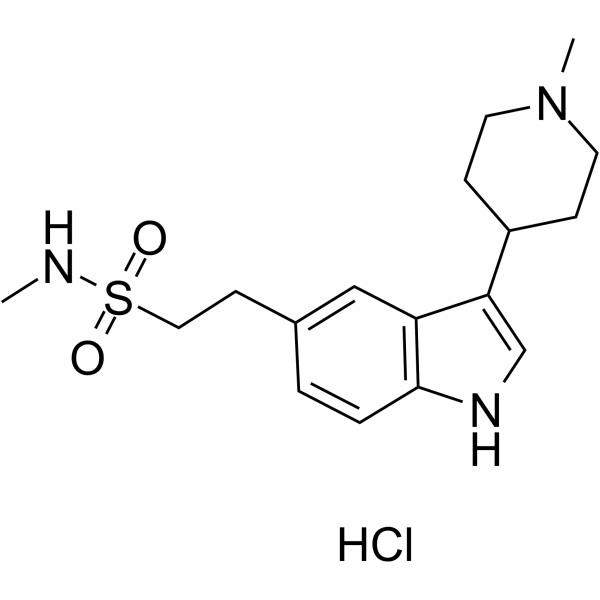
Naratriptan (GR-85548A) hydrochloride is a selective 5-HT1B/1D receptor agonist. Naratriptan hydrochloride is peripherally active and has good oral bioavailability, inducing cranial artery vasoconstriction by activating 5-HT1B/1D receptors (EC50=0.11 μM for dog basilar artery). Naratriptan hydrochloride also inhibits trigeminal nerve-mediated dural neurogenic plasma extravasation and reduces sterile inflammation. Naratriptan hydrochloride is mainly used in the research of acute migraine, targeting cranial vascular and neuroinflammatory mechanisms .
loading...
    loading...
2
2 Cited Publications
Cat. No.: HY-B0197
CAS No.: 121679-13-8
Synonyms: GR-85548A
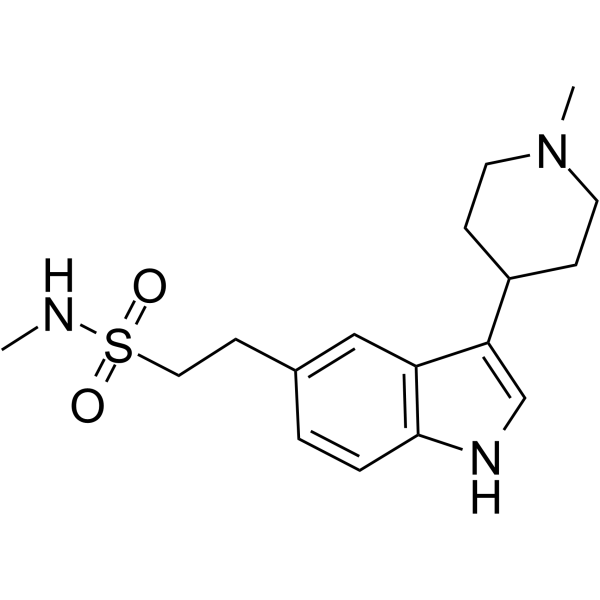
Naratriptan is an orally active and selective 5-HT1B/1D receptor agonist. Naratriptan is peripherally active and has good oral bioavailability, inducing cranial artery vasoconstriction by activating 5-HT1B/1D receptors (EC50=0.11 μM for dog basilar artery). Naratriptan also inhibits trigeminal nerve-mediated dural neurogenic plasma extravasation and reduces sterile inflammation. Naratriptan is mainly used in the research of acute migraine, targeting cranial vascular and neuroinflammatory mechanisms .
loading...
    loading...
2
2 Cited Publications
Cat. No.: HY-107613A
CAS No.: 93076-98-3
Purity:  98.88%
Synonyms: DKGI-I hydrochloride; Diacylglycerol kinase inhibitor I hydrochloride
Target:  

PKC 5-HT Receptor

R 59-022 (DKGI-I) hydrochloride is a DGK inhibitor (IC50: 2.8 µM). R 59-022 hydrochloride inhibits the phosphorylation of OAG to OAPA. R 59-022 hydrochloride is a 5-HT Receptor antagonist, and activates protein kinase C (PKC). R 59-022 hydrochloride potentiates thrombin-induced diacylglycerol production in platelets and inhibits phosphatidic acid production in neutrophils .
loading...
    loading...
1
1 Cited Publications
Cat. No.: HY-30234A
CAS No.: 1163-36-6
Target:  

TRP Channel Apoptosis

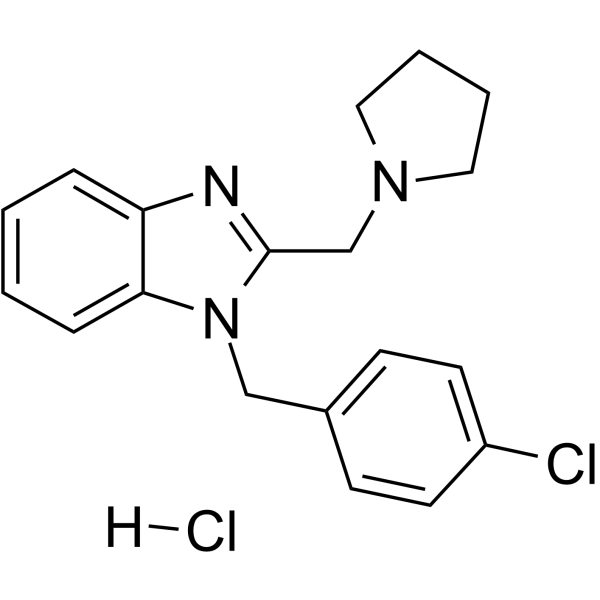
Clemizole hydrochloride is an orally active, blood-brain barrier permeable TRPC5 inhibitor, with an IC50 value of 1.05-1.34 μM against mouse TRPC5. Clemizole hydrochloride blocks TRPC1:TRPC5, TRPC3, TRPC4, TRPC6, TRPC7, hERG, hKCNQ1/hKCNE1 and hKv1.5 channels, and activates TRPA1; it modulates 5HT-2B and HTR2A receptors; it inhibits HCV RNA replication, CrtN enzymatic activity, oxidative stress, neuroinflammation, cell apoptosis and bacterial virulence; it maintains blood-brain barrier (BBB) integrity; it enhances DNA repair capacity; it improves cell viability; and it alters cardiac electrophysiological properties. Clemizole hydrochloride can be used in the research of Dravet syndrome, hepatitis C virus infection, Staphylococcus aureus skin infection, Cisplatin (HY-17394)-induced nephrotoxicity, STXBP1-related diseases, traumatic brain injury and xeroderma pigmentosum type C .
loading...
    loading...
1
1 Cited Publications
Cat. No.: HY-14604
CAS No.: 90494-79-4
Purity:  98.57%
Synonyms: SR57746A; SR57746 hydrochloride
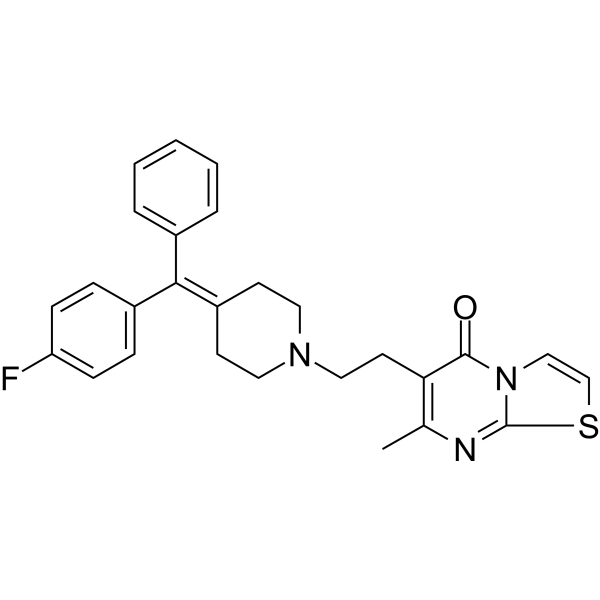
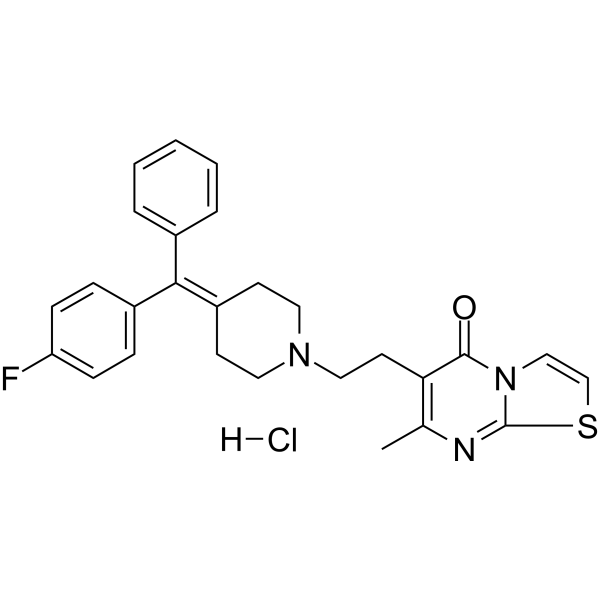
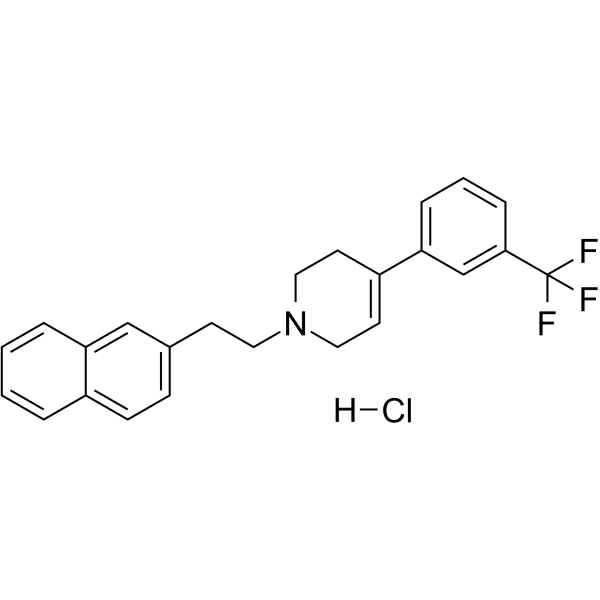
Xaliproden (SR57746) hydrochloride (SR57746A) is an orally active, highly selective 5-HT1A receptor agonist. Xaliproden hydrochloride activates pertussis toxin-sensitive G protein-coupled signaling cascades, as well as the PKC, ERK1/ERK2, Akt and p21 Ras/MEK-1 pathways. Xaliproden hydrochloride also downregulates the JNK/p66/c-Jun signaling pathway, induces phosphorylation of the shc adaptor protein, regulates extracellular dopamine and 5-HT levels, and induces [ 35S]GTPγS labeling in rat brain structures rich in 5-HT1A receptors. Xaliproden hydrochloride exerts neurotrophic, neuroprotective, renoprotective, anti-inflammatory, anti-apoptotic, anti-fibrotic and analgesic effects. Xaliproden hydrochloride also enhances NGF-induced neurite outgrowth, promotes motor neuron survival, attenuates renal tubular injury and inhibits chemotherapy-induced mechanical allodynia, without activating or altering NGF-induced TrkA receptor activation. Xaliproden hydrochloride can be used in the research of motor neuron disease, diabetic nephropathy, chemotherapy-induced peripheral neuropathy, amyotrophic lateral sclerosis, Alzheimer's disease, acute tonic nociceptive pain, inflammatory pain, depression and anxiety .
loading...
    loading...
1
1 Cited Publications
Cat. No.: HY-30234
CAS No.: 442-52-4
Target:  

TRP Channel Apoptosis

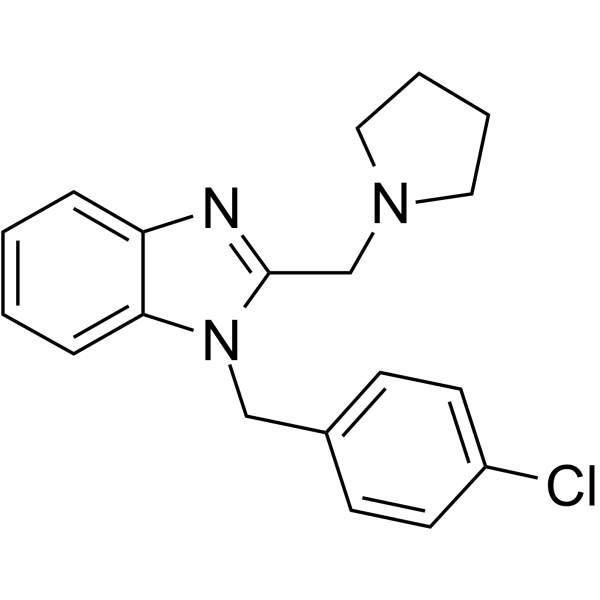
Clemizole is an orally active, blood-brain barrier permeable TRPC5 inhibitor, with an IC50 value of 1.05-1.34 μM against mouse TRPC5. Clemizole blocks TRPC1:TRPC5, TRPC3, TRPC4, TRPC6, TRPC7, hERG, hKCNQ1/hKCNE1 and hKv1.5 channels, and activates TRPA1; it modulates 5HT-2B and HTR2A receptors; it inhibits HCV RNA replication, CrtN enzymatic activity, oxidative stress, neuroinflammation, cell apoptosis and bacterial virulence; it maintains blood-brain barrier (BBB) integrity; it enhances DNA repair capacity; it improves cell viability; and it alters cardiac electrophysiological properties. Clemizole can be used in the research of Dravet syndrome, hepatitis C virus infection, Staphylococcus aureus skin infection, Cisplatin (HY-17394)-induced nephrotoxicity, STXBP1-related diseases, traumatic brain injury and xeroderma pigmentosum type C .
loading...
    loading...
1
1 Cited Publications
Cat. No.: HY-P3641A
Target:  

GnRH Receptor

Kisspeptin 13 TFA is the TFA salt form of Kisspeptin 13 (HY-P3641). Kisspeptin-13 TFA inhibits glucose-induced insulin secretion with an IC50 of 1.2 nM. Kisspeptin 13 TFA activates the hypothalamic-pituitary-adrenal (HPA) axis, causes hyperthermia, motor behavior and anxiety in rats. Kisspeptin 13 TFA interacts with α2-adrenergic and 5-HT2 serotonin receptors, exhibits antidepressant efficacy. Kisspeptin 13 TFA is an activator for GPR54 and GnRH receptor, which enhances memory and can be used in Alzheimer's disease research .
loading...
    loading...
Cat. No.: HY-W001160
CAS No.: 1953-54-4
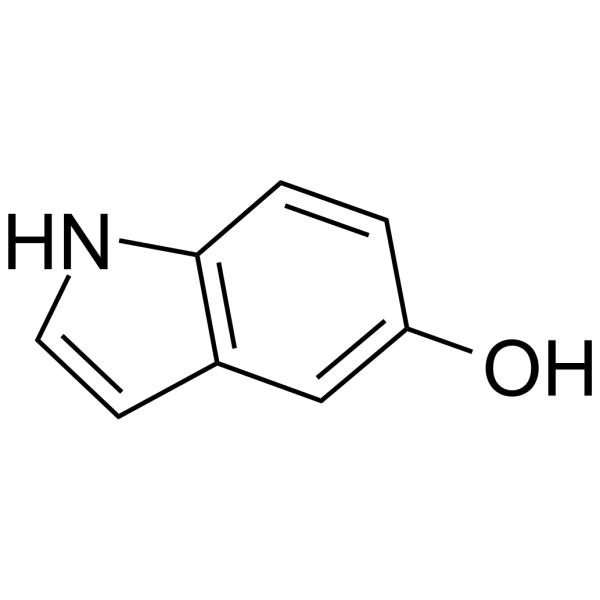
5-Hydroxyindole is an orally active hydroxylated indole and tryptophan metabolite. 5-Hydroxyindole activates α7 nicotinic acetylcholine receptors and acts on intestinal L-type calcium channels. 5-Hydroxyindole slows down the desensitization of 5-HT3 receptor-mediated ion currents in cells. 5-Hydroxyindole causes convulsions and loss of consciousness. 5-Hydroxyindole is used in the study of neuroblastoma, schizophrenia, and diseases related to intestinal motility disorders .
loading...
    loading...
Cat. No.: HY-Y1191
CAS No.: 16357-59-8
Synonyms: EEDQ
EEDQ is a carboxylate activator and irreversible antagonist of 5HT2c receptors. EEDQ reduces [ 3H]β-CIT binding to the dopamine transporter (DAT) in rat caudate-putamen (CPu) homogenates (IC50 = 78.3 μM). EEDQ inhibits contralateral rotation behavior .
loading...
    loading...
Cat. No.: HY-15472
CAS No.: 866206-54-4
Purity:  97.46%
PRX-08066 is a selective and orally active 5-hydroxytryptamine receptor 2B (5-HT2BR) antagonist with a Ki of 3.4 nM. PRX-08066 inhibits the MAPK pathway, 5-HT release and fibrotic factor (TGFβ1, CTGF and FGF2) expression. PRX-08066 inhibits the proliferation of KRJ-I cells and induces apoptosis (caspase-3 activation). PRX-08066 inhibits pulmonary vascular remodeling. PRX-08066 can be used of pulmonary Arterial Hypertension (PAH) and neuroendocrine tumor (NET) .
loading...
    loading...
Cat. No.: HY-103415
CAS No.: 75272-39-8
Purity:  99.9%
Synonyms: YM-09151-2; Emonapride
Research Areas:  

Neurological Disease

Nemonapride is a highly potent dopamine D2 receptor antagonist with a Ki of 0.06 nM. Nemonapride also activates 5-HT1A receptor with an IC50 of 34 nM. Nemonapride is an antipsychotic that readily passes through the blood brain barrier and exhibits potent neuroleptic effects in animals .
loading...
    loading...
Cat. No.: HY-118301
CAS No.: 1207440-88-7
Research Areas:  

Neurological Disease

ADX71441 is an orally active, blood-brain barrier penetrant positive allosteric modulator of GABAB receptor. ADX71441 potentiates the activity of endogenous GABA at GABAB receptor, with an EC50 of 96 nM. ADX71441 functionally inhibits adenosine transporters and 5-HT2B receptor. ADX71441 produces anxiolytic-like, analgesic, muscle relaxant, hypothermic and overactive bladder inhibitory effects, reduces acute locomotor activity levels, decreases voluntary intake of alcohol and saccharin, attenuates stress-induced neuronal activation, and exhibits anti-hyperalgesic activity .
loading...
    loading...
Cat. No.: HY-W742532
CAS No.: 65527-62-0
Synonyms: N-Ethyl-nor-LSD
Research Areas:  

Neurological Disease

ETH-LAD (N-Ethyl-nor-LSD) is an activator for 5-HT2A receptor with Ki of 5.1 nM. ETH-LAD exhibits affinity for dopamine receptor D1 and dopamine receptor D2 with Ki of 22.1 nM and 4.4 nM. ETH-LAD acts as psychoactive substance in rat model .
loading...
    loading...
Cat. No.: HY-139201E
CAS No.: 27964-99-4
Synonyms: PDLHB (MW 150000-300000)
Poly-D-lysine hydrobromide (MW 150000-300000) is a synthetic polymer composed of D-lysine residues and is one of the most widely used matrices in neural cell culture applications. Poly-D-lysine hydrobromide (MW 150000-300000) can be used as a non-specific cell adhesion enhancer. Poly-D-lysine hydrobromide (MW 30000-70000) is an orally active CaSR agonist peptide that indirectly activates the 5-HT₃ receptor signaling pathway, delaying gastric emptying and thereby slowing the rate at which glucose enters the small intestine and is absorbed .
loading...
    loading...
Cat. No.: HY-168809
CAS No.: 21420-59-7
Research Areas:  

Neurological Disease

Norbaeocystin is an intermediate/minor metabolite naturally present in the psilocybin biosynthetic pathway of hallucinogenic mushrooms (Psilocybe spp.). Norbaeocystin has weak or no affinity for the serotonin 2A (5-HT2A) receptor and does not induce receptor activation. Norbaeocystin is rapidly metabolized by monoamine oxidase, and thus does not participate in centrally mediated psychedelic effects. Norbaeocystin can be used for studies on biological pathways associated with hallucinogenic effects .
loading...
    loading...

