1. Search Result
Search Result
Results for "

AMP/ATP ratio

" in MedChemExpress (MCE) Product Catalog:

7

Inhibitors & Agonists

1

Isotope-Labeled Compounds

Cat. No. Product Name Target Research Areas Chemical Structure
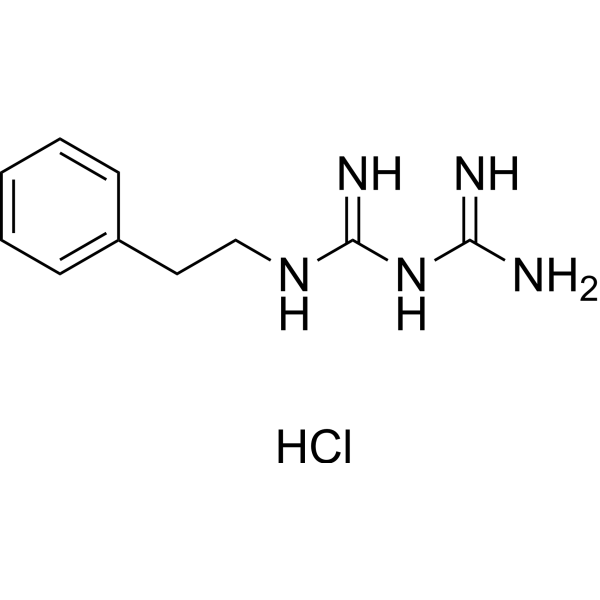
  • HY-16397A
    Phenformin hydrochloride
    5+ Cited Publications

    Phenethylbiguanide hydrochloride

    Apoptosis mTOR Autophagy Mitochondrial Metabolism AMPK Neurological Disease Metabolic Disease Cancer
    Phenformin (Phenethylbiguanide) hydrochloride is an orally active biguanide hypoglycemic agent. Phenformin hydrochloride inhibits mitochondrial respiratory chain complex I, leading to an increased AMP/ATP ratio, activation of AMPK, and subsequent inhibition of the mTOR pathway, thereby suppressing cell proliferation, inducing apoptosis and autophagy. Phenformin hydrochloride inhibits cancer stem cells (CSCs) and possesses potent antitumor potential .
    Phenformin hydrochloride
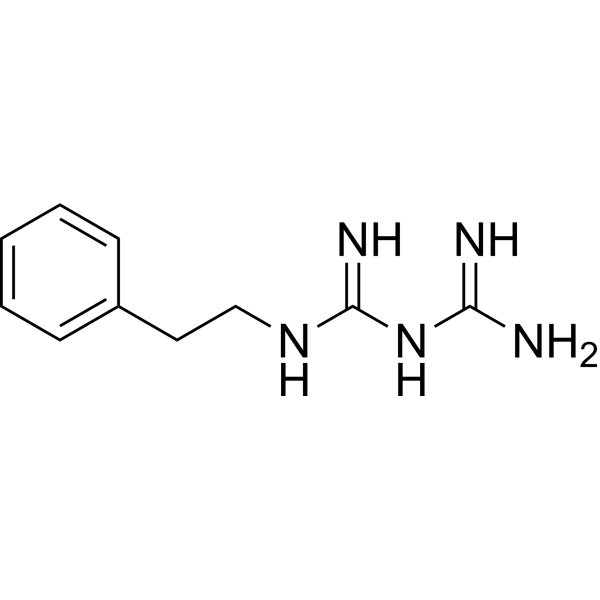
  • HY-16397
    Phenformin
    5+ Cited Publications

    Phenethylbiguanide

    Mitochondrial Metabolism AMPK Apoptosis Autophagy mTOR Neurological Disease Metabolic Disease Cancer
    Phenformin (Phenethylbiguanide) is an orally active biguanide hypoglycemic agent. Phenformin inhibits mitochondrial respiratory chain complex I, leading to an increased AMP/ATP ratio, activation of AMPK, and subsequent inhibition of the mTOR pathway, thereby suppressing cell proliferation, inducing apoptosis and autophagy. Phenformin inhibits cancer stem cells (CSCs) and possesses potent antitumor potential .
    Phenformin
  • HY-178239

    Drug Metabolite AMPK Reactive Oxygen Species (ROS) Inflammation/Immunology
    DX-8951 Hydroxy-acid is a prodrug of phosphoramide. ProAX can effectively increase intracellular ATP levels. DX-8951 Hydroxy-acid activates the AMPK signaling pathway by increasing the AMP/ATP ratio. DX-8951 Hydroxy-acid can enhance mitochondrial function and antioxidant capacity while reducing reactive oxygen species (ROS) levels. DX-8951 Hydroxy-acid has shown significant anti-aging and longevity effects in both human fibroblast and nematode models .
    DX-8951 Hydroxy-acid
  • HY-178239A

    Drug Metabolite AMPK Reactive Oxygen Species (ROS) Inflammation/Immunology
    DX-8951 Hydroxy-acid sodium is a prodrug of phosphoramide. DX-8951 Hydroxy-acid sodium can effectively increase intracellular ATP levels. DX-8951 Hydroxy-acid sodium activates the AMPK signaling pathway by increasing the AMP/ATP ratio. DX-8951 Hydroxy-acid sodium can enhance mitochondrial function and antioxidant capacity while reducing reactive oxygen species (ROS) levels. DX-8951 Hydroxy-acid sodium has shown significant anti-aging and longevity effects in both human fibroblast and nematode models .
    DX-8951 Hydroxy-acid sodium
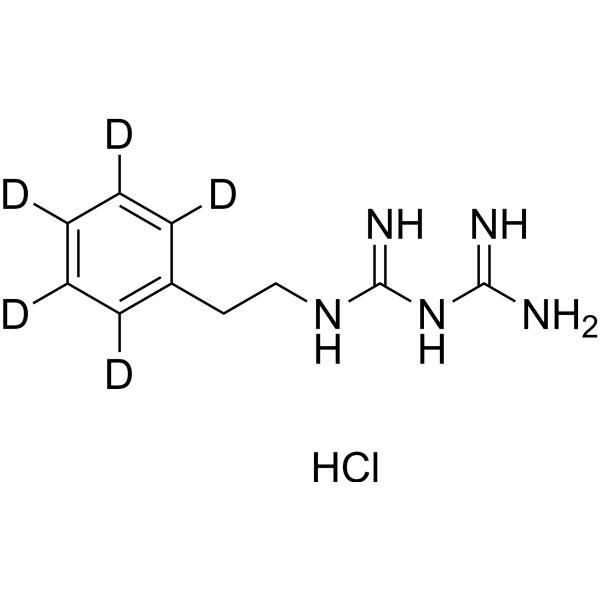
  • HY-16397AS

    Phenethylbiguanide-d5 hydrochloride

    Isotope-Labeled Compounds Apoptosis mTOR Autophagy Mitochondrial Metabolism AMPK Neurological Disease Metabolic Disease Cancer
    Phenformin-d5 (Phenethylbiguanide-d5) hydrochloride is the deuterium labeled Phenformin hydrochloride. Phenformin hydrochloride is an orally active biguanide hypoglycemic agent. Phenformin hydrochloride inhibits mitochondrial respiratory chain complex I, leading to an increased AMP/ATP ratio, activation of AMPK, and subsequent inhibition of the mTOR pathway, thereby suppressing cell proliferation, inducing apoptosis and autophagy. Phenformin hydrochloride inhibits cancer stem cells (CSCs) and possesses potent antitumor potential.
    Phenformin-d5 hydrochloride
  • HY-16397R

    Phenethylbiguanide (Standard)

    Reference Standards Apoptosis mTOR Autophagy Mitochondrial Metabolism AMPK Neurological Disease Metabolic Disease Cancer
    Phenformin (Phenethylbiguanide) (Standard) is the analytical standard of Phenformin (HY-16397). This product is intended for research and analytical applications. Phenformin (Phenethylbiguanide) is an orally active biguanide hypoglycemic agent. Phenformin inhibits mitochondrial respiratory chain complex I, leading to an increased AMP/ATP ratio, activation of AMPK, and subsequent inhibition of the mTOR pathway, thereby suppressing cell proliferation, inducing apoptosis and autophagy. Phenformin inhibits cancer stem cells (CSCs) and possesses potent antitumor potential.
    Phenformin (Standard)
  • HY-16397AR

    Phenethylbiguanide hydrochloride (Standard)

    Reference Standards Apoptosis mTOR Autophagy Mitochondrial Metabolism AMPK Neurological Disease Metabolic Disease Cancer
    Phenformin (Phenethylbiguanide) hydrochloride (Standard) is the analytical standard of Phenformin hydrochloride (HY-16397). This product is intended for research and analytical applications. Phenformin hydrochloride (Phenethylbiguanide) is an orally active biguanide hypoglycemic agent. Phenformin hydrochloride inhibits mitochondrial respiratory chain complex I, leading to an increased AMP/ATP ratio, activation of AMPK, and subsequent inhibition of the mTOR pathway, thereby suppressing cell proliferation, inducing apoptosis and autophagy. Phenformin hydrochloride inhibits cancer stem cells (CSCs) and possesses potent antitumor potential.
    Phenformin hydrochloride (Standard)

Inquiry Online

Your information is safe with us. * Required Fields.

Salutation


Country or Region *

Applicant Name *


Organization Name *

Department *


Email Address *


Product Name *

Cat. No.


Requested quantity *

Phone Number *


Remarks

Inquiry Online

Inquiry Information

Product Name:
Cat. No.:
Quantity:
MCE Japan Authorized Agent:

