Search Result
Results for "
Adenosine (Standard)
" in MedChemExpress (MCE) Product Catalog:
6
Biochemical Assay Reagents
| Cat. No. |
Product Name |
Target |
Research Areas |
Chemical Structure |
-
- HY-B2176R
-
|
Adenosine 5'-triphosphate (Standard)
|
Reference Standards
Endogenous Metabolite
|
Metabolic Disease
Inflammation/Immunology
|
ATP (Standard) is the analytical standard of ATP. This product is intended for research and analytical applications. ATP (Adenosine 5'-triphosphate) is a central component of energy storage and metabolism in vivo. ATP provides the metabolic energy to drive metabolic pumps and serves as a coenzyme in cells. ATP is an important endogenous signaling molecule in immunity and inflammation .
In Vitro: ATP (5 mM; 1 hour) co-treatment with LPS (1 μg/mL) has a synergistic effect on the activation of the NLRP3 inflammasome in HGFs .
ATP (2 mM; 0.5-24 hours) induces secretion of IL-1β, KC and MIP-2 from BMDMs in a caspase-1 activation-dependent manner .
ATP promotes neutrophil chemotaxis in vitro .
In Vivo: ATP (50 mg/kg; i.p.) protects mice against bacterial infection in vivo .
ATP induces the secretion of IL-1β, KC and MIP-2 and neutrophils recruitment in vivo .
|
-
-
- HY-13417R
-
|
Acadesine (Standard); AICA Riboside (Standard)
|
Reference Standards
AMPK
Autophagy
YAP
Mitophagy
Endogenous Metabolite
|
Cancer
|
|
AICAR (Standard) is the analytical standard of AICAR. This product is intended for research and analytical applications. AICAR (Acadesine) is an adenosine analog and a AMPK activator. AICAR regulates the glucose and lipid metabolism, and inhibits proinflammatory cytokines and iNOS production. AICAR is also an autophagy, YAP and mitophagy inhibitor .
|
-
-
- HY-B0228R
-
|
Adenine riboside (Standard); D-Adenosine (Standard)
|
Reference Standards
Nucleoside Antimetabolite/Analog
Autophagy
Apoptosis
Endogenous Metabolite
|
Metabolic Disease
Cancer
|
|
Adenosine (Standard) is the analytical standard of Adenosine. This product is intended for research and analytical applications. Adenosine (Adenine riboside), a ubiquitous endogenous autacoid, acts through the enrollment of four G protein-coupled receptors: A1, A2A, A2B, and A3. Adenosine affects almost all aspects of cellular physiology, including neuronal activity, vascular function, platelet aggregation, and blood cell regulation .
|
-
-
- HY-A0181R
-
|
AMP (Standard)
|
Reference Standards
Endogenous Metabolite
Adenosine Receptor
HSV
|
Infection
Metabolic Disease
|
|
Adenosine monophosphate (Standard) is the analytical standard of Adenosine monophosphate (HY-A0181). This product is intended for research and analytical applications. Adenosine monophosphate is an adenosine A1 receptor agonist. Adenosine monophosphate has significant antiviral activity against HSV-1 and HSV-2. Adenosine monophosphate is a key cellular metabolite regulating energy homeostasis and signal transduction .
|
-
-
- HY-B1511R
-
|
Cyclic Adenosine monophosphate (Standard); Adenosine cyclic 3', 5'-monophosphate (Standard); cAMP (Standard)
|
Endogenous Metabolite
Reference Standards
|
Cancer
|
|
Cyclic AMP (Standard) is the analytical standard of Cyclic AMP. Cyclic AMP (Cyclic adenosine monophosphate), adenosine triphosphate derivative, is an intracellular signaling molecule responsible for directing cellular responses to extracellular signals. Cyclic AMP is an important second messenger in many biological processes .
|
-
-
- HY-N0092R
-
|
|
Reference Standards
Adenosine Receptor
Endogenous Metabolite
|
Neurological Disease
Inflammation/Immunology
|
Inosine (Standard) is the analytical standard of Inosine. This product is intended for research and analytical applications. Inosine is an endogenous purine nucleoside produced by catabolism of adenosine. Inosine has anti-inflammatory, antinociceptive, immunomodulatory and neuroprotective effects. Inosine is an agonist for adenosine A1 (A1R) and A2A (A2AR) receptors . In Vitro:Inosine dose-dependently stimulates cAMP production mediated through the A2AR . Inosine dose-dependently induces hA2AR-mediated ERK1/2 phosphorylation . Inosine (100 μM; 24 hours) reduces oxidative stress in MES 23.5 cells cultured with astrocytes . In Vivo:Inosine (10-100 mg/kg; i.p.) exhibits antinociceptive effect in mice .
|
-
-
- HY-D0199R
-
|
Adenosine diphosphate disodium (Standard); ADP disodium (Standard)
|
Endogenous Metabolite
Reference Standards
|
Cardiovascular Disease
|
|
Adenosine 5'-diphosphate (disodium) (Standard) is the analytical standard of Adenosine 5'-diphosphate (disodium). This product is intended for research and analytical applications. Adenosine 5'-diphosphate disodium is a nucleoside diphosphate. Adenosine 5'-diphosphate disodium is the product of ATP dephosphorylation by ATPases. Adenosine 5'-diphosphate disodium is a platelet aggregation agent for hemostasis and the development and extension of arterial thrombosis .
|
-
-
- HY-W010918R
-
|
Adenosine diphosphate (Standard); ADP (Standard)
|
Reference Standards
Endogenous Metabolite
|
Others
|
|
Adenosine 5'-diphosphate (Standard) is the analytical standard of Adenosine 5'-diphosphate. This product is intended for research and analytical applications. Adenosine 5'-diphosphate (Adenosine diphosphate) is a nucleoside diphosphate. Adenosine 5'-diphosphate is the product of ATP dephosphorylation by ATPases. Adenosine 5'-diphosphate induces human platelet aggregation and inhibits stimulated adenylate cyclase by an action at P2T-purinoceptors.
In Vitro: Adenosine 5'-diphosphate consists of the pyrophosphate group, the pentose sugar ribose, and the nucleobase adenine. Adenosine 5'-diphosphate is the product of ATP dephosphorylation by ATPases. ADP is converted back to ATP by ATP synthases. ATP is an important energy transfer molecule in cells. Adenosine 5'-diphosphate is utilized in a wide number of cellular processes, including respiration, biosynthetic reactions, motility, and cell division.
|
-
-
- HY-19528R
-
|
SAH (S-Adenosylhomocysteine) (Standard)
|
Reference Standards
Endogenous Metabolite
|
Metabolic Disease
|
|
SAH (Standard) is the analytical standard of SAH. This product is intended for research and analytical applications. SAH (S-Adenosylhomocysteine) is an amino acid derivative and a modulartor in several metabolic pathways. It is an intermediate in the synthesis of cysteine and adenosine . SAH is an inhibitor for METTL3-METTL14 heterodimer complex (METTL3-14) with an IC50 of 0.9 μM .
|
-
-
- HY-N0262R
-
|
3'-DeoxyAdenosine (Standard)
|
TNF Receptor
Reference Standards
MMP
Bacterial
Autophagy
Antibiotic
|
Infection
Inflammation/Immunology
Cancer
|
|
Cordycepin (Standard) is the analytical standard of Cordycepin. This product is intended for research and analytical applications. Cordycepin (3'-Deoxyadenosine) is a nucleoside derivative and inhibits IL-1β-induced MMP-1 and MMP-3 expression in rheumatoid arthritis synovial fibroblasts (RASFs) in a dose-dependent manner . Cordycepin kills Mycobacterium tuberculosis through hijacking the bacterial adenosine kinase .
|
-
-
- HY-B0809R
-
|
1,3-Dimethylxanthine(Standard); Theo-24 (Standard)
|
Reference Standards
Phosphodiesterase (PDE)
Adenosine Receptor
HDAC
Apoptosis
Interleukin Related
TNF Receptor
Endogenous Metabolite
|
Cancer
|
|
Theophylline (Standard) is the analytical standard of Theophylline. This product is intended for research and analytical applications. Theophylline (1,3-Dimethylxanthine) is a potent phosphodiesterase (PDE) inhibitor, adenosine receptor antagonist, and histone deacetylase (HDAC) activator. Theophylline (1,3-Dimethylxanthine) inhibits PDE3 activity to relax airway smooth muscle. Theophylline (1,3-Dimethylxanthine) has anti-inflammatory activity by increase IL-10 and inhibit NF-κB into the nucleus. Theophylline (1,3-Dimethylxanthine) induces apoptosis. Theophylline (1,3-Dimethylxanthine) can be used for asthma and chronic obstructive pulmonary disease (COPD) research .
|
-
-
- HY-100973AR
-
|
ADP ribose sodium (Standard)
|
Reference Standards
TRP Channel
Autophagy
|
Metabolic Disease
Endocrinology
Cancer
|
|
Adenosine 5′-diphosphoribose (sodium) (Standard) is the analytical standard of Adenosine 5′-diphosphoribose (sodium). This product is intended for research and analytical applications. Adenosine 5′-diphosphoribose sodium (ADP ribose sodium) is a nicotinamide adenine nucleotide (NAD+) metabolite. Adenosine 5′-diphosphoribose sodium is the most potent and primary intracellular Ca2+-permeable cation TRPM2 channel activator. Adenosine 5′-diphosphoribose sodium also can enhance autophagy .
|
-
-
- HY-B0345AR
-
|
Adenosine 5'-triphosphate disodium (Standard); Disodium Adenosine triphosphate (Standard)
|
Reference Standards
Endogenous Metabolite
|
Metabolic Disease
Inflammation/Immunology
Cancer
|
|
ATP disodium salt (Standard) is the analytical standard of ATP disodium salt (HY-B0345A). This product is intended for research and analytical applications. ATP disodium salt (Adenosine 5'-triphosphate disodium salt) is a central component of energy storage and metabolism in vivo, provides the metabolic energy to drive metabolic pumps and serves as a coenzyme in cells. ATP disodium salt is an important endogenous signaling molecule in immunity and inflammation .
|
-
-
- HY-W016009R
-
|
|
Reference Standards
Endogenous Metabolite
|
Metabolic Disease
|
|
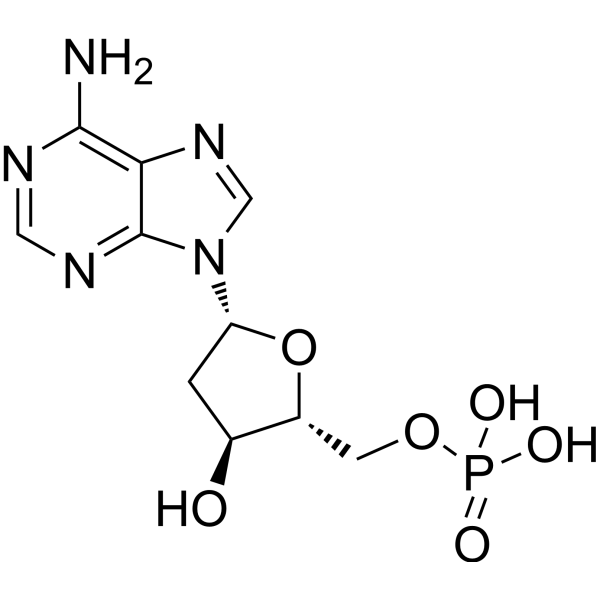
2'-Deoxyadenosine-5'-monophosphate (Standard) is the analytical standard of 2'-Deoxyadenosine-5'-monophosphate. This product is intended for research and analytical applications. 2′-Deoxyadenosine 5′-monophosphate, a nucleic acid AMP derivative, is a deoxyribonucleotide found in DNA. 2′-Deoxyadenosine 5′-monophosphate can be used to study adenosine-based interactions during DNA synthesis and DNA damage .
|
-
-
- HY-15424R
-
|
NSC 113939 (Standard); 5-ITu (Standard)
|
Adenosine Kinase
Reference Standards
|
Cancer
|
|
5-Iodotubercidin (Standard) is the analytical standard of 5-Iodotubercidin. This product is intended for research and analytical applications. 5-Iodotubercidin (NSC 113939), an ATP mimetic, is a potent adenosine kinase inhibitor with an IC50 of 26 nM. 5-Iodotubercidin (NSC 113939) initiates glycogen synthesis in isolated hepatocytes by causing inactivation of phosphorylase and activation of glycogen synthase. 5-Iodotubercidin (NSC 113939) also inhibits CK1, insulin receptor tyrosine kinase, phosphorylase kinase, PKA, CK2, PKC and Haspin .
|
-
-
- HY-W010735R
-
|
Adenosine 5'-triphosphate disodium salt hydrate (Standard)
|
Reference Standards
Endogenous Metabolite
|
Metabolic Disease
Inflammation/Immunology
Cancer
|
|
ATP (disodium salt hydrate) (Standard) is the analytical standard of ATP (disodium salt hydrate). This product is intended for research and analytical applications. ATP disodium salt hydrate (Adenosine 5'-triphosphatedisodium salt hydrate) is a central component of energy storage and metabolism in vivo, provides the metabolic energy to drive metabolic pumps and serves as a coenzyme in cells. ATP disodium salt hydrate is an important endogenous signaling molecule in immunity and inflammation .
|
-
-
- HY-A0181AR
-
|
5'-AMP monohydrate (Standard)
|
Reference Standards
Endogenous Metabolite
Adenosine Receptor
HSV
|
Infection
Metabolic Disease
|
|
Cyanidin 3-sambubioside (chloride) (Standard) is the analytical standard of Cyanidin 3-sambubioside (chloride). This product is intended for research and analytical applications. Cyanidin 3-sambubioside chloride (Cyanidin-3-O-sambubioside chloride), a major anthocyanin, a natural colorant, and is a potent NO inhibitor. Cyanidin 3-sambubioside chloride is a H274Y mutation inhibitor, and inhibits influenza neuraminidase activity with an IC50 of 72 μM. Cyanidin 3-sambubioside chloride inhibits angiotensin-converting enzyme (ACE) activity and has antioxidant, anti-angiogenic and antiviral properties .
|
-
-
- HY-100957R
-
|
|
Nucleoside Transporters
Reference Standards
|
Cardiovascular Disease
|
|
Dilazep (dihydrochloride) (Standard) is the analytical standard of Dilazep (dihydrochloride). This product is intended for research and analytical applications. Dilazep dihydrochloride is an inhibitor of adenosine uptake. Dilazep dihydrochloride has cerebral and coronary vasodilating action through enhancement of effect of adenosine. Dilazep dihydrochloride also inhibits the ischemic damage, platelet aggregation, and membrane transport of nucleosides .
|
-
-
- HY-13417AR
-
|
Acadesine phosphate (Standard); AICA Riboside phosphate (Standard)
|
AMPK
Autophagy
YAP
Mitophagy
Endogenous Metabolite
Reference Standards
|
Cancer
|
|
AICAR (phosphate) (Standard) is the analytical standard of AICAR (phosphate). This product is intended for research and analytical applications. AICAR phosphate (Acadesine phosphate) is an adenosine analog and a AMPK activator. AICAR phosphate regulates the glucose and lipid metabolism, and inhibits proinflammatory cytokines and iNOS production. AICAR phosphate is also an autophagy, YAP and mitophagy inhibitor .
|
-
-
- HY-W011552R
-
|
|
Reference Standards
Endogenous Metabolite
|
Cardiovascular Disease
|
|
2'-O-Methyladenosine (Standard) is the analytical standard of 2'-O-Methyladenosine. This product is intended for research and analytical applications. 2'-O-Methyladenosine, a methylated adenine residue is found in urine of normals as well as in urine of adenosine deaminase (ADA) deficient patients. 2'-O-Methyladenosine exhibits unique hypotensive activities .
|
-
-
- HY-178783
-
|
|
Adenosine Receptor
|
Metabolic Disease
Inflammation/Immunology
Cancer
|
|
MRS8454 is a positive allosteric modulator (PAM) of the A3 adenosine receptor (A3AR). MRS8454 can significantly enhance the maximum effect of the standard agonist Cl-IB-MECA by approximately 286%-300%, and significantly reduce its EC50 value. MRS8454 effectively enhances the ability of A3AR agonists to inhibit the cAMP accumulation induced by Forskolin (HY-15371). MRS8454 can be used for the development of molecular probes .
|
-
-
- HY-B0549AR
-
|
Rec-7-0040 (Standard); DW61 (Standard)
|
Reference Standards
mAChR
Calcium Channel
Adrenergic Receptor
Adenosine Receptor
Dopamine Receptor
|
Neurological Disease
|
|
Flavoxate (hydrochloride) (Standard) is the analytical standard of Flavoxate (hydrochloride). This product is intended for research and analytical applications. Flavoxate hydrochloride (Rec-7-0040; DW61) is an orally active L-type Ca 2+ channel inhibitor and antispasmodic. Flavoxate hydrochloride inhibits cyclic adenosine monophosphate production by blocking voltage-dependent inward Ba 2+ currents, regulating the brainstem micturition center, and stimulating G protein-coupled receptors. Consequently, Flavoxate hydrochloride induces relaxation of bladder smooth muscle and inhibits isovolumetric rhythmic contractions. Flavoxate hydrochloride effectively increases bladder capacity and alleviates symptoms of urgent urination frequency and pollakiuria caused by overactive bladder. Flavoxate hydrochloride can be used in research on overactive bladder and related voiding dysfunctions .
|
-
-
- HY-B2176AR
-
|
Adenosine-5'-triphosphate disodium trihydrate (Standard)
|
Endogenous Metabolite
Reference Standards
|
Metabolic Disease
Inflammation/Immunology
Cancer
|
|
ATP (disodium trihydrate) (Standard) is the analytical standard of ATP (disodium trihydrate). This product is intended for research and analytical applications. ATP disodium trihydrate (Adenosine 5'-triphosphate disodium trihydrate) is a central component of energy storage and metabolism in vivo. ATP disodium trihydrate provides the metabolic energy to drive metabolic pumps and serves as a coenzyme in cells. ATP disodium trihydrate is an important endogenous signaling molecule in immunity and inflammation .
|
-
-
- HY-16938R
-
|
5'-(Methylthio)-5'-deoxyAdenosine (Standard); 5'-Deoxy-5'-(methylthio)Adenosine (Standard); 5'-S-Methyl-5'-thioAdenosine (Standard)
|
Reference Standards
Endogenous Metabolite
Apoptosis
Parasite
|
Metabolic Disease
Cancer
|
|
5'-Methylthioadenosine (Standard) is the analytical standard of 5'-Methylthioadenosine. This product is intended for research and analytical applications. 5'-Methylthioadenosine (5'-(Methylthio)-5'-deoxyadenosine) is a nucleoside generated from S-adenosylmethionine (SAM) during polyamine synthesis[1]. 5'-Methylthioadenosine suppresses tumors by inhibiting tumor cell proliferation, invasion, and the induction of apoptosis while controlling the inflammatory micro-environments of tumor tissue. 5'-Methylthioadenosine and its associated materials have striking regulatory effects on tumorigenesis[2].
|
-
-
- HY-B0028R
-
|
NSC 118218 phosphate (Standard)
|
Reference Standards
Nucleoside Antimetabolite/Analog
Apoptosis
|
Cancer
|
|
Fludarabine (phosphate) (Standard) is the analytical standard of Fludarabine (phosphate). This product is intended for research and analytical applications. Fludarabine (phosphate) is an analogue of adenosine and deoxyadenosine, which is able to compete with dATP for incorporation into DNA and inhibit DNA synthesis.
|
-
-
- HY-19638AR
-
|
AR-C69931MX tetrasodium (Standard)
|
P2Y Receptor
Reference Standards
|
Cardiovascular Disease
Inflammation/Immunology
|
|
Cangrelor (tetrasodium) (Standard) is the analytical standard of Cangrelor (tetrasodium). This product is intended for research and analytical applications. Cangrelor tetrasodium, an adenosine triphosphate analogue, is a reversible and selective platelet P2Y12 antagonist, with prompt and potent antiplatelet effects. Cangrelor tetrasodium directly blocks adenosine diphosphate (ADP)-induced activation and aggregation of platelets. Cangrelor tetrasodium is also a nonspecific GPR17 antagonist .
|
-
-
- HY-N0138R
-
-
-
- HY-10888R
-
|
KW-6002 (Standard)
|
Reference Standards
Adenosine Receptor
|
Neurological Disease
|
|
Istradefylline (Standard) is the analytical standard of Istradefylline. This product is intended for research and analytical applications. Istradefylline is a very potent, selective and orally active adenosine A2A receptor antagonist with Ki of 2.2 nM in experimental models of Parkinson's disease.
|
-
-
- HY-19532R
-
|
|
Adenosine Receptor
|
Neurological Disease
Cancer
|
|
ZM241385 (Standard) is the analytical standard of ZM241385. This product is intended for research and analytical applications. ZM241385 is a potent, high affinity and selective adenosine A2a receptor (A2AR) antagonist with a Ki value of 1.4 nM .
|
-
-
- HY-179179
-
|
|
Biochemical Assay Reagents
|
Others
|
|
1/2 MS Medium has a similar composition to standard MS medium, including inorganic salts, sucrose, vitamins, etc. Unlike MS medium, 1/2 MS Medium contains a lower concentration of plant growth hormones (such as indoleacetic acid and adenosine), typically half the concentration of standard MS medium.
|
-
-
- HY-B1505R
-
-
-
- HY-13599R
-
|
2-Chloro-2′-deoxyAdenosine (Standard); CldAdo (Standard); 2CdA (Standard)
|
Reference Standards
Adenosine Deaminase
Apoptosis
|
Cardiovascular Disease
Cancer
|
|
Cladribine (Standard) is the analytical standard of Cladribine. This product is intended for research and analytical applications. Cladribine (2-Chloro-2′-deoxyadenosine), a purine nucleoside analog, is an orally active adenosine deaminase inhibitor. Cladribine functions as an inhibitor of DNA synthesis to block the repair of the damaged DNA. Cladribine can inhibit DNA methylation. Cladribine has anti-lymphoma activity. Cladribine can be used for the research of several hematologic malignancies and multiple sclerosis .
|
-
-
- HY-N0126R
-
|
|
Reference Standards
Monoamine Oxidase
Calcium Channel
|
Cardiovascular Disease
Neurological Disease
|
|
Xanthone (Standard) is the analytical standard of Xanthone (HY-N0126). This product is intended for research and analytical applications. Xanthone is a monoamine oxidase A (MAO-A) inhibitor with an IC50 of 0.84 µM. Xanthon inhibits Norepinephrine (HY-13715) and high-K +-induced vasoconstriction with IC50 values of 60.26 μM and 82.9 μM, respectively. Xanthon increases intracellular cyclic adenosine 3′,5′-monophosphate (cAMP) content and blocks Ca 2+ channels. Xanthone is the scaffold of several pharmacologically active compounds .
|
-
-
- HY-B0255R
-
|
GS 0840 (Standard)
|
Reference Standards
HBV
Reverse Transcriptase
Orthopoxvirus
Endogenous Metabolite
|
Infection
Cancer
|
|
Adefovir dipivoxil (Standard) is the analytical standard of Adefovir dipivoxil. This product is intended for research and analytical applications. Adefovir dipivoxil is an orally active adenosine analog and Adefovir prodrug. Adefovir dipivoxil inhibits DNA synthesis, activates the ATR signaling pathway, and disrupts the KCTD12-CDK1 interaction. Adefovir dipivoxil has antiviral activity against PRV, HBV, and orthopoxviruses. Adefovir dipivoxil has inhibitory effects on both lamivudine-resistant and wild-type strains. Adefovir dipivoxil has antitumor activity against lung and colon cancer .
|
-
-
- HY-123055R
-
|
|
Reference Standards
Nucleoside Antimetabolite/Analog
S-adenosylhomocysteine hydrolase (SAHH)
|
Cancer
|
|
Adenosine dialdehyde (Standard) is the analytical standard of Adenosine dialdehyde. This product is intended for research and analytical applications. Adenosine dialdehyde, a purine nucleoside analogue, is a potent inhibitor of S-Adenosylhomocysteine hydrolase (SAHH) (Ki=3.3 nM) . Adenosine Dialdehyde exhibits potent anti-tumor activity in vivo and can be used for the cancer research .
|
-
-
- HY-W011012R
-
|
|
Reference Standards
Adenosine Receptor
|
Metabolic Disease
|
|
Adenosine 5'-monophosphate (disodium) (Standard) is the analytical standard of Adenosine 5'-monophosphate (disodium). This product is intended for research and analytical applications. Adenosine 5'-monophosphate disodium is an orally active purine nucleotide, and participates in ATP metabolism. Adenosine 5'-monophosphate disodium is also a ligand for adenosine 2B receptor. Adenosine 5'-monophosphate disodium can activate AMPK in skeletal muscle, and ameliorates insulin resistance and impaired glucose metabolism. Adenosine 5'-monophosphate disodium can be used for research of diabetes .
|
-
-
- HY-B2176BR
-
|
Adenosine 5'-triphosphate dimagnesium (Standard)
|
Endogenous Metabolite
Reference Standards
|
Inflammation/Immunology
|
|
ATP (dimagnesium) (Standard) is the analytical standard of ATP (dimagnesium). This product is intended for research and analytical applications. ATP (Adenosine 5'-triphosphate) dimagnesium is a central component of energy storage and metabolism in vivo. ATP dimagnesium provides the metabolic energy to drive metabolic pumps and serves as a coenzyme in cells. ATP dimagnesium is an important endogenous signaling molecule in immunity and inflammation .
|
-
-
- HY-124151R
-
|
2'-AMP (Standard); Adenosine 2'-phosphate (Standard); AMP 2'-phosphate (Standard)
|
Reference Standards
Adenosine Receptor
Endogenous Metabolite
|
Neurological Disease
|
|
Bisphenol A diglycidyl ether (Standard) is the analytical standard of Bisphenol A diglycidyl ether. This product is intended for research and analytical applications. Bisphenol A diglycidyl ether is used as a stabilizer and embedding agent.
|
-
-
- HY-100973R
-
|
ADP ribose (Standard)
|
Reference Standards
Endogenous Metabolite
|
Others
|
|
Cyanidin 3,5-diglucoside (chloride) (Standard) is the analytical standard of Cyanidin 3,5-diglucoside (chloride). This product is intended for research and analytical applications. Cyanidin 3,5-diglucoside chloride is a type of anthocyanin. Cyanidin 3,5-diglucoside chloride inhibits hyperbaric pressure-induced GLAST decrease. Cyanidin 3,5-diglucoside chloride has the potential for the research of glaucoma .
|
-
-
- HY-135359R
-
|
|
Drug Metabolite
Reference Standards
|
Neurological Disease
|
|
Adenosine 5'-monophosphate (disodium) (Standard) is the analytical standard of Adenosine 5'-monophosphate (disodium). This product is intended for research and analytical applications. Adenosine 5'-monophosphate disodium is an orally active purine nucleotide, and participates in ATP metabolism. Adenosine 5'-monophosphate disodium is also a ligand for adenosine 2B receptor. Adenosine 5'-monophosphate disodium can activate AMPK in skeletal muscle, and ameliorates insulin resistance and impaired glucose metabolism. Adenosine 5'-monophosphate disodium can be used for research of diabetes .
|
-
-
- HY-103183R
-
|
2-PhenylaminoAdenosine (Standard)
|
Reference Standards
Adenosine Receptor
Endogenous Metabolite
|
Inflammation/Immunology
|
|
CV1808 (Standard) is the analytical standard of CV1808. This product is intended for research and analytical applications. CV1808?(2-Phenylaminoadenosine) is a non-selective A2?adenosine receptor (A2 AR) agonist with Kis of 76 and 1450 nM for A2A and A3 adenosine receptor subtypes, respectively .
|
-
-
- HY-10889R
-
|
SCH-420814 (Standard)
|
Adenosine Receptor
Reference Standards
|
Neurological Disease
Cancer
|
|
Preladenant (Standard) is the analytical standard of Preladenant. This product is intended for research and analytical applications. Preladenant is a potent and competitive antagonist of the human adenosine A2A receptor with a Ki of 1.1 nM and has over 1000-fold selectivity over other adenosine receptors.
|
-
-
- HY-A0006R
-
|
CI-825 (Standard); Deoxycoformycin (Standard)
|
Reference Standards
Adenosine Deaminase
Antibiotic
|
Cancer
|
|
Pentostatin (Standard) is the analytical standard of Pentostatin. This product is intended for research and analytical applications. Pentostatin (CI-825; Deoxycoformycin) is an irreversible inhibitor of adenosine deaminase with Ki of 2.5 pM.
|
-
-
- HY-N0113R
-
|
Ordenina (Standard); Peyocactine (Standard)
|
Reference Standards
Bacterial
Antibiotic
|
Infection
Cardiovascular Disease
|
|
Hordenine (Standard) is the analytical standard of Hordenine. This product is intended for research and analytical applications. Hordenine, an alkaloid found in plants, inhibits melanogenesis by suppression of cyclic adenosine monophosphate (cAMP) production .
|
-
-
- HY-100678R
-
|
|
Reference Standards
Adenosine Receptor
PI3K
|
Inflammation/Immunology
Cancer
|
|
CGS 15943 (Standard) is the analytical standard of CGS 15943. This product is intended for research and analytical applications. CGS 15943 is an orally bioavailable non-xanthine Adenosine Receptor antagonist. Its Ki for human A1, A2A, A2B, and A3 Adenosine Receptors are 3.5, 4.2, 16, and 50 nM in transfected CHO cells, respectively. .
|
-
-
- HY-121453R
-
|
|
Adenosine Receptor
Reference Standards
|
Cardiovascular Disease
|
|
Bamifylline (hydrochloride) (Standard) is the analytical standard of Bamifylline (hydrochloride). This product is intended for research and analytical applications. Bamifylline hydrochloride is a drug in the chemical class of xanthine that acts as a selective adenosine A1 receptor antagonist .
|
-
-
- HY-133980AR
-
|
|
Reference Standards
Drug Metabolite
|
Cancer
|
|
Bamifylline (hydrochloride) (Standard) is the analytical standard of Bamifylline (hydrochloride). This product is intended for research and analytical applications. Bamifylline hydrochloride is a drug in the chemical class of xanthine that acts as a selective adenosine A1 receptor antagonist .
|
-
-
- HY-N0113BR
-
|
Ordenina hydrochloride (Standard); Peyocactine hydrochloride (Standard)
|
Reference Standards
Bacterial
|
Infection
|
|
Hordenine (hydrochloride) (Standard) is the analytical standard of Hordenine (hydrochloride). This product is intended for research and analytical applications. Hordenine (hydrochloride), an alkaloid found in plants, inhibits melanogenesis by suppression of cyclic adenosine monophosphate (cAMP) production[1].
|
-
-
- HY-103173R
-
|
NECA (Standard)
|
Reference Standards
Adenosine Receptor
|
Metabolic Disease
Cancer
|
|
5'-N-Ethylcarboxamidoadenosine (Standard) is the analytical standard of 5'-N-Ethylcarboxamidoadenosine. This product is intended for research and analytical applications. 5'-N-Ethylcarboxamidoadenosine (NECA) is a nonselective adenosine receptor agonist.
|
-
-
- HY-154796R
-
|
|
Nucleoside Antimetabolite/Analog
Reference Standards
|
Cancer
|
|
2-Methoxy-2’-deoxyadenosine (Standard) is the analytical standard of 2-Methoxy-2’-deoxyadenosine. This product is intended for research and analytical applications. 2-Methoxy-2’-deoxyadenosine is an adenosine analog. Adenosine analogs mostly act as smooth muscle vasodilators and have also been shown to inhibit cancer progression. Its popular products are adenosine phosphate, Acadesine (HY-13417), Clofarabine (HY-A0005), Fludarabine phosphate (HY-B0028) and Vidarabine (HY-B0277) .
|
-
- HY-10857R
-
|
BIIB-014 (Standard); CEB-4520 (Standard)
|
Adenosine Receptor
Reference Standards
|
Neurological Disease
|
|
Vipadenant (Standard) is the analytical standard of Vipadenant. This product is intended for research and analytical applications. Vipadenant (BIIB-014; CEB-4520) is an adenosine receptor antagonist, with Kis of 1.3 nM and 68 nM for A2A and A1, respectively.
|
-
- HY-101139AR
-
|
XAC hydrochloride (Standard)
|
Reference Standards
Adenosine Receptor
|
Neurological Disease
|
|
Xanthine amine congener (hydrochloride) (Standard) is the analytical standard of Xanthine amine congener (hydrochloride). This product is intended for research and analytical applications. Xanthine amine congener (XAC) hydrochloride is a non-selective adenosine receptor antagonist. Xanthine amine congener hydrochloride induces convulsions in mice .
|
-
- HY-103186R
-
|
|
Reference Standards
Adenosine Receptor
|
Inflammation/Immunology
|
|
MRS-1706 (Standard) is the analytical standard of MRS-1706. This product is intended for research and analytical applications. MRS-1706 is a potent and selective adenosine A2B receptor inverse agonist. MRS-1706 has Ki values of 1.39, 112, 157, and 230 nM for human A2B, A2A, A1 and A3 receptors respectively. MRS-1706 blocks adenosine-mediated cAMP induction .
|
-
- HY-N2189R
-
|
|
Reference Standards
Adenosine Receptor
|
Metabolic Disease
Inflammation/Immunology
|
|
Swertisin (Standard) is the analytical standard of Swertisin. This product is intended for research and analytical applications. Swertisin, a C-glucosylflavone isolated from Iris tectorum, is known to have antidiabetic, anti-inflammatory and antioxidant effects. Swertisin is an adenosine A1 receptor antagonist .
|
-
- HY-100126R
-
|
7-DeazaAdenosine (Standard)
|
Reference Standards
Bacterial
DNA/RNA Synthesis
Influenza Virus
Antibiotic
|
Infection
|
|
Tubercidin (Standard) is the analytical standard of Tubercidin. This product is intended for research and analytical applications. Tubercidin (7-Deazaadenosine) is an antibiotic obtained from Streptomyces tubercidicus. Tubercidin inhibits the growth of Streptococcus faecalis (8043) with an IC50 of 0.02 μM[1]. Tubercidin inhibits polymerases by incorporating DNA or RNA, thereby inhibiting DNA replication, RNA and protein synthesis[2]. Tubercidin is a weak inhibitor of adenosine phosphorylase, and interferes with the phosphorylation of adenosine and AMP[1]. Tubercidin has antiviral activity[2].
|
-
- HY-14121R
-
|
|
Adenosine Receptor
|
Metabolic Disease
Inflammation/Immunology
|
|
MRS 1754 (Standard) is the analytical standard of MRS 1754. This product is intended for research and analytical applications. MRS 1754 is a selective antagonist radioligand for A2B adenosine receptor with very low affinity for A1 and A3 receptors of both humans and rats .
|
-
- HY-133216R
-
|
|
Reference Standards
Fungal
Adenosine Deaminase
|
Infection
|
|
Bupirimate (Standard) is the analytical standard of Bupirimate (HY-133216). This product is intended for research and analytical applications. Bupirimate is a systemic fungicide that inhibits adenosine deaminase (ADA). Bupirimate is widely used in the cultivation of fruit trees, vegetables, flowers, and other crops to control powdery mildew .
|
-
- HY-B0140R
-
|
|
Reference Standards
Phosphodiesterase (PDE)
Adenosine Receptor
|
Inflammation/Immunology
Cancer
|
|
Aminophylline (Standard) is the analytical standard of Aminophylline. This product is intended for research and analytical applications. Aminophylline is a competitive and non-selective phosphodiesterase (PDE) inhibitor. Aminophylline is a competitive adenosine receptor antagonist. Aminophylline has apulmonary vasodilator action as well as a bronchodilator action and has the potential for asthma research .
|
-
- HY-W088152R
-
|
|
Adenosine Receptor
Reference Standards
|
Others
|
|
8-Bromotheophylline (Standard) is the analytical standard of 8-Bromotheophylline. This product is intended for research and analytical applications. 8-Bromotheophylline can be used for the synthesis of the Oxazolo[2,3-f]purinediones, which are evaluated for their affinity at adenosine A1 and A2A receptors .
|
-
- HY-B0128R
-
|
Diprophylline (Standard)
|
Reference Standards
Adenosine Receptor
Phosphodiesterase (PDE)
|
Cardiovascular Disease
Inflammation/Immunology
|
|
Diphylline (Standard) is the analytical standard of Diphylline. This product is intended for research and analytical applications. Diphylline (Diprophylline) is a potent A1/A2 adenosine receptor antagonist and cyclic nucleotide phosphodiesterase inhibitor. Diphylline, a xanthine derivative, is a bronchodilator and vasodilator agent and has the potential for chronic bronchitis and emphysema .
|
-
- HY-103182R
-
|
|
Reference Standards
Adenosine Receptor
|
Others
|
|
PSB-1115 (Standard) is the analytical standard of PSB-1115. This product is intended for research and analytical applications. PSB-1115 is a selective A2B Adenosine Receptor antagonist. PSB-1115 inhibits the 2,4,6-trinitrobenzenesulfonic acid (TNBS)-induced contraction inhibition of acetylcholine (ACh) .
|
-
- HY-123085R
-
|
Isoalloxazine (Standard)
|
Adenosine Receptor
Reference Standards
|
Cancer
|
|
Alloxazine (Standard) is the analytical standard of Alloxazine. This product is intended for research and analytical applications. Alloxazine is a selective A2b antagonist. Alloxazine completely block 5’N-Ethylcarboxamido adenosine (NECA)-mediated cyclic AMP accumulation with an IC50 of 2.9 μM. Alloxazine can be used for the research of cancer .
|
-
- HY-100937R
-
|
PD 116948 (Standard)
|
Reference Standards
Adenosine Receptor
|
Cardiovascular Disease
|
|
DPCPX (Standard) is the analytical standard of DPCPX. This product is intended for research and analytical applications. DPCPX (PD 116948), a xanthine derivative, is a highly potent and selective Adenosine A1 receptor antagonist, with a Ki of 0.46 nM in 3H-CHA binding to A1 receptors in rat whole brain membranes .
|
-
- HY-B1294R
-
|
Inamrinone (Standard)
|
Reference Standards
Phosphodiesterase (PDE)
|
Cardiovascular Disease
|
|
Amrinone (Standard) is the analytical standard of Amrinone. This product is intended for research and analytical applications. Amrinone (Inamrinone) is a positive inotropic-vasodilator agent. Amrinone is a selective phosphodiesterase III inhibitor that increases cyclic adenosine monophosphate by preventing its breakdown. Amrinone is also an orally active, non-glycosidic and non-catecholamine cardiotonic agent .
|
-
- HY-12365R
-
|
CF-102 (Standard); 2-Cl-IB-MECA (Standard)
|
Reference Standards
Adenosine Receptor
|
Cancer
|
|
Namodenoson (Standard) is the analytical standard of Namodenoson. This product is intended for research and analytical applications. Namodenoson (CF-102) is a selective A3 adenosine receptor (A3AR) agonist (Ki=0.33 nM). Namodenoson displays 2500- and 1400-fold selectivity over A1 and A2A receptors respectively .
|
-
- HY-103169R
-
|
|
Reference Standards
Adenosine Receptor
|
Neurological Disease
|
|
SCH442416 (Standard) is the analytical standard of SCH442416. This product is intended for research and analytical applications. SCH442416 is a potent, selective and brain-penetrant antagonist of adenosine A2A receptor (A2AR), with Kis of 0.048 and 0.5 nM for human and rat A2AR respectively. SCH442416 displays more than 23000-fold selectivity over A1R, A2BR, and A3R (Ki=1111, 10000, and 10000 nM, respectively). SCH442416 can be used for imaging of adenosine A2A receptors in rat and primate brain .
|
-
- HY-W017163R
-
|
|
Reference Standards
Endogenous Metabolite
Adenosine Receptor
|
Metabolic Disease
|
|
7-Methylxanthine (Standard) is the analytical standard of 7-Methylxanthine. This product is intended for research and analytical applications. 7-Methylxanthine is an orally active methyl derivative of xanthine and a non-selective adenosine receptor antagonist. 7-Methylxanthine is also one of the purine components of human urinary calculi. 7-Methylxanthine has anti-myopia activity .
|
-
- HY-138247R
-
|
EX-A4764 (Standard); UUN51204 (Standard)
|
Beta-lactamase
Reference Standards
Bacterial
Antibiotic
|
Infection
|
|
ATP (disodium salt) (Standard) is the analytical standard of ATP (disodium salt). This product is intended for research and analytical applications. ATP disodium salt (Adenosine 5'-triphosphate disodium salt) is a central component of energy storage and metabolism in vivo, provides the metabolic energy to drive metabolic pumps and serves as a coenzyme in cells. ATP disodium salt is an important endogenous signaling molecule in immunity and inflammation .
|
-
- HY-108974R
-
|
|
Phosphodiesterase (PDE)
Calcium Channel
Reference Standards
|
Neurological Disease
|
|
Drotaverine (hydrochloride) (Standard) is the analytical standard of Drotaverine (hydrochloride). This product is intended for research and analytical applications. Drotaverine hydrochloride is a type 4 cyclic nucleotide phosphodiesterase (PDE4) inhibitor and an L-type voltage-dependent calcium channel (L-VDCC) blocker, blocks the degradation of 3',5'-cyclic adenosine monophosphate. Drotaverine (hydrochloride) exhibits in vivo antispasmodic efficacy without anticholinergic effects.
|
-
- HY-14858R
-
|
SLV 320 (Standard)
|
Adenosine Receptor
Reference Standards
|
Cardiovascular Disease
|
|
Derenofylline (Standard) is the analytical standard of Derenofylline. This product is intended for research and analytical applications. Derenofylline (SLV 320) is a potent, selective and orally active adenosine A1 receptor antagonist, with Ki values of 1 nM, 200 nM and 398 nM for human A1, A3 and A2A receptors respectively. Derenofylline suppresses cardiac fibrosis and attenuates albuminuria without affecting blood pressure in rats .
|
-
- HY-19533R
-
|
|
Adenosine Receptor
|
Cancer
|
|
SCH 58261 (Standard) is the analytical standard of SCH 58261. This product is intended for research and analytical applications. SCH 58261 is a potent, selective and competitive antagonist of adenosine A2A receptor with an IC50 of 15 nM, and displays 323-, 53- and 100-fold more selective for A2A receptor than A1, A2B, and A3 receptors, respectively .
|
-
- HY-A0168R
-
|
CVT-3146 (Standard)
|
Reference Standards
Adenosine Receptor
|
Cardiovascular Disease
|
|
Regadenoson (Standard) is the analytical standard of Regadenoson. This product is intended for research and analytical applications. Regadenoson (CVT-3146) is a selective A2A adenosine receptor agonist and vasodilator that increases coronary blood flow, can be used in study of myocardial perfusion imaging. Regadenoson also increases the permeability of the blood-brain barrier (BBB) in rodents, can be used to study increased delivery of agents to the human CNS .
|
-
- HY-103185R
-
|
2-Chloro-N6-cyclopentylAdenosine (Standard)
|
Reference Standards
Adenosine Receptor
Adenylate Cyclase
|
Cardiovascular Disease
Neurological Disease
|
|
CCPA (2-Chloro-N6-cyclopentyladenosine (Standard)) is the analytical standard of CCPA (HY-103185). This product is intended for research and analytical applications. CCPA (2-Chloro-N6-cyclopentyladenosine) a highly selective A1 adenosine receptors agonist with a Ki of 0.4 nM. CCPA inhibits adenylate cyclase with an IC50 of 33 nM. CCPA exhibits anti-seizure and cardiacprotective activity. CCPA can be used for the research of seizure and myocardial infarction .
|
-
- HY-103171R
-
|
|
Reference Standards
Adenosine Receptor
|
Cardiovascular Disease
Inflammation/Immunology
|
|
BAY 60-6583 (Standard) is the analytical standard of BAY 60-6583. This product is intended for research and analytical applications. BAY 60-6583 is a potent and high-affinity agonist of adenosine A2B receptor (EC50?= 3 nM) over A1, A2A, and A3 receptors. BAY 60-6583 binds to mouse, rabbit, and dog A2BAR with Ki values of 750 nM, 340 nM and 330 nM, respectively. BAY 60-6583 has a cardioprotective effect in a myocardial ischemia model .
|
-
- HY-124543R
-
|
|
Adenosine Receptor
|
Neurological Disease
|
|
MRS-1191 (Standard) is the analytical standard of MRS-1191. This product is intended for research and analytical applications. MRS-1191 is a potent and selective A3 adenosine receptor antagonist with a KB value of 92 nM, a Ki value of 31.4 nM for human A3 receptor and an IC50 of 120 nM for CHO cells . MRS-1191 is a click chemistry reagent, it contains an Alkyne group and can undergo copper-catalyzed azide-alkyne cycloaddition (CuAAc) with molecules containing Azide groups.
|
-
- HY-121119R
-
|
|
Adenosine Receptor
Calcium Channel
|
Cardiovascular Disease
Neurological Disease
Inflammation/Immunology
|
|
MRS 1523 (Standard) is the analytical standard of MRS 1523. This product is intended for research and analytical applications. MRS 1523 is a potent and selective adenosine A3 receptor antagonist with Ki values of 18.9 nM and 113 nM for human and rat A3 receptors, respectively. In rat this corresponds to selectivities of 140- and 18-fold vs A1 and A2A receptors, respectively. MRS 1523 can exert antihyperalgesic effect through N-type Ca channel block and action potential inhibition in isolated rat dorsal root ganglion (DRG) neurons .
|
-
- HY-103237R
-
|
|
Reference Standards
Adenosine Deaminase
|
Neurological Disease
|
|
L-Adenosine (Standard) is the analytical standard of L-Adenosine (HY-103237). This product is intended for research and analytical applications. L-Adenosine is a metabolically stable enantiomeric analog and also is a potential probe. L-Adenosine has weakly inhibitory adenosine deaminase (ADA) activity with an Ki value of 385 μM. L-Adenosine can be used for the research of adenosine uptake and accumulation .
|
-
- HY-10965R
-
|
KW-3902 (Standard)
|
Adenosine Receptor
Reference Standards
|
Neurological Disease
|
|
Rolofylline (Standard) is the analytical standard of Rolofylline. This product is intended for research and analytical applications. Rolofylline (KW-3902) is a potent, selective adenosine A1 receptor antagonist that is under development for the treatment of patients with acute congestive heart failure and renal impairment.
Rolofylline is metabolized primarily to the pharmacologically active M1-trans and M1-cis metabolites by cytochrome P450 (CYP450) .
Rolofylline is alleviating the presynaptic dysfunction and restores neuronal activity as well as dendritic spine levels in vitro, is an interesting candidate to combat the hypometabolism and neuronal dysfunction associated with Tau-induced neurodegenerative diseases .
|
-
- HY-100130R
-
-
- HY-101854R
-
|
N6-PhenethylAdenosine (Standard); N6-PhenylethylAdenosine (Standard)
|
Reference Standards
Adenosine Receptor
|
Inflammation/Immunology
Cancer
|
|
N6-(2-Phenylethyl)adenosine (Standard) (N6-Phenethyladenosine (Standard)) is the analytical standard of N6-(2-Phenylethyl)adenosine (HY-101854). This product is intended for research and analytical applications. N6-(2-Phenylethyl)adenosine (N6-Phenethyladenosine), an adenosine derivative, is a potent adenosine receptors (AR) agonist with Ki values of 11.8 nM, 30.1 nM, 0.63 nM for rat A1AR, human A1AR and hA3AR, respectively .
|
-
- HY-108666R
-
|
Adenosine-5'-O-(3-thiotriphosphate) tetralithium salt (Standard); Adenosine 5'-[γ-thio]triphosphate tetralithium salt (Standard)
|
Reference Standards
Eukaryotic Initiation Factor (eIF)
P2Y Receptor
|
Neurological Disease
Metabolic Disease
Inflammation/Immunology
|
|
ATPγS tetralithium salt (Standard) is the analytical standard of ATPγS (tetralithium salt) (HY-108666). This product is intended for research and analytical applications. ATPγS (tetralithium salt) is a P2Y11 receptor agonist, an antioxidant and a neuroprotective agent. ATPγS (tetralithium salt) can be used as a substrate for the nucleotide hydrolysis and RNA unwinding activities of eukaryotic translation initiation factor eIF4A. ATPγS (tetralithium salt) is active in ATP hydrolysis .
|
-
- HY-108322R
-
|
|
Reference Standards
Others
|
Cardiovascular Disease
|
|
NBTGR (Standard) is the analytical standard of NBTGR (HY-108322). This product is intended for research and analytical applications. NBTGR (p-Nitrobenzylthioguanosine) is a potent inhibitor of nucleoside transport; inhibits adenosine uptake with a Ki of 70 nM.
|
-
- HY-101980R
-
|
HTL1071 (Standard); AZD4635 (Standard)
|
Reference Standards
Adenosine Receptor
|
Cancer
|
|
Imaradenant (Standard) is the analytical standard of Imaradenant (HY-101980). This product is intended for research and analytical applications. AZD4635 (HTL1071) is a potent, selective and orally active adenosine A2A receptor (A2AR) antagonist. AZD4635 binds to human A2AR with a Ki of 1.7 nM and shows >30-fold selectivity over other adenosine receptors .
|
-
- HY-103161R
-
|
|
Reference Standards
Adenosine Kinase
|
Inflammation/Immunology
|
|
ABT-702 dihydrochloride (Standard) is the analytical standard of ABT-702 dihydrochloride (HY-103161). This product is intended for research and analytical applications. ABT-702 dihydrochloride is a potent adenosine kinase (AK) inhibitor (IC50=1.7 nM).
|
-
- HY-N7844R
-
|
BenzylAdenosine (Standard)
|
Apoptosis
Adenosine Receptor
Phytohormone
Reference Standards
|
Inflammation/Immunology
Cancer
|
|
N6-Benzyladenosine (Standard) (Benzyladenosine (Standard)) is the analytical standard of N6-Benzyladenosine (HY-N7844). This product is intended for research and analytical applications. N6-Benzyladenosine is an adenosine receptor agonist, has a cytoactive activity. N6-Benzyladenosine arrests cell cycle at G0/G1 phase and induces cell apoptosis. N6-Benzyladenosine also exerts inhibitory effect on T. gondii adenosine kinase and glioma - .
|
-
- HY-105275AR
-
|
|
Reference Standards
Adenosine Receptor
|
Neurological Disease
|
|
FK 453 (Standard) is the analytical standard of FK 453 (HY-105275A). This product is intended for research and analytical applications. FK 453 (compound 1d) is a potent and selective adenosine A1 receptor antagonist with an IC50 value of 17.2 nM .
|
-
- HY-101978R
-
|
CPI-444 (Standard); V81444 (Standard)
|
Reference Standards
Adenosine Receptor
|
Cancer
|
|
Ciforadenant (Standard) is the analytical standard of Ciforadenant (HY-101978). This product is intended for research and analytical applications. Ciforadenant (CPI-444) is a potent, orally active and selective adenosine A2A receptor (A2AR) antagonist, which induces antitumor responses .
|
-
- HY-100032R
-
|
CI947 (Standard)
|
Adenosine Receptor
Reference Standards
|
Neurological Disease
|
|
PD 117519 (Standard) is the analytical standard of PD 117519 (HY-100032). This product is intended for research and analytical applications. PD 117519 (CI947) is an A2A adenosine agonist which has shown oral antihypertensive activity in pharmacological animal models .
|
-
- HY-103162R
-
|
|
Reference Standards
Adenosine Receptor
|
Neurological Disease
|
|
ANR94 (Standard) is the analytical standard of ANR94 (HY-103162). This product is intended for research and analytical applications. ANR94 is a potent and selective adenosine A2A receptor (AA2AR) antagonist with an Ki of 46 nM for hAA2AR. ANR94 has the potential for the research of Parkinson's disease .
|
-
- HY-106450R
-
|
MRE-0470 (Standard); WRC 0470 (Standard)
|
Reference Standards
Adenosine Receptor
|
Cardiovascular Disease
|
|
Binodenoson (Standard) is the analytical standard of Binodenoson (HY-106450). This product is intended for research and analytical applications. Binodenoson (MRE-0470) is a potent and selective A2A adenosine receptor agonist (KD=270 nM). Binodenoson is being developed as a short-acting coronary vasodilator as an adjunct to radiotracers for use in myocardial stress imaging .
|
-
- HY-182659
-
|
|
Biochemical Assay Reagents
|
Others
|
|
3/4 MS Medium (Agar-Free, Sucrose-Free) has a similar composition to standard MS medium, including inorganic salts, sucrose, and vitamins. However, unlike standard MS medium, 3/4 MS Medium (Agar-Free, Sucrose-Free) contains lower concentrations of plant growth hormones (such as indoleacetic acid and adenosine), typically three-quarters the concentration found in standard MS medium.
|
-
- HY-10081R
-
|
CVT-6883 (Standard)
|
Adenosine Receptor
Reference Standards
|
Inflammation/Immunology
|
|
GS-6201 (Standard) is the analytical standard of GS-6201 (HY-10081). This product is intended for research and analytical applications. GS-6201 (CVT-6883) is a selective adenosine A2B receptor antagonist. GS-6201 displays high affinity and selectivity for the human adenosine A2B receptors (Ki=22 nM) . GS-6201 reduces caspase-1 activity in the heart, and attenuates cardiac remodeling after acute myocardial infarction (AMI) in the mouse . GS-62013 attenuates the airway reactivity induced by NECA, AMP, or allergen in sensitized mice .
|
-
- HY-103673R
-
|
|
Reference Standards
Adenosine Deaminase
|
Neurological Disease
|
|
AMPD2 inhibitor 1 (Standard) is the analytical standard of AMPD2 inhibitor 1 (HY-103673). This product is intended for research and analytical applications. AMPD2 inhibitor 1 is an adenosine monophosphate deaminase 2 (AMPD2) inhibitor, used in the research of sugar craving, salt craving, umami craving, and addictions including agent, tobacco, nicotine and alcohol addictions.
|
-
- HY-179179A
-
|
|
Biochemical Assay Reagents
|
Others
|
|
1/2 MS Medium (Agar-Free, Sucrose-Free) has a similar composition to standard MS medium, including inorganic salts, sucrose, vitamins, etc. Unlike MS medium, 1/2 MS Medium (Agar-Free, Sucrose-Free) contains a lower concentration of plant growth hormones (such as indoleacetic acid and adenosine), typically half the concentration of standard MS medium.
|
-
- HY-103190R
-
|
|
Reference Standards
Adenosine Receptor
|
Neurological Disease
Cancer
|
|
MRS1220 (Standard) is the analytical standard of MRS1220 (HY-103190). This product is intended for research and analytical applications. MRS1220, a highly potent and selective human A3 adenosine receptor (hA3AR) antagonist with a Ki of 0.59 nM, has therapeutic potential for the research of diseases of the central nervous system . MRS1220 reduces glioblastoma tumor size and blood vessel formation in vivo .
|
-
- HY-103166R
-
|
|
Reference Standards
Adenosine Receptor
|
Inflammation/Immunology
|
|
PSB-603 (Standard) is the analytical standard of PSB-603 (HY-103166). This product is intended for research and analytical applications. PSB-603 is a potent and highly selective A2B adenosine receptor antagonist exhibiting a Ki value of 0.553 nM and virtually no affinity for the human and rat A1 and A2A and the human A3 receptors up to a concentration of 10 μM .
|
-
- HY-108631R
-
|
|
Reference Standards
PARP
|
Inflammation/Immunology
|
|
EB-47 dihydrochloride (Standard) is the analytical standard of EB-47 (dihydrochloride) (HY-108631). This product is intended for research and analytical applications. EB-47 dihydrochloride, a potent and selective PARP-1/ARTD-1 inhibitor with an IC50 value of 45 nM, shows modest potency against ARTD5 with an IC50 value of 410 nM. EB-47 mimics the substrate NAD+ and extends from the nicotinamide to the adenosine subsite .
|
-
- HY-103160AR
-
|
|
Reference Standards
Adenosine Deaminase
Phosphodiesterase (PDE)
Influenza Virus
|
Infection
Cardiovascular Disease
Neurological Disease
Cancer
|
|
EHNA hydrochloride (Standard) is the analytical standard of EHNA hydrochloride (HY-103160A). This product is intended for research and analytical applications. EHNA hydrochloride is a potent and selective dual inhibitor of cyclic nucleotide phosphodiesterase 2 (PDE2)(IC50=4 μM) and adenosine deaminase (ADA). EHNA hydrochloride exerts a concentration inhibition of the cGMP-stimulated PDE II (cGs-PDE)(IC50:0.8 μM (human), 2 μM (porcine myocardium)), but has smaller inhibitory effect on the unstimulated PDE2 activity. EHNA hydrochloride play roles in mediating diverse pharmacological responses, including antiviral, antitumour and antiarrhythmic effects .
|
-
- HY-107497R
-
|
|
Reference Standards
Biochemical Assay Reagents
|
Cancer
|
|
1-Methyl-3-amino-4-cyanopyrazole (Standard) is the analytical standard of 1-Methyl-3-amino-4-cyanopyrazole (HY-107497). This product is intended for research and analytical applications. 1-Methyl-3-amino-4-cyanopyrazole (compound 3) is a molecular compound that can be used in the synthesis of adenosine A3 receptor antagonists. 1-Methyl-3-amino-4-cyanopyrazole can be utilized in cancer research .
|
-
- HY-N0165R
-
|
|
Reference Standards
HIV
Reverse Transcriptase
|
Cardiovascular Disease
Infection
Inflammation/Immunology
|
|
Methyl-Hesperidin (Standard) is the analytical standard of Methyl-Hesperidin (HY-N0165). This product is intended for research and analytical applications. Methyl-Hesperidin is a glycoside compound. Methyl-Hesperidin has hypotensive, coronary dilating, smooth muscle relaxing, capillary stabilizing, choleretic, and anti-ulcer activities. Methyl-Hesperidin act as a competitive substrate to inhibit HIV-1 reverse transcriptase activity. Methyl-Hesperidin potentiates coronary dilating actions of adenine nucleotides and 3'-AMP, enhances depressant action on isolated atria, and prolongs adenosine- and ATP-induced heart block in guinea pigs .
|
-
- HY-101984R
-
|
|
Reference Standards
Nucleoside Antimetabolite/Analog
Adenosine Receptor
Akt
SARS-CoV
|
Infection
Cancer
|
|
N6,N6-Dimethyladenosine (Standard) is the analytical standard of N6,N6-Dimethyladenosine (HY-101984). This product is intended for research and analytical applications. N6,N6-Dimethyladenosine, a modified ribonucleoside, is an endogenous A3 adenosine receptor ligand. N6,N6-Dimethyladenosine is an AKT inhibitor with antitumor effects. N6, N6-Dimethyladenosine targets SARS-CoV-2 entry protein ADAM17. N6, N6-Dimethyladenosine robustly inhibits AKT signaling in a variety of non-small cell lung cancer cell lines.
|
-
- HY-B0764R
-
|
Dibutyryl cAMP sodium (Standard); DBcAMP sodium (Standard)
|
Reference Standards
PKA
Reactive Oxygen Species (ROS)
Apoptosis
|
Neurological Disease
Inflammation/Immunology
Cancer
|
|
Bucladesine (Dibutyryl cAMP; DBcAMP) sodium (Standard) is the analytical standard of Bucladesine sodiumn (HY-B0764). This product is intended for research and analytical applications. Bucladesine is a membrane-permeable 3′, 5′-cyclic adenosine monophosphate (cAMP) analog. Bucladesine selectively activates cAMP dependent protein kinase (PKA) by increasing the intracellular level of cAMP. Bucladesine significantly attenuates MDMA-induced increases in hippocampal mitochondrial ROS formation, mitochondrial outer membrane damage, cytochrome c release, and hippocampal ADP/ATP ratio, thereby improving spatial learning and memory impairments. Bucladesine exhibit anti-nociceptive and anti-inflammation effect. Bucladesine can inhibit cancer cells proliferation, induce apoptosis. Bucladesine can be used for the researches of neurological disease, cancer, inflammation .
|
-
- HY-103181R
-
|
CPA (Standard); UK-80882 (Standard)
|
Reference Standards
Adenosine Receptor
Apoptosis
|
Cardiovascular Disease
Neurological Disease
Cancer
|
|
N6-Cyclopentyladenosine (Standard) is the analytical standard of N6-Cyclopentyladenosine (HY-103181). This product is intended for research and analytical applications. N6-Cyclopentyladenosine (CPA) is a selective Adenosine A1 receptor agonist, with Ki values of 2.3 nM, 790 nM and 43 nM for human A1, A2A and A3 receptors, respectively. N6-cyclopentyladenosine increases Apoptosis. N6-Cyclopentyladenosine has antitumor activity against leukemia. N6-cyclopentyladenosine improves 5-fluorouracil (HY-90006)-induced hematopoietic damage, regulates sleep, and delays Aminophylline-induced clonic epileptic seizures .
|
-
- HY-113066AR
-
|
GDP disodium salt (Standard)
|
Hepcidin
Endogenous Metabolite
Potassium Channel
Reference Standards
|
Neurological Disease
Inflammation/Immunology
Cancer
|
Guanosine 5'-diphosphate (disodium salt) (Standard) is the analytical standard of Guanosine 5'-diphosphate (disodium salt). This product is intended for research and analytical applications. Guanosine 5'-diphosphate (GDP) disodium salt, a purine nucleoside diphosphate, is interconverted to guanosine by the action of exonucleotidase and phosphorylation of nucleoside to guanine. Guanosine 5'-diphosphate disodium salt activates adenosine 5'-triphosphate-sensitive K+ channel and is used to study the kinetics and characteristics of GTPases such as those associated with G-protein coupled receptors (GPCR). Guanosine 5'-diphosphate disodium salt is a potential iron mobilizer, which prevents the Hepcidin (HY-P70400)-ferroportin interaction and modulates the interleukin-6 (IL-6)/stat-3 pathway. Elevated levels of guanosine 5’-diphosphate are associated with the pathogenesis of neurological diseases. Guanosine 5'-diphosphate disodium salt is promising for the research of inflammation, such as anemia of inflammation (AI) .
|
-
- HY-N7368R
-
|
|
Reference Standards
Adenosine Deaminase
Bacterial
Caspase
|
Neurological Disease
Inflammation/Immunology
Cancer
|
|
Hibifolin (Standard) is the analytical standard of Hibifolin. This product is intended for research and analytical applications. Hibifolin is a flavonol glycoside that can be isolated from Helicteres isora. Hibifolin is an inhibitor of adenosine deaminase (ADA) (Ki = 49.92 μM). Hibifolin protects neurons against β-amyloid-induced neurotoxicity. Hibifolin possesses a potent protective activity against cell death induced by aggregated Aβ. Hibifolin can abolish Aβ-induced caspase-3 and caspase-7 activation. Hibifolin induces Akt phosphorylation in cortical neurons. Hibifolin is also a natural sortase A (SrtA) inhibitor (IC50 = 31.2 μM) through direct binding to SrtA protein. Hibifolin attenuates the pathogenic behavior of Staphylococcus aureus including adhesion, invasion, and biofilm formation. Hibifolin improves the survival of pneumonia induced by Staphylococcus aureus in mouse model and alleviates pathological damage. Hibifolin shows a synergistic antibacterial effect with Cefotaxime (HY-A0088A) .
|
-
| Cat. No. |
Product Name |
Type |
-
- HY-D0199R
-
|
Adenosine diphosphate disodium (Standard); ADP disodium (Standard)
|
Biochemical Assay Reagents
|
|
Adenosine 5'-diphosphate (disodium) (Standard) is the analytical standard of Adenosine 5'-diphosphate (disodium). This product is intended for research and analytical applications. Adenosine 5'-diphosphate disodium is a nucleoside diphosphate. Adenosine 5'-diphosphate disodium is the product of ATP dephosphorylation by ATPases. Adenosine 5'-diphosphate disodium is a platelet aggregation agent for hemostasis and the development and extension of arterial thrombosis .
|
-
- HY-179179
-
|
|
Biochemical Assay Reagents
|
|
1/2 MS Medium has a similar composition to standard MS medium, including inorganic salts, sucrose, vitamins, etc. Unlike MS medium, 1/2 MS Medium contains a lower concentration of plant growth hormones (such as indoleacetic acid and adenosine), typically half the concentration of standard MS medium.
|
-
- HY-W011012R
-
|
|
Biochemical Assay Reagents
|
|
Adenosine 5'-monophosphate (disodium) (Standard) is the analytical standard of Adenosine 5'-monophosphate (disodium). This product is intended for research and analytical applications. Adenosine 5'-monophosphate disodium is an orally active purine nucleotide, and participates in ATP metabolism. Adenosine 5'-monophosphate disodium is also a ligand for adenosine 2B receptor. Adenosine 5'-monophosphate disodium can activate AMPK in skeletal muscle, and ameliorates insulin resistance and impaired glucose metabolism. Adenosine 5'-monophosphate disodium can be used for research of diabetes .
|
-
- HY-B2176BR
-
|
Adenosine 5'-triphosphate dimagnesium (Standard)
|
Biochemical Assay Reagents
|
|
ATP (dimagnesium) (Standard) is the analytical standard of ATP (dimagnesium). This product is intended for research and analytical applications. ATP (Adenosine 5'-triphosphate) dimagnesium is a central component of energy storage and metabolism in vivo. ATP dimagnesium provides the metabolic energy to drive metabolic pumps and serves as a coenzyme in cells. ATP dimagnesium is an important endogenous signaling molecule in immunity and inflammation .
|
-
- HY-182659
-
|
|
Biochemical Assay Reagents
|
|
3/4 MS Medium (Agar-Free, Sucrose-Free) has a similar composition to standard MS medium, including inorganic salts, sucrose, and vitamins. However, unlike standard MS medium, 3/4 MS Medium (Agar-Free, Sucrose-Free) contains lower concentrations of plant growth hormones (such as indoleacetic acid and adenosine), typically three-quarters the concentration found in standard MS medium.
|
-
- HY-179179A
-
|
|
Biochemical Assay Reagents
|
|
1/2 MS Medium (Agar-Free, Sucrose-Free) has a similar composition to standard MS medium, including inorganic salts, sucrose, vitamins, etc. Unlike MS medium, 1/2 MS Medium (Agar-Free, Sucrose-Free) contains a lower concentration of plant growth hormones (such as indoleacetic acid and adenosine), typically half the concentration of standard MS medium.
|
| Cat. No. |
Product Name |
Category |
Target |
Chemical Structure |
-
- HY-B2176R
-
|
Adenosine 5'-triphosphate (Standard)
|
Structural Classification
Alkaloids
Human Gut Microbiota Metabolites
Microorganisms
other families
Animals
Other Alkaloids
Plants
Endogenous metabolite
Source Classification
|
Reference Standards
Endogenous Metabolite
|
ATP (Standard) is the analytical standard of ATP. This product is intended for research and analytical applications. ATP (Adenosine 5'-triphosphate) is a central component of energy storage and metabolism in vivo. ATP provides the metabolic energy to drive metabolic pumps and serves as a coenzyme in cells. ATP is an important endogenous signaling molecule in immunity and inflammation .
In Vitro: ATP (5 mM; 1 hour) co-treatment with LPS (1 μg/mL) has a synergistic effect on the activation of the NLRP3 inflammasome in HGFs .
ATP (2 mM; 0.5-24 hours) induces secretion of IL-1β, KC and MIP-2 from BMDMs in a caspase-1 activation-dependent manner .
ATP promotes neutrophil chemotaxis in vitro .
In Vivo: ATP (50 mg/kg; i.p.) protects mice against bacterial infection in vivo .
ATP induces the secretion of IL-1β, KC and MIP-2 and neutrophils recruitment in vivo .
|
-
-
- HY-13417R
-
-
-
- HY-B0228R
-
-
-
- HY-A0181R
-
-
-
- HY-N0092R
-
-
-
- HY-D0199R
-
|
Adenosine diphosphate disodium (Standard); ADP disodium (Standard)
|
Structural Classification
Natural Products
Endogenous metabolite
Source Classification
|
Endogenous Metabolite
Reference Standards
|
|
Adenosine 5'-diphosphate (disodium) (Standard) is the analytical standard of Adenosine 5'-diphosphate (disodium). This product is intended for research and analytical applications. Adenosine 5'-diphosphate disodium is a nucleoside diphosphate. Adenosine 5'-diphosphate disodium is the product of ATP dephosphorylation by ATPases. Adenosine 5'-diphosphate disodium is a platelet aggregation agent for hemostasis and the development and extension of arterial thrombosis .
|
-
-
- HY-W010918R
-
-
-
- HY-19528R
-
-
-
- HY-N0262R
-
-
-
- HY-B0809R
-
-
-
- HY-B0345AR
-
-
-
- HY-W016009R
-
-
-
- HY-101984R
-
|
|
Microorganisms
Source Classification
|
Reference Standards
Nucleoside Antimetabolite/Analog
Adenosine Receptor
Akt
SARS-CoV
|
|
N6,N6-Dimethyladenosine (Standard) is the analytical standard of N6,N6-Dimethyladenosine (HY-101984). This product is intended for research and analytical applications. N6,N6-Dimethyladenosine, a modified ribonucleoside, is an endogenous A3 adenosine receptor ligand. N6,N6-Dimethyladenosine is an AKT inhibitor with antitumor effects. N6, N6-Dimethyladenosine targets SARS-CoV-2 entry protein ADAM17. N6, N6-Dimethyladenosine robustly inhibits AKT signaling in a variety of non-small cell lung cancer cell lines.
|
-
-
- HY-113066AR
-
|
GDP disodium salt (Standard)
|
Structural Classification
Natural Products
Endogenous metabolite
Source Classification
|
Hepcidin
Endogenous Metabolite
Potassium Channel
Reference Standards
|
Guanosine 5'-diphosphate (disodium salt) (Standard) is the analytical standard of Guanosine 5'-diphosphate (disodium salt). This product is intended for research and analytical applications. Guanosine 5'-diphosphate (GDP) disodium salt, a purine nucleoside diphosphate, is interconverted to guanosine by the action of exonucleotidase and phosphorylation of nucleoside to guanine. Guanosine 5'-diphosphate disodium salt activates adenosine 5'-triphosphate-sensitive K+ channel and is used to study the kinetics and characteristics of GTPases such as those associated with G-protein coupled receptors (GPCR). Guanosine 5'-diphosphate disodium salt is a potential iron mobilizer, which prevents the Hepcidin (HY-P70400)-ferroportin interaction and modulates the interleukin-6 (IL-6)/stat-3 pathway. Elevated levels of guanosine 5’-diphosphate are associated with the pathogenesis of neurological diseases. Guanosine 5'-diphosphate disodium salt is promising for the research of inflammation, such as anemia of inflammation (AI) .
|
-
-
- HY-W010735R
-
-
-
- HY-A0181AR
-
|
5'-AMP monohydrate (Standard)
|
Structural Classification
Ketones, Aldehydes, Acids
Endogenous metabolite
Source Classification
|
Reference Standards
Endogenous Metabolite
Adenosine Receptor
HSV
|
|
Cyanidin 3-sambubioside (chloride) (Standard) is the analytical standard of Cyanidin 3-sambubioside (chloride). This product is intended for research and analytical applications. Cyanidin 3-sambubioside chloride (Cyanidin-3-O-sambubioside chloride), a major anthocyanin, a natural colorant, and is a potent NO inhibitor. Cyanidin 3-sambubioside chloride is a H274Y mutation inhibitor, and inhibits influenza neuraminidase activity with an IC50 of 72 μM. Cyanidin 3-sambubioside chloride inhibits angiotensin-converting enzyme (ACE) activity and has antioxidant, anti-angiogenic and antiviral properties .
|
-
-
- HY-13417AR
-
-
-
- HY-W011552R
-
-
-
- HY-B2176AR
-
|
Adenosine-5'-triphosphate disodium trihydrate (Standard)
|
Structural Classification
Ketones, Aldehydes, Acids
Endogenous metabolite
Source Classification
|
Endogenous Metabolite
Reference Standards
|
|
ATP (disodium trihydrate) (Standard) is the analytical standard of ATP (disodium trihydrate). This product is intended for research and analytical applications. ATP disodium trihydrate (Adenosine 5'-triphosphate disodium trihydrate) is a central component of energy storage and metabolism in vivo. ATP disodium trihydrate provides the metabolic energy to drive metabolic pumps and serves as a coenzyme in cells. ATP disodium trihydrate is an important endogenous signaling molecule in immunity and inflammation .
|
-
-
- HY-16938R
-
|
5'-(Methylthio)-5'-deoxyAdenosine (Standard); 5'-Deoxy-5'-(methylthio)Adenosine (Standard); 5'-S-Methyl-5'-thioAdenosine (Standard)
|
Structural Classification
Natural Products
Microorganisms
Endogenous metabolite
Source Classification
|
Reference Standards
Endogenous Metabolite
Apoptosis
Parasite
|
|
5'-Methylthioadenosine (Standard) is the analytical standard of 5'-Methylthioadenosine. This product is intended for research and analytical applications. 5'-Methylthioadenosine (5'-(Methylthio)-5'-deoxyadenosine) is a nucleoside generated from S-adenosylmethionine (SAM) during polyamine synthesis[1]. 5'-Methylthioadenosine suppresses tumors by inhibiting tumor cell proliferation, invasion, and the induction of apoptosis while controlling the inflammatory micro-environments of tumor tissue. 5'-Methylthioadenosine and its associated materials have striking regulatory effects on tumorigenesis[2].
|
-
-
- HY-N0138R
-
-
-
- HY-B1505R
-
-
-
- HY-N0126R
-
-
-
- HY-B0255R
-
-
-
- HY-B2176BR
-
|
Adenosine 5'-triphosphate dimagnesium (Standard)
|
Structural Classification
Natural Products
Endogenous metabolite
Source Classification
|
Endogenous Metabolite
Reference Standards
|
|
ATP (dimagnesium) (Standard) is the analytical standard of ATP (dimagnesium). This product is intended for research and analytical applications. ATP (Adenosine 5'-triphosphate) dimagnesium is a central component of energy storage and metabolism in vivo. ATP dimagnesium provides the metabolic energy to drive metabolic pumps and serves as a coenzyme in cells. ATP dimagnesium is an important endogenous signaling molecule in immunity and inflammation .
|
-
-
- HY-124151R
-
-
-
- HY-100973R
-
-
-
- HY-103183R
-
-
-
- HY-N0113R
-
-
-
- HY-N0113BR
-
-
-
- HY-N2189R
-
-
-
- HY-100126R
-
-
-
- HY-W017163R
-
-
-
- HY-N7368R
-
|
|
Flavonols
Structural Classification
Flavonoids
other families
Phenols
Polyphenols
Plants
Source Classification
|
Reference Standards
Adenosine Deaminase
Bacterial
Caspase
|
|
Hibifolin (Standard) is the analytical standard of Hibifolin. This product is intended for research and analytical applications. Hibifolin is a flavonol glycoside that can be isolated from Helicteres isora. Hibifolin is an inhibitor of adenosine deaminase (ADA) (Ki = 49.92 μM). Hibifolin protects neurons against β-amyloid-induced neurotoxicity. Hibifolin possesses a potent protective activity against cell death induced by aggregated Aβ. Hibifolin can abolish Aβ-induced caspase-3 and caspase-7 activation. Hibifolin induces Akt phosphorylation in cortical neurons. Hibifolin is also a natural sortase A (SrtA) inhibitor (IC50 = 31.2 μM) through direct binding to SrtA protein. Hibifolin attenuates the pathogenic behavior of Staphylococcus aureus including adhesion, invasion, and biofilm formation. Hibifolin improves the survival of pneumonia induced by Staphylococcus aureus in mouse model and alleviates pathological damage. Hibifolin shows a synergistic antibacterial effect with Cefotaxime (HY-A0088A) .
|
-
-
- HY-N7844R
-
-
-
- HY-N0165R
-
|
|
Structural Classification
Flavonoids
other families
Flavonones
Phenols
Polyphenols
Plants
Source Classification
|
Reference Standards
HIV
Reverse Transcriptase
|
|
Methyl-Hesperidin (Standard) is the analytical standard of Methyl-Hesperidin (HY-N0165). This product is intended for research and analytical applications. Methyl-Hesperidin is a glycoside compound. Methyl-Hesperidin has hypotensive, coronary dilating, smooth muscle relaxing, capillary stabilizing, choleretic, and anti-ulcer activities. Methyl-Hesperidin act as a competitive substrate to inhibit HIV-1 reverse transcriptase activity. Methyl-Hesperidin potentiates coronary dilating actions of adenine nucleotides and 3'-AMP, enhances depressant action on isolated atria, and prolongs adenosine- and ATP-induced heart block in guinea pigs .
|
-
Your information is safe with us. * Required Fields.
Inquiry Information
- Product Name:
- Cat. No.:
- Quantity:
- MCE Japan Authorized Agent:

