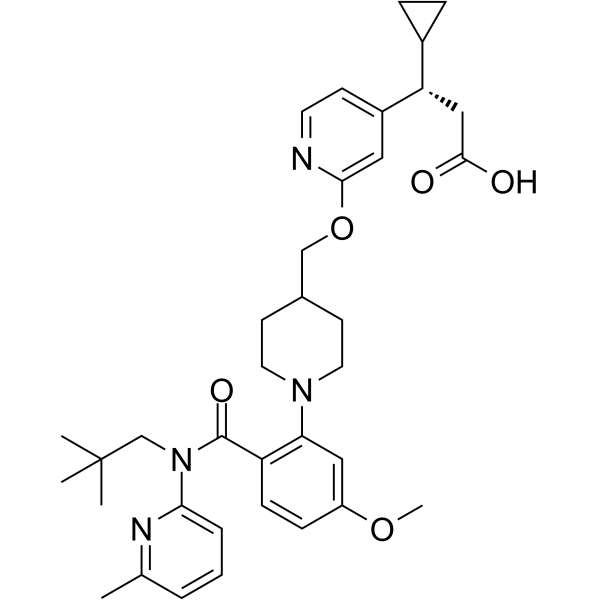
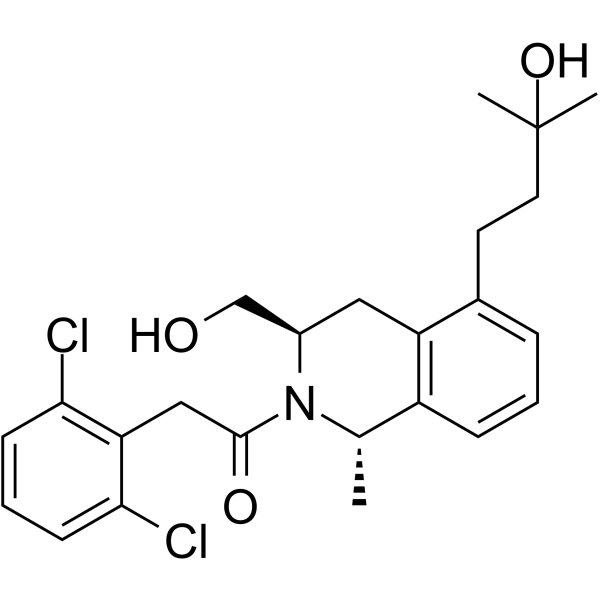
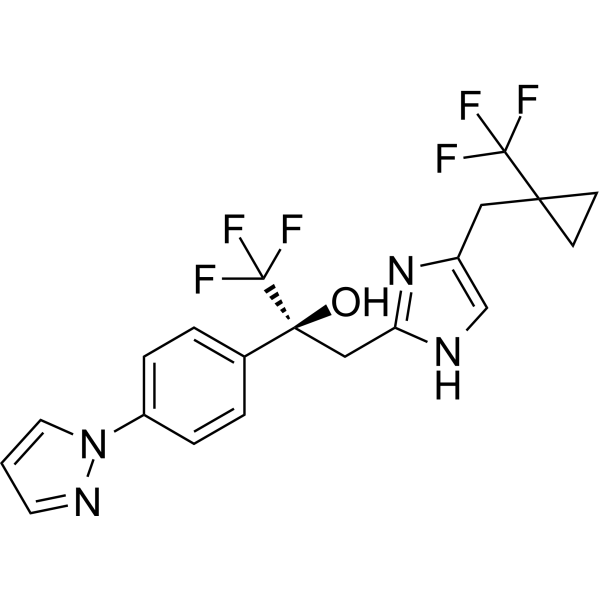
Search Result
Results for "
Allosteric agonist
" in MedChemExpress (MCE) Product Catalog:
6
Isotope-Labeled Compounds
| Cat. No. |
Product Name |
Target |
Research Areas |
Chemical Structure |
-
- HY-10046
-
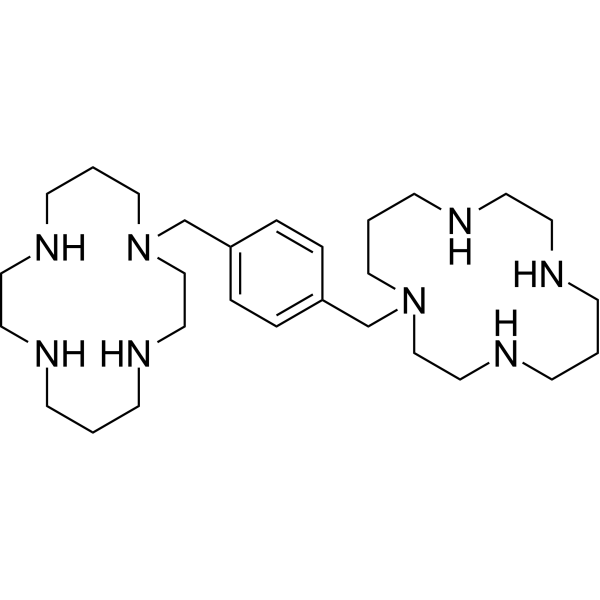
Plerixafor
Maximum Cited Publications
102 Publications Verification
AMD 3100; JM3100; SID791
|
CXCR
HIV
|
Infection
Inflammation/Immunology
Endocrinology
Cancer
|
|
Plerixafor (AMD 3100) is a selective CXCR4 antagonist with an IC50 of 44 nM. Plerixafor, an immunostimulant and a hematopoietic stem cell (HSC) mobilizer, is an allosteric agonist of CXCR7. Plerixafor inhibits HIV-1 and HIV-2 replication with an EC50 of 1-10 nM .
|
-
-
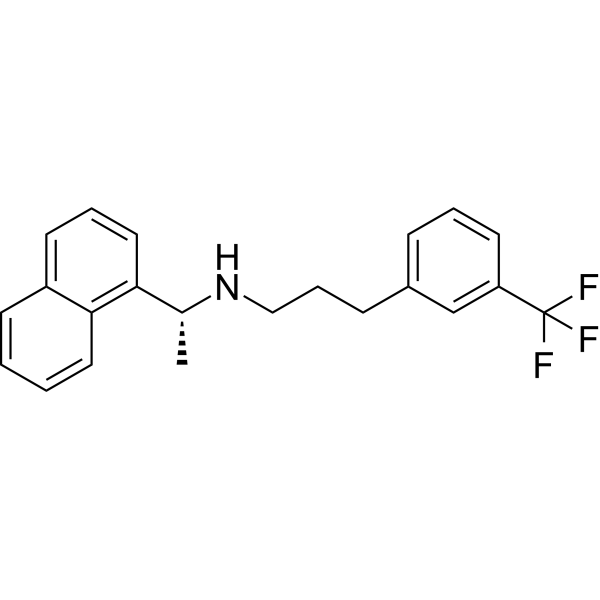
- HY-70037
-
-
-
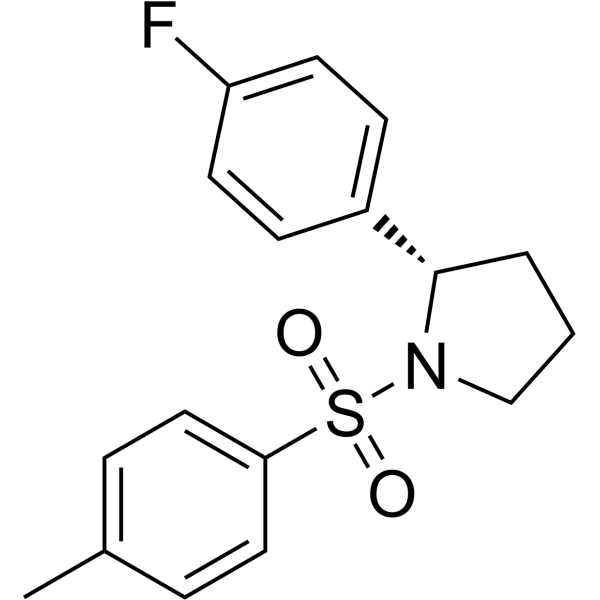
- HY-16940
-
|
24S-OHC; 24S-HC; Cerebrosterol
|
LXR
iGluR
Endogenous Metabolite
|
Metabolic Disease
|
|
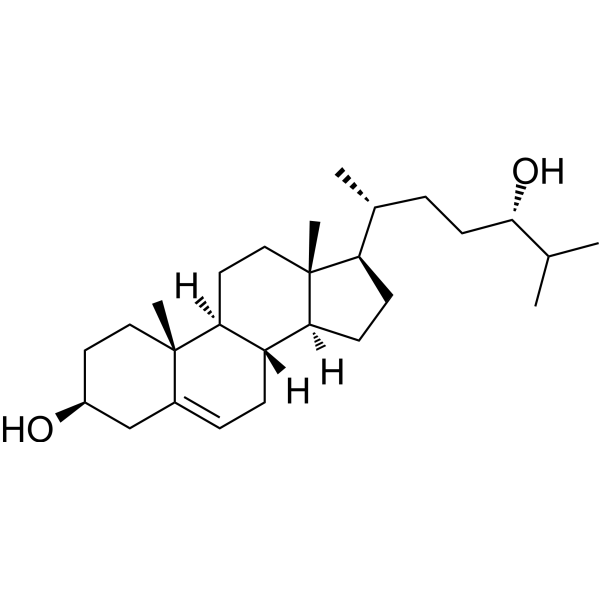
24(S)-Hydroxycholesterol (24S-OHC), the major brain cholesterol metabolite, plays an important role to maintain homeostasis of cholesterol in the brain. 24(S)-Hydroxycholesterol (24S-OHC) is one of the most efficient endogenous LXR agonist known and is present in the brain and in the circulation at relatively high levels. 24(S)-Hydroxycholesterol (24S-OHC) is a very potent, direct, and selective positive allosteric modulator of NMDARs with a mechanism that does not overlapthat of other allosteric modulators .
|
-
-
- HY-P1125
-
|
|
Free Fatty Acid Receptor
|
Others
|
|
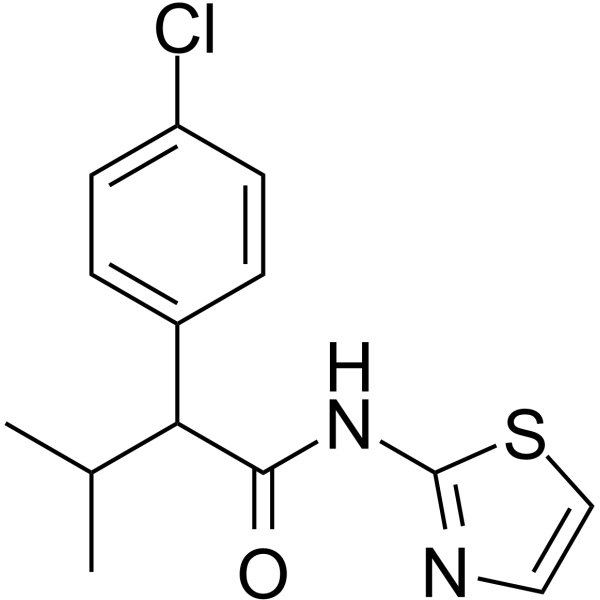
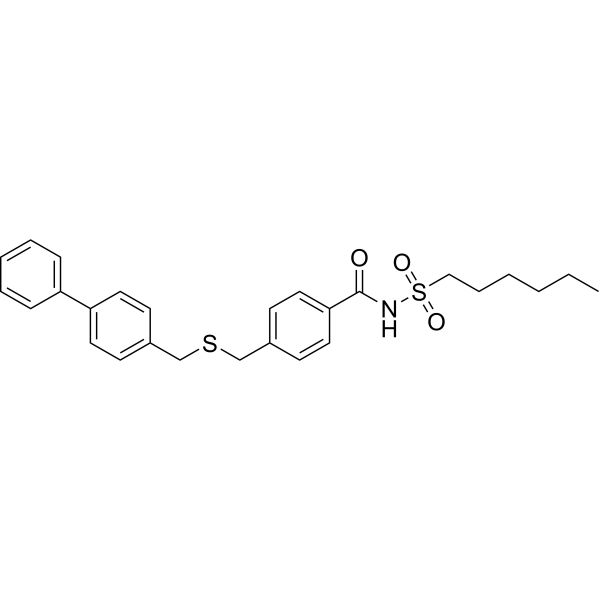
4-CMTB is a selective free fatty acid receptor 2 (FFA2/GPR43) agonist and a positive allosteric modulator (pEC50=6.38) .
|
-
-
- HY-70037A
-
-
-
- HY-132265
-
-
-
- HY-128770
-
|
|
Dopamine Receptor
|
Neurological Disease
|
|
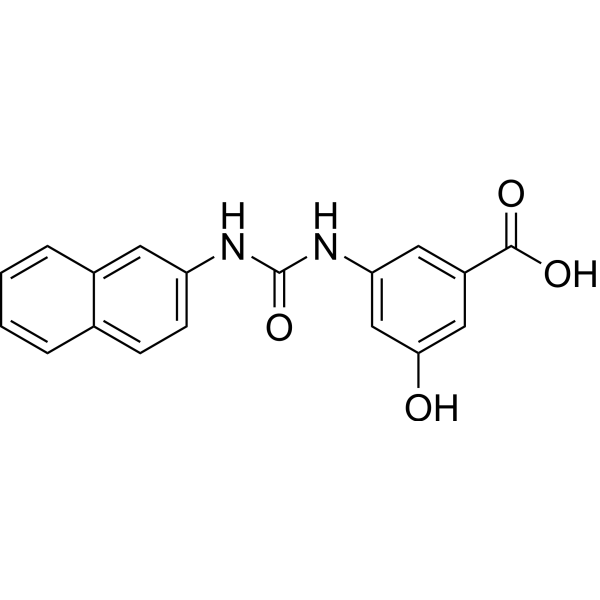
LY3154207 is a potent, subtype selective, and orally available human dopamine D1 receptor
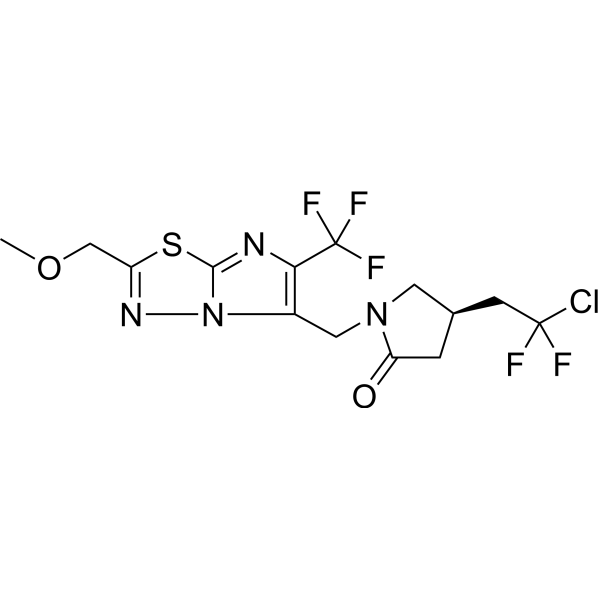
positive allosteric modulator (PAM) with minimal allosteric agonist activity (EC50=3 nM) .
|
-
-
- HY-101419
-
-
-
- HY-G0021
-
|
Norclozapine; Desmethylclozapine; Normethylclozapine
|
mAChR
Opioid Receptor
Drug Metabolite
Virus Protease
|
Infection
|
|
N-Desmethylclozapine is a major active metabolite of the atypical antipsychotic agent Clozapine. N-Desmethylclozapine is a potent, allosteric and partial M1 receptors agonist (EC50=115 nM) and is able to potentiate hippocampal N-methyl-d-aspartate (NMDA) receptor currents through M1 receptor activation. N-Desmethylclozapine is also a δ-opioid agonist .
|
-
-
- HY-15701B
-
ADH-503
2 Publications Verification
(Z)-Leukadherin-1 choline
|
Complement System
|
Cancer
|
|
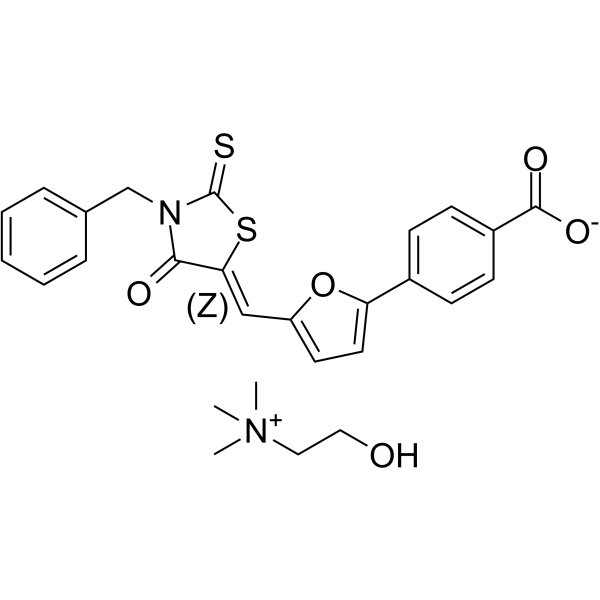
ADH-503 ((Z)-Leukadherin-1 choline) is an orally active and allosteric CD11b agonist. ADH-503 leads to the repolarization of tumor-associated macrophages, reduction in the number of tumor-infiltrating immunosuppressive myeloid cells, and enhances dendritic cell responses .
|
-
-
- HY-147105
-
|
|
Orphan Nuclear Receptor
Interleukin Related
|
Inflammation/Immunology
|
|
LRH-1 agonist-2 (Compound 6N) is a selective, full LRH-1 agonist with an EC50 of 15.7 nM. LRH-1 agonist-2 directly interacts with the Thr352 and His390 residues in the LRH-1 binding pocket, promotes allosteric signaling to the activation function surface (AFS), stabilizes the AFS and enhances coactivator recruitment. LRH-1 agonist-2 induces the anti-inflammatory cytokine IL-10, and reduces the pro-inflammatory cytokines IL-1β and TNFα. LRH-1 modulator-1 exerts anti-inflammatory effects in intestinal organoids. LRH-1 modulator-1 can be used in studies related to inflammatory bowel disease .
|
-
-
- HY-112606
-
|
|
RXFP Receptor
|
Others
|
|
ML-290 is a first-in-class and potent relaxin/insulin-like family peptide receptor (RXFP1) agonist and activator of anti-fibrotic genes, with an EC50 of 94 nM . ML290 is a biased allosteric agonist at the relaxin receptor RXFP1.
|
-
-
- HY-122190
-
|
|
mAChR
|
Neurological Disease
|
|
TAK-071 is a novel, potent and highly selective muscarinic acetylcholine receptor 1 (M1R) positive allosteric modulator. EC50 of TAK-071 M1R agonist activities is 520 nM .
|
-
-
- HY-103524
-
|
(-)-Valerenic Acid
|
GABA Receptor
5-HT Receptor
|
Neurological Disease
|
|
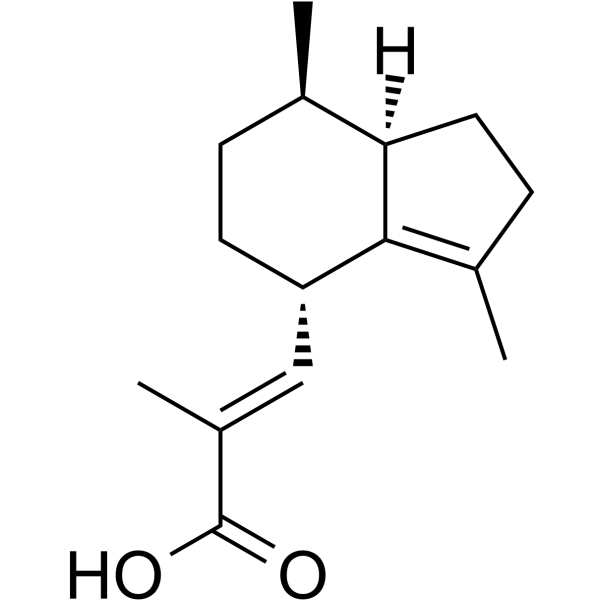
Valerenic acid ((-)-Valerenic Acid), a sesquiterpenoid, is an orally active positive allosteric modulator of GABAA receptors. Valerenic acid is also a partial agonist of the 5-HT5a receptor. Valerenic acid mediates anxiolytic activity via GABAA receptors containing the β3 subunit. Valerenic acid also exhibits potent antioxidant properties .
|
-
-
- HY-14342
-
MK-5046
2 Publications Verification
|
Bombesin Receptor
|
Metabolic Disease
|
|
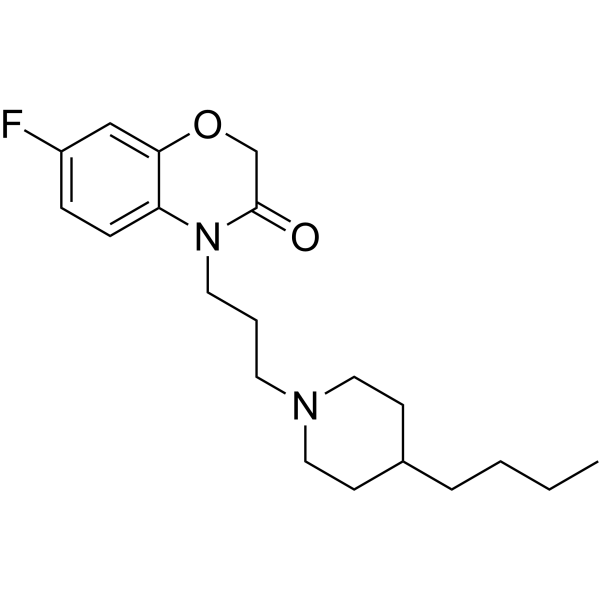
MK-5046 is a potent, selective and orally active Bombesin receptor subtype-3 (BRS-3) allosteric agonist with an IC50 and an EC50 value of 27 and 25 nM for hBRS-3, respectively. MK-5046 inhibits food intake and reduces body weight of diet-induced obese (DIO) mouse models. MK-5046 can be used for the research of obesity .
|
-
-
- HY-13288
-
-
-
- HY-12150
-
CCMI
1 Publications Verification
AVL-3288; UCI-4083
|
nAChR
|
Neurological Disease
|
|
CCMI (AVL-3288) is a potent and selective α7 nAChR-positive allosteric modulator, does not bind to or activate α7 nAChRs via the orthosteric site, and causes significant positive modulation of agonist-induced currents at α7 nAChRs. CCMI has potential in CNS diseases with cognitive dysfunction .
|
-
-
- HY-150210
-
|
|
Estrogen Receptor/ERR
|
Endocrinology
|
|
FSHR agonist 1 is a high affinity and allosteric follicle stimulating hormone receptor (FSHR) agonist with a pEC50 of 7.72. FSHR agonist 1 formes extensive interactions with the TMD to directly activate FSHR .
|
-
-
- HY-114011
-
-
-
- HY-103423
-
|
|
Dopamine Receptor
|
Neurological Disease
|
|
PAOPA, an analog of L-proline-l-leucine-glycine amide (PLG) peptide, is an allosteric modulator of Dopamine D2 Receptor. PAOPA can effectively reduce behavioral abnormalities in rodent models of schizophrenia. PAOPA increases the high affinity dopamine D2 receptor and promotes its binding to agonists .
|
-
-
- HY-18286
-
|
|
TSH Receptor
|
Endocrinology
|
|
NCGC00229600 is an allosteric inverse agonist of thyrotropin receptor (TSHR). NCGC00229600 inhibits both TSH and stimulating antibody activation of TSHRs endogenously expressed in Graves' disease .
|
-
-
- HY-160857
-
|
|
Estrogen Receptor/ERR
|
Endocrinology
|
|
TOP5668 is an orally active follicle-stimulating hormone receptor allosteric agonist. TOP5668 can induce the production of testosterone in stromal cells and promote follicular genesis and superovulation in rats .
|
-
-
- HY-153615
-
|
|
mGluR
|
Neurological Disease
|
|
CVN636 is a potent, orally active and selective mGluR7 allosteric agonist with an EC50 value of 7 nM for hu mGluR7. CVN636 has central nervous system (CNS) permeability .
|
-
-
- HY-145684
-
|
|
Prostaglandin Receptor
|
Inflammation/Immunology
|
|
EP2 receptor antagonist-1 (compound 1) is a potent, reversible, and agonist dependent allosteric prostaglandin EP2 receptor antagonist. EP2 receptor antagonist-1 shows anti-inflammatory effects .
|
-
-
- HY-176716
-
|
|
Aldehyde Dehydrogenase (ALDH)
|
Cardiovascular Disease
|
|
ALDH2 activator 1 (Compound Z17) is an allosteric aldehyde dehydrogenase 2 (ALDH2) agonist. ALDH2 activator 1 enhances cardiac function and reduces myocardial necrosis in a mouse model of myocardial ischemia-reperfusion. ALDH2 activator 1 is promising for research of cardiovascular diseases such as myocardial infarction (MI) .
|
-
-
- HY-129527
-
|
|
iGluR
|
Neurological Disease
|
|
GNE-9278 is a highly selective positive allosteric modulator of NMDAR that acts at the GluN1 transmembrane domain (TMD). GNE-9278 acts on activated NMDARs to increase peak current and agonist affinity .
|
-
-
- HY-100336
-
-
-
- HY-111763
-
-
-
- HY-156025
-
|
|
Hydroxycarboxylic Acid Receptor (HCAR)
|
Inflammation/Immunology
|
|
HCAR2 agonist 1 (Compound 9n) is a Gi protein-biased allosteric modulator of HCAR2. HCAR2 agonist 1 activates the Gi protein signaling pathway. HCAR2 agonist 1 shows anti-inflammatory effect, and reduces mRNA level of pro-inflammatory cytokine (TNF-α, IL-1β, IL-6, and MCP-1). HCAR2 agonist 1 enhances anti-inflammatory effects of orthosteric agonists in the mouse model of colitis .
|
-
-
- HY-113616A
-
|
|
MARCKS
mAChR
|
Neurological Disease
|
|
VU0364572 TFA is an orally active and selective allosteric agonist of the M1 muscarinic receptor with an EC50 of 0.11 μM. VU0364572 TFA has neuroprotective potential for preventing memory impairments and reducing neuropathology in Alzheimer’s Disease. VU0364572 TFA is CNS penetrant .
|
-
-
- HY-119464
-
MRL-871
1 Publications Verification
|
ROR
|
Cancer
|
|
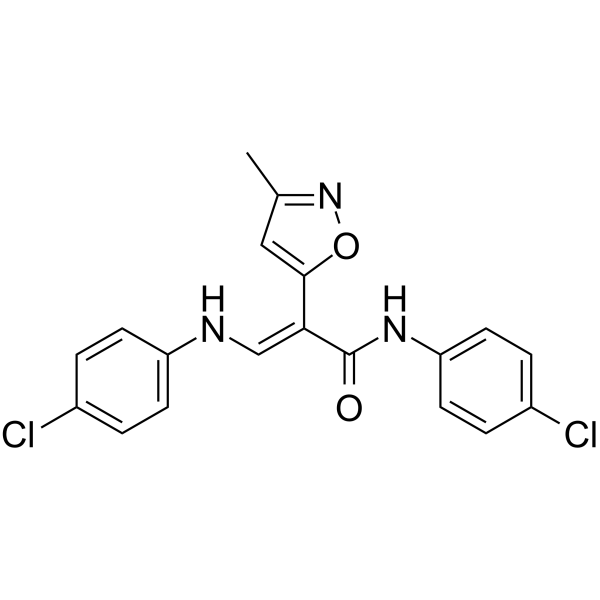
MRL-871 (compound 3) is a potent and allosteric retinoic acid receptor-related orphan receptor γt (RORγt) inverse agonists with an IC50 of 12.7 nM. MRL-871 has a distinct isoxazole chemotype and effectively reduces IL-17a mRNA production in EL4 cells .
|
-
-
- HY-112603
-
|
|
Free Fatty Acid Receptor
|
Metabolic Disease
|
|
AP5 is a potent, orlly active, and selective GPR40 receptor agonist with a positive allosteric modulation of endogenous ligand (AgoPAM). AP5 demonstrates rat and human inositol monophosphate (IP1) EC50 values of 0.49 nM and 0.8 nM against the GPR40 receptor, respectively. AP5 has the potential for type II diabetes research .
|
-
-
- HY-110087
-
|
|
nAChR
|
Neurological Disease
|
|
4BP-TQS is a potent allosteric agonist of α7 nAChR. 4BP-TQS activates nAChRs via an allosteric transmembrane site .
|
-
-
- HY-W193844
-
|
ZINC13684400
|
GPR65
|
Inflammation/Immunology
|
|
MLS001006105 (ZINC13684400) is a GPR65 allosteric agonist. MLS001006105 displays GPR65 allosteric agonist activity at pH 8.40 but not at lower pH .
|
-
-
- HY-116586A
-
|
|
mAChR
Sigma Receptor
|
Neurological Disease
|
|
(Rac)-AF710B is the racemate of AF710B (HY-116586). AF710B is a highly potent and selective allosteric M1 muscarinic and σ1 receptor agonist. AF710B can be used for the research of Alzheimer’s disease .
|
-
-
- HY-119226
-
|
|
mAChR
|
Neurological Disease
|
|
VU0152099 is a potent, selective and brain-penetrant mAChR M4 positive allosteric modulator with an EC50 of 0.4 µM for rat M4 receptor. VU0152099 is inactive for other mAChR subtypes or other GPCRs. VU0152099 has no agonist activity but potentiated responses of M4 to acetylcholine .
|
-
-
- HY-131032
-
|
|
Adenosine Receptor
|
Others
|
|
KI-7 is an A2B adenosine receptor positive allosteric modulator. KI-7 potentiates the cAMP accumulation induced by the non-selective A2B adenosine receptor agonist NECA (EC50=445.8 nM). KI-7 also potentiates the cAMP accumulation induced by the selective A2B adenosine receptor agonist BAY 60-6583 as well as by adenosine with EC50s of 2390 nM and 2550 nM, respectively .
|
-
-
- HY-117851
-
|
|
CaSR
|
Metabolic Disease
Endocrinology
|
|
AC-265347 is a calcium-sensing receptor (CaSR) agonist and positive allosteric modulator (ago-PAM) with the functional affinity (pKB) of 5.1. AC-265347 can be used for the research of hyperparathyroidism and related diseases .
|
-
-
- HY-14342A
-
|
|
Bombesin Receptor
|
Metabolic Disease
|
|
(R)-MK-5046 is the isomer of MK-5046 (HY-14342), and can be used as an experimental control. MK-5046 is a potent, selective and orally active Bombesin receptor subtype-3 (BRS-3) allosteric agonist with an IC50 and an EC50 value of 27 and 25 nM for hBRS-3, respectively. MK-5046 inhibits food intake and reduces body weight of diet-induced obese (DIO) mouse models. MK-5046 can be used for the research of obesity .
|
-
-
- HY-100728
-
|
|
mGluR
|
Neurological Disease
|
|
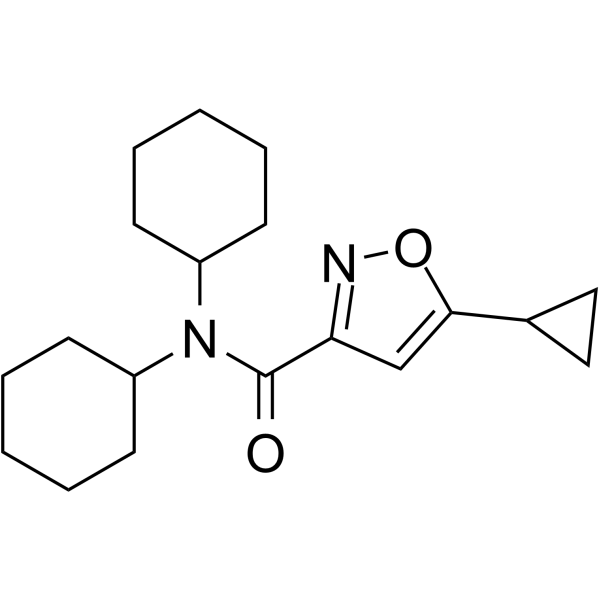
BMT-145027 is an mGluR5 positive allosteric modulator without inherent agonist activity, exhibits an EC50 of 47 nM.
|
-
-
- HY-135601
-
|
|
Drug Metabolite
|
Cardiovascular Disease
|
|
Cinacalcet metabolite M4 is a metabolite of Cinacalcet. Cinacalcet is an orally active, allosteric agonist of Ca receptor (CaR), used for cardiovascular disease .
|
-
-
- HY-70037AR
-
|
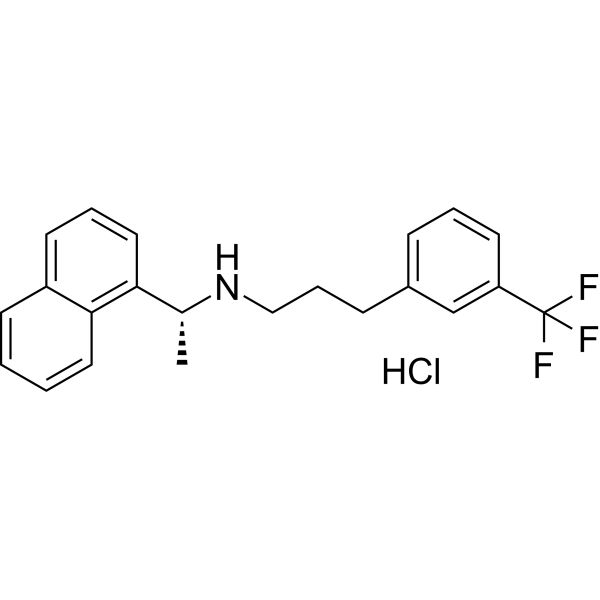
AMG-073 hydrochloride (Standard)
|
Reference Standards
CaSR
Endogenous Metabolite
|
Cardiovascular Disease
Cancer
|
|
Cinacalcet (hydrochloride) (Standard) is the analytical standard of Cinacalcet (hydrochloride). This product is intended for research and analytical applications. Cinacalcet hydrochloride (AMG-073 hydrochloride) is an orally active, allosteric agonist of Ca receptor (CaR), used for cardiovascular disease treatment.
|
-
-
- HY-120004
-
|
|
mAChR
|
Infection
|
|
PF-06827443 is a potent, low-clearance, orally bioavailable, and CNS-penetrant M1-selective positive allosteric modulator (PAM) with minimal agonist activity. PF-06827443 induce cholinergic AEs and convulsion .
|
-
-
- HY-123852
-
|
|
mAChR
|
Neurological Disease
|
|
PF-06764427 is a selective M1 muscarinic acetylcholine receptor positive allosteric modulator. PF-06764427 exhibits robust M1 agonist activity. PF-06764427 can be used in the research of Alzheimer's disease and schizophrenia .
|
-
-
- HY-133011
-
|
|
nAChR
|
Neurological Disease
|
|
nAChR agonist 1 is a potent, blood-brain-barrier-permeable, and orally active allosteric modulator of α7 nicotinic acetylcholine receptor (α7 nAChR). nAChR agonist 1 has the EC50 of 0.32 μM in a Ca 2+ mobilization assay (PNU-282987-induced, FLIPR based) in human IMR-32 neuroblastoma cells that endogenously express α7 nAChR. nAChR agonist 1 can be develpoped for the treatment of Alzheimer’s disease .
|
-
-
- HY-133128
-
|
|
ROR
|
Cancer
|
|
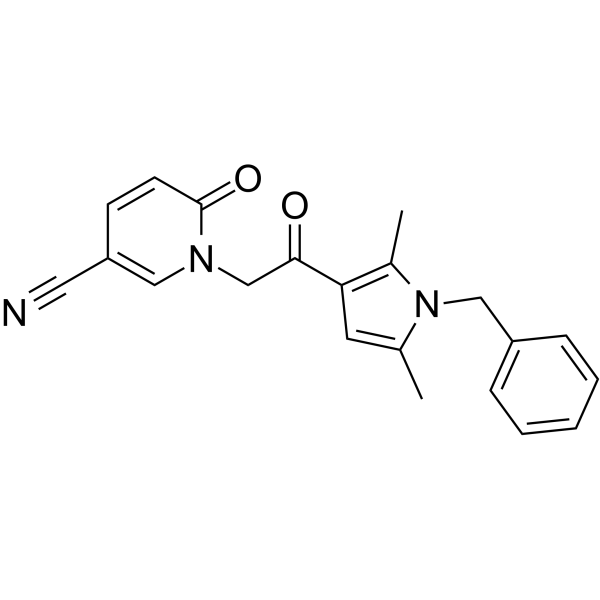
FM26 (compound 25) is a potent and allosteric retinoic acid receptor-related orphan receptor γt (RORγt) inverse agonists with an IC50 of 264 nM. FM26 has a distinct isoxazole chemotype and effectively reduces IL-17a mRNA production in EL4 cells .
|
-
-
- HY-G0021S1
-
|
Norclozapine-d8 hydrochloride; Desmethylclozapine-d8 hydrochloride; Normethylclozapine-d8 hydrochloride
|
mAChR
Opioid Receptor
Drug Metabolite
Virus Protease
|
Infection
|
|
N-Desmethylclozapine-d8 (hydrochloride) is the deuterium labeled N-Desmethylclozapine hydrochloride. N-Desmethylclozapine hydrochloride is a major active metabolite of the atypical antipsychotic agent Clozapine. N-Desmethylclozapine hydrochloride is a potent, allosteric and partial M1 receptors agonist (EC50=115 nM) and is able to potentiate hippocampal N-methyl-d-aspartate (NMDA) receptor currents through M1 receptor activation. N-Desmethylclozapine hydrochloride is also a δ-opioid agonist .
|
-
-
- HY-178783
-
|
|
Adenosine Receptor
|
Metabolic Disease
Inflammation/Immunology
Cancer
|
|
MRS8454 is a positive allosteric modulator (PAM) of the A3 adenosine receptor (A3AR). MRS8454 can significantly enhance the maximum effect of the standard agonist Cl-IB-MECA by approximately 286%-300%, and significantly reduce its EC50 value. MRS8454 effectively enhances the ability of A3AR agonists to inhibit the cAMP accumulation induced by Forskolin (HY-15371). MRS8454 can be used for the development of molecular probes .
|
-
-
- HY-162401
-
|
|
RXFP Receptor
|
Cardiovascular Disease
|
|
AZ7976 (Compound 42) is a highly selective agonist for the Relaxin Family Peptide Receptor 1 (RXFP1) (pEC50 > 10.5). AZ7976 enhances RXFP1's cAMP signaling through an allosteric mechanism, thereby physiologically increasing heart rate. AZ7976 can be used in the field of cardiovascular disease research .
|
-
-
- HY-10046S
-
-
- HY-118806A
-
|
|
mAChR
|
Neurological Disease
|
|
AC-42 hydrochloride is the hydrochloride salt form of AC-42 (HY-118806). AC-42 hydrochloride is an allosteric agonist for muscarinic M1 receptor with EC50s of 805 nM and 220 nM for human wild-type and Y381A mutated M1 receptors, respectively. AC-42 hydrochloride stimulates the inositol phosphate (IP)-accumulation and calcium mobilization in CHO cells .
|
-
- HY-119208
-
|
|
CXCR
|
Others
|
|
VUF11211 is an allosteric inverse CXCR3 agonist with a Kd of 0.65 nM .
|
-
- HY-114978
-
|
|
mGluR
PERK
|
Neurological Disease
|
|
VU0424465 is a potent and partial PAM (positive allosteric modulator)-agonist for mGlu5 mediated iCa 2+ mobilization. VU0424465 exhibits high affinity at MPEP allosteric binding site, with a Ki value of 11.8 nM. VU0424465 is also a agonist for pERK1/2 in cortical neurons .
|
-
- HY-153001
-
-
- HY-10915
-
|
|
Adenosine Receptor
|
Cardiovascular Disease
|
|
LUF6096, a potent allosteric enhancer of the adenosine A3 receptor, is able to allosterically enhance agonist binding. LUF6096 shows low orthosteric affinity for any of the adenosine receptors. LUF6096 shows protective effects in myocardial ischemia/reperfusion injury .
|
-
- HY-150067
-
|
|
Cannabinoid Receptor
|
Metabolic Disease
|
|
CB1R Allosteric modulator 5, a selective cannabinoid-1 receptor (CB1R) inverse agonist with an IC50 value of 4.2 μM and EC50 value of >10 μM. CB1R Allosteric modulator 5 can be used for the research of metabolic and obesity .
|
-
- HY-175366
-
|
|
Opioid Receptor
Arrestin
|
Neurological Disease
|
|
DOR agonist 3 (Compound 10) is a δ-opioid receptor (DOR)-selective positive allosteric modulator. DOR agonist 3 enhances G protein signaling while reducing β-arrestin2 recruitment. DOR agonist 3 is promising for research of chronic pain and depression .
|
-
- HY-W823500
-
|
|
GLP Receptor
|
Metabolic Disease
|
|
GLP-1R agonist 39 (Compound 7) is a potent GLP-1 receptor positive allosteric modulator. GLP-1R agonist 39 can be used for the research of obesity and type 2 diabetes .
|
-
- HY-70037AS
-
-
- HY-160856
-
|
TOP05300
|
Estrogen Receptor/ERR
|
Endocrinology
|
|
TOP5300 is an orally active follicle-stimulating hormone receptor allosteric agonist. TOP5300 can induce the production of testosterone in stromal cells and promote follicular genesis and superovulation in rats .
|
-
- HY-107683
-
|
|
nAChR
|
Neurological Disease
|
|
LY-2087101 is an allosteric potentiator of α7 nAChRs. LY-2087101 causes potentiation of agonist-evoked α7 responses by binding within the nAChR transmembrane region .
|
-
- HY-143880
-
|
|
Mas-related G-protein-coupled Receptor (MRGPR)
|
Neurological Disease
|
|
MRGPRX1 agonist 4 (compound 1t) is a potent and orally active Mas-related G protein-coupled receptor X1 (MRGPRX1) positive allosteric modulator with an EC50 value of 0.1 μM. MRGPRX1 agonist 4 has good metabolic stability and oral bioavailability. MRGPRX1 agonist 4 can reduce behavioral heat hypersensitivity in a neuropathic pain model humanized MRGPRX1 mice. MRGPRX1 agonist 4 can be used for researching neuropathic pain .
|
-
- HY-113616
-
|
|
mAChR
MARCKS
|
Neurological Disease
|
|
VU0364572 is a selective allosteric agonist of the M1 muscarinic receptor with an EC50 of 0.11 μM. VU0364572 has neuroprotective potential for preventing memory impairments and reducing neuropathology in Alzheimer’s Disease. VU0364572 is orally active and is CNS penetrant .
|
-
- HY-121140
-
|
|
Free Fatty Acid Receptor
|
Metabolic Disease
|
|
AZ1729 is a potent free fatty acid 2 receptor (FFA2) activator, acting as a direct allosteric agonist and as a positive allosteric modulator. AZ1729 increases the activity of the endogenously produced short chain fatty acid propionate in Gi-mediated pathways, but not at those transduced by Gq/G11. AZ1729 induces inhibition of isoproterenol-induced lipolysis in mouse adipocytes. AZ1729 also can Induce migration of human neutrophils. AZ1729 can be used for researching the signaling pathways of the physiological roles of FFA2 .
|
-
- HY-G0021S
-
|
Norclozapine-d8; Desmethylclozapine-d8; Normethylclozapine-d8
|
mAChR
Opioid Receptor
Drug Metabolite
Virus Protease
|
Infection
|
|
N-Desmethylclozapine-d8 is the deuterium labeled N-Desmethylclozapine. N-Desmethylclozapine is a major active metabolite of the atypical antipsychotic agent Clozapine. N-Desmethylclozapine is a potent, allosteric and partial M1 receptors agonist (EC50=115 nM) and is able to potentiate hippocampal N-methyl-d-aspartate (NMDA) receptor currents through M1 receptor activation. N-Desmethylclozapine is also a δ-opioid agonist .
|
-
- HY-105115
-
|
ZK 112119
|
GABA Receptor
|
Neurological Disease
|
|
Abecarnil (ZK 112119) is a ligand or a partial agonist for benzodiazepine (BZ) receptor. Abecarnil possesses anxiolytic and anticonvulsant properties. Abecarnil can act as a positive allosteric modulator of GABAA receptor. Abecarnil inhibits the binding of the BZ [3H]lormetazepam to rat cerebral cortex membranes, with an IC50 of 0.82 nM. Abecarnil can be used for epilepsy research .
|
-
- HY-119806
-
|
|
5-HT Receptor
|
Neurological Disease
|
|
TMPPAA is an allosteric agonist and positive allosteric modulator of the 5-HT3 receptor. TMPPAA enhances 5-HT-mediated 5-HT3AR signaling .
|
-
- HY-114589
-
|
|
mGluR
|
Others
|
|
VU0240382 is a metabotropic glutamate receptor subtype 5 modulator whose activity differs depending on whether it has allosteric agonist activity. VU0240382 with allosteric agonist activity can activate mGlu(5) receptors in cell lines, but has no agonist activity in natural systems and has similar efficacy to mGlu(5) modulators without allosteric agonist activity in animal models.
|
-
- HY-P5860
-
|
Micrurotoxin 1
|
GABA Receptor
|
Neurological Disease
|
|
MmTx1 toxin (Micrurotoxin 1) is an allosteric GABAA receptor modulator that increases GABAA receptor susceptibility to agonist .
|
-
- HY-103498
-
|
|
GABA Receptor
|
Neurological Disease
|
|
Org20599 is a positive allosteric modulator and at higher concentrations direct agonist of GABAA receptor with an EC50 of 1.1 μM .
|
-
- HY-150186
-
|
|
RXFP Receptor
|
Metabolic Disease
|
|
RXFP2 agonist 2 is a selective, orally active and allosteric RXFP2 agonist with an EC50 value of 0.38 μM. RXFP2 agonist 2 induces osteoblast mineralization. RXFP2 agonist 2 increases bone formation in female mice. RXFP2 agonist 2 has the potential for the research of osteoporosis .
|
-
- HY-144698
-
|
|
mGluR
|
Neurological Disease
|
|
mGlu4 receptor agonist 1 (compound 62) is a potent mGlu4 receptor positive allosteric modulator, with an EC50 of 308 nM. mGlu4 receptor agonist 1 shows significant anxiolytic- and antipsychotic-like effect .
|
-
- HY-161810
-
|
|
Adenosine Receptor
|
Others
|
|
MRS8247 is a positive allosteric modulator (PAM) of the A3 adenosine receptor (A3AR) that can also slow the dissociation rate of agonists .
|
-
- HY-70037S
-
|
AMG 073-d3
|
CaSR
Endogenous Metabolite
|
Cardiovascular Disease
|
|
Cinacalcet-d3 is the deuterium labeled Cinacalcet. Cinacalcet (AMG 073) is an orally active, allosteric agonist of Ca receptor (CaR), used for cardiovascular disease treatment.
|
-
- HY-143878
-
-
- HY-70037R
-
-
- HY-143879
-
-
- HY-P1397
-
|
|
Cannabinoid Receptor
|
Neurological Disease
|
|
RVD-Hpα, an α-hemoglobin-derived peptide containing three additional amino acids, is a CB1 cannabinoid receptor agonist. RVD-Hpα is a positive allosteric modulator of cannabinoid receptor 2 .
|
-
- HY-W653978
-
-
- HY-136258
-
|
|
nAChR
|
Neurological Disease
|
|
nAChR agonist CMPI hydrochloride is a potent and selective positive allosteric modulator (PAM) of nAChR containing a α4:α4 subunit interface. nAChR agonist CMPI hydrochloride enhances the response of (α4)3(β2)2 nAChR to ACh (10 µM) with an EC50 of 0.26 µM. nAChR agonist CMPI hydrochloride has potential for the research of nicotine dependence and many neuropsychiatric conditions associated with decreased brain cholinergic activity .
|
-
- HY-15701A
-
|
ADH-503 free base
|
Complement System
|
Cancer
|
|
(Z)-Leukadherin-1 (ADH-503 free base) is an orally active and allosteric CD11b agonist. (Z)-Leukadherin-1 leads to the repolarization of tumor-associated macrophages, reduction in the number of tumor-infiltrating immunosuppressive myeloid cells, and enhances dendritic cell responses .
|
-
- HY-118806
-
|
|
mAChR
|
Neurological Disease
|
|
AC-42 is a poent M1 muscarinic selective allosteric agonist with EC50s of 805 nM and 220 nM for human wild-type and Y381A mutated M1 receptors, respectively. AC-42 stimulates the IP-accumulation and calcium mobilization in CHO cells .
|
-
- HY-14611
-
|
DFB
|
mGluR
|
Neurological Disease
|
|
3,3'-Difluorobenzaldazine (DFB) is a selective positive allosteric modulator of mGluR5. 3,3'-Difluorobenzaldazine potentiates 3- to 6-fold action for mGlu5 agonists (Glutamate, Quisqualate, and 3,5-Dihydroxyphenylglycine), with EC50s in the 2 to 5 μM range .
|
-
- HY-G0021R
-
|
Norclozapine (Standard); Desmethylclozapine (Standard); Normethylclozapine (Standard)
|
Reference Standards
mAChR
Opioid Receptor
Drug Metabolite
Virus Protease
|
Infection
|
|
N-Desmethylclozapine (Standard) is the analytical standard of N-Desmethylclozapine. This product is intended for research and analytical applications. N-Desmethylclozapine is a major active metabolite of the atypical antipsychotic agent Clozapine. N-Desmethylclozapine is a potent, allosteric and partial M1 receptors agonist (EC50=115 nM) and is able to potentiate hippocampal N-methyl-d-aspartate (NMDA) receptor currents through M1 receptor activation. N-Desmethylclozapine is also a δ-opioid agonist .
|
-
- HY-P11259
-
|
|
Urotensin Receptor
|
Cardiovascular Disease
Metabolic Disease
Inflammation/Immunology
Cancer
|
UPG-111 is a peptide compound that acts as a negative allosteric modulator of the Urotensin II receptor (UTR). UPG-111 exhibits a dual inhibitory effect on the vasoconstriction induced by UTR agonists - it reduces both the maximum response intensity and the sensitivity of the agonist. UPG-111 does not induce calcium release or cause contraction of the endothelium-deprived rat aortic rings. UPG-111 can be used for the study of various diseases related to the angiotensinergic system .
|
-
- HY-112603A
-
|
|
Free Fatty Acid Receptor
|
Metabolic Disease
|
|
AP5 sodium is a potent, orall active, and selective GPR40 receptor agonist with a positive allosteric modulation of endogenous ligand (AgoPAM). AP5 sodium demonstrates rat and human inositol monophosphate (IP1) EC50 values of 0.49 nM and 0.8 nM against the GPR40 receptor, respectively. AP5 sodium has the potential for type II diabetes research .
|
-
- HY-119082A
-
|
|
mAChR
|
Others
|
|
VU0029767 is an allosteric enhancer of the M1 muscarinic receptor with the activity to modulate M1 receptor activity. VU0029767 can enhance M1 receptor activity by increasing agonist affinity, but exhibits different properties from other compounds under different experimental conditions, such as effects on mutant M1 receptors and effects on downstream signaling pathways.
|
-
- HY-180674
-
|
|
STING
|
Inflammation/Immunology
|
|
LA24 is a potent STING allosteric agonist, with an EC₅₀ of 0.82 μM. LA24 induces the phosphorylation of STING and IRF3. LA24 can be used for the study of STING-targeted immunotherapies .
|
-
- HY-180845
-
|
|
G protein-coupled Bile Acid Receptor 1
|
Metabolic Disease
|
|
TGR5 agonist 9 is a highly selective and orally active TGR5 allosteric agonist with EC₅₀ values for hTGR5 and mTGR5 of 0.48 and 0.49 μM, respectively. TGR5 agonist 9 can recruit β-arrestin 1 (EC₅₀ = 78.8 μM) and β-arrestin 2 (EC₅₀ = 12.3 μM), and has a higher efficacy in cAMP accumulation (EC₅₀ = 0.48 μM). TGR5 agonist 9 exhibits a significant hypoglycemic effect in the ICR mouse model. TGR5 agonist 9 can be used for research on diabetes .
|
-
- HY-180796
-
|
|
Pyruvate Kinase
|
Cardiovascular Disease
|
|
PKM2 agonist-1 (Compound D16) is a highly effective, allosteric PKM2 agonist with an AC50 value of 77 nM. PKM2 agonist-1 inhibits Ang II-induced smooth muscle cell phenotypic switching. PKM2 agonist-1 effectively prevents aortic dissection and results in reduced mortality .
|
-
- HY-120093
-
|
|
Cannabinoid Receptor
PERK
|
Neurological Disease
|
|
GAT100 is a negative allosteric modulator and covalent allosteric probe for cannabinoid receptor type 1 (CB1R). GAT100 acts as a positive allosteric modulator for orthosteric agonist CP55,940 binding to regulate the CB1R signaling pathway. GAT100 reduces the potency and efficacy of orthosteric CB1R agonists in terms of β-arrestin 1 recruitment, phosphorylation of PLCβ3 and ERK1/2, cAMP accumulation, and CB1R internalization. GAT100 is applicable to the research of psychobehavioral and somatic diseases .
|
-
- HY-100336R
-
|
|
mAChR
Reference Standards
|
Neurological Disease
|
|
AC260584 (Standard) is the analytical standard of AC260584 (HY-100336). This product is intended for research and analytical applications. AC260584 is an M1 muscarinic receptor allosteric agonist with a pEC50 of 7.6.
|
-
- HY-182270
-
|
|
Orphan GPCR
|
Metabolic Disease
|
|
GPR61 Inverse agonist 2 is a selective GPR61 inverse agonist with human IC50 of 6.2 nM and mouse IC50 of 20 nM, human Ki of 0.21 nM, and mouse Ki of 0.72 nM. GPR61 Inverse agonist 2 binds to an induced intracellular allosteric pocket of GPR61, disrupts receptor-Gαs interactions, and abolishes GPR61 constitutive activity. GPR61 Inverse agonist 2 does not alter food intake or body weight in healthy mice. GPR61 Inverse agonist 2 can be used for the research of cachexia/sarcopenia .
|
-
- HY-100728R
-
|
|
mGluR
Reference Standards
|
Neurological Disease
|
|
BMT-145027 (Standard) is the analytical standard of BMT-145027 (HY-100728). This product is intended for research and analytical applications. BMT-145027 is an mGluR5 positive allosteric modulator without inherent agonist activity, exhibits an EC50 of 47 nM.
|
-
- HY-182723
-
|
|
GPR84
|
Cancer
|
|
PSB-16671 is an allosteric agonist of GPR84. PSB-16671 recruits β-arrestins and couples to Gi, enhances the Gi activation potency of orthosteric agonists, and exerts a synergistic effect with orthosteric agonists. PSB-16671 promotes G protein activation and partial chemotaxis independent of GPR84 in mouse neutrophils, maintains the phagocytic function of macrophages against cancer cells without inducing receptor desensitization. PSB-16671 can be used in cancer-related research .
|
-
- HY-131196
-
|
|
mAChR
|
Neurological Disease
|
|
M3 mAChR agonist 1 is an M3-preferring M3/M5 mAChR dual positive allosteric modulators (PAM). M3 mAChR agonist 1 shows excellent subtype selectivity over other subtypes of mAChRs including M1, M2, and M4 mAChRs. M3 mAChR agonist 1 increases the contraction of isolated rat bladder strips by modulating the M3 muscarinic acetylcholine receptor, leading to enhanced signaling pathways. M3 mAChR agonist 1 can be used for the research of endocrinology .
|
-
- HY-P11258
-
|
|
Urotensin Receptor
|
Cardiovascular Disease
Metabolic Disease
Inflammation/Immunology
Cancer
|
UPG-108, a peptide compound, is a non-competitive allosteric modulator of Urotensin II receptors (UTR). UPG-108 significantly enhances the efficacy of UTR agonists but reduces the potency of UTR agonists. UPG-111 efficiently induces calcium release and does not cause contraction of rat aortic rings without endothelial denudation. UPG-111 can be used to study various diseases related to the angiotensinergic system .
|
-
- HY-181102
-
|
|
G protein-coupled Bile Acid Receptor 1
|
Metabolic Disease
Inflammation/Immunology
|
|
TGR5 agonist 10 is a selective, allosteric and orally active Takeda G protein coupled receptor 5 (TGR5) agonist with EC50s of 0.8 μM and 0.6 μM for human TGR5 and mouse TGR5, respectively. TGR5 agonist 10 demonstrates selectivity for TGR5 over FXR. TGR5 agonist 10 activates hTGR5 and mTGR5 to induce cAMP accumulation, and positively modulates lithocholic acid functional activity and potency at hTGR5, with higher selectivity for cAMP formation over β-arrestin2 recruitment. TGR5 agonist 10 exerts glucose-lowering effects in Mus musculus oral glucose tolerance tests. TGR5 agonist 10 can be used for the research of diabetes .
|
-
- HY-185356
-
|
|
Opioid Receptor
|
Neurological Disease
|
|
SR-14968 is a full, allosteric and non-competitive MOR agonist, with an EC50 of 88 nM for MOR in mouse brainstem. SR-14968 stabilizes MOR in a G protein signaling state that is resistant to washout but reversible by antagonists. SR-14968 induces respiratory depression in mice. SR-14968 can be used in pain-related research .
|
-
- HY-122222
-
|
|
PPAR
|
Others
|
|
MRL20 is a PPARγ constitutive and allosteric agonist. MRL20 enhances the interaction between PPARγ and the co-activating peptide of TRAP220, with its EC50 being 10 nM. Even after being covalently blocked in the constitutive pocket by GW9662 (HY-16578) or T0070907 (HY-13202), MRL20 can still strengthen the interaction between PPARγ and TRAP220, with EC50 values of 176 and 440 nM respectively. MRL20 fails to completely inhibit its cell activation effect. MRL20 can be used to study the allosteric regulatory mechanism of PPARγ .
|
-
- HY-10046R
-
|
AMD 3100 (Standard); JM3100 (Standard); SID791 (Standard)
|
Reference Standards
CXCR
HIV
|
Infection
Inflammation/Immunology
Endocrinology
Cancer
|
|
Plerixafor (Standard) is the analytical standard of Plerixafor. This product is intended for research and analytical applications. Plerixafor (AMD 3100) is a selective CXCR4 antagonist with an IC50 of 44 nM. Plerixafor, an immunostimulant and a hematopoietic stem cell (HSC) mobilizer, is an allosteric agonist of CXCR7. Plerixafor inhibits HIV-1 and HIV-2 replication with an EC50 of 1-10 nM .
|
-
- HY-P1397A
-
|
|
Cannabinoid Receptor
|
Cardiovascular Disease
|
|
RVD-Hpα TFA is the N-terminally extended form of human hemopressin that acts as a selective CB1 receptor agonist. RVD-Hpα TFA increases intracellular Ca 2+ levels in cells expressing CB1 receptors in vitro. RVD-Hpα TFA also high affinity CB2 positive allosteric modulator (Ki=50 nM).
|
-
- HY-156505A
-
|
|
iGluR
|
Neurological Disease
|
|
R-(+)-EU-1180-453 is a positive allosteric modulator targeting NMDA receptors containing GluN2C and GluN2D subunits, with a pEC50 value of 5.5 for both rat receptor subtypes, and it can cross the blood-brain barrier. R-(+)-EU-1180-453 increases the potency of glutamate, enhances receptor responses to maximally effective concentrations of agonists, and acts only on receptors bound to both co-agonists. R-(+)-EU-1180-453 is applicable to research related to Alzheimer's disease, Parkinson's disease, epilepsy, and neuropathic pain .
|
-
- HY-155484
-
|
|
Sigma Receptor
|
Neurological Disease
|
|
SOMCL-668 is a selective and potent sigma-1 receptor allosteric modulator. ?SOMCL-668 shows positive modulation of improvement in social deficits and cognitive impairment induced by the selective sigma-1 agonist PRE084.?SOMCL-668 displays anti-seizure activities and can be used for psychotic illness research .
|
-
- HY-120641
-
|
|
mGluR
|
Neurological Disease
|
|
BMS-955829 is an orally active and selective mGluR5 positive allosteric modulator with an EC50 of 2.6 nM. BMS-955829 has no intrinsic agonist activity and a low glutamate fold shift (2.4). BMS-955829 can effectively improve cognitive and executive function deficits in rodents. BMS-955829 can be used in the research of cognitive impairment diseases such as schizophrenia .
|
-
- HY-109009
-
|
UCB-0942
|
GABA Receptor
|
Neurological Disease
|
|
Padsevonil (UCB0942) is a potent antiepileptic agent that selectively acts on presynaptic and postsynaptic targets. Padsevonil binds to synaptic vesicular protein 2 (SV2) with high affinity. Padsevonil is also a positive allosteric modulator and partial agonist of GABAAR, with high potency against α1 and α5 receptors. Padsevonil has antiepileptic effects in a variety of rodent models .
|
-
- HY-120645
-
|
|
Opioid Receptor
|
Neurological Disease
|
|
BMS-986122 is a selective, potent positive allosteric modulator of the mu-opioid receptor (µ-OR). BMS-986122 shows potentiation of orthosteric agonist-mediated β-arrestin recruitment, adenylyl cyclase inhibition, and G protein activation. BMS-986122 potentiates DAMGO-mediated [ 35S]GTPγS binding in mouse brain membranes .
|
-
- HY-119082
-
|
|
mAChR
|
Others
|
|
(E/Z)-VU0029767 is an allosteric enhancer of M1 muscarinic receptors with the activity to modulate M1 receptor activity. (E/Z)-VU0029767 can enhance M1 receptor activity by increasing agonist affinity, but exhibits different properties from other compounds under different experimental conditions, such as effects on mutant M1 receptors and effects on downstream signaling pathways.
|
-
- HY-103423R
-
|
|
Reference Standards
Dopamine Receptor
|
Neurological Disease
|
|
PAOPA (Standard) is the analytical standard of PAOPA (HY-103423). This product is intended for research and analytical applications. PAOPA, an analog of L-proline-l-leucine-glycine amide (PLG) peptide, is an allosteric modulator of Dopamine D2 Receptor. PAOPA can effectively reduce behavioral abnormalities in rodent models of schizophrenia. PAOPA increases the high affinity dopamine D2 receptor and promotes its binding to agonists .
|
-
- HY-19752
-
|
CID-25010775 free base
|
mAChR
|
Neurological Disease
|
|
VU0357017 (CID-25010775) is a potent, selective and brain-penetrant allosteric agonist of M1 muscarinic acetylcholine receptor, with an EC50 of 477 nM. VU0357017 is highly selective for M1 and has no activity at M2-M5 up to the highest concentrations tested (30 μM). VU0357017 can be used for the research of Alzheimer’s disease and schizophrenia .
|
-
- HY-19752A
-
|
CID-25010775
|
mAChR
|
Neurological Disease
|
|
VU0357017 hydrochloride (CID-25010775) is a potent, selective and brain-penetrant allosteric agonist of M1 muscarinic acetylcholine receptor, with an EC50 of 477 nM. VU0357017 hydrochloride is highly selective for M1 and has no activity at M2-M5 up to the highest concentrations tested (30 μM). VU0357017 hydrochloride can be used for the research of Alzheimer’s disease and schizophrenia .
|
-
- HY-120327
-
KY-226
2 Publications Verification
|
Phosphatase
|
Neurological Disease
Metabolic Disease
|
|
KY-226 is a potent, selective, orally active and allosteric protein tyrosine phosphatase 1B (PTP1B) inhibitor with an IC50 of 0.25 μM, and without PPARγ agonist activity. KY-226 exerts anti-diabetic and anti-obesity effects by enhancing insulin and leptin signaling, respectively. KY-226 also protects neurons from cerebral ischemic injury .
|
-
- HY-103524R
-
|
(-)-Valerenic Acid (Standard)
|
5-HT Receptor
GABA Receptor
Reference Standards
|
Neurological Disease
|
|
Valerenic acid (Standard) is the analytical standard of Valerenic acid. This product is intended for research and analytical applications. Valerenic acid ((-)-Valerenic Acid), a sesquiterpenoid, is an orally active positive allosteric modulator of GABAA receptors. Valerenic acid is also a partial agonist of the 5-HT5a receptor. Valerenic acid mediates anxiolytic activity via GABAA receptors containing the β3 subunit. Valerenic acid also exhibits potent antioxidant properties .
|
-
- HY-100403
-
|
|
mGluR
|
Cancer
|
|
Ro 67-7476 is a potent positive allosteric modulator of mGluR1 and potentiates glutamate-induced calcium release in HEK293 cells expressing rat mGluR1a with an EC50 of 60.1 nM . Ro 67-7476 is a potent P-ERK1/2 agonist and activates ERK1/2 phosphorylation in the absence of exogenously added glutamate (EC50=163.3 nM) .
|
-
- HY-129636
-
|
(E)-GABAB receptor antagonist 1
|
GABA Receptor
ERK
|
Neurological Disease
|
|
CLH304a (compound 14) is a specific and noncompetitive GABAB receptor negative allosteric modulator (NAM). CLH304a decreases GABA-induced IP3 production with an IC50 of 37.9 μM. CLH304a has no effect on other GPCR Class C members such as mGluR1, mGluR2, and mGluR5. CLH304a acts on the heptahelical domain of GB2 subunits and non-competitively inhibits the effect of agonists with inverse agonist properties. CLH304a inhibits Baclofen (HY-B0007)-induced ERK1/2 phosphorylation in HEK293 cells overexpressing GABAB receptor .
|
-
- HY-180617
-
|
|
5-HT Receptor
|
Neurological Disease
Inflammation/Immunology
|
|
5-HT2CR modulator 1 (Compound 3B) is a selective, positive ago-allosteric modulator of 5HT2CR with an EC50 of 8 nM. 5-HT2CR modulator 1 is also a selective 5HT2CR agonist with an EC50 of 25 nM. 5-HT2CR modulator 1 reduces food intake .
|
-
- HY-103565
-
AMN082
1 Publications Verification
|
mGluR
|
Neurological Disease
|
|
AMN082, a selective, orally active, and brain penetrant mGluR7 agonist, directly activates receptor signaling via an allosteric site in the transmembrane domain. AMN082 potently inhibits cAMP accumulation and stimulates GTPγS binding (EC50 values, 64-290 nM) at transfected mammalian cells expressing mGluR7. AMN082 shows selectivity over other mGluR subtypes and selected ionotropic glutamate receptors. Antidepressant effects .
|
-
- HY-175672
-
|
|
Mas-related G-protein-coupled Receptor (MRGPR)
|
Neurological Disease
|
|
MRGPRX4 modulator-3 (Compound 1C) is a negative allosteric MAS-related G-protein-coupled receptor X4 (MRGPRX4) modulator. MRGPRX4 modulator-3 significantly attenuates Nateglinide (HY-B0422) (orthosteric agonist)-induced responses with an IC50 of 337 nM. MRGPRX4 modulator-3 can be used for chronic itch (especially cholestatic itch) and pain research .
|
-
- HY-173572
-
|
|
Sirtuin
Autophagy
|
Cardiovascular Disease
|
|
SKLB-11A is a selective, orally active and allosteric SIRT3 (sirtuin 3) agonist with a Kd value of 4.7 μM. SKLB-11A is highly selective for other members of the SIRT family. SKLB-11A activates autophagy-related signaling pathways, prevents mitochondrial dysfunction, improves cardiac function in Doxorubicin (HY-15142A)-induced cardiotoxicity and myocardial ischemia/reperfusion models .
|
-
- HY-112567
-
|
|
Adenosine Receptor
|
Neurological Disease
|
|
TRR469 is a positive allosteric modulator of the A1 adenosine receptor (A1AR). TRR469 significantly increases the affinity of 2-chloro N(6)-cyclopentyladenosine (CCPA) for A₁AR, increasing the number of receptors recognized by the agonist radioligand [³H]-CCPA. TRR469 shows significant effects in both anxiety and pain models. TRR469 can be used to study anxiety disorders and pain management .
|
-
- HY-116149
-
|
|
nAChR
|
Others
|
|
A-424274 is a positive allosteric modulator of the α4β2 neuronal nicotinic acetylcholine receptor with activity to enhance the efficacy of analgesics. A-424274 selectively enhances the potency of a range of nicotinic acetylcholine receptor agonists at the α4β2 receptor and, in preclinical models, co-administration with an α4β2 PAM significantly enhances the analgesic efficacy of ABT-594 at clinically well-tolerated doses in humans.
|
-
- HY-109009A
-
|
(S)-UCB-0942
|
GABA Receptor
|
Neurological Disease
|
|
(S)-Padsevonil is the S-enantiomer of Padsevonil (HY-109009).Padsevonil (UCB0942) is a potent antiepileptic agent that selectively acts on presynaptic and postsynaptic targets. Padsevonil binds to synaptic vesicular protein 2 (SV2) with high affinity. Padsevonil is also a positive allosteric modulator and partial agonist of GABAAR, with high potency against α1 and α5 receptors. Padsevonil has antiepileptic effects in a variety of rodent models .
|
-
- HY-116586
-
|
|
Sigma Receptor
mAChR
ERK
Amyloid-β
Tau Protein
|
Neurological Disease
|
|
AF710B is an orally effective allosteric agonist for the M1 muscarinic receptor and σ1 receptor. AF710B activates the downstream phosphorylated ERK1/2 and phosphorylated CREB signaling pathways. AF710B simultaneously improves cognitive function and alleviates the core pathological features of Alzheimer's disease, including Aβ deposition, excessive Tau phosphorylation and neuroinflammation. AF710B is applicable to the research of Alzheimer's disease .
|
-
- HY-109009R
-
|
UCB-0942 (Standard)
|
GABA Receptor
Reference Standards
|
Neurological Disease
|
|
Padsevonil (Standard) is the analytical standard of Padsevonil (HY-109009). This product is intended for research and analytical applications. Padsevonil (UCB0942) is a potent antiepileptic agent that selectively acts on presynaptic and postsynaptic targets. Padsevonil binds to synaptic vesicular protein 2 (SV2) with high affinity. Padsevonil is also a positive allosteric modulator and partial agonist of GABAAR, with high potency against α1 and α5 receptors. Padsevonil has antiepileptic effects in a variety of rodent models .
|
-
- HY-100953
-
|
|
LPL Receptor
|
Metabolic Disease
|
|
CYM-5520 is a selective and allosteric sphingosine 1-phosphate receptor 2 (S1PR2) agonist with an EC50 of 480 nM. CYM-5520 does not activate S1PR1, S1PR3, S1PR4 and S1PR5 receptors. CYM-5520 can co-bind in the S1PR2 receptor with S1P. CYM-5520 can be used for osteoporosis research .
|
-
- HY-131445A
-
|
|
Orphan Nuclear Receptor
|
Metabolic Disease
Inflammation/Immunology
|
|
SS-RJW100 is a enantiomer of RJW100, which is a racemic agonist of nuclear receptor liver receptor homolog 1 (LRH-1) and steroidogenic factor 1 (SF-1). SS-RJW100 promotes recruitment of coregulator protein fragments in vitro, recruits the transcriptional intermediary factor 2 (Tif2) coactivator to LRH-1. SS-RJW100 diminishes LRH-1 allosteric activation networks, shows poor thermal stability .
|
-
- HY-103565A
-
|
|
mGluR
|
Neurological Disease
|
|
AMN082 free base, a selective, orally active, and brain penetrant mGluR7 agonist, directly activates receptor signaling via an allosteric site in the transmembrane domain. AMN082 free base potently inhibits cAMP accumulation and stimulates GTPγS binding (EC50 values, 64-290 nM) at transfected mammalian cells expressing mGluR7. AMN082 free base shows selectivity over other mGluR subtypes and selected ionotropic glutamate receptors. Antidepressant effects .
|
-
- HY-117163
-
FzM1.8
1 Publications Verification
|
Wnt
β-catenin
|
Cancer
|
|
FzM1.8, derives from FzM1, is an allosteric agonist of FZD4 with pEC50 of 6.4. FzM1.8 binds to FZD4 and activates the WNT/β-catenin pathway, by promoting TCF/LEF transcriptional activity in the absence of any WNT ligand. FzM1.8 stabilizes FZD4 with an increased affinity for heterotrimeric G protein and stimulates the release of the Gβγ subunit that in turn activates PI3K .
|
-
- HY-P0172A
-
|
|
CXCR
|
Inflammation/Immunology
Endocrinology
Cancer
|
|
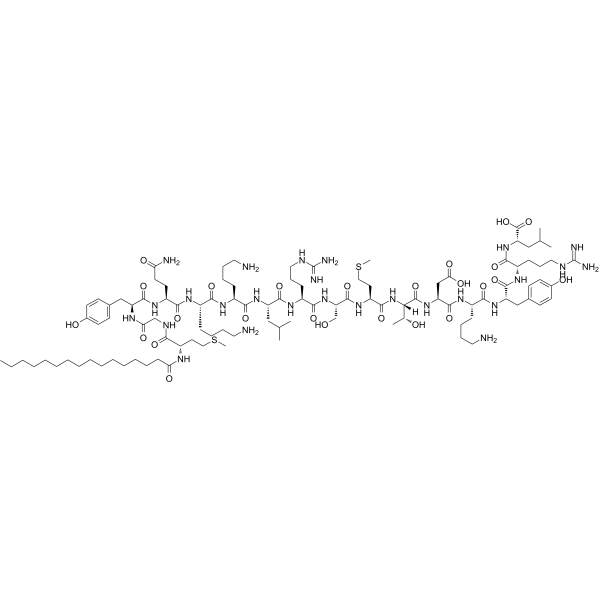
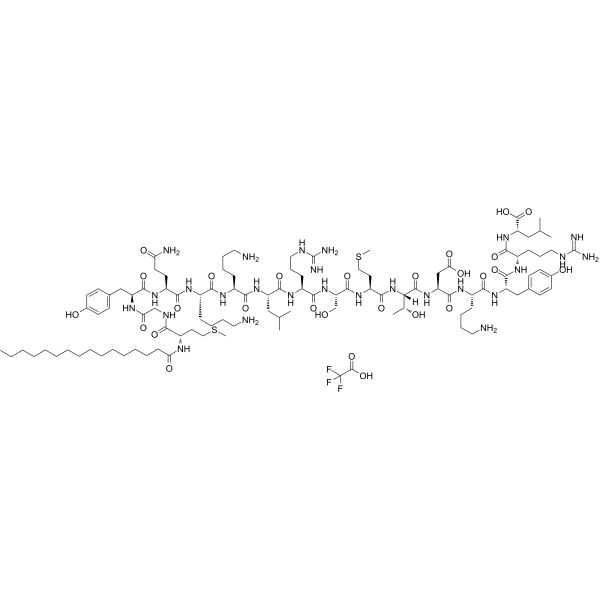
ATI-2341 is a potent and functionally selective allosteric agonist of C-X-C chemokine receptor type 4 (CXCR4), which functions as a biased ligand, favoring Gαi activation over Gα13. ATI-2341 activates the inhibitory heterotrimeric G protein (Gi) to promote inhibition of cAMP production and induce calcium mobilization. ATI-2341 is a potent and efficacious mobilizer of bone marrow polymorphonuclear neutrophils (PMNs) and hematopoietic stem and progenitor cells (HSPCs) .
|
-
- HY-130344
-
|
|
Dopamine Receptor
Sigma Receptor
|
Neurological Disease
|
|
SKF83959 is a potent and selective dopamine D1-like receptor partial agonist. SKF83959 Ki values for rat D1, D5, D2 and D3 receptors are 1.18, 7.56, 920 and 399 nM, respectively. SKF83959 is a potent allosteric modulator of sigma (σ)-1 receptor. SKF83959 belongs to benzazepine family and has improvements on cognitive dysfunction. SKF83959 can be used for the research of Alzheimer's disease and depression .
|
-
- HY-103565R
-
|
|
Reference Standards
mGluR
|
Neurological Disease
|
|
AMN082 (Standard) is the analytical standard of AMN082. This product is intended for research and analytical applications. AMN082, a selective, orally active, and brain penetrant mGluR7 agonist, directly activates receptor signaling via an allosteric site in the transmembrane domain. AMN082 potently inhibits cAMP accumulation and stimulates GTPγS binding (EC50 values, 64-290 nM) at transfected mammalian cells expressing mGluR7. AMN082 shows selectivity over other mGluR subtypes and selected ionotropic glutamate receptors. Antidepressant effects .
|
-
- HY-123525
-
|
|
GABA Receptor
|
Neurological Disease
|
|
COR628 is a positive allosteric modulator of GABA(B) receptors with the activity of enhancing GABA-induced GTPγS stimulation. COR628 showed significant activity in in vitro studies but did not exhibit endogenous agonist activity. COR628 has shown efficacy in experiments in mice by enhancing the sedation/hypnosis induced by baclofen, shortening the onset time and extending the duration of loss of righting reflex when combined with non-sedating doses of baclofen . The cytotoxic effect of COR628 is comparable to or higher than that of GS39783 or BHF177 in concentration .
|
-
- HY-P0172
-
|
|
CXCR
|
Inflammation/Immunology
Endocrinology
Cancer
|
|
ATI-2341 is a potent and functionally selective allosteric agonist of C-X-C chemokine receptor type 4 (CXCR4), which functions as a biased ligand, favoring Gαi activation over Gα13. ATI-2341 activates the inhibitory heterotrimeric G protein (Gi) to promote inhibition of cAMP production and induce calcium mobilization. ATI-2341 is a potent and efficacious mobilizer of bone marrow polymorphonuclear neutrophils (PMNs) and hematopoietic stem and progenitor cells (HSPCs) .
|
-
- HY-14562
-
|
|
mAChR
Amyloid-β
|
Neurological Disease
Inflammation/Immunology
|
|
TBPB (tert-butyl peroxybenzoate) is a highly selective, blood-brain-permeable M1 mAChR allosteric agonist (EC50=289 nM) with anti-schizophrenia and anti-inflammatory activities. TBPB can enhance the sensitivity of M1 receptors to acetylcholine, activate downstream signaling pathways, and inhibit the release of pro-inflammatory cytokines (TNF-α, IL-6). TBPB can regulate the processing of amyloid and can be used in the study of neurodegenerative diseases (such as Alzheimer's disease) and inflammation-related diseases (such as sepsis) .
|
-
- HY-182091
-
|
|
5-HT Receptor
Dopamine Receptor
Dopamine Transporter
Adrenergic Receptor
Calcium Channel
|
Neurological Disease
|
|
CYD-1-79 is a selective positive allosteric modulator of 5-HT2C receptor. CYD-1-79 potentiates 5-HT-evoked intracellular calcium release via a topographically distinct allosteric site. CYD-1-79 shows significant inhibition of binding at dopamine D3 receptor, DAT, and α2A/α2B adrenergic receptors. CYD-1-79 modulates 5-HT2C receptor-mediated spontaneous ambulation in rodents and synergizes with a low dose of a 5-HT2C receptor agonist. CYD-1-79 attenuates relapse vulnerability of psychoactive substance in a rodent self-administration model. CYD-1-79 can be used for the research of neurological disease .
|
-
- HY-109009AR
-
|
(S)-UCB-0942 (Standard)
|
Reference Standards
GABA Receptor
|
Neurological Disease
|
|
(S)-Padsevonil (Standard) is the analytical standard of (S)-Padsevonil (HY-109009A). This product is intended for research and analytical applications. (S)-Padsevonil is the S-enantiomer of Padsevonil (HY-109009).Padsevonil (UCB0942) is a potent antiepileptic agent that selectively acts on presynaptic and postsynaptic targets. Padsevonil binds to synaptic vesicular protein 2 (SV2) with high affinity. Padsevonil is also a positive allosteric modulator and partial agonist of GABAAR, with high potency against α1 and α5 receptors. Padsevonil has antiepileptic effects in a variety of rodent models .
|
-
- HY-116152
-
|
Ciprofol; HSK3486
|
GABA Receptor
Sirtuin
Keap1-Nrf2
Apoptosis
|
Cardiovascular Disease
Neurological Disease
Metabolic Disease
Inflammation/Immunology
Cancer
|
|
Cipepofol (Ciprofol), a novel 2,6-disubstituted phenol derivative, is a positive allosteric modulator and direct agonist of the GABAA receptor. Cipepofol can cause the central nerve inhibition and promote sleep based on the structural modification of Propofol (HY-B0649). Cipepofol can activate the sirtuin1 (Sirt1)/Nrf2 pathway. Cipepofol protects the heart against Isoproterenol (ISO; HY-B0468)-induced myocardial infarction by reducing cardiac oxidative stress, inflammatory response and cardiomyocyte apoptosis .
|
-
- HY-100403R
-
|
|
mGluR
Reference Standards
|
Cancer
|
|
Ro 67-7476 (Standard) is the analytical standard of Ro 67-7476 (HY-100403). This product is intended for research and analytical applications. Ro 67-7476 is a potent positive allosteric modulator of mGluR1 and potentiates glutamate-induced calcium release in HEK293 cells expressing rat mGluR1a with an EC50 of 60.1 nM . Ro 67-7476 is a potent P-ERK1/2 agonist and activates ERK1/2 phosphorylation in the absence of exogenously added glutamate (EC50=163.3 nM) .
|
-
- HY-103412
-
|
|
Dopamine Receptor
Sigma Receptor
|
Neurological Disease
|
|
SKF83959 hydrobromide is a potent and selective dopamine D1-like receptor partial agonist. SKF83959 hydrobromide Ki values for rat D1, D5, D2 and D3 receptors are 1.18, 7.56, 920 and 399 nM, respectively. SKF83959 hydrobromide is a potent allosteric modulator of sigma (σ)-1 receptor. SKF83959 hydrobromide belongs to benzazepine family and has improvements on cognitive dysfunction. SKF83959 hydrobromide can be used for the research of Alzheimer's disease and depression .
|
-
- HY-116819
-
|
|
GCGR
|
Neurological Disease
Metabolic Disease
|
|
VU0453379 is a blood-brain barrier permeable GLP-1R positive allosteric modulator (PAM) with an EC50 value of 1.3 μM. VU0453379 potentiates the actions of endogenous GLP-1 and synthetic peptide agonists, and promotes GLP-1 receptor internalization. VU0453379 stimulates insulin secretion from primary mouse islets. VU0453379 enhances the function of endogenous GLP-1R and reverses catalepsy in animal models. VU0453379 is useful for research on Parkinson's disease and type 2 diabetes .
|
-
- HY-179419
-
|
|
Glucokinase
|
Metabolic Disease
|
|
Glucokinase activator 10, a thiazole-based compound, is a liver-selective and orally active glucokinase activator with an EC50 of 42 nM. Glucokinase activator 10 exhibits significant glucose lowering in acute diet-induced obese mouse oral glucose tolerance (OGTT) test. Glucokinase activator 10 can be used for the study of metabolic disorders .
|
-
- HY-117734
-
|
|
iGluR
|
Neurological Disease
|
|
PYD-106 is a stereoselective pyrrolidinone (PYD) positive allosteric modulator for GluN2C-containing NMDA receptors. PYD-106 increases opening frequency and open time of single channel currents activated by maximally effective concentrations of agonist but only has modest effects on glutamate and glycine EC50. PYD-106 selectively enhances the responses of diheteromeric GluN1/GluN2C receptors but not triheteromeric GluN1/GluN2A/GluN2C receptors .
|
-
- HY-103565AR
-
|
|
Reference Standards
mGluR
|
Neurological Disease
|
|
AMN082 (free base) (Standard) is the analytical standard of AMN082 (free base). This product is intended for research and analytical applications. AMN082 free base, a selective, orally active, and brain penetrant mGluR7 agonist, directly activates receptor signaling via an allosteric site in the transmembrane domain. AMN082 free base potently inhibits cAMP accumulation and stimulates GTPγS binding (EC50 values, 64-290 nM) at transfected mammalian cells expressing mGluR7. AMN082 free base shows selectivity over other mGluR subtypes and selected ionotropic glutamate receptors. Antidepressant effects .
|
-
- HY-W856819
-
|
|
Opioid Receptor
Cholinesterase (ChE)
Drug Metabolite
nAChR
|
Neurological Disease
|
|
Eseroline is a potent μ-opioid receptor agonist, which is the hydrolytic metabolite of Physostigmine (HY-N6608). Eseroline is a selective and competitive acetylcholinesterase (AChE) inhibitor, with its Ki values for AChE and BuChE being 0.1 μM and 200 μM respectively. Eseroline has nicotinic acetylcholine receptor allosteric enhancing ligand (nAChR-APL) activity, meaning it does not activate the receptor but significantly enhances the signal transduction of Ach triggered by the receptor. Eseroline is neurotoxic, causing cell membrane damage (LDH leakage) and energy metabolism collapse (ATP depletion). Eseroline can be used for the study of Alzheimer's disease .
|
-
- HY-15618
-
|
M1 receptor modulator
|
mAChR
Calcium Channel
|
Neurological Disease
|
|
MK-7622 (M1 receptor modulator) is an orally active positive allosteric modulator of muscarinic M1 acetylcholine receptors (mAChRs). MK-7622 enhances ACh-induced calcium flux in CHO cells expressing human M1 receptors (EC50 = 21 nM) and shows robust agonist activity in rat M1-expressing CHO cells, increasing intracellular calcium. MK-7622 reverses Scopolamine (HY-N0296)-induced cognitive deficits in rhesus macaques in an object retrieval detour task. MK-7622 can be used for the study of Alzheimer's disease (AD) .
|
-
- HY-107111
-
|
|
mAChR
|
Neurological Disease
|
|
GSK1034702 is an orally active and allosteric agonist of M1 mAChR (pEC50=8.1) that can cross the blood-brain barrier. GSK1034702 activates the Gq/11 protein-mediated signaling pathway, enhancing neuronal firing and long-term potentiation (LTP) in the CA1 region of the hippocampus. GSK1034702 can modulate hippocampal function, improve memory encoding in the nicotine withdrawal cognitive dysfunction model, and show pro-cognitive effects in rodents. GSK1034702 can be used for the study of the mechanisms of cognitive impairment diseases such as Alzheimer's disease, and has certain peripheral M receptor activation-related side effects (such as gastrointestinal reactions) .
|
-
- HY-107111A
-
|
|
Cholinesterase (ChE)
mAChR
|
Neurological Disease
|
|
GSK1034702 hydrochloride is an orally active and allosteric agonist of M1 mAChR (pEC50=8.1) that can cross the blood-brain barrier. GSK1034702 hydrochloride activates the Gq/11 protein-mediated signaling pathway, enhancing neuronal firing and long-term potentiation (LTP) in the CA1 region of the hippocampus. GSK1034702 hydrochloride can modulate hippocampal function, improve memory encoding in the nicotine withdrawal cognitive dysfunction model, and show pro-cognitive effects in rodents. GSK1034702 hydrochloride can be used for the study of the mechanisms of cognitive impairment diseases such as Alzheimer's disease, and has certain peripheral M receptor activation-related side effects (such as gastrointestinal reactions) .
|
-
- HY-16639
-
|
|
GPR35
Neurotensin Receptor
|
Neurological Disease
Endocrinology
|
|
ML314 is a potent, BBB-penetrant and β-arrestin biased molecule agonist of NTR1 (EC50 = 1.9 μM). ML314 shows good selectivity against NTR2 and GPR35, but does not stimulate Ca2+ mobilization. ML314 can attenuate amphetamine-like hyperlocomotion in dopamine transporter knockout mice. ML314 attenuates methamphetamine-associated hyperlocomotion and potentiates the psychostimulant inhibitory effects of a ghrelin antagonist in wild type mouse model. ML314 also acts as an allosteric enhancer of endogenous neurotensin. ML314 antagonizes G protein signaling. ML314 can be studied in research for methamphetamine abuse conditions .
|
-
- HY-115857
-
|
|
GABA Receptor
|
Neurological Disease
|
|
SH-053-S-CH3-2'F is a selective positive allosteric modulator that produces mild to partial agonistic activity at α(1) GABA(A) receptors. SH-053-S-CH3-2'F showed anxiety-relieving effects at a dose of 30 mg/kg. SH-053-S-CH3-2'F completely avoids the memory impairment commonly caused by benzodiazepine site agonists. SH-053-S-CH3-2'F shows strong selectivity at GABA(A) receptors, which could potentially be used to develop more selective anti-anxiety drugs .
|
-
- HY-155811
-
|
|
iGluR
|
Neurological Disease
|
|
DQP-997-74 (compound 2i) is a selective negative allosteric modulator of N-methyl-d-aspartate receptor (NMDAR), specifically targeting GluN2C/D (IC50: 0.069 μM and 0.035 μM), with blood-brain barrier penetrability. Where DQP refers to dihydroquinoline-pyrazoline. DQP-997-74 acts synergistically with the agonist glutamate to exhibit time-dependent enhanced potency in inhibiting hypersynchronous activity driven by high-frequency excitatory synaptic transmission. DQP-997-74 reduces the number of epileptogenesis in a murine model of tuberous sclerosis complex (TSC)-induced epilepsy. DQP-997-74 can be used for research on NMDAR-related neurological diseases .
|
-
- HY-176710
-
|
|
Protein Arginine Deiminase
Opioid Receptor
mAChR
|
Neurological Disease
Inflammation/Immunology
Cancer
|
|
PAD-PF2 is a PAD family inhibitor, as well as a κ-opioid receptor agonist (EC50 = 7.55 μM) and an M1 muscarinic acetylcholine receptor antagonist (IC50 = 12.3 μM). The IC50 values of PAD-PF2 against PAD1, PAD2, PAD3 and PAD4 are 109 nM, 27.9 nM, 106 nM and 20.1 nM, respectively. PAD-PF2 binds to the common allosteric pocket of PAD1-4, and its inhibitory effects on PAD2 and PAD4 are Ca 2+-dependent. PAD-PF2 inhibits protein citrullination in neutrophils. PAD-PF2 is applicable to research related to rheumatoid arthritis, neurodegenerative diseases and cancer .
|
-
- HY-107111R
-
|
|
Reference Standards
mAChR
|
Neurological Disease
|
|
GSK1034702 (Standard) is the analytical standard of GSK1034702 (HY-107111). This product is intended for research and analytical applications. GSK1034702 is an orally active and allosteric agonist of M1 mAChR (pEC50=8.1) that can cross the blood-brain barrier. GSK1034702 activates the Gq/11 protein-mediated signaling pathway, enhancing neuronal firing and long-term potentiation (LTP) in the CA1 region of the hippocampus. GSK1034702 can modulate hippocampal function, improve memory encoding in the nicotine withdrawal cognitive dysfunction model, and show pro-cognitive effects in rodents. GSK1034702 can be used for the study of the mechanisms of cognitive impairment diseases such as Alzheimer's disease, and has certain peripheral M receptor activation-related side effects (such as gastrointestinal reactions) .
|
-
- HY-132806
-
|
RG-7816; RO-7017773
|
GABA Receptor
|
Neurological Disease
|
|
Alogabat is a positive allosteric modulator (PAM) and agonist (Ki <100 nM) of the GABAA α5 receptor, targeting the α5β3γ2 subunit with a Ki of 8.7 nM. Alogabat increases the expression level of α5β3γ2 in oocytes (1.97-fold). GABAA has been implicated in cognitive impairment associated with central nervous system (CNS) disorders, brain cancer (including brain tumors such as medulloblastoma), and can be used in the study of mild cognitive impairment (MCI), amnestic MCI (aMCI), age-associated memory impairment (AAMI), age-related cognitive decline (ARCD), dementia, Alzheimer's disease (AD), prodromal AD, post-traumatic stress disorder (PTSD), schizophrenia, bipolar disorder, amyotrophic lateral sclerosis (ALS), cognitive impairment associated with cancer treatment, mental retardation, Parkinson's disease (PD), autism spectrum disorder, fragile X, Rett syndrome, obsessive-compulsive behavior, and substance addiction .
|
-
| Cat. No. |
Product Name |
Target |
Research Area |
-
- HY-P0172
-
|
|
CXCR
|
Inflammation/Immunology
Endocrinology
Cancer
|
|
ATI-2341 is a potent and functionally selective allosteric agonist of C-X-C chemokine receptor type 4 (CXCR4), which functions as a biased ligand, favoring Gαi activation over Gα13. ATI-2341 activates the inhibitory heterotrimeric G protein (Gi) to promote inhibition of cAMP production and induce calcium mobilization. ATI-2341 is a potent and efficacious mobilizer of bone marrow polymorphonuclear neutrophils (PMNs) and hematopoietic stem and progenitor cells (HSPCs) .
|
-
- HY-P0172A
-
|
|
CXCR
|
Inflammation/Immunology
Endocrinology
Cancer
|
|
ATI-2341 is a potent and functionally selective allosteric agonist of C-X-C chemokine receptor type 4 (CXCR4), which functions as a biased ligand, favoring Gαi activation over Gα13. ATI-2341 activates the inhibitory heterotrimeric G protein (Gi) to promote inhibition of cAMP production and induce calcium mobilization. ATI-2341 is a potent and efficacious mobilizer of bone marrow polymorphonuclear neutrophils (PMNs) and hematopoietic stem and progenitor cells (HSPCs) .
|
-
- HY-P5860
-
|
Micrurotoxin 1
|
GABA Receptor
|
Neurological Disease
|
|
MmTx1 toxin (Micrurotoxin 1) is an allosteric GABAA receptor modulator that increases GABAA receptor susceptibility to agonist .
|
-
- HY-P1397
-
|
|
Cannabinoid Receptor
|
Neurological Disease
|
|
RVD-Hpα, an α-hemoglobin-derived peptide containing three additional amino acids, is a CB1 cannabinoid receptor agonist. RVD-Hpα is a positive allosteric modulator of cannabinoid receptor 2 .
|
-
- HY-P11259
-
|
|
Urotensin Receptor
|
Cardiovascular Disease
Metabolic Disease
Inflammation/Immunology
Cancer
|
UPG-111 is a peptide compound that acts as a negative allosteric modulator of the Urotensin II receptor (UTR). UPG-111 exhibits a dual inhibitory effect on the vasoconstriction induced by UTR agonists - it reduces both the maximum response intensity and the sensitivity of the agonist. UPG-111 does not induce calcium release or cause contraction of the endothelium-deprived rat aortic rings. UPG-111 can be used for the study of various diseases related to the angiotensinergic system .
|
-
- HY-P1397A
-
|
|
Cannabinoid Receptor
|
Cardiovascular Disease
|
|
RVD-Hpα TFA is the N-terminally extended form of human hemopressin that acts as a selective CB1 receptor agonist. RVD-Hpα TFA increases intracellular Ca 2+ levels in cells expressing CB1 receptors in vitro. RVD-Hpα TFA also high affinity CB2 positive allosteric modulator (Ki=50 nM).
|
-
- HY-P11258
-
|
|
Urotensin Receptor
|
Cardiovascular Disease
Metabolic Disease
Inflammation/Immunology
Cancer
|
UPG-108, a peptide compound, is a non-competitive allosteric modulator of Urotensin II receptors (UTR). UPG-108 significantly enhances the efficacy of UTR agonists but reduces the potency of UTR agonists. UPG-111 efficiently induces calcium release and does not cause contraction of rat aortic rings without endothelial denudation. UPG-111 can be used to study various diseases related to the angiotensinergic system .
|
| Cat. No. |
Product Name |
Category |
Target |
Chemical Structure |
| Cat. No. |
Product Name |
Chemical Structure |
-
- HY-G0021S1
-
|
|
|
N-Desmethylclozapine-d8 (hydrochloride) is the deuterium labeled N-Desmethylclozapine hydrochloride. N-Desmethylclozapine hydrochloride is a major active metabolite of the atypical antipsychotic agent Clozapine. N-Desmethylclozapine hydrochloride is a potent, allosteric and partial M1 receptors agonist (EC50=115 nM) and is able to potentiate hippocampal N-methyl-d-aspartate (NMDA) receptor currents through M1 receptor activation. N-Desmethylclozapine hydrochloride is also a δ-opioid agonist .
|
-
-
- HY-10046S
-
|
|
|
Plerixafor-d4 is the deuterium labeled Plerixafor. Plerixafor (AMD 3100) is a selective CXCR4 antagonist with an IC50 of 44 nM. Plerixafor, an immunostimulant and a hematopoietic stem cell (HSC) mobilizer, is an allosteric agonist of CXCR7. Plerixafor inhibits HIV-1 and HIV-2 replication with an EC50 of 1-10 nM .
|
-
-
- HY-70037AS
-
|
|
|
Cinacalcet-d3 (hydrochloride) is the deuterium labeled Cinacalcet (hydrochloride). Cinacalcet hydrochloride (AMG-073 hydrochloride) is an orally active, allosteric agonist of Ca receptor (CaR), used for cardiovascular disease treatment.
|
-
-
- HY-G0021S
-
|
|
|
N-Desmethylclozapine-d8 is the deuterium labeled N-Desmethylclozapine. N-Desmethylclozapine is a major active metabolite of the atypical antipsychotic agent Clozapine. N-Desmethylclozapine is a potent, allosteric and partial M1 receptors agonist (EC50=115 nM) and is able to potentiate hippocampal N-methyl-d-aspartate (NMDA) receptor currents through M1 receptor activation. N-Desmethylclozapine is also a δ-opioid agonist .
|
-
-
- HY-70037S
-
|
|
|
Cinacalcet-d3 is the deuterium labeled Cinacalcet. Cinacalcet (AMG 073) is an orally active, allosteric agonist of Ca receptor (CaR), used for cardiovascular disease treatment.
|
-
-
- HY-W653978
-
|
|
|
Cinacalcet-d4 (AMG-073-d4) hydrochlorideis deuterium labeled Cinacalcet (hydrochloride). Cinacalcet hydrochloride (AMG-073 hydrochloride) is an orally active, allosteric agonist of Ca receptor (CaR), used for cardiovascular disease treatment .
|
-
Your information is safe with us. * Required Fields.
Inquiry Information
- Product Name:
- Cat. No.:
- Quantity:
- MCE Japan Authorized Agent:

