



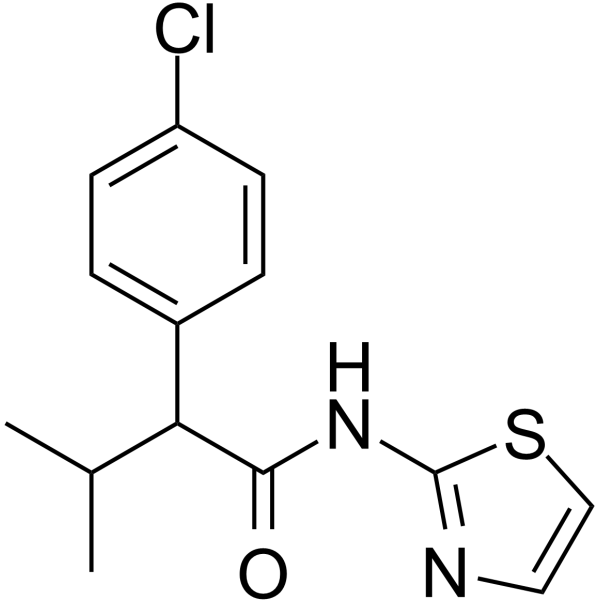
4-CMTB
Based on 6 publication(s) in Google Scholar
4-CMTB is a selective free fatty acid receptor 2 (FFA2/GPR43) agonist and a positive allosteric modulator (pEC50=6.38).
Nos produits utilisent uniquement pour la recherche. Nous ne vendons pas aux patients.
- Pureté : 99.73%
- CAS No.: 300851-67-6
- Formule: C14H15ClN2OS
- Masse moléculaire:294.80
-
Stockage:
4°C, protect from light
* In solvent : -80°C, 6 months; -20°C, 1 month (protect from light)

To place orders, for customer services and technical support, please contact: MedChemExpress USA
Tel: 609-228-6898 E-mail: [email protected] [email protected]


-
 Activité biologique
-
Chemical Information
-
Solvant et solubilité
- Pureté et documentation
- Références
-
 Help & FAQs


-
HY-116522
AR420626FFAR3 Agonist -
HY-15589
GW9508GPR40 Agonist -
HY-12940
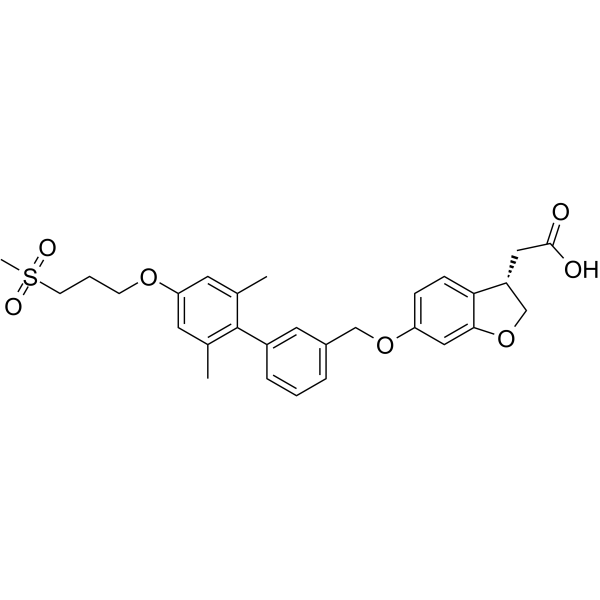
GLPG0974FFA2/GPR43 Antagonist -
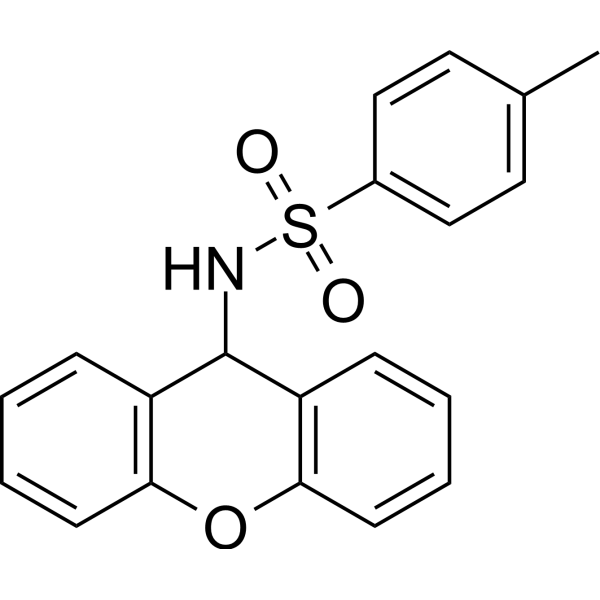
HY-19996
AH-7614FFA4 Antagonist -
HY-B0143
NiacinB3 vitamin -
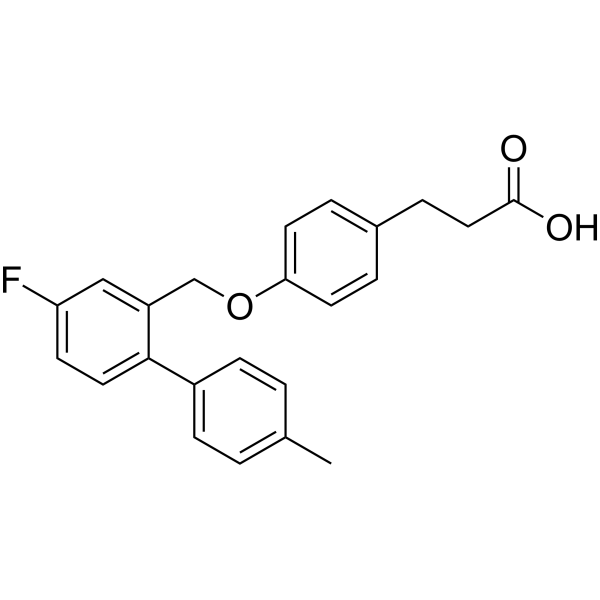
HY-100881
TUG-891FFA4/GPR120 Agonist -
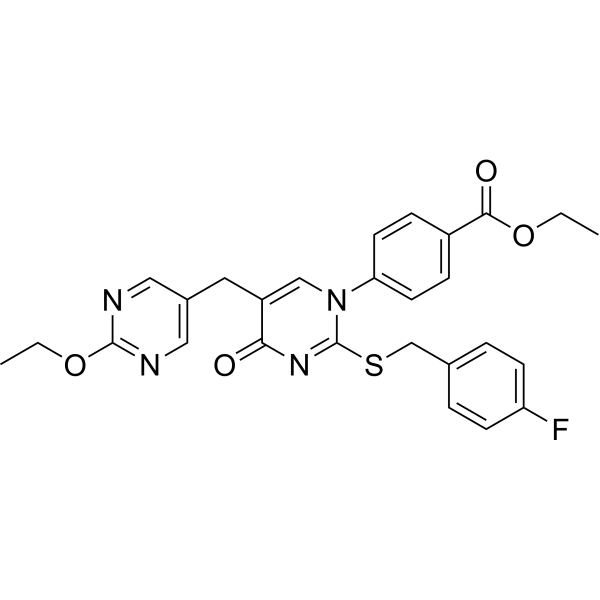
HY-50691
GW-1100Free Fatty Acid Receptor Antagonist -
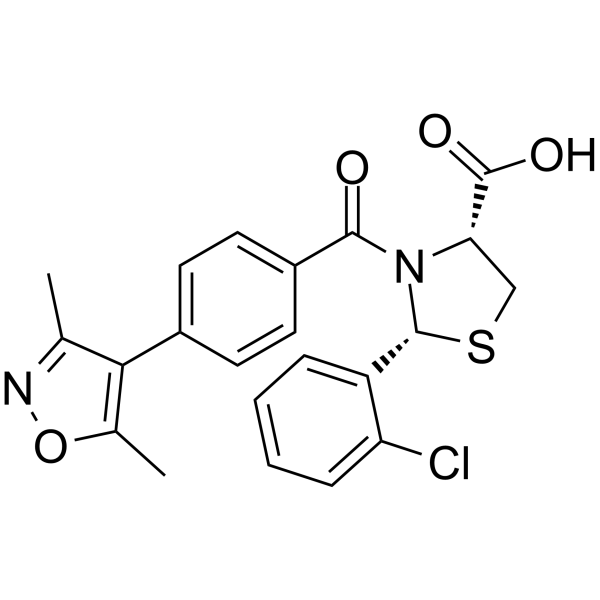
HY-112813
TUG-1375FFA2/GPR43 Agonist -
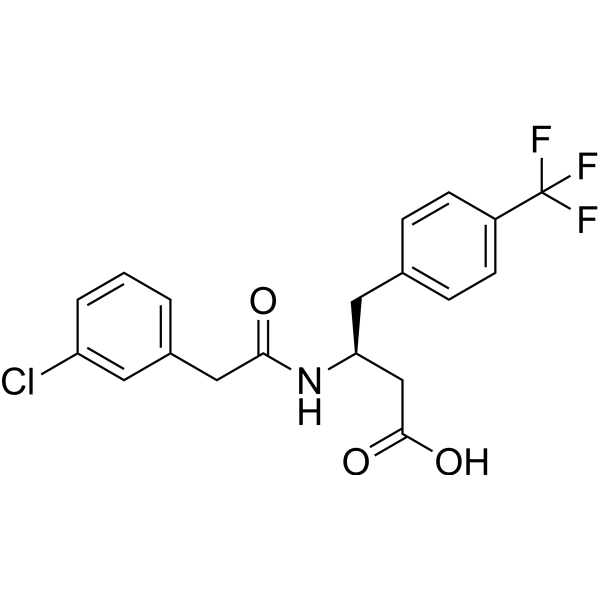
HY-116263
CATPBFFA2R Antagonist -
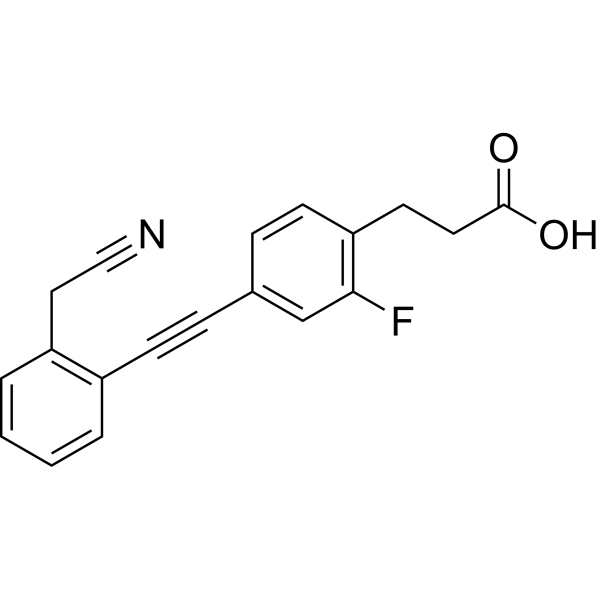
HY-15697
TUG-770GPR40/FFA1 Agonist -
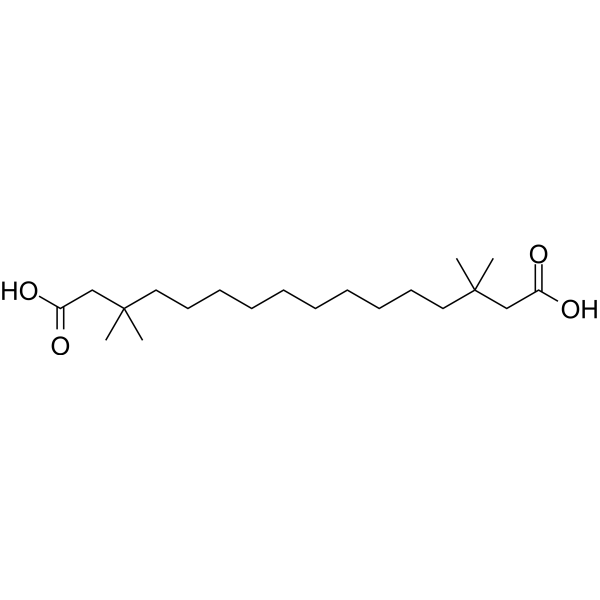
HY-P1123
MEDICA16Acetyl-CoA Carboxylase/ATP-Citrate Lyase Inhibitor -
HY-10480
FasiglifamGPR40 Agonist
Publications Citing Use of MedChemExpress (MCE) 4-CMTB
More- Phytomedicine. 2025 Dec:149:157523. [Abstract]
- J Pharm Anal. 2026 Mar 19.
- Antioxidants (Basel). 2022 Jan 29;11(2):274. [Abstract]
- Biochem Pharmacol. 2024 Dec;230(Pt 2):116593. [Abstract]
- Int Immunopharmacol. 2024 Oct 16;143(Pt 2):113328. [Abstract]
- Aging (Albany NY). 2021 Sep 28;13(18):22588-22610. [Abstract]
 Customer Validation & Images

-
In Vivo Efficacy Study
-
RT-PCR
-
Histological Imaging/Staining

-
IHC
-
Flow Cytometry



Activité biologique
Description
Cellular Effect
|
Cell Line

|
Type | Value | Description | References |
|---|---|---|---|---|
| CHO | IC50 |
0.8 μM
Compound: rac-1
|
Agonist activity at human FFA2 receptor expressed in CHO cells assessed as inhibition of forskolin-induced cAMP production
Agonist activity at human FFA2 receptor expressed in CHO cells assessed as inhibition of forskolin-induced cAMP production
|
[PMID: 20005104] |
In Vitro
4-CMTB is both a direct agonist and a positive allosteric modulator of the action of short-chain free fatty acids. 4-CMTB modulates the activity of short-chain fatty acids at FFA2 via the FFA2 second extracellular loop (ECL2)[1][2].
MedChemExpress (MCE) has not independently confirmed the accuracy of these methods. They are for reference only.


Chemical Information
-
CAS No. 300851-67-6
-
Appearance Solid
-
Masse moléculaire 294.80
-
Formule C14H15ClN2OS
-
Color White to off-white
-
SMILES
O=C(NC1=NC=CS1)C(C(C)C)C2=CC=C(Cl)C=C2
-
Livraison
Room temperature in continental US; may vary elsewhere.
-
Stockage
4°C, protect from light
* In solvent : -80°C, 6 months; -20°C, 1 month (protect from light)


Publications (6)
-
Journal Impact Factor
-
Most Recent
-
Phytomedicine
Tetrastigma hemsleyanum polysaccharides alleviate inflammatory bowel disease via the gut microbiota-SCFA-GPR43 signaling axis. [Abstract]2025 Dec:149:157523. PMID: 41308392
4-CMTB purchased from MedChemExpress. Usage Cited in: Phytomedicine. 2025 Dec:149:157523. [Abstract]
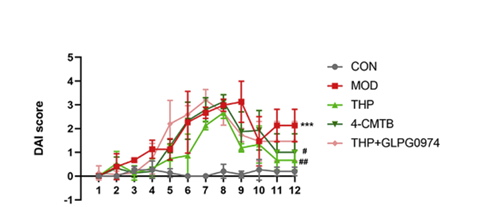
THP (Tetrastigma hemsleyanum polysaccharides, THP) or 4-CMTB (10 mg/kg, i.p., 5 days) improved the Disease Activity Index induced by DSS. However, GLPG0974 (1 mg/kg, i.g., 5 days) reversed the Disease Activity Index increase induced by Tetrastigma hemsleyanum polysaccharides in the IBD mouse model.
4-CMTB purchased from MedChemExpress. Usage Cited in: Phytomedicine. 2025 Dec:149:157523. [Abstract]
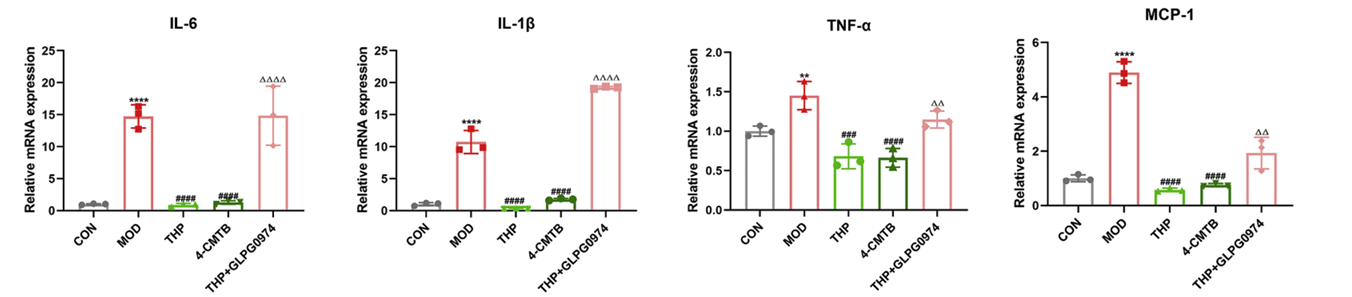
THP(Tetrastigma hemsleyanum polysaccharides, THP) or 4-CMTB (10 mg/kg, i.p., 5 days) reduced the expression of these pro-inflammatory mediators (IL-6, IL-1β, TNFα, and MCP-1) in the colon. Conversely, mice administered THP + GLPG0974 (1 mg/kg, i.g., 5 days) displayed an upregulation of colonic cytokine mRNA.
4-CMTB purchased from MedChemExpress. Usage Cited in: Phytomedicine. 2025 Dec:149:157523. [Abstract]
THP (Tetrastigma hemsleyanum polysaccharides, THP)or 4-CMTB (10 mg/kg, i.p., 5 days) reduced the abnormal spleen index induced by DSS and improved the pathological changes in the spleens of mice following DSS treatment. Conversely, in the THP + GLPG0974 group, the abnormal spleen index and spleen inflammation persisted, indicating that GLPG0974 reversed the therapeutic effect of THP.
4-CMTB purchased from MedChemExpress. Usage Cited in: Phytomedicine. 2025 Dec:149:157523. [Abstract]
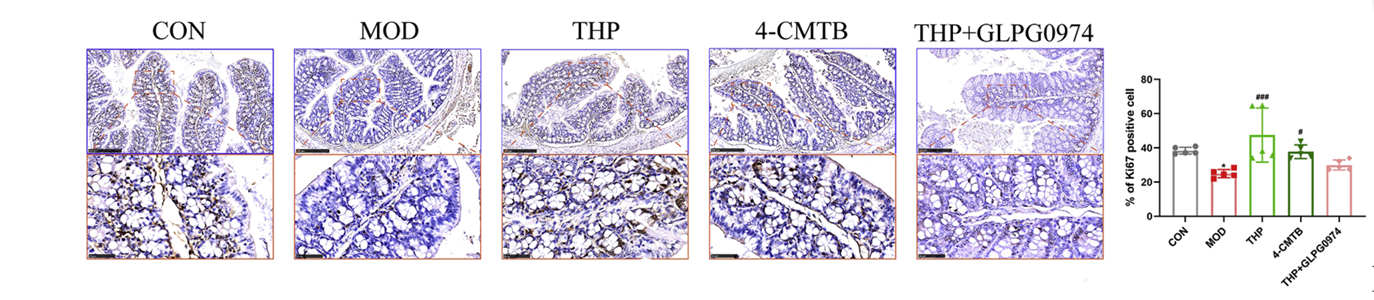
Immunohistochemical staining images of Ki67 showed that THP (Tetrastigma hemsleyanum polysaccharides, THP) or 4-CMTB (10 mg/kg, i.p., 5 days) regulated the growth and apoptosis of intestinal epithelial cells induced by DSS in mice. However, mice in the THP + GLPG0974 group exhibited persistent damage to intestinal epithelial cells.
4-CMTB purchased from MedChemExpress. Usage Cited in: Phytomedicine. 2025 Dec:149:157523. [Abstract]
THP (Tetrastigma hemsleyanum polysaccharides, THP) or 4-CMTB alleviated the aberrant proliferation of CD3+ cells induced by DSS in mice. However, mice in the THP + GLPG0974 group still exhibited elevated levels of CD3+ cells.
-
-
Antioxidants (Basel)
Blue Light Alters the Composition of the Jejunal Microbiota and Promotes the Development of the Small Intestine by Reducing Oxidative Stress. [Abstract]2022 Jan 29;11(2):274. PMID: 35204158 -
Biochem Pharmacol
MNAM enhances Blautia abundance and modulates Th17/Treg balance to alleviate diabetes in T2DM mice. [Abstract]2024 Dec;230(Pt 2):116593. PMID: 39454734 -
Int Immunopharmacol
The VDR/FFAR2 axis mitigates sepsis-induced lung injury by suppressing macrophage lipid peroxidation. [Abstract]2024 Oct 16;143(Pt 2):113328. PMID: 39418731 -
Aging (Albany NY)
2021 Sep 28;13(18):22588-22610. PMID: 34584017


Solvant et solubilité
In Vitro:
DMSO : 100 mg/mL (339.21 mM; Need ultrasonic; Hygroscopic DMSO has a significant impact on the solubility of product, please use newly opened DMSO)
Please refer to the solubility information to select the appropriate solvent. Once prepared, please aliquot and store the solution to prevent product inactivation from repeated freeze-thaw cycles.
Storage method and period of stock solution: -80°C, 6 months; -20°C, 1 month (protect from light). When stored at -80°C, please use it within 6 months. When stored at -20°C, please use it within 1 month.
Please refer to the solubility information to select the appropriate solvent. Once prepared, please aliquot and store the solution to prevent product inactivation from repeated freeze-thaw cycles.
Storage method and period of stock solution: -80°C, 6 months; -20°C, 1 month (protect from light). When stored at -80°C, please use it within 6 months. When stored at -20°C, please use it within 1 month.
Concentration (start) × Volume (start) = Concentration (final) × Volume (final)
In Vivo:
Select the appropriate dissolution method based on your experimental animal and administration route.
- For the following dissolution methods, please ensure to first prepare a clear stock solution using an In Vitro approach and then sequentially add co-solvents:
- To ensure reliable experimental results, the clarified stock solution can be appropriately stored based on storage conditions. As for the working solution for In Vivo experiments, it is recommended to prepare freshly and use it on the same day.
- The percentages shown for the solvents indicate their volumetric ratio in the final prepared solution. If precipitation or phase separation occurs during preparation, heat and/or sonication can be used to aid dissolution.
Add each solvent one by one: 10% DMSO 40% PEG300 5% Tween-80 45% Saline
Solubility: ≥ 2.5 mg/mL (8.48 mM); Clear solution
This protocol yields a clear solution of ≥ 2.5 mg/mL (saturation unknown).
Taking 1 mL working solution as an example, add 100 μL DMSO stock solution (25.0 mg/mL) to 400 μL PEG300, and mix evenly; then add 50 μL Tween-80 and mix evenly; then add 450 μL Saline to adjust the volume to 1 mL.
Preparation of Saline: Dissolve 0.9 g sodium chloride in ddH₂O and dilute to 100 mL to obtain a clear Saline solution.
In Vivo Dissolution Calculator
Please enter the basic information of animal experiments:
-
-
-
-
Recommended: Prepare an additional quantity of animals to account for potential losses during experiments.
Please enter your animal formula composition:
-
%DMSO +
Recommended: Keep the proportion of DMSO in working solution below 2% if your animal is weak.
-
%+
-
+%Tween-80 + +
-
%Saline +
The co-solvents required include: DMSO, . All of co-solvents are available by MedChemExpress (MCE). , Tween 80. All of co-solvents are available by MedChemExpress (MCE).
Working solution concentration: 0.22 mg/mL
Method for preparing stock solution: mg drug dissolved in μL DMSO. Stock solution concentration: mg/mL. * In solvent : -80°C, 6 months; -20°C, 1 month (protect from light)
1. Take μL DMSO stock solution;
2. Add μL .
μL , mix evenly;
3. Then add μL Tween 80, mix evenly;
4. Then add μL
Please ensure that the stock solution in the first step is dissolved to a clear state, and add co-solvents in sequence. You can use ultrasonic heating (ultrasonic cleaner, recommended frequency 20-40 kHz), vortexing, etc. to assist dissolution.


Pureté et documentation
-
Fiche technique (277 KB)
-
SDS (393 KB)
- English - EN (393 KB)
- Français - FR (393 KB)
- Deutsch - DE (393 KB)
- Norwegian - NO (393 KB)
- Español - ES (393 KB)
- Swedish - SV (393 KB)
- Italian - IT (393 KB)
- Korean - KR (393 KB)
- Portuguese - PT (393 KB)
-
Instruction de manipulation (2659 KB)
Références
[1]. Smith NJ, et al. Extracellular loop 2 of the free fatty acid receptor 2 mediates allosterism of a phenylacetamide ago-allosteric modulator. Mol Pharmacol. 2011;80(1):163-173. [Content Brief]
[2]. Milligan G, Stoddart LA, Smith NJ. Agonism and allosterism: the pharmacology of the free fatty acid receptors FFA2 and FFA3. Br J Pharmacol. 2009;158(1):146-153. [Content Brief]


Complete Stock Solution Preparation Table
Please refer to the solubility information to select the appropriate solvent. Once prepared, please aliquot and store the solution to prevent product inactivation from repeated freeze-thaw cycles.
Storage method and period of stock solution: -80°C, 6 months; -20°C, 1 month (protect from light). When stored at -80°C, please use it within 6 months. When stored at -20°C, please use it within 1 month.
| Optional Solvent | Concentration Solvent Mass | 1 mg | 5 mg | 10 mg | 25 mg |
|---|---|---|---|---|---|
| DMSO | 1 mM | 3.3921 mL | 16.9607 mL | 33.9213 mL | 84.8033 mL |
| 5 mM | 0.6784 mL | 3.3921 mL | 6.7843 mL | 16.9607 mL | |
| 10 mM | 0.3392 mL | 1.6961 mL | 3.3921 mL | 8.4803 mL | |
| 15 mM | 0.2261 mL | 1.1307 mL | 2.2614 mL | 5.6536 mL | |
| 20 mM | 0.1696 mL | 0.8480 mL | 1.6961 mL | 4.2402 mL | |
| 25 mM | 0.1357 mL | 0.6784 mL | 1.3569 mL | 3.3921 mL | |
| 30 mM | 0.1131 mL | 0.5654 mL | 1.1307 mL | 2.8268 mL | |
| 40 mM | 0.0848 mL | 0.4240 mL | 0.8480 mL | 2.1201 mL | |
| 50 mM | 0.0678 mL | 0.3392 mL | 0.6784 mL | 1.6961 mL | |
| 60 mM | 0.0565 mL | 0.2827 mL | 0.5654 mL | 1.4134 mL | |
| 80 mM | 0.0424 mL | 0.2120 mL | 0.4240 mL | 1.0600 mL | |
| 100 mM | 0.0339 mL | 0.1696 mL | 0.3392 mL | 0.8480 mL |


4-CMTB Related Classifications
HY-P1125 Related Classifications
 Powered by Bioz