1. Search Result
Search Result
Results for "

Aortic ring

" in MedChemExpress (MCE) Product Catalog:

28

Inhibitors & Agonists

1

Biochemical Assay Reagents

4

Peptides

11

Natural
Products

1

Isotope-Labeled Compounds

Cat. No. Product Name Target Research Areas Chemical Structure
  • HY-Y0337A
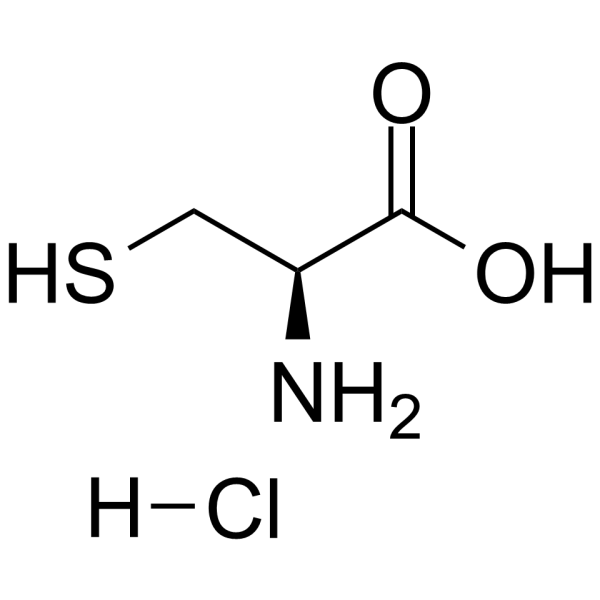
    L-Cysteine hydrochloride
    10+ Cited Publications

    Endogenous Metabolite Metabolic Disease Cancer
    L-Cysteine hydrochloride is an orally active conditionally essential amino acid, which acts as a precursor for biologically active molecules such as hydrogen sulphide (H2S), glutathione and taurine. L-Cysteine hydrochloride suppresses ghrelin and reduces appetite in rodents. L-Cysteine hydrochloride inhibits Aspergillus flavus growth and AFB synthesis by disrupting cell structure and antioxidant system balance. L-Cysteine hydrochloride enhances relaxant responses of rat aortic rings to NO and reduces responses to endothelium-derived relaxing factor (EDRF) .
    L-Cysteine hydrochloride
  • HY-W005255

    Endogenous Metabolite Cardiovascular Disease
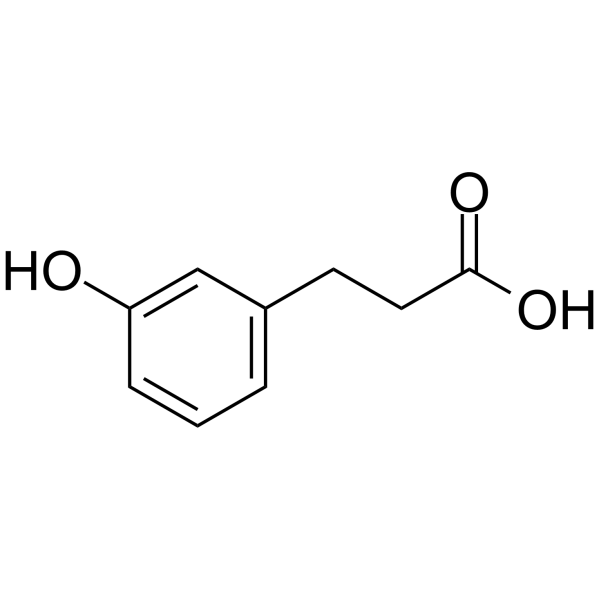
    3-(3-Hydroxyphenyl)propionic acid (3HPPA) is an endothelium-dependent nitric oxide (NO) release promoter and endothelial nitric oxide synthase (eNOS) activator. 3-(3-Hydroxyphenyl)propionic acid activates eNOS to mediate vascular smooth muscle relaxation and enhances endothelial cell NO synthesis, inducing vasodilation and reducing peripheral vascular resistance. 3-(3-Hydroxyphenyl)propionic acid can dose-dependently reduce systolic and diastolic blood pressure in spontaneously hypertensive rats (SHR) without affecting cardiac contractility or heart rate. 3-(3-Hydroxyphenyl)propionic acid has antihypertensive and vascular protective effects and can be used in the prevention and treatment of cardiovascular diseases .
    3-(3-Hydroxyphenyl)propionic acid
  • HY-108518

    ROCK Cardiovascular Disease Inflammation/Immunology
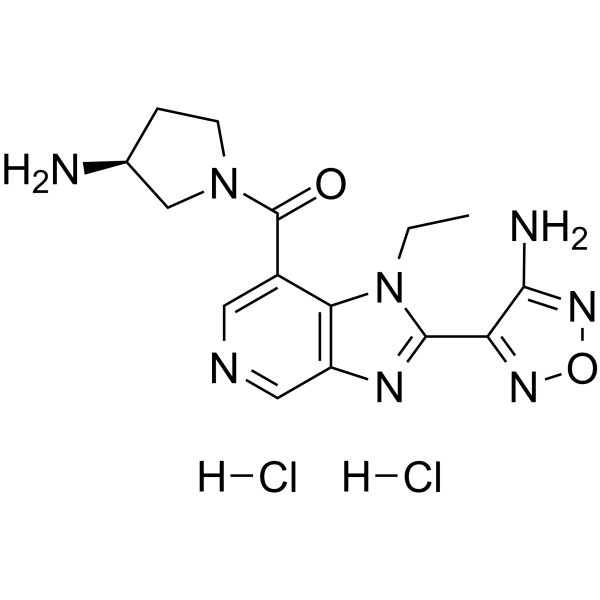
    SB-772077B dihydrochloride is an orally active aminofuran-based Rho kinase ((ROCK)) inhibitor with IC50 values of 5.6 nM and 6 nM for ROCK1 and ROCK2, respectively. SB-772077B dihydrochloride reduces inflammatory cytokines (TNF-α and IL-6). SB-772077B dihydrochloride relaxes aortic rings and lowers blood pressure. SB-772077B dihydrochloride can be used in the research of inflammatory diseases .
    SB-772077B dihydrochloride
  • HY-N0724
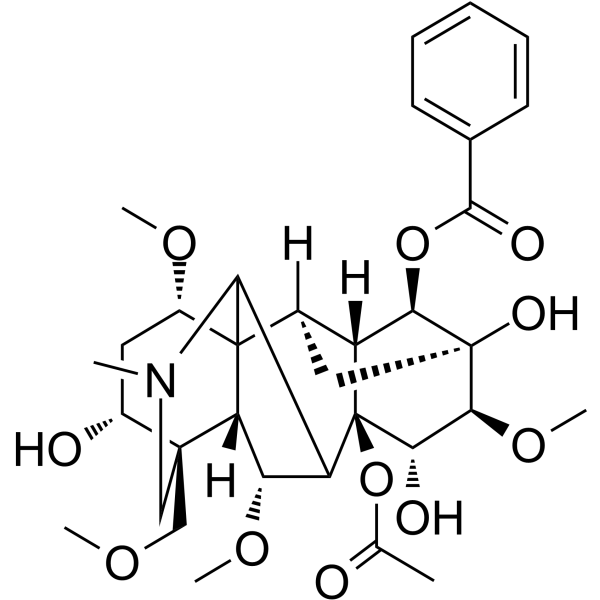
    Mesaconitine
    2 Publications Verification

    TNF Receptor Neurological Disease
    Mesaconitine is a nitric oxide synthase activator. Mesaconitine drives extracellular Na + and Ca 2+ influx into endothelial cells, increases intracellular Na + and Ca 2+ concentrations, and triggers nitric oxide release. Mesaconitine is applicable for pain-related research .
    Mesaconitine
  • HY-101366

    Adrenergic Receptor Endocrinology
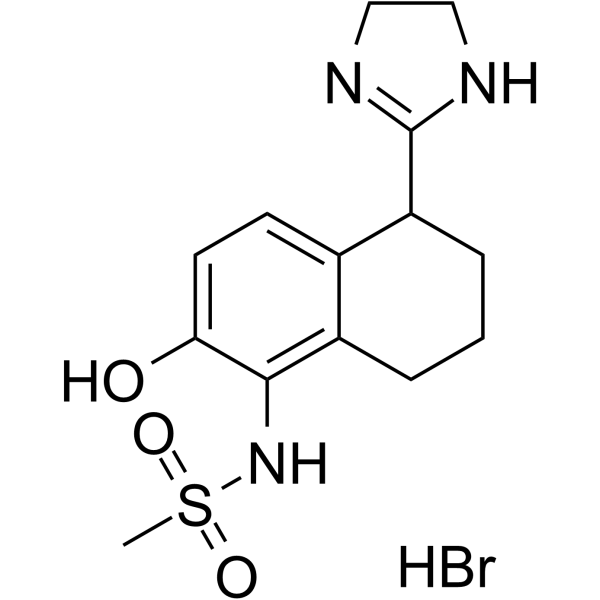
    A-61603 is a selective α1A/α1a-adrenergic receptor agonist with Ki of 8.89 nM for rat submaxillary gland α1A, Ki of 30.5 nM for cloned bovine α1a. A-61603 potentiates Ca 2+ transients with EC50 of 6.9 nM. A-61603 stimulates phosphoinositide hydrolysis, induces contractile responses in vas deferens, prostate strips, and spleen strips, and exhibits low activity in aortic rings. A-61603 can be used for research on adrenergic function .
    A-61603
  • HY-B1035
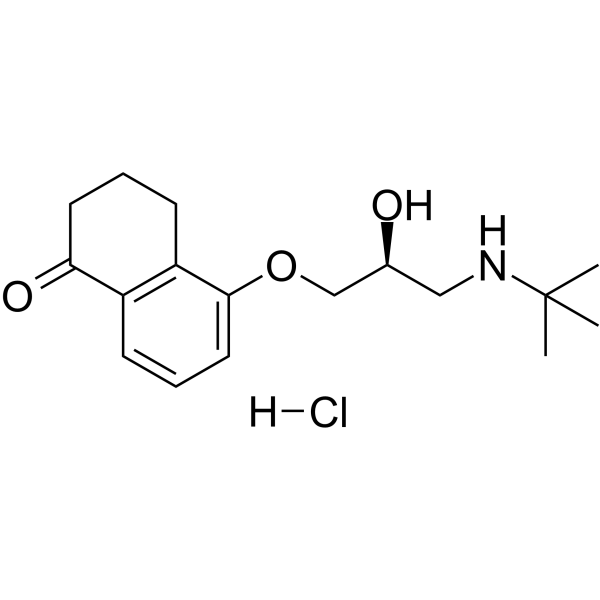
    Levobunolol hydrochloride
    1 Publications Verification

    l-Bunolol hydrochloride

    Adrenergic Receptor Calcium Channel Casein Kinase Cardiovascular Disease
    Levobunolol (l-Bunolol) hydrochloride is a non-selective β-adrenergic antagonist and vasodilator. By blocking calcium ion influx and reducing the sensitivity of vascular smooth muscle to calcium, Levobunolol hydrochloride effectively dilates the ciliary arteries and increases ocular blood flow, so it is widely used in research on glaucoma and ocular hypertension. Levobunolol hydrochloride inhibits the β-receptor signaling pathway and the expression of related proliferation markers (such as CK3, CK14, CK19, Ki67) in corneal cells. In rabbit models, Levobunolol hydrochloride not only does not inhibit corneal epithelial regeneration, but also accelerates the healing of mechanical injury without adverse effects. Levobunolol hydrochloride also inhibits histamine-induced vasoconstriction and intracellular calcium elevation, exhibiting unique vascular regulatory activity. Levobunolol hydrochloride protects ocular blood flow and promotes corneal repair .
    Levobunolol hydrochloride
  • HY-Y1890B

    Biochemical Assay Reagents Others
    Cremophor EL-10 is a nonionic polyoxyethylene castor oil surfactant with multiple functions including organic solubilizer, mixed zinc anode corrosion inhibitor and dendrite growth inhibitor. By forming a physical barrier to block electrolyte contact and constructing oriented hydration channels to reduce the desolvation energy barrier of Zn 2+ , Cremophor EL-10 achieves a corrosion inhibition efficiency of over 99%. Cremophor EL-10 exerts no significant effects on the mitochondrial activity and cell viability of epithelial cells, making it suitable for in vitro drug delivery and biopharmaceutical research at concentrations ≤10% v/v. However, Cremophor EL-10 may induce sustained non-endothelium-dependent contraction in rat aortic rings and exert concentration-dependent inhibitory effects on acetylcholine-induced endothelium-dependent relaxation responses .
    Cremophor EL-10
  • HY-103291

    Bradykinin Receptor Inflammation/Immunology Endocrinology
    Sar-[D-Phe8]-des-Arg9-Bradykinin is a agonist of B1 receptor. Sar-[D-Phe8]-des-Arg9-Bradykinin selectively amplifies the contractile response when incubation with human recombinant interleukin-1 β (IL-1 β) in rabbit aortic rings .
    Sar-[D-Phe8]-des-Arg9-Bradykinin
  • HY-N13614

    Bacterial IFNAR Nuclear Factor of activated T Cells (NFAT) NF-κB Infection Inflammation/Immunology
    Centaurein, a flavonoid, is an IFN-γ promoter enhancer. Centaurein up-regulates the activity of NFAT and NF-κB enhancers. Centaurein increases the IFN-γ expression in T and NK cells and the serum IFN-γ level in mice. Centaureidin completely relaxes the contractions in intact rat aortic rings. Centaurein effectively protects mice against Listeria infection [1][2][3][4].
    Centaurein
  • HY-W103372

    Adrenergic Receptor Cardiovascular Disease
    Vasorelaxant agent-2 (Compound 8h) targets α1A-adrenergic receptor with an affinity of pD2=5.4. Vasorelaxant agent-2 exhibits vasodilator activity in rats aortic rings with an EC50 of 0.79 μM .
    Vasorelaxant agent-2
  • HY-129665

    (±)-O,O-Dimethylcoclaurine

    Endogenous Metabolite Metabolic Disease
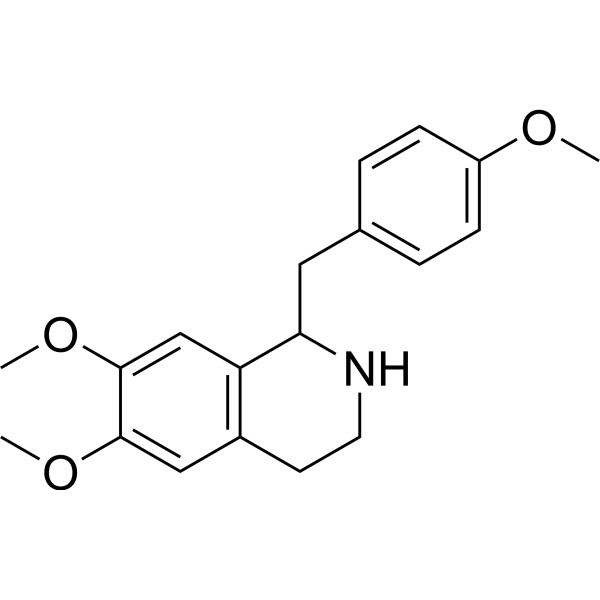
    GS 389 ((±)-O,O-Dimethylcoclaurine) is a tetrahydroisoquinoline. GS-389 inhibites Cyclic AMP and cyclic AMP dependent phosphodiesterases from rat atrial and ventricular tissue. GS-389 relaxes the contraction induced by phenylephrine and high K + in rat aortic rings .
    GS-389
  • HY-W005255R

    Reference Standards Endogenous Metabolite Cardiovascular Disease
    Citrinin (Standard) is the analytical standard of Citrinin. This product is intended for research and analytical applications. Citrinin (NSC 186) is a mycotoxin that causes food contamination and has different toxic effects. Citrinin is an effective oral anticancer agent. Citrinin has various regulatory effects on mouse immune system, including regulating the number of immune cells, inducing apoptosis and autophagy of immune cells, altering toll-like receptor expression and cytokine production. Citrinin can induce oxidative stress and lead to early apoptosis of oocytes. Low doses of Citrinin have neuroprotective effects against glutamate-induced excitotoxicity in rat cortical neurons. In addition, Citrinin also has antibacterial activity .
    3-(3-Hydroxyphenyl)propionic acid (Standard)
  • HY-117568

    Calcium Channel Cardiovascular Disease
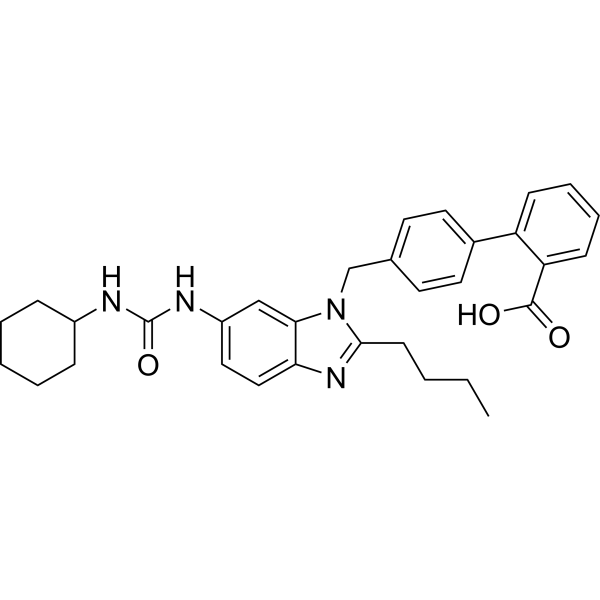
    A-80b is a pyridazino[4,5-b]indole derivate. A 80b showsantihypertensive activity and can be used for study of Arterial hypertension .
    A-80b
  • HY-N9005

    Others Cardiovascular Disease
    Dysolenticin J has potent vasodilative effects on aortic rings. Dysolenticin J is an alkaloid that can be isolated from Dysoxylum lenticellatum .
    Dysolenticin J
  • HY-P11259

    Urotensin Receptor Cardiovascular Disease Metabolic Disease Inflammation/Immunology Cancer
    UPG-111 is a peptide compound that acts as a negative allosteric modulator of the Urotensin II receptor (UTR). UPG-111 exhibits a dual inhibitory effect on the vasoconstriction induced by UTR agonists - it reduces both the maximum response intensity and the sensitivity of the agonist. UPG-111 does not induce calcium release or cause contraction of the endothelium-deprived rat aortic rings. UPG-111 can be used for the study of various diseases related to the angiotensinergic system .
    UPG-111
  • HY-161836

    Adrenergic Receptor Cardiovascular Disease
    α2AR agonist 1 (compound S6a), a new morpholine-containing pyrimidinone, acts as an agonist of α2-adrenoceptor. α2AR agonist 1 induces a concentration-dependent relaxation on aortic ring pre-contracted with Phenylephrine (HY-B0769; pEC50=6.81). α2AR agonist 1 increases NOx and NO levels in HUVECs .
    α2AR agonist 1
  • HY-138166S

    Isotope-Labeled Compounds Potassium Channel Drug Metabolite NO Synthase Cardiovascular Disease
    Rosuvastatin lactone-d6 is the deuterium labeled Rosuvastatin lactone. Rosuvastatin lactone is a metabolite of Rosuvastatin (HY-17504A), a statin lipid-lowering agent and HMG-CoA inhibitor. Rosuvastatin lactone exhibits endothelium-independent and HMG-CoA reductase-independent vasorelaxant activity in rat aortic rings, and its vasorelaxant effect is jointly mediated by NO produced by inducible nitric oxide synthase (iNOS) located in vascular smooth muscle and activation of potassium channels. Rosuvastatin lactone itself has no lipid-lowering effect .
    Rosuvastatin lactone-d6
  • HY-138166R

    Reference Standards Potassium Channel Drug Metabolite NO Synthase Cardiovascular Disease
    Rosuvastatin lactone (Standard) is the analytical standard of Rosuvastatin lactone. This product is intended for research and analytical applications. Rosuvastatin lactone is a metabolite of Rosuvastatin (HY-17504A), a statin lipid-lowering agent and HMG-CoA inhibitor. Rosuvastatin lactone exhibits endothelium-independent and HMG-CoA reductase-independent vasorelaxant activity in rat aortic rings, and its vasorelaxant effect is jointly mediated by NO produced by inducible nitric oxide synthase (iNOS) located in vascular smooth muscle and activation of potassium channels. Rosuvastatin lactone itself has no lipid-lowering effect .
    Rosuvastatin lactone (Standard)
  • HY-105572

    MC-838 calcium

    Angiotensin-converting Enzyme (ACE) Cardiovascular Disease
    Moveltipril calcium (MC-838 calcium) is an orally active angiotensin converting enzyme (ACE) inhibitor with antihypertensive activity. Moveltipril calcium binds via a stable thioester bond and exhibits relative resistance to enzymatic hydrolysis in rat liver homogenate. Moveltipril calcium effectively inhibits ACE extracted from rabbit lung in a concentration-dependent manner. Moveltipril calcium is able to highly specifically inhibit the contractile response to angiotensin-I (AI) in free rat aortic rings and guinea pig ileum preparations, while enhancing the contractile response to calcitonin .
    Moveltipril calcium
  • HY-Y0337AR

    Reference Standards Endogenous Metabolite Metabolic Disease Cancer
    L-Cysteine (hydrochloride) (Standard) is the analytical standard of L-Cysteine (hydrochloride). This product is intended for research and analytical applications. L-Cysteine hydrochloride is an orally active conditionally essential amino acid, which acts as a precursor for biologically active molecules such as hydrogen sulphide (H2S), glutathione and taurine. L-Cysteine hydrochloride suppresses ghrelin and reduces appetite in rodents. L-Cysteine hydrochloride inhibits Aspergillus flavus growth and AFB synthesis by disrupting cell structure and antioxidant system balance. L-Cysteine hydrochloride enhances relaxant responses of rat aortic rings to NO and reduces responses to endothelium-derived relaxing factor (EDRF) [4].
    L-Cysteine hydrochloride (Standard)
  • HY-117991

    VEGFR Cancer
    DW10075 is a highly selective and orally active VEGFR inhibitor targeting the VEGF/VEGFR pathway. DW10075 selectively inhibits VEGFR-1, VEGFR-2, and VEGFR-3, but has no effect on FGFR and PDGFR. DW10075 inhibits VEGF-induced HUVEC proliferation, migration, and tube formation. And DW10075 inhibits angiogenesis in both the rat aortic ring model and the chick chorionic membrane model. DW10075 also exhibits antiproliferative activity against human cancer cell lines, with IC50s of 2.2 μM and 22.2 μM against U87-MG human glioblastoma cells and A375 melanoma cells, respectively. In the nude mouse U87-MG xenograft tumor model, DW10075 (po) significantly inhibits tumor growth and reduces the expression of CD31 and Ki67 in tumor tissues.
    DW10075
  • HY-N15186

    Fungal Cardiovascular Disease
    Gymnoascolide A, identified as a fungal metabolite in M. filamentosa, demonstrates vasodilatory effects. At a concentration of 1 µM, it effectively inhibits contractions induced by calcium in isolated rat aortic rings .
    Gymnoascolide A
  • HY-N18103

    Others Cardiovascular Disease
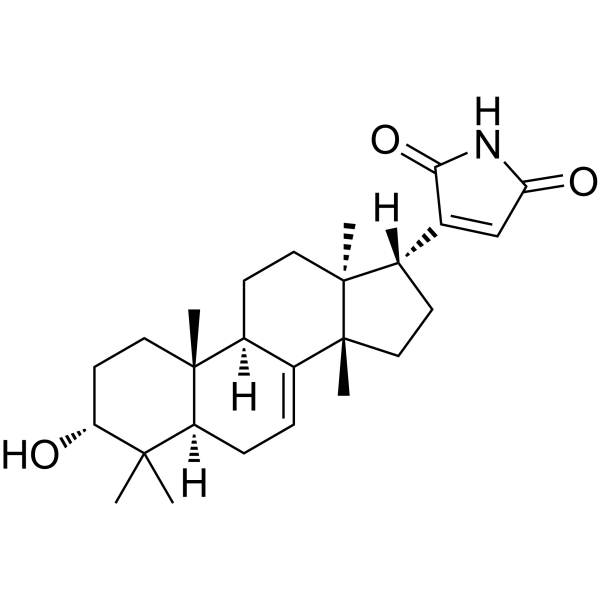
    Anhydrohirundigenin (Compound 2) is a steroid. Anhydrohirundigenin can be isolated from the roots of Cynanchum stauntonii. Anhydrohirundigenin has no vasodilation activity .
    Anhydrohirundigenin
  • HY-P11258

    Urotensin Receptor Cardiovascular Disease Metabolic Disease Inflammation/Immunology Cancer
    UPG-108, a peptide compound, is a non-competitive allosteric modulator of Urotensin II receptors (UTR). UPG-108 significantly enhances the efficacy of UTR agonists but reduces the potency of UTR agonists. UPG-111 efficiently induces calcium release and does not cause contraction of rat aortic rings without endothelial denudation. UPG-111 can be used to study various diseases related to the angiotensinergic system .
    UPG-108
  • HY-126939

    Reactive Oxygen Species (ROS) Calcium Channel iGluR Neurological Disease
    MN-05 is a dual neuroprotective and vasodilatory NMDA receptor inhibitor.MN-05 blocks calcium influx, reduces free radical production, and maintains mitochondrial membrane potential in cortical neurons exposed to glutamate.MN-05 dilates aortic rings against phenylephrine-induced contraction.MN-05 protects neurons against glutamate-induced injury in vitro.MN-05 can be used for the research of neurodegenerative diseases .
    MN-05
  • HY-108518R

    Reference Standards ROCK Cardiovascular Disease Inflammation/Immunology
    SB-772077B dihydrochloride (Standard) is the analytical standard of SB-772077B (dihydrochloride) (HY-108518). This product is intended for research and analytical applications. SB-772077B dihydrochloride is an orally active aminofuran-based Rho Kinase ((ROCK)) inhibitor with IC50 values of 5.6 nM and 6 nM for ROCK1 and ROCK2, respectively. SB-772077B dihydrochloride reduces inflammatory cytoKines (TNF-α and IL-6). SB-772077B dihydrochloride relaxes aortic rings and lowers blood pressure. SB-772077B dihydrochloride can be used in the research of inflammatory diseases .
    SB-772077B dihydrochloride (Standard)
  • HY-N17738

    Calcium Channel Cardiovascular Disease Inflammation/Immunology
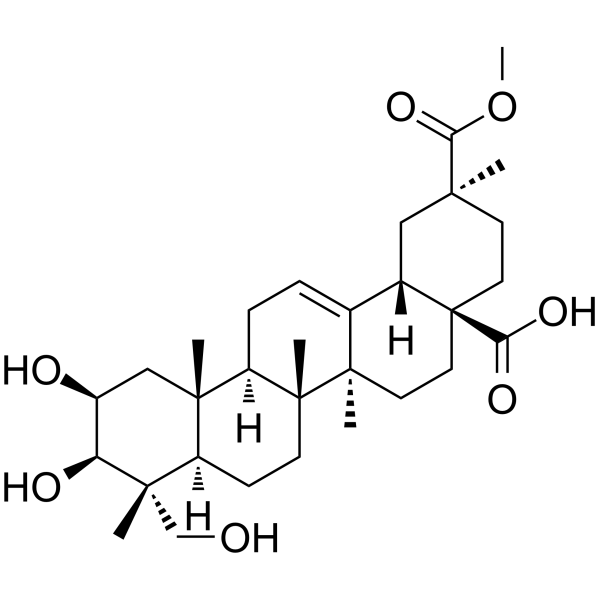
    Acetyljujuboside B is a saponin. Acetyljujuboside B can be isolated from seeds of Zizyphus jujuba Mill. var. spinosa. Acetyljujuboside B inhibits Ca 2+ influx. Acetyljujuboside B shows only sustained vasorelaxant effects, with no transient effect on NE-induced vasoconstrictions. Acetyljujuboside B inhibits histamine release from rat peritoneal exudate cells induced by the antigen-antibody reaction .
    Acetyljujuboside B
  • HY-P11777

    MMP SDCBP Cardiovascular Disease Neurological Disease Cancer
    AG73 is a polypeptide. AG73 is derived from the G domain of the Laminin α1 chain. AG73 binds heparin, Syndecan-1 and Syndecan-4. AG73 promotes the adhesion of various cells, induces the differentiation of salivary gland acinar cells, stimulates neurite outgrowth, secretion of matrix metalloproteinases and angiogenesis. AG73 retains its angiogenic activity when conjugated to chitosan membranes. AG73 can be used in the research of melanoma and ischemic injury .
    AG73

Inquiry Online

Your information is safe with us. * Required Fields.

Salutation


Country or Region *

Applicant Name *


Organization Name *

Department *


Email Address *


Product Name *

Cat. No.


Requested quantity *

Phone Number *


Remarks

Inquiry Online

Inquiry Information

Product Name:
Cat. No.:
Quantity:
MCE Japan Authorized Agent: