18 Results for "

BODIPY fluorophore

" in MedChemExpress (MCE) Product Catalog:
Products (18)

18 Results for "BODIPY fluorophore" in MCE Product Catalog:

5
5 Cited Publications
Cat. No.: HY-125623
CAS No.: 1392820-50-6
Purity:  98.14%
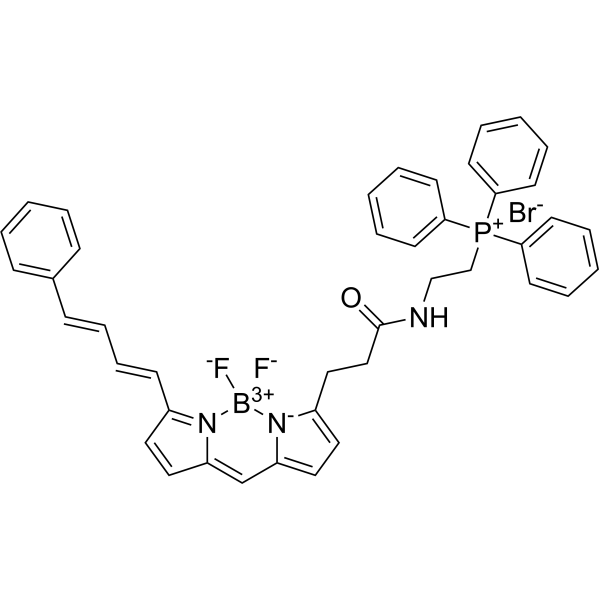
MitoPerOx is a mitochondrial-targeted, lipid peroxidation-indicating fluorescent probe with BODIPY581/591 fluorophores. The triphenylphosphine cation (TPP+) of MitoPerOx can be selectively enriched in mitochondria (depending on membrane potential) and can be used to detect lipid peroxidation in the inner mitochondrial membrane. Under the action of lipid peroxides, the BODIPY581/591 fluorophores of MitoPerOx shift their emission wavelength from 590 nm (reduced state) to 520 nm (oxidized state), and ratiometric detection can be performed at an excitation wavelength of 488 nm. MitoPerOx can specifically monitor the peroxidation of mitochondrial phospholipids (especially cardiolipin) and is used in the study of oxidative stress-related diseases (such as aging, neurodegenerative diseases, and mitochondrial dysfunction)[1][2].
loading...
    loading...
1
1 Cited Publications
Cat. No.: HY-100335
CAS No.: 1022899-36-0
Purity:  ≥98.0%
Target:  

Fluorescent Dye Btk

Research Areas:  

Cancer

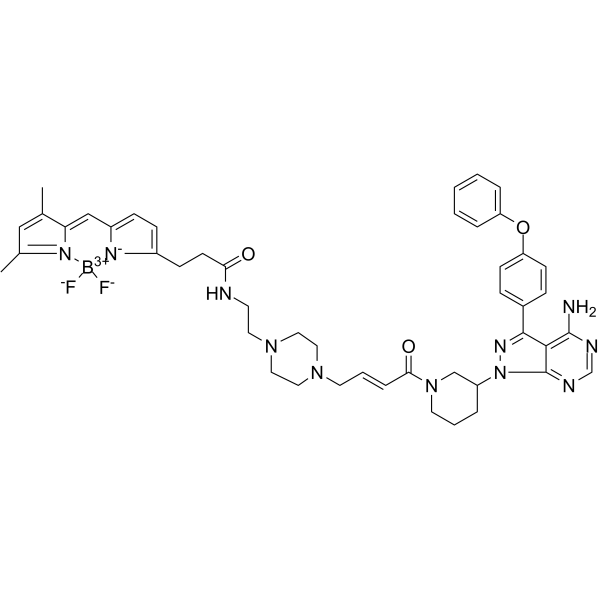
PCI-33380 is a fluorescent probe ( (Ex=532 nm, Em=555 nm). PCI-33380 consists of a (BTK) inhibitor PCI-32765 (HY-10997) attaching with a Bodipy-FL fluorophore via a piperazine linker. PCI-33380 binds predominantly to Btk in B cell lysates with cell permeable activity. PCI-33380 can be used for imaging live cancer cells such as non-Hodgkin lymphoma research
loading...
    loading...
Cat. No.: HY-N0729F
BODIPY-Linoleic acid is a conjugate of the BODIPY fluorophore and Linoleic acid (HY-N0729) (C18:2) and is a lipid metabolism probe.
loading...
    loading...
Cat. No.: HY-DY1073
CAS No.: 1392820-50-6
MitoPerOx (solution) is a mitochondrial-targeted, lipid peroxidation-indicating fluorescent probe with BODIPY581/591 fluorophores. The triphenylphosphine cation (TPP+) of MitoPerOx can be selectively enriched in mitochondria (depending on membrane potential) and can be used to detect lipid peroxidation in the inner mitochondrial membrane. Under the action of lipid peroxides, the BODIPY581/591 fluorophores of MitoPerOx shift their emission wavelength from 590 nm (reduced state) to 520 nm (oxidized state) , and ratiometric detection can be performed at an excitation wavelength of 488 nm. MitoPerOx can specifically monitor the peroxidation of mitochondrial phospholipids (especially cardiolipin) and is used in the study of oxidative stress-related diseases (such as aging, neurodegenerative diseases, and mitochondrial dysfunction) .
Solvent and concentration: DMSO: 2 mM
loading...
    loading...
Cat. No.: HY-D1602
CAS No.: 217075-07-5
Target:  

Fluorescent Dye

Research Areas:  

Others

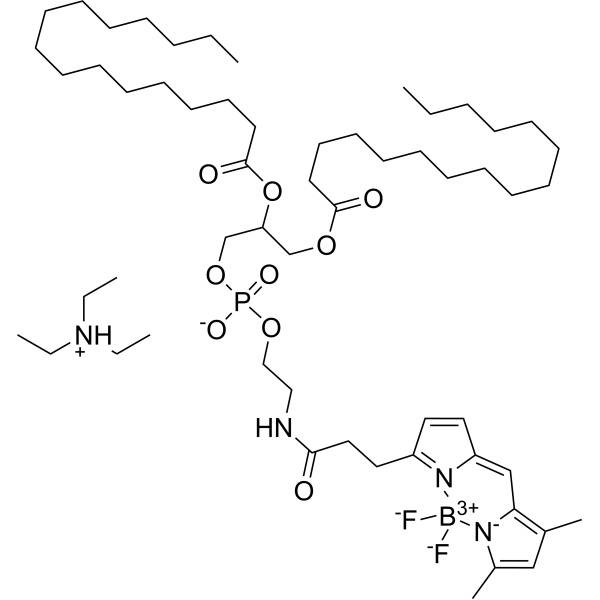
BODIPY FL-DHPE is a fluorescent lipid probe composed of phosphatidylethanolamine (DHPE) labeled with a BODIPY FL fluorophore, which is used for fluorescent labeling of cell membranes, differentiation between liposome membrane fusion and endocytic pathways, and studies of membrane dynamics. The two C16 alkyl chains of BODIPY FL-DHPE insert into the lipid bilayer of membranes, and its fluorescence exhibits concentration dependence: it exists as monomers and emits green fluorescence at low mole fractions; it forms dimers with a red-shifted emission peak at high mole fractions; this spectral change is independent of enzymes, pH, and membrane potential. When liposomes enter the plasma membrane via membrane fusion, the dye is diluted, leading to attenuation of the dimer peak and enhancement of the monomer peak; when entry occurs via endocytosis, the dye remains in endosomes at high concentration with no change in the dimer peak, allowing differentiation between the two uptake pathways. Ex = 488 nm; monomer Em = 515 nm, dimer Em ≈ 620 nm .
loading...
    loading...
Cat. No.: HY-W075603
CAS No.: 1031443-55-6
Synonyms: 2,6-Diiodo-Pyrromethene 546
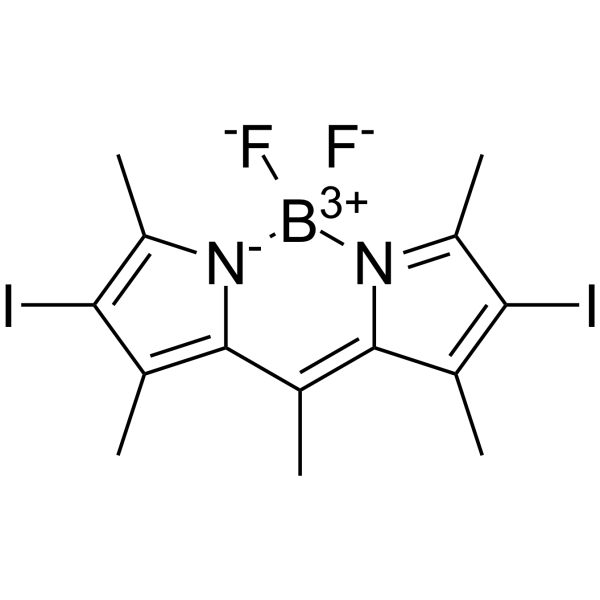
2,6-Diiodo-BODIPY 493/503 (2,6-Diiodo-Pyrromethene 546) is a 2,6-diiodo-substituted BODIPY intermediate that can be used to synthesize dual-organelle-targeted BODIPY-cyanostilbene fluorophores. 2,6-Diiodo-BODIPY 493/503 is applicable to research related to fluorescent dye synthesis .
loading...
    loading...
Cat. No.: HY-D1590
CAS No.: 929679-22-1
Target:  

Fluorescent Dye

Research Areas:  

Others

ODIPY Green 8-P2M is a novel thiol-reactive fluorescence probe based on the BODIPY fluorophore, the fluorescence is strongly quenched by d-PeT and then can be restored after reaction with thiol, resulting in an extremely high signal-to-noise ratio. ODIPY Green 8-P2M can be useful for detecting extremely low concentrations of protein in the gel after SDS-PAGE .
loading...
    loading...
Cat. No.: HY-114353
CAS No.: 1379771-95-5
Purity:  99.71%
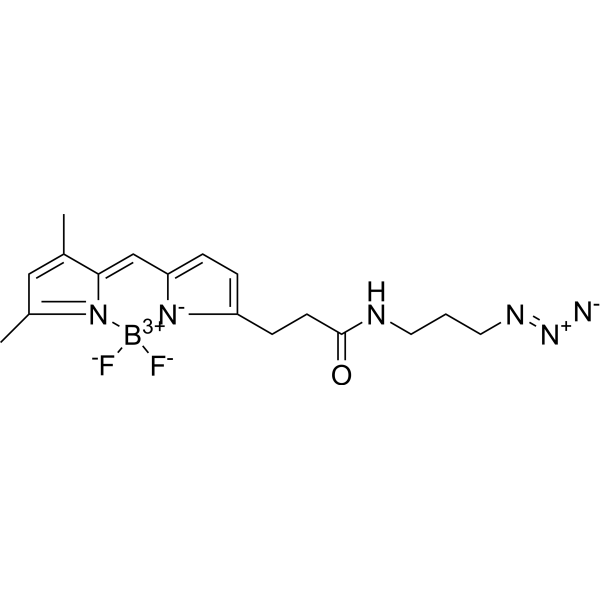
BODIPY FL azide is a BODIPY dye connector containing an azide group capable of Click Chemistry. The green fluorophore is representative of the borodipyrromethane class of fluorescent dyes and has a high quantum yield in aqueous environments, high stability to photobleaching and is compatible with FAM fluorescence measurement instruments .
loading...
    loading...
Cat. No.: HY-114354
CAS No.: 302795-84-2
Purity:  98.41%
Synonyms: BOD FL alkyne
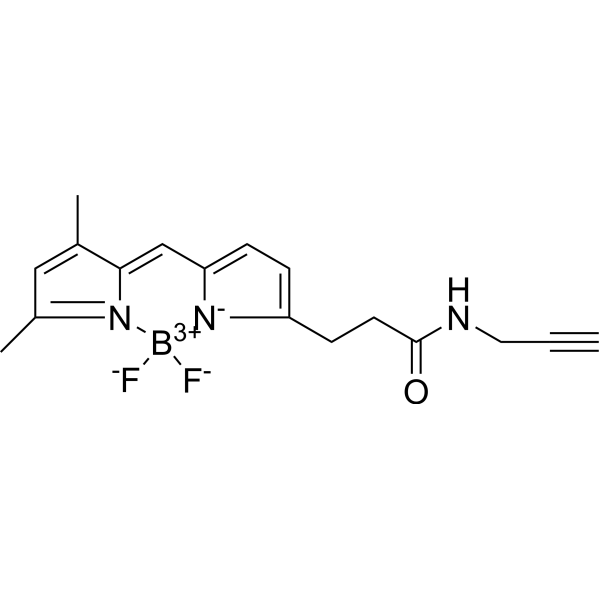
BODIPY (BOD) FL alkyne is an alkyne-containing BODIPY fluorophore derivative. BODIPY FL alkyne is a bioorthogonal labeling reagent with low toxicity and extremely low non-specific reactivity, and it is widely used in fluorescent bioimaging. BODIPY FL alkyne specifically labels azide groups on intracellular glycoconjugates mainly via strain-promoted azide-alkyne cycloaddition (SPAAC), or mediates site-specific conjugation with proteins such as IL-33, and supports positive cross-linking with other probes (e.g., DBCO-SCy5) for dual labeling. With the advantages of high specificity and low background interference, BODIPY FL alkyne can be used in the research of related diseases such as asthma, atopic dermatitis and inflammatory bowel disease .
loading...
    loading...
Cat. No.: HY-D2292
BODIPY TMR acid is a fluorescent dye. BODIPY TMR acid is a high quantum yield fluorophore which can be coupled with Rebastinib .
loading...
    loading...
Cat. No.: HY-D1592
CAS No.: 937803-31-1
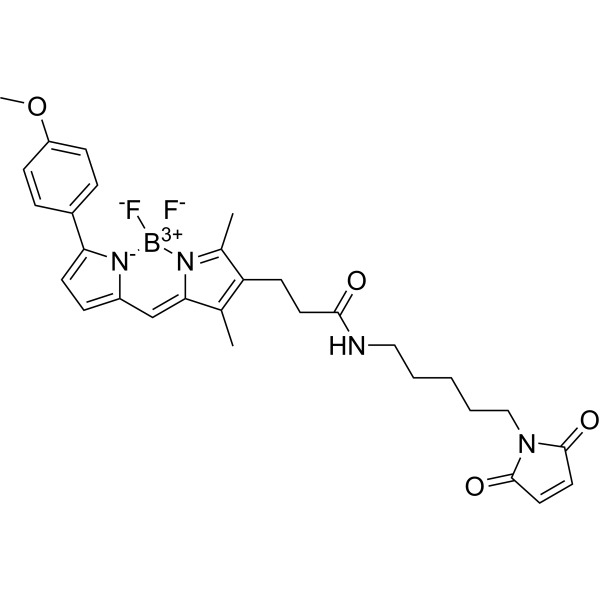
BODIPY TMR C5-maleimide is a fluorescent dye. BODIPY TMR C5-maleimide is a high quantum yield fluorophore which can be coupled with peptides .
loading...
    loading...
Cat. No.: HY-147177
CAS No.: 208462-25-3
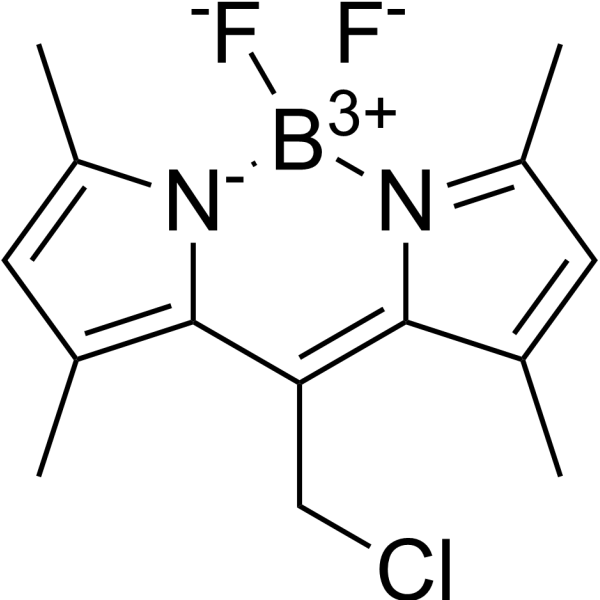
BODIPY-8-chloromethane is a fluorophore. BODIPY-8-chloromethane can be used as as a fluorescent probe .
loading...
    loading...
Cat. No.: HY-163140
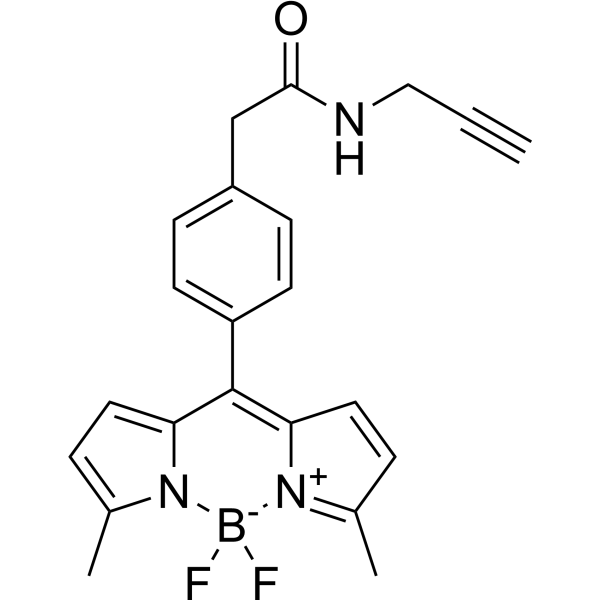
BODIPY-phenyl-amide-alkyne (compound 6) is an alkyne-containing OFF-to-ON fluorophore. BODIPY-phenyl-amide-alkyne is a BODIPY derivative that can be conjugated to protein IL-33 Y143azidoPhe via CuAAC reaction .
loading...
    loading...
Cat. No.: HY-D1349
CAS No.: 2006345-35-1
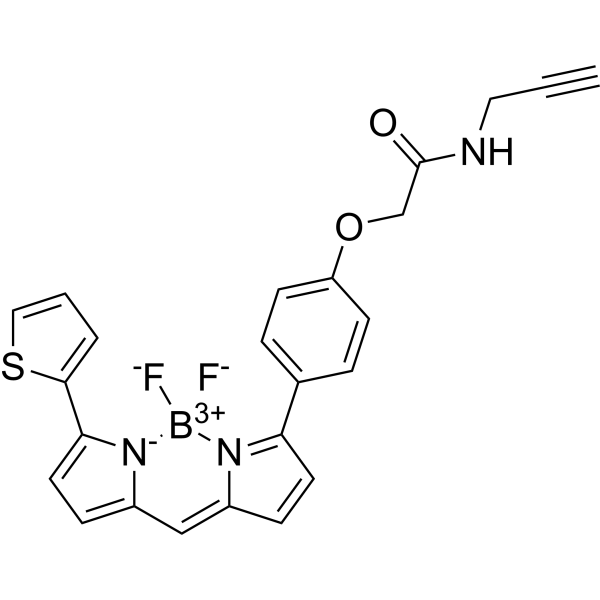
Bodipy TR alkyneis one of a boron dipyrromethene fluorophore for the ROX (Texas Red) channel. This is a versatile fluorophore that can be used in microscopy, fluorescence polarization measurements, and other applications. This derivative is a terminal alkyne of copper-catalyzed click chemistry.
loading...
    loading...
Cat. No.: HY-D3496
Synonyms: BODIPY 576/589 Succinimidyl ester
BODIPY 576/589 NHS ester (BODIPY 576/589 Succinimidyl ester) is an active fluorophore containing the BODIPY 576/589 fluorophore and an NHS ester. BODIPY 576/589 NHS ester can covalently couple red fluorescence to biomolecules containing primary amines (-NH2), such as proteins, antibodies, peptides, and oligonucleotides. BODIPY 576/589 NHS ester can also be used to prepare BODIPY 576/589-Met-tRNAfMet to achieve N-terminal co-translational labeling of nascent proteins (Ex/Em = 576/589 nm) .
loading...
    loading...
Cat. No.: HY-D3106
CAS No.: 2659241-66-2
Target:  

Fluorescent Dye

Research Areas:  

Others

Lys-VBOD is a Fluorescent probe for lysosomal viscosity monitoring and live cell imaging. Its detection mechanism depends on viscosity: increased viscosity restricts the twisting of the double bond between the indole and BODIPY fluorophore, as well as the rotation of the single bond between quinoline and BODIPY, which reduces non-radiative decay and leads to enhanced fluorescence intensity in high viscosity environments; it also features a morpholine group that provides lysosome-targeting properties, allowing it to localize to lysosomes for viscosity detection. The probe has excitation/emission wavelengths of Ex/Em = 602/637 nm, and its fluorescence intensity shows a good linear relationship with log-transformed viscosity values. Lys-VBOD is stable across a wide pH range of 5.35 to 10.74, is not affected by macromolecules and proteins like BSA, has a fluorescence lifetime that increases with viscosity, and can visualize real-time lysosomal viscosity changes in live cells under Dexamethasone (HY-14648) stimulation[1].
loading...
    loading...
Cat. No.: HY-W585368
CAS No.: 945921-51-7
Research Areas:  

Others

BODIPY dyes are a class of small-molecule fluorophores with strong ultraviolet absorption and sharp fluorescence emission peaks. BODIPY dyes can non-specifically label erythrocyte membranes, fail to inhibit the proliferation of Plasmodium falciparum, exhibit weak cytotoxicity against Chinese hamster ovary cells, and have extremely low hemolytic activity. BODIPY dyes serve as a universal scaffold for fluorescent compounds such as laser dyes and fluorescent probes, and can also be used to construct photoelectric and biophotonic molecular assembly units. BODIPY dyes are applicable to research related to live-cell imaging, fluorescent labeling of proteins and DNA, and various biological imaging assays .
loading...
    loading...
Cat. No.: HY-100335R
CAS No.: 1022899-36-0
Research Areas:  

Cancer

PCI-33380 (Standard) is the analytical standard of PCI-33380 (HY-100335). This product is intended for research and analytical applications. PCI-33380 is a fluorescent probe ( (Ex=532 nm, Em=555 nm). PCI-33380 consists of a (BTK) inhibitor PCI-32765 (HY-10997) attaching with a Bodipy-FL fluorophore via a piperazine linker. PCI-33380 binds predominantly to Btk in B cell lysates with cell permeable activity. PCI-33380 can be used for imaging live cancer cells such as non-Hodgkin lymphoma research
loading...
    loading...
  • 1

