1. Search Result
Search Result
Results for "

BRD2-BD1

" in MedChemExpress (MCE) Product Catalog:
Cat. No. Product Name Target Research Areas Chemical Structure
  • HY-136570
    GSK778
    1 Publications Verification

    iBET-BD1

    Epigenetic Reader Domain Apoptosis Inflammation/Immunology Cancer
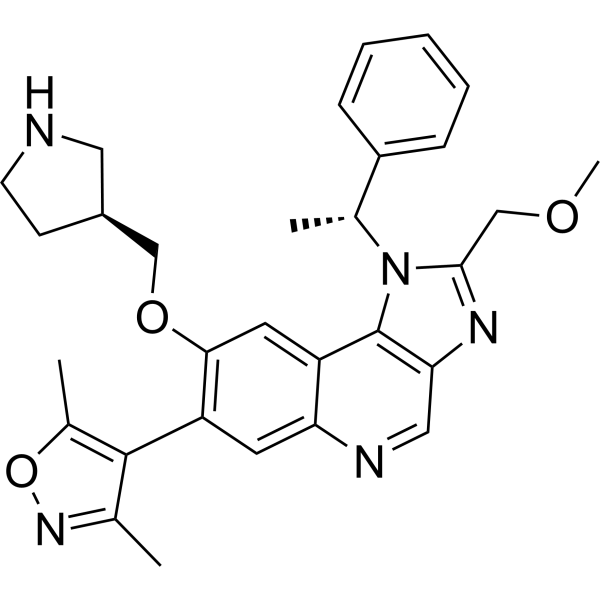
    GSK778 (iBET-BD1), a chemical probe, is a potent and selective BD1 bromodomain inhibitor of the BET proteins, with IC50s of 75 nM (BRD2 BD1), 41 nM (BRD3 BD1), 41 nM (BRD4 BD1), and 143 nM (BRDT BD1), respectively. GSK778 phenocopies the effects of pan-BET inhibitors in cancer models .
    GSK778
  • HY-162514

    Epigenetic Reader Domain Inflammation/Immunology
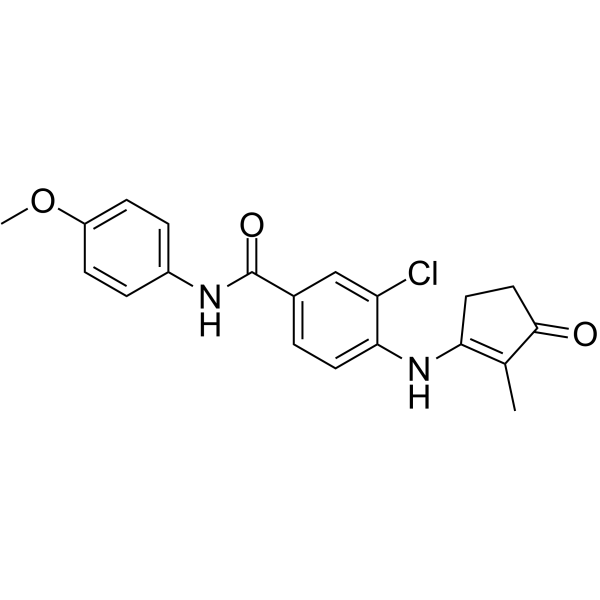
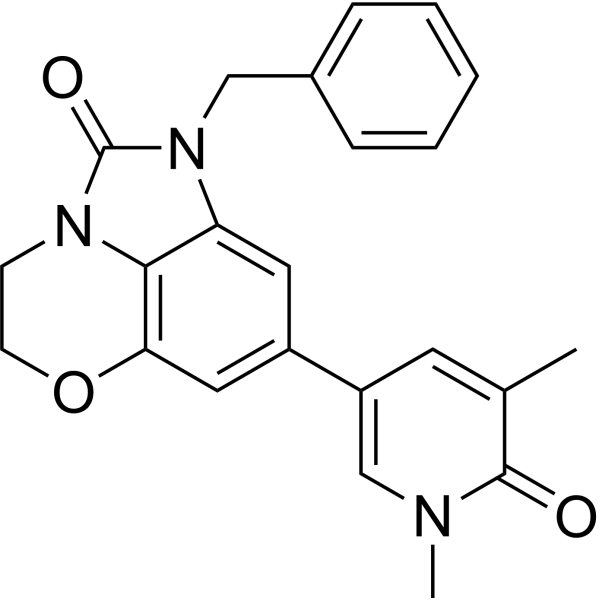
    BBC0403 is a selective BRD2 inhibitor with Kds of 7.64 μM and 41.37 μM for BRD2 (BD2) and BRD2 (BD1), respectively. BBC0403 exhibitS higher binding specificity for BRD2 compared to BRD3 and BRD4. BBC0403 has the potential for osteoarthritis (OA) research .
    BBC0403
  • HY-120000
    MS402
    2 Publications Verification

    Epigenetic Reader Domain Inflammation/Immunology Cancer
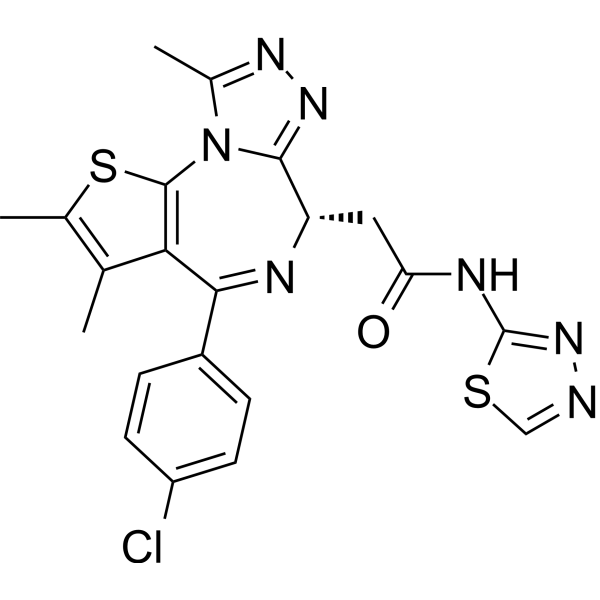
    MS402 is a BD1-selective BET BrD inhibitor with Kis of 77 nM, 718 nM, 110 nM, 200 nM, 83 nM, and 240 nM for BRD4(BD1), BRD4(BD2), BRD3(BD1), BRD3(BD2), BRD2(BD1) and BRD2(BD2), respectively. MS402 blocks Th17 cell differentiation and ameliorates colitis in mice .
    MS402
  • HY-112429
    HJB97
    2 Publications Verification

    Ligands for Target Protein for PROTAC Epigenetic Reader Domain Cancer
    HJB97 is a high-affinity BET inhibitor with Ki values of 0.9 nM (BRD2 BD1), 0.27 nM (BRD2 BD2), 0.18 nM (BRD3 BD1), 0.21 nM (BRD3 BD2), 0.5 nM (BRD4 BD1), and 1.0 nM (BRD4 BD2) . HJB97 can serve as a ligand for target protein (Ligands for Target Protein for PROTAC) for the development of PROTAC BET degraders with antitumor activity . HJB97 can be used for the synthesis of BETd-260 (HY-101519).
    HJB97
  • HY-19760

    Epigenetic Reader Domain Inflammation/Immunology
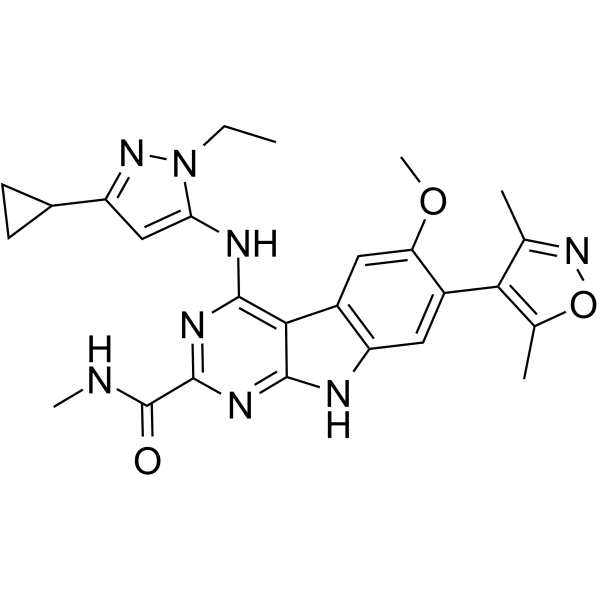
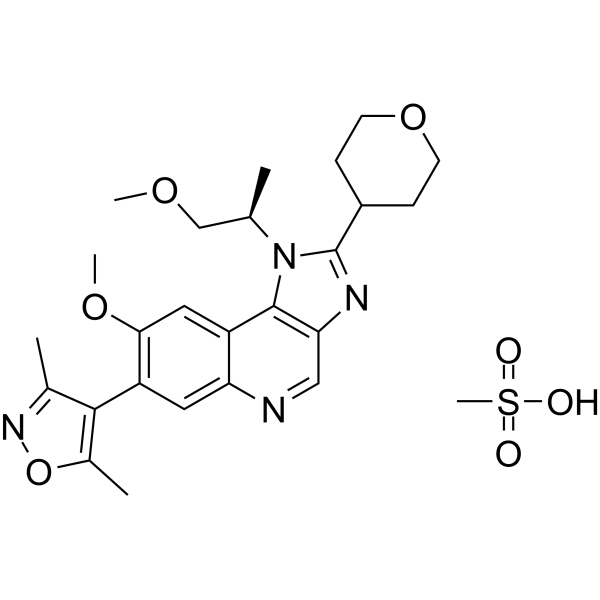
    I-BET282 is a pan-inhibitor of all eight BET bromodomains, and selectivity over other representative bromodomain-containing proteins. I-BET282 shows pIC50s ranging 6.4-7.7 for BRD2 (BD1/BD2), BRD2 (BD1/BD), BRD3 (BD1/BD), and BRD4 (BD1/BD) .
    I-BET282
  • HY-175678

    PROTACs Epigenetic Reader Domain Cancer
    PROTAC BRD2 BD1 Degrader-1 (compound 21-1) is a potent and selective BRD2 BD1 PROTAC degrader. PROTAC BRD2 BD1 Degrader-1 induces the association of BRD2 BD1 and von Hippel–Lindau-elongin C-elongin B (VCB). (Pink: BRD2-BD1 Ligand (HY-175679); Blue: E3 ligase ligand (HY-125845); Black: Linker (HY-W069332)) .
    PROTAC BRD2 BD1 Degrader-1
  • HY-175679

    Ligands for Target Protein for PROTAC Epigenetic Reader Domain Cancer
    BRD2 BD1 ligand-1 is a potent BRD2 BD1 ligand (Ligands for Target Protein for PROTACs) can be used in the synthesis of PROTAC BRD2 BD1 Degrader-1 (HY-175678) .
    BRD2 BD1 ligand-1
  • HY-175680

    E3 Ligase Ligand-Linker Conjugates Cancer
    Boc-4-(3-oxobutyl)piperidine-(S,R,S)-AHPC is an E3 ligase ligand-linker conjugatecan be used in the synthesis of PROTAC BRD2 BD1 Degrader-1 (HY-175678) .
    Boc-4-(3-oxobutyl)piperidine-(S,R,S)-AHPC
  • HY-136570A

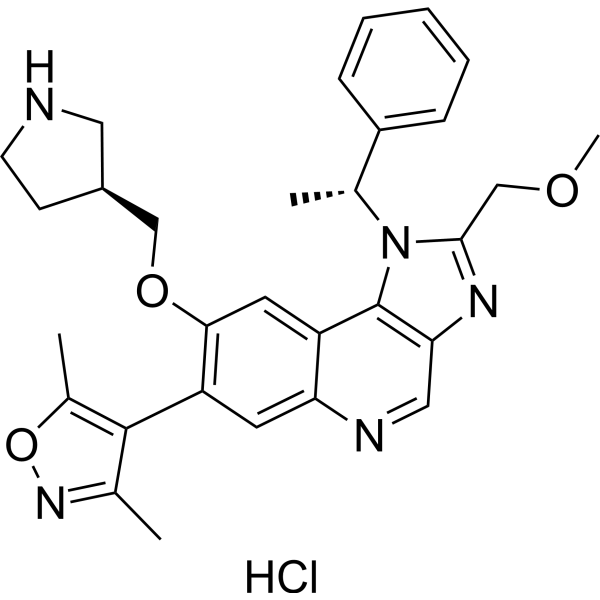
    iBET-BD1 hydrochloride

    Apoptosis Epigenetic Reader Domain Inflammation/Immunology Cancer
    GSK778 (iBET-BD1) hydrochloride is a potent and selective BD1 bromodomain inhibitor of the BET proteins, with IC50s of 75 nM (BRD2 BD1), 41 nM (BRD3 BD1), 41 nM (BRD4 BD1), and 143 nM (BRDT BD1), respectively .
    GSK778 hydrochloride
  • HY-176535

    BBC0115

    Epigenetic Reader Domain Interleukin Related STAT Inflammation/Immunology
    KB-0118 (BBC0115) is an orally active BET bromodomain inhibitor. KB-0118 selective binds to BRD2 and BRD4 over BRD3, with Kd values of 36.7 μM for BRD2 BD1 and 47.4 μM for BRD4 BD1. KB-0118 inhibits pro-inflammatory cytokines, including TNF, IL-1β, and IL-23a and selectively suppresses Th17 cell differentiation. KB-0118 modulates Th17-driven inflammation occurs through epigenetic suppression of BRD4, confirmed by downregulation of STAT3 and BRD4 target genes. KB-0118 has immunomodulatory effects in inflammatory bowel disease (IBD) model.
    KB-0118
  • HY-149519

    Epigenetic Reader Domain Cancer
    BRD4 Inhibitor-28 (Compound 18) is an orally active BRD4 Inhibitor. BRD4 Inhibitor-28 inhibits BRD40-BD1, BRD40-BD2 with IC50s of 15, 55 nM. BRD4 Inhibitor-28 also inhibits BRD2-BD1, BRD3-BD1, BRDT-BD1 with IC50s of 19, 25, 68 nM. BRD4 Inhibitor-28 has anti-melanoma activity .
    BRD4 Inhibitor-28
  • HY-173062

    Epigenetic Reader Domain c-Myc Others
    BRD4 Inhibitor-40 (Compound 23) is the inhibitor for BRD that inhibits BRD4-BD1, BRD4-BD2, BRD2-BD1 and BRD2-BD2 with IC50s of 16.1, 142.18, 29.35 and 302.35 nM, respectively. BRD4 Inhibitor-40 modulates the expression of c-Myc and p21, arrests cell cycle at G1 phase, inhibits Pkd1-null (PN) renal cystic epithelial cells, and blocks the renal cysts formation in Madin-Darby canine kidney and embryonic kidney vesicle models. BRD4 Inhibitor-40 exhibits renal cysts inhibitory activity in mouse models .
    BRD4 Inhibitor-40
  • HY-19760B

    Epigenetic Reader Domain Inflammation/Immunology
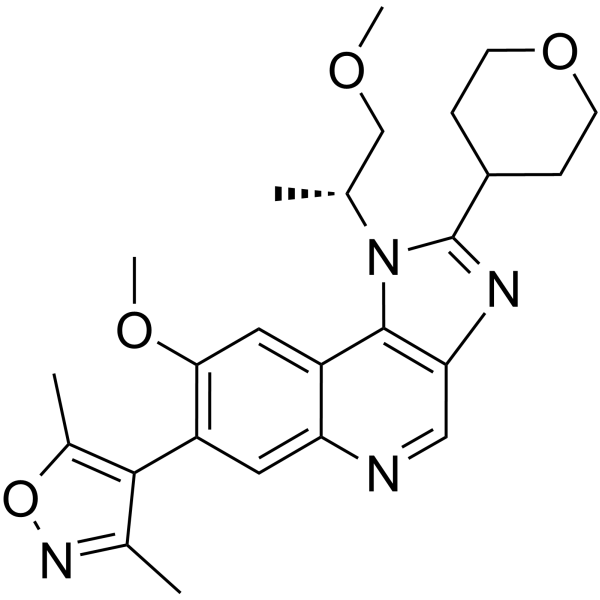
    I-BET282E is a pan-inhibitor of all eight BET bromodomains, and selectivity over other representative bromodomain-containing proteins. I-BET282E shows pIC50s ranging 6.4-7.7 for BRD2 (BD1/BD2), BRD2 (BD1/BD), BRD3 (BD1/BD), and BRD4 (BD1/BD) .
    I-BET282E
  • HY-149098

    Epigenetic Reader Domain Cancer
    SJ1461 is a potent and orally active BET inhibitor. SJ1461 inhibits BRD2 (BD1), and BRD2 (BD2), BRD4 (BD1), and BRD4 (BD2) with IC50 values of 1.6 nM, 0.1 nM, 6.5 nM, and 0.2 nM, respectively .
    SJ1461
  • HY-168628

    Epigenetic Reader Domain Cancer
    BET-IN-27 (compound 6C) is an oral BET inhibitor with the IC50 values of 3.3 nM (BRD4-BD2)、3.4 nM (BRD4-BD1)、4.1 nM (BRD2-BD1)、20.4 nM (BRD3-BD1) and 42.0 nM (BRDT-BD1), respectively. BET-IN-27 shows anti-proliferative activity .
    BET-IN-27
  • HY-183247

    Epigenetic Reader Domain Cancer
    BRDT-IN-1 is a BRDT-BD1 and BRDT-T inhibitor with BRDT-BD1 IC50 19 nM, Ki 8.8 nM, Ka 1.6 nM, and BRDT-T IC50 56 nM, Ka 5.0 nM. BRDT-IN-1 displays in vitro metabolic stability and limited cellular permeability in MDCK-MDR1 cells. BRDT-IN-1 can be used for the research of multiple myeloma .
    BRDT-IN-1

Inquiry Online

Your information is safe with us. * Required Fields.

Salutation


Country or Region *

Applicant Name *


Organization Name *

Department *


Email Address *


Product Name *

Cat. No.


Requested quantity *

Phone Number *


Remarks

Inquiry Online

Inquiry Information

Product Name:
Cat. No.:
Quantity:
MCE Japan Authorized Agent:

