
1. Search Result
Search Result
Results for "

BT-474

" in MedChemExpress (MCE) Product Catalog:

39

Inhibitors & Agonists

1

Fluorescent Dyes

2

Peptides

4

Inhibitory Antibodies

2

Natural
Products

Cat. No. Product Name Target Research Areas Chemical Structure
  • HY-164992
    Trastuzumab vedotin
    2 Publications Verification

    MRG002; Trastuzumab MMAE

    Antibody-Drug Conjugates (ADCs) EGFR Microtubule/Tubulin Cancer
    Trastuzumab vedotin (MRG002; Trastuzumab MMAE) is an antibody-drug conjugate and cytotoxin targeting HER2, with a Kd of 7.50E-11 M for human HER2. After binding to HER2, Trastuzumab vedotin undergoes internalization and lysosomal trafficking, delivering a cytotoxic payload to HER2-expressing cells and inducing tumor regression in in vivo xenograft models with HER2-expressing tumors. The anti-tumor activity of Trastuzumab vedotin is enhanced when used in combination with anti-PD-1 antibodies, and it exhibits preclinical anti-tumor activity in drug-resistant breast cancer, gastric cancer, and urothelial carcinoma PDX models. Trastuzumab vedotin has low antibody-dependent cellular cytotoxicity activity and can be used in studies related to HER2-positive breast cancer, HER2-positive gastric cancer, and unresectable locally advanced or metastatic HER2-positive urothelial carcinoma .
    Trastuzumab vedotin
  • HY-164202

    Antibody-Drug Conjugates (ADCs) Cancer
    ORM-5029 is a first-in-class human epidermal growth factor receptor 2 (HER2)-targeted antibody-drug conjugate (ADC) comprised of SMol006, a highly potent GSPT1 degrader, conjugated to Pertuzumab (HY-P9912). ORM-5029 exhibits robust efficacy across 14 HER2-positive breast cancer cell lines, with IC50 values ranging from 0.3 to 14.4 nM.ORM-5029 demonstrates anti-tumor activity in the BT474 xenograft model. ORM-5029 can be used for study of breast cancer .
    ORM-5029
  • HY-111551
    FT113
    3 Publications Verification

    Fatty Acid Synthase (FASN) Cancer
    FT113 is a potent and orally active fatty acid synthase (FASN) inhibitor, with an IC50 of 213 nM for full-length recombinant human FASN enzyme. In cell-based assay, FT113 blocks FASN activity in BT474 cells (IC50, 90 nM). FT113 shows anti-proliferative activity, and exhibits anti-cancer activity both in vitro and in vivo .
    FT113
  • HY-P991149

    YH32367; ABL105

    TNF Receptor Cancer
    Nesfrotamig (YH32367; ABL105) is a bispecific activator targeting HER2 and 4-1BB. The Kd values of Nesfrotamig for human HER2 and human 4-1BB are 0.48 nM and 3.36 nM, respectively. By blocking tumor cell growth signals, activating HER2-dependent local 4-1BB in tumors to maintain T cell survival, and inducing NK cell-mediated antibody-dependent cellular cytotoxicity, Nesfrotamig enhances the cytotoxicity and tumor infiltration ability of immune cells. Nesfrotamig promotes the generation of tumor-specific memory T cells, drives T cell-mediated tumor lysis, exhibits significant anti-tumor efficacy against both HER2-positive and HER2-low-expressing tumors, and shows synergistic activity when combined with anti-PD-1 antibodies. In cynomolgus monkey studies, Nesfrotamig demonstrates good safety and is suitable for research related to HER2-positive and HER2-low-expressing tumors .
    Nesfrotamig
  • HY-153468

    TEQ103; Sera2

    Sodium Channel TRP Channel Cancer
    ErSO-TFPy (TEQ103) is an ERα+ tumor cell inhibitor with low nanomolar cytotoxic activity against ERα+ breast cancer cells. ErSO-TFPy activates the sodium channel TRPM4, causes an imbalance of intracellular calcium and sodium ions. ErSO-TFPy dysregulates calcium homeostasis in ERα+ tumor cells, triggers the anticipatory unfolded protein response, and induces rapid immune cell-independent necrotic cell death. ErSO-TFPy can be used for the research of estrogen receptor alpha positive breast cancer .
    ErSO-TFPy
  • HY-107367A

    S-22611 hydrochloride

    EGFR Cancer
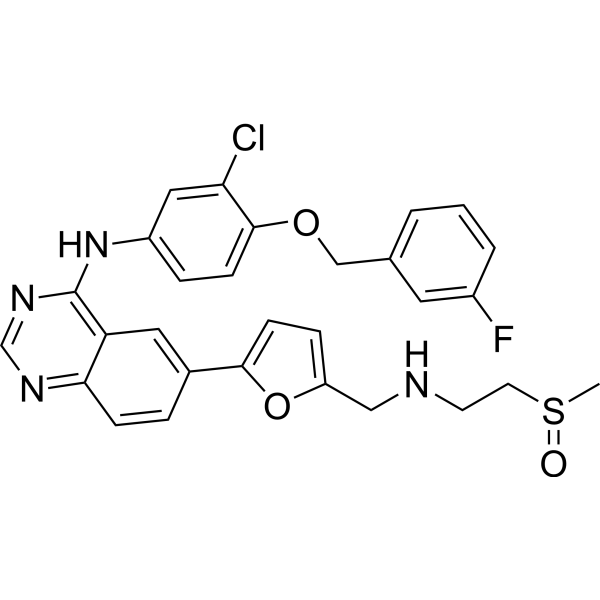
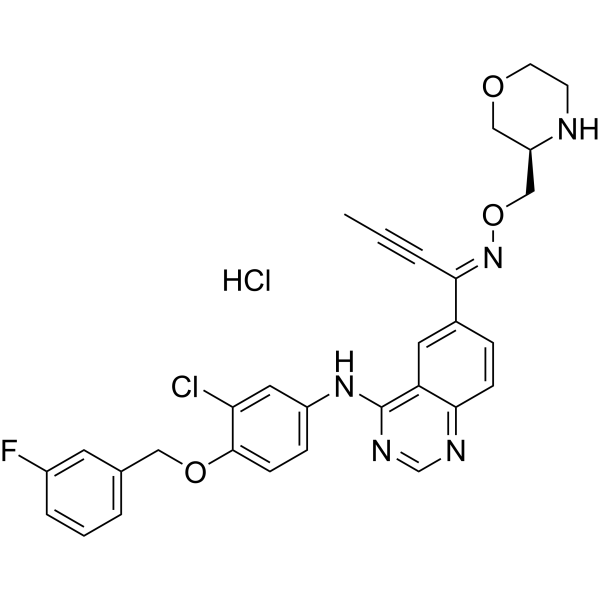
    Epertinib (S-22611) hydrochloride is a potent, orally active, reversible, and selective tyrosine kinase inhibitor of EGFR, HER4 and HER2, with IC50s of 1.48 nM, 2.49 nM and 7.15 nM, respectively. Epertinib hydrochloride shows potent antitumor activity . Epertinib (hydrochloride) is a click chemistry reagent, it contains an Alkyne group and can undergo copper-catalyzed azide-alkyne cycloaddition (CuAAc) with molecules containing Azide groups.
    Epertinib hydrochloride
  • HY-103400
    8-Chloroadenosine
    1 Publications Verification

    8-Cl-Ado

    AMPK Autophagy Cancer
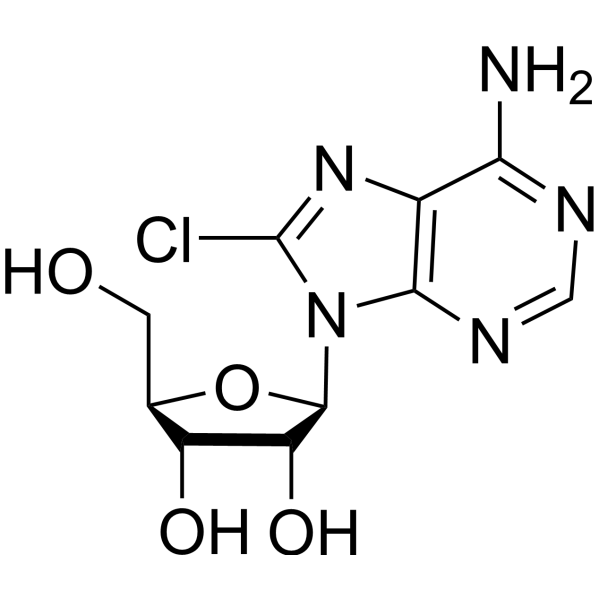
    8-Chloroadenosine (8-Cl-Ado), a unique ribonucleoside analog, depletes endogenous ATP that subsequently induces the phosphorylation and activation of AMPK. 8-Chloroadenosine induces autophagic cell death. 8-Chloroadenosine effectively inhibited in vivo tumor growth in mice .
    8-Chloroadenosine
  • HY-177008

    PROTACs EGFR Apoptosis Akt ERK Cancer
    PROTAC HER2 degrader-1 is a highly selective HER2 PROTAC degrader, with a DC50 of 69 nM and a Dmax of 96%. PROTAC HER2 degrader-1 inhibits HER2-positive cell proliferation and tumor growth through persistent HER2 degradation and potent inhibition of downstream pathways (AKT and ERK). PROTAC HER2 degrader-1 induces apoptosis in BT-474 cells. PROTAC HER2 degrader-1 can be used for research of HER2-positive cancers. (Pink: HER2 ligand: (HY-177009); Black: Linker; Blue: CRBN ligand: (HY-W023573) .
    PROTAC HER2 degrader-1
  • HY-163428

    ZN-A-1041

    EGFR Inflammation/Immunology Cancer
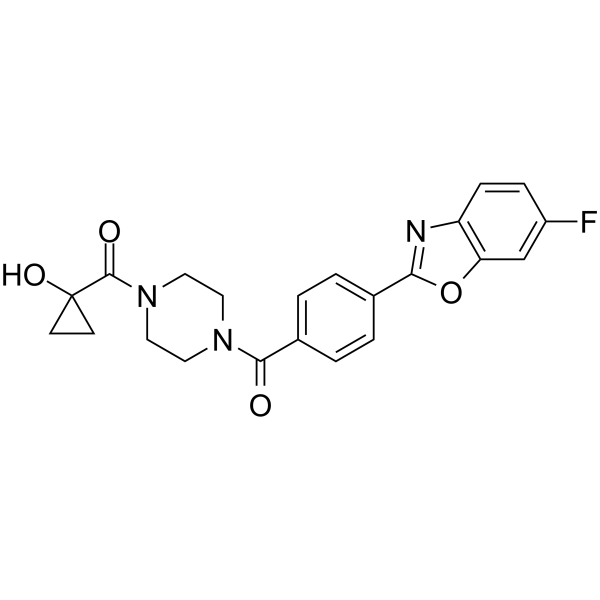
    ZN-A-1041 inhibits HER2 in BT474 cell and wt-EGFR in H838 cells, with IC50s of 9.5 nM and 12 μM respectively. ZN-A-1041 can be used for research of cancer and inflammation .
    Perzebertinib
  • HY-108931

    EGFR Cancer
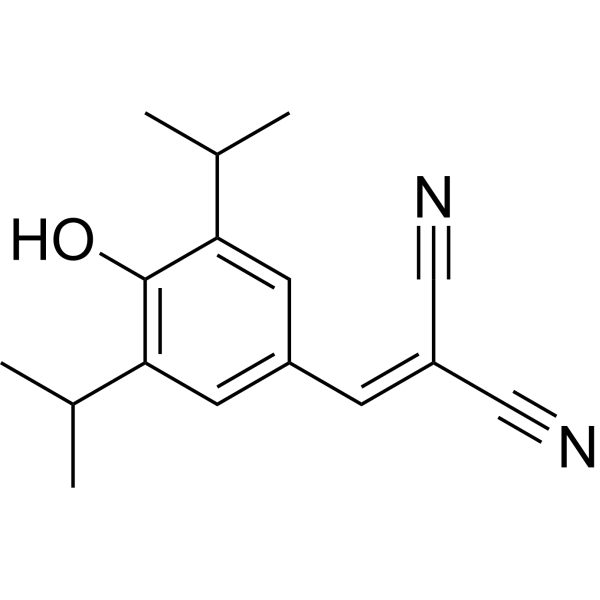
    AG 1406 (compound M19) is a HER2 inhibitor, with an IC50 of 10.57 μM for HER2 in BT474 cell and >50 μM for EGFR in EGF-3T3 cell .
    AG 1406
  • HY-P2317

    Bacterial Endogenous Metabolite Infection
    Cecropin P1, porcine is an antibacterial peptide that can be isolated from the upper part of the small intestine of the pig. Cecropin P1, porcine shows antibacterial activity against Gram-negative bacteria. Cecropin P1, porcine shows antiviral activity and inhibits PRRSV infection .
    Cecropin P1, porcine
  • HY-164399

    HSP EGFR CDK Akt Cancer
    SST0116CL1 is a HSP90 inhibitor (IC50: 0.21 μM). SST0116CL1 binds to the ATP binding pocket of Hsp90, and interferes with Hsp90 chaperone function thus resulting in client protein (EGFR, CDK4 and AKT) degradation. SST0116CL1 induces degradation of Her2 in BT-474 cell (IC50: 0.2 μM). SST0116CL1 has antiproliferative activity and inhibits tumor growth. SST0116CL1 can be used for the study of leukemia, gastric and ovarian carcinoma .
    SST0116CL1
  • HY-158318

    DNA/RNA Synthesis Cancer
    NUDT5/14 antagonist 1 (Compound 9) is a selective, dual antagonist for nucleotide diphosphate kinase NUDT5 and NUDT14, with IC50 of 0.27 and 0.16 μM, respectively. NUDT5/14 antagonist 1 binds to Bruton’s tyrosine kinase (BTK) with an IC50 of 0.377 μM .
    NUDT5/14 antagonist 1
  • HY-122664

    BRK Apoptosis STAT ERK Akt Cancer
    XMU-MP-2 is a selective BRK/PTK6 inhibitor with an IC50 of 5.4 nM. XMU-MP-2 inhibits the proliferation of BRK-positive breast cancer cells and induces apoptosis. XMU-MP-2 is applicable to breast cancer-related research .
    XMU-MP-2
  • HY-107367

    S-22611

    EGFR Cancer
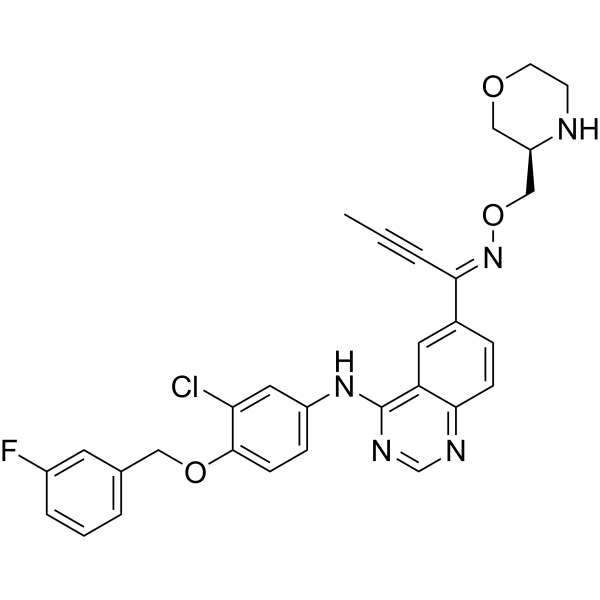
    Epertinib (S-22611) is a potent, orally active, reversible, and selective tyrosine kinase inhibitor of EGFR, HER4 and HER2, with IC50s of 1.48 nM, 2.49 nM and 7.15 nM, respectively. Epertinib shows potent antitumor activity . Epertinib is a click chemistry reagent, it contains an Alkyne group and can undergo copper-catalyzed azide-alkyne cycloaddition (CuAAc) with molecules containing Azide groups.
    Epertinib
  • HY-160899A

    Drug-Linker Conjugates for ADC Cancer
    Thailanstatin A cyclohexane diamine formic is an analog of Spliceostatin (HY-16466). Thailanstatin A cyclohexane diamine formic inhibits proliferations of cells N87 (IC50 is 0.33 μM), BT474 (IC50 is 0.34 μM), MDA-MB-361-DYT2 (IC50 is 0.88 μM) and MDA-MB-468 (IC50 is 0.27 μM). Thailanstatin A cyclohexane diamine formic is used as a drug-linker conjugate for ADC molecule .
    Thailanstatin A cyclohexane diamine formic
  • HY-160613

    EGFR Cancer
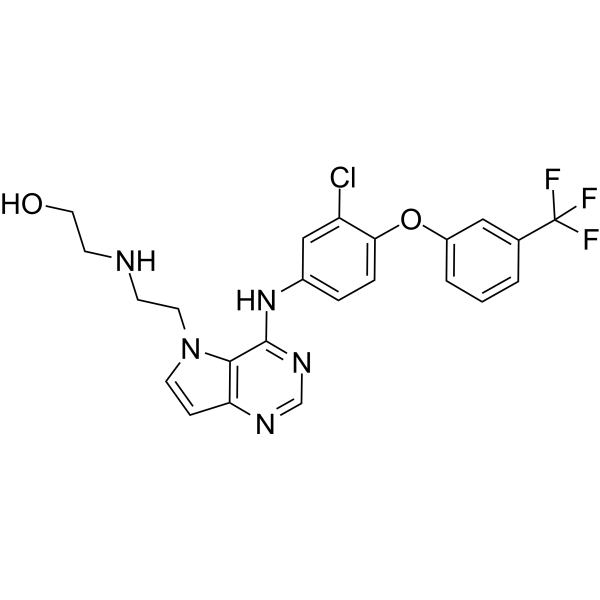
    EGFR/HER2-IN-11 (compound 20) is an orally active dual inhibitor for human epidermal growth factor receptor 2 (HER2) and epidermal growth factor receptor (EGFR), with IC50s of 7.7 and 22 nM, respectively. EGFR/HER2-IN-11 exhibits antitumor efficacy and inhibits proliferation against cancer cells BT-474 with GI50 of 601 nM .
    EGFR/HER2-IN-11
  • HY-P10785

    Bacterial Antibiotic Infection
    Iturin A-2 is a cyclic lipopeptide discovered in B. subtilis and exhibits inhibitory activity against the plant pathogenic fungus P. expansum (MIC = 8 µg/disk). Iturin A-2 is cytotoxic to MCF-7 and BT474 breast cancer cells, as well as HeLa cervical cancer cells, with IC50 values of 66.81, 95.04, and 77.5 µg/mL, respectively. In greenhouse studies, Iturin A-2 at concentrations of 100 and 300 mg/kg Iturin A-2 reduces the lesion area of southern corn leaf blight caused by B. maydis, and in field studies, concentrations of 300 and 500 mg/kg Iturin A-2 reduce the incidence of the disease. Iturin A-2 (12.5 µg/mL) inhibits cell division, but not nuclear division, in isolated fertilized starfish eggs .
    Iturin A-2
  • HY-P991328

    Notch Cancer
    MAb604.107 is a human monoclonal antibody (mAb) targeting NOTCH1. MAb604.107 inhibits the proliferation and CD34/CD44 expression of primary T-ALL cells. MAb604.107 has anti-tumor activity in four tumor xenograft mouse models: MDA-MB-231, HCC-1806, BT-474, and HCT-116. MAb604.107 can be used in T acute lymphoblastic leukemia research .
    MAb604.107
  • HY-169307

    Btk Cancer
    BTK-IN-38 (Example 125) is a potent BTK inhibitor. BTK-IN-38 inhibits DOHH2 and BT474 cells proliferation with IC50s of 114 and 340 nM, respectively .
    BTK-IN-38
  • HY-125916

    Endogenous Metabolite Cancer
    Pseurotin A is a secondary metabolite of Aspergillus and other fungi. Pseurotin A is a competitive inhibitor of chitin synthase and a neuritogenic agent. Pseurotin A inhibits IgE production (IC50 = 3.6 μM). Pseurotin A inhibits the PCSK9-LDLr interaction. Pseurotin A shows dose-dependent reduction of PCSK9, along with increased LDLR levels in hormone-dependent breast cancer cell lines. Pseurotin A exhibits antitumor activity .
    Pseurotin A
  • HY-101447

    EPH 116

    Src Apoptosis Cancer
    SI-2 (EPH 116) is an inhibitor for steroid receptor coactivator-3 (SRC-3), which reduces the transcriptional activity and protein concentration of SRC-3 in cells, exhibits cytotoxicity in cancer cell, inhibits migration of MDA-MB-468, induces apoptosis of MDA-MB-468. SI-2 inhibits the tumor growth in mouse models, without significant toxicity for heart and other major organs (20 mg/kg) .
    SI-2
  • HY-179271

    Carbonic Anhydrase HDAC Cancer
    CA/HDAC-IN-1 (Compound 11) is a CA and HDAC inhibitor with Ki values of 7.4 nM, 31.0 nM, and 7.3 nM for hCA II, hCA IX, and hCA XII, respectively, and IC50 values of 0.21 μM and 3.60 μM for HDAC3 and HDAC8, respectively. CA/HDAC-IN-1 has anti-cancer activity against colon cancer, breast cancer, and melanoma .
    CA/HDAC-IN-1
  • HY-103691A
    ARN5187 trihydrochloride
    1 Publications Verification

    Autophagy Apoptosis Cancer
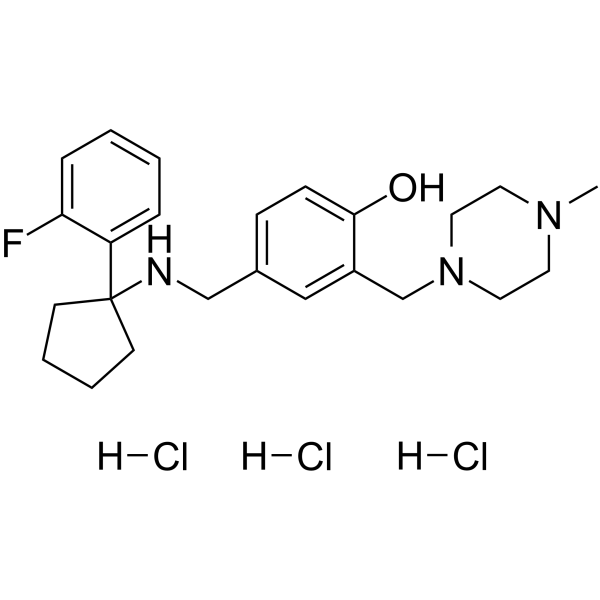
    ARN5187 trihydrochloride is a lysosomotropic REV-ERBβ ligand with a dual inhibitory activity toward REV-ERB-mediated transcriptional regulation and autophagy. ARN5187 trihydrochloride shows lysosomotropic potency and cytotoxicity. ARN5187 trihydrochloride induces apoptosis .
    ARN5187 trihydrochloride
  • HY-155098

    SHP2 Cancer
    CNBCA is a potent, selective, competitive SHP2 enzyme inhibitor, with the IC50 of 0.87 μM. CNBCA binds to full-length SHP2 and inhibits enzyme activity. CNBCA inhibits pAkt and pERK1/2, and the cell growth of BT474 and MDA-MB468 cells. CNBCA can be used for breast cancer study .
    CNBCA
  • HY-163468

    Src Cancer
    SRC-3-IN-1 (compound SI-10) is a steroid receptor coactivator 3 (SRC-3) inhibitor (IC50=3.3 μM). SRC-3-IN-1 has good water solubility, oral bioavailability, and improved selectivity profile. SRC-3-IN-1 can be used in prostate cancer research .
    SRC-3-IN-1
  • HY-N3626

    Others Cancer
    Coronalolide is a natural triterpene with anticancer effects. Coronalolide exhibits a broad cytotoxic activity for human breast (BT474), gastric (KATO-3), lung (CHAGO), colon (SW-620), and liver (Hep-G2) cancer cell lines, with IC50 values of 6.59 µg/mL, 5.85 µg/mL, 5.42 µg/mL, 4.98 µg/mL, and 6.41 µg/mL, respectively .
    Coronalolide
  • HY-164399A

    HSP ERK CDK Akt Cancer
    SST0116CL1 free base is a HSP90 inhibitor (IC50: 0.21 μM). SST0116CL1 free base binds to the ATP binding pocket of Hsp90, and interferes with Hsp90 chaperone function thus resulting in client protein (EGFR, CDK4 and AKT) degradation. SST0116CL1 free base induces degradation of Her2 in BT-474 cell (IC50: 0.2 μM). SST0116CL1 free base has antiproliferative activity and inhibits tumor growth. SST0116CL1 free base has antiproliferative activity and inhibits tumor growth. SST0116CL1 free base can be used for the study of leukemia, gastric and ovarian carcinoma .
    SST0116CL1 free base
  • HY-163453

    EGFR Cancer
    HER2-IN-19 (Compound 10e) is a potent inhibitor of HER2 and EGFR with IC50 values of 0.87 respectively and 3.5 nM. HER2-IN-19 has potent inhibitory activity against tumor cells, IC50 NCI-N87 = 1.63 nM, IC50 BT474= 15.17 nM, IC50 BaF3-HER2YVMA = 1.49 nM .
    HER2-IN-19
  • HY-147801

    Topoisomerase Apoptosis Cancer
    Topoisomerase IIα-IN-3 (Compound 12c) is a DNA intercalative topoisomerase-IIα inhibitor. Topoisomerase IIα-IN-3 arrests cell cycle at the G0/G1 phase and induces apoptosis .
    Topoisomerase IIα-IN-3
  • HY-168577

    Ras EGFR Cancer
    KRAS G12D inhibitor 25 (Compound 148) is an inhibitor for KRAS G12C and HSP90α with IC50 of < 0.1 μM and 0.1-1 μM, respectively. KRAS G12D inhibitor 25 inhibits the proliferation of MIA PaCa-2 and NCI-H358 with EC50 of < 0.1 μM and 0.1-1 μM, respectively. KRAS G12D inhibitor 25 degrades ERBB2 with a DC50 of 0.1-1 μM .
    KRAS G12D inhibitor 25
  • HY-170377

    Estrogen Receptor/ERR Potassium Channel Cancer
    ER degrader 10 (Compound 51) is a selective, orally active degrader and antagonist for estrogen receptor (ER) with a DC50 of 0.43 nM and an IC50 of 0.56 nM. ER degrader 10 inhibits the proliferation of ER-positive cells with IC50s of 0-15 nM. ER degrader 10 exhibits a weak inhibitory activity against hERG channel with an IC50 >40 μM. ER degrader 10 is blood-brain barrier penetrable with a brain/plasma ratio (Kp) of 3.05. ER degrader 10 exhibits antitumor efficacy in mice model .
    ER degrader 10
  • HY-179343

    HSP Cancer
    Hsp90-IN-43 (Compound 12) is a Hsp90-TPR2A interaction inhibitor with an IC50 of 360 nM and a Kd of 928 nM. Hsp90-IN-43 effectively inhibits the proliferation of BT474 cells. Hsp90-IN-43 can be used for the study of breast cancer .
    Hsp90-IN-43
  • HY-103691

    Autophagy Apoptosis Cancer
    ARN5187 is a lysosomotropic REV-ERBβ ligand with a dual inhibitory activity toward REV-ERB-mediated transcriptional regulation and autophagy. ARN5187 shows lysosomotropic potency and cytotoxicity. ARN5187 induces apoptosis .
    ARN5187
  • HY-103400R

    8-Cl-Ado (Standard)

    Reference Standards AMPK Nucleoside Antimetabolite/Analog Autophagy Cancer
    8-Chloroadenosine (Standard) is the analytical standard of 8-Chloroadenosine. This product is intended for research and analytical applications. 8-Chloroadenosine (8-Cl-Ado), a unique ribonucleoside analog, depletes endogenous ATP that subsequently induces the phosphorylation and activation of AMPK. 8-Chloroadenosine induces autophagic cell death. 8-Chloroadenosine effectively inhibited in vivo tumor growth in mice .
    8-Chloroadenosine (Standard)
  • HY-107367AR

    S-22611 hydrochloride (Standard)

    Reference Standards EGFR Cancer
    Epertinib hydrochloride (Standard) (S-22611 hydrochloride (Standard)) is the analytical standard of Epertinib (hydrochloride) (HY-107367A). This product is intended for research and analytical applications. Epertinib (S-22611) hydrochloride is a potent, orally active, reversible, and selective tyrosine Kinase inhibitor of EGFR, HER4 and HER2, with IC50s of 1.48 nM, 2.49 nM and 7.15 nM, respectively. Epertinib hydrochloride shows potent antitumor activity . Epertinib (hydrochloride) is a click chemistry reagent, it contains an Alkyne group and can undergo copper-catalyzed azide-alkyne cycloaddition (CuAAc) with molecules containing Azide groups.
    Epertinib hydrochloride (Standard)
  • HY-103691AR

    REV-ERB Reference Standards Autophagy Apoptosis Cancer
    ARN5187 trihydrochloride (Standard) is the analytical standard of ARN5187 trihydrochloride (HY-103691A). This product is intended for research and analytical applications. ARN5187 trihydrochloride is a lysosomotropic REV-ERBβ ligand with a dual inhibitory activity toward REV-ERB-mediated transcriptional regulation and autophagy. ARN5187 trihydrochloride shows lysosomotropic potency and cytotoxicity. ARN5187 trihydrochloride induces apoptosis .
    ARN5187 trihydrochloride (Standard)
  • HY-P991977

    5G9

    EGFR Apoptosis PARP Akt ERK Cancer
    BSI-001 (5G9) is a HER2-targeting antibody. BSI-001 inhibits cell proliferation and migration, induces apoptosis and PARP cleavage, and suppresses HER2-mediated downstream signaling pathways (including the phosphorylation of EGFR, HER3, AKT and ERK) when combined with Trastuzumab (HY-P9907) in HER2-positive cancer cells. BSI-001 exhibits synergistic anti-tumor efficacy in animal models of gastric cancer and breast cancer when combined with Trastuzumab. BSI-001 can be used for the research of HER2-positive breast cancer and HER2-overexpressing gastric cancer .
    BSI-001
  • HY-P991984

    EGFR PI3K Akt Cancer
    SIBP-03 is a specifical anti-HER3 antibody. SIBP-03 binds strongly and specifically to recombinant HER3 protein. SIBP-03 inhibits HER3 activation, as well as the downstream PI3K/AKT signaling pathway. SIBP-03 exhibits anticancer activity against squamous cell carcinoma, non-small cell lung cancer, gastric cancer, and breast cancer. SIBP-03 synergistically enhances the antitumor activity of DS-8201 (HY-138298A) and Cetuximab (HY-P9905) .
    SIBP-03

Inquiry Online

Your information is safe with us. * Required Fields.

Salutation


Country or Region *

Applicant Name *


Organization Name *

Department *


Email Address *


Product Name *

Cat. No.


Requested quantity *

Phone Number *


Remarks

Inquiry Online

Inquiry Information

Product Name:
Cat. No.:
Quantity:
MCE Japan Authorized Agent:

