



1. Search Result
Search Result
Results for "

CHO-K1

" in MedChemExpress (MCE) Product Catalog:

94

Inhibitors & Agonists

1

Fluorescent Dyes

23

Peptides

1

MCE Kits

11

Inhibitory Antibodies

3

Natural
Products

1

Isotope-Labeled Compounds

2

Click Chemistry

Targets Recommended:
Cat. No. Product Name Target Research Areas Chemical Structure
  • HY-P4146

    BI 456906

    GLP Receptor GCGR Metabolic Disease
    Survodutide (BI 456906) is a potent, selective glucagon receptor/GLP-1 receptor (GCGR/GLP-1R) dual agonist with EC50s of 0.52 nM and 0.33 nM in CHO-K1 cells, respectively. Survodutide, a 29-amino-acid peptide, is a potent acylated peptide containing a C18 fatty acid. Survodutide has robust anti-obesity efficacy achieved by increasing energy expenditure and decreasing food intake [1].
    Survodutide
  • HY-A0042

    CGP 33101; E 2080; RUF 331

    Sodium Channel Neurological Disease
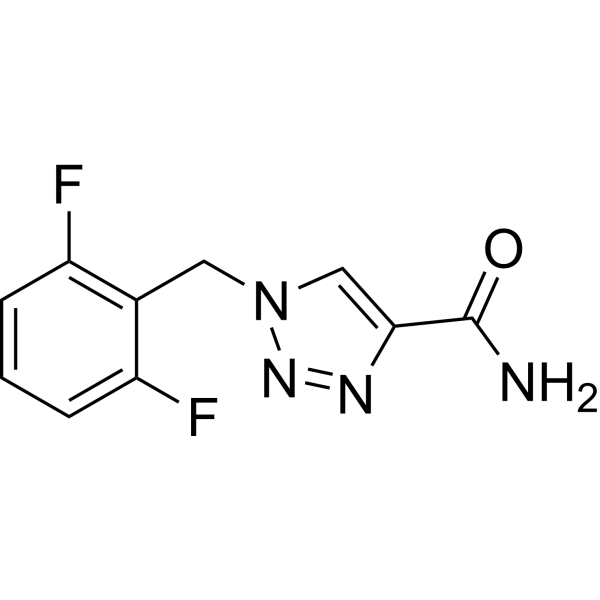
    Rufinamide (CGP 33101) is an orally active antiepileptic compound that inhibits Na + current activation, inhibits neuronal hyperexcitability, and has anticonvulsant effects. Rufinamide is used in the study of Lennox-Gastaut syndrome [1] .
    Rufinamide
  • HY-108003

    Apelin Receptor (APJ) Cardiovascular Disease
    MM 07 is a biased apelin receptor agonist, with a KD of 300 nM in CHO-K1 cells and a KD of 172 nM in human heart.
    MM 07
  • HY-W020790
    Sialyl-Lewis X
    1 Publications Verification

    sLeX

    Endogenous Metabolite Inflammation/Immunology
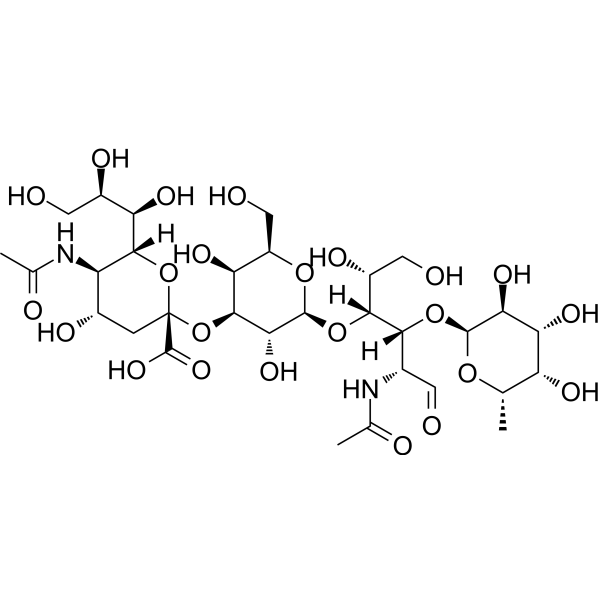
    Sialyl-Lewis X (sLeX) is a sialylated fucosylated tetrasaccharide, an endogenous antigen. Sialyl-Lewis X is a high-affinity ligand for selectins (E-, P-, and L-selectin) [1]. Sialyl-Lewis X binds to ELAM-1 and CD62 and has the ability?to inhibits CD62-mediated neutrophil recruitment to sites of inflammation .
    Sialyl-Lewis X
  • HY-136832

    Serotonin Transporter Potassium Channel Arrestin Opioid Receptor Cardiovascular Disease Neurological Disease
    Noribogaine hydrochloride is an orally active, blood-brain barrier permeable SERT inhibitor (IC50=50-300 nM) and hERG channel blocker. Noribogaine hydrochloride enhances serotonergic transmission, activates the κ-opioid receptor (OPRK) G protein signaling pathway and inhibits β-arrestin recruitment. Meanwhile, Noribogaine hydrochloride blocks the μ-opioid receptor (OPRM) signaling pathway as well as ion channels associated with cardiac repolarization. Noribogaine hydrochloride induces neuritogenesis, upregulates GDNF mRNA expression, and modulates opioid tolerance. Noribogaine hydrochloride reduces alcohol-seeking behavior in experimental animals, and is widely used in studies related to depression, addiction, alcoholism, and cardiotoxicity [1] .
    Noribogaine hydrochloride
  • HY-P1108
    Astressin 2B
    1 Publications Verification

    CRFR Neurological Disease Inflammation/Immunology
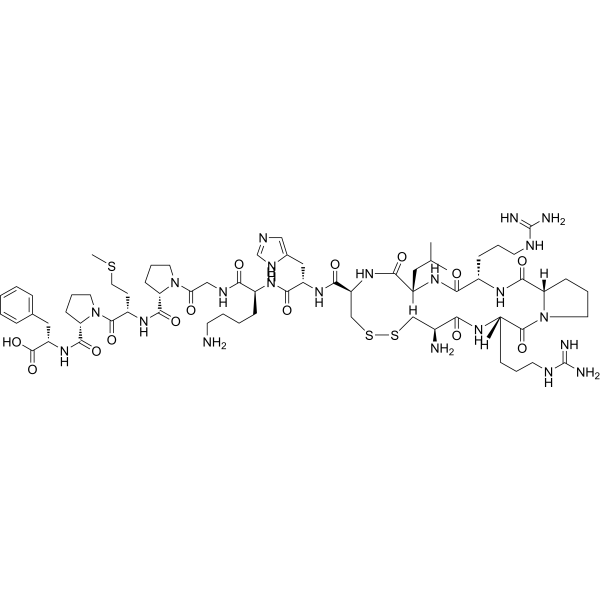
    Astressin 2B is a blood-brain barrier-impermeable, highly selective CRFR2 antagonist (rCRFR2, IC50=0.57 nM). Astressin 2B blocks the protective effects mediated by CRFR2, thereby exacerbating indomethacin (HY-14397)-induced hemorrhagic intestinal injury in rats. Astressin 2B reverses the protective effects of Urocortin 1 against intestinal hypermotility, bacterial invasion and upregulation of inflammatory mediators. Astressin 2B also blocks the anxiogenic effect of Urocortin 2 and attenuates stress-induced anxiety-related behaviors. In the Clostridioides difficile toxin A (C. difficile toxin A)-mediated enteritis model, Astressin 2B mimics the phenotype of CRFR2-deficient mice, significantly exacerbating intestinal epithelial damage, edema, neutrophil migration and the expression of multiple proinflammatory cytokines. Astressin 2B is an important tool molecule for investigating the intestinal protective mechanisms of CRFR2 [1] .
    Astressin 2B
  • HY-129724A

    ACTH-(11-13) acetate; Lys-Pro-Val acetate; H-Lys-Pro-Val-OH acetate

    Melanocortin Receptor NF-κB Bacterial Interleukin Related Apoptosis Infection Neurological Disease Metabolic Disease Inflammation/Immunology
    α-MSH (11-13) (ACTH-(11-13)) acetate is a C-terminal tripeptide of α-MSH that can cross the blood-brain barrier. α-MSH (11-13) acetate exhibits antipyretic, anti-inflammatory, and antibacterial activities. α-MSH (11-13) acetate also exerts neuroprotective effects after traumatic brain injury by inhibiting excessive activation of microglia and reducing neuronal apoptosis. α-MSH (11-13) acetate can be used in research related to traumatic brain injury, fever, and bacterial infections [1] .
    α-MSH (11-13) acetate
  • HY-107194

    FGFR c-Myc DNA/RNA Synthesis Caspase Reactive Oxygen Species (ROS) Cancer
    NSC12 is an orally active pan-FGF trap. NSC12 inhibits the interaction between FGF2/FGFR. NSC12 suppresses the phosphorylation of FGFR3. NSC12 reduces c-Myc levels, induces DNA damage, triggers the cleavage of Caspase 3, and promotes ROS production. NSC12 exhibits anticancer activity against lung cancer and multiple myeloma [1] .
    NSC12
  • HY-161247

    5-HT Receptor Metabolic Disease
    5HT2A antagonist 2 is an orally active, selective antagonist for 5HT2A with IC50 of 14 nM. 5-HT2A antagonist 2 exhibits good chemical, hepatocyte, and plasma stability, without significant cytotoxicity in cell lines VERO, HFL-1, L929, NIH3T3, CHO-K1 [1].
    5-HT2A antagonist 2
  • HY-P99870

    ASLAN004; CSL-334; MK-6105

    Interleukin Related Others
    Eblasakimab (ASLAN004; CSL-334) is a human IgG4 antibody that specifically targets IL13RA1 and is primarily expressed by CHO-K1 cells [1].
    Eblasakimab
  • HY-160888

    mAChR Endocrinology
    ASP8302 is a positive and allosteric muscarinic M3 receptor modulator. ASP8302 improves voiding efficiency and reduced residual urine volume in two voiding dysfunction models. ASP8302 can be used for research of underactive bladder [1] .
    ASP8302
  • HY-19778
    (R)-BPO-27
    3 Publications Verification

    CFTR Autophagy Inflammation/Immunology
    (R)-BPO-27, the R enantiomer of BPO-27, is a potent, orally active and ATP-competitive CFTR inhibitor with an IC50 of 4 nM.
    (R)-BPO-27
  • HY-D2426

    Fluorescent Dye Transferrin Receptor Cardiovascular Disease
    Cy3-Transferrin is a fluorescent labeling reagent that combines Cy3 (HY-D0822) fluorescent dye and Transferrin (HY-P3267). The Cy3 fluorophore is commonly used in applications such as immunolabeling, nucleic acid labeling, fluorescence microscopy, and flow cytometry. Cy3 has an emission maximum around 562-570 nm. Transferrin, a blood-plasma glycoprotein, is a target ligand for transferrin receptor. Transferrin can bind to and mediate the transport of iron [1].
    Cy3-Transferrin
  • HY-P3579

    GIP (1-42), porcine

    Insulin Receptor Metabolic Disease
    Gastric Inhibitory Peptide (GIP (1-42)), porcine is a porcine glucose-dependent insulinotropic polypeptide and inhibitor of pentagastrin-stimulated gastric acid secretion. Gastric Inhibitory Peptide, porcine stimulates endogenous somatostatin release. Gastric Inhibitory Peptide, porcine acts in a dose- and time-dependent manner in conscious, chronic gastric fistula-equipped rats [1].
    Gastric Inhibitory Peptide, porcine
  • HY-19870C
    Setmelanotide monoacetate
    5+ Cited Publications

    RM-493 monoacetate; BIM-22493 monoacetate; IRC-022493 monoacetate

    Melanocortin Receptor Calmodulin AMPK Cardiovascular Disease Metabolic Disease Inflammation/Immunology
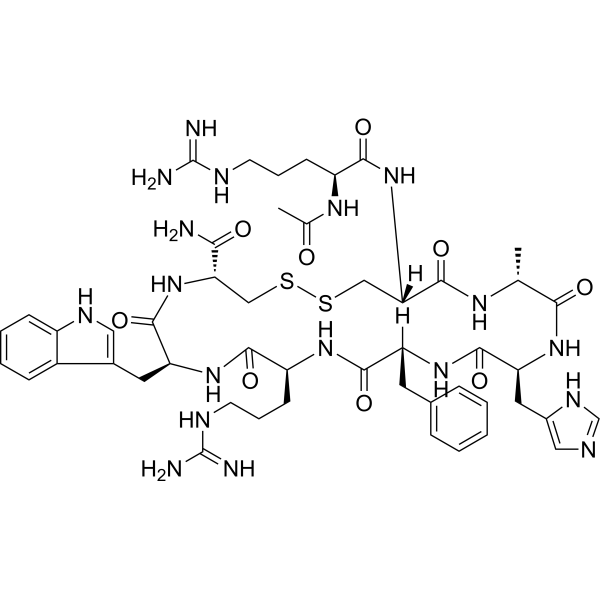
    Setmelanotide monoacetate (RM-493 monoacetate) is a blood-brain barrier-permeable, selective MC4R agonist with a Ki value of 2.1 nM for hMC4R. Setmelanotide monoacetate activates the CaMKK2/AMPK signaling pathway. Setmelanotide monoacetate mediates body weight homeostasis, feeding regulation and energy expenditure modulation; it reduces food intake, induces weight loss, decreases obesity severity, increases daytime activity and energy expenditure, lowers levels of leptin, triglycerides, fasting insulin and diastolic blood pressure, improves insulin sensitivity, glucose tolerance and fatty liver condition, and reverses respiratory depression. Setmelanotide monoacetate is applicable to research related to obesity, hyperinsulinemia, fatty liver and respiratory depression [1] .
    Setmelanotide monoacetate
  • HY-P990009

    NIS-793

    TGF-beta/Smad Cancer
    Nisevokitug (NIS-793) is a human, IgG2λ antibody targeting TGF-β (TGFB1/TGFB2). Nisevokitug is expressed by CHO-K1 cells [1].
    Nisevokitug
  • HY-123335A

    Somatostatin Receptor Neurological Disease
    L-796778 acetate is a selective agonist of the sst3 receptor. In CHO-K1 cells expressing the hsst3 receptor, L-796778 acetate is a partial agonist that inhibits Forskolin (HY-15371)-stimulated cAMP production with an IC50 value of 18 nM. L-796778 acetate has anticonvulsant effect [1].
    L-796778 acetate
  • HY-136895

    Prostaglandin Receptor Cancer
    AZ12672857 is an orally active inhibitor of EphB4 (IC50=1.3 nM) and Src kinases. AZ12672857 shows good inhibition of proliferation of c-Src transfected 3T3 cells (IC50=2 nM) as well as autophosphorylation of EphB4 in transfected CHO-K1 cells (IC50=9 nM) [1].
    AZ12672857
  • HY-132225

    5-HT Receptor Inflammation/Immunology
    SB 206553 is a 5-HT2C inverse agonist. SB 206553 can attenuate methamphetamine-seeking in rats. SB 206553 has activity for 5-HT2 receptor ligands in HEK-293 or CHO-K1 cells expressing human recombinant 5-HT2 receptors with pKi values of 5.6 nM (5-HT2A), 7.7 nM (5-HT2B) and 7.8 nM (5-HT2C), respectively. SB 206553 can be used for the research of psychostimulant abuse disorders [1].
    SB 206553
  • HY-P3789

    GnRH Receptor Metabolic Disease
    Prolactin-Releasing Peptide (12-31), rat is a fragment of the prolactin releasing peptide (PrRP). Prolactin-Releasing Peptide (12-31), rat shows high affinity for GPR10 receptors. Prolactin-Releasing Peptide (12-31), stimulates calcium mobilization in CHOK1 cells transfected with the PrRP receptor [1] .
    Prolactin-Releasing Peptide (12-31), rat
  • HY-117617

    Histone Acetyltransferase Cancer
    CAY10669 (compound 6d) is an anacardic acid (HY-N2020) derivative that inhibits histone acetyltransferase PCAF with an IC50 of 662 μM [1]. CAY10669 enhances the SAHA-induced acetylation in HEPG2 cells, exhibits cytotoxicity in zebrafish embryo, promotes transgene expression in CHO-K1 cells [1] .
    CAY10669
  • HY-P991114

    FLT3 Inflammation/Immunology
    Adezkibart is a human monoclonal antibody immunosuppressant targeting the human FMS-like tyrosine kinase 3 ligand (FLT3LG). Adezkibart is found in the Chinese hamster ovary cell line CHO-K1, which binds to FLT3LG to block the relevant signaling pathway, inhibits the immune response, and exerts immunosuppressive activity. Adezkibart is promising for research of immune-related diseases [1].
    Adezkibart
  • HY-P3840

    Mitosis Neurological Disease Cancer
    Head activator neuropeptide is a mitogen for mammalian cell lines of neuronal or neuroendocrine origin. Head activator neuropeptide signals by binding GPR37 and stimulates cells to enter mitosis [1].
    Head activator neuropeptide
  • HY-P99888

    EGFR Others
    Pimurutamab is a humanized IgG1-κ antibody targeting EGFR. Mainly expressed by CHO-K1 cells [1].
    Pimurutamab
  • HY-129724

    ACTH-(11-13); Lys-Pro-Val; H-Lys-Pro-Val-OH

    Melanocortin Receptor Bacterial NF-κB Apoptosis Interleukin Related Infection Neurological Disease Metabolic Disease Inflammation/Immunology
    α-MSH (11-13) (ACTH-(11-13)) is a C-terminal tripeptide of α-MSH that can cross the blood-brain barrier. α-MSH (11-13) exhibits antipyretic, anti-inflammatory, and antibacterial activities. α-MSH (11-13) also exerts neuroprotective effects after traumatic brain injury by inhibiting excessive activation of microglia and reducing neuronal apoptosis. α-MSH (11-13) can be used in research related to traumatic brain injury, fever, and bacterial infections [1] .
    α-MSH (11-13)
  • HY-P5142

    ω-ACTX-Hv1; ω-Atracotoxin-HV1

    Insecticide Calcium Channel Apoptosis Necroptosis Cardiovascular Disease Neurological Disease Inflammation/Immunology
    ω-Hexatoxin-Hv1a (ω-ACTX-Hv1; ω-Atracotoxin-HV1) is an orally active insecticidal neurotoxin containing an inhibitor cystine knot motif and a selective calcium channel inhibitor. ω-Hexatoxin-Hv1a blocks L-type voltage-dependent Ca 2+ channels and reduces intracellular calcium ion concentration, thereby decreasing apoptosis, necroptosis and oxidative stress, and promoting cell recovery and energy level elevation. ω-Hexatoxin-Hv1a causes larval paralysis and death by impairing neurotransmission in the central nervous system of insects. It shows high injectable toxicity against insects of multiple orders, but exhibits weak oral toxicity. ω-Hexatoxin-Hv1a is widely applicable to studies related to ischemia-reperfusion injury, atopic dermatitis, and ischemic injury of cardiomyocytes and neurons [1] .
    ω-Hexatoxin-Hv1a
  • HY-123335

    Somatostatin Receptor Others
    L-796778 is an agonist of the hsst3 receptor. In CHO-K1 cells expressing the hsst3 receptor, L-796778 is a partial agonist that inhibits forskolin (HY-15371)-stimulated cAMP production with an IC50 value of 18 nM [1].
    L-796778
  • HY-134661

    GPR6 Neurological Disease
    (S)-CVN424 is a potent G-Protein-Coupled Receptor 6 (GPR6) modulator. (S)-CVN424 has the potential for a variety of neurological and psychiatric disorders research, including Parkinson's disease [1].
    (S)-CVN424
  • HY-14840A

    MRZ 9547

    Dopamine Transporter Neurological Disease Inflammation/Immunology
    (R)-Phenylpiracetam (MRZ 9547) is a dopamine transporter (DAT) inhibitor (Ki: 14.8 μM; IC50: 65.5 μM). (R)-Phenylpiracetam can be used for the research of the neurological or neuropsychiatric disorders [1] .
    (R)-Phenylpiracetam
  • HY-151884

    c-Myc Cancer
    FUBP1-IN-2 (compound 9) is a potent FUBP1 (far upstream binding protein 1) inhibitor. FUBP1-IN-2 inhibits the KH4 FUBP1-FUSE interaction in a gel shift assay. FUBP1-IN-2 binds to FUBP1 in a ChIP assay. FUBP1-IN-2 reduces both c-Myc mRNA and protein expression, increases p21 mRNA and protein expression, and depletes intracellular polyamines [1].
    FUBP1-IN-2
  • HY-175231

    5-HT Receptor Neurological Disease
    ST171 is a bitopic 5-HT1AR agonist with an Ki of 0.41  nM. ST171 selectively activates Gi/o signaling pathway and inhibits 5-HT1AR-mediated cAMP accumulation without Gs activation and marginal β-arrestin recruitment. T171 reduces hypersensitivity in chronic neuropathic and inflammatory pain mice model. ST171 can be used for pain research [1].
    ST171
  • HY-12835

    LPL Receptor Inflammation/Immunology
    S1P1 agonist III is an orally active hS1P1 agonist with an EC50 value of 18 nM. S1P1 agonist III shows limited activity against hS1P3. S1P1 agonist III can be used in the research of multiple sclerosis [1].
    S1P1 agonist III
  • HY-P4146A

    BI 456906 TFA

    GLP Receptor GCGR Metabolic Disease
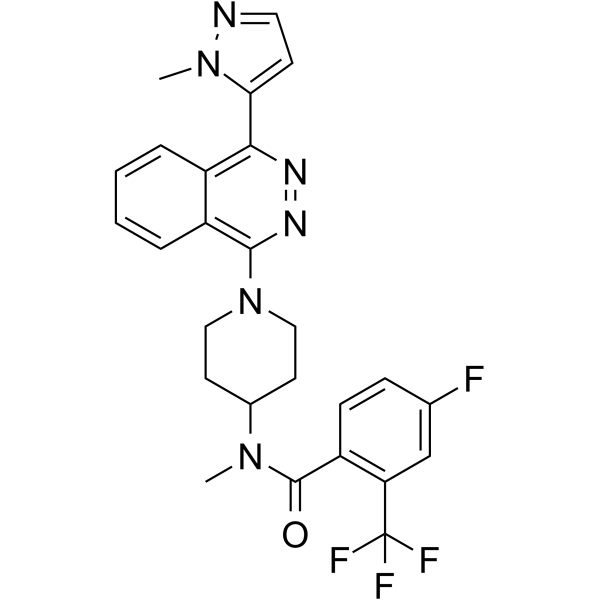
    Survodutide (BI 456906) TFA is a potent, selective glucagon receptor/GLP-1 receptor (GCGR/GLP-1R) dual agonist with EC50s of 0.52 nM and 0.33 nM in CHO-K1 cells, respectively. Survodutide TFA, a 29-amino-acid peptide, is a potent acylated peptide containing a C18 fatty acid. Survodutide TFA has robust anti-obesity efficacy achieved by increasing energy expenditure and decreasing food intake [1].
    Survodutide TFA
  • HY-171854

    G2A (GPR132) Neurological Disease Inflammation/Immunology
    SB-583355 (Compound 56) is a potent G2A antagonist. SB-583355 can be prepared by a Suzuki reaction between 4-methoxyphenyl boronic acid and 3-bromo-4-hydroxybenzoic acid following the conditions followed by an amide coupling reaction. SB-583355 blocks the activation of G2A mediated either by 9-HOPE or T-10148 in human G2A expressing CHO-K1 cells. SB-583355 can be studied in research for inflammation, myeloid leukemia, and neuropathic pain [1].
    SB-583355
  • HY-123596

    Prostaglandin Receptor Inflammation/Immunology
    LAS191859 is an orally active, potent and selective CRTh2 antagonist with an IC50 of 9.58 nM against human CRTh2. LAS191859 can be used for the research of chronic asthma [1].
    LAS191859
  • HY-P1185

    Vasopressin Receptor Apoptosis Cardiovascular Disease Cancer
    Antagonist G is a potent vasopressin antagonist. Antagonist G is also a weak antagonist of GRP and Bradykinin. Antagonist G induces AP-1 transcription and sensitizes cells to chemotherapy [1] .
    Antagonist G
  • HY-P991729

    APG-777

    Interleukin Related Inflammation/Immunology
    Zumilokibart (APG-777) is an anti-IL-13 IgG1κ type humanized antibody. The recommed isotype control is Human IgG1 kappa, Isotype Control (HY-P99001). Zumilokibart can be used for the research of atopic dermatitis (AD) [1] .
    Zumilokibart
  • HY-P4146B

    BI 456906 sodium

    GLP Receptor GCGR Metabolic Disease
    Survodutide (BI 456906) sodium is a potent, selective glucagon receptor/GLP-1 receptor (GCGR/GLP-1R) dual agonist with EC50s of 0.52 nM and 0.33 nM in CHO-K1 cells, respectively. Survodutide sodium, a 29-amino-acid peptide, is a potent acylated peptide containing a C18 fatty acid. Survodutide sodium has robust anti-obesity efficacy achieved by increasing energy expenditure and decreasing food intake [1].
    Survodutide sodium
  • HY-137749A

    2'-Deoxy-3'-MANT-ADP trisodium

    Biochemical Assay Reagents Others
    MANT-dADP (trisodium) (2'-Deoxy-3'-MANT-ADP (trisodium)) is a fluorescent nucleotide derivative, with an emission maximum of 453 nm upon excitation at 350 nm. MANT-dADP (trisodium) can decrease inositol phoshate formation in CHO-K1 cells that express human purinergic P2Y12 receptor. MANT-dADP (trisodium) can be studied in research on the interaction between cardiac troponin I and myofibrils [1] .
    MANT-dADP trisodium
  • HY-124104

    Drug Metabolite Cardiovascular Disease Metabolic Disease
    Aldicarb sulfoxide is a metabolite of Aldicarb. Aldicarb sulfoxide affects the glutathione-linked enzymes in CHO-K1 cells. Aldicarb sulfoxide inhibits cholinesterase (ChE) and carboxylesterase (CaE) with IC50 of 10 μM for both in zebrafish [1] .
    Aldicarb sulfoxide
  • HY-P5872

    JZTX-XI

    Sodium Channel Neurological Disease
    Jingzhaotoxin XI (JZTX-XI) is a sodium conductance inhibitor with an IC50 of 124 nM. Jingzhaotoxin XI slows the fast inactivation (EC50=1.18±0.2 μM) of Nav1.5 expressed in Chinese hamster ovary (CHO-K1) cells [1].
    Jingzhaotoxin XI
  • HY-179241

    Dopamine Receptor Neurological Disease
    UNC10062 is a dopamine D1 receptor (D1R) positive allosteric modulator. UNC10062 specifically binds to the extracellular allosteric pocket (upper pocket) at the interface of transmembrane helices (TM) 1 and 7 of D1R. UNC10062 can increase dopamine potency and D1R-mediated cAMP production. UNC10062 can be used for the research of neurological disease, such as Parkinson's disease [1].
    UNC10062
  • HY-124104S

    Isotope-Labeled Compounds Metabolic Disease
    Aldicarb sulfoxide-d3 is the deuterium labled Aldicarb sulfoxide (HY-124104). Aldicarb sulfoxide is a metabolite of Aldicarb. Aldicarb sulfoxide affects the glutathione-linked enzymes in CHO-K1 cells. Aldicarb sulfoxide inhibits cholinesterase (ChE) and carboxylesterase (CaE) with IC50 of 10 μM for both in zebrafish [1] .
    Aldicarb sulfoxide-d3
  • HY-100962A

    Tyrphostin 46; Tyrphostin AG 99

    Tyrosinase Cancer
    AG 99 (Tyrphostin 46), a tyrphostin derivative, is a tyrosine kinase inhibitor that increases sister chromatid exchange frequency in transformed CHO-K1 and primary CHE cells. AG 99 is promising for research of proliferative diseases [1].
    AG 99
  • HY-P10378

    GnRH Receptor Metabolic Disease
    GPR10 agonist 1 (compound 18-S4) is a potent GPR10 agonist with EC50 values of 80, 7.8 nM in the presence (10%) or absence (0%) of FBS, respectively. GPR10 agonist 1 has the potential for the research of chronic obesity [1].
    GPR10 agonist 1
  • HY-128207

    Orphan Nuclear Receptor Cancer
    SID7970631, as an isoquinolinone analog, is a potent and selective submicromolar SF-1 inhibitor (IC50=255 nM). SID7970631 can be used for the research of cancer [1] .
    SID7970631
  • HY-16765

    TD-1211

    Opioid Receptor Neurological Disease
    Axelopran (TD-1211) is an opioid receptor antagonist with pKi values of 9.8, 8.8 and 9.9 for human recombinant μ and δ receptors and guinea pig κ receptor, respectively.
    Axelopran
  • HY-174259

    mAChR Neurological Disease
    Muscarinic M4 modulator-1 is a Muscarinic M4 receptor positive allosteric modulator. Muscarinic M4 modulator-1 activates the muscarinic M4 receptor with allosteric potency EC50 s of 14 and 3 Nm in CHO-K1 cells and HEK293 cells. Muscarinic M4 modulator-1 has an antipsychotic-like activity, promising for psychiatric and/or neurological disorders research [1].
    Muscarinic M4 modulator-1
  • HY-P1426

    Potassium Channel Neurological Disease
    AmmTX3 is a peptide toxin identified from the venom of the scorpion Androctonus mauretanicus. AmmTX3 is a highly specific blocker of Kv4 channels, which selectively and almost completely blocks transient A-type K + currents with a Ki of 131 nM. AmmTX3 induces epileptiform behaviors and causes death in mice receiving intracerebroventricular injection. AmmTX3 increases the excitability of dentate gyrus granule cells, reduces GABAergic inhibition, enhances and stabilizes the EPSP-spike component of long-term potentiation, and impairs reference memory. AmmTX3 can be used in research related to pain, epilepsy, and autism spectrum disorder [1] .
    AmmTX3
  • HY-P0165B

    ITM077 acetate; R1583 acetate; BIM51077 acetate

    GLP Receptor Metabolic Disease
    Taspoglutide (R1583) acetate is an agonist of the glucagon-like peptide 1 receptor (GLP-1R) with an Ki value of 1.1 nM. Taspoglutide acetate induces cAMP accumulation in CHO-K1 cells expressing human GLP-1R (EC50 = 0.06 nM). Taspoglutide acetate decreases blood levels of glucose and increases blood levels of insulin in a glucose tolerance test in Zucker diabetic obese rats. Taspoglutide acetate reduces blood levels of gastric inhibitory polypeptide (GIP), plasma levels of triglycerides, and body weight in the same model [1] .
    Taspoglutide acetate

Inquiry Online

Your information is safe with us. * Required Fields.

Salutation


Country or Region *

Applicant Name *


Organization Name *

Department *


Email Address *


Product Name *

Cat. No.


Requested quantity *

Phone Number *


Remarks

Inquiry Online

Inquiry Information

Product Name:
Cat. No.:
Quantity:
MCE Japan Authorized Agent:

